Ideal for: Home cooks who own and love cast iron; those serving family meals or entertaining.
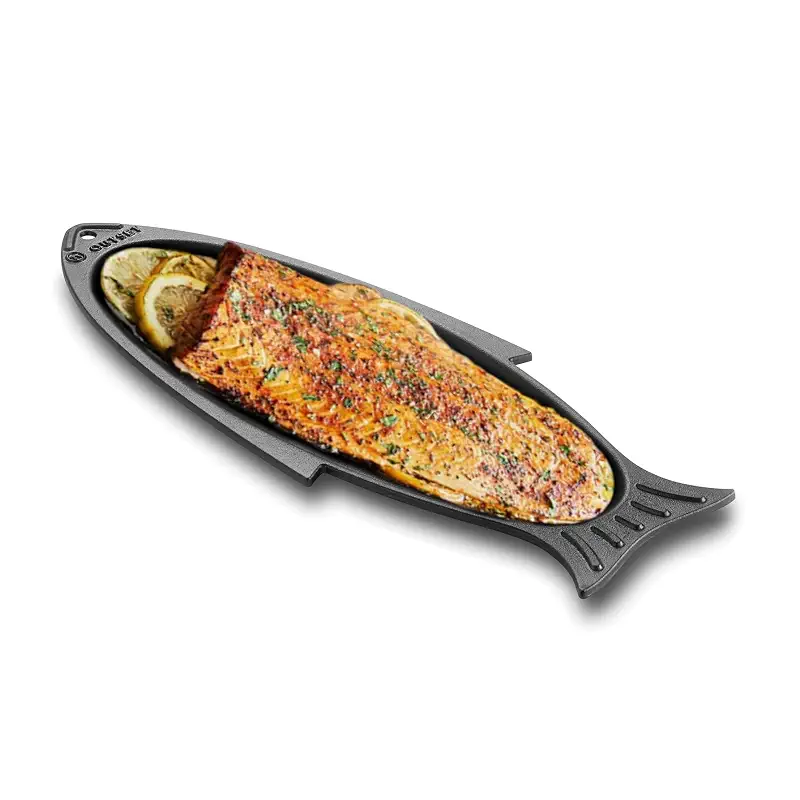
The Outset cast iron fish pan earns its place as the top choice for cooks who understand that cast iron improves over time. This isn't a modern nonstick coated in polymer: it's properly seasoned metal that builds flavor and release with each use. The shallow, angled design lets you sear whole fish or slip fillets side by side without crowding, and the pan moves seamlessly from stovetop to oven to grill. Owners consistently report crispy skin and evenly cooked flesh, with one noting their salmon turned out perfect after a simple oven roast.
The trade-off is maintenance discipline. Cast iron demands immediate drying after use and periodic seasoning to stay in top form: it's not a throw-it-in-the-dishwasher tool. But that care requirement is precisely why cast iron outlasts every other option on this list by decades. The weight itself (over 5 pounds) means excellent heat retention, so food stays warm longer from oven to table, a real advantage if you're cooking for a crowd.
When comparing options, this pan rewards slow, intentional cooking in ways that lighter aluminum or nonstick broiler designs cannot match. If you already own and love cast iron cookware elsewhere in your kitchen, this fish pan slots naturally into your routine. If you're cast iron–skeptical or value zero-fuss cleanup, the Nordic Ware or Culinarin options below might suit you better.
Pros
Seasoning builds naturally over time for superior release
Moves between stovetop, oven, grill, and campfire seamlessly
Retains heat long after leaving oven; keeps food warm at table
Lasts for decades with basic care
Cons
Requires hand drying immediately after each use
Heavier and more cumbersome than aluminum alternatives
Key features
Pre-seasoned cast iron that works stovetop, oven, grill, or campfire
Shallow angled design prevents fish and fillets from falling through
Dimensions 18.9 x 7.28 inches for single or paired fillets
Doubles as rustic serving platter when presented straight from heat
#2 Pick
Best for Grill-to-Oven Versatility
Wilton Armetale
Wilton Armetale Gourmet Grillware Fish Griller Pan - Heat Safe to 1000°F, 18.75 x 8.5 Inches - Cookware for Grill, Stovetop, Oven, Camping, Tailgating
4.6(85)
Durable aluminum-alloy griddle that won't rust and handles 1000°F heat without warping.
Ideal for: Grill enthusiasts who cook outdoors year-round; boaters and tailgaters.
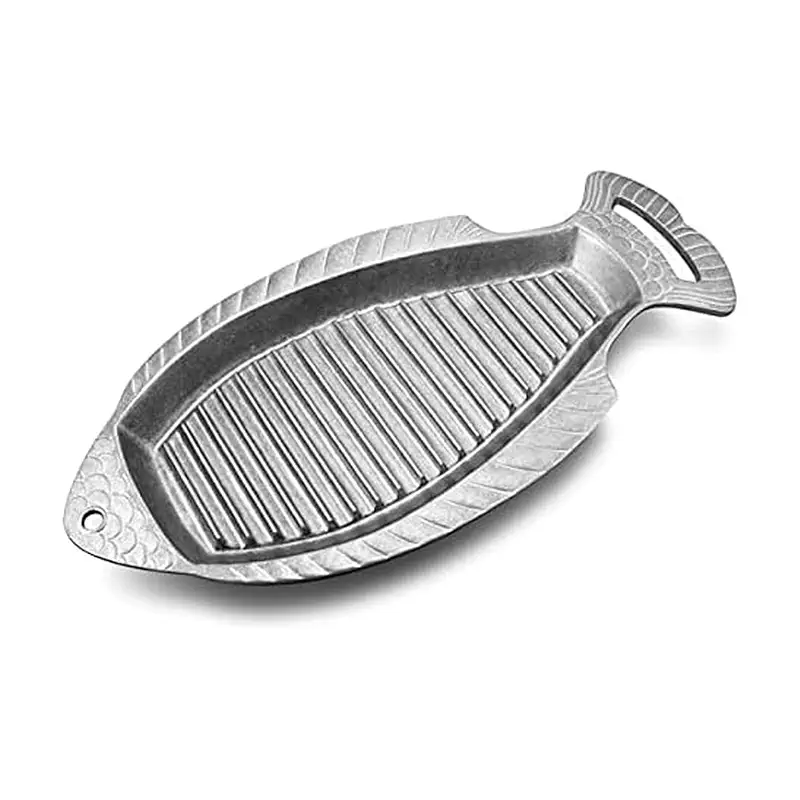
Wilton Armetale's Gourmet Grillware occupies a sweet spot between cast iron's maintenance demands and disposable nonstick coatings. The pan is made from recycled aluminum-based alloy designed to last a lifetime without rusting, cracking, or chipping: a real advantage if you cook outdoors frequently or live near salt water. It preheats quickly, distributes heat evenly, and the smooth metal surface doesn't require seasoning.
Where this pan shines is its 1000-degree heat tolerance, making it ideal for high-temperature broiling or finishing fish under intense direct heat. Several owners report using it multiple times per week on gas and charcoal grills with excellent results. The hand-crafted quality (it's made in smaller batches, not mass-produced) also appeals to cooks who value durability over trendy kitchen aesthetics.
The catch: buildup and residue can adhere more stubbornly than on newer nonstick surfaces. One owner mentioned needing a Brillo pad to restore shine after cooking oily fish, though this doesn't affect performance: just appearance. If you're weighing this against the best pan for cooking fish in your kitchen arsenal overall, consider that this sits between categories and won't satisfy cooks looking for either ultra-easy cleanup or the prestige finish of cast iron.
Pros
Won't rust, crack, or chip even in harsh outdoor environments
Handles temperatures up to 1000°F without warping
Preheats quickly and heats evenly across entire surface
Hand-crafted quality designed to last a lifetime with proper care
Cons
Oils and residue can adhere and require scrubbing to remove completely
Heavier gauge metal means slower to cool than lightweight aluminum
Key features
100% recycled, food-safe aluminum-based alloy construction
Dimensions 18.75 x 8.5 inches; 1-inch depth for adequate fish and vegetables
Rated for oven, stovetop, and grill use up to 1000°F
Hand-washed care preserves finish; not dishwasher safe
#3 Pick
Best for Air Circulation and Crispy Results
Nordic Ware
Nordic Ware Oven Crisp Baking Tray 2pc Set Includes Pan and Rack; Natural Aluminum For Air Frying, Crisping, Broiling, Baking; Cooking Surface 17 x 12 Inches
4.6(7,676)
Two-piece aluminum set with elevated rack lets hot air reach every angle for restaurant-quality crisping.
Ideal for: Home cooks who bake multiple times weekly; families who want even browning without flipping.
Nordic Ware's Oven Crisp baking tray offers a different philosophy: rather than a solid pan, you get a base tray plus a nonstick-coated steel rack that sits 2 inches above it. This elevation is transformative for fish cookery because hot air circulates underneath, browning the bottom without flipping. Owners report that vegetables and proteins cook evenly without turning, a genuine time-saver for weeknight dinner.
The aluminum conducts heat rapidly and evenly, essential for avoiding the hot spots that plague thinner pans. The 17 x 12-inch cooking surface is generous (larger than most broiler pans), so you can roast a whole side of salmon or arrange multiple fillets without crowding. The porcelain nonstick coating on the rack outperforms standard single-coat systems and resists sticking far better than older aluminum designs. Most buyers report years of service, and the pan is made in America.
One limitation: the aluminum base is relatively thin, and acidic foods (tomato, vinegar, citrus) can pit the surface over time. A few owners noted discoloration after the first wash, though this is cosmetic and doesn't affect cooking. The set is hand-wash only, and the nonstick coating won't survive dishwasher heat. If you prioritize zero-maintenance cleanup and won't cook acidic fish preparations (ceviche, lemon-based sauces), this excels. Compared to the cast iron or the Culinarin broiler design, it trades durability for ease and speed.
Pros
Elevated rack promotes air circulation for even browning on all sides
Large 17 x 12-inch surface fits whole fish or multiple fillets
Rapid, even aluminum heat distribution prevents hot spots
Made in America; porcelain nonstick coating resists sticking reliably
Cons
Aluminum reacts to acidic ingredients; can pit or stain with prolonged contact
Hand-wash only; nonstick coating not dishwasher safe
Key features
Two-piece set: aluminum base pan plus nonstick-coated steel rack
Cooking surface 17 x 12 inches; rack elevates food 2 inches for air circulation
Aluminum conducts heat rapidly and evenly for consistent browning
Made in America; hand wash only to preserve nonstick coating
#4 Pick
Best Heavy-Duty Broiler Pan
Culinarin
Broiler Pan for Oven Nonstick 16.75” x 13” Porcelain Nonstick Coated - Broiling Pan for Oven Withstands Heat up to 550° F - Heavy Duty Broil Pans and Rack Circulates Heat and Drains Fat (Black)
4.6(272)
Porcelain-coated cast iron handles sustained broiler heat; nonstick release holds even at 550°F.
Ideal for: Cooks who broil fish, steaks, and vegetables regularly; those replacing worn-out broiler pans.
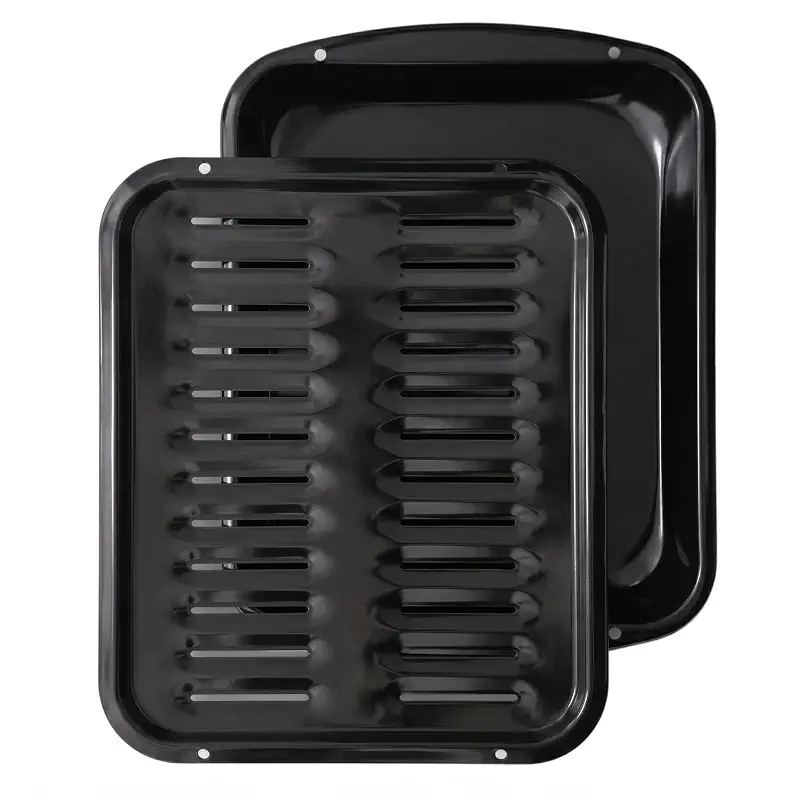
The Culinarin broiler pan sits at the intersection of traditional broiler design and modern coating technology. The porcelain nonstick surface is stronger than standard polymer coatings and doesn't degrade under the punishing 550-degree heat of a home broiler: a real advantage if you broil frequently. The 16.75 x 13-inch footprint fits most standard ovens and gives plenty of room for whole small fish, thick steaks, or an array of fillets.
The slotted rack design drains fat as food cooks, creating a healthier finished dish while keeping the pan clean underneath. Owners praise its durability and ease of cleanup; several report replacing an older broiler pan with this model and finding it performs identically. The weight is lighter than vintage cast-iron broilers, which appeals to cooks with arthritis or limited hand strength.
The porcelain coating is the potential weak point: while more heat-resistant than standard nonstick, it's still a finish that can chip or wear if scratched by metal utensils or dropped. One owner noted the coating feels less robust than their original pan, suggesting long-term durability may not match heritage equipment. Compared to the Nordic Ware set, this pan is explicitly engineered for high-heat broiling rather than air-circulation crisping. If you broil fish weekly and want maximum heat tolerance, this is your pick.
Pros
Porcelain nonstick coating withstands broiler heat up to 550°F without degrading
Slotted rack drains fat for healthier cooking and easier cleanup
16.75 x 13-inch size accommodates whole fish or multiple fillets
Lightweight compared to vintage cast-iron broiler pans
Cons
Porcelain coating can chip if struck or scraped with metal tools
Not as durable long-term as seasoned cast iron or aluminum
Key features
Porcelain nonstick coating rated for broiler heat up to 550°F
Slotted rack design drains fat and promotes heat circulation
16.75 x 13-inch footprint fits most standard home ovens
Lightweight construction easier to handle than traditional cast-iron broilers
Ideal for: First-time buyers and budget-conscious home cooks; smaller households cooking for 1-4 people.
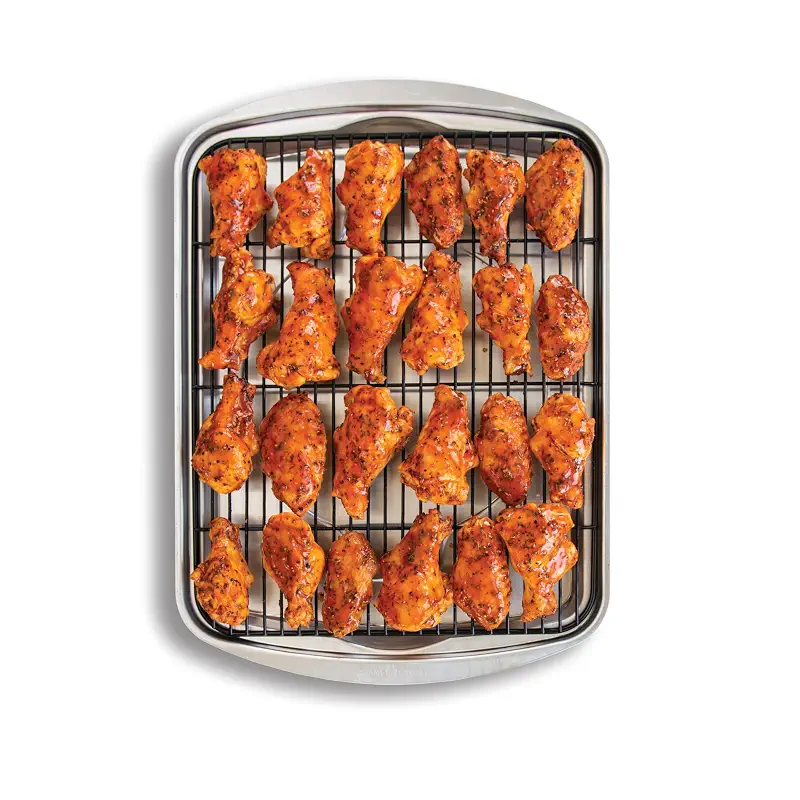
GoodCook's Nonstick Carbon Steel set brings the raised-rack crisping design to an entry-level price point. The 15 x 10.5-inch base is smaller than the Nordic Ware (which matters if you're cooking for six or meal-prepping bulk protein), but the carbon steel construction is solid and the nonstick formula performs better than cheaper single-coat systems, according to owners who've used it weekly for months.
The raised wire rack elevates food away from drippings, allowing air and heat to circulate underneath for crispier results than a flat sheet pan. Owners report excellent results crisping bacon, chicken wings, and roasted vegetables, often without needing to flip. The set is dishwasher-safe and oven-safe to 410 degrees, making cleanup straightforward for busy households.
There are durability trade-offs: some owners report the wire rack coating peeling after repeated washing or the nonstick degrading if exposed to very high heat or metal utensils. Carbon steel also warms more slowly than aluminum and doesn't hold heat as long after the oven, which affects how long food stays warm at the table. Compared to the Nordic Ware, this trades some longevity and heat distribution for affordability. If you're building your first oven-fish setup or cooking for one or two, this set is genuinely capable; heavy home cooks or those planning to use this pan daily for years may prefer investing in the Nordic Ware or cast iron.
Pros
Carbon steel and nonstick coating resists warping under normal oven use
Raised rack allows grease to drain and air to circulate evenly underneath
Oven-safe to 410°F and dishwasher-safe for quick cleanup
Affordable entry point compared to premium aluminum or cast iron options
Cons
Wire rack coating can peel after repeated washing or metal-utensil scrubbing
Carbon steel heats slower and holds heat less long than aluminum or cast iron
Key features
15 x 10.5-inch carbon steel pan with PFOA-free nonstick coating
Raised wire rack included; holds in place with interior rim for stability
Oven-safe to 410°F and fully dishwasher-safe for convenient cleanup
Carbon steel resists warping; rack separates for independent cooling or glazing use
How to Choose the Best Fish Cooking Pan for Your Oven
Four trade-offs that actually matter when matching a pan to cook fish in oven to your kitchen.
Material Matters: Cast Iron, Aluminum, and Porcelain-Coated Steel
The fish pan material comparison reveals distinct trade-offs. Cast iron heats slowly but retains warmth exceptionally long, making it ideal for tabletop service; it improves with age and lasts lifetimes, though it demands hand drying and occasional seasoning. Aluminum-based designs (whether pure or alloyed) heat rapidly and distribute that heat evenly, preventing hot spots that plague thin materials: a real advantage for delicate fillets. Porcelain and standard nonstick coatings offer fast cleanup and zero maintenance but won't match cast iron's longevity or aluminum's heat distribution. For everyday fish cooking, most home cooks find aluminum or nonstick surfaces less demanding than cast iron, while serious outdoor cooks gravitate toward cast iron's permanence.
Size and Surface Area: Whole Fish Versus Fillets
Your cooking style and household size dictate the dimensions you need. A narrow fish-specific pan (like the Outset or Wilton Armetale at roughly 18 x 7 inches) is perfect for whole trout, small branzino, or side-by-side fillets, and it fits easily on a residential grill. A standard broiler pan or baking sheet (16-17 inches wide) accommodates larger whole fish, multiple thick steaks, or a family's worth of fillets without crowding. Crowding forces steam to build around food rather than allowing direct heat, which dulls browning and extends cooking time. Measure your oven rack or grill surface before ordering; a pan too wide will block heat circulation or refuse to fit through the oven door.
Heat Tolerance and Cooking Method
If you broil frequently, prioritize pans rated for sustained high heat (the Culinarin reaches 550°F; most others max around 400-450°F). Broiling is intense, and a pan that warps or whose nonstick coating degrades at temperature becomes a liability. For gentler baking (the most common fish cooking method), any of these options will perform. Cast iron and the Wilton Armetale also work directly over flame (stovetop or grill), expanding versatility. An oven fish cooking guide will help you dial in the right temperature for your particular pan and fish type; thinner aluminum or nonstick pans may require slightly lower temperatures than cast iron to prevent over-browning the exterior while the interior finishes.
Cleanup and Long-Term Maintenance
Cast iron and the Wilton Armetale require hand washing and some routine care (seasoning or occasional oil wipe). Aluminum and nonstick options are dishwasher-safe and demand minimal upkeep, though acidic foods can pit aluminum and metal utensils degrade nonstick coatings. If you prioritize zero-fuss cleaning and use the pan several times weekly, nonstick or porcelain-coated designs save real time. If you cook with cast iron elsewhere in your kitchen and enjoy its ritual, a cast iron fish pan slots naturally into your routine. Budget cooks should know that cheaper nonstick coatings wear faster than porcelain or premium formulas; the price difference often pays for itself over years of use.
Versatility Beyond Fish
All five pans excel at vegetables, chicken, and roasted meats. The Nordic Ware and GoodCook sets, with their elevated racks, are particularly strong for crisping bacon, wings, and frozen fries. Cast iron doubles as a rustic serving platter (it stays hot for 20 minutes after the oven). The Wilton Armetale handles direct flame, opening grilling and campfire cooking. A broiler pan like the Culinarin works well for any oven-finished protein but is narrowly optimized for broiling. Choose based on where 80% of your cooking happens; versatility is a bonus, not the deciding factor.
Frequently asked
Quick answers to the questions readers ask most.
Can I cook fish directly on a broiler pan without the rack?
Yes. The pan itself (without the rack) works for baking fish if you line it with parchment or foil to prevent sticking. The rack's main job is elevation: it allows air underneath for crisping and drains fat away. For gentle baking (especially thinner white fish), the pan alone is fine. For broiling, the rack is essential because it keeps delicate flesh away from the direct heat source, preventing scorching.
Do I need to preheat the pan before adding fish?
For cast iron and aluminum, preheating the empty pan for 5-10 minutes is standard practice. It ensures even heat distribution and helps develop a brown crust quickly. Nonstick pans preheat faster (3-5 minutes) but still benefit from the warmth. Cold fish on a cold pan often sticks and cooks unevenly. Many cooks oil the preheated pan lightly, which further reduces sticking and improves browning.
Is cast iron really better than nonstick for oven cooking?
Cast iron and nonstick excel in different situations. Cast iron stays hot longer (great for tabletop service), improves with age, and outlasts nonstick by decades. Nonstick requires zero seasoning, cleans faster, and appeals to cooks who want weeknight simplicity. For pure fish cooking, either works. Your lifestyle determines the best choice: daily cook with minimal cleanup appetite? Nonstick. Weekend entertaining or outdoor grilling? Cast iron.
Can acidic ingredients (lemon, tomato) damage my pan?
Yes, aluminum reacts to acidic foods and can pit, discolor, or develop white spots over prolonged contact. Cast iron is naturally resistant to acidity. Porcelain and nonstick coatings are generally safe with acid, though aluminum under a nonstick layer can still react if the coating is damaged. If you regularly cook fish with citrus or tomato-based sauces, line aluminum pans with parchment or use cast iron to avoid damage.
What's the difference between a fish pan and a standard baking sheet?
Fish pans are narrower (7-9 inches wide) and shallow, designed to hold whole small fish or paired fillets without crowding. Standard sheet pans are rectangular (13-17 inches) and accommodate larger batches or different foods side by side. Many fish pans (especially cast iron) are also heavy enough to move safely from oven to table. For roasting whole salmon or cooking for four people, a standard pan gives you more flexibility; for trout or elegant plating, a fish-specific pan looks sharper and cooks more precisely.