Verdict, analysis, and key features for each pick.
#1 Pick
Best Overall
Nordic Ware
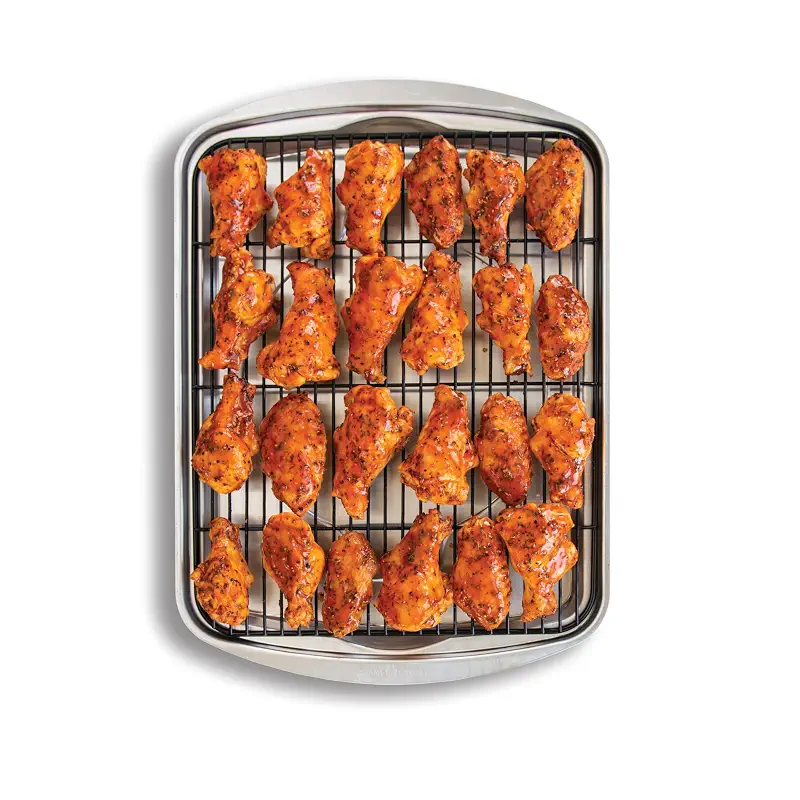
Nordic Ware Oven Crisp Baking Tray 2pc Set Includes Pan and Rack; Natural Aluminum For Air Frying, Crisping, Broiling, Baking; Cooking Surface 17 x 12 Inches
4.6(7,676)
Versatile aluminum pan with elevated rack that browns fish evenly and handles everything from delicate fillets to whole roasts.
Ideal for: Home cooks baking fish several times a week who value even browning and easy cleanup over specialty features.
The Nordic Ware Oven Crisp Baking Tray sits at the sweet spot for most home cooks. The combination of a formed aluminum base and a nonstick-coated steel rack gives you two cooking surfaces in one set. The rack elevates food above the pan, allowing hot air to circulate underneath so fish cooks evenly without requiring you to flip it halfway through. For baked fish, this means you get consistent browning on the bottom without the fuss of rotation.
Aluminum conducts heat rapidly and evenly, which is exactly what you want when baking delicate fillets that can dry out or toughen in just a few minutes. The 17 by 12 inch cooking surface is genuinely large enough to fit a whole salmon or multiple filets side by side without crowding. Owners report that the nonstick coating holds up well through repeated use, and cleanup is as simple as wiping with a cloth after the pan cools.
The main limitation is material reactivity. Aluminum reacts to acidic ingredients like vinegar, lemon juice, and tomato: prolonged contact can cause pitting or discoloration. If you frequently bake fish with tomato sauce or acidic marinades, you'll want to line the pan with parchment or foil. Also, hand washing only is required, which means no dishwasher convenience.
Pros
Elevated rack allows air circulation for even cooking
Large 17x12-inch surface fits whole fish or multiple fillets
Rapid, even heat distribution across aluminum base
Nonstick rack coating resists sticking without seasoning
Cons
Aluminum reacts to acidic ingredients over time
Hand wash only; not dishwasher safe
Key features
Formed aluminum pan with nonstick-coated steel elevated rack
17 by 12 inch cooking surface for whole fish and large portions
Four corner pouring spouts for easy fat drainage
Made in America; suitable for oven, stovetop air-fryer feature
#2 Pick
Best for High-Heat Grilling
Outset
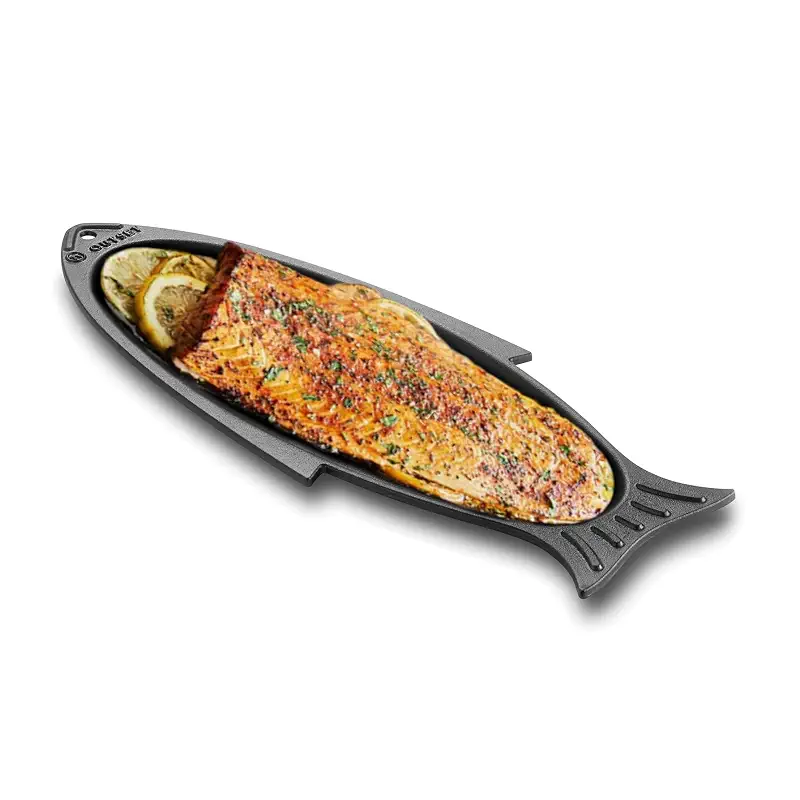
Outset Cast Iron Fish Grill and Serving Pan, 18.9 x 7.28 x 0.98 inch BBQ and Oven Safe Fish Cooking Pan
4.6(252)
Cast iron fish pan designed to move from grill to table, with pre-seasoned surface that improves flavor over years of use.
Ideal for: Grill enthusiasts and outdoor cooks who value high heat, durability, and the flavor development cast iron offers over time.
The Outset Cast Iron Fish Pan is built for cooks who want to sear whole fish or fillets on hot surfaces while keeping delicate meat from falling through the grates. The distinctive fish-shaped cavity with sloped edges contains your catch and doubles as a serving platter, so you can cook and present in the same piece. This is where cast iron shines for grilling: it retains tremendous heat, creating a naturally crispy exterior while the fish stays moist inside.
Cast iron's heavy weight means it sits stable on grill grates and stovetops, and it heats evenly over any flame. Unlike the aluminum option, cast iron improves with use. Each cooking session adds to the seasoning, making the nonstick surface more effective over time. Owners who grill fish regularly report that the pan is easy to clean if you scrape off debris immediately, dry it right away, and apply a thin coat of oil before storing. The best pan for cooking fish shifts in appeal depending on your setup; where the Nordic Ware Oven Crisp leans toward everyday oven use, this pan is purpose-built for grill work and outdoor cooking.
The trade-off is maintenance. Cast iron requires immediate drying after washing, leaving it wet risks rust. It also comes pre-seasoned but benefits from re-seasoning before first use if you're particular about the nonstick surface. And while cast iron is oven-safe, it's heavier to handle when moving between appliances compared to lighter aluminum.
Pros
Pre-seasoned cast iron improves with every use
Retains high heat for crispy skin on grilled fish
Beautiful fish-shaped design serves as platter
Stable, heavy construction on any heat source
Cons
Requires immediate drying and regular seasoning maintenance
Much heavier than aluminum alternatives like the Nordic Ware option
Key features
Pre-seasoned cast iron with fish-shaped cavity design
Dimensions 18.9 by 7.28 inches, suitable for whole fish or fillets
Multi-functional for stovetop, grill, oven, and camping
Develops better nonstick surface and flavor with age
#3 Pick
Best for Grill-to-Table Service
Wilton Armetale
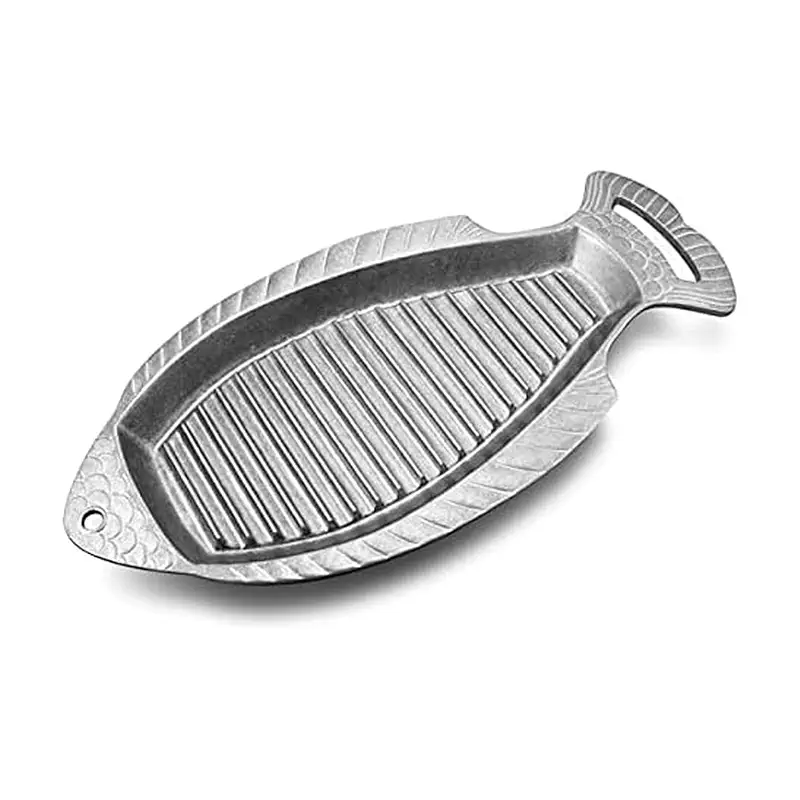
Wilton Armetale Gourmet Grillware Fish Griller Pan - Heat Safe to 1000°F, 18.75 x 8.5 Inches - Cookware for Grill, Stovetop, Oven, Camping, Tailgating
4.6(85)
Lightweight Armetale alloy pan that withstands extreme heat, resists rust forever, and serves fish directly from grill to table.
Ideal for: Grill hosts and outdoor entertainers who want a beautiful, rust-proof pan that moves from grill to table without seasoning worries.
Wilton Armetale's Gourmet Grillware Fish Pan occupies a niche that neither pure cast iron nor aluminum quite fill. Made from 100 percent recycled aluminum-based alloy, it weighs far less than cast iron yet handles temperatures up to 1000 degrees Fahrenheit. You can get it screaming hot on the grill, cook your fish, and carry it straight to the table without a separate serving dish. It will never rust, crack, or chip under normal use, which makes it exceptional for outdoor entertaining where cast iron's maintenance requirements might feel like a burden.
The pan is also designed for foods that fall through grates: peppers, onions, mushrooms, and shrimp all stay contained. Owners praise the heavy-gauge construction and appreciate that the metal doesn't develop a dark patina like cast iron does, so it looks refined whether you're grilling or serving at a dinner party. One caveat from reviews: oils and residue can burn onto the surface after grilling, making cleanup more involved than with the nonstick coatings on the Nordic Ware. You'll likely need a Brillo pad or similar abrasive to restore it fully.
Compared to the cast iron fish pan, the Armetale offers less flavor development through seasoning and slightly more cleanup work. But if you want durability without the maintenance obligations of cast iron, this bridges the gap nicely.
Pros
Heat-safe to 1000 degrees, exceeding most home equipment
100% recycled material, never rusts or cracks
Lightweight compared to cast iron yet durable
Attractive presentation as serving vessel
Cons
Burned-on residue requires abrasive scrubbing to clean
No nonstick coating; oil still needed to prevent sticking
Key features
100% recycled Armetale aluminum-based alloy metal
Temperature-safe to 1000 degrees Fahrenheit
18.5 by 8.75 inch cooking surface for whole fish or filets
Hand-crafted design doubles as serving platter
#4 Pick
Best Premium Choice
Staub
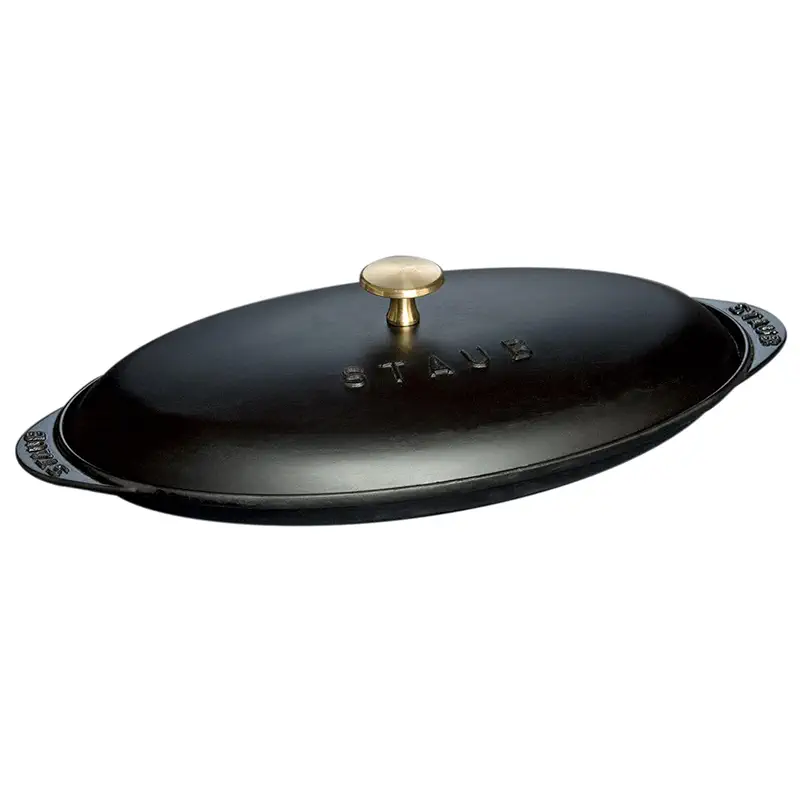
Staub Cast Iron 14.5-inch x 8-inch Covered Fish Pan - Matte Black, Made in France
4.2(99)
French enameled cast iron fish pan with tight-fitting lid that steams fish to tender perfection, then serves at table elegantly.
Ideal for: Home cooks who cook fish frequently, value presentation, and prefer covered, gentle cooking methods over high-heat searing.
Staub's Cast Iron Fish Pan represents the premium tier of fish cookware. Made in France from enameled cast iron, it eliminates the seasoning obligations of bare cast iron while keeping the heat-retention and browning advantages. The signature tight-fitting lid creates a sealed environment that returns cooking juices back onto the fish, resulting in moist, delicate flesh that finishes perfectly in the oven. The rough-textured interior (a Staub hallmark) promotes exceptional browning even without added fat.
Unlike the Nordic Ware or Wilton Armetale pans, this is designed for oven and stovetop cooking rather than direct grill use. The covered design makes it ideal for braising or poaching fish gently. Owners report using a simple technique: get the pan very hot, add a touch of oil or butter, sear the fish, cover, and finish in a hot oven until the internal temperature is just done. The enameled surface requires no maintenance beyond hand washing, and it looks beautiful enough to bring to the table.
The main consideration is oven temperature, which maxes out at 500 degrees Fahrenheit compared to the Wilton Armetale's 1000 degrees. The pan is also more expensive than the Nordic Ware option and heavier to handle. For cast iron vs. aluminum fish, this leans cast iron but removes the seasoning burden through enameling.
Pros
Enameled cast iron retains heat without seasoning maintenance
Tight-fitting lid returns moisture to fish during cooking
Ideal for: Budget-conscious occasional bakers who need a rust-proof pan and don't prioritize advanced heat distribution or nonstick surfaces.
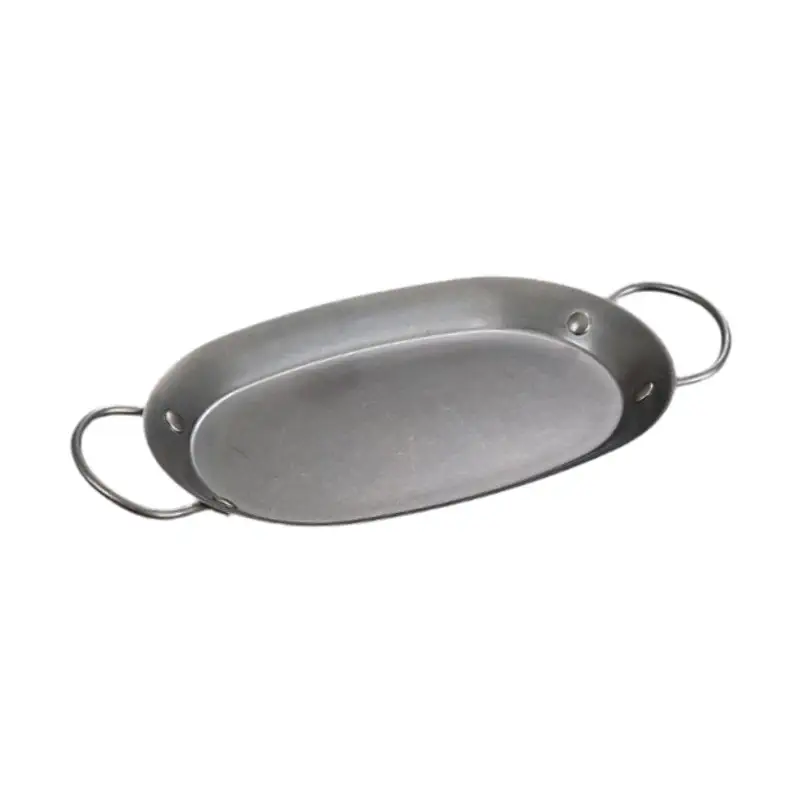
Leefasy's Stainless Steel Fish Baking Tray offers a no-frills alternative for cooks who bake fish infrequently and want to avoid the maintenance of cast iron or the heat-retention advantages of premium cookware. Stainless steel doesn't rust, doesn't require seasoning, and performs adequately for oven baking. The dual handles make it easy to move between counter and oven, and the polished surface wipes clean with minimal effort.
This is where the budget-friendly positioning becomes relevant. Owners note that at its price point, it represents solid value if you're looking for a vessel that will last decades. The material is food-grade stainless steel, the thickened edges are carefully polished, and the non-slip flat bottom keeps the pan stable. However, with only five reviews available, long-term durability feedback is limited. One reviewer expressed concerns about material authenticity, so inspect any pan carefully upon arrival.
Compared to the Nordic Ware Oven Crisp (which includes a beneficial elevated rack and nonstick coating), this is a simpler, flatter baking surface with no heat-circulation advantage. It's also heavier than aluminum, though lighter than cast iron. If you occasionally bake fish fillets and want the bare minimum of fuss, this works. But for regular use, you'll likely find the Nordic Ware's elevated rack and nonstick coating worth the modest step up in price.
Pros
Food-grade stainless steel never rusts or requires seasoning
Dual handles for easy transport and serving
Polished surface cleans easily without abrasive scrubbing
Entry-level investment for infrequent use
Cons
Flat design lacks elevated rack or heat-circulation benefits
Limited customer reviews and long-term durability data
Key features
Food-grade stainless steel construction with anti-rust performance
Thickened edges and smooth, rounded design for comfort
Double-handle design for easy carrying and serving
Suitable for family dining, camping, and outdoor picnics
How to Choose the Right Fish Baking Pan
Four trade-offs that actually matter when matching a pan for baking fish to your kitchen.
Material Matters: Cast Iron, Aluminum, Armetale, and Stainless Steel
Your material choice shapes both cooking performance and maintenance. Aluminum heats quickly and evenly, making it forgiving for delicate fillets, but reacts to acids over time. Cast iron retains heat exceptionally well, creating crispy skin and improving with age, yet demands immediate drying and periodic seasoning. Armetale and enameled cast iron skip the seasoning step while keeping many cast iron benefits. Stainless steel never rusts and requires zero maintenance but doesn't retain or distribute heat quite as effectively. Consider cast iron vs. aluminum fish pans based on whether you grill regularly (cast iron excels) or bake in the oven daily (aluminum is more forgiving for frequent use).
Size and Shape for Your Catch
Fish pans come in two broad designs: shallow rectangular trays for filets and whole fish up to about four pounds, and specialty shapes like the fish-shaped cavity pan that prevents meat from sliding around. A 17-by-12-inch tray accommodates a large salmon or six to eight filets side by side. Smaller pans (14-by-8 inches) suit smaller families or individual portions. Think about the largest fish you regularly cook, then add an inch or two for maneuvering room. If you primarily roast chicken or vegetables alongside fish, a larger, flatter tray gives you flexibility.
Heat Circulation and Cooking Method
Elevated-rack designs (like the Nordic Ware) let hot air flow underneath, promoting even browning and reducing flip-over needs. This matters most for oven baking, where air circulation is critical. For grill cooking, a solid, heavy pan like cast iron or Armetale retains heat better and creates a crust. For gentle, covered cooking (braising or poaching), enameled cast iron's tight-fitting lid and moisture return are decisive. Match your preferred cooking technique to the pan's design: if you broil fish quickly, a flat heavy pan works; if you bake slowly, air circulation helps.
Maintenance and Longevity
Aluminum pans require hand washing and avoid prolonged contact with acids. Cast iron needs immediate drying and occasional re-seasoning but improves over time. Enameled cast iron and Armetale skip seasoning. Stainless steel is the most hands-off. How to season and maintain your fish baking pan depends on the material: cast iron benefits from a light oil wipe after drying, while aluminum pans actually benefit from careful drying to prevent spotting. If maintenance feels like a chore, prioritize enameled cast iron, Armetale, or stainless steel. If you enjoy the ritual of caring for cast iron, bare cast iron or the Outset pan will reward you with better flavor and nonstick surface over years of use.
Frequently asked
Quick answers to the questions readers ask most.
Can I use a regular baking sheet for fish, or do I really need a specialty fish pan?
A standard rimmed baking sheet works for fish, but specialty fish pans offer advantages. An elevated rack (like the Nordic Ware) ensures even cooking without flipping. Cast iron creates a superior crust. Specialty shapes keep whole fish centered. For occasional baking, a standard sheet suffices. For regular cooking, a dedicated fish pan pays dividends in consistency and cleanup. The best pan for baking fish ultimately depends on how often you cook fish and whether you value those advantages.
Why does my aluminum pan look discolored or pitted after cooking fish with lemon?
Aluminum reacts chemically with acidic ingredients like lemon juice, vinegar, and tomato. The discoloration is harmless oxidation, not rust, and the food is safe to eat. To prevent it, line the pan with parchment paper or foil before adding acidic marinades. If discoloration bothers you, choose cast iron (enameled or bare), Armetale, or stainless steel, which resist acid reactivity.
Is cast iron difficult to maintain for someone new to cooking?
Cast iron requires a different mindset than nonstick cookware, but it's not difficult. The basics: scrape off food debris immediately, rinse with hot water and a soft brush (no soap needed), dry thoroughly with a cloth, and apply a light wipe of neutral oil. Let it air-dry for a few minutes. After a few uses, the seasoning builds up and sticking becomes less common. If you prefer zero maintenance, enameled cast iron or stainless steel eliminate the learning curve.
Can I put a fish pan in the dishwasher?
Aluminum and cast iron pans require hand washing only. Enameled cast iron can technically tolerate a dishwasher but often comes with hand-wash recommendations to preserve the enamel finish. Stainless steel is usually dishwasher-safe. Check the manufacturer's instructions, but hand washing extends the life of any specialty cookware. It takes just a few minutes and prevents damage.
What temperature should I bake fish, and does the pan material affect timing?
Most baked fish cooks at 375 to 425 degrees Fahrenheit for 12 to 18 minutes, depending on thickness. Pan material affects browning and heat distribution but not timing much. Cast iron and enameled cast iron brown faster due to better heat retention, so you might check doneness a minute or two early. Aluminum heats evenly and gives you a wider window before overcooking. The best approach: use a meat thermometer (target 145 degrees Fahrenheit internal temperature) and season the pan's heat output after a use or two.