Best Pan for Fish: Cast Iron, Stainless Steel & Nonstick
Find the best pan for fish cooking. Compare cast iron, stainless steel, and nonstick options. Expert guide to choosing the right fish pan for your kitchen.
Ideal for: Home cooks who grill or cook fish regularly and embrace cast iron seasoning rituals.
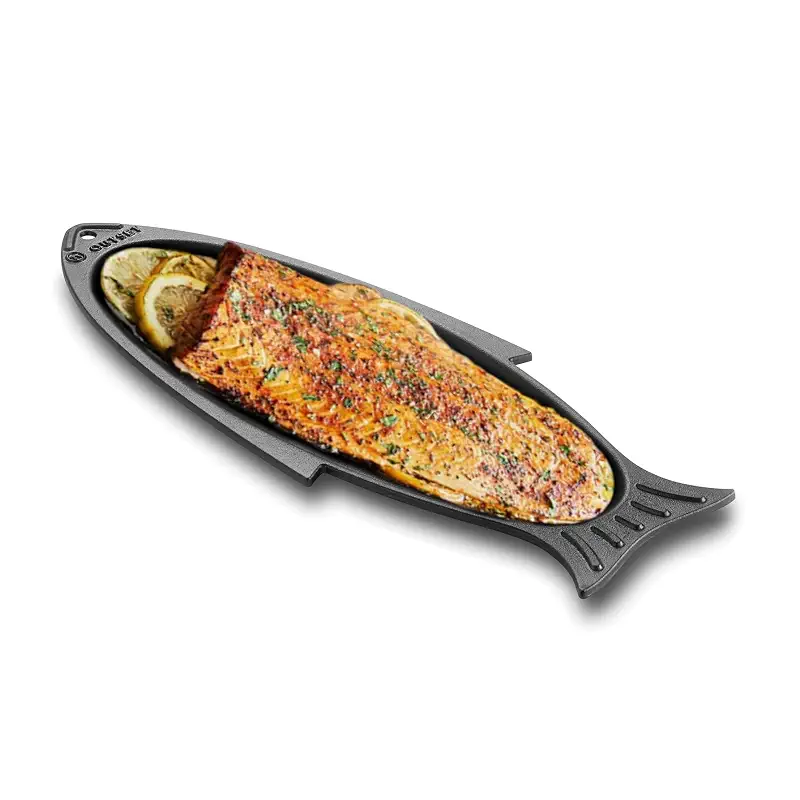
The Outset cast iron option stands out because it solves a real problem: whole fish and fillets slip through standard grill grates, but this shallow pan's flat surface keeps them secure while still building that char and smoke you want from a grill or stovetop. Cast iron's heat retention means the pan itself does much of the work once it's hot, so fish cooks evenly without fussing. Owners report the pan comes preseasoned and performs well right out of the box, though a touch of oil before the first use helps confidence.
What makes this choice work across different cooking scenarios is its versatility. Move it from stovetop to oven to grill to campfire, and it adapts. The rectangular shape fits salmon fillets and whole trout better than a round pan would. Seasoning builds naturally over time, so the nonstick properties actually improve with use instead of degrading. One caveat: cast iron demands respect. It needs drying immediately after washing and occasional re-seasoning if you're not using it often, and it's heavier to handle than aluminum or thin stainless steel.
Compared to the stainless steel and aluminum options in this lineup, cast iron requires more maintenance but rewards you with durability that can span generations. If you're cooking fish multiple times a week and don't mind the ritual of cast iron care, this pan becomes the centerpiece of your fish cooking. For occasional use or a hands-off approach, the lighter-weight alternatives make more practical sense.
Pros
Builds seasoning layer that improves nonstick properties over time
Excellent heat retention and even cooking surface for consistent browning
Works across stovetop, grill, oven, and campfire without restriction
Cons
Requires immediate hand-drying and periodic re-seasoning
Heavier than aluminum or stainless steel options
Key features
Preseasoned cast iron with flat cooking surface, no grill grates
18.9 x 7.28 inch rectangular design fits whole fish and multiple fillets
Oven, stovetop, and grill safe for complete cooking flexibility
Naturally nonstick layer develops with proper maintenance and use
#2 Pick
Best Budget-Friendly
APL
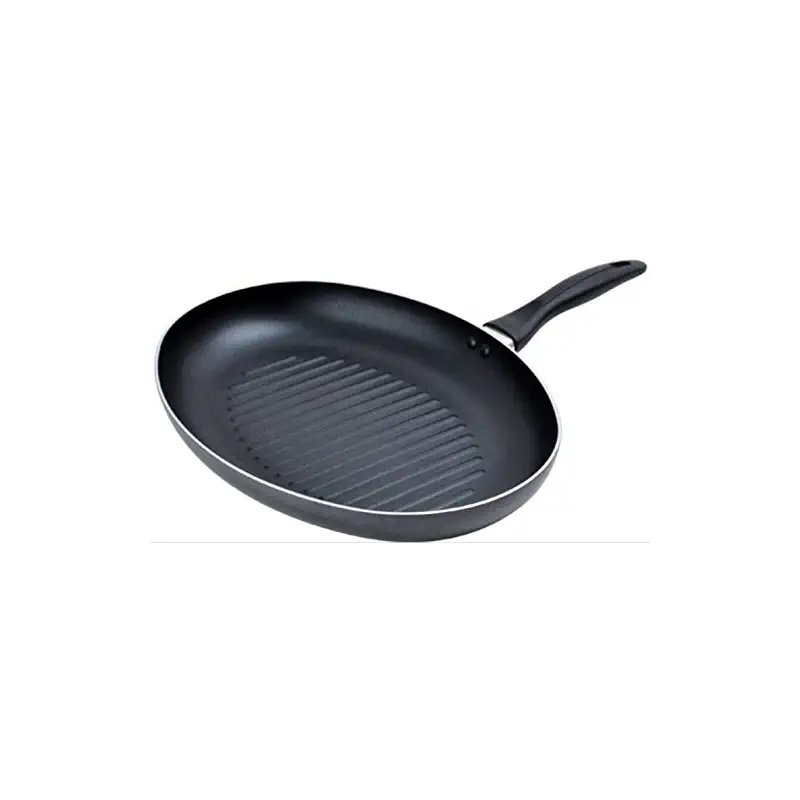
Fish Fry Pan Frypan Aluminum Oval shape 14"x 10" Non-stick coating Cool Touch Handle
4.5(5)
Lightweight aluminum fish pan with nonstick coating at an entry-level price point.
Ideal for: Beginners or occasional fish cooks who prioritize easy cleanup over long-term durability.
The APL aluminum option appeals to buyers who want a dedicated fish pan without the weight or maintenance demands of cast iron. Aluminum conducts heat quickly and distributes it evenly, so temperature swings are minimal. The nonstick coating means food slides easily, and cleanup is genuinely effortless; a quick wipe or rinse with soapy water is all you need. This is the opposite of cast iron in every practical way: lighter, faster to clean, no seasoning required.
The trade-off is longevity and durability. Nonstick coatings eventually wear, particularly if you use metal utensils or aggressive scrubbing. The pan won't last decades the way cast iron can. The oval shape is slightly narrower and shorter than some competitors, so a large whole fish might feel cramped compared to rectangular designs. Owners note it's good for cooking fish, but the review pool is small (five reviews total), so you're working with limited real-world feedback on how the nonstick surface holds up over months of use.
If you're comparing this to the Wagensteiger stainless steel option, the aluminum is lighter and requires zero seasoning, but the stainless steel will outlast the nonstick coating and develop a patina of flavor over time. For a cook who wants simplicity over longevity, the APL makes sense as a starting point.
Pros
Lightweight aluminum heats quickly and distributes temperature evenly
Nonstick coating eliminates sticking without seasoning or maintenance
Simple soap-and-water cleanup takes seconds
Cons
Nonstick coating will eventually wear with regular use and metal utensils
Oval shape is slightly narrower than rectangular designs, crowding larger fillets
Key features
Aluminum construction with integrated nonstick coating
14 x 10 inch oval shape for single fillets and smaller whole fish
Ideal for: Experienced cooks seeking a precision-engineered, uncoated stainless steel pan for decades of use.
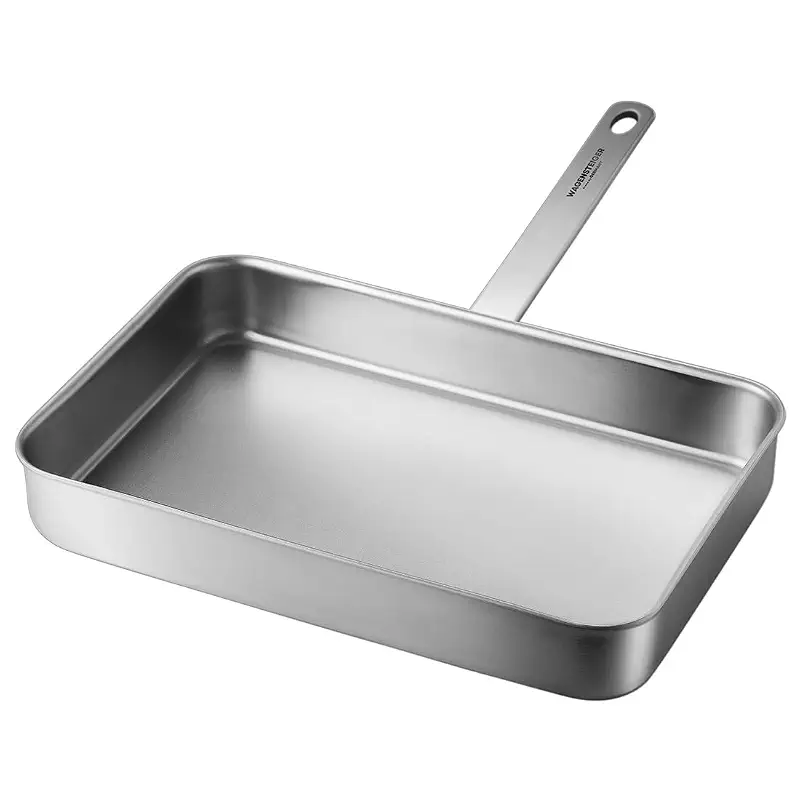
The Wagensteiger Core 5 takes a philosophy opposite to nonstick coatings: no polishing compounds, no chemical finishes, just natural stainless steel that resists peeling and degradation. This appeals to cooks who want a pan that improves slightly with age rather than one whose performance declines as coating wears away. The rectangular shape maximizes surface for fillets and whole fish, and the material conducts heat evenly so skin crisps without hot spots. It's oven-safe, so you can sear on the stovetop and finish under the broiler if needed.
The learning curve is real. Stainless steel doesn't have the forgiving nonstick surface of aluminum, so you need proper technique: adequate heat, good oil, and understanding when to move food versus when to let it develop a crust before turning. New stainless steel owners often struggle with sticking until they develop that instinct. The pan body comes alone, meaning you'll need to purchase a lid separately if you want one, which adds to the total investment. With only one review in the available feedback, you're relying more on the design philosophy and material science than on crowd validation.
Compared to the Outset cast iron, this stainless steel requires less maintenance but also doesn't build a self-improving seasoning layer. Compared to the APL aluminum nonstick, this pan trades ease of cleanup for durability and performance longevity. For a cook willing to learn stainless steel technique and planning to own the pan for twenty years, this is the pick.
Pros
Uncoated natural stainless steel resists peeling and coating degradation
Rectangular shape optimizes cooking surface for whole fish and fillets
Even heat distribution for consistent browning without hot spots
Cons
Stainless steel requires proper technique to prevent sticking initially
Lid sold separately; body-only purchase requires additional investment
Key features
SUS304 uncoated stainless steel resists wear and chemical degradation
Rectangular fish-forward design maximizes surface without crowding
Oven and stovetop safe for searing and finishing techniques
Pan body only; customize with compatible lid separately
#4 Pick
Best for Grill-Style Indoor Cooking
Qelunaro
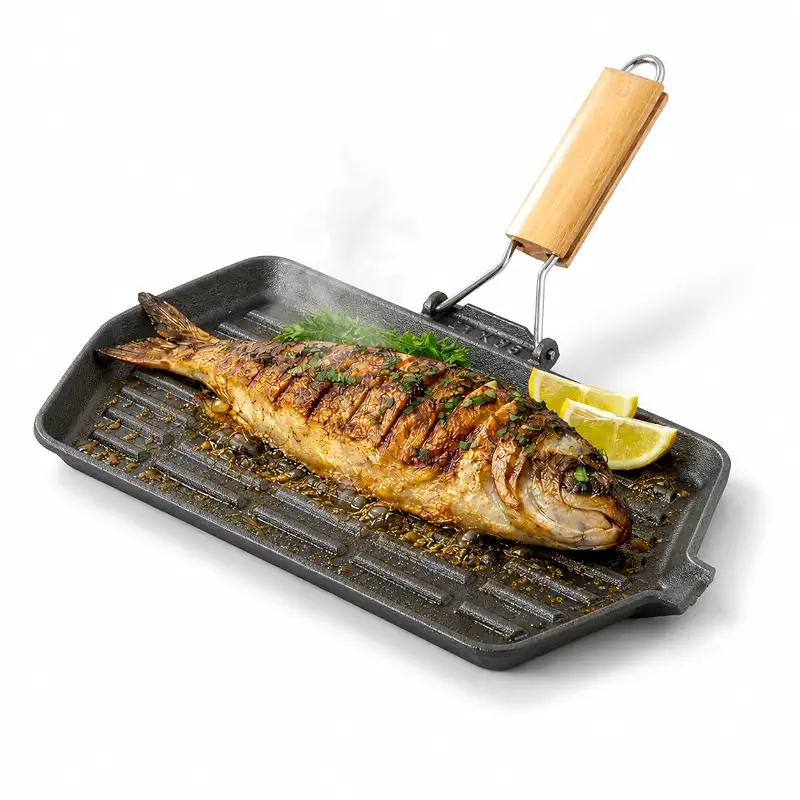
Sartén Para Freír Pescado, 14 x 8 in Cast Iron Fish Grill Pan | Rectangular ridged skillet with wood handle for fish fillets, seafood and vegetables on stovetops
5.0(1)
Cast iron rectangular grill pan with ridged surface that sears fish and vegetables with authentic char indoors.
Ideal for: Cooks who want indoor grill-mark aesthetics on fish and seafood without outdoor equipment.
The Qelunaro rectangular cast iron grill pan splits the difference between flat-surface searing and outdoor-grill aesthetics. The raised ridges create grill marks and lift food slightly above rendered juices, so you get that outdoor-cooked texture without leaving home. The 14 x 8 inch footprint fits a salmon fillet lengthwise without crowding, and the ridged surface works equally well for shrimp, sliced chicken, peppers, and steak strips. The wooden handle gives it a more approachable feel than bare cast iron, and owners report it seasons easily and cleans up better than some other cast iron pieces.
The ridged surface is both strength and limitation. It excels at building char and grill texture, but it's less forgiving for delicate whole fish or thin fillets that might catch on the ridges during flipping. If your main goal is restaurant-quality sear marks on salmon steaks or shrimp, the ridges deliver. If you're cooking whole trout or papery-thin white fish fillets, a flat surface is safer. Cast iron's heat retention and seasoning benefits apply here as much as the Outset flat-pan option, so the same maintenance rhythm applies: dry immediately, re-season periodically, and respect the material.
Where this differs from the Outset flat pan is focus: this one leans harder into the grill-aesthetic for stovetop cooking, while the Outset prioritizes versatility across grill, campfire, and oven. If you want the sear-mark look without a backyard grill, the Qelunaro delivers.
Pros
Ridged surface creates authentic grill marks and charred texture indoors
Wooden handle adds familiar skillet feel for everyday cooking
Compact 14 x 8 inch footprint fits most stovetops and storage easily
Cons
Ridges catch on delicate whole fish or thin fillets during flipping
Cast iron requires immediate drying and periodic seasoning maintenance
Key features
Cast iron construction with ridged cooking surface for grill-style searing
14 x 8 inch rectangular shape fits salmon fillets lengthwise
Wooden handle for comfortable handling and everyday kitchen feel
Works well for fish, seafood, and vegetables on stovetop or oven
#5 Pick
Best for Versatile Everyday Cooking
Leefasy
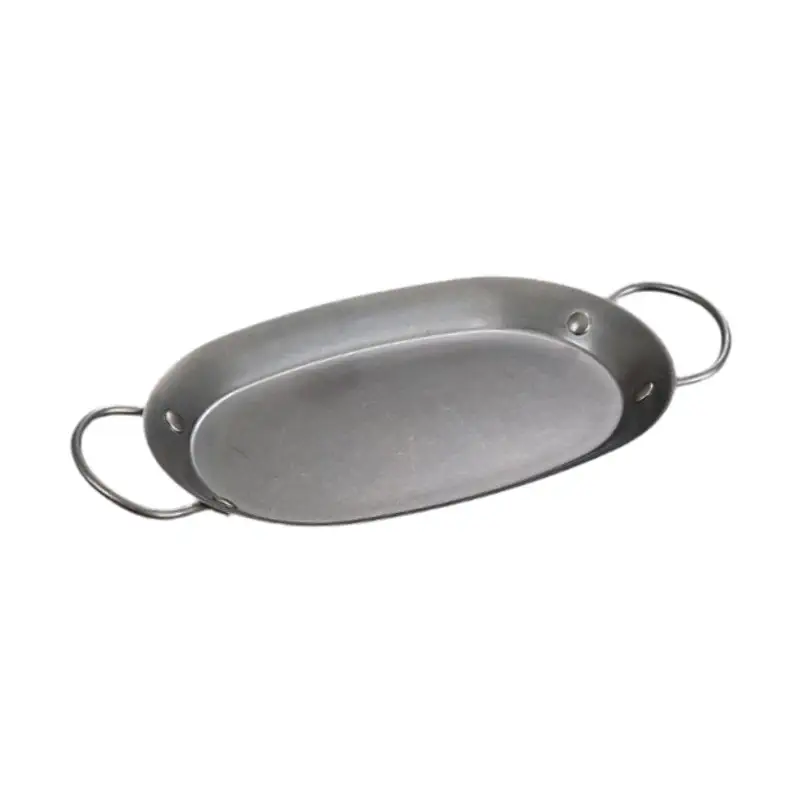
Stainless Steel Fish Baking Tray Fish Pan Roasting Pan Heavy Duty Accessory Serving Platter Grill Plate for Cooking Meat Oven, M
3.9(5)
Heavy-duty stainless steel baking tray with double handles for cooking, serving, and entertaining.
Ideal for: Home cooks who want a multipurpose stainless steel tray for cooking, serving, and entertaining.
The Leefasy stainless steel tray takes a different approach: it's designed as much for presentation and serving as for cooking. The double handles make it easy to move from oven to table without grabbing bare metal, and the polished stainless surface cleans quickly. The heavier gauge stainless steel resists warping better than thin pans, so if you're cooking larger batches or whole fish, structural stability matters. Owners praise the build quality and note it should last for decades without degradation.
But this is where the budget-friendliness and versatility come with catches. One reviewer flagged that the material may not be true stainless steel, raising questions about actual composition. The pan is shorter in length than the rectangular options designed specifically for fish, so a full-length fillet might hang over the edge. It's marketed as a "baking tray" and "serving platter" first, fish pan second, which means it's a generalist tool rather than a specialist. The best pan for cooking fish depends on whether you prioritize all-purpose versatility or fish-specific design; this tray excels at the former, while the other pans in this lineup focus on the latter. The double handles add weight and bulk compared to single-handle designs.
Compared to the Wagensteiger stainless steel option, the Leefasy emphasizes serving versatility and handles over the precision-engineered flat cooking surface. It's a practical addition to a kitchen that entertains frequently, but if fish cooking is your main focus, the fish-specific designs elsewhere in this lineup will serve you better.
Pros
Double handles make transport from oven to table safe and easy
Heavy-gauge stainless steel resists warping and lasts for decades
Polished surface cleans easily and works for both cooking and presentation
Cons
Shorter length than fish-specific rectangular designs; larger fillets overhang
Material composition has been questioned by at least one reviewer
Key features
Heavy-duty stainless steel with polished, corrosion-resistant surface
Double handles for easy transport between stovetop, oven, and table
Multipurpose design works for cooking, baking, and serving dishes
Smooth rounded edges and non-slip flat bottom for safe, stable use
How to Choose the Right Fish Pan
Four trade-offs that actually matter when matching a pan for fish to your kitchen.
Material Matters: Cast Iron vs Stainless Steel vs Aluminum
Your material choice determines maintenance rhythm, durability, and how the pan behaves under heat. Cast iron heats evenly, retains temperature well, and builds a natural nonstick surface over time, but requires immediate drying and periodic seasoning. Stainless steel offers precision and longevity without coatings that wear away, though it demands proper cooking technique to prevent sticking initially. Aluminum with nonstick coating heats fast and cleans easily but will eventually degrade and won't last as long. Understanding cast iron vs stainless steel helps you decide whether durability and flavor development matter more than convenience, or whether you're willing to trade longevity for ease of use.
Shape and Size: Flat vs Ridged, and Dimensions
A rectangular fish pan fits whole fillets and larger fish without crowding the way a round skillet would. Flat cooking surfaces excel at general searing and work across different protein types, while ridged grill surfaces create char marks and authentic grill-style texture indoors but can catch on delicate whole fish during flipping. Consider your typical catch or purchase: will you be cooking mainly fillets, whole fish, or a mix? A pan narrower than 8 inches will crowd a standard salmon fillet; one wider than 10 inches might overhang on smaller stovetops. Match dimensions to your stove and the fish you actually cook most often.
Cooking Method and Kitchen Setup
Where will you use this pan? If you grill outdoors and also cook indoors, cast iron moves between contexts seamlessly. If you're stovetop-only in a small kitchen, weight and storage space matter more, making aluminum or thin stainless steel practical choices. Oven-to-table entertaining requires a pan that looks good enough to serve from, which steers you toward polished stainless or heirloom cast iron. Consider your energy: an electric range behaves differently with cast iron than a gas flame does. How to clean and season plays a role too: some kitchens have the discipline for cast iron maintenance; others need the grab-and-rinse simplicity of nonstick or stainless.
Seasoning and Maintenance Expectations
Cast iron rewards consistent seasoning and penalizes neglect; a pan left wet in the sink will rust within hours. Stainless steel tolerates the dishwasher and doesn't require rituals, though proper technique improves results. Aluminum nonstick needs careful handling to protect the coating from metal utensils and high heat, which can degrade the finish. Be honest about your lifestyle. If you're ambitious about kitchen work and enjoy the ritual of maintaining tools, cast iron becomes better and more flavorful with every use. If you value speed and simplicity, understanding how to clean and season your fish pan after cooking will help you decide whether the payoff justifies the work, or whether nonstick aluminum or dishwasher-safe stainless is more realistic for your routine.
Frequently asked
Quick answers to the questions readers ask most.
Can I use a fish pan for other foods besides fish?
Yes. The rectangular shape works well for any long ingredient: bacon strips, sausage links, sliced vegetables like zucchini or asparagus, chicken breast halves, and even steak strips. Ridged cast iron grill pans excel at shrimp and mixed grill meals. Flat surfaces work across proteins and vegetables equally. The design is fish-optimized but not fish-only; you'll find yourself reaching for it for many stovetop tasks once you own it.
Is a cast iron fish pan better than a nonstick aluminum one?
Better depends on priorities. Cast iron lasts longer, builds nonstick properties over time, and works on any heat source including campfire and grill. Nonstick aluminum cleans instantly and requires zero maintenance. If you cook fish weekly and enjoy kitchen rituals, cast iron rewards the investment. If you cook occasionally and value simplicity, aluminum is more practical. Neither is objectively superior; they serve different cooking lives.
What size fish pan do I actually need?
A 14 x 8 inch rectangular pan fits most standard salmon fillets without crowding and works on home stovetops. If you regularly cook whole fish or entertain large groups, an 18 x 9 inch option provides more surface. If you cook single fillets or cook space is tight, a 12 x 7 inch compact size suffices. Measure your fillets and your stovetop before buying; oversized pans waste heat and can overhang electric coils.
Do I need to season a new stainless steel fish pan?
No. Stainless steel doesn't require seasoning the way cast iron does. A light coat of oil on first use helps prevent sticking while you develop technique. After that, washing and drying is all you need. Over time, a natural patina may develop from cooking oils, but it's optional and happens without effort. Stainless steel improves slightly with use but doesn't have the dramatic seasoning transformation cast iron does.
Why does my new cast iron pan seem to stick even though it came preseasoned?
Preseasoned cast iron has a light foundational layer but isn't fully broken in. Fish proteins especially benefit from adequate oil and medium-high heat. Make sure the pan is genuinely hot before adding food, and use enough fat that you hear a gentle sizzle. Don't move the fish too early; let it develop a crust and release naturally. Seasoning deepens over dozens of uses, so your first few cook sessions won't feel as nonstick as they will in a month.