Verdict, analysis, and key features for each pick.
#1 Pick
Best for Solo Cooks & Small Batches
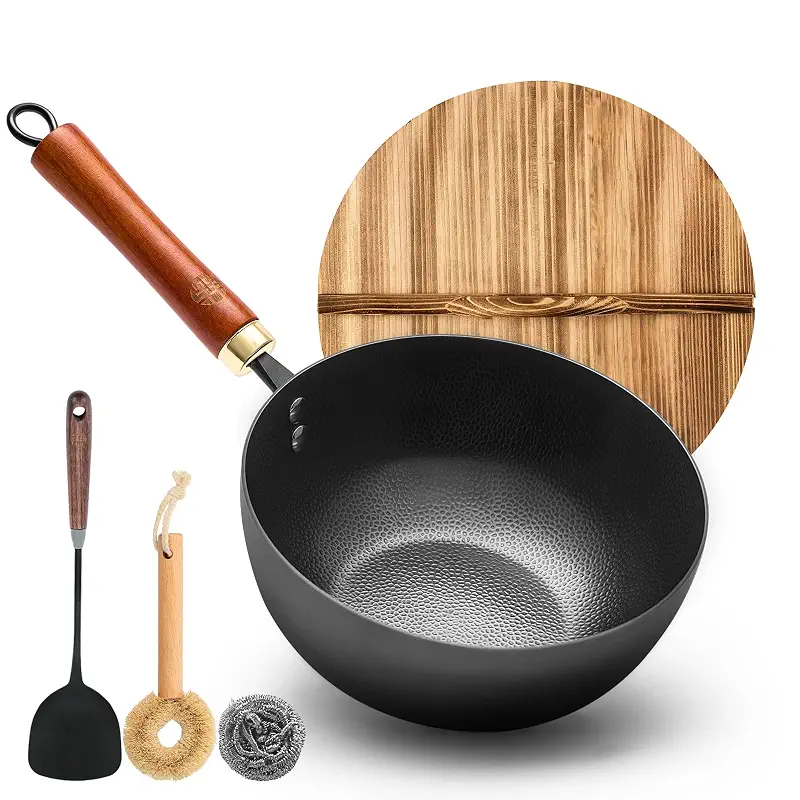
Wangyuanji
WANGYUANJI 8.7 Inch Carbon Steel Mini Wok with Wooden Lid, Flat Bottom Wok | Uncoated Stir Fry Pan with Detachable Handle for Ramen, 2.2 Qt Small Wok Pan for 1–2 People, Deep Frying, Gas & Induction
4.2(403)
Lightweight carbon steel mini wok that seasons quickly and heats fast, ideal for one or two servings.
Ideal for: Solo cooks, small households, apartment dwellers, campers seeking lightweight compact cookware.
This compact 8.7-inch carbon steel piece hits a real gap in the market: most woks assume you're cooking for a family, but apartment dwellers and empty-nesters need something that doesn't waste heat or oil. At 2.2 quarts, it's sized right for a single portion of stir-fry, ramen, or a small deep-fry batch. The 2mm carbon steel body is thick enough to hold heat steadily without being so heavy that you dread lifting it.
The uncoated surface requires seasoning before use, which some buyers find liberating: the natural patina that builds with use actually improves nonstick performance over weeks, unlike coated pans that degrade. Buyers report that with proper preheating and oil management, sticking becomes a non-issue after the first few uses. The detachable wooden handle is a practical touch for camping or tight storage, and the included spatula and lid add value.
If you're cooking delicate items like eggs early on, expect a learning curve: the manufacturer suggests sticking to heartier vegetables and oils with high smoke points at first. Compared to the Lodge cast iron option, this is lighter and heats faster but demands more active seasoning upkeep. For daily cooking in a small household, that trade-off is worth it.
Pros
Quick heat response and even warming across cooking surface
Detachable handle simplifies storage and transport
Seasoning improves naturally over time with regular use
Cons
Requires seasoning before first use and ongoing maintenance
Uncoated surface has a learning curve for sticky foods
Key features
2.2-quart capacity sized for 1–2 servings or small-batch frying
2mm carbon steel body with hammered texture for natural oil retention
Flat bottom fits gas, electric, ceramic, and induction stovetops
Wooden lid, detachable handle, spatula and cleaning cloth included
#2 Pick
Best Cast Iron for Lifetime Use
Lodge
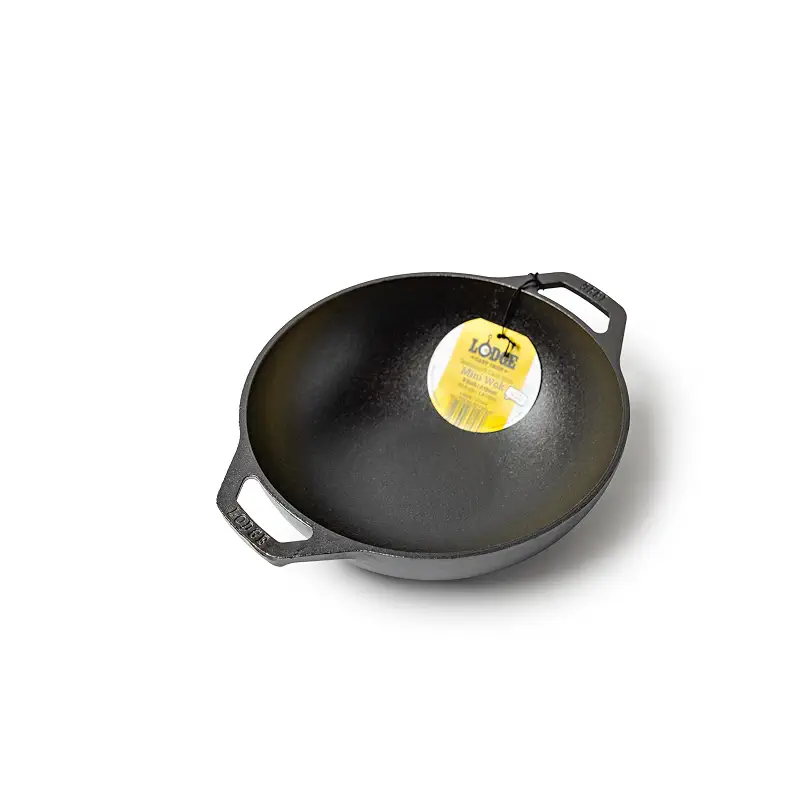
Lodge Pre-Seasoned Cast Iron Stir Fry Mini Wok, PFAS-Free, 9 Inches | PFAS-Free Cast Iron Wok for Stir Fry, Searing & Everyday Cooking, Oven & Stovetop Safe, Non-Toxic & Durable
4.6(6,079)
Pre-seasoned American-made cast iron mini wok that deepens with every use and will outlast any coated pan.
Ideal for: Home cooks seeking heirloom cookware, high-heat deep frying, stir-fry enthusiasts, those avoiding chemical coatings.
Lodge cast iron has been the benchmark since 1896, and this nine-inch mini wok brings that industrial-grade durability to smaller cooking tasks. Unlike the carbon steel option above, cast iron arrives pre-seasoned with vegetable oil: you can start cooking immediately without the fussy initial seasoning ritual. The thick iron body distributes heat slowly but holds it longer, creating an ideal environment for crisping and searing at high temperatures for deep frying.
Buyers repeatedly highlight that nothing sticks once the seasoning layer matures, often within weeks of regular use. The dual loop handles are positioned for a comfortable grip even when the pan is hot and full of oil, and the flat bottom sits stable on gas ranges and induction cooktops. Cast iron's weight is a feature for serious cooks: the mass prevents hot spots and keeps temperature steady even when cold ingredients hit the surface. One owner with decades of experience noted they've replaced multiple nonstick sets over the years but intend to pass this wok to their grandchildren.
Where the stainless steel Hawkins pans below offer nonstick convenience, this cast iron trades that for durability and the ability to handle the highest heat without degradation. It does require hand-washing and a thin oil coat after use, not a burden for most daily cooks, but a real difference from tossing a pan in the dishwasher.
Pros
Pre-seasoned from the foundry; ready to use straight away
Nonstick surface improves with every use over years
Made in USA with construction designed to last generations
Cons
Hand-washing required; reactive to acidic foods stored overnight
Heavier than aluminum or carbon steel woks
Key features
Pre-seasoned with 100% vegetable oil, ready to cook immediately
Dual loop handles provide secure grip for high-heat and transfer
Flat bottom design stable on gas, electric, and induction cooktops
Made in the USA with food-grade cast iron construction
#3 Pick
Best Stainless Steel for Everyday Frying
Hawkins
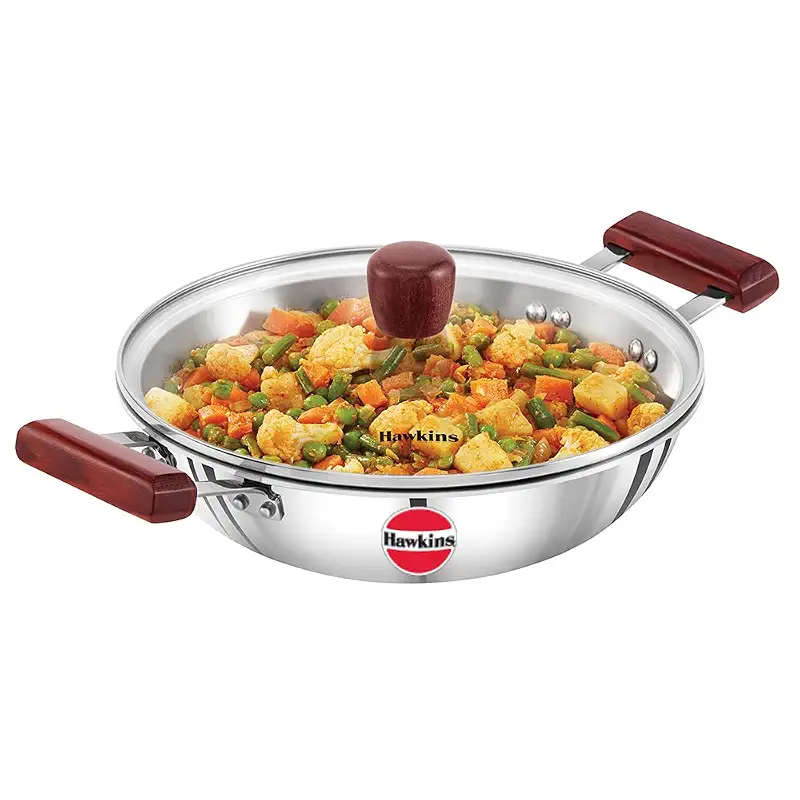
Hawkins 2.5 Litre Deep Fry Pan, Triply Stainless Steel Kadai with Glass Lid, Flat Bottom Induction Kadhai, Silver (SSD25G)
4.5(2,771)
Tri-ply stainless steel with glass lid that heats evenly and withstands dishwasher duty without rust or corrosion.
Ideal for: Families cooking daily meals, Indian cuisine enthusiasts, those wanting durable cookware without coatings or seasoning.
Hawkins' tri-ply construction (stainless steel cooking surface bonded to aluminum core) solves the sticking problem that plagues single-layer stainless steel pans without relying on PFAS coatings. The aluminum core spreads heat quickly and prevents the hot spots that make frying inconsistent. At 2.5 liters, it's larger than the mini woks above but still manageable for a family of four, with curved sides and extra height purpose-built for deep frying.
The no-drip flange, riveted handles, and glass lid are thoughtful details that make the pan both functional and durable. Owners report that the heavy-gauge construction never warps or bulges, critical for even heat distribution across a flat bottom that works on induction and electric stoves alike. Cleanup is straightforward: stainless steel doesn't require seasoning or oil coating, and the pan tolerates dishwashers, though hand-washing is gentler on the finish. One reviewer who came from expensive enameled French cookware noted that Hawkins delivers comparable performance at a fraction of the price and without the fussiness of enamel care.
Where Lodge cast iron delivers heirloom longevity and the carbon steel option maximizes speed, this stainless steel tri-ply splits the difference: it heats faster than cast iron, needs no seasoning upkeep, and offers the durability of heavy metal without coatings that can flake. Some users note that stainless steel requires slightly more oil initially and a brief learning curve with heat settings compared to nonstick surfaces.
Pros
Tri-ply construction eliminates hot spots and heat inconsistencies
Dishwasher-safe stainless steel exterior stays rust-proof and pristine
Heavier gauge riveted handles stay firmly attached for years
Cons
Requires slightly more oil than ceramic nonstick for even browning
Modest learning curve on heat settings compared to nonstick pans
Key features
Tri-ply stainless steel with aluminum core for even heat spread
2.5-liter capacity with curved sides ideal for deep frying
No-drip flange and glass lid for easy pouring and visibility
Ideal for: Health-conscious cooks, daily curry and frying enthusiasts, those avoiding PFAS coatings, families wanting easy cleanup.
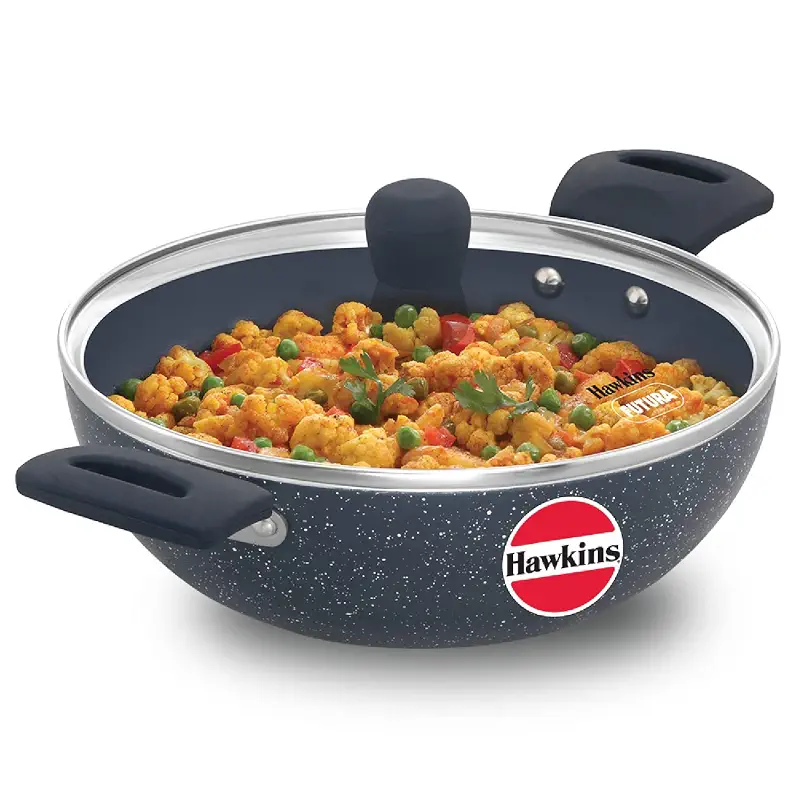
Hawkins' ceramic nonstick interior represents a modern shift away from PFAS-based coatings, using a German ceramic layer that resists degradation at the high temperatures needed for deep frying. At 2.5 liters, it's the same footprint as the tri-ply stainless steel option above, making it a direct alternative if you prioritize minimal oil and maximum release. The coating has no heavy metals, and many health-conscious cooks find the ceramic approach more reassuring than fluoropolymer nonstick.
Owners consistently report that food slides off with minimal sticking, and cleanup requires only hot water and a soft cloth: no scrubbing or soaking. For those cooking curries, samosas, or other Indian dishes that benefit from reduced oil, the release properties genuinely cut fat intake while maintaining crisping. The heavy bottom and induction compatibility match the tri-ply pan's performance on heat distribution, though ceramic coating doesn't improve with use the way cast iron seasoning does.
The trade-off: ceramic nonstick has a finite lifespan. While users in the first months report excellent performance, the coating can scratch or wear over years of heavy use, particularly if hand-washing isn't gentle. Compared to the cast iron option's potential for generations of cooking, this ceramic pan is more consumable. Still, for families who cook daily and want to minimize oil without constant seasoning rituals, the convenience and health profile justify the eventual replacement cycle.
Pros
German ceramic coating reduces oil needs significantly
No PFAS or heavy metals; hygienic and health-conscious choice
Easy cleanup with minimal effort; excellent food release
Cons
Ceramic coating has finite lifespan and can scratch with hard use
Hand-washing recommended to preserve nonstick surface long-term
Key features
German ceramic nonstick interior with high-heat stability
2.5-liter capacity with induction-compatible flat bottom
Heavy-gauge construction prevents warping; includes glass lid
No PFAS or heavy metals in coating; eco-conscious manufacturing
#5 Pick
Best for Larger Families
Hawkins
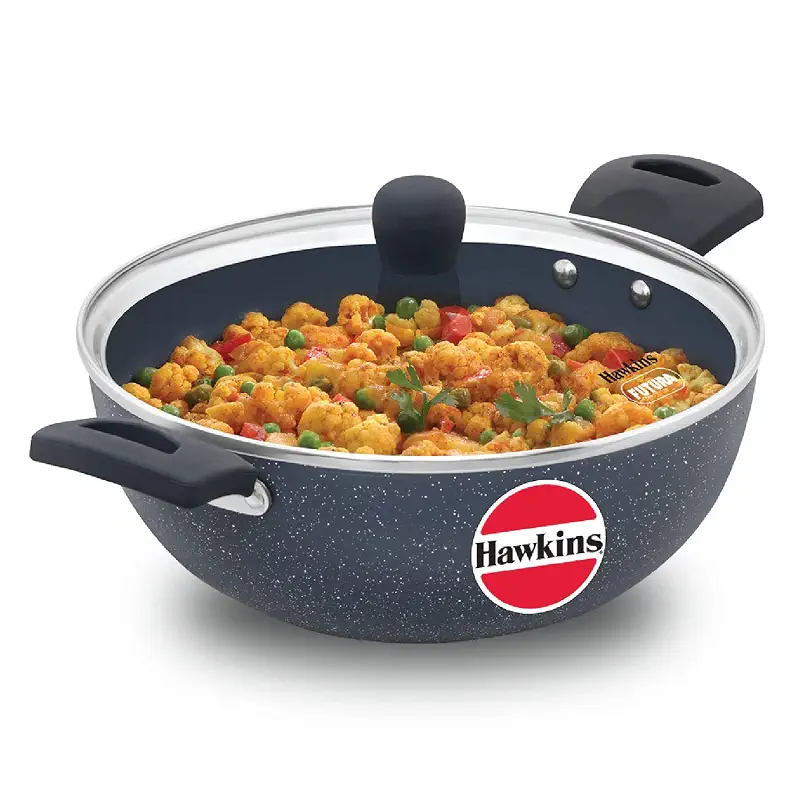
HAWKINS Ceramic Nonstick 3.5 Litre Deep Kadhai, Induction Deep Fry Pan with Glass Lid, Granite Kadai (ICK35G)
4.4(673)
Roomier 3.5-liter ceramic nonstick kadai that fries and cooks curries for crowds without multiple batches.
Ideal for: Large families, meal-prep cooks, those serving four or more regularly, kitchens with multiple daily frying sessions.
This larger Hawkins ceramic nonstick scales up the 2.5-liter model to accommodate families of five or more, or anyone who prefers fewer batches when deep frying or making large curries. The same German ceramic interior and PFAS-free construction apply, but the extra capacity genuinely matters: one owner noted it's the workhorse of their kitchen, used for both deep frying and everyday cooking without having to clean and refill the pan halfway through meal prep.
The nonstick release is equally responsive at this size, and owners report the same easy cleanup. At this volume, the weight becomes slightly more noticeable compared to smaller pans, though the sturdy handle brackets and rosewood grips are engineered to manage it safely. Compared to the 2.5-liter ceramic option, you get roughly 40% more cooking capacity for minimal additional weight: worthwhile if your household regularly cooks in batches of four or more. Much like how a best pan for cooking fish needs the right size for the protein, a kadai's capacity should match your typical meal volume.
The durability caution still applies: ceramic coating will eventually wear with heavy use, so this pan is best for cooks committed to hand-washing. For a family running a home kitchen daily, that's usually a reasonable expectation. If you're torn between this size and the smaller 2.5-liter version, the deciding factor is whether you cook for more than four people or prefer to minimize reheating and recooking.
Pros
3.5-liter capacity handles larger batches without refilling
German ceramic coating with high-heat stability at scale
Heavy construction distributes heat evenly across larger surface
Cons
Noticeably heavier than smaller options; requires careful handling
Ceramic coating durability depends on hand-washing and gentle care
Key features
3.5-liter capacity ideal for families and batch cooking
German ceramic nonstick interior with PFAS-free formula
Induction-compatible flat bottom; includes tempered glass lid
Sturdy riveted handle brackets with rosewood grips
How to Choose the Right Kadai for Your Kitchen
Four trade-offs that actually matter when matching a kadai for deep frying to your kitchen.
Size & Capacity Matter
Mini woks at 2.2 quarts work beautifully for solo cooks or apartment kitchens but feel cramped if you're cooking for a family. The 2.5-liter Hawkins options suit families of three to four, while the 3.5-liter version handles larger gatherings without needing to fry or cook in multiple batches. Think about your typical meal size, not your largest dinner party: you'll use the pan that fits your routine, not the one gathering dust for occasional use.
Material & Heat Response
Cast iron heats slowly but holds temperature longer, ideal if you're serious about consistent deep frying and can manage hand-washing. Carbon steel responds quickly to heat changes, suiting smaller portions and nimble cooking. Stainless steel tri-ply avoids seasoning altogether while delivering even heat. Ceramic nonstick prioritizes health and ease if you're willing to accept a finite lifespan for the convenience. Consider how you cook daily and whether you'd rather invest in seasoning and care (cast iron, carbon steel) or accept eventual replacement (ceramic nonstick). Our guide on the stainless steel vs cast iron explains the performance trade-offs in detail if you're deciding between those two materials.
Stovetop & Induction Compatibility
All five options work on gas and electric cooktops. If you use induction, confirm the flat bottom and magnetic properties: the Wangyuanji carbon steel, Lodge cast iron, and all Hawkins tri-ply and ceramic pans are induction-safe. Curved-bottom traditional woks won't work on induction, so modern flat-bottom designs matter more than you might expect if you're upgrading from an older stove to induction.
Oil & Seasoning Demands
Uncoated carbon steel and cast iron require seasoning before use and periodic maintenance oiling: a ritual some cooks find meditative, others tedious. Stainless steel tri-ply needs no seasoning but uses more oil initially for browning. Ceramic nonstick uses the least oil overall, cutting fat intake but offering no benefit after the coating wears. For deep frying specifically, cast iron and stainless steel tolerate the highest sustained temperatures without degradation, while ceramic nonstick performs well but eventually shows wear. If you choose cast iron, our cast iron kadai seasoning guide walks through maintenance step-by-step.
Cleanup & Long-Term Cost
Cast iron and carbon steel demand hand-washing; stainless steel tolerates dishwashers; ceramic nonstick prefers gentle hand-washing to preserve the coating. Upfront cost varies, but so does lifespan. Cast iron woks routinely outlast multiple sets of nonstick pans, making the per-year cost quite low. Ceramic nonstick sits in the middle: moderate cost, moderate lifespan. If you hate hand-washing, stainless steel or ceramic nonstick make sense. If you're building heirloom cookware, cast iron is the only option that improves with decades of use.
Frequently asked
Quick answers to the questions readers ask most.
Can I use a kadai for deep frying on an induction cooktop?
Yes, if the pan has a flat bottom and ferrous metal construction. All five options in this guide work on induction. Cast iron, carbon steel, and stainless steel are naturally magnetic; ceramic-coated pans require a steel or iron base underneath the coating to register on induction. Check the product description if you're upgrading from a gas stove: older curved-bottom woks won't work on induction, but modern flat-bottom kadais handle it fine.
How do I season a carbon steel or cast iron kadai before first use?
For carbon steel, wash the pan in hot water, dry thoroughly, then heat it on the stove until wisps of smoke appear. Coat lightly with high-smoke-point oil (vegetable, canola, or peanut), wipe off excess, and let cool. Repeat two or three times. Cast iron from Lodge arrives pre-seasoned, so you can start cooking right away, but an initial seasoning layer never hurts. For both, cook oily foods early on (stir-fries with oil work better than dry roasting) to build the patina faster.
Is stainless steel or cast iron better for deep frying?
Both excel at high heat, but they excel differently. Cast iron holds heat longer and creates very even browning once seasoned, making it ideal if you're frying large batches. Stainless steel tri-ply heats faster and never warps, so if you're controlling temperature precisely or frying a variety of foods in quick succession, stainless steel's responsiveness wins. Cast iron is forgiving for set-and-forget frying; stainless steel rewards active attention. Choose based on your frying style, not the material alone.
How long does ceramic nonstick coating last on a kadai?
Most owners report excellent performance in the first year to eighteen months. Durability depends heavily on care: hand-washing gently preserves it longer than dishwasher use or scrubbing. Heavy use with hard spatulas accelerates wear. Unlike cast iron, which improves over time, ceramic nonstick eventually shows spots where food starts sticking as the coating thins. Budget for replacement in two to three years with daily use, longer with lighter cooking. It's a trade-off between convenience now and longevity later.
What size kadai is best for a family of four?
A 2.5-liter kadai comfortably feeds a family of four for curries, stir-fries, and light deep frying. If you regularly fry samosas, pakoras, or other fried snacks for the whole family at once, consider stepping up to 3.5 liters to avoid multiple batches. For solo or couple cooking, the 2.2-quart mini woks are perfectly adequate and heat much faster. Think about your typical dinner plate, not your largest party: the pan you use three nights a week matters more than one that sits idle.