Kitchen & Dining · Gadgets
Best Nakiri Knife: Japanese Vegetable Blades Compared
Compare the best nakiri knives for home and professional kitchens. Find sharp, durable Japanese vegetable knives with expert reviews and buyer guidance.
Affiliate disclosure: As an Amazon Associate I earn from qualifying purchases.
At a glance
2
Best ValueMercer Culinary
3
Best for Handcrafted CharacterMitsumoto Sakari
4
Best German-Made OptionWüsthof
Detailed reviews
The Shun Classic nakiri is where tradition meets precision. Each blade is forged in Japan with a VG-MAX core and 68 layers of Damascus cladding, then finished to a 16-degree edge that arrives almost hair-popping sharp. We'd put this ahead of most competitors because the factory edge is genuinely exceptional: several owners who sharpen knives professionally said they wouldn't improve it. The D-shaped Pakkawood handle prevents rotation in the hand, a detail that matters during long prep sessions, and the knife feels balanced without being heavy.
There are real trade-offs to weigh. The blade demands hand washing and immediate drying; it will show water spots if you're careless. Some buyers noted a chemical smell from the Pakkawood that fades after a few days of airing out. That said, owners report the edge holds longer than expected, and Shun's free lifetime sharpening service is a genuine safety net if you ever do want professional tune-ups.
If you cook vegetables regularly and want a knife that feels beautiful to hold and use, the Shun Classic is worth the premium investment. You're paying for handcrafted precision and a warranty that backs the maker's confidence in the blade.
Pros
- Factory edge rivals professional sharpening standards
- 68-layer Damascus cladding creates striking visual texture
- D-shaped handle prevents twisting during repetitive cuts
- Lifetime warranty includes free sharpening service
Cons
- Requires immediate hand washing and drying after use
- New Pakkawood handle may emit chemical smell initially
Key features (5)
- VG-MAX steel core with 68-layer Damascus cladding, 16-degree edge
- D-shaped Pakkawood handle suited for left and right hands
- Handcrafted in Japan with traditional forging methods
- 6.5-inch blade optimized for vegetable prep and precise slicing
- Free lifetime sharpening and honing service from Shun
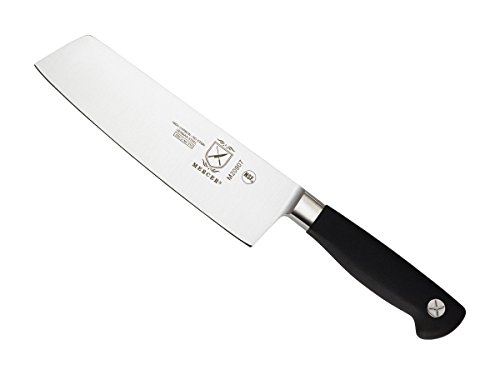
Mercer Culinary supplies most cooking academies in North America, and their Genesis nakiri shows why. The blade is precision-forged from high-carbon German steel with a taper-grind edge polished by hand, which translates to a knife that arrives sharp and stays that way through real work. The 7-inch length is slightly longer than the Shun, giving you more blade surface for moving minced vegetables from board to bowl: a practical advantage during busy prep.
Compared to the Shun, the Mercer trades some visual drama for durability and lower maintenance. The Santoprene handle is less "warm" than Pakkawood, but it's genuinely non-slip even with wet hands, and the knife is easier to care for. Owners consistently report that this blade holds an edge well and feels good in the hand without requiring fussy attention. A few buyers mentioned using it heavily in restaurant prep, which says something about its toughness.
The main caveat is that German steel, while durable, doesn't get quite as sharp as Japanese high-carbon blades, and it won't hold that edge as long. If you want a knife that's forgiving, reliable, and priced fairly, the Mercer Genesis is the smarter everyday choice over the premium options.
Pros
- Hand-polished taper-grind edge holds sharpness through heavy use
- Non-slip Santoprene handle stays secure even with wet hands
- 7-inch length maximizes blade surface for vegetable transfer
- Forgiving German steel requires less careful handling than high-carbon blades
Cons
- Steel doesn't achieve quite as fine an edge as Japanese high-carbon options
- Less visually striking than Damascus or forged-finish blades
Key features (5)
- Precision-forged high-carbon German steel with taper-grind edge
- Non-slip Santoprene handle with substantial bolster for balance
- 7-inch rectangular blade for push-cutting and vegetable mincing
- Hand-polished edge on all Genesis knives for consistent sharpness
- Made in Taiwan with European components and technology
Mitsumoto Sakari's nakiri is a handcrafted piece that takes seriously the idea that a tool can be beautiful and functional at once. The 3-layer San-Mai construction uses a hard core surrounded by softer outer cladding, which means the blade is easier to maintain than a pure high-carbon knife but still gets sharp enough to shred magazine paper. The tsuchime hammered texture and kurouchi black finish give the blade visible character: every knife looks slightly different, which appeals to buyers who see their knives as part of the kitchen's visual identity.
Where the Mitsumoto differs from the Shun or Mercer is in the care equation. The steel is stain-resistant but not stainless, so it needs immediate drying and occasional coating with the included mineral oil. That's not a burden if you hand-wash anyway, but it's a detail. The edge is ground to 15 degrees and benefits from regular honing with a ceramic stone or leather strop. Owners report this knife performs excellently for vegetable prep and maintains its edge well, especially if you're willing to hone regularly.
If you compare this to the Mercer, you're trading some edge-holding for more personality and a lower price than the Shun while keeping handcrafted appeal. The rosewood handle and sandalwood box make this feel like a gift-worthy knife, which several buyers mentioned appreciating.
Pros
- Hand-forged San-Mai steel with hard core and softer cladding layers
- Tsuchime texture and kurouchi finish reduce food sticking during cuts
- Comes with mineral oil and beautiful sandalwood storage box
- Octagonal rosewood handle guides grip orientation during push cuts
Cons
- Requires immediate drying and occasional oil coating to prevent discoloration
- steel won't hold an edge as long as premium high-carbon blades
Key features (5)
- San-Mai 3-layer high-carbon stainless steel construction
- 15-degree heat-treated edge with deep cryogenic treatment for hardness
- Tsuchime hammered and kurouchi black-forged finish reduces food friction
- Octagonal rosewood handle with ergonomic guidance for repetitive cuts
- Includes mineral oil and handcrafted sandalwood storage box
Wüsthof has been forging knives in Solingen since 1814, and the Classic nakiri carries that heritage forward. The blade is forged from a single block of high-carbon stainless steel and tempered to 58-degree HRC, then finished with Precision Edge Technology that makes it 20% sharper than previous iterations while doubling edge retention. The flat blade geometry and the kullenschliff (scalloped) indentations along the spine reduce food sticking, which matters during high-volume vegetable prep.
Compared to the Shun, the Wüsthof is equally sharp but trades some of the Japanese aesthetic detail for robust German engineering. Where the Shun demands careful hand drying, the Wüsthof is more forgiving because the stainless content is higher. The knife is comfortable for left and right hands, and the handle feels solid without excessive weight. Owners describe using it as their favorite for vegetables after trying many other knives, which speaks to its balance of performance and practicality.
The main trade-off versus the Mercer is price (the Wüsthof costs more) but the edge-retention advantage and the reputation for longevity justify it if you want a German-made knife you'll keep for decades. For cooks considering options beyond the standard vegetable prep knife, the best kiritsuke knife focuses on finesse cuts and angled geometry, while the Wüsthof nakiri excels at straight-edge vegetable push work. This is the choice if you value the Solingen guarantee and want traditional European manufacturing without the learning curve of high-maintenance carbon steel.
Pros
- Precision Edge Technology delivers 20% sharper edge with 2x retention
- High-carbon stainless steel forgiving enough for regular use
- Kullenschliff indentations reduce food sticking on blade
- Seven generations of Solingen manufacturing reputation
Cons
- Higher price than comparable forged options like the Mercer
- German steel doesn't achieve quite as fine an edge as high-carbon Japanese blades
Key features (5)
- Single-piece high-carbon stainless steel tempered to 58-degree HRC
- Precision Edge Technology for 20% sharper, twice-lasting edge
- Kullenschliff scalloped indentations prevent food sticking
- 7-inch blade optimized for slicing, chopping, and dicing vegetables
- Forged in Solingen, Germany with century-old techniques and guarantees
Paudin's 7-inch nakiri delivers sharp performance at an entry-level price that won't deter you from trying the form factor for the first time. The blade uses 5Cr15MoV stainless steel hardened to 56+ HRC, the same steel found in many established cutlery brands, and it arrives genuinely sharp. The wave pattern on the blade mimics Damascus aesthetics while also serving a practical function (reducing food friction) which matters if you're planning to chop vegetables for an hour straight.
If you're comparing this to the Wüsthof or Shun, the differences are real: the Paudin won't hold an edge quite as long, and the steel isn't as refined. But what you get is a nakiri that works. Thousands of owners report using it daily, loving the ergonomic Pakkawood handle, and being shocked by how well it cuts for the price. Several buyers mentioned moving to this knife from expensive chef's knives and finding it more fun to use for vegetables. The lightweight design is easier on the hand during long prep sessions than heavier options.
The trade-off is maintenance and care. High-carbon stainless steel benefits from immediate hand washing and regular honing with a steel, just like any quality blade. Don't expect premium edge retention, but do expect reliable performance that justifies the budget-friendly tag. This is where to start if you're curious about nakiri knives but not ready to invest in handcrafted or premium options.
Pros
- Arrives razor-sharp with excellent initial cutting performance
- Wave pattern reduces food friction and improves release from blade
- Lightweight and ergonomic Pakkawood handle reduces hand fatigue
- High volume of positive reviews from everyday home cooks
Cons
- Steel won't retain edge as long as premium high-carbon Japanese options
- Not designed for hard or frozen foods, which can damage the fine edge
Key features (5)
- 5Cr15MoV high-carbon stainless steel hardened to 56+ HRC
- Wave pattern mimics Damascus while reducing food sticking during cuts
- 7-inch rectangular blade for push-cutting vegetables and soft foods
- Ergonomic Pakkawood handle integrated with thin blade at pinch point
- Lightweight design reduces hand fatigue during extended prep work
How to Choose a Nakiri Knife
Understand Blade Steel and Edge Retention
Nakiri blades fall into two camps: high-carbon Japanese steel (like Shun's VG-MAX or Mitsumoto's ) and forgiving stainless blends (Mercer's German steel, Wüsthof's high-carbon stainless). Japanese high-carbon gets sharper and holds that edge longer, but it needs immediate drying and won't forgive moisture or salt. Stainless options are more forgiving and require less fussing, though they plateau at a slightly less fine edge. If you're obsessive about maintenance, go high-carbon. If you want the knife to work hard without drama, choose stainless or explore how the nakiri versus chef knife comparison breaks down specialty blades across different cutting demands.
Blade Length and Weight Matter in Your Hand
Most nakiri knives range from 6.5 to 7 inches. The Shun Classic is 6.5 inches and lighter, favoring precision work on smaller items; the Mercer and Paudin are 7 inches, which gives more blade surface for moving minced vegetables from board to container. Weight varies too: the Mitsumoto and Mercer feel heavier, which some cooks love for effortless cutting while others find tiring. The Paudin is lightweight. If your hands are small or you tire easily, opt for a lighter blade. If you do high-volume prep, weight can be your friend because gravity does some of the work for you.
Handle Design and Grip Security
The handle is where personality diverges. Shun's D-shaped Pakkawood subtly prevents rotation and feels warm to the hand. Mercer's Santoprene is explicitly non-slip even when wet, which matters in a busy kitchen. Wüsthof's handle is classic European solid, and Paudin's is ergonomic for pinch-grip work. Consider your hand size and whether you prefer natural-feeling wood or engineered materials that need no oil or maintenance. If you're left-handed, most manufacturers now design handles that work for both, though the Shun's D-shape is so subtle you may not notice it either way.
Maintenance Reality and Edge Maintenance
Before you buy, accept what the blade demands. A high-carbon Japanese nakiri requires hand washing and immediate drying; skip the dishwasher and don't leave it wet. Wüsthof and Mercer are more forgiving but still deserve hand washing. All nakiri blades benefit from regular honing with a ceramic steel or leather strop to realign the edge between sharpens. If you skip maintenance, even the best blade dulls faster. The nakiri knife sharpening guide covers techniques for keeping your blade in peak condition, and it's worth reading before you buy so you understand the commitment.
Budget and Long-Term Value
Entry-level nakiris like the Paudin work well for a few years if you hone regularly; expect to sharpen them more often. Mid-range options like Mercer and Mitsumoto hold an edge longer and feel more refined. Premium picks like Shun and Wüsthof cost more upfront but often become kitchen favorites that outlast cheaper blades and inspire you to use them daily. Think of it as the cost per use over five or ten years rather than the sticker price alone. If you cook vegetables multiple times a week, a premium nakiri becomes less expensive per use than replacing a budget blade every couple of years.
Our picks at a glance
2
Best ValueMercer Culinary
3
Best for Handcrafted CharacterMitsumoto Sakari
4
Best German-Made OptionWüsthof
Frequently asked
What's the difference between a nakiri and a santoku?
A nakiri is a Japanese vegetable knife with a wide, flat blade and blunt tip, designed for push-cutting vegetables. A santoku is a multi-purpose Japanese chef's knife with a slightly curved blade and pointed tip, suited for proteins, vegetables, and herbs. The nakiri excels at vegetables; the santoku is more versatile. If you cook mainly vegetables, the nakiri is specialized and superior. If you need one blade for everything, the santoku is the safer bet.
Can I use a nakiri on meat and fish?
Gently, yes. A nakiri can slice soft meats and fish if you use a slicing motion rather than chopping. However, the blade is optimized for vegetables and will dull faster on proteins because the edge is thinner and sharper than blades designed for harder work. Avoid bones, cartilage, and anything frozen, which can chip the edge. Reserve the nakiri for vegetables, and use a chef's knife or dedicated meat knife for protein prep.
Do I need a special sharpening stone for a nakiri?
No. A whetstone in the 1000 to 6000 grit range works for any nakiri blade, just as it does for chef's knives. The technique is slightly different because the blade is flat and straight rather than curved, so you push the edge across the stone in a straight line rather than rocking. Many owners hone regularly with a ceramic steel between sharpenings, which realigns the edge and extends the time between stone work. Consult a sharpening guide before your first attempt if you're unsure.
Are Damascus blades worth the extra cost?
Damascus cladding (like on the Shun Classic) is primarily aesthetic and also serves a practical function by reducing friction and sticking. The real edge quality comes from the core steel and heat treatment, not the pattern. You pay extra for the visual appeal and the reduced sticking, which is genuine but not transformative. If aesthetics matter and you display your knife on a magnetic strip, yes. If you only care about cutting power, a simpler blade like the Mercer performs comparably for less money.
Which nakiri is best for a beginner?
Start with either the Paudin (if budget matters) or the Mercer (if you want reliability without much fussing). Both arrive sharp, are forgiving if you hand-wash them, and won't punish you for occasional neglect the way a high-carbon Japanese blade will. Once you fall in love with the nakiri form and understand your maintenance habits, upgrade to a Shun or Mitsumoto if you want handcrafted character, or a Wüsthof if you want German engineering. The Paudin or Mercer teach you the motion and let you decide if the nakiri is really your knife.