Best Damascus Chef Knife | 8-Inch Japanese Kitchen Blades Reviewed
Compare top Damascus chef knives for home and professional kitchens. Find sharp, durable 8-inch blades with authentic patterns and excellent edge retention.
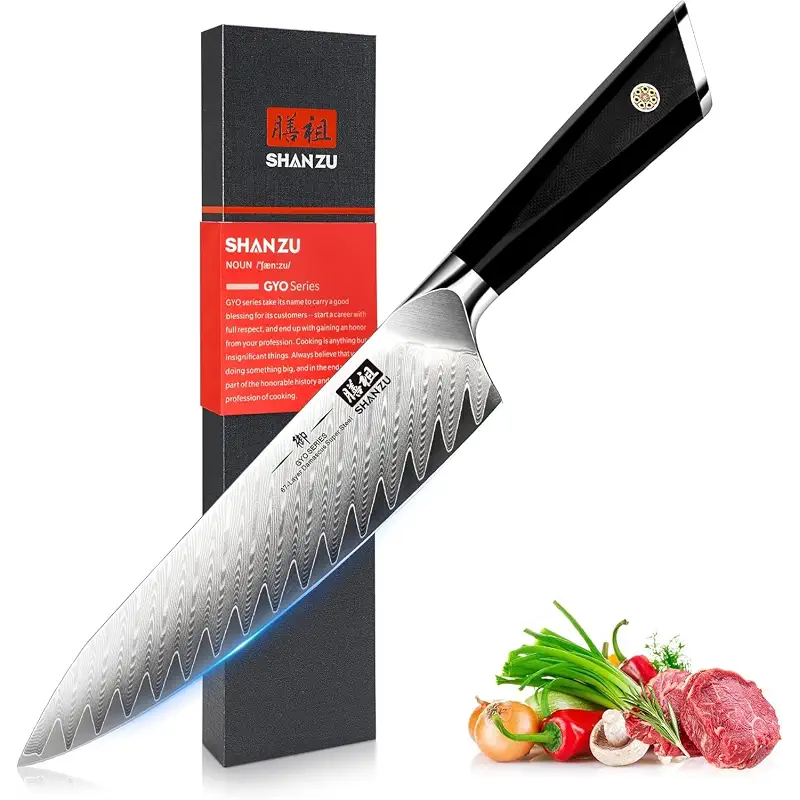
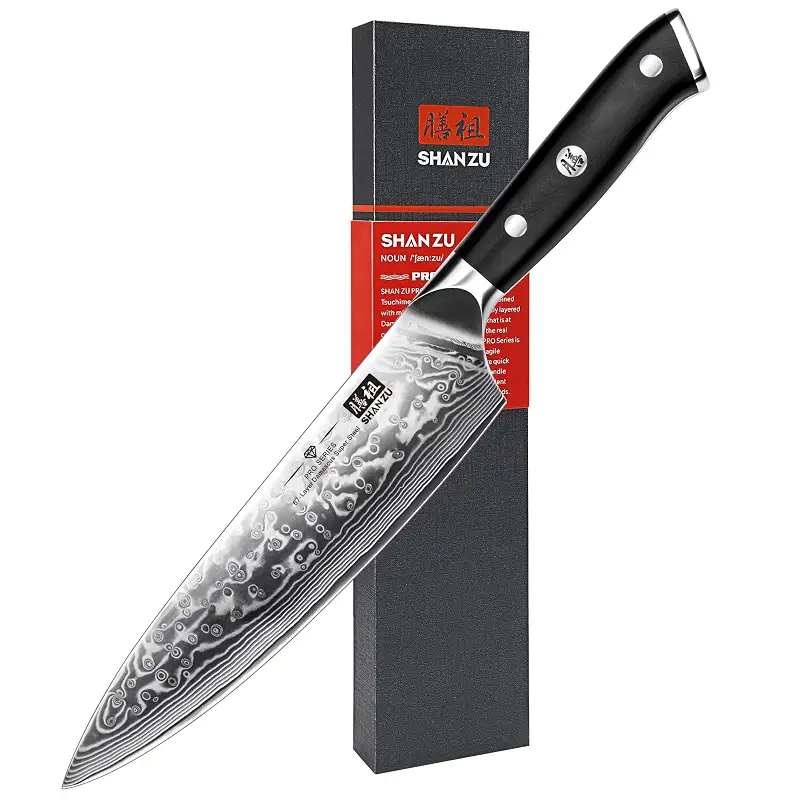
SHAN ZU Chef Knife 8 Inch Japanese Steel Damascus Kitchen Knife | Professional Kitchen Knives Ultra Sharp High Carbon Super Steel Kitchen Utility Knife
4.8(5,606)
Sharp, well-balanced 67-layer Damascus knife that outperforms its price point without compromising genuine construction.
Ideal for: Home cooks seeking genuine Damascus construction without premium pricing.
The Shan Zu 8-inch brings real Damascus layering (not laser-etched fakery) at a price that doesn't demand you save for months. Owners consistently praise how sharp it arrives and how that edge holds through regular kitchen use. The G10 handle sits somewhere between comfort and durability; it's not fancy but it won't absorb water or warp like wood might. The blade handles vegetables and proteins with ease, and the 15-degree edge angle is steep enough to maintain sharpness without becoming fragile.
Where this knife shines is in its honest value proposition. You're getting a legitimately folded-and-forged 67-layer blade, not a marketing trick. Compared to premium brands like Shun, you trade some hand-finishing refinement and lifetime sharpening support for a knife that cuts just as well at a fraction of the cost. The tradeoff is worth considering: this is a knife for cooks who want performance, not prestige.
One real caveat: several owners note the edge dulls slightly faster than pricier Japanese steel alternatives, though nothing out of line for the hardness rating. Hand honing between sharpenings keeps it responsive. The handle, while functional, feels utilitarian rather than premium: thick, textured G10 that grips well but doesn't have the warmth of wood or the refinement of Pakkawood.
Pros
Authentic 67-layer Damascus construction with visible folded patterns
Sharp out of box with solid edge retention for the price
Well-balanced G10 handle that won't deteriorate with moisture
Cons
Edge dulls slightly faster than premium Japanese alternatives
Utilitarian handle lacks the warmth or refinement of higher-end options
Key features
10Cr15MoV steel core with 62 HRC hardness for sustained sharpness
Genuine 67-layer Damascus construction using repeated folding and heat treatment
15-degree edge angle engineered for both durability and keen cutting
Frosted G10 fiberglass handle with ergonomic balance point
12-month manufacturer warranty with responsive customer support
#2 Pick
Premium Choice
Shun
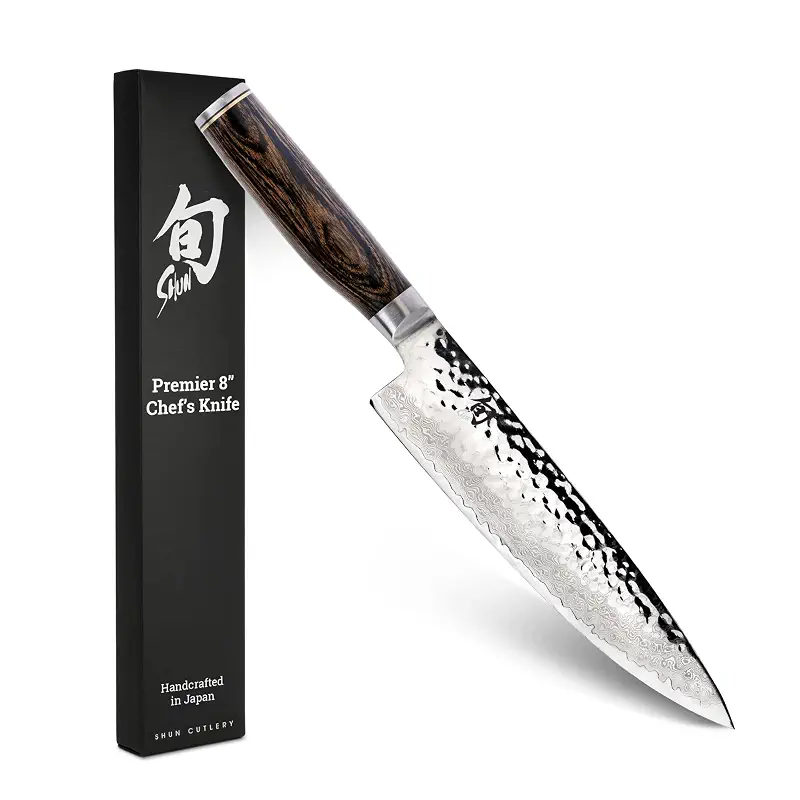
Shun Premier 8" Chef's Knife, Handcrafted Japanese Kitchen Knife for Professional and Home Chefs, VG-MAX Core with Damascus Stainless Steel Cladding, Pakkawood Handle | Handcrafted Japanese Kitchen Knife, VG-MAX Core, Damascus Stainless Steel Cladding, Pakkawood Handle
4.8(2,135)
Handcrafted Japanese masterpiece with VG-MAX steel and hammered tsuchime finish that feels like an heirloom from the first use.
Ideal for: Serious home cooks and professionals who prioritize craftsmanship and edge performance.
The Shun Premier represents the gold standard for Damascus chef knives at a genuinely premium level. Handcrafted in Japan with VG-MAX steel and 68 layers of authentic Damascus cladding, this knife reads like a tool designed for people who know exactly what they want from Japanese cutlery. The 16-degree edge is slightly gentler than the Shan Zu, which means it's less brittle and more forgiving of occasional misuse: a real advantage if you're cooking frequently and don't obsess over every cut.
What separates Shun from the field is the hammered tsuchime finish, which doesn't just look beautiful but genuinely reduces food drag and sticking. Multiple professional and experienced home cooks report that this finish alone changes the cutting experience in ways they didn't expect. The Pakkawood handle is warm to hold, sculpted for a proper pinch grip, and feels like it'll outlast your tenure in the kitchen. Shun backs the knife with free sharpening, not a small thing, since maintaining VG-MAX properly requires technique.
The trade-off is price and fragility. This is a precision tool that demands respect. Owners warn against careless handling; the thin blade can chip if abused, and the blade height isn't generous enough for aggressive heel work on dense vegetables. Compared to the Dalstrong's more forgiving design, the Shun demands slightly better knife technique and care habits.
Pros
Handcrafted in Japan with meticulous attention to balance and finish
Hammered tsuchime surface measurably reduces food drag during cutting
Included lifetime sharpening service keeps the blade optimized long-term
Cons
Premium pricing reflects quality but limits casual or gifting considerations
Thin blade requires careful handling and proper technique to avoid chipping
Key features
VG-MAX steel core with 62 HRC hardness and 68-layer Damascus cladding
Hand-hammered tsuchime finish engineered to minimize blade drag
16-degree edge angle for balance between sharpness and edge durability
Sculptured Pakkawood handle contoured for optimal pinch grip and control
Lifetime free sharpening and honing service from Shun's facility
#3 Pick
Best for Edge Retention
Shan Zu
SHAN ZU Damascus Chef Knife 8 inch, 67-Layer High Carbon Steel | Ultra Sharp Japanese Chef Knife,Professional Kitchen Utility Knives with G10 Ergonomic Handle Cooking Knife with Gift Box
4.7(2,247)
Robust 67-layer Damascus with a stronger hardness rating and kiritsuke profile that holds its edge through months of heavy use.
Ideal for: Experienced cooks who want maximum edge retention and don't mind precise blade geometry.
Shan Zu's second entry, the 8-inch Damascus, takes a different approach to the same brand philosophy. The hardness rating climbs to 62 HRC (matching the original but with tighter tolerances), and owners report extraordinary edge retention: some say six months of regular use without noticeable decline. The 15-degree angle is paired with a slightly refined blade geometry that feels closer to a boning knife or kiritsuke gyuto than a traditional chef's knife, which appeals to cooks who want more tip work capability.
The G10 handle here mirrors the first model, so comfort is familiar. What changes is the blade itself: slightly thinner stock, a more pronounced tip curve, and what users describe as a fingerprint-like Damascus pattern that looks almost too perfectly uniform to be real: until you read the construction details and understand the precision involved. The finish is polished to a mirror on the face, which adds to the premium appearance without inflating the price significantly.
One honest drawback: that narrower profile and forward-leaning geometry mean less knuckle clearance than a traditional chef's knife. If you use a claw grip with your guiding hand, you'll need to adjust your technique slightly. The edge is also notably harder, which means it takes longer to dull but also demands proper sharpening technique when the time comes: a whetstone is non-negotiable here, not optional. Compared to the Atumuryou's more forgiving resin handle, this knife is purely performance-focused.
Pros
Exceptional edge retention through months of regular kitchen use
Mirror-polished Damascus face with refined blade geometry and visible layering
Lightweight balance point positions knife for precise, controlled cutting strokes
Cons
Narrower blade profile requires technique adjustment for traditional claw grip
Harder steel demands proper whetstone sharpening rather than honing alone
Key features
10Cr15CoMoV core steel at 62 HRC hardness with optimized edge geometry
67-layer Damascus cladding with 33 layers on each side of the core
Slight kiritsuke tip for improved precision work and tip-forward cutting
Mirror-polished blade face with hammered spine for drag reduction
24-month warranty with direct manufacturer replacement guarantee
#4 Pick
Best for Professionals
Dalstrong
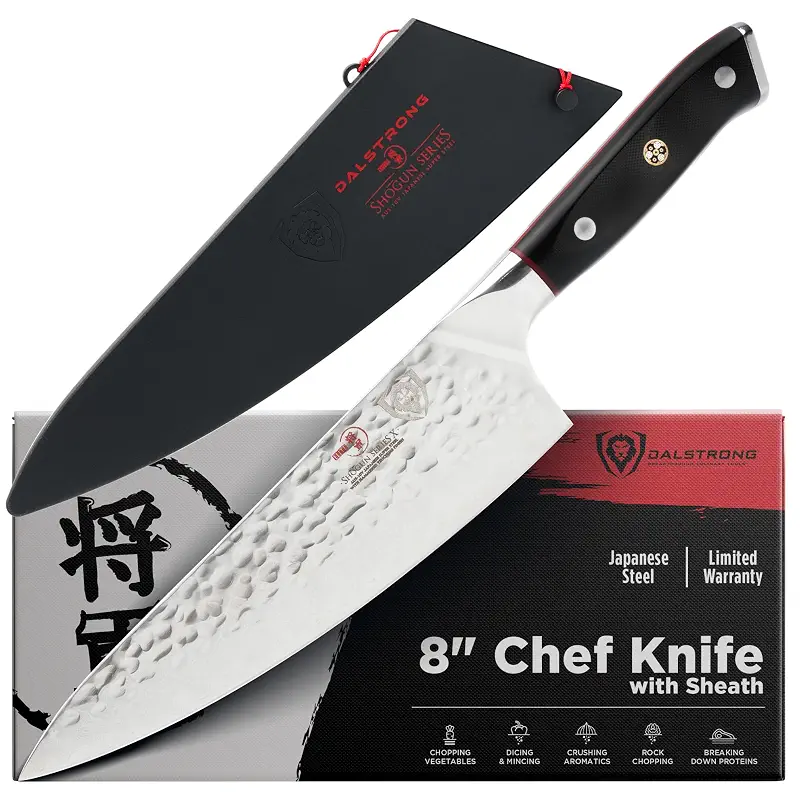
Dalstrong 8" Japanese Chef Knife Gyuto - 66-Layer Damascus AUS-10V | Hand-sharpened 8-12° Edge - Full-tang G-10 Handle - For Meal Prep - Sushi - Home Butchering - Customer Support Included
4.7(2,715)
66-layer Damascus with aggressive 8-12° edge and full-tang construction designed for high-volume kitchen use.
Ideal for: Professional chefs and high-volume home cooks who sharpen regularly and prioritize edge-first design.
Dalstrong's Shogun Series represents a deliberate engineering push toward working kitchens rather than home collections. The hand-finished 8-12 degree edge is sharper than anything else in this lineup: aggressive enough to glide through protein with minimal downward pressure but maintained by a hardier steel core () that resists chipping when used correctly. The 66 layers of premium stainless cladding sit around that core, reducing the maintenance burden compared to pure carbon or softer stainless alternatives.
The G10 handle here is military-grade and triple-riveted, which feels like overkill until you've used cheaper rivets in a busy kitchen. The 55mm blade width gives knuckle clearance that more conservative designs sacrifice, and the smooth spine is ground specifically for pinch grip comfort. The hammered tsuchime finish mirrors Shun's, but Dalstrong's execution leans more aggressive: less refined, more industrial.
Where Dalstrong differs from the Shan Zu models is in the construction philosophy: this is a knife that expects to be maintained and sharpened frequently, and it rewards that attention. Early reviewers noted tiny surface imperfections (minor scuffs, isolated rust spots) that suggest less hand-polishing than premium competitors. Dalstrong's customer service addressed these proactively. Compared to the Atumuryou's aesthetic warmth, the Dalstrong is pure performance: it looks striking but doesn't pretend to be art.
Pros
Hand-sharpened 8-12° edge delivers exceptional sharpness and cutting control
Military-grade triple-riveted G10 handle engineered for daily commercial kitchen use
vacuum heat-treated core resists chipping and maintains edge through high volume
Cons
Requires frequent maintenance and proper sharpening technique to justify aggressive angle
Less refined finish and occasional minor surface marks compared to handcrafted alternatives
Key features
Japanese super steel core at 62+ HRC hardness for edge retention and durability
66-layer premium high-carbon stainless Damascus with 'tsunami-rose' aesthetic pattern
Hand-finished 8-12° edge using traditional 3-step Honbazuke method
Full-tang military-grade G10 handle with ergonomic shape and smooth pinch-grip spine
Hammered tsuchime finish reduces drag and minimizes food adhesion during cutting
#5 Pick
Best for Aesthetics and Balance
Atumuryou
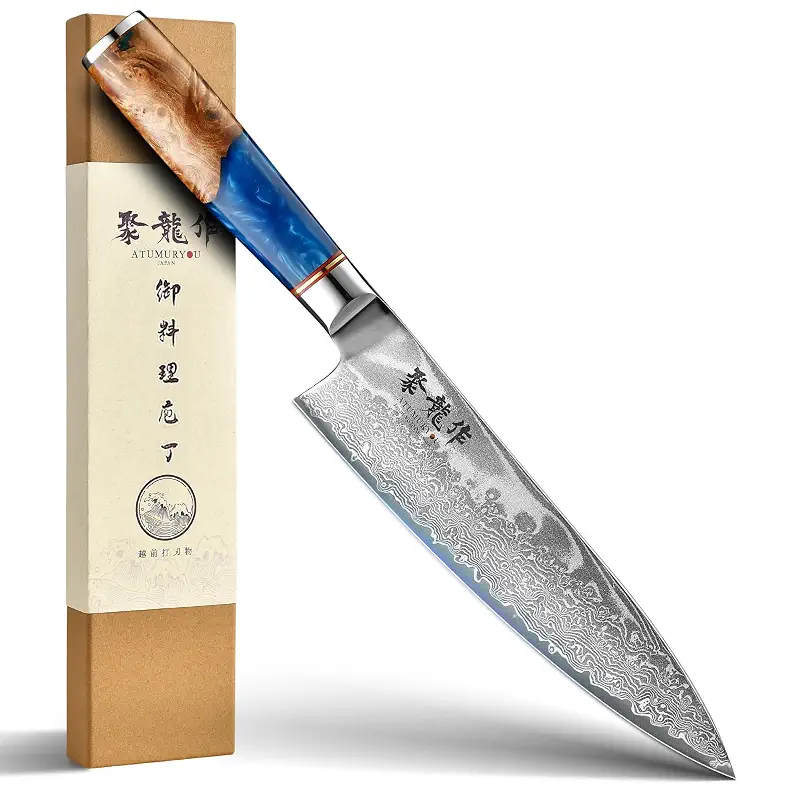
Japanese Chef Knife, 8 Inch Damascus Kitchen Knife with VG10 Steel, Ultra Sharp Professional Cooking Knives with Resin Wood Handle, Gift Box for Home & Restaurant
4.8(124)
Hand-forged Damascus with stabilized wood resin handle that combines beauty and performance for discerning home cooks.
Ideal for: Home cooks who value beauty and balance as much as performance, seeking a gift-worthy knife.
Atumuryou enters this field with a philosophy that prioritizes handcraftsmanship and balance over pure edge aggression. The steel core (62 HRC) sits in the middle hardness range, which means the blade is forgiving without sacrificing sharpness. The 67-layer Damascus cladding and hand-sharpened edge deliver the cutting performance you'd expect, but it's the stabilized wood-resin handle that sets this knife apart: warm to hold, visually distinctive, and built to resist the deterioration that plain wood suffers in kitchen humidity.
Owners consistently describe this knife as the one that gets complimented by guests, which speaks to its aesthetic appeal. The craftsmanship is evident in details: the velvet-lined gift packaging, the dimples at the hilt for grip security, and the overall sense that someone cared about the final product. Compared to the Shan Zu's utilitarian G10, the Atumuryou feels like an object you'll enjoy picking up, not just using. The blade balance is excellent (neither blade-heavy nor handle-heavy) which translates to less wrist fatigue during extended prep work.
The tradeoff is limited availability and a smaller review base relative to established brands. With only 124 reviews versus thousands for Shun or Dalstrong, you're betting on a newer or smaller brand's consistency. The resin-stabilized wood handle, while beautiful, requires the same care as wood (hand washing, not dishwasher) but it holds up better to moisture than pure wood would. If the kiritsuke profile and narrower blade geometry of the second Shan Zu appealed to you but you wanted a warmer handle, this is the compromise.
Pros
Stabilized wood-resin handle combines aesthetic warmth with durability and moisture resistance
Hand-sharpened edge delivers professional-grade sharpness with forgiving hardness rating
Excellent weight distribution and balance reduce wrist fatigue during extended meal prep
Cons
Smaller brand with limited review history compared to established manufacturers
Stabilized wood handle requires hand washing and regular care despite water resistance
Key features
Japanese steel core at 62 HRC hardness with 67-layer Damascus cladding
Hand-sharpened edge using time-honored Japanese techniques for surgical precision
Stabilized wood-resin handle with ergonomic dimples and slip-resistant surface
Professional-grade craftsmanship with attention to balance and center-of-gravity
Includes premium gift box with protective velvet blade cushioning for presentation
How to Choose the Right Damascus Chef Knife
Real Damascus vs. Laser-Etched Imitations
Authentic Damascus involves repeatedly folding and heating carbon steel layers until the pattern emerges naturally: a time-intensive process that costs real money. Laser-etched fakes apply a surface pattern that wears away after a few months of use and regular washing. Every knife in this lineup uses genuine layered construction, but examining the blade edge under light helps confirm authenticity; real Damascus shows pattern variation throughout the thickness, while etched patterns are surface-only. Check product descriptions carefully: legitimate makers describe the damascus steel pattern explained in their construction process, not just the final appearance.
Edge Angle and Hardness
Japanese chef knives typically use 15-16 degree edges, which are sharper than German knives (20 degrees) but require more careful handling. Hardness ratings (measured in HRC, or Rockwell hardness) between 60-62 HRC offer the sweet spot: hard enough to hold an edge for months, but not so brittle that normal cooking chips the blade. Higher hardness demands more frequent professional sharpening; lower hardness forgives technique but dulls faster. Consider your sharpening habits before committing to an ultra-hard blade: you'll need access to proper whetstones, not just honing steel.
Handle Material and Comfort
G10 fiberglass is durable, moisture-resistant, and won't warp: ideal for busy kitchens or frequent hand-washing. Pakkawood offers warmth and traditional aesthetics while resisting water better than plain wood. Stabilized wood-resin balances beauty with durability, though both wood-based handles demand hand washing. The best handle is the one that fits your hand comfortably during a 20-minute prep session; test weight distribution, grip security, and how the bolster or guard meets your palm. A heavy, uncomfortable handle will sit in a drawer no matter how sharp the blade.
Maintenance and Sharpening Reality
Damascus knives need respect: hand washing only, storage in a knife block or with blade guards (never loose in a drawer), and regular honing with a honing steel between proper sharpenings. Most home cooks benefit from professional sharpening every 6-12 months depending on use. Shun's lifetime sharpening service is valuable only if you'll actually use it; others require you to maintain the blade yourself. Budget for either a quality whetstone, a professional sharpening service, or both. The damascus knife sharpening guide will walk you through proper technique if you choose to maintain your own blade.
Budget and Long-Term Value
Entry-level Damascus knives (under $100) deliver surprisingly sharp performance but may not hold an edge as long or handle rough treatment. Mid-range options ($100-200) balance craftsmanship with accessibility. Premium knives ($200+) justify cost through better steel, hand-finishing, and refined aesthetics, but only if you'll actually care for and use them regularly. A neglected $300 knife is a worse investment than a maintained $80 blade. Consider how often you cook, how long you typically keep kitchen tools, and whether appearance matters as much as pure cutting performance.
Frequently asked
Is Damascus a real forge process or just a decorative pattern?
Authentic Damascus involves actual folding and layering of different steel alloys during forging, which creates both the visual pattern and structural properties. The layers improve durability and allow sharpness and flexibility to coexist. Some cheaper knives fake Damascus by laser-etching a pattern on the surface: this wears away with use. Every knife reviewed here uses genuine Damascus construction, but the folding process and final polish vary by price point. More expensive knives invest in visible, intricate patterns; budget models deliver the same layered structure with simpler aesthetics.
Can I put a Damascus chef knife in the dishwasher?
No. Hand wash only. Dishwashers expose the blade to harsh detergents, high heat, and metal-on-metal contact that accelerates dulling and can cause corrosion, especially on softer wood handles. Dry the blade immediately after washing to prevent water spots or rust. This single habit (hand washing and prompt drying) extends your knife's life by years and preserves the Damascus pattern visibility. If you're unwilling to hand wash regularly, a Damascus knife isn't the right tool for your kitchen.
What's the difference between a chef's knife and a gyuto?
Gyuto is the Japanese term for a chef's knife, so they're the same tool with different cultural names. Gyutos tend to be slightly lighter and thinner than German-style chef's knives, with sharper edge angles (15-16 degrees vs. 20 degrees). Blade length varies by personal preference and hand size; most cooks find 8 inches to be the versatile sweet spot, though 6-inch and 10-inch versions are common. Choose based on the feel in your hand and the tasks you perform most: vegetable prep favors slightly shorter blades, while large cuts of meat benefit from longer reach.
How often should I sharpen a Damascus chef knife?
Most Damascus knives in daily use benefit from professional sharpening every 6-12 months, depending on cutting volume and cutting surface hardness. Between sharpenings, use a honing steel every few weeks or after heavy use, honing realigns the edge without removing metal, keeping the blade responsive. The harder the steel (higher HRC rating), the longer it holds sharpness but the more technique required when you do sharpen. If you're new to knife maintenance, investing in professional sharpening initially and learning whetstone technique gradually is a smarter path than trial-and-error on a knife you're proud of.
Will a Damascus knife chip or break easily?
Damascus blades are tougher than pure high-carbon steel, but they're not unbreakable. The layered cladding protects the core from corrosion and adds toughness, but the cutting edge itself is still refined steel that resists abuse through proper technique, not invincibility. Never chop through bones, don't use it as a can opener, and avoid hard surfaces like marble countertops: use a wooden or plastic board. Avoid rapid, aggressive rocking motions that some cooks use on German knives. Japanese knives cut cleaner with a forward-pushing motion. Treated with respect, a Damascus knife will outlive most cookware in your kitchen.