Best Damascus Knives for Home Cooks and Professional Chefs
Find the best damascus knives for your kitchen. Compare Japanese steel, edge retention, and ergonomic designs for everyday cooking and professional use.
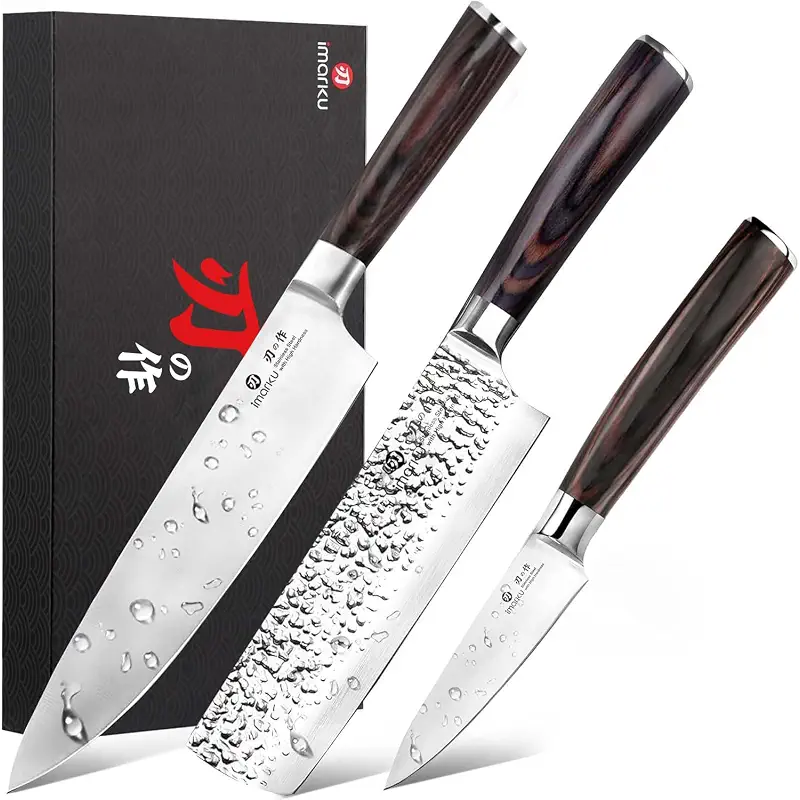
imarku 3 Pieces Knife set, Japanese HC Stainless Steel Kitchen Knife Set, Professional Chef Knife Set With Ergonomic Pakkawood Handle, Ultra Sharp Knives Set for Kitchen & Home Cooking, Best Gifts
4.6(10,469)
Sharp, well-balanced, and backed by genuine customer service: a three-piece set that covers everyday prep without premium pricing.
Ideal for: Home cooks seeking a durable three-piece set with responsive customer service and no-nonsense performance.
The imarku 3-piece set offers the essentials: an 8-inch chef knife, 7-inch nakiri, and 3.5-inch paring knife. Each blade uses high-carbon Japanese stainless steel tempered to 57±1 HRC, which is respectable for a value-oriented lineup. What distinguishes this set in the field is the lifetime warranty backed by support that actually responds within a day: owners report genuine claims handled without hassle, even after a decade of kitchen work.
The ergonomic pakkawood handle reduces hand fatigue over longer prep sessions, and the 15-degree edge angle delivers clean cuts through vegetables and proteins alike. The nakiri brings a Japanese geometry into the mix, useful for flat cuts and tricky shapes. This trades some of the advanced damascus steel craftsmanship you'd find in pricier options, but the trade-off is a set you'll actually use daily without anxiety about scratching a trophy piece.
If you want genuine damascus layering patterns, look elsewhere: these are straight stainless blades. But for cooks who value reliability and support over visual drama, this lineup punches well above its weight. Compared to the kanngou Japanese chef knife with its 67-layer damascus construction, the imarku skips the complex forging in exchange for a tougher, easier-to-maintain blade.
Pros
Lifetime warranty with responsive, same-day customer support
Sharp 15-degree edge on all three knives from factory
Ergonomic pakkawood handle reduces hand fatigue during extended use
Three complementary blades cover most everyday prep work
Cons
No damascus layering or pattern; straight stainless steel only
Requires hand washing and careful drying to prevent spotting
Key features
Three-piece set includes 8-inch chef, 7-inch nakiri, and 3.5-inch paring knife
High-carbon Japanese stainless steel at 57±1 HRC hardness
15-degree double bevel edge hand-polished by craftsmen
Ergonomic pakkawood handles with balanced weight distribution
Lifetime warranty with 24-hour customer support response
#2 Pick
Best Compact Single Knife
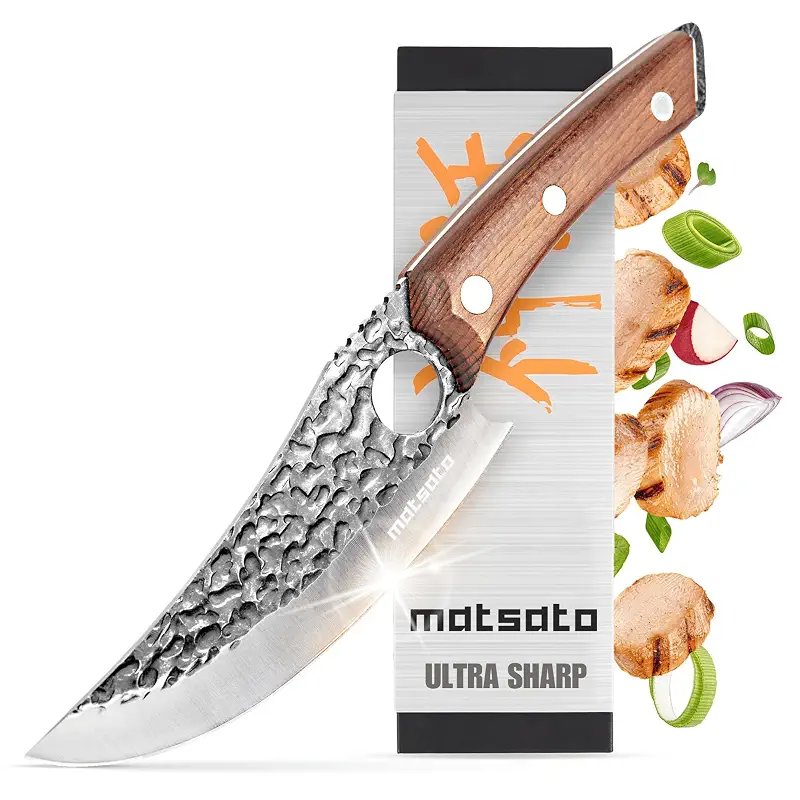
Matsato
Matsato Chef Knife - Perfect Kitchen Knife for Cooking, Chopping | Japanese Steel Knife for Home, BBQ. For Balance & Control, 6.3 Inch
4.5(9,752)
A smaller, nimble 6.3-inch blade that shines for detail work and everyday slicing without hogging counter space.
Ideal for: Cooks with smaller hands or compact kitchens seeking a single, agile slicing blade for everyday prep.
The Matsato chef knife strips away set bundling and gives you a standalone 6.3-inch blade forged from Japanese stainless steel. At this length, it's more maneuverable than a full 8-inch chef knife, making it ideal for smaller hands or kitchens where a short handle and blade feel natural. The balanced weight and solid handle promote control during fine cuts: meat slicing, herb work, and vegetable prep all feel deliberate and less fatiguing.
Owners appreciate the sharpness out of the box and note that hand washing preserves the edge well over time. One caveat: some buyers received a dull edge initially and needed to sharpen before use, so edge consistency isn't guaranteed across all units. The curved blade geometry works well for slicing and push-cutting but feels less intuitive for traditional rock-chopping motions, especially if you have wrist or hand conditions that favor a different stroke.
Compared to the imarku three-piece set, this is a single-tool investment that prioritizes nimbleness over versatility. If you already own a paring knife and want a focused slicer rather than a workhorse bundle, this compact form factor delivers without the bulk. For specialized cutting work, some cooks pair a general chef knife with top yanagiba knives for sashimi and sushi prep, but the Matsato's shorter length makes more sense if all-purpose slicing is your focus.
Pros
Shorter 6.3-inch blade offers nimble, controlled cutting for detail work
Balanced weight reduces fatigue during fine slicing and mincing tasks
Sharp edge out of the box for most deliveries
Japanese steel holds an edge through regular home kitchen use
Cons
Edge consistency variable; some units arrive dull and require immediate sharpening
Curved blade geometry feels less intuitive for traditional rock-chopping motion
Key features
6.3-inch (16 cm) Japanese stainless steel blade, compact and maneuverable
Balanced weight and solid handle for controlled daily prep work
Sharp, precise edge for slicing meat, vegetables, and herbs
Hand wash and dry required to preserve edge and prevent rust
Versatile for both home cooking and BBQ use
#3 Pick
Best for Meat and Carving
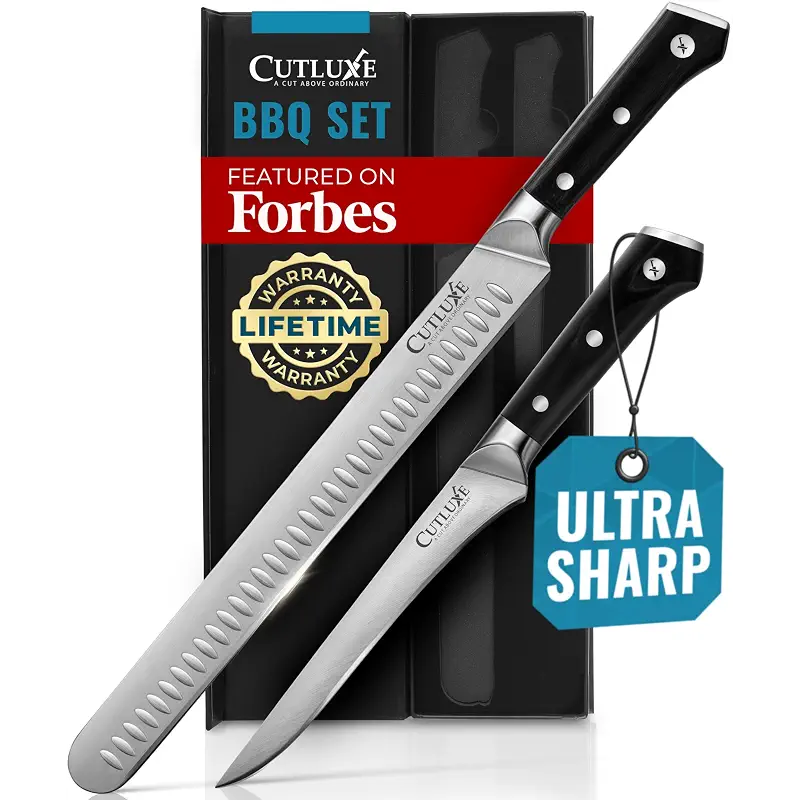
Cutluxe
Cutluxe Carving Knife Set, Brisket Slicing & Boning Knife for Meat & BBQ | Razor Sharp German Steel, Full Tang Ergonomic Handle – Grilling Gift for Men, Artisan Series
4.8(1,524)
A specialized two-piece meat set with granton-edge technology and full-tang German steel, purpose-built for brisket, turkey, and precise protein slicing.
Ideal for: BBQ enthusiasts, caterers, and holiday cooks who regularly carve large roasts and need precision meat slicing.
The Cutluxe carving set focuses on a single mission: slicing cooked meat cleanly and safely. The 12-inch brisket knife handles large roasts with long, deliberate strokes, while the 6-inch boning knife trims and breaks down smaller cuts. Both use German steel with granton (dimpled) edges that reduce friction and prevent meat from sticking to the blade: a genuine advantage when carving turkey or brisket that would otherwise cling to a flat edge.
The full-tang construction keeps the handle from separating and adds weight that feels reassuring during the steady pull-cuts that carving demands. Owners praise the sharpness out of the box and report that the balance stays true even after months of use. One practical note: the 12-inch blade requires adequate storage and clear counter space behind your cutting board, so measure before committing. The lifetime warranty and German steel reputation inspire confidence for a long-term investment.
Where this differs from the kanngou damascus gyuto is purpose. The Cutluxe targets protein work exclusively; it won't chop vegetables or do the daily utility tasks that a true chef knife handles. If you entertain or smoke meats regularly and want a dedicated carving set, this is a smarter choice than forcing a general knife into that role. Compared to the imarku and Shan Zu options, it's the specialist's tool, not the all-rounder.
Pros
Granton-edge technology prevents meat from sticking during slicing
12-inch blade handles large cuts with long, clean strokes
Full-tang German steel provides weight, balance, and durability
Sharp out of the box and backed by lifetime warranty
Cons
12-inch length requires safe storage space and clear counter room
Two-knife set limits versatility; not designed for vegetable or general prep work
Key features
Two-knife set: 12-inch brisket slicer and 6-inch boning knife
Granton dimpled-edge technology reduces friction and meat sticking
Premium German steel with high Rockwell score and rust resistance
Full-tang ergonomic handle with secure, non-slip grip
Lifetime warranty and premium velvet-lined storage box included
#4 Pick
Best Damascus Craftsmanship
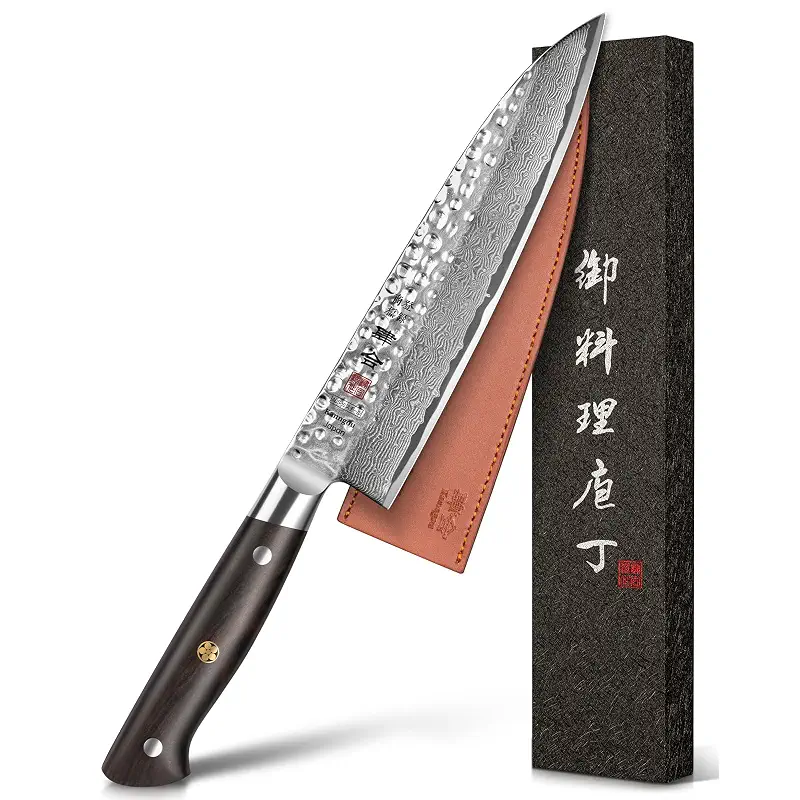
kanngou
kanngou Japanese Chef Knife Kitchen Knife with 67 Layers Damascus Steel AUS-10 Core, Professional Damascus Knife with Full-Tang Ebony Wood Handle and Premium Gift Box (8.27 Inch Gyuto Chef Knife)
4.7(133)
A genuine damascus gyuto with 67-layer construction and core: a beautiful, hand-sharpened blade that rewards careful maintenance.
Ideal for: Serious home cooks and light professional users who appreciate genuine damascus construction and will hand-sharpen regularly.
The kanngou Japanese chef knife represents the damascus approach done right: 67 layers of folded steel surrounding an core (60-62 HRC) that holds an edge far longer than commodity stainless. The hand-sharpening to a 10-12 degree angle using the three-step Honbazuke method means the edge arrives razor-ready, though it benefits from proper maintenance if you want that edge to last twice as long as standard blades. The ebony wood handle is full-tang and fitted flush: no metal edges protruding or rough grain that catches skin.
Owners repeatedly mention the visual impact when they unbox this knife: the damascus wave pattern is authentic and deepens after polishing. The feel is precise: thin blade profile delivers clean cuts with minimal crushing, especially useful for pineapple, tomatoes, and other ingredients that bruise easily under dull or thick knives. One limitation: the handle finish, while beautiful, isn't quite at the precision level of knives twice the price, and the steel, though excellent at edge retention, will chip if dropped or used on bones: a real consideration if your kitchen habits are careless.
Compared to the Shan Zu damascus also with 67 layers, the kanngou uses (better for edge retention) versus the Shan Zu's 10Cr15Mov (more forgiving, easier to sharpen). The kanngou asks more of the owner in terms of blade care but delivers finer cutting geometry and visible craftsmanship. This is the choice if damascus steel layering is not just pattern but a core part of why you want this knife.
Pros
Authentic 67-layer damascus steel with core for superior edge retention
Hand-sharpened to 10-12 degree angle using three-step Honbazuke method
Thin blade profile delivers clean cuts without crushing delicate ingredients
Ebony wood handle is full-tang and flush with no protruding metal
Cons
steel will chip if dropped or used on bones; requires careful handling
Handle finish is beautiful but less precise than higher-priced competitors
Key features
67-layer damascus steel construction with core at 60-62 HRC
8.27-inch gyuto blade hand-sharpened to 10-12 degree angle
Ebony wood full-tang handle with ergonomic balance and non-slip grip
Authentic damascus steel wavy pattern visible and deepens with polishing
Premium gift box and leather scabbard included for storage and transport
#5 Pick
Best Professional Value Damascus
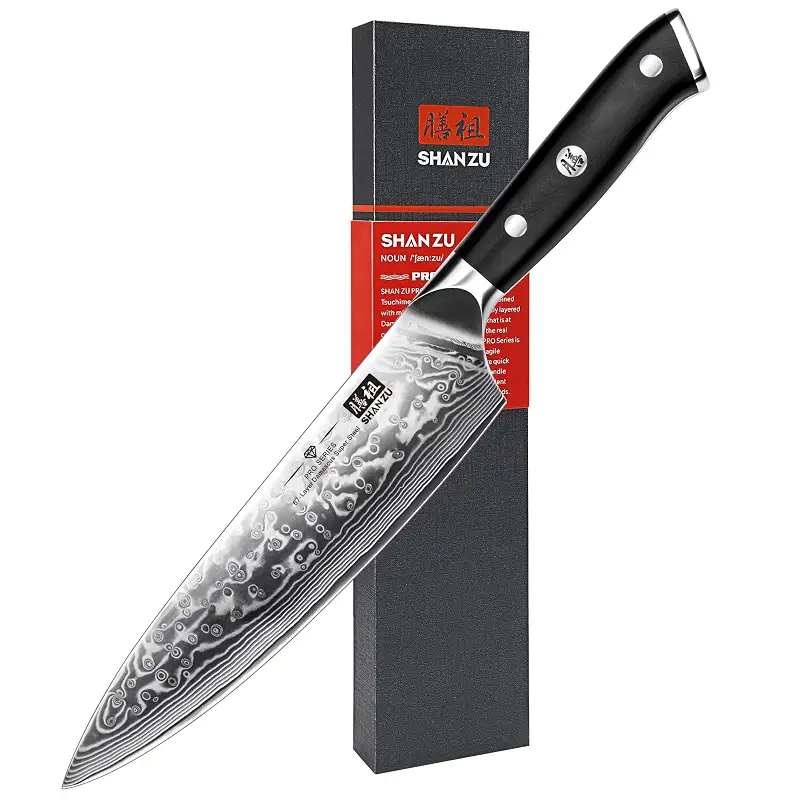
Shan Zu
SHAN ZU Chef Knife 8 Inch Japanese Steel Damascus Kitchen Knife | Professional Kitchen Knives Ultra Sharp High Carbon Super Steel Kitchen Utility Knife
4.8(5,606)
A 67-layer damascus chef knife with real forged layering, G10 handle, and professional-grade edge that punches far above its price.
Ideal for: Professional and serious home cooks seeking authentic damascus construction with easy maintenance and professional-grade performance.
The Shan Zu 8-inch damascus delivers legitimate damascus steel construction, not laser-etched pattern on a plain blade but actual folded layers repeated 67 times around a 10Cr15Mov core (62 HRC). The layering strengthens the blade against chipping and improves toughness, and the pattern becomes more visible as you use and polish the knife over time. The G10 handle (frosted glass-fiber composite) is a practical choice over wood: it's more durable, less prone to warping, and equally comfortable, especially in wet conditions or if your grip occasionally loosens.
Owners, including a 30-year professional cook who switched from a restaurant supply knife to this one: report that the blade holds its edge through weeks of daily use and cuts with authority on vegetables, herbs, and meat without crushing. The full-tang construction with multiple handle bolts feels solid, and the balance sits forward of your hand just enough to guide the blade without effort. A few users noted the edge dulled faster than expected with heavy use, though that's partly habit and partly blade care (honing and proper sharpening matter).
Compared to the kanngou damascus, the Shan Zu uses a tougher steel (10Cr15Mov) that's easier to sharpen but won't hold an edge quite as long: a fair trade if you prefer a knife that forgives occasional carelessness. Where it truly separates from single-blade options like the Matsato is the genuine damascus layering, visible pattern, and full professional geometry at a fraction of what you'd pay at a restaurant supply house. This is the damascus knife for cooks who want the real thing without perfectionism.
Pros
Authentic 67-layer damascus steel forged and folded; pattern deepens with use
10Cr15Mov core at 62 HRC offers excellent edge retention and toughness balance
G10 frosted fiber handle is durable, non-slip, and comfortable in wet conditions
Full-tang construction with three bolts provides rock-solid, confident feel
Cons
Edge dulls faster than higher-end steels under heavy daily professional use
Handle finish is solid but less refined than premium Damascus knives at higher price points
Key features
67-layer forged damascus steel with 10Cr15Mov core at 62 HRC hardness
8-inch blade at 2.2mm thickness with 15-degree cutting angle
G10 frosted glass-fiber handle with full-tang construction and multiple bolts
Authentic damascus pattern visible and becomes more prominent with use and polishing
12-month warranty and responsive customer support included
How to Choose a Damascus Knife
Understand What Damascus Actually Is
True damascus knives are forged by folding layers of steel around a core material, repeated many times to create both pattern and strength. The damascus steel layering explained shows why this matters: the pattern you see isn't cosmetic, it's evidence of the steel's internal structure. Budget knives sometimes use laser etching to fake the look. Real damascus improves edge retention, flexibility, and chip resistance, but also demands hand washing and careful storage. Authentic options like the Shan Zu and kanngou show visible layering that deepens over time as you use and polish the knife.
Match Blade Length to Your Hand and Style
An 8-inch chef knife is the standard, but if you have smaller hands or prefer detail work, a 6.3-inch blade like the Matsato offers better control. Carving requires longer reach: the Cutluxe 12-inch excels for brisket and turkey. Test grip size by wrapping your fingers around the handle; your thumb and forefinger should meet with minimal gap. A longer blade feels exhausting if it doesn't suit your stroke and hand size, so choose honestly rather than defaulting to full-size.
Core Steel and Edge Retention Matter More Than Layers
A damascus knife's performance hinges on its core steel and hardness rating (HRC). at 60-62 HRC (kanngou) excels at holding an edge for months but chips if dropped. 10Cr15Mov at 62 HRC (Shan Zu) is tougher and easier to sharpen, forgiving carelessness. For first-time damascus buyers, the Shan Zu's balance of durability and performance often proves wiser than chasing the highest edge-retention claim. Consider your knife maintenance habits: can you hand-sharpen with stones, or do you need a knife that forgives neglect?
Handle Material Shapes Your Long-Term Comfort
Ebony wood (kanngou) feels warm and traditional but requires climate control and careful drying. G10 composite (Shan Zu) handles wet conditions better and won't warp if your kitchen gets humid. Pakkawood (imarku) splits the difference: attractive and durable enough for everyday use. If you wash your knives immediately and dry them by hand, either works. If you procrastinate or live in high humidity, G10 is more forgiving. damascus versus stainless comparison notes that material choice affects how long the blade stays protected from moisture as much as the steel itself does.
Purpose Shapes Your Pick
A three-piece set like imarku covers general cooking but lacks focus. A single gyuto (kanngou, Shan Zu, Matsato) excels at vegetables and boneless proteins. A carving set (Cutluxe) is useless for everyday prep but unbeatable for cooked meats. Clarify first: are you replacing your whole knife collection or adding one special blade for a specific task? That answer narrows the field immediately.
Frequently asked
Is the damascus pattern just for show, or does it affect performance?
Authentic damascus layering contributes to edge retention, flexibility, and toughness, not just appearance. The folded steel creates a blade that resists chipping and holds a sharp edge longer than single-layer stainless. That said, the pattern itself is cosmetic. A cheap laser-etched damascus-look knife performs like cheap stainless. The kanngou and Shan Zu show real layering; the imarku skips it entirely but compensates with excellent warranty support and durability at a lower price.
Do damascus knives require special care compared to regular stainless steel?
Yes. Hand washing and immediate drying are non-negotiable: both to preserve the edge and prevent rust along the layered steel boundaries. Never dishwasher or leave wet. If your lifestyle doesn't allow careful knife care, the imarku or Shan Zu with their tougher steels forgive minor neglect better than the kanngou's, which will stain or develop patina without proper drying. Many owners find hand care a meditation rather than a chore once habits form.
What's the difference between a chef knife, gyuto, and nakiri?
A chef knife and gyuto are nearly identical: the latter is the Japanese version with a slightly thinner, more tapered blade ideal for push-cutting and slicing without crushing. A nakiri has a rectangular profile designed for flat cuts and vegetable work, less effective on meat. The imarku set includes all three; the kanngou and Shan Zu are standalone gyutos; the Matsato is a compact chef knife. Choose based on your primary prep work.
How often should I sharpen a damascus knife?
With proper honing (realigning the edge weekly with a honing steel), most damascus knives stay sharp for 3-6 months of home kitchen use. Professional cooks may need monthly sharpening. blades (kanngou) hold an edge longer but demand more skill to sharpen correctly. 10Cr15Mov (Shan Zu) is more forgiving if you use an electric sharpener. Budget for learning a whetstone or building a relationship with a local knife sharpener.
Is a damascus knife worth the extra cost over regular stainless?
If you cook daily and hand-wash your knives, the Shan Zu's authentic layering and superior edge retention justify the step up from budget stainless. The kanngou's core earns its price if you're disciplined about maintenance. But if knife care feels like a chore or you're prone to dropping blades, the imarku three-piece set delivers 90% of the cutting performance with zero fuss and a lifetime warranty that actual customer service backs up.