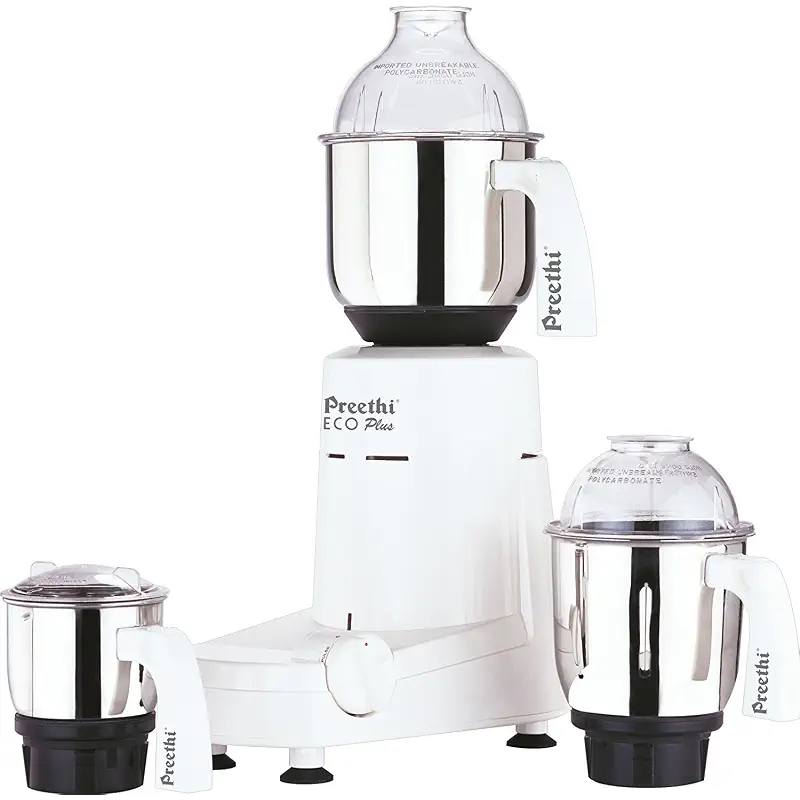
Ideal for: Families making idli, dosa, and chutneys 3+ times per week; households wanting three jar sizes in one unit.
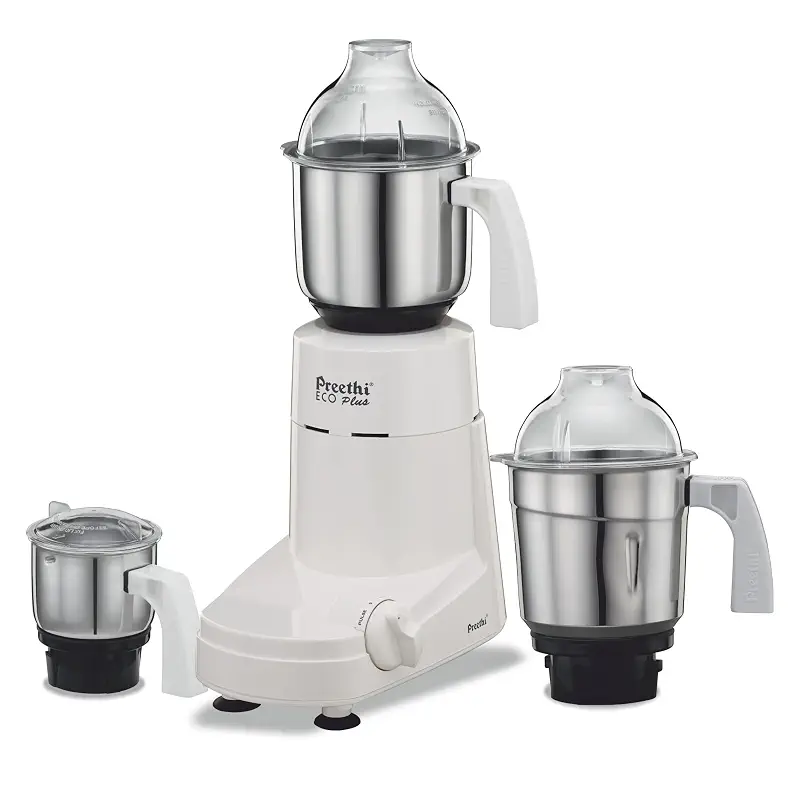
The Preethi Eco Plus stands out as the go-to choice for households committed to regular idli and dosa preparation. The three stainless steel jars (1.5L, 1.0L, and 0.4L chutney jar) let you handle different tasks without crowding the bowl, which matters when you're grinding soaked rice and dal to the fine texture idli demands. The 550-watt motor pairs with machine-ground, polished blades and flow breakers designed specifically for extracting moisture and air into batter, producing the light, fluffy results that distinguish good idlis from dense, heavy ones.
Owners report that the large jar handles full batches of idli batter smoothly, though you'll get the best results if you don't overfill beyond two-thirds capacity. The smaller jars excel at masala powders and chutneys where precision matters. One consistent theme in reviews is that this model demands patience on the first use; some buyers initially struggled with runtime length, but learned that letting the motor work for 8–10 minutes without interruption (rather than pulsing) produces better results. The inclusion of replacement parts and a jar-loosening tool shows Preethi understands the real wear points of regular use.
The trade-off is noise and heat. This is a loud appliance by modern standards, and extended grinding sessions warm the motor, so expect to let it cool between batches if you're making large quantities. A few owners noted blade wear over years of heavy use, which is normal for any grinder at this price point.
Pros
Three stainless steel jars for wet grinding, dry spices, and chutney prep
Ideal for: Apartments and smaller kitchens; households making idli 1-2 times per week; cooks who value storage space.
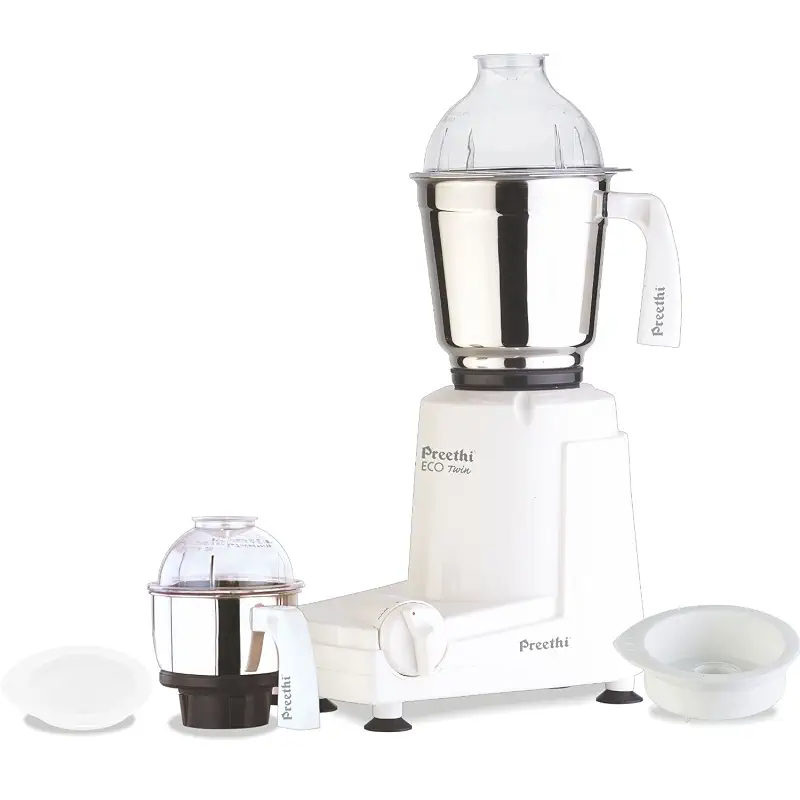
The Preethi Eco Twin Jar addresses a real constraint: not everyone has room for three separate jars. This model swaps the third jar for a clever flexi-lid system that converts each jar to a smaller working size, cutting counter and cabinet footprint without sacrificing functionality. The larger 1.5L jar (convertible to 1.0L) handles full idli and dosa batters, while the smaller unit (0.5L, convertible to 0.3L) manages chutneys and dry spice grinding. For a single person or couple making idli once or twice a week, the storage and space savings matter.
Reviewers who've owned this model for years report idli batter that rivals traditional stone grinders, with one owner updating a review after a decade of near-daily use to confirm it still performs reliably. The interchangeable blades (dry/wet grind, mince, whip) handle diverse Indian kitchen tasks. Owners appreciate the self-locking jar feature, which lets you grab it with wet hands without fumbling with couplers. Compared to the Preethi Eco Plus, this trades one jar for simplicity and a smaller footprint.
The drawbacks are real: the motor is the same 550 watts as the Plus model, so heavy loads trigger the overload reset just as easily. Several owners mention that flexi lids, while space-saving, can splatter if the jar isn't perfectly sealed or if you overfill. The appliance is also loud and requires hand-washing only. If you prioritize counter space and occasional use over maximum capacity, this is a solid fit.
Pros
Flexi lids shrink each jar to smaller capacity, cutting storage need
Proven 10+ year durability in regular daily use
Self-locking jars easier to handle with wet hands during cooking
Cons
Flexi-lid design can cause splashing if jar not sealed tight
Same 550-watt motor means caution needed on large batches
Key features
550-watt motor with two convertible jars via flexi-lid system
Interchangeable steel blades for grinding, mincing, and whipping tasks
Self-locking jars with suction feet prevent vibration and slipping
Stainless steel construction throughout jars and blades
#3 Pick
Most Powerful Motor
Vidiem
VIDIEM METALLICA STEEL 750W / 110V Free Service Kit included - INDIAN MIXER GRINDER USA
4.4(80)
750-watt Aria Cool Tec motor delivers faster grinding and more torque; best for heavy, frequent use.
Ideal for: Heavy daily use; large-batch idli and dosa makers; cooks grinding tough ingredients like whole spices.
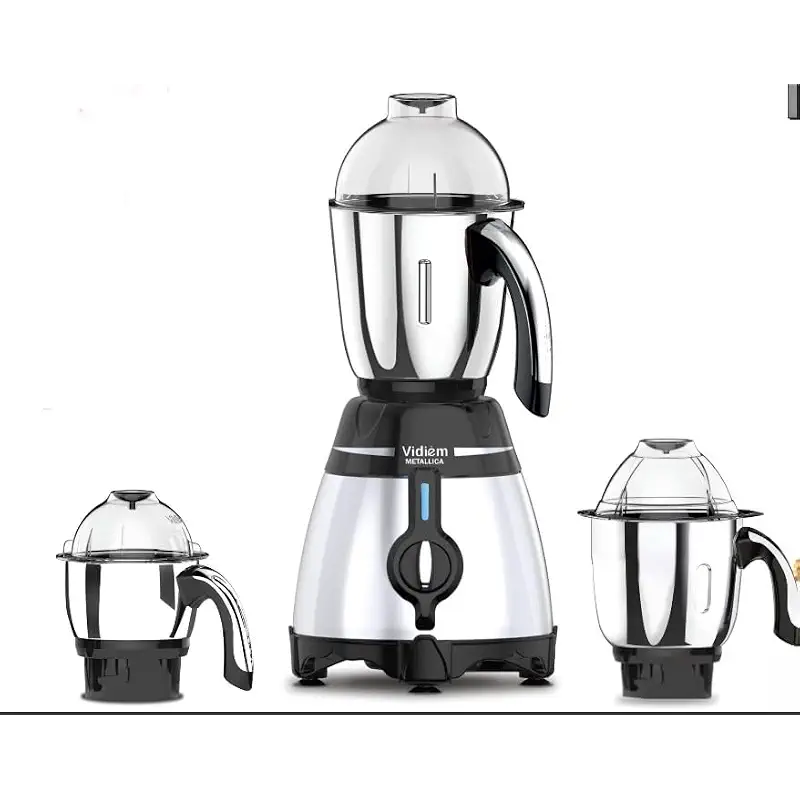
The Vidiem Metallica represents a power upgrade: 750 watts versus the 550-watt standard in most competitor models. For households grinding large quantities or tackling dense ingredients (like soaked dal or whole spices), the extra 200 watts means shorter grinding times and less motor strain. Vidiem's proprietary Aria Cool Tec motor includes an air pump system and dielectric casing designed to cool 40% more efficiently than conventional designs, so you can run longer batches without mandatory cool-down waits.
Owners report that this model handles idli batter and chutneys quickly, grinding is visibly faster than on 550-watt models. The self-locking jars and penta drive couplers feel more robust, and several reviewers note a tighter fit that eliminates the slight jar wobble some owners experience with Preethi models. The three-jar setup mirrors the Eco Plus, giving you the same flexibility for different task sizes. The motor comes with a 2-year warranty, longer than most competitors, and includes complimentary service parts. If you also grind dry ingredients like seeds or grains, selecting a top grinder for flaxseed or similar small batches becomes easier when you have the extra power to handle variable loads without strain.
The catch: the higher power means higher noise levels, and some owners report that the jar can still shake slightly during grinding, suggesting the motor's added force isn't entirely translated to stability. One owner experienced motor failure within three months (September to December 2025), though this appears to be a rare defect rather than a pattern. Hand-washing only; dishwashers will damage the jars. If you're comparing this to the Eco Plus, you're paying more for faster grinding and better cooling, which makes sense if you use the grinder 4+ times weekly.
Pros
750-watt motor grinds batter 20-30% faster than 550-watt models
Advanced air-cooling system allows longer runtime without breaks
2-year motor warranty and included service parts for peace of mind
Cons
Higher noise output during operation than standard 550-watt models
Jar can vibrate slightly despite robust couplers during heavy grinding
Key features
750-watt Aria Cool Tec motor with patent-pending cooling technology
Three stainless steel jars with self-locking feature for secure fit
Dynamically balanced blades reduce vibration and extend motor life
Penta drive couplers withstand high torque needed for tough grinding
#4 Pick
Best Value Three-Jar Model
Preethi
Preethi Eco Plus Mixer Grinder, White, 3 Jar
4.0(1,973)
Affordable entry point with proven durability; reliable for regular idli and dosa batter, lighter daily loads.
Ideal for: Budget-conscious buyers making idli 2-3 times weekly; households comfortable with batch-size limits.
This variant of the Preethi Eco Plus (the white 3-jar model) delivers the same three-jar design at a lower price point than the original B07C8QN785 listing, making it the most accessible way to get a full three-jar Preethi setup. The 550-watt motor and stainless steel jars are identical, along with the flow breakers designed for fine batter grinding. Owners who've kept this model for 2+ years report consistent performance making idli, dosa, and various chutneys without significant wear.
The key insight from reviews is understanding the motor's real limits: this appliance is engineered for batches of half to two-thirds jar capacity, not stuffed-full loads. Owners who respect that constraint report zero overload shutdowns; those who try to maximize load trigger frequent cutoffs that frustrate first-time buyers. Several reviewers specifically note that the 550-watt motor is notably less powerful than the 750-watt models available in the Indian market, which affects what you can push through in one run. The three-jar flexibility means you can handle idli batter, small-quantity chutneys, and masala powders without swapping jars, and the small jar's fixed blade makes chutney work straightforward.
Fewer owners report long-term issues here compared to some other Preethi models, suggesting this particular version may have benefited from later manufacturing refinements. However, one significant concern surfaces occasionally: seal or washer defects on arrival, resulting in leaks. Buying from Amazon directly (rather than third-party sellers) may reduce this risk, as returns are straightforward.
Pros
Three stainless steel jars at lower cost than premium variants
Strong track record of 2+ year durability with regular maintenance
Overload protection and reset feature prevent permanent motor damage
Cons
Motor overheats and shuts down if jar is overfilled or overloaded
Occasional reports of seal defects on arrival requiring replacement
Key features
550-watt motor with automatic overload cut-off and reset protection
Three stainless steel jars: 1.5L, 1.0L, 0.4L for varied grinding tasks
Machine-ground and polished blades with flow breakers for fine texture
Nylon couplers and rubber feet minimize vibration during operation
#5 Pick
Best Wet Grinder Alternative
Premier
Premier Small Wonder Table Top Wet Rice and Lentils Grinder 1.5 Liter,110 volts with coconut scrapper and atta kneader
4.5(1,598)
Specialized wet-grinding design produces lighter, fluffier idli batter; ideal for purists seeking traditional texture.
Ideal for: Idli purists wanting traditional wet-ground texture; cooks with time and patience; households making fresh batter regularly.
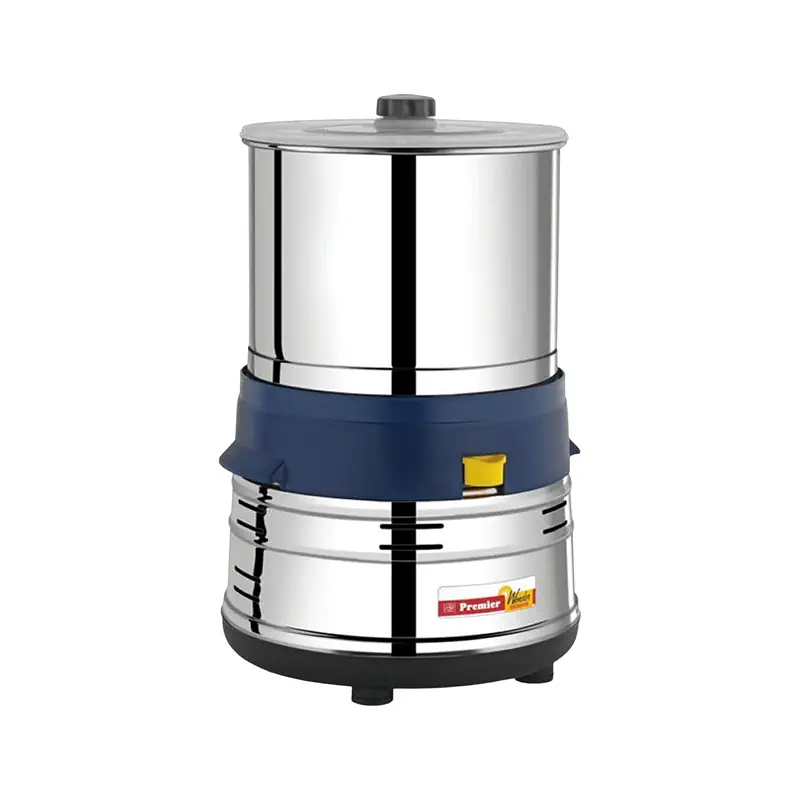
The Premier Small Wonder is a fundamentally different category: a wet grinder rather than a mixer grinder. Where mixer grinders rely on high-speed blade friction, wet grinders use a slower-speed stone drum that grinds via gentle rotation and pressure: more akin to traditional Indian grinding stones. This matters for idli texture. Owners consistently report that batter from this wet grinder produces visibly lighter, more airy idlis than they achieved with mixer grinders, and the batter stays cooler during grinding, which some believe preserves fermentation quality.
The 200-watt motor sounds underpowered, but wet grinding is inherently slower and gentler, not a defect. With proper technique (not overfilling, allowing adequate time), this produces silky-smooth batter suitable for idlis, dosas, and vadas. The stainless steel drum and food-grade plastic construction are durable. Complimentary attachments (coconut scraper, atta kneader) add versatility. Owners report that cleanup is straightforward once you know not to use a dishwasher, and the compact footprint fits most kitchen sinks.
The trade-off versus mixer grinders is time and learning curve. Wet grinding takes longer: expect 20–30 minutes for a batch where a 550-watt mixer might take 10–15. You'll also need to adjust your technique: pulsing doesn't work as well; steady grinding with brief pauses yields better results. This is not a grinder for someone in a hurry or unfamiliar with wet-grinding mechanics. However, if you've experienced the difference between mixer-ground and wet-ground idli batter and prefer the latter, this is the entry-level choice at a fair price. Compared to wet versus mixer grinder comparison discussions online, this model consistently gets praise from serious idli makers willing to invest time for superior texture.
Pros
Stone drum design produces lighter, fluffier idli batter than blade grinders
Batter stays cool during grinding, potentially preserving fermentation
Includes coconut scraper and atta kneader for expanded functionality
Cons
Wet grinding takes 20–30 minutes per batch versus 10–15 for mixer grinders
Steeper learning curve; improper technique yields gritty or unground results
Key features
200-watt motor with stone drum design for gentle, cool grinding
1.5-liter stainless steel drum with food-grade plastic components
Compact footprint fits standard kitchen sink for easy water rinsing
Includes coconut scraper and atta kneader attachments for versatility
How to Choose a Mixer Grinder for Idli Batter
Four trade-offs that actually matter when matching a mixer grinder for idli batter in usa to your kitchen.
Motor Power: 550W vs. 750W
The standard for idli grinding in the US is 550 watts, which handles regular batches of rice and urad dal when you don't overfill the jar. A 750-watt motor (like the Vidiem) cuts grinding time by 20–30% and tolerates larger loads, but costs more and runs louder. For households making idli 2–3 times weekly with modest batch sizes, 550 watts is sufficient. If you grind daily or work with large quantities, the extra power and cooling of a 750-watt motor pays for itself in convenience and motor longevity.
Jar Count and Capacity: One, Two, or Three
Three-jar models (1.5L, 1.0L, 0.4L) let you grind idli batter in the large jar while keeping a dedicated small jar for chutneys and spice powders: no jar switching between tasks. Two-jar models with flexi lids save counter and cabinet space, ideal for apartments or occasional cooks. Single-jar grinders are rare in this category and limit flexibility. Choose based on your kitchen's physical space and how often you switch between batter and spice grinding; three jars mean less cleanup between tasks, but two jars with converter lids work fine if space is tight.
Mixer Grinder vs. Wet Grinder: Speed and Texture
Mixer grinders with high-speed blades grind batter in 10–15 minutes and work for multiple cooking tasks (smoothies, spice powders, chutneys). Wet grinders use a slow stone drum, take 20–30 minutes for batter, and produce a lighter, more traditional idli texture that some cooks prefer. The wet versus mixer grinder comparison hinges on whether you prioritize speed and versatility (mixer) or authentic texture and cool-grinding (wet grinder). Most US households choose mixer grinders for their flexibility, but idli traditionalists gravitate toward wet grinders.
Durability and Warranty Support in the USA
Preethi models dominate US reviews because of established service centers in major cities and straightforward warranty claims. Vidiem is newer to the US market but offers a 2-year motor warranty versus Preethi's typical 1-year coverage. Premier wet grinders include responsive customer support with free replacement parts (coconut scraper, lid caps). Before buying, confirm there's a US service address and that Amazon fulfillment is involved: returns are far easier than dealing with overseas sellers for defects. Avoid third-party resellers in India unless you're comfortable with international warranty hassles.
Daily Grinding Technique for Best Results
When grinding idli batter, fill the jar only to two-thirds capacity, not to the brim. Run the grinder for 8–10 minutes on medium-high speed without pulsing: continuous grinding produces finer, fluffier batter than intermittent pulsing. Let the motor cool for 5–10 minutes between batches if grinding large quantities. Hand-wash all jars and blades immediately after use and dry thoroughly; soaking in water promotes rust and blade corrosion. These habits extend motor life and prevent the overload shutdowns that frustrate first-time owners who try to rush the process. Learning grinding idli batter properly means respecting the equipment's design, not fighting it.
Frequently asked
Quick answers to the questions readers ask most.
Will a 550-watt mixer grinder make fluffy idli batter?
Yes, a 550-watt motor produces excellent idli batter when used correctly. The key is not overfilling the jar and allowing 8–10 minutes of continuous grinding without interruption. Owners report light, airy idlis from 550-watt models consistently. The batter texture depends more on proper grinding technique than raw wattage, overpowering a small batch wastes energy, while a full (but not packed) jar grinds evenly.
Can I use a mixer grinder for both idli batter and spice powders?
Absolutely. Mixer grinders with interchangeable blades handle wet grinding (batter), dry grinding (spices and coffee), and chutney prep in one unit. Rinse and dry the jar between wet and dry tasks to prevent rust. If you grind spices frequently, a model with a dedicated small jar (chutney jar) eliminates the need to empty a large jar of residual moisture before switching to dry grinding.
How long do mixer grinder motors typically last with regular idli-making use?
Owners report 5–10 years of reliable service with proper care (not overfilling, allowing cooling breaks, regular cleaning). One Preethi Eco Twin owner updated their review after a decade of near-daily use confirming zero issues. Motor lifespan depends on respecting the wattage limit, letting it cool between batches, and ensuring the jars are clean and sealed properly. Defects happen (as with any appliance), but most failures occur in the first month if parts are flawed on arrival.
Is hand-washing really necessary, or can I use a dishwasher?
Hand-washing only. Dishwashers can damage rubber seals, dull the blade edges, and degrade stainless steel over repeated heat cycles. Rinse jars immediately after use with warm water and mild soap, dry thoroughly, and store inverted to prevent moisture accumulation inside. The five-minute hand-wash habit is far cheaper than replacing jars or discovering rust inside the motor.
What's the difference between a mixer grinder and a food processor?
Mixer grinders are engineered specifically for wet grinding (batter, chutneys) and dry grinding (spices) with stainless steel jars and blades designed for the extended runtimes and loads Indian cooking demands. Food processors use plastic bowls and are optimized for brief chopping and pulsing tasks. A food processor will not grind idli batter to the fine, smooth consistency you need; mixer grinders are the right tool for the job.