Best Mezzaluna Knife for Pizza, Herbs & Vegetables
Find the best mezzaluna knife for your kitchen. Compare top-rated rocker knives for pizza cutting, herb mincing, and vegetable chopping with expert reviews.
Ideal for: Home cooks who need a reliable, everyday mezzaluna for pizza nights and regular vegetable prep.
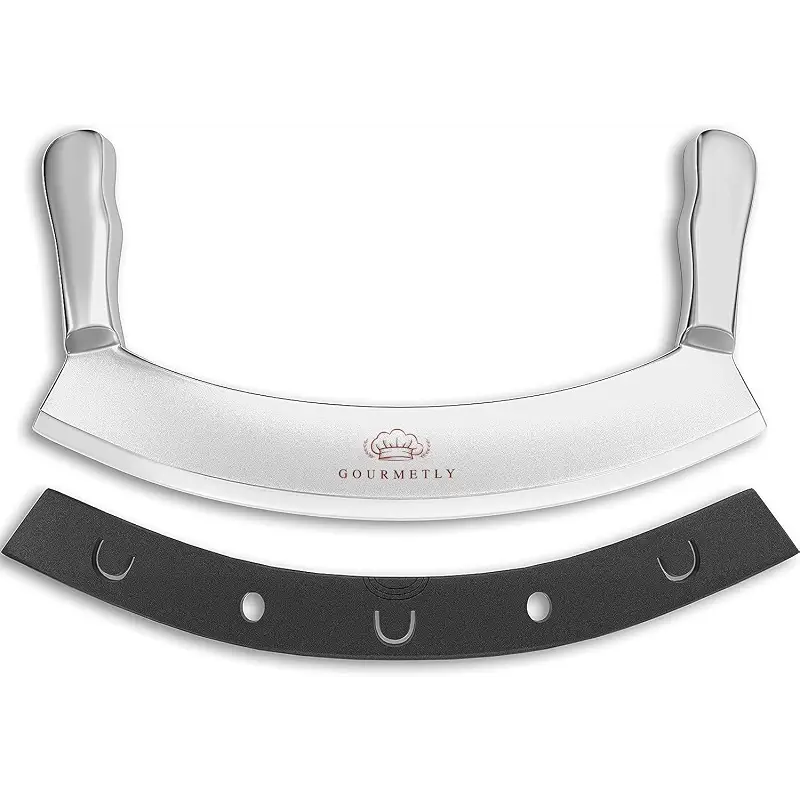
The Gourmetly mezzaluna strikes a balance many home cooks need: a sharp blade that handles pizza, vegetables, and herbs without requiring much pressure, paired with handles that stay comfortable through sustained chopping. The solid stainless steel construction means low maintenance, and the included sheath actually protects your hands while reaching into drawers, not just the blade itself.
Owners with arthritis and repetitive strain consistently praise how the two-handle design reduces hand pain compared to traditional knives. The blade's sharpness comes up repeatedly, which matters because a dull rocker forces you to press harder and lose control. That said, the sheath requires a bit of deliberate placement to go back on smoothly; this isn't the friction-snap affair of some competitors: it's a moment of care each time.
Compared to the Verve mezzaluna, which is narrower and made in Italy, the Gourmetly favors a fuller 12-inch sweep and heftier presence for heavier-duty work like cutting thick-crust pizzas or large batches of herbs. If you prize simplicity and workhorse performance, this is the pick.
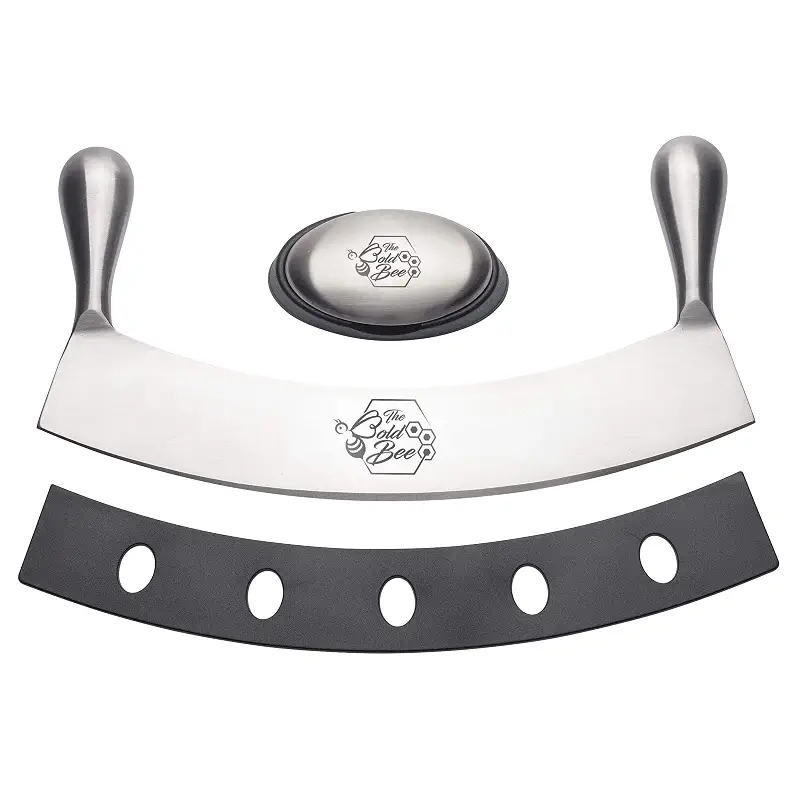
The Bold Bee's mezzaluna earned the most reviews in this lineup, and the volume speaks to a formula that works: genuine 304 stainless steel (the same grade hospitals use), rounded handles that conform to different grip styles rather than forcing one position, and a truly thoughtful inclusion: a stainless steel soap bar that neutralizes garlic and onion odors from your hands. The blade cover is durable polypropylene designed to last, and the packaging reflects the company's commitment to low-waste production.
Owners note a learning curve if you've never used a mezzaluna before; the rocking rhythm and diagonal motions differ from knife work, but once that clicks, the speed increase becomes obvious. The company's customer service stands out: one reviewer received the bonus soap bar replacement after an initial miss, a detail that reinforces the brand's reliability. Where this differs from the Tivoli hand-forged option is philosophy: the Bold Bee prioritizes accessible durability and eco values over artisanal narrative. The blade is solid, not exceptional, and proper drying after washing is essential to avoid spots, a discipline the brand explicitly calls out.
If you want a mezzaluna that delivers good performance and comes with thoughtful extras, this is hard to beat.
Pros
Authentic 304 stainless steel with chromium-nickel balance
Includes free stainless steel soap bar for odor neutralization
Rounded handles adapt to different grip styles and hand sizes
Cons
Blade cover fits very tightly and requires care to remove safely
Water spots possible if not dried immediately after washing
Key features
12-inch blade in certified 304 18/8 stainless steel
Bonus stainless steel soap bar to neutralize sulfuric food odors
Durable polypropylene cover and eco-conscious minimal packaging
Rounded, elongated handles conform to varying hand sizes and grips
#3 Pick
Best Premium Handcrafted
Tivoli
TIVOLI Hand Forged Ulu Knife - Mezzaluna Rocker Knife - Pizza Cutter | Anti-stick Pounding Texture, Full Tang, Rosewood Handle, Belt Sheath, Gift Box, for Kitchen, Camping, BBQ
4.9(238)
Hand-forged high-carbon steel with striking aesthetics, rosewood handle, and leather belt sheath for kitchen or camp use.
Ideal for: Discerning cooks and outdoor enthusiasts who appreciate handcrafted tools and will maintain high-carbon steel properly.
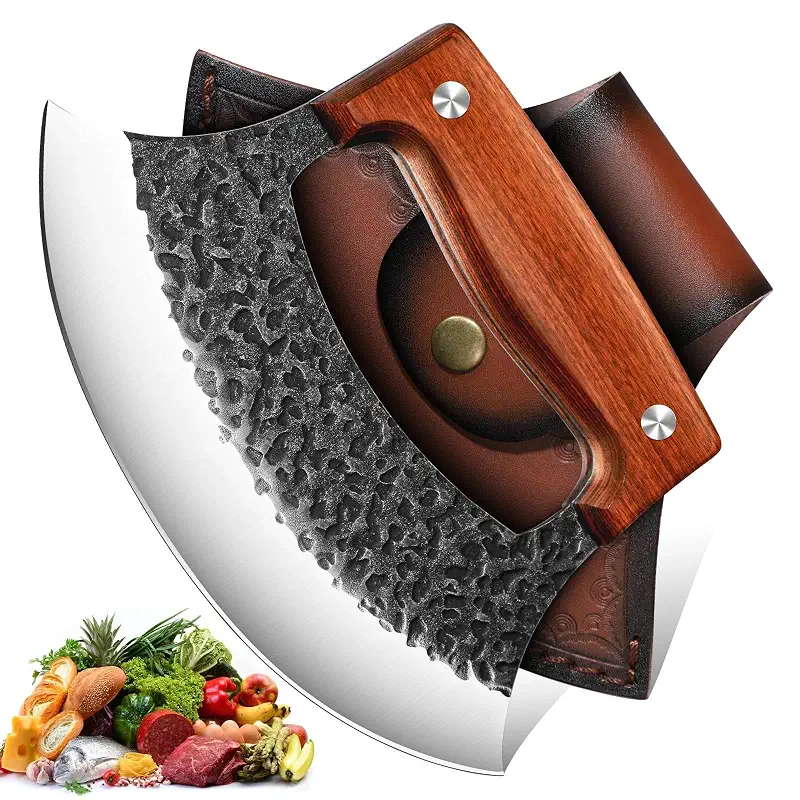
The Tivoli ulu represents a different category: a luxury item with a story. Each blade passes through over 70 handforging steps, resulting in a unique pattern and visible hammer texture that signals authentic craftsmanship. The high-carbon steel edge is visibly sharper than stamped alternatives, and reviewers consistently note the knife arrives ready to work without any initial honing. The full-tang rosewood handle feels premium and balanced, and the included leather sheath with belt loop opens possibilities beyond the kitchen, camping trips, outdoor cooking, grilling setups.
The trade-off is care and cost: high-carbon steel requires hand washing, immediate drying, and storage in the leather sheath to prevent rust and oxidation. One owner who preferred a wooden block discovered that storing a wet blade in leather invites corrosion, a maintenance reality. If you compare this to the Coowolf ulu, which includes a wooden stand and uses stainless steel for easier care, the Tivoli demands more attention but rewards it with edge retention and visual presence. Arthritic hands and one-handed cooks praise the ergonomic rocking motion; this is genuinely accessible design married to heirloom craftsmanship.
This is the pick for collectors, outdoor enthusiasts, or anyone who values the story behind their tools. In terms of specialized kitchen blades, the Tivoli occupies a tier closer to best kiritsuke knife designs that prioritize craftsmanship and heritage over mere functionality.
Ideal for: Italian cooking enthusiasts and cooks who value traditional technique and precise herb mincing.
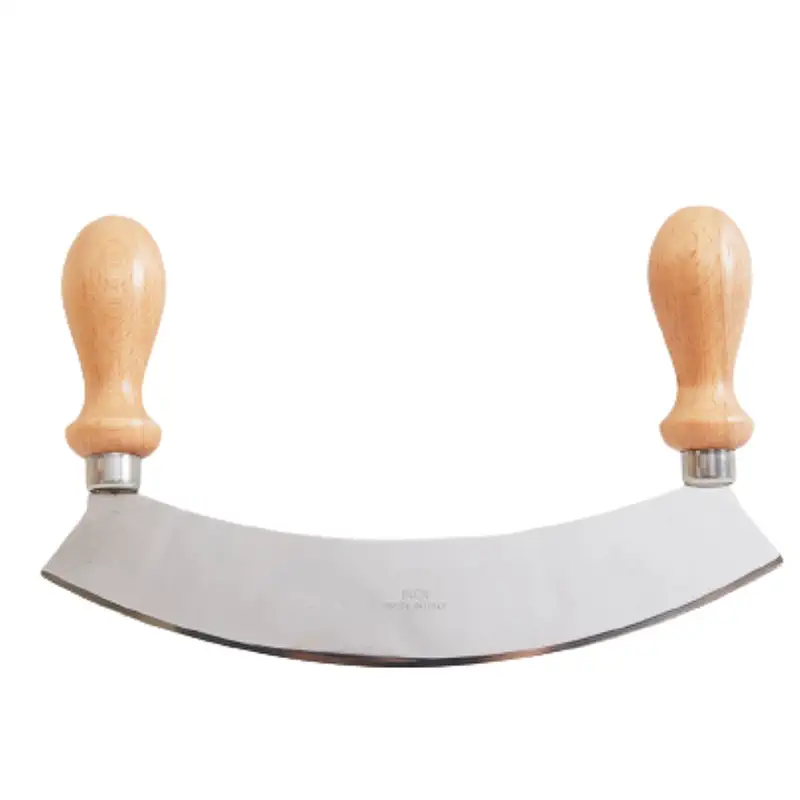
The Verve mezzaluna is the purist's choice: a 10-inch single blade that honors how Italian cooks have approached herb and vegetable prep for generations. The stainless-steel curve is narrower than the 12-inch competitors, which changes the feel: less dramatic rock, more precise control. Beechwood handles offer warmth and grip without the slip of metal or the heft of rosewood, and the dimensions feel right in hands accustomed to lighter European cutlery.
Owners consistently mention a learning curve, but once the rocking rhythm establishes itself, the tool becomes meditative. One reviewer who watched an 80-year-old Italian cook work with it recalled thinking, "Why don't we use these?" The Verve's philosophy differs sharply from food-processor logic: instead of pulverizing aromatics into submission, the gentle teeter-totter motion releases oils naturally. That distinction matters if you're making pesto or fine herb blends where subtlety counts.
Where this sits versus the Gourmetly or Bold Bee is scale and compromise: the single blade and narrower width mean it's less suited to batch pizza cutting or heavy root vegetables. This is a specialist's tool, excellent for what it does, but requiring intentional technique and patience. If your kitchen leans toward Italian cooking and hand-tool aesthetics, this belongs on the wall.
Pros
Authentic Italian design made in Italy with proven longevity
Single narrow blade offers precise control and gentle aromatic release
Warm beechwood handles provide excellent grip without slip
Cons
Narrower 10-inch blade less effective for batch chopping or thick pizzas
No storage sheath or cover included for protection
Key features
10-inch single curved stainless-steel blade, made in Italy
Ergonomic beechwood handles keep hands low and stable
Traditional half-moon design ideal for coarse mincing of fresh herbs
Dimensions: 10 x 6 x 1 inches, lightweight and portable
#5 Pick
Best with Wooden Stand
Coowolf
Coowolf Ulu Knife with Stand for Cutter Pizza Meat Vegetables Herb Salad | Stainless Steel Blade, Walnut Wood Handle, Sharp Rocker Mezzaluna Knife, Kitchen Essentials Accessories and Gadgets Tools
4.6(728)
Compact ulu design with stainless blade, walnut wood handle, and included stand for upright storage and display.
Ideal for: Home cooks seeking a lower-maintenance ulu with smart storage and one-handed capability.
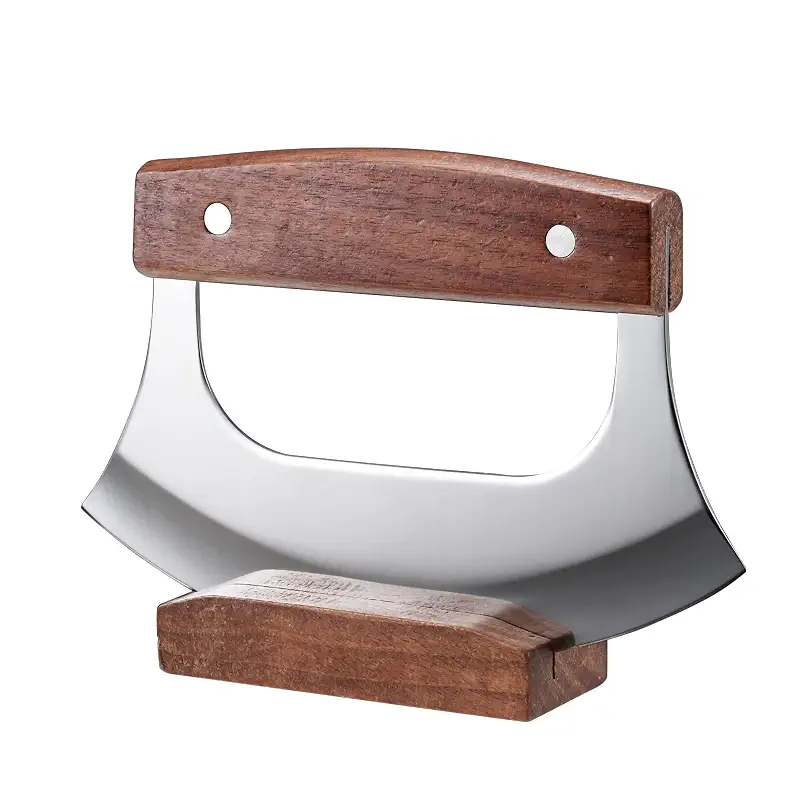
The Coowolf ulu takes a smaller, portable approach: a 6.5-inch blade that excels at control and works well in bowls or smaller cutting boards. The stainless-steel construction means zero rust worry and easy cleaning, a practical advantage over high-carbon alternatives. The walnut wood handle is warm to the touch and reduces fatigue during one-handed rocking: a real benefit for those with limited mobility or repetitive strain concerns. The included wooden stand transforms storage from a drawer liability into a countertop feature; the knife sits upright, accessible, and safe.
Owners love it for sandwich cutting, rocking through bread on a plate, nut chopping in bowls, and daily salad prep. The blade holds its edge well; one owner noted it behaves like VG10 stainless, a mid-tier Japanese steel that offers durability without demanding obsessive maintenance. The grooved underside of the handle can pinch skin if you're not careful with placement, a minor ergonomic hiccup that doesn't undermine the overall design.
Compared to the Tivoli's high-carbon heritage piece, the Coowolf prioritizes everyday ease and storage intelligence. Where specialized blades like best yanagiba knives serve the single purpose of slicing fish, this ulu embraces versatility across sandwich, salad, and vegetable work, making it the pragmatic choice for varied kitchen needs.
Pros
Stainless steel requires no special care, dries quickly, resists rust
Wooden stand included; keeps blade upright and accessible on counter
Compact 6.5-inch blade excels in bowls and for precision work
Cons
Grooved underside of handle can pinch skin if grip shifts
Smaller blade less ideal for full-size pizzas or large batch chopping
Key features
6.5-inch stainless-steel curved blade with downward-cutting force
Ergonomic walnut wood handle reduces wrist strain for prolonged use
Wooden stand included for upright storage and kitchen display
Ideal for one-handed operation, sandwich cutting, and bowl chopping
How to Choose a Mezzaluna Knife
Four trade-offs that actually matter when matching a mezzaluna knife to your kitchen.
Blade Length and Material
Mezzalunas range from compact 6.5-inch ulus to full 12-inch rocker blades. Longer blades handle batch work and pizza cutting faster but demand more counter space and control. Material matters: stainless steel is forgiving and rust-resistant, ideal for busy kitchens; high-carbon steel holds sharper edges longer but requires immediate drying and leather or wood storage. Consider your prep volume and your tolerance for steel maintenance before choosing.
Handle Design and Grip
Dual handles keep both hands engaged and low, which reduces wrist strain compared to single-blade knives. Look for rounded or contoured designs that conform to your hand rather than forcing a single grip style. Metal handles stay cool but can slip when wet; wood and beechwood provide warmth and grip but need hand washing. If you have arthritis or limited mobility, the two-handle setup is genuinely transformative: many cooks discover they can prep longer without pain.
Storage and Protection
A quality blade cover or sheath protects both the knife and your hands reaching into drawers. Plastic covers are durable and easy to clean; leather sheaths look elegant but require careful drying to prevent rust in high-carbon blades. The mezzaluna knife maintenance guide covers specific care routines for different materials, but the core rule is dry immediately after washing and store it safely. Some models include stands or magnetic strips for counter display, which keeps the knife accessible and visible.
Task-Specific Fit
Pizza cutters benefit from longer blades and weight; daily herb work thrives with precision control and narrower profiles. A mezzaluna versus chef knife comparison explores when each tool shines, but quick answer: a mezzaluna excels at herbs, vegetables, and soft items, while chef knives handle harder tasks like carving raw meat or tough squash. Test the rocking rhythm on your cutting board before committing; some cooks love the meditative pace, others find it slower than they expect.
Price and Longevity
Budget mezzalunas start around entry-level investment and deliver solid stainless performance; mid-range options add design refinement and reliability. Hand-forged and Italian heritage pieces command premium pricing but often reward you with decades of use and a tool that feels like a kitchen heirloom. Balance immediate need against long-term value; a frequently used herb cutter may justify higher investment, while an occasional pizza tool can lean budget-friendly.
Frequently asked
Quick answers to the questions readers ask most.
What's the difference between a mezzaluna and a ulu knife?
Both are rocker blades with similar rocking motions, but mezzaluna traditionally refers to the Italian half-moon design, often with two handles and a curved stainless blade. Ulu is the Inuit design, typically with a single blade, rounded handle, and more portable footprint. In practice, they're used nearly interchangeably in kitchens; the ulu style works well for one-handed use and compact spaces, while the mezzaluna's dual handles suit longer prep sessions and two-handed control.
Do I need special technique to use a mezzaluna?
Yes, there's a learning curve. Instead of slicing straight down like a chef's knife, you rock the blade back and forth in a left-right or diagonal motion, keeping the blade tip on the board. Watch a few YouTube videos to see the rhythm; most cooks get comfortable within a few uses. The key is letting the weight of the blade do the work rather than pressing hard, which prevents the blade from slipping and keeps your hands safer.
Is a mezzaluna sharp enough for raw meat?
Most quality mezzalunas can handle cooked or raw meat, though they excel at mincing herbs and vegetables. The curved blade and rocking motion mean you're not slicing with precision like a traditional knife; you're breaking down tissue through repetitive cuts. If raw meat processing is your main task, a chef's knife or boning knife is more purpose-built. For occasional use on cooked chicken or ham, a sharp mezzaluna performs fine.
How do I sharpen a mezzaluna?
Stainless-steel blades can be sharpened with a honing steel or whetstone; high-carbon blades may require professional sharpening to maintain their finish and hardness. The curved blade makes DIY sharpening trickier than a flat edge, so many owners send them to a professional knife sharpener annually if they use them heavily. Hand-forged pieces often hold their edge longer due to material quality, while stamped stainless options dull faster but are easier to touch up.
Can I put a mezzaluna in the dishwasher?
Hand washing is recommended for all mezzalunas, especially those with wooden handles or high-carbon steel. Dishwasher heat and detergent can warp wood, dull edges, and promote rust in high-carbon blades. Wash with warm soapy water, dry immediately, and return the blade to its cover or stand. This minimal care investment keeps the knife sharp and extends its life significantly.