Find the best knife to cut fruit with our guide to paring knives. Compare sharp, durable options for precise slicing, peeling, and detail work in the kitchen.
Ideal for: Home cooks who want a single reliable paring knife for daily fruit and vegetable prep.
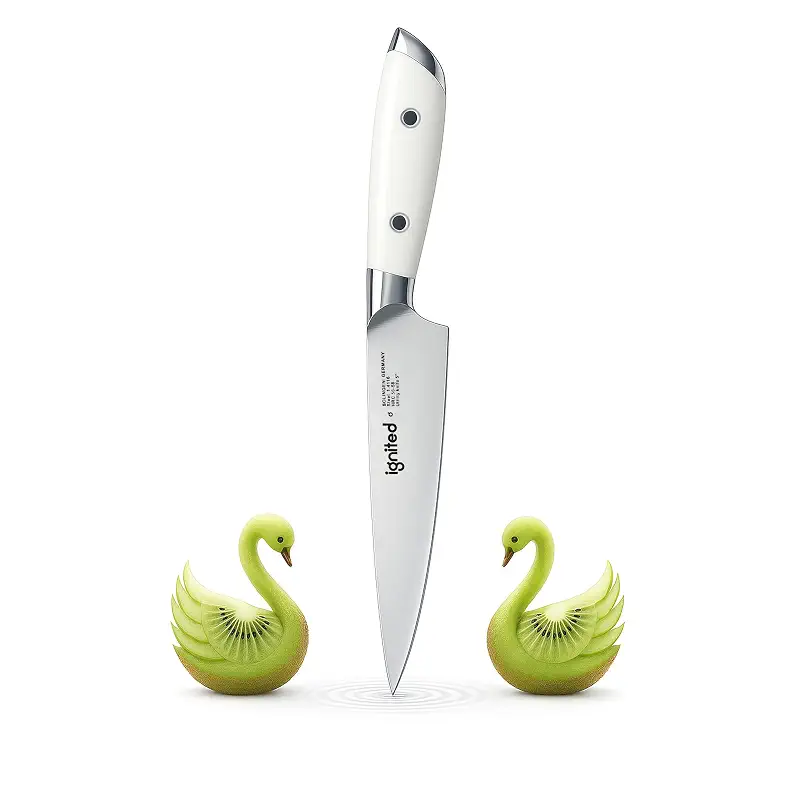
The Ignited Cutlery 5-inch paring knife earns its place at the top through a combination of hard data and buyer consistency. Built from German 1.4116 stainless steel and heat-treated to 58 HRC, it delivers the sharpness you need for precise fruit slicing without the brittleness that comes with overly hard blades. Owners report reaching for this knife far more than expected, especially for smaller, controlled tasks where a chef's knife feels clumsy. The ergonomic handle is genuinely slim and comfortable, which matters during extended prep sessions when hand fatigue can undermine both safety and cut quality.
What sets this knife apart is longevity. Multiple reviewers note that after months of daily use, the blade maintains its edge remarkably well before requiring sharpening. That's not hype; that's the result of thoughtful heat treatment and full-tang construction. The 5-inch length gives you slightly more blade than a compact paring knife, opening up applications like slicing softer fruits whole.
The only consideration: the ivory white handle requires hand washing and careful drying to stay pristine. If you prefer a stainless steel or textured handle that shrugs off dishwasher exposure, the Paudin offers a more low-maintenance aesthetic at a smaller size, though it trades some of the longer blade's versatility.
Pros
Exceptionally sharp right out of box, holds edge for months
Slim, ergonomic handle feels like extension of hand
Full-tang construction provides excellent balance and durability
German stainless steel resists corrosion without brittleness
Cons
Ivory handle requires hand washing; not dishwasher safe
Blade dulls eventually with heavy daily use, needs regular sharpening
Key features
5-inch blade, German 1.4116 stainless steel, 58 HRC hardness rating
Full-tang construction for superior balance and strength
Multi-stage heat treatment ensures lasting sharpness and edge retention
Ergonomic ivory white handle with comfort grip design
Comes with elegant gift box for storage or presenting
#2 Pick
Best Value
Paudin
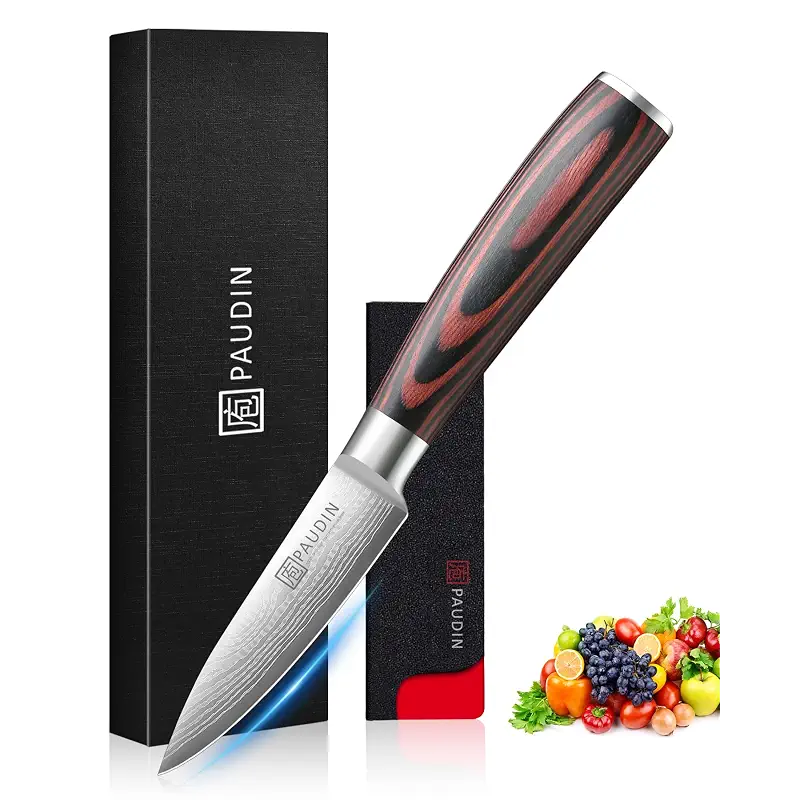
PAUDIN Paring Knife 3.5 Inch, Ultra Sharp Small Kitchen Knife | High Carbon 5Cr15Mov Stainless Steel Forged Fruit Knife, Ergonomic Pakkawood Handle with Elegant Box
4.7(1,887)
Exceptional sharpness and edge retention at an entry-level investment; over 1,800 confirmed owners.
Ideal for: Budget-conscious home cooks and those new to paring knives seeking proven quality.
The Paudin 3.5-inch paring knife stands out for delivering performance that vastly outpaces its modest price point. High-carbon 5Cr15MoV stainless steel, conical ground and ice-tempered, arrives sharp enough that buyers immediately notice the difference. Reviewers who own multiple Paudin knives consistently praise the brand for quality that punches above weight, and owners of other kitchen knives often rank this alongside tools that cost significantly more. The smaller 3.5-inch blade is ideal for peeling, coring, and detail work where a full 5-inch knife might feel unnecessarily long.
The Pakkawood handle is genuinely durable and non-slip, even with wet hands, and the decorative waved pattern on the blade is etched rather than damascus, but that's an honest trade-off at this price. The knife is dishwasher safe, which removes the hand-washing friction that some home cooks find tedious. Edge retention is strong; a quick strop before use keeps it performing day after day. With nearly 1,900 reviews and consistent 4-5 star ratings, this is one of the most field-tested paring knives available.
Compared to the Ignited Cutlery above, you're sacrificing 1.5 inches of blade length and the prestige of German steel, but you're gaining ease of care and a significantly lower entry cost. For anyone unsure whether a paring knife deserves counter space, this removes the financial barrier to finding out.
Pros
Consistently sharp and holds edge well with regular use
Dishwasher safe for easy cleanup and maintenance
Comfortable Pakkawood handle, suitable for left and right-handed users
Excellent value; performance far exceeds typical budget-knife quality
Cons
Shorter 3.5-inch blade limits versatility for larger fruits
Etched pattern blade, not true Damascus, though decorative appeal remains
Key features
3.5-inch blade, high-carbon 5Cr15MoV stainless steel construction
Conical ground and ice-tempered for 60% longer edge life versus typical small knives
Durable Pakkawood handle, ergonomic and non-slip grip
Dishwasher safe for convenient cleaning
Lifetime manufacturer warranty against material and workmanship defects
#3 Pick
Best Premium Option
Famcüte
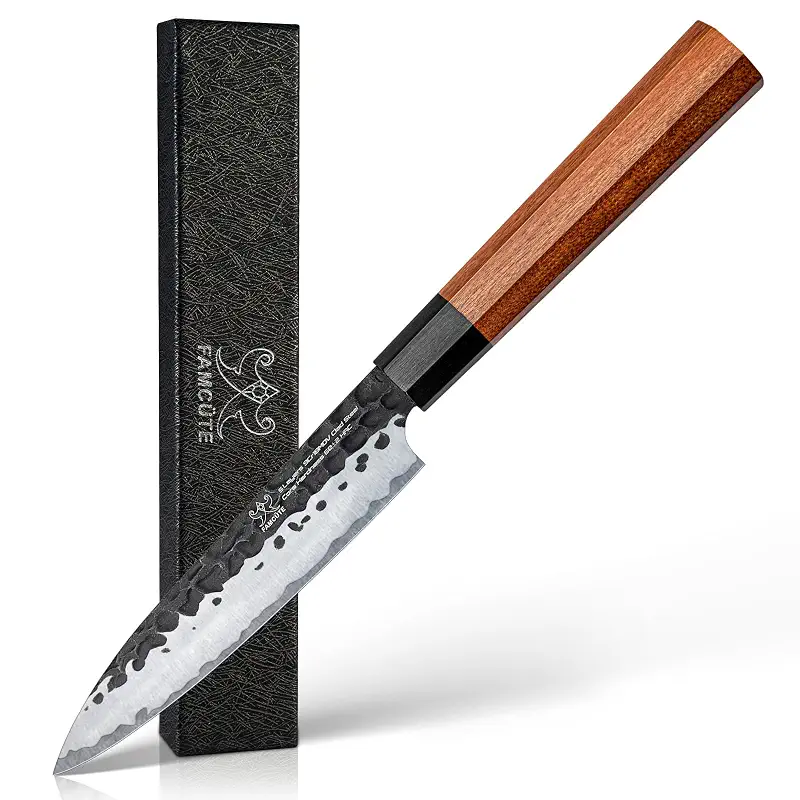
FAMCÜTE 5" Paring Knife, Hand-Forged Japanese Small Knife for Easy Control | Japanese 5-Layer 9CR18MOV High Carbon Steel Professional Petty Knife with Rosewood Handle, Unique Beautiful Gifts for Mom/Dad
4.4(216)
Japanese-forged precision and artisan build quality for cooks who value craftsmanship and balance.
Ideal for: Experienced home cooks and professionals who spend significant time on detail work and value balance.
The Famcüte 5-inch paring knife brings Japanese forging tradition to the category, and the difference in how the blade feels in hand is immediately apparent. Nine-layer steel hardened to 58-62 HRC provides both sharpness and toughness, and the dimpled blade (a Japanese detail many overlook) genuinely helps food release during slicing, reducing the friction that makes cutting feel like a chore. The African rosewood handle is polished and contoured, designed for extended use without hand fatigue. For left-handed cooks, this knife is a thoughtful choice; most options favor right-handed users through handle design, but this one works equally well either way.
What elevates this knife above the Ignited Cutlery is the balance point and blade geometry. Buyers note that it feels "nimble" and precision-engineered, with weight distributed toward the blade to reduce hand strain during peeling and mincing. One reviewer noted the blade is thick enough for durability but acknowledged that thickness trades some of the ultra-fine cuts a thinner Japanese blade would allow. The gift packaging and customer support add polish, but this is ultimately for cooks who prioritize how a knife feels over pure edge-holding numbers.
Where the Paudin offers pure value, the Famcüte offers an experience. If you spend considerable time on detailed prep work, the ergonomic payoff over months of use justifies the step up.
Pros
Japanese nine-layer forged steel with exceptional edge and durability
Dimpled blade reduces food sticking and friction during cuts
Polished African rosewood handle is comfortable for both left and right-handed users
Precision weight distribution reduces hand strain during extended prep sessions
Polished African rosewood handle, contoured for comfort and left-right versatility
Precision balance with weight toward blade to reduce wrist strain
Comes elegantly packaged and backed by dedicated customer support
#4 Pick
Best for Specialist Work
Huusk
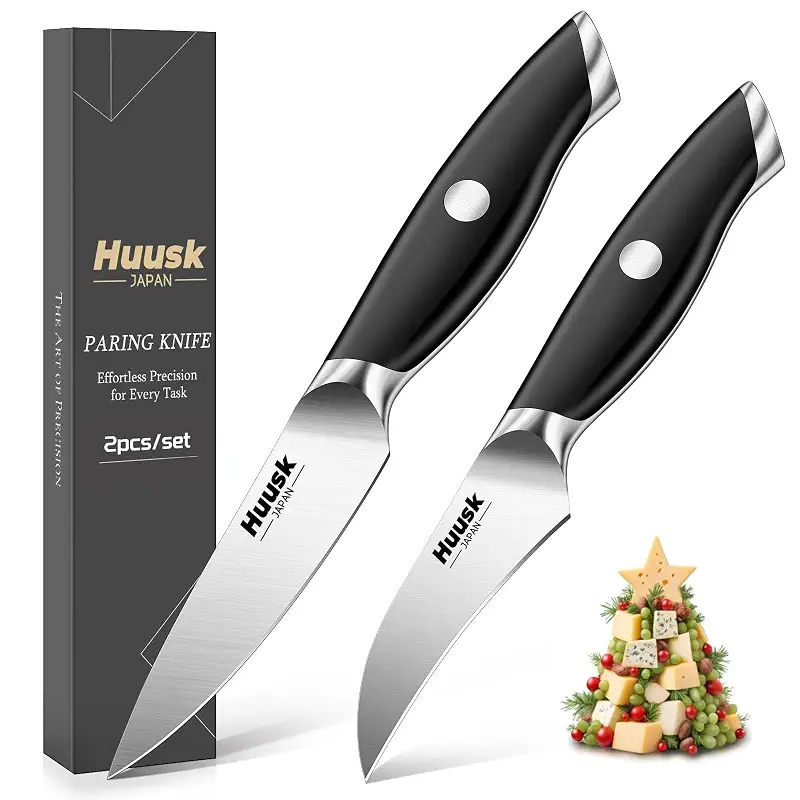
Huusk Paring Knife Set of 2 - Bird Beak Small Kitchen Knives Ergonomic Grip | Japanese Stainless Steel, Well-balanced, Sleek Black, Vegetable Fruit Cutting Hulling Coring Segmenting, Gift
4.8(34)
Two-knife set pairs precision straight blade with curved bird's beak for meat, fish, and decorative cuts.
Ideal for: Home cooks and professionals doing meat trimming, fish filleting, and decorative garnish work.
The Huusk set of two paring knives takes a different approach by including both a straight 3.5-inch blade and a curved 2.75-inch bird's beak peeling knife. This is less about being a one-knife workhorse and more about owning the right tool for specific tasks. The straight blade excels at slicing, dicing, and mincing fruits and softer vegetables. The curved bird's beak follows the contours of apples, potatoes, and citrus, making coring and decorative work faster and more controlled. For home cooks and professionals doing meat or fish prep, reviewers emphasize how the bird's beak eliminates the fumbling that comes when a straight blade tries to follow a rounded surface.
The sharpness arrives as a notable strength. Both blades are ground to a fine edge and the Japanese stainless steel holds that edge through regular use. Owners note the build quality exceeded expectations for the price, with solid full-tang construction and substantial steel that doesn't feel cheap. The resin handles offer secure, non-slip grip even with wet hands, which matters when working with raw proteins. If you work with fish or do your own chicken breakdown, this set is purpose-built for exactly that work. Compared to buying a single all-rounder like the Paudin, you're investing in specialization rather than versatility, but that specificity pays off for cooks doing detailed meat work or garnish preparation regularly.
One caveat: the sharpness demands respect. Owners are explicit that these knives call for proper knife skills and caution; they're not forgiving with careless handling.
Pros
Razor-sharp Japanese stainless steel blades deliver clean, controlled cuts
Curved bird's beak blade excels at coring, peeling, and following contours
Full-tang construction provides stability and precise weight distribution
Non-slip resin handles secure grip even with wet or oily hands
Cons
Exceptional sharpness requires experienced knife skills and careful handling
Set of two blades less versatile than single all-purpose knife for general fruit prep
Ideal for: Home cooks needing multiple paring knives, travelers, and those building backup kitchen tool kits.
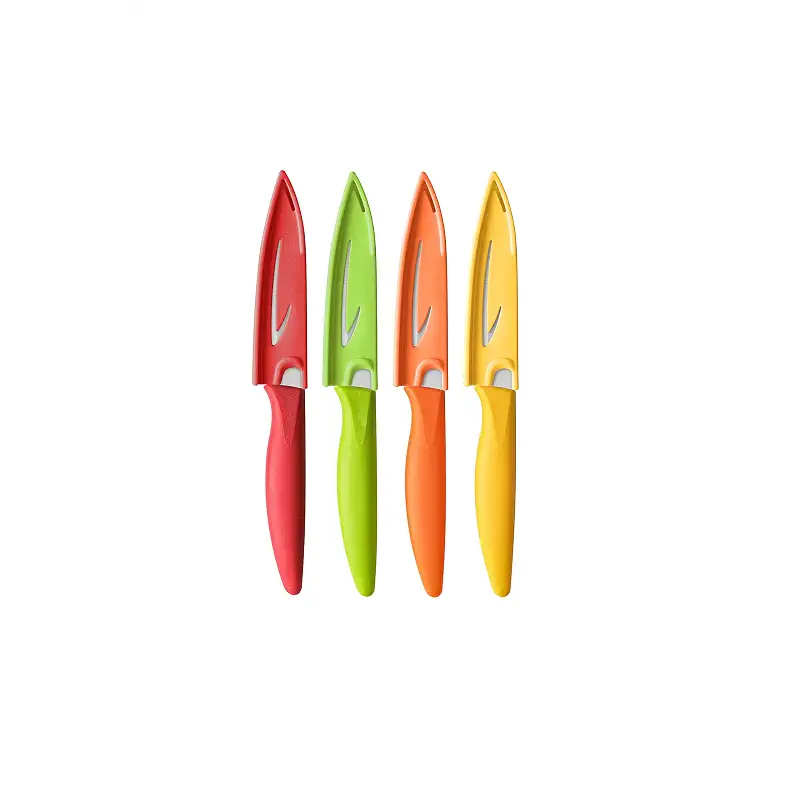
The Vituer four-piece set trades single-knife mastery for practical abundance. Four 4-inch paring knives in different colors, each with its own protective sheath, makes this appealing for cooks who want a knife in multiple locations or are building a durable backup kit. German 3Cr13MoV stainless steel, hardened to 56 HRC, arrives sharp and handles fruit and vegetable work without issue. Owners consistently call these sharp right out of the box and note that the color variety adds a small touch of personality to the knife block or drawer. The plastic handles are lightweight and ergonomic, integrated with the blade, and the sheath design is a practical touch that most single-knife options skip.
The trade-off is honest: reviewers describe the blades as somewhat thin and flexible compared to premium options. Cutting into harder apples or root vegetables can cause the blade to flex slightly rather than slice cleanly, which separates this from the solidity of the Ignited Cutlery or Famcüte. However, for softer fruits, travel knives, or fast-food prep (yes, multiple reviewers buy these for road trip use), that flexibility is a non-issue. One reviewer reported rust spots when run through the dishwasher, reinforcing that hand washing yields better longevity. The real value here is ownership and accessibility: for the cost of one premium paring knife, you get four sharp tools and the flexibility to keep one at the office, in a travel bag, or as backup when others are being sharpened. Compared to the Paudin's single offering, the Vituer trades thickness and premium feel for quantity and distributed convenience.
Pros
Four sharp knives for the cost of premium single blade
Included protective sheaths add safety and portability value
Lightweight, colorful design appeals to casual kitchen users
Excellent choice for travel or keeping knives in multiple locations
Cons
Thinner, more flexible blades than premium options; struggle with harder vegetables
Hand washing required; rust spots noted when dishwasher used despite label claim
Key features
Four 4-inch paring knives with matching protective blade sheaths
German 3Cr13MoV stainless steel, 56 HRC hardness rating for reliable sharpness
Lightweight, integrated plastic handles with ergonomic shape and balance
Colorful design variety. BPA-free and lead-free construction
Compact and portable; ideal for travel kits or distributed kitchen backup
How to Choose the Right Paring Knife
Four trade-offs that actually matter when matching a knife to cut fruit to your kitchen.
Blade Length and Task Fit
Paring knives typically range from 3 to 5 inches. A 3.5-inch blade is ideal for peeling, coring, and intricate detail work where control matters more than reach. A 5-inch blade gives you more versatility for slicing whole small fruits and vegetables without frequent repositioning. If you do mostly peeling and garnish work, shorter is often better; if you slice softer fruits or prep small vegetables whole, the longer option keeps you from having to reposition as often. Your task preference drives the right length for your kitchen.
Steel Type and Edge Retention
German stainless steels like 1.4116 are known for durability and corrosion resistance; they hold an edge well but may dull slightly faster than harder Japanese steel formulations. Japanese and high-carbon Chinese steels (5Cr15MoV, ) harden to higher Rockwell ratings (57-62 HRC versus 56-58), which means they stay sharp longer but can be slightly more brittle if mishandled. For daily home cooking, either works well. The key is matching the steel to maintenance habits: if you hand wash and maintain knives regularly, harder Japanese steel pays dividends. If you want low-friction care, German stainless is more forgiving.
Handle Comfort and Control
A paring knife spends extended time in your hand during detail work, so handle ergonomics matter more than novelty. Look for handles that feel slim enough to grip precisely without fatigue, with enough texture or material (rosewood, Pakkawood, resin) to stay secure even with wet hands. Full-tang construction, where the blade extends fully into the handle, provides better balance and stability than partial-tang designs. If you're left-handed, verify that the handle curve works equally well either way; most western paring knives default to right-handed ergonomics. Testing in hand, when possible, beats reading alone.
Sharpness and the Paring Knife vs Chef's Knife Role
A paring knife excels at tasks where control and precision beat raw cutting force. The key to understanding when to reach for a paring knife is recognizing that a paring knife vs chef's knife serve different kitchen needs; a paring knife shines for peeling, coring, mincing garlic, segmenting citrus, and decorative work. A chef's knife dominates larger chopping and slicing tasks. Sharpness matters for both, but for a paring knife, precision control often matters more than brute cutting power. An extremely sharp paring knife that's also lightweight and balanced makes detail work safer and faster than a heavier, less sharp option.
Maintenance and Care
How to clean and sharpen your paring knife properly will determine how long it stays useful. Hand washing and immediate drying extend life far beyond dishwasher cycles, which can dull the edge and promote rust at the blade-handle joint. Most owners report stropping (a light realignment of the edge on a leather strop or steel) before use keeps a good paring knife performing for months between sharpenings. Harder Japanese steels sharpen quickly with a whetstone but can be intimidating for home cooks; softer German steels are easier to sharpen but need it more frequently. Factor in whether you're comfortable sharpening at home or prefer knives that stay sharp longer.
Frequently asked
Quick answers to the questions readers ask most.
What size paring knife is best for cutting fruit?
A 3.5 to 5-inch blade is the typical range. For peeling and detail work, 3.5 inches offers maximum control; for slicing whole soft fruits, 5 inches reduces repositioning. Most home cooks find a single 4 to 5-inch paring knife covers everyday fruit prep well. If you do significant peeling or garnish work, 3.5 inches is more comfortable for extended sessions.
How sharp should a paring knife be out of the box?
A quality paring knife should arrive sharp enough to slice an apple cleanly with minimal pressure and cut a tomato without crushing it. Most buyers in this category report their knives are immediately usable for detailed work. If a paring knife feels dull upon arrival, it's either a defect or packed poorly; contact the seller. Proper sharpness is non-negotiable in this category because the whole point is control.
Should I buy a paring knife set or a single knife?
A single high-quality paring knife covers most home cooks' needs. A set of two or more makes sense if you want specialization (straight blade and curved bird's beak for different tasks), backup knives in multiple locations, or simply can't decide on size. Most experienced cooks prefer one excellent knife they know well over multiple adequate ones. Start with a single trusted knife and add only if a specific task demands it.
Is stainless steel or carbon steel better for a paring knife?
Stainless steel (German or Japanese) is easier to care for and resists rust, making it ideal for home cooks who hand wash and want low-maintenance tools. High-carbon stainless (like 5Cr15MoV or ) offers a middle ground, staying sharp longer than pure stainless but remaining corrosion-resistant. Pure carbon steel requires more care and sharpening discipline. For fruit cutting, stainless is the practical choice.
How often should I sharpen a paring knife?
With regular use and hand washing, a quality paring knife typically needs sharpening every 2 to 4 months of daily cooking. Light stropping before use extends the interval significantly. Hard Japanese steels hold an edge longer than softer German steels, but both benefit from consistent stropping. The true answer depends on your use intensity and maintenance habits more than the knife itself. Many owners find that proper care extends sharpening intervals well beyond initial expectations.