Kitchen & Dining · Gadgets
Best Knife for Grilling
Find the best knife for grilling and BBQ. Compare top-rated brisket slicing knives with razor-sharp German steel and ergonomic handles for perfect meat cuts.
Affiliate disclosure: As an Amazon Associate I earn from qualifying purchases.
At a glance
2
Best Budget-Friendly OptionBright Hobby
3
Best for the Full ButcheryKitnats
4
Best Balanced PerformanceKatisun
5
Premium Choice with Proven Track RecordCutluxe
Detailed reviews
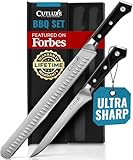
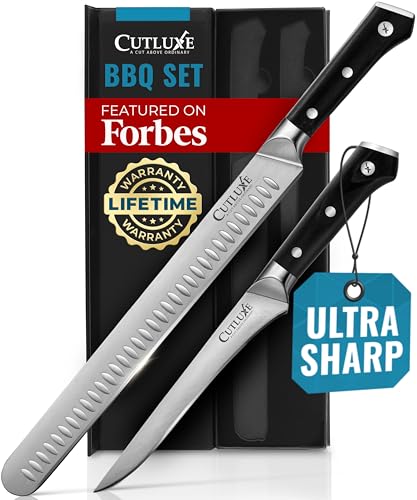
This set arrives sharper out of the box than most competitors, with a Rockwell hardness rating that surpasses some premium brands at a lower cost. The 12" carving blade handles large cuts of brisket with minimal effort, while the included 6" boning knife adds practical prep work before cooking. The granton edge (those shallow dimples along the blade) reduces friction and prevents meat from sticking during the slice, which buyers consistently praise for producing clean, restaurant-ready cuts.
The full tang construction and ergonomic handle keep the knife stable under pressure, and the included velvet-lined storage box signals the craftsmanship. One buyer noted that the blade's length does demand storage space, not a flaw, but a reality worth planning for. The Rockwell hardness of 56+ means the edge lasts through multiple cookouts.
Compared to single-knife options, this set's value lies in getting both a primary carving tool and a secondary prep blade. If you're outfitting a BBQ station from scratch, pairing these knives with the top grilling spatula in your kit saves multiple separate purchases. Buyers across five-star reviews report the blade still slices cleanly after months of regular use, suggesting durability that justifies the investment.
Pros
- Includes both 12" carving and 6" boning knife
- Granton edge prevents meat sticking and tears
- Arrives exceptionally sharp, cuts arm hair out of box
- Full tang design with comfortable ergonomic handle
Cons
- 12" blade requires safe storage and counter space
- Honing steel grit could be finer for maintenance
Key features (5)
- 12-inch carving knife with shallow granton dimples for smooth slicing
- 6-inch boning knife for trimming and prep work
- High-carbon German steel at 56+ Rockwell hardness
- Full tang construction with triple-riveted ergonomic handle
- Lifetime warranty and premium velvet-lined storage box
This knife carries exceptional value: owners report it arrives sharper than expected and holds its edge through repeated cookouts. The 12" blade and non-slip handle strike a balance between length for long, clean strokes and manageable weight that doesn't tire your hand. At 56+ Rockwell hardness, the steel resists dulling and corrosion, which budget options often compromise on. One buyer sliced through multiple rib and brisket sessions before noticing any edge degradation.
The packaging and instruction manual suggest a manufacturer who sweats the details. Buyers praise the knife's balance and note that proper technique (letting the blade do the work) yields professional presentation. The lifetime warranty removes purchase risk, though like all single-blade tools, this doesn't include a boning knife for pre-cook prep.
Where the Bright Hobby knife excels is in simplicity and purpose. For tasks like preparing poultry, a knife to cut raw chicken needs sharpness and precision, but this carving blade is optimized for sliced cooked meat rather than raw butchering. If you own prep knives for raw work and need only a dedicated carving blade for finishing, this single-purpose tool beats buying a full set. Compared to the multi-knife Cutluxe set above, you trade the extra boning knife for lower entry cost and a narrower focus that still proves versatile enough for vegetables, fruits, and even bread.
Pros
- Arrives exceptionally sharp from factory
- Premium German steel at competitive price point
- Excellent fit and finish for the investment
- Non-slip handle supports extended use without hand fatigue
Cons
- Single blade limits prep versatility without additional knives
- May require sharpening sooner than premium-grade alternatives
Key features (5)
- 12-inch slicing blade with premium German steel
- 56+ Rockwell hardness for durability and edge retention
- Full tang design with non-slip ergonomic handle
- Resists rust, stains, and corrosion
- Lifetime warranty covers defects in material and workmanship
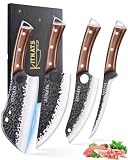
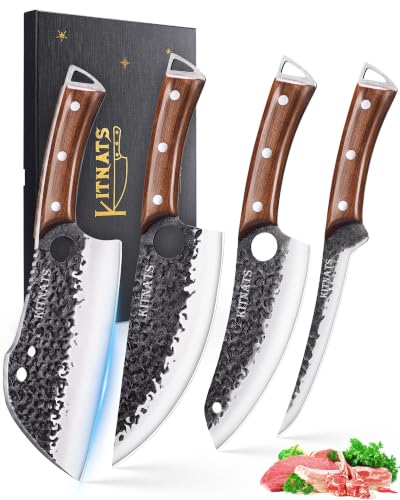
This set stands out for hand-forged construction and the inclusion of a 7.8" meat cleaver: a tool that pure carving knife sets don't offer. If your BBQ workflow involves breaking down whole chickens or handling thick rib bones before trimming, the cleaver's heft and edge angle make quick work of joints and cartilage. The 5Cr15MoV high-carbon stainless steel and traditional hand-hammering create a textured blade finish that looks as capable as it performs.
Owners emphasize the weight distribution and balance across all four blades, noting that the heavier tools feel controlled rather than cumbersome. The 15° double-sided V-edge delivers clean slices on meat and vegetables, and the hand-polished finish resists sticking. One reviewer noted the blades weren't quite as sharp on arrival as competitors, but sharpening brought them to full potential: a minor trade-off given the set's comprehensiveness and hand-forged character.
Compared to single-blade options like the Bright Hobby, this four-knife approach covers far more territory: cleaver for bone work, chef knife for large cuts, prep knife for vegetables and trim, and boning knife for detail. The knife for cutting chicken breast demands a different geometry than a carving blade, and this set's variety handles that distinction through its multiple specialized edges. If you're building a dedicated BBQ prep station or gifting a serious meat cook, the hand-forged aesthetic and tool variety justify the step up. The wood handles and 3-rivet full tang construction telegraph durability for long-term use.
Pros
- Hand-forged high-carbon steel with distinctive textured finish
- Meat cleaver handles bones and thick cartilage with ease
- Four-piece set covers carving, prep, and butchering in one box
- Natural wood handles with 3-rivet full tang for strength
Cons
- Requires hand washing and immediate drying to maintain finish
- May need sharpening out of box to match other competitors
Key features (5)
- 7.8-inch meat cleaver for breaking down bones and joints
- 7.8-inch chef knife for slicing large brisket and roast cuts
- 6.7-inch prep knife for vegetables, fruits, and trimming
- 7-inch boning knife for separating meat from bone
- Hand-forged 5Cr15MoV high-carbon steel with natural wood handle
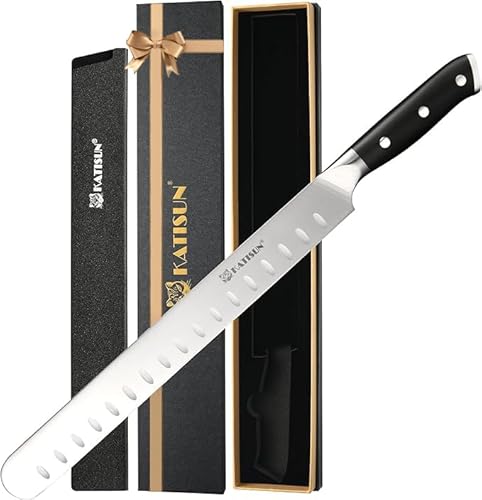
This knife prioritizes weight distribution and hand feel over flashy packaging. Owners consistently report that the heavy, well-balanced 12" blade makes slicing brisket feel almost automatic: you drag it rather than push it, and the meat falls into clean sections. The 17 engraved dimples (more than granton edges on lighter knives) actively help release meat fibers, reducing shredding and sticking that mars presentation.
The ergonomic handle is designed around comfort during extended use, and the stainless steel resists corrosion with minimal maintenance. One reviewer trimmed fat on 75+ pulled-pork butts without the blade dulling noticeably, suggesting the hardness and heat-treatment hold up under heavy rotation. The included sheath provides safe storage, though like all large carving blades, proper cabinet or drawer space is necessary.
Where the Katisun differs from the Cutluxe single-blade option below is in the emphasis on weight and dimple density: some cooks prefer a heavier blade that does more of the work, while others find the Cutluxe's lighter touch more controlled. The Katisun leans toward "let gravity help," while the Cutluxe emphasizes precision technique. Both deliver sharp slices, but the Katisun appeals to cooks who want the blade's mass to be part of the cutting action.
Pros
- Heavy, well-balanced design reduces cutting effort
- 17 engraved dimples prevent meat sticking effectively
- Hand-forged steel maintains edge through extended use
- Protective sheath included for safe storage
Cons
- Heavier blade may feel tiring for cooks with smaller hands
- One buyer reported sharpness not matching advertisement on arrival
Key features (5)
- 12-inch carving blade with 17 engraved dimple texture
- Hand-forged stainless steel construction for durability
- Ergonomic handle with comfortable grip design
- Heavy-duty weight distribution assists slicing motion
- Protective sheath and satisfaction guarantee included
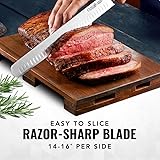
The volume of buyer feedback here speaks for itself: this single blade has earned more than 7,000 five-star reviews, and the consistency of praise for edge sharpness, balance, and durability is rare. The hand-sharpened 14-16 degree edge is tighter than commodity knives, which translates to finer cuts that preserve meat fiber and presentation. Owners report it slicing brisket, turkey, and roasts with almost no resistance, often in a single smooth stroke.
The high-carbon German steel at 56+ Rockwell hardness and the full tang luxury pakkawood handle combine durability with comfort. The granton edge, triple rivets, and laminated construction signal a no-compromise build. One buyer compared it directly to a premium-brand knife at a retail store and found this blade superior in feel and performance while costing significantly less. Another noted it held sharpness through months of regular use, including slicing frozen cuts from a warehouse supplier.
Compared to the Cutluxe Carving Knife Set at the start of this lineup, this is the single-blade version: you lose the 6" boning knife but gain a larger, more passionate buyer community and a slightly higher level of finish detail. The sheath received one complaint about internal materials rolling down over time, a real flaw worth noting, though the knife itself drew unanimous praise. If you're choosing between a full set and a premium single blade, the test is whether you already have prep knives elsewhere. The best knife for cutting chicken breast requires sharpness and control that this carving blade provides, though it's oversized for that specific task.
Pros
- 7,400+ five-star reviews document consistent edge sharpness
- Hand-sharpened 14-16 degree edge for precision slicing
- Luxury pakkawood handle with triple-rivet full tang construction
- Holds edge through months of heavy, regular use
Cons
- Sheath interior material can roll down and detach over time
- No boning or prep knife included despite full carving capability
Key features (5)
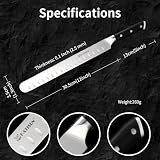
- 12-inch blade hand-sharpened to 14-16 degrees per side
- Premium German high-carbon steel at 56+ Rockwell hardness
- Granton edge with shallow dimples reduces food sticking
- Luxury pakkawood handle with triple-riveted full tang
- Includes protective sheath and backed by lifetime warranty
How to Choose a Grilling Knife
Single Blade vs. Multi-Knife Sets
A dedicated 12-inch carving knife handles 90% of grilling tasks: slicing brisket, turkey, ham, and large roasts. If you already own prep and boning knives, a single premium blade is the most efficient investment. But if you're building a BBQ station from scratch, a two- or four-piece set lets you carve, trim, and handle bone work without switching tools. Sets also make thoughtful gifts because they arrive in packaging designed for presentation, while single blades feel more utilitarian. Think about the difference: a carving blade optimizes for long, smooth slices of cooked meat, while a chef knife sacrifices length for versatility across raw prep and hard ingredients.
Blade Length and Weight Trade-offs
The standard 12-inch carving blade reaches across large briskets and turkeys with a single stroke, reducing the number of cuts and preserving meat fiber. Shorter prep knives (6-7 inches) sacrifice reach but gain control and are easier to handle in tight quarters. Weight matters too: heavier blades use gravity to assist the cut, so cooks with smaller hands may find them tiring, while larger-handed cooks prefer the momentum. Lighter blades demand more technique and precision but reward careful, controlled slicing. Test if you can: hold a 12-inch blade at chest height and feel how the weight sits in your palm. If it feels balanced rather than tip-heavy, it will perform well during extended carving sessions.
Edge Angle and Sharpness Retention
Most grilling knives ship with a 14-16 degree edge (measured per side), which is sharper than chef's knives (around 20 degrees) but less durable under heavy use. The shallower angle cuts meat cleanly but dulls faster; a wider angle lasts longer but requires more pressure. German steel typically holds edges better than stainless alternatives and resists rust in humid environments. Look for Rockwell hardness ratings of 56+ for long-term retention between sharpenings. When comparing options, "razor sharp out of the box" is standard in this category: all models here arrive sharp. The real test is whether that edge persists through 5, 10, or 20 cookouts. Reading customer reviews of long-term ownership reveals which models maintain sharpness versus those needing frequent honing.
Handle Design and Ergonomics
Full tang construction (metal extending through the entire handle) is the gold standard for durability and control. Triple-riveted handles won't separate under stress, and pakkawood or natural wood handles grip better than plastic when wet or greasy. Ergonomic shaping reduces hand fatigue during extended carving, especially important at large gatherings or competitive BBQ events. The knife should feel balanced in your hand, not nose-heavy (which tires your forearm) or handle-heavy (which loses cutting momentum). An ergonomic handle also keeps your fingers a safe distance from the blade, reducing accidental nicks. Test grip: if you can hold the knife at a 45-degree angle to a cutting board with one finger, it's probably balanced well.
Maintenance and Storage
All quality grilling knives require hand washing and immediate drying to prevent rust and handle damage; avoid dishwashers even if the label claims they're safe. Store blades in a sheath, knife block, or magnetic strip to protect the edge and keep hands safe. The brisket knife versus chef knife distinction also extends to care: carving blades are gentler than chef's knives and don't need the aggressive maintenance that everyday prep tools require. Grilling knife care and sharpening routine is simple but necessary: wipe after each use, dry fully, and hone every few months on a whetstone if you cook frequently. German steel holds edges longer than cheaper stainless but still benefits from occasional stropping or honing steel use. A knife that arrives at 56+ Rockwell hardness and is maintained properly will outlast your grill and require minimal investment beyond a basic honing stone.
Our picks at a glance
2
Best Budget-Friendly OptionBright Hobby
3
Best for the Full ButcheryKitnats
4
Best Balanced PerformanceKatisun
5
Premium Choice with Proven Track RecordCutluxe
Frequently asked
What's the difference between a carving knife and a brisket knife?
Carving and brisket knives are the same tool: a long (typically 10-12 inches), thin blade optimized for slicing cooked meat. The terms are interchangeable in modern usage. Both are distinct from chef's knives, which are shorter and thicker to handle raw prep and chopping. Carving knives excel at creating thin, uniform slices of turkey, brisket, ham, and roast; chef's knives sacrifice that precision for versatility across cutting tasks.
How long do these knives stay sharp?
A quality German-steel carving knife at 56+ Rockwell hardness typically stays sharp for 3-6 months of regular home use (weekly cooking), or longer if used occasionally. Professional kitchens sharpen weekly. Proper maintenance (hand washing, immediate drying, and storing in a sheath) extends the interval significantly. When the blade starts to slip rather than slice, stropping on a honing steel refreshes the edge without removing metal; if that stops working, a whetstone or professional sharpening restores the blade fully.
Is a 12-inch blade too long for my kitchen?
A 12-inch blade requires clear counter space during use and safe storage afterward. If your cutting board is under 18 inches, you'll feel cramped. For storage, a knife sheath takes minimal cabinet space, or a magnetic wall strip keeps it accessible and safe. If counter space is tight, a 10-inch blade sacrifices some reach but maintains most carving capability for typical home-sized briskets and turkeys. Test by holding a 12-inch ruler on your counter: that's the working length you'll need.
Can I use a carving knife for vegetables and other prep?
Yes, but it's not ideal. A carving knife's thin, long blade is optimized for cooked meat and will handle vegetables, bread, and fruits, but a 6-7 inch prep knife or chef's knife is better for raw produce because it's shorter and easier to control on a cutting board. If you're buying only one knife for a grill station, a carving blade is versatile enough for most tasks, but a two-knife set that includes a prep knife is more practical for pre-cook prep work.
What does the Rockwell hardness rating actually mean for cooking?
Rockwell hardness measures how resistant steel is to scratching and dulling. A rating of 56+ means the blade holds its edge through extended use and resists everyday wear. Higher hardness (like 58-60) is even more durable but harder to sharpen at home; most cooking knives target 56-57 as the sweet spot between durability and practical maintenance. For grilling knives, 56+ is the minimum for reliable long-term performance between professional sharpenings.