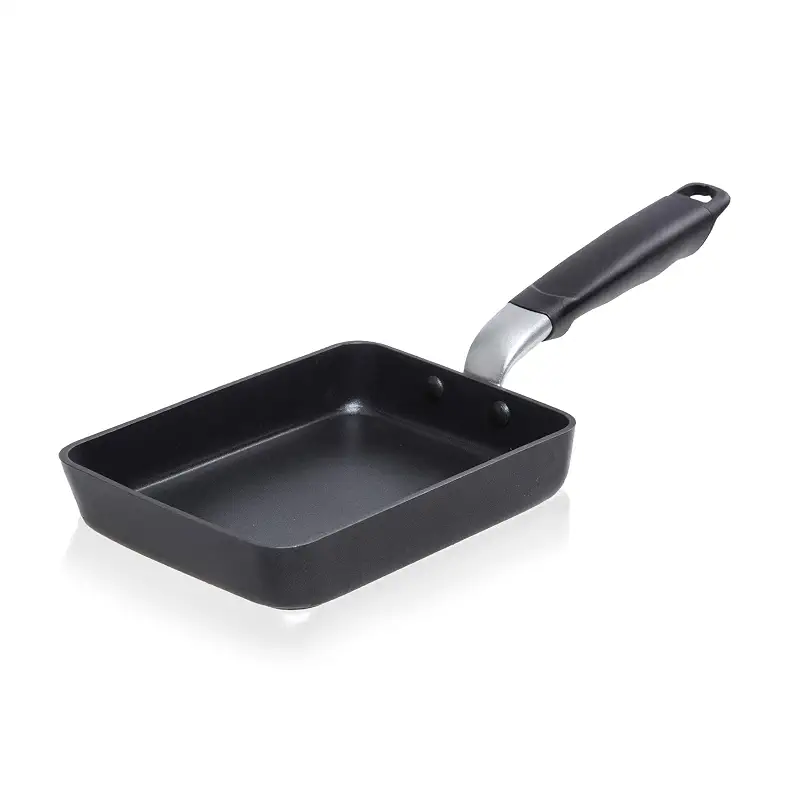
Ideal for: Home cooks who want reliable tamagoyaki or love cooking eggs daily without fuss.
The Techef Tamagoyaki stands out because it does one job exceptionally well and doesn't pretend otherwise. The forged aluminum core prevents warping, the three-layer nonstick coating resists scratching under normal use, and the sloped front with straight sides genuinely make rolling omelets feel natural rather than like fighting the pan. For tamagoyaki specifically, buyers report success on their first attempt, and many end up cooking eggs almost exclusively in this pan because it's that reliable.
Beyond rolled eggs, this pan excels at any single-serving egg dish: fried eggs, scrambles, thin pancakes. The medium rectangle size suits one or two people well, and at a lighter weight than cast iron, it's easy to maneuver. Heat distribution is even enough that you won't battle hot spots if you keep the flame moderate. Buyers emphasize keeping heat gentle and investing in a wooden or silicone spatula; that care pays off in years of service without visible wear.
The main trade-off is capacity and versatility. This is a specialist tool: narrow enough that you won't flip steaks in it comfortably, and small enough that it's a second pan rather than a workhorse. If your kitchen is tight on storage or you need one pan for everything, a larger nonstick might serve you better. For anyone serious about making tamagoyaki or simply wanting a lightweight, reliable egg pan, though, this is the first choice.
Pros
Forged aluminum base resists warping and wobbling
Three-layer nonstick coating holds up to daily use
Lightweight and easy to maneuver one-handed
Heats evenly at moderate temperature
Cons
Narrow specialty size limits other cooking tasks
Nonstick requires gentle heat to maximize lifespan
Key features
Forged heavy-gauge 3004 aluminum construction for durability
PFOA-free, three-layer Teflon nonstick with scratch resistance
7.5 x 5.5 inch rectangle or 8.5 x 8.5 inch square option
Induction-ready; oven safe to 350°F and dishwasher safe
#2 Pick
Best Starter Kit
Happi Studio
HAPPI STUDIO Tamagoyaki Pan - Japanese Egg Pan with Lid, Square 7x6 Inch | Japanese Omelette Pan For Rolled Omelets - Nonstick Tamago & Square Frying Pan, Induction Ready, Heat-resistant Handle
4.6(1,143)
Square tamagoyaki pan with lid and matching tools; well-suited for beginners learning to roll eggs.
Ideal for: Beginners wanting a complete tamagoyaki kit with accessories and guidance.
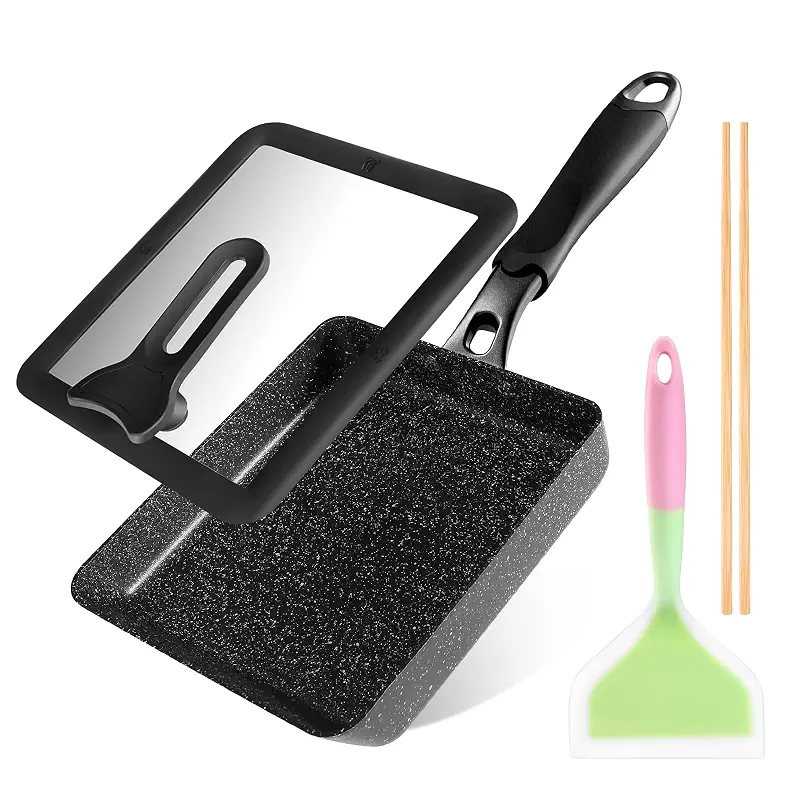
Happi Studio packages everything a first-time tamagoyaki maker needs: pan, fitted glass lid, wide spatula, and chopsticks. The completeness appeals to folks who don't want to hunt down accessories separately, and the included spatula is correctly proportioned for the 7 x 6 inch square, which matters more than it sounds when you're learning the rolling motion.
The nonstick performs well: buyers report their first attempt at rolled eggs came out restaurant-quality, and the lid genuinely speeds cooking by trapping steam and heat while you build layers. For someone cooking one or two eggs, this size strikes a reasonable balance between the tiny rectangle and a full-size pan. The maifanite stone with PFOA-free coating feels durable in hand, and the heat-resistant handle stays cool under normal use.
Compared to the Techef pan, this set trades raw specialization for completeness and includes a lid that the Techef doesn't. However, one significant complaint in reviews raises a red flag: the lid rubber peeling or showing glue residue on new units, which undermines confidence in overall quality control. If your lid arrives in perfect condition, you'll likely be happy; if it shows defects, the hassle outweighs the savings. The pan itself (separate from the lid issue) earns consistent praise. Also note that the labeling claims "Japanese cookware" but the pan is made in China, which some buyers find misleading.
Pros
Includes lid, spatula, and chopsticks for full setup
Lid helps cook eggs evenly and speeds cooking
Square shape allows more surface area than rectangles
Nonstick coating responsive and beginner-friendly
Cons
Lid quality control issues reported; rubber and adhesive defects
Made in China despite marketing language around Japanese cookware
Key features
Square 7 x 6 inch pan with maifanite stone and PFOA-free nonstick
Matching glass lid and wide spatula included for rolling
Induction compatible and dishwasher safe
Heat-resistant polymer handle for comfortable grip
#3 Pick
Best Lightweight Daily Pan
ウルシヤマ金属工業(Urushiyama)
Urushiyama Yumic Frying Pan, IH Gat, 11.0 inches (28 cm), Compatible with IH Gas, Made in Japan, Lightweight, Non-Stick
4.4(28)
Made-in-Japan lightweight frying pan with spinning-formed sides; versatile for everyday cooking across all stovetop types.
Ideal for: Home cooks seeking a versatile, lightweight nonstick daily pan for most cooking tasks.
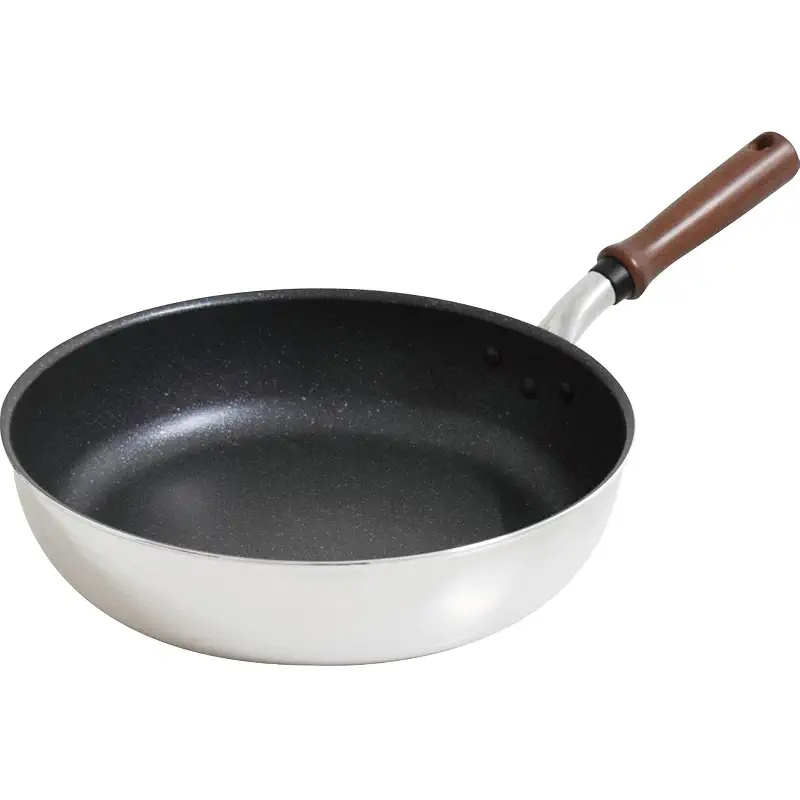
The Urushiyama Yumic shifts focus from specialty tamagoyaki to a practical, lightweight workhorse that handles daily frying. At just under 2 pounds and 11 inches across, it delivers the responsiveness Japanese makers are known for without the heft of Western nonstick or the maintenance burden of seasoned steel. The spinning-forming technique (where the pan is gradually extended rather than stamped) creates thinner, stronger walls that distribute heat quickly and evenly.
Buyers highlight how much easier this pan is to manipulate compared to heavier cookware, especially when working over an open flame or doing quick sautés. The fluorine-resin (Teflon) interior is durable enough for daily use, and cleanup is straightforward. Many owners compare it favorably to well-known French brands they've used for years, noting that the Japanese construction feels refined without being fussy. The 11-inch size covers most meal types (sautéing vegetables, searing fish, frying a larger omelette) making it a genuine all-rounder rather than a single-purpose tool.
Where the Techef tamagoyaki pan excels at one specialized task, this pan trades that precision for broad everyday utility. If you want one additional pan beyond your main cookware and value lightweight maneuverability, this outperforms the heavier Happi Studio option. The trade-off is that it's less specialized for tamagoyaki rolling and carries a steeper investment than budget nonstick. For cooks who want quality Japanese craftsmanship and have the counter space or storage, this becomes the pan you reach for constantly.
Pros
Lightweight design reduces fatigue during frequent cooking
Spinning-formed construction ensures even heat distribution
Compatible with gas, induction, electric, and ceramic cooktops
Made in Japan with reputation for lasting durability
Cons
Handle design reported as difficult to hang on some hooks
Slightly shallower depth may limit capacity for some dishes
Key features
11-inch diameter with spinning-formed lighter sides
Fluorine-resin nonstick interior for easy cleaning
Compatible with all cooktop types including induction
Made in Japan by established cookware manufacturer
#4 Pick
Best Premium Nonstick
ウルシヤマ金属工業(Urushiyama)
Urushiyama LON-F24 Frying Pan, 9.4 inches (24 cm), Made in Japan, Leon, Induction Compatible, Silver
5.0(2)
Japanese clad-steel pan with Teflon Platinum coating and heft; balances traditional quality with modern nonstick convenience.
Ideal for: Cooks who want premium Japanese nonstick with heft and the ability to use metal utensils.
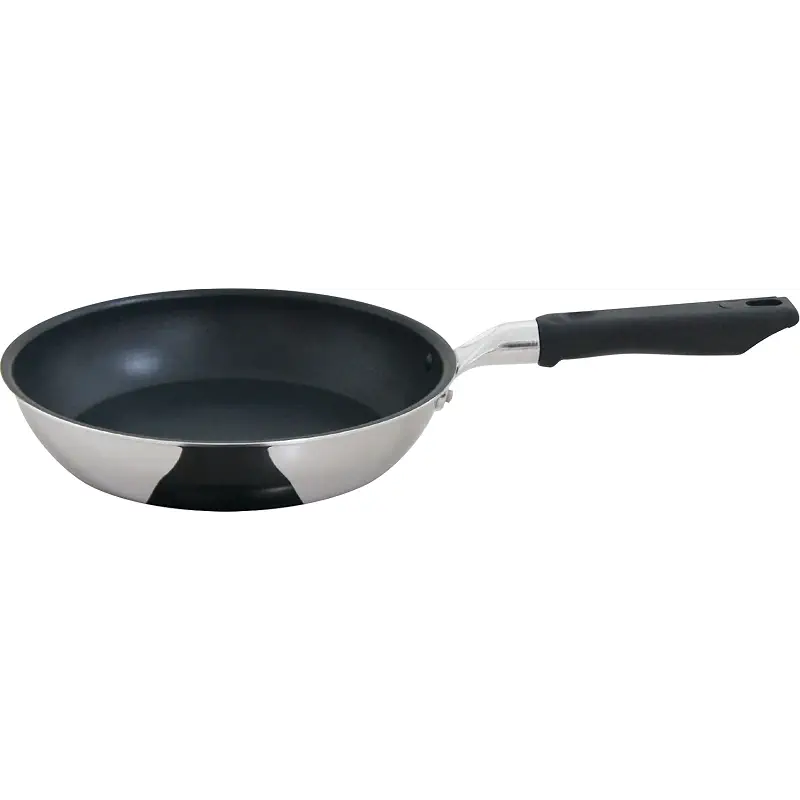
The Urushiyama sits at the intersection of Japanese craftsmanship and practical everyday cooking. The two-layer clad construction (aluminum core bonded to stainless steel exterior) ensures efficient induction performance while the Teflon Platinum interior offers a more durable nonstick than basic Teflon. At 9.4 inches, this is a focused size: larger than tamagoyaki pans but smaller than standard 12-inch skillets, making it ideal for two-person households or quick single-serving meals.
What distinguishes this pan from the lightweight Yumic model is substance. The clad material creates visible heft in hand, and that weight contributes to stable heat retention; the pan doesn't cool noticeably when you add cold ingredients. The polished exterior reflects light like a mirror and signals the care Japanese metalworkers put into finishing. For cooks accustomed to heavier Western pans or cast iron, this weight feels purposeful rather than burdensome. The Teflon Platinum coating means you can use metal utensils without worry: important if you like the feedback and speed of a metal spatula.
Compared to the lighter Yumic pan, you're paying for more substance and a premium coating at the cost of slightly less nimble handling. If kitchen storage is tight or you prioritize easy one-handed cooking, the Yumic wins. If you want a pan that feels like a genuine heirloom piece and value cooking with metal tools, this delivers. The two-star review count means less buyer feedback overall, but what feedback exists emphasizes build quality and heat characteristics that justify the investment.
Pros
Two-layer clad material for superior heat retention
Teflon Platinum coating allows safe metal spatula use
Polished finish reflects Japanese manufacturing precision
Excellent electrical efficiency on induction cooktops
Cons
Heavier than lighter Japanese alternatives like the Yumic
Limited buyer reviews; less long-term durability data available
Key features
9.4-inch diameter with two-layer clad construction
Teflon Platinum nonstick interior; allows metal utensils
Polished mirror-finish exterior and phenolic resin handle
Compatible with all heat sources including induction
#5 Pick
Best Carbon Steel Option
バリューサークル
Crafted in Japan. Trusted by Chefs. Japanese Carbon Steel Frying Pan – Precision-Formed, Pre-Seasoned & Lightweight, Chef-Designed for High-Heat Control (10.2 inches)
4.2(37)
Pre-seasoned Japanese carbon steel pan with walnut handle; demands care but builds character and improves over time.
Ideal for: Experienced cooks or enthusiasts willing to season and maintain carbon steel for superior heat control.
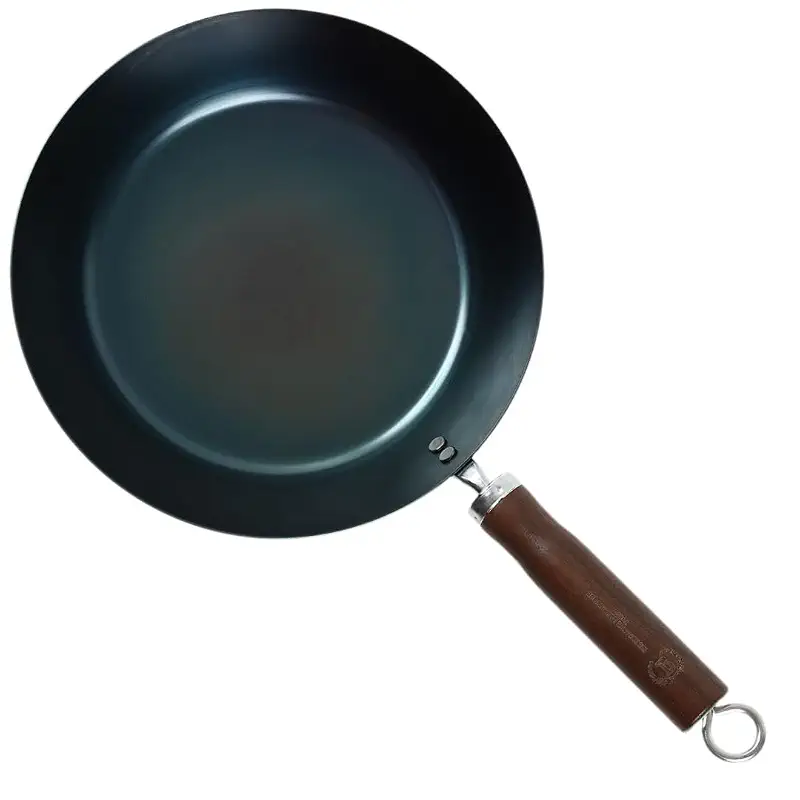
This carbon steel pan represents a different cooking philosophy than nonstick. Made by Fujita Kinzoku, an established Japanese metalworker, and co-designed with a Tokyo chef, it's precision-formed rather than cast, resulting in thinner, more responsive walls and significantly lighter weight than Western carbon steel alternatives. The 10.2-inch diameter sits between tamagoyaki specialist and full-size skillet, and the depth suits sautéing and stir-frying as well as searing.
Carbon steel attracts cooks seeking chemistry rather than convenience. The pan arrives pre-seasoned and ready to use, but "ready" means it needs proper heat and oil to perform; it's not a Teflon surface. As you cook, the seasoning naturally deepens, creating a uniquely responsive surface that many users prefer to any synthetic coating. Owners of well-seasoned carbon steel report exceptional nonstick results and the freedom to use any utensil without worry. The lightweight construction and walnut handle make it comfortable to manipulate, and compatibility with all cooktop types (including induction) adds practical flexibility.
The critical caveat: some buyers report handle looseness developing within weeks due to loose rivets that cannot be tightened. This quality-control issue is serious and undermines confidence at the price point. If your pan arrives with a solid handle, you're likely in for years of excellent service. If not, you face a frustrating situation with no easy fix. Also expect a steeper learning curve than nonstick; the pan behaves more like cast iron in its need for consistent oiling and gentler cleaning. For serious home cooks who embrace the methodology and accept the maintenance, this pan rewards you with restaurant-level searing and the satisfaction of using and improving a tool over years. For those seeking convenience or skeptical about handling loose rivets, the nonstick alternatives offer less drama.
Pros
Precision-formed construction lighter than cast iron alternatives
Pre-seasoned and improves naturally with use over time
Excellent heat conduction and retention for searing and stir-frying
Compatible with all cooktop types; no chemical coatings to flake
Cons
Handle rivets reported loose after short use in some units
Requires oiling and gentler cleaning; steeper learning curve than nonstick
Key features
10.2-inch diameter, 1.6mm carbon steel precision-formed in Japan
Walnut wood handle reduces wrist strain versus heavier cookware
Pre-seasoned and compatible with gas, electric, induction, and oven
Made by Fujita Kinzoku, a family metalworking shop since 1951
How to Choose a Japanese Frying Pan
Four trade-offs that actually matter when matching a japanese frying pan to your kitchen.
Shape and Size: Specialty Versus Versatility
Japanese frying pans come in distinct shapes, each optimized for different cooking. Rectangle and square tamagoyaki pans are narrow and short, designed specifically for rolling thin layers of eggs; they excel at that task but struggle with larger items like steaks or fish fillets. Larger round or slightly flared pans (9 to 11 inches) handle everyday cooking: sautéing vegetables, searing proteins, frying a full omelette for two. Consider how you cook: if tamagoyaki is a regular breakfast, the specialty shape justifies a dedicated pan. If you want one additional quality pan beyond your main cookware, a larger round or slightly flared diameter does more. Understanding the tamagoyaki versus round pan differences helps clarify whether you need both or one versatile option.
Nonstick Versus Carbon Steel: Convenience or Chemistry
Nonstick pans (whether Teflon, Teflon Platinum, or maifanite stone coatings) cook immediately without fussing over seasoning or oil management. They clean quickly and suit busy kitchens where simplicity matters. Carbon steel demands more: oil for seasoning, gentler cleaning, and acceptance that the pan changes and improves over years. Neither is objectively better; it's a choice about how much involvement you want. Nonstick wins for low-friction daily cooking. Carbon steel appeals to cooks who enjoy the process and value heat control and freedom to use metal tools. Many serious home cooks own both.
Weight and Handling
Japanese pan makers prioritize lightweight construction through spinning-formed sides and precision-forming techniques, making pans responsive and comfortable to use for extended cooking or one-handed flipping. Lighter pans (under 2 pounds) reduce fatigue, particularly for high-heat cooking or frequent stir-frying. Heavier pans (clad steels, cast iron alternatives) offer more heat retention and feel substantial in hand but demand more from your wrist and shoulders. If you cook frequently or prefer responsive handling, prioritize lighter options. If you value thermal stability and don't mind weight, heavier pans deliver.
Cooktop Compatibility and Durability
Most modern Japanese frying pans work on all cooktop types (gas, electric, ceramic, and induction) thanks to flat bottoms and conductive materials. Check the product specs if induction is essential. For longevity, nonstick coatings last longest when you avoid high heat and use wooden or silicone utensils; most nonstick pans last 3 to 7 years with proper care. Carbon steel and cast iron, if maintained, last decades and actually improve. Made-in-Japan construction carries a reputation for precision and durability; manufacturers like Urushiyama have been at it since the 1950s and stand behind their work. Consider whether you want a pan that lasts a season or two or one you plan to hand down.
Frequently asked
Quick answers to the questions readers ask most.
Can I use a Japanese tamagoyaki pan for cooking other foods?
Absolutely. While designed for rolled eggs, tamagoyaki pans work well for fried eggs, pancakes, hash browns, seared fish fillets, or any small individual dish. The small footprint and straight sides mean they're not ideal for items that need room to flip or slide (like full chicken breasts), but for personal-portion cooking, they're remarkably versatile. Many owners report cooking nearly all their eggs in these pans once they experience how responsive they are.
Do Japanese nonstick pans scratch easily?
Quality Japanese nonstick pans resist scratching better than budget alternatives thanks to reinforced coatings like Teflon Platinum or three-layer formulations. Scratches do happen with metal utensils, but daily use with wooden or silicone spatulas minimizes damage. Most owners report years of use without visible wear if they follow basic care: moderate heat, gentle tools, hand-washing when possible. The Teflon Platinum option specifically allows safe metal utensil use.
What's the learning curve for a carbon steel Japanese pan?
Carbon steel handles like a lighter, more responsive version of cast iron. If you're comfortable with cast iron, you'll adapt quickly. If you're new to seasoned cookware, expect a few weeks of adjustment. The pan needs adequate oil for nonstick performance, and seasoning builds gradually with repeated use. Many users report that proper heat and consistent oiling create excellent results within the first month, and performance continues improving for years.
Are Japanese pans worth the investment compared to budget brands?
Japanese pans, particularly those made in Tsubame Sanjo or other established metalworking centers, typically cost more upfront but offer superior heat distribution, durability, and craftsmanship. A quality Japanese nonstick or carbon steel pan often outlasts several budget alternatives, and handling improves daily cooking satisfaction. If you cook frequently and value responsiveness and longevity, the investment pays off. For occasional use, budget options suffice.
Should I buy a tamagoyaki pan if I'm not planning to make rolled eggs regularly?
Only if you appreciate the shape for other single-serving egg dishes and have storage space. Tamagoyaki pans excel at their specialty but don't cover the range of a 9 to 11-inch round or flared pan. If you're unsure, a larger round Japanese nonstick or carbon steel pan gives you flexibility for eggs, sautéing, searing, and more. Invest in specialty tools when you know you'll use them regularly.