Best Backpacking Frying Pans for Ultralight Camping
Find the best backpacking frying pan for your trips. Compare lightweight options from Fire-Maple to Jetboil, with nonstick coatings and packable handles.
Ideal for: Backpackers who cook frequently and value even heating and nonstick performance over extreme weight savings.
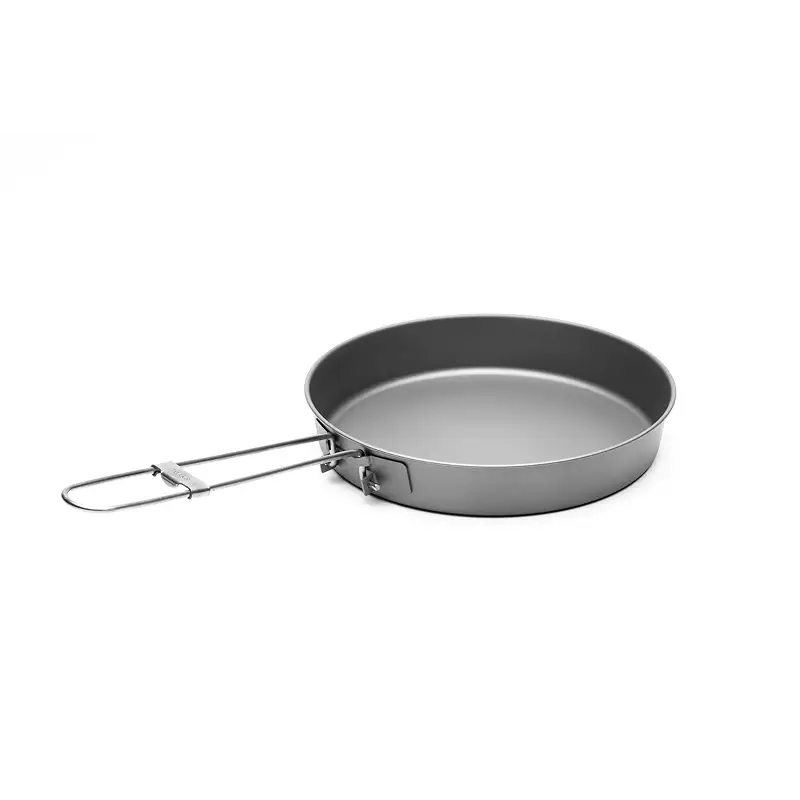
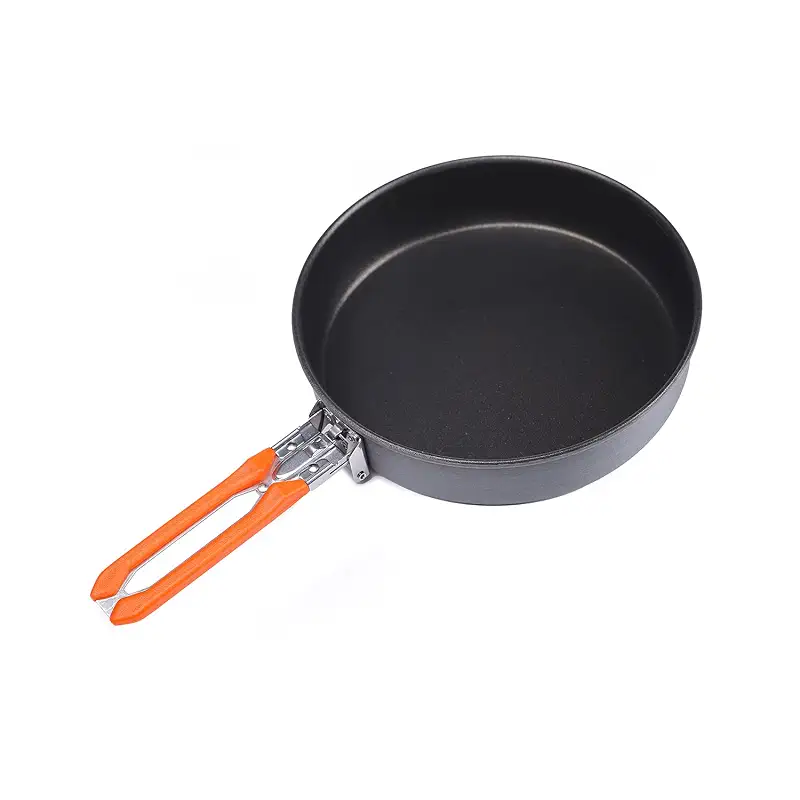
The Fire-Maple 7.6 Inch strikes a practical middle ground for most backpackers. At 9.2 ounces, it's light enough to justify packing, yet the hard-anodized aluminum with nonstick coating delivers results that owners consistently praise for eggs, fish, and bacon. The thicker base heats more evenly than paper-thin competitors, which matters when you're cooking over an inconsistent camp burner or open flame.
Owners report the nonstick coating holds up well to repeated use and field cleaning, and the self-locking handle stays secure during cooking. One significant caveat: the plastic-dipped handle can degrade if exposed to direct flame for extended periods or left too close to fire, which is a real concern for open-flame cooking. The hinge where the handle folds also traps grease and is difficult to clean thoroughly in camp conditions without a sink.
Fire-Maple's customer service reputation is strong; multiple buyers reported quick replacements or refunds when hardware failed. If you want a pan that works across jetboil stoves, camp burners, and careful open-flame cooking without spending premium dollars, this delivers. You're trading the absolute minimum weight for better heat control and nonstick reliability.
Pros
Even heat distribution across thicker base
Reliable nonstick coating that resists sticking
Responsive customer service and warranty support
Cons
Plastic handle can soften near open flames
Handle joint collects grease and is hard to clean
Key features
Hard-anodized aluminum with high-quality nonstick coating
9.2 ounces with compact 7.8×7.6×2.2 inch folded size
Thicker base design for more even heat than standard camp pans
Self-locking foldable handle for stable grip and compact storage
#2 Pick
Ultralight Pick
Toaks
TOAKS Titanium D6.5 (165mm) Frying Pan
4.3(56)
Featherweight titanium option for minimalist packers willing to accept heat management challenges.
Ideal for: Ultralight backpackers willing to master heat management and comfortable with basic one-pot meals.
At only 3 ounces, the Toaks Titanium D6.5 is a genuine ultralight champion. For backpackers obsessed with base weight, this is the easiest pan to justify carrying. Titanium doesn't rust, won't flavor your food with off-tastes, and resists deformation even over open flame. The 6.5-inch diameter is practical for solo cooking or sharing a meal between two people.
The trade-off is immediate: the thin titanium heats unevenly and burns quickly if you're not watching flame closely. Multiple owners note hot spots that char food even on low flame, and the material's poor heat conductivity means you're constantly adjusting burner height rather than set-it-and-forget-it cooking. The handle system takes some practice to master, and some buyers report it requiring heavy scrubbing after heavy use, making field cleanup less convenient than genuinely nonstick alternatives like the Fire-Maple.
Compared to the Fire-Maple, the Toaks trades reliability and ease of use for weight savings that matter only if every tenth of a pound counts. If you're cooking simple foods (eggs, oatmeal, dehydrated meals) and have experience managing hotspot-prone titanium gear, the weight reduction justifies the learning curve. For first-time backpackers or those planning more ambitious camp cooking, the extra 6 ounces of Fire-Maple makes more sense.
Pros
Exceptionally lightweight at 3 ounces
Rust-resistant titanium won't degrade over years
Doubles as a serving plate for group meals
Cons
Thin construction creates hot spots and uneven heating
Requires careful flame management to prevent burning food
Key features
Pure food-grade titanium, 3 ounces for ultralight packs
6.5-inch diameter with foldable handle and 24-ounce capacity
Rust-proof and durable for open-flame cooking
Stacks with compatible Toaks cookware for group trips
#3 Pick
Best Premium Option
Sea to Summit
Sea to Summit Frontier Ultralight 8 Inch Camping Cooking Pan
4.9(56)
Premium hard-anodized aluminum with ceramic coating, excellent nonstick performance, and lifetime warranty.
Ideal for: Backpackers prioritizing excellent heat distribution and durability who are happy to carry a larger, slightly heavier pan.
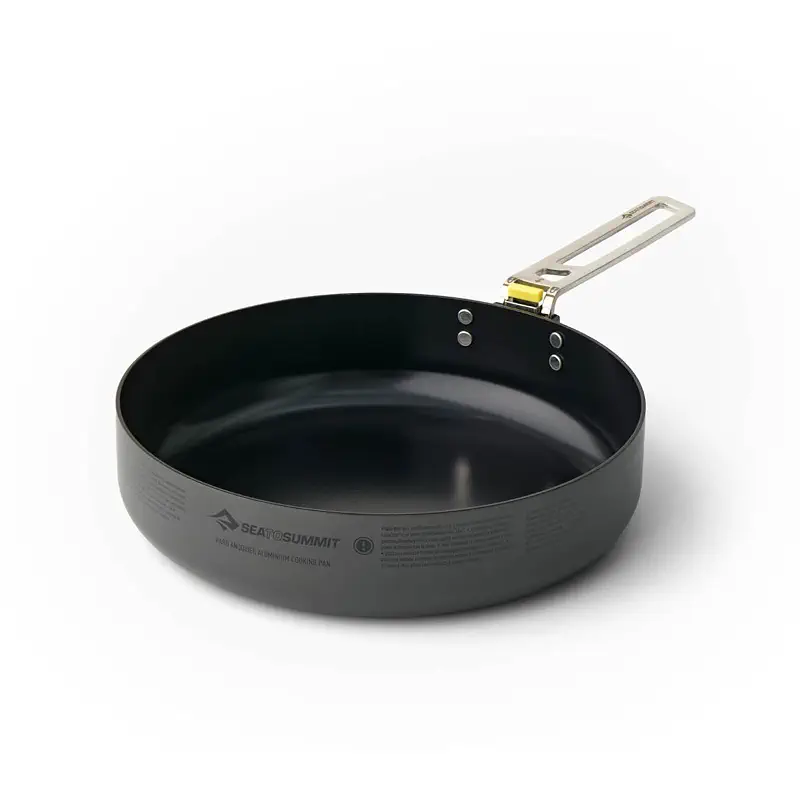
The Sea to Summit Frontier Ultralight 8 represents what thoughtful engineering looks like at the higher end of the backpacking pan category. Hard-anodized aluminum combined with a ceramic nonstick coating delivers heat distribution and food release that owners consistently rate as exceptional. The larger 8-inch diameter cooks for 2-3 people comfortably, and reviews highlight the wide, sloped sidewalls that make turning and flipping food genuinely easy, unlike narrow competition that forces awkward spatula angles.
The removable Click-Safe handle is the standout feature. It detaches completely for storage, stacks down thin within the pan itself, and reverses for space savings that justify the added complexity. Buyers praise how the pan nests with Sea to Summit's 3-liter pot to form a complete cookware system with minimal pack footprint. The lifetime warranty backs up the premium pricing. Some international reviews noted preference for a included lid (which doesn't come standard), and the ultralight label might disappoint packweight zealots.
Where this edges out the Fire-Maple is in nonstick durability and engineering thoughtfulness. The Sea to Summit feels built to last a decade of camping seasons, not just a few trips. If you're choosing between this and the Toaks Titanium for serious backcountry use, the 8-inch surface area and reliable heating make the extra weight worthwhile for anyone cooking more than simple scrambled eggs.
Pros
Ceramic nonstick coating with excellent food release and longevity
Large radius design makes flipping and turning intuitive
Removable Click-Safe handle with nesting storage design
Cons
Higher price point than comparable aluminum options
Slightly heavier than titanium alternatives
Key features
Hard-anodized aluminum alloy with ceramic nonstick coating
8-inch diameter, 56-ounce capacity for 2-3 person cooking
Removable Click-Safe handle folds flat for compact packing
Nests with 3-liter Sea to Summit Frontier Pot for integrated cookware system
#4 Pick
Best Titanium All-Rounder
Keith
KEITH Titanium Frying Pan 8 Inch Lightweight Camping Skillet Non-Stick Open Fire Compatible with Foldable Detachable Handle Cookware for Backpacking Hiking Outdoor Storage Bag Included
5.0(3)
Thicker titanium with nonstick coating and detachable handle balances weight, durability, and cooking ease.
Ideal for: Backpackers wanting titanium's durability and open-flame safety with enough thickness for confident cooking over variable heat.
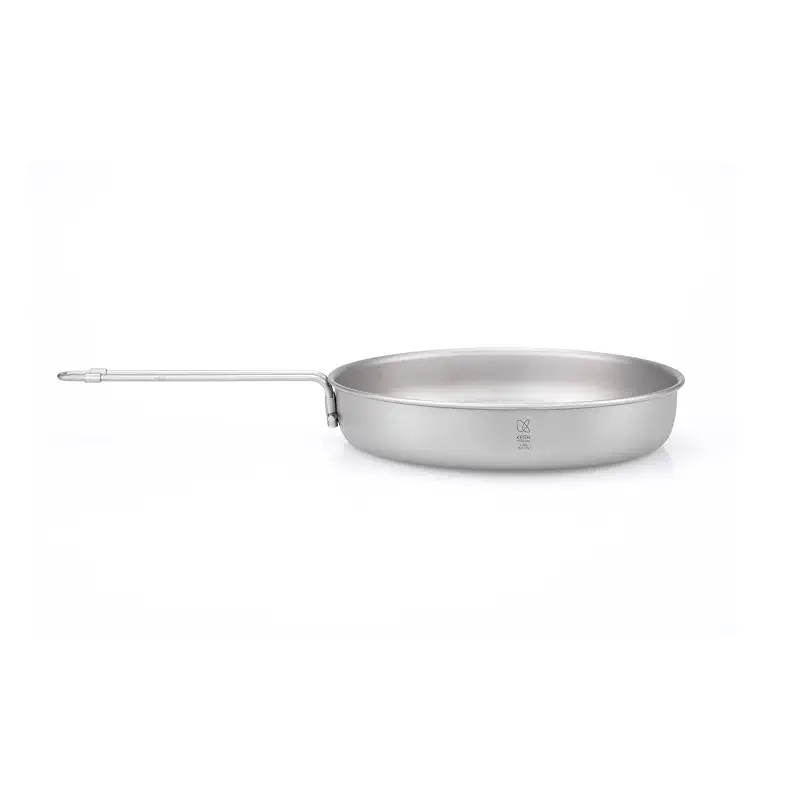
The Keith Titanium Frying Pan 8 Inch addresses the weakness that plagues thin-titanium competitors by using a thickened titanium bottom that distributes heat more evenly. At 12.8 ounces, it's heavier than the featherweight Toaks but still genuinely packable, and owners report significantly fewer hot spots. The 8-inch diameter and 1000-milliliter capacity cook for multiple people or allow more generous portioning for solo trips. The titanium alloy resists deformation over open flame, and the nonstick surface (though not ceramic) requires only a wipe with a paper towel in many cases.
The foldable and detachable handle design matches the Sea to Summit's storage philosophy, and the included storage bag keeps soot from darkening the rest of your kit. German-language reviews (the brand has strong European presence) emphasize the even, thick base as the standout. This is a solid middle path: titanium's durability and no-flavor properties with enough material thickness to avoid constant heat adjustments that plague ultra-thin competitors. Where the Jetboil Summit Skillet offers size and nonstick ease for heavier pack loads, the Keith keeps you in genuine ultralight territory while delivering more reliable cooking than a 3-ounce pan.
The trade-off versus the Sea to Summit is ceramic versus titanium; titanium won't chip and resists some rough handling, while ceramic coatings can degrade. Compared to the Fire-Maple, the Keith costs more but saves 4 ounces and avoids the plastic-handle durability issue that plagues direct open-flame cooking.
Pros
Thickened titanium bottom prevents hot spots and uneven heating
Titanium alloy resists deformation and won't rust or flavor food
Detachable, foldable handle and included storage bag
Cons
Higher cost than aluminum alternatives of similar size
Nonstick surface less robust than ceramic coatings long-term
Key features
Premium food-grade titanium alloy with nonstick surface
8-inch diameter, 34-ounce capacity with 2-inch high walls
Thickened titanium base for even heat distribution
Foldable detachable handle, 12.8 ounces including storage bag
#5 Pick
Best for Jetboil Stove Systems
Jetboil
Jetboil Summit Skillet Non Stick Camping Cookware for Jetboil Backpacking Stoves
4.8(1,251)
Ceramic nonstick skillet designed for Jetboil stoves, excellent food release, includes built-in nesting spatula.
Ideal for: Jetboil stove users who prioritize food release, quick heating, and integrated cookware systems over versatility.
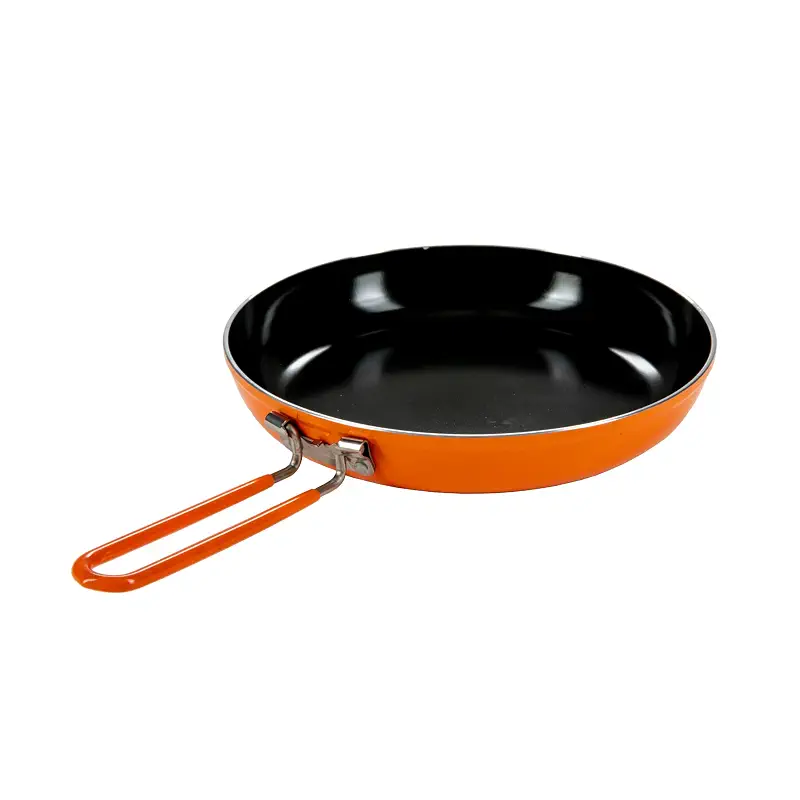
The Jetboil Summit Skillet is engineered specifically to integrate with Jetboil cooking systems. If you're already running a Jetboil stove, this skillet pairs seamlessly with the pot support and regulated heat system that makes Jetboil appealing in the first place. The ceramic nonstick coating is genuinely exceptional; owners consistently praise searing fish, flipping eggs without sticking, and wiping clean with a paper towel in the field. The nesting spatula built into the handle is a clever touch that eliminates a separate utensil.
At 10.6 ounces, it's heavier than the Toaks or Keith but lighter than the Fire-Maple, though the weight is less relevant if you're already carrying a Jetboil stove. The 8×8.5 inch square form is intentional; it fits the burner footprint precisely but occupies more surface area than round pans, which some may see as overkill for single-person trips. Owners note that while it excels for fresh-caught fish, pancakes, and breakfast cooking, the size feels tight if you're cooking for a group or attempting ambitious backcountry meals.
Compared to the titanium vs aluminum camping pans discussion, the Summit Skillet leans ceramic and specialist. If you're locked into Jetboil as your stove system, this is the obvious choice. If you use other camp burners or cook over open flame, the flexibility of the Fire-Maple or Keith matters more. The premium reflects the specialized fit rather than revolutionary performance.
Pros
Ceramic nonstick coating with excellent food release and durability
Integrated spatula in handle eliminates separate utensil
Optimized to pair with Jetboil stove and pot support
Cons
Square 8×8.5 inch form limits capacity compared to round pans
Significant cost and requires Jetboil system to justify purchase
Key features
Ceramic-coated nonstick aluminum heats quickly and evenly
8×8.5 inch square form optimized for Jetboil burner compatibility
Nesting spatula built into handle for integrated utensil storage
10.6 ounces, designed for Jetboil-regulated cooking systems
How to Choose a Backpacking Frying Pan
Four trade-offs that actually matter when matching a backpacking frying pan to your kitchen.
Weight vs. Cooking Reliability
Ultralight pans (under 4 ounces) shine for solo backpackers obsessed with pack weight, but they often heat unevenly and require constant attention. Mid-weight options (8–12 ounces) offer better heat distribution and nonstick surfaces that actually release food without fuss. The jump from 3 to 9 ounces is meaningful on the scale but nearly invisible on your back; weigh the real-world cooking experience against the theoretical ounce savings. A pan that burns your trout isn't lighter: it's frustrating.
Heat Source Matters
Jetboil stoves benefit from a skillet that integrates with their burner and pot support system; free-standing camp stoves and open flame demand different trade-offs. Some pans feature thickened bases specifically to manage uneven camp-burner flames. Before buying, consider whether you're cooking on a controlled canister stove, a portable camp burner, or campfire: this choice alone can eliminate half the options. If you're building an integrated system, check whether the stackable cookware that appeals to you actually nests with your chosen frying pan before committing.
Titanium vs Aluminum Coating Strategy
Titanium vs aluminum camping pans are the core split in the category. Titanium is rustproof, lightweight, and durable over decades but requires careful heat management and develops hot spots due to poor heat conductivity. Aluminum (with hard-anodized finish) distributes heat evenly and pairs better with nonstick coatings, but requires proper care to avoid oxidation. Ceramic nonstick coatings on aluminum excel at food release but can chip; titanium nonstick surfaces are less refined but more durable against rough handling.
Nonstick Coating Durability
Field cleanup with limited water and rough camp scrubbing tests nonstick coatings hard. Ceramic coatings deliver the slipperiest surface for eggs and fish but will degrade if scratched or overheated. Titanium nonstick surfaces are less slick but more forgiving of metal spatulas and abrasive cleaning in dusty camp conditions. Some backpackers bring a dedicated soft spatula to extend coating life; others accept that a 2-3 year lifespan is reasonable for a heavily used field tool and budget accordingly.
Packing and Handle Design
A foldable or detachable handle isn't luxury: it's the difference between a pan that fits your cookware bag and one that doesn't. Removable handles free up nesting space for pots and bowls; foldable handles add bulk. Self-locking handles stay put during cooking but wear out faster. Hinge joints trap grease and are miserable to clean in camp. Review how each design packs within your existing cookware system before committing; a pan that nests well with your pot saves more weight than shaving an ounce off the pan itself.
Frequently asked
Quick answers to the questions readers ask most.
Can I use a backpacking frying pan on an open campfire?
Yes, but carefully. Aluminum and titanium both tolerate open flame if you keep fire low and avoid flames wrapping around the sides. Plastic handles (like Fire-Maple's) can soften if exposed directly to heat; titanium handles withstand flame better. Many owners cook over campfire by holding the pan above coals or using a grill grate. Open-flame cooking demands attention: you can't set it and walk away like you can on a regulated camp stove.
How do I clean a nonstick camping pan without damaging the coating?
Use a soft cloth, sponge, or wood spatula: never steel wool or metal utensils. A quick rinse with water and gentle wiping usually suffices if you've cooked with adequate oil. In camp, wipe immediately after cooking while residue is warm and loosens easily. At home, hand wash with mild soap; never dishwasher-clean nonstick pans as heat and abrasion degrade the coating faster. Avoid overheating empty pans, which shortens nonstick lifespan.
Is a nonstick coating necessary for backpacking, or can I use bare titanium?
Bare titanium works if you're comfortable with a modest learning curve and don't mind slightly more grease residue. A thin nonstick coating (whether titanium or ceramic) genuinely reduces cleanup burden in camp and saves fuel by requiring less oil. The trade-off is that coatings eventually wear; bare titanium lasts indefinitely. Most backpackers find nonstick worth the eventual re-coating or replacement cost for field convenience and faster meal prep.
What size pan do I need for solo backpacking versus group camping?
Solo trips work well with 6.5-inch pans (24 ounces capacity); you can cook a modest dinner or breakfast in one. For two people, 8-inch pans (30-36 ounces) comfortably serve a meal without cramping. Group camping with three or more people often demands either a dedicated pot plus skillet combo or settling for smaller individual portions. Many ultralight backpackers carry multiple small pans that stack and nest rather than one large pan that wastes weight on unused capacity.
Do backpacking frying pans work on a regular stovetop at home?
Yes. Most camping pans work on home stovetops, though they're not optimized for home cooking and may tip on narrow burners. The nonstick surfaces hold up fine in a home kitchen and often outlast field use. Some backpackers keep their camping pan at home for occasional weeknight cooking rather than retiring it between trips. Just ensure the burner is appropriately sized for the pan base to maintain contact and even heating.