Best Hot Plate for Canning: Cast Iron & Induction Burners
Find the best hot plate for canning with expert reviews of cast-iron and induction models. Compare portable burners for pressure canners, water bath, and everyday cooking.
Ideal for: Home canners on a budget, seasonal preservers, dorm and RV cooks needing portable heat.
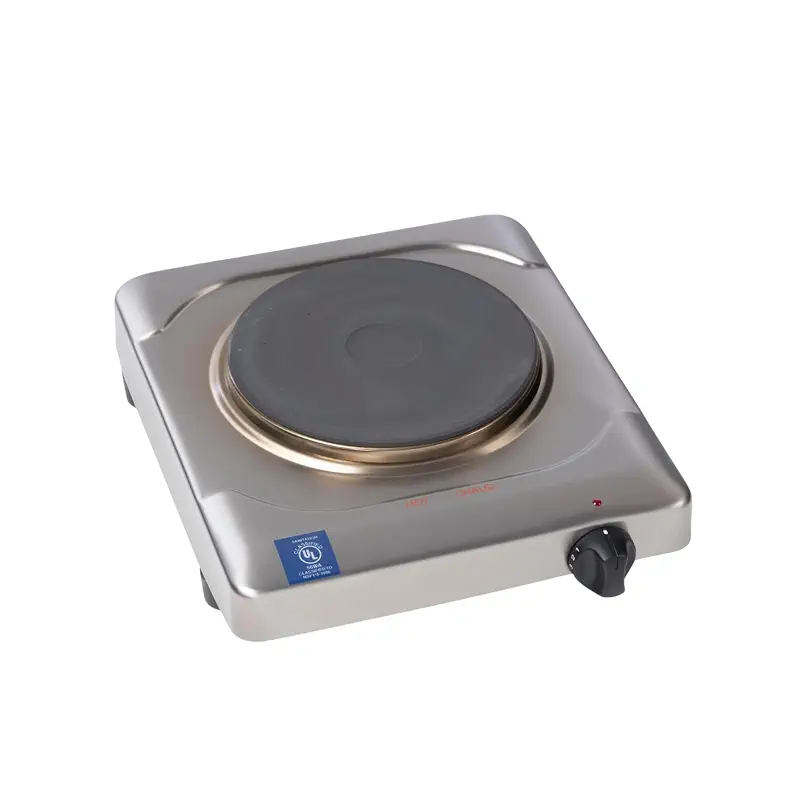
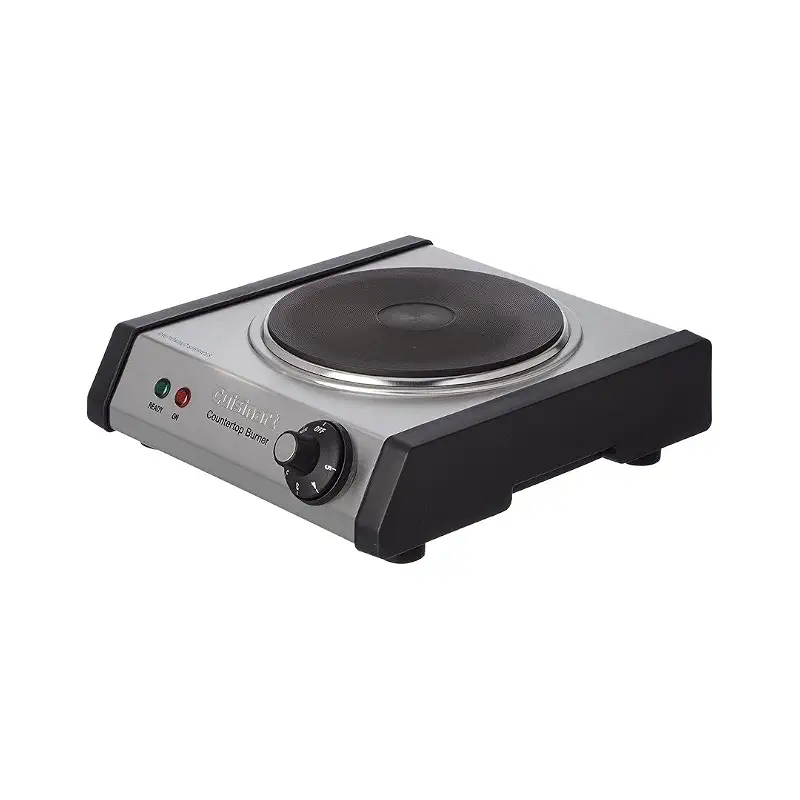
The Cuisinart Cast-Iron Single Burner has earned its reputation among home canners because it delivers reliable, consistent heat at a price point that makes sense for occasional to moderate use. The 1300-watt cast-iron plate heats steadily and holds temperature well once it settles, which is exactly what you need when bringing a large canning pot to pressure and maintaining it there for 20 or 30 minutes. The "coil-less" surface is genuinely easy to wipe clean between batches, and the brushed stainless-steel housing looks professional on a kitchen counter or utility table.
Owners consistently praise durability and longevity; several report years of daily or seasonal use without failure. The trade-off is speed: the cast iron takes longer to heat large volumes of water than higher-wattage options, and early reviews flagged that boiling a half-gallon of water can stretch past 25 minutes on high heat. The 6-setting temperature dial is straightforward but not as granular as induction controls. Where the Cadco CSR-3T trades cast iron for a tubular element for even wider pan support, the Cuisinart remains the simpler, lower-cost choice for canners who don't need commercial-grade features.
If you're a serious canner buying your first dedicated burner, this model gives you solid performance without overinvesting. The compact footprint (11.5 inches wide) fits alongside most kitchen counter layouts, and the non-slip feet hold steady under the weight of a full pressure canner.
Pros
Durable cast-iron plate holds heat and lasts for years
Easy to clean coil-less cooking surface
Reliable 6-setting temperature control
Cons
Slow to boil large water volumes; 25+ minutes for half-gallon
Takes time to cool down; requires oven mitts to move
Key features
1300-watt cast-iron burner with 6-setting thermostat
Compact 11.5" x 11" footprint for small kitchens and portable use
Coil-less surface wipes clean with no buildup
Non-slip rubber feet for stable counter placement
#2 Pick
Best for Speed and Precision
Changbert
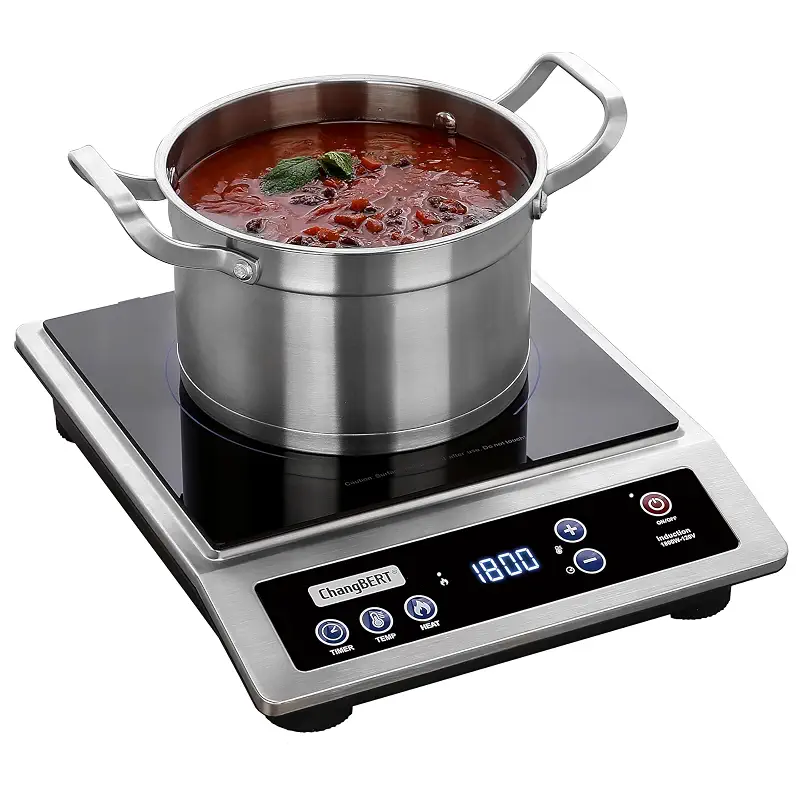
ChangBERT Induction Cooktop, Commercial Grade Portable Cooker, Large 8” Heating Coil, Premium Stainless Steel Countertop Burner with NSF Certified, 10 Hours Timer Powerful 1800W Professional Hot Plate
4.4(1,384)
High-efficiency induction cooktop with 1800W power and 10-hour timer; fastest heating, quietest fan, commercial-grade build.
Ideal for: Canners who value speed, small kitchens, outdoor cooks, anyone with induction-compatible cookware and patience for the control learning curve.
The Changbert Induction Cooktop stands out in the induction category for three reasons: raw speed, noise level, and intelligent temperature hold. At 1800 watts, it boils water measurably faster than cast-iron alternatives, and buyers report getting a gallon of water to a rolling boil in around 13 minutes: nearly half the time of the Cuisinart. The induction coil is more energy-efficient than resistive heating, and the 83% efficiency rating reflects that. Unlike many portable induction burners that rely on high-speed fans to cool the electronics, this model uses a filtered resonance system that keeps operation noticeably quieter: a real benefit if you're cooking in a shared space or open kitchen.
The 10-hour countdown timer is genuinely useful for canners who step away mid-session or for sous vide work. Nine preset power levels (200–1800W) and 18 temperature settings give you fine-grained control once you dial in your setup. The large 8-inch magnetic coil distributes heat more evenly than smaller induction burners, reducing the dreaded hot-spot problem. The 2-year home warranty and NSF commercial certification signal serious build quality.
The caveat: induction requires magnetic cookware, which most modern canners have, but older or specialty pots won't work without an adaptor plate (which reduces efficiency). Temperature regulation takes practice (it's different from gas or coil burners) and some owners report the learning curve for simmering and holding precise temps is steeper than with cast iron. Compare this to the Cadco KR-S2 if you want an induction option with a smaller footprint or if your canning pot is very large.
Pros
Boils water 2x faster than cast-iron models
Quieter cooling system than typical induction burners
10-hour timer and large 8-inch coil for even heating
Cons
Requires magnetic cookware; non-induction pots need an adaptor
Temperature regulation takes practice; not intuitive for first-time users
Key features
1800-watt induction with 9 power levels and 18 temperature presets
Large 8-inch magnetic coil for wider pan coverage and even heat
Commercial-grade NSF certified, 2-year home warranty
10-hour countdown timer with auto-shutoff and safety protections
#3 Pick
Best Budget-Friendly for Heavy Canning
Cadco
Cadco KR-S2 Portable Electric Hot Plate, 1500W Cast Iron Single Burner | Commercial grade stainless steel countertop stove for heavy canning pots. Ideal for food trucks, dorms or compact kitchens
4.2(161)
Robust 1500W cast-iron burner designed for pressure canners; commercial-grade stainless steel at mid-range price.
Ideal for: Canners with large pressure canners, home food preservation enthusiasts, cooks prioritizing durability over convenience features.
The Cadco KR-S2 is purpose-built for exactly what home canners need: a heavy-duty platform that won't flinch under a full 25-quart All-American pressure canner. The 1500-watt cast-iron element is more powerful than the Cuisinart, which does speed up the time to reach pressure, though owners note you still have to manage the dial carefully once at pressure to avoid overshooting. The stainless-steel housing and infinite thermostat control are industrial fixtures: this is the kind of equipment food trucks and commercial kitchens rely on.
Many canners buy this burner specifically to protect a glass-top stove, and reviewers consistently report it solves that problem. The 7.125-inch cast-iron element is slightly smaller than some competitors, so if you use very large stockpots, heat concentration may feel tighter toward the center. A few owners flagged a smell or residue on the first use, likely from a factory coating, which a thorough scrub resolves. The knob lacks a detent, so bumping it is possible, and the entire unit does get quite hot during extended use, something to keep in mind in households with small children or in tight spaces.
Where the Cadco CSR-3T (the tubular model in this lineup) offers an 8-inch element for larger pans and slightly more refined controls, the KR-S2 delivers serious canning capability at a lower price point. For seasonal canners working within budget, this is the commercial-grade workhorse pick.
Pros
1500W cast-iron element handles large canning pots reliably
Rugged stainless-steel construction built for heavy daily use
Infinite temperature control for precise heat management
Cons
Entire unit becomes very hot; exterior can cause burns if touched during use
Knob has no click-stop; easily bumped on accidentally
Ideal for: Serious canners with large pots, semi-permanent canning stations, cooks who value stability and precision over portability.
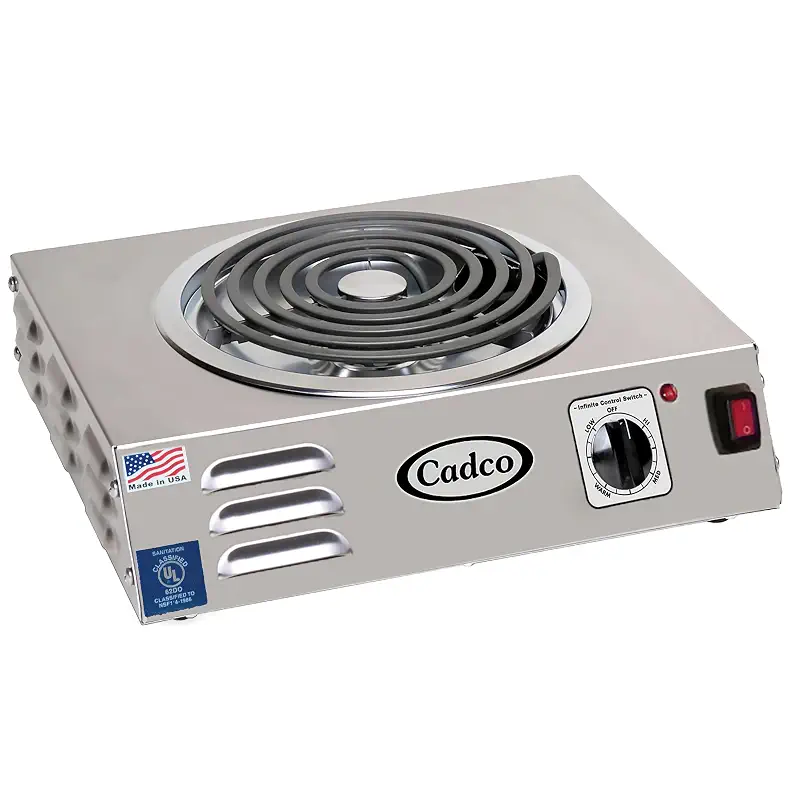
The Cadco CSR-3T is the most spacious and refined cast-iron option in this lineup. Its 8-inch tubular heating element (versus the 7.125-inch on the KR-S2) spreads heat across a wider footprint, which matters if you regularly use large canning pots, 12-inch skillets, or stockpots that don't rest flat-centered on smaller burners. The Robertshaw thermostat is an industry standard in commercial kitchens, and owners report exceptional temperature stability once you find your sweet spot: crucial for the precise heat maintenance that canning demands.
The unit is heavier and wider (14 inches) than the Cuisinart or KR-S2, so it needs dedicated counter space; it's not as portable if you move it frequently. But if your setup is semi-permanent (a dedicated canning station in a basement, garage, or outdoor kitchen) the rock-solid build quality and even heat distribution justify the larger footprint. Several canners report that compared to the smaller burners, this model doesn't require as much pan-shifting during cooking because heat reaches more of the pan's bottom surface. The vented design keeps the sides and base relatively cool during extended use, a safety advantage over closed-body models.
Where an induction cooktop like the Changbert prioritizes speed, the CSR-3T prioritizes even, predictable heat and durability. If you've tested the Cadco KR-S2 and found its element too small for your pots, or if even heating across large batches is your priority, this upgrade delivers.
Pros
Largest 8-inch tubular element ensures heat reaches entire pan bottom
Robertshaw thermostat holds temperature reliably for extended canning
Vented design keeps exterior cooler during heavy use
Cons
14-inch width requires significant counter space; less portable
Short power cord may be inconvenient in some kitchens
Safety power indicator light, non-skid rubber feet for stability
#5 Pick
Best Premium Induction with Commercial Certifications
Changbert
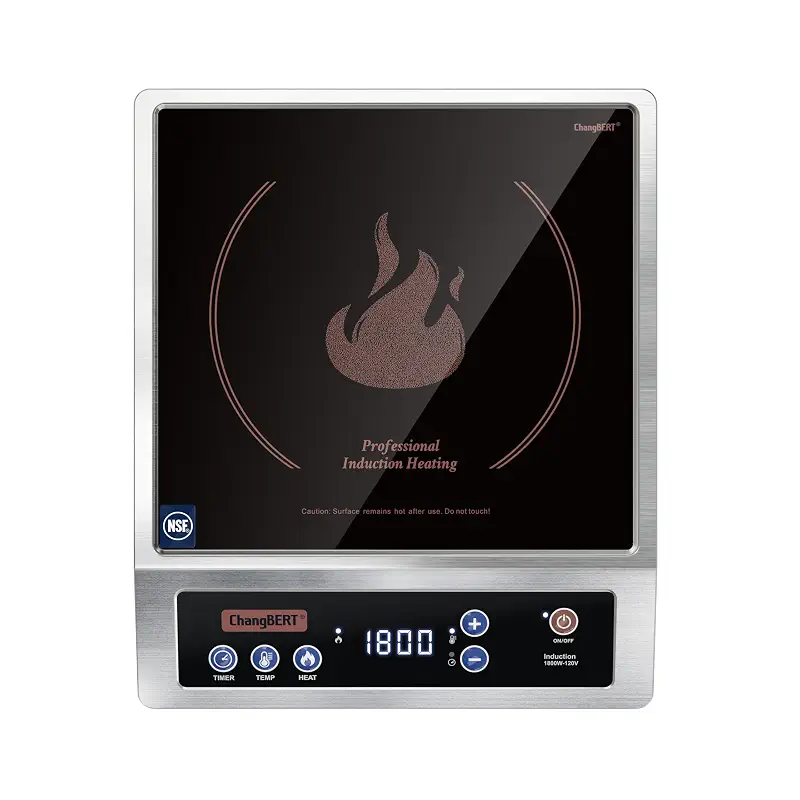
ChangBERT Professional Induction Cooktop, NSF Certified Countertop Burner, Large Coil for Even Heating, Precise Temperature Control, 10 Hours Timer, 1800W Powerful Hot Plate for Home & Commercial Use
4.6(24)
NSF-certified induction burner with 1800W, 8-inch coil, quiet cooling, and 10-hour timer; professional-grade reliability.
Ideal for: Energy-conscious canners with induction cookware, kitchens where noise matters, cooks who cook year-round and value professional-grade reliability.
The Changbert Professional Induction Cooktop is essentially the refined cousin of the B0B4J6PXPN model, with added emphasis on commercial durability and quieter operation for kitchens that demand both performance and low noise. The 1800-watt induction with 8-inch magnetic coil delivers the speed advantage of induction (boiling water roughly twice as fast as cast-iron burners) while the continuous-duty circuitry is designed to handle extended canning sessions without thermal cutoffs or power drops that plague cheaper models.
The upgraded cooling system and filtered resonance control make this noticeably quieter than many induction burners, which is meaningful if you're running it during family meals or in a multi-use kitchen. Button controls (not touch screen) provide tactile feedback and reliability, even with wet or greasy hands. The 10-hour timer, 18 temperature presets, and large heating area accommodate everything from boiling large stockpots to precise sous vide work. NSF commercial certification and the 2-year home warranty signal that this is built to last.
The induction trade-off (requiring magnetic cookware) still applies here. Owners note that temperature regulation for sustained simmering requires practice and ongoing adjustment; it's not the "set and forget" experience of a cast-iron burner. If you already own induction-compatible cookware or are willing to adapt, and you value speed and energy efficiency over simplicity, this premium option justifies the step up. It's notably quieter and more stable than the entry-level Changbert model and comparable in raw performance to cast-iron while using less electricity.
Pros
Fastest water boiling and heat-up among all models tested here
Noticeably quieter cooling fan than standard induction burners
NSF commercial-grade build and 10-hour timer for long sessions
Cons
Requires induction-compatible magnetic cookware; adaptors reduce efficiency
Learning curve for precise simmering; temperature regulation is manual
Key features
1800-watt induction with 8-inch magnetic coil and 18 temperature presets
Quiet-operation cooling system, optimized for extended cooking
NSF-certified commercial-grade construction, 2-year home warranty
10-hour countdown timer, button controls, 5-foot heavy-duty power cord
How to Choose a Hot Plate for Canning
Four trade-offs that actually matter when matching a hot plate for canning to your kitchen.
Cast Iron vs. Induction: What Works for Your Setup
Cast-iron burners like the Cuisinart and Cadco models heat through a traditional resistive element, which makes them compatible with any cookware and intuitive to control. They heat more slowly but hold heat longer once they reach temperature, which helps maintain a steady pressure during canning. Induction burners use electromagnetic energy to heat magnetic cookware directly, which is faster and more energy-efficient but requires compatible pots and pans. If you have an older pressure canner or non-magnetic cookware, cast iron is your only option without buying an adapter. If you have modern magnetic cookware and want to cut boil time in half, induction offers a speed advantage. For cooks who also need versatile cookware across multiple burners and cooking methods, investing in best stackable cookware ensures efficient storage and use across both your main stove and portable burners.
Wattage and Element Size for Canning Pots
Most dedicated canning burners range from 1300 to 1800 watts. Higher wattage (1500–1800W) cuts the time to reach pressure, which matters if you can multiple batches in a day. The element or coil size also matters: a larger surface (8 inches vs. 7 inches) distributes heat more evenly across the canner's bottom and reduces the risk of scorching. The Cadco CSR-3T's 8-inch tubular element and the Changbert induction models' large coils both excel here. For canners who process occasionally, a smaller 1300W element like the Cuisinart is sufficient, though it takes longer to come to pressure.
Glass-Top Stove Protection and Canning Season Planning
The primary reason to buy a hot plate for canning is to keep a heavy canner off a fragile glass cooktop. Pressure canners weigh 20–50 pounds when filled, and sitting on the frame of a glass stove (not centered on the burner) can crack the glass. A dedicated burner solves this and frees up your main stove for side dishes and other cooking during busy canning days. If you can year-round or have frequent canning sessions, a commercial-grade unit like the Cadco KR-S2 or CSR-3T justifies the investment. If you can once or twice a season, the Cuisinart offers solid performance at lower cost. The water bath canning vs. pressure option also matters: water bath canners are lighter and less demanding, while pressure canners need stable, sustained heat, something cast iron excels at.
Portability and Counter Space
If your kitchen is tight or you're in an apartment or dorm, the compact Cuisinart (11.5 inches wide) and Changbert induction models fit easily on a prep table or cart. The Cadco CSR-3T, at 14 inches wide, needs dedicated space. Cast-iron burners take a long time to cool, so moving them while still warm requires oven mitts. Induction units cool quickly, making them easier to store. If you plan to use the burner outdoors (on a patio or in a yard kitchen during warm months), portability and quick cool-down are assets. For a semi-permanent garage or basement canning station, size is less of a concern.
Frequently asked
Quick answers to the questions readers ask most.
Can I use my pressure canner on an induction hot plate?
Yes, as long as your pressure canner has a magnetic bottom (most modern American models do). Test by holding a magnet to the exterior bottom; if it sticks, induction will work. Older or aluminum canners won't work without a steel adapter plate, which reduces efficiency. An induction burner boils water much faster than cast iron, which speeds up the time to reach pressure, but you'll need to practice temperature control during the sustained pressure phase.
Why does a cast-iron burner take so long to heat water?
Cast iron is dense and requires time to absorb heat energy before it transfers that heat to your cookware. Once hot, it holds heat well, which is why it maintains steady temperature during canning. The 1300–1500W power is lower than some induction models, which also contributes to slower initial heating. Induction burners transfer energy directly to magnetic cookware electromagnetically, skipping the intermediate step, which is why they boil water in roughly half the time.
Is a commercial-grade hot plate worth the extra cost for home canning?
If you can multiple batches per week during harvest season or year-round, yes. Commercial-grade models like the Cadco CSR-3T have Robertshaw thermostats and tubular elements designed for constant use without temperature drift, and they typically last 5+ years of heavy use. For occasional seasonal canning (a few batches per month), the Cuisinart offers solid performance at lower cost and will serve you well for years. The durability difference matters most during intensive canning days when you're processing dozens of jars back-to-back.
Which hot plate is quietest if I'm cooking in a small space?
The Changbert Professional Induction Cooktop is notably quieter than other induction burners because it uses an optimized cooling system instead of a high-speed fan. Cast-iron burners like the Cuisinart and Cadco models have no fan at all, so they're silent during operation, though they take longer to heat. If noise is a priority, cast iron wins; if you want induction speed with minimal fan noise, the Changbert Professional is the best choice.
Can I leave a hot plate unattended during canning?
No. Even with a timer feature (available on some induction models), you should monitor the burner and canner throughout canning to ensure the pot stays at the right pressure or boil. The timer is a safety reminder, not a substitute for supervision. Cast-iron burners cool down slowly, so they can hold residual heat after you turn them off, which is another reason to keep the area clear and supervised until the unit has cooled.