Verdict, analysis, and key features for each pick.
#1 Pick
Best Overall for Heavy Canning
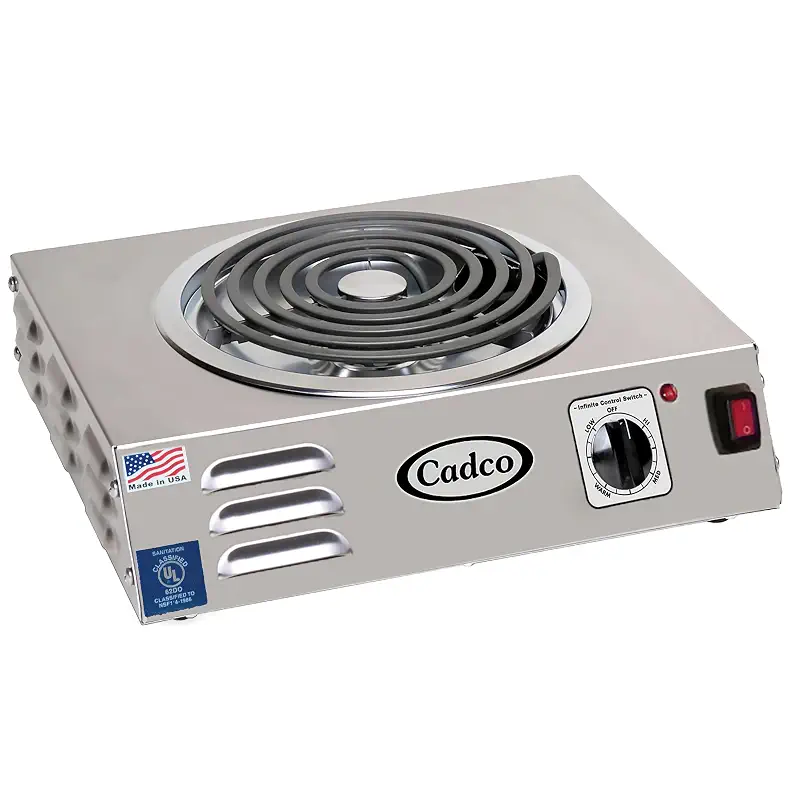
Cadco
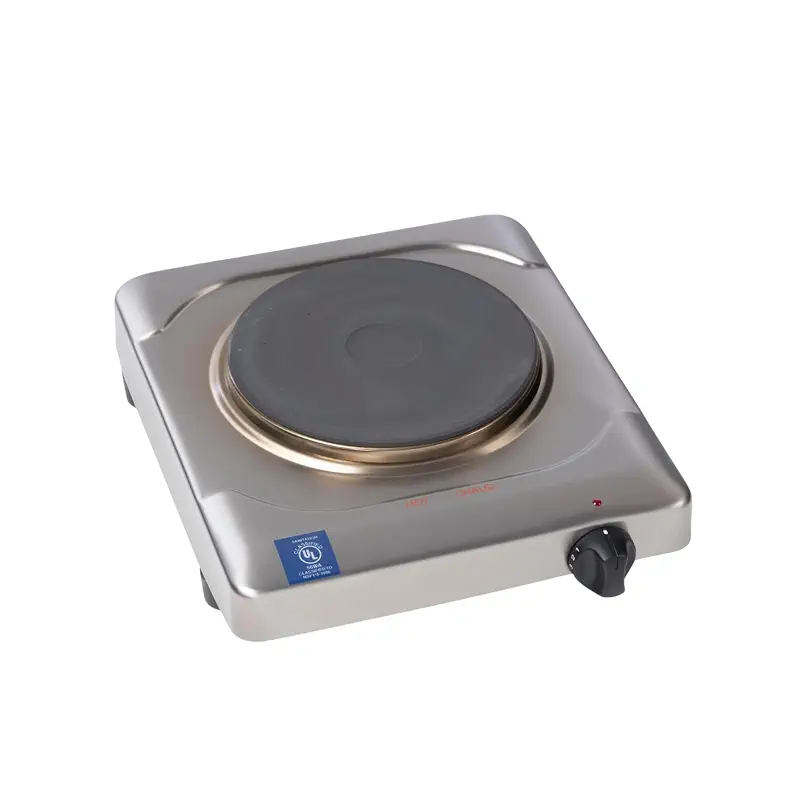
Cadco KR-S2 Portable Electric Hot Plate, 1500W Cast Iron Single Burner | Commercial grade stainless steel countertop stove for heavy canning pots. Ideal for food trucks, dorms or compact kitchens
4.2(161)
Commercial-grade cast iron burner built for serious canners who need durability and dependable heat for large pressure cookers.
Ideal for: Experienced canners using large pressure cookers who prioritize durability and consistent heat output over convenience.
The Cadco KR-S2 earns its reputation among experienced home canners for one clear reason: it handles big jobs without flinching. The 1500-watt cast iron element is heavy enough to support massive pressure cookers like the All-American 930, and owners report consistent pressure maintenance once the canner reaches temperature. The stainless steel housing feels professional and lasts through years of seasonal use.
One honest caveat: the learning curve exists here. Buyers note that reaching pressure takes longer than a stovetop burner would, and the cast iron element can leave residue on your canner's bottom on the first run. Some find the temperature dial a bit finicky to dial in just right, and there's a documented safety concern about the knob turning too easily if bumped. These aren't show-stoppers for deliberate canning work, but they're worth knowing upfront.
Compared to induction models like the Changbert line, this trades precision temperature control for raw, unapologetic heat output and proven longevity under the demands of pressure canning. If your priority is a burner that will outlast two seasons of heavy use and won't let you down mid-batch, this is the one.
Pros
Proven performance with 30-quart pressure cookers
Durable cast iron element withstands years of heavy seasonal use
Stainless steel housing resists rust and corrosion
Cons
Slower heat-up time than tubular or induction burners
Temperature dial requires deliberate adjustment to avoid accidental bumping
Key features
1500-watt cast iron element with 7-1/8" diameter cooking surface
Infinite controls with manual thermostat for precise heat management
Stainless steel housing rated for commercial and home canning use
Auto shut-off feature and power indicator light for safety
#2 Pick
Best for Consistent Temperature Control
Cadco
Cadco CSR-3T 14" Portable Electric Hot Plate, 1500W, 120V, Stainless Steel
4.5(516)
Professional tubular heating element with Robertshaw thermostat delivers stable, predictable heat perfect for canners who value precision.
Ideal for: Serious home canners who want restaurant-grade reliability and consistent temperature hold during long canning sessions.
The Cadco CSR-3T brings commercial restaurant equipment thinking to the home canning setup. The 8-inch tubular element heats more evenly than cast iron and responds faster to thermostat adjustments, which matters when you're trying to hold 15 psi without overshooting. Owners who've used this exclusively for pressure canning praise how once you hit your target pressure, the temperature dial keeps you locked in with minimal fuss.
The Robertshaw thermostat is industry-standard for good reason: it holds temperatures reliably across long cooking sessions. The on-off rocker switch feels more positive than a rotary dial, and the stainless steel construction is genuinely robust. Multiple owners report using two of these side-by-side during harvest season, which speaks to confidence in the design.
The trade-off: at 14 inches wide, this needs more counter real estate than the smaller Cadco KR-S2 or induction models. Also, the non-removable heating element means cleanup around the trim ring can trap grease over time. Compared to induction cooktops, this excels at holding a steady simmer or boil without the electromagnetic quirks some canners find unpredictable with induction cookware.
Pros
Robertshaw thermostat maintains stable pressure with minimal drift
Tubular element heats evenly across 8-inch surface
Wide base with rubber feet provides excellent stability for heavy pots
Cons
Larger 14-inch footprint demands significant counter space
Trim ring around heating element can accumulate grease over time
Key features
8-inch tubular heating element with 1500-watt output and fast response
Robertshaw thermostat with fully variable heat control from simmer to boil
Illuminated on-off rocker switch with power indicator light
Wide base with non-skid rubber feet for stability under heavy cookers
#3 Pick
Best High-Efficiency Induction Option
Changbert
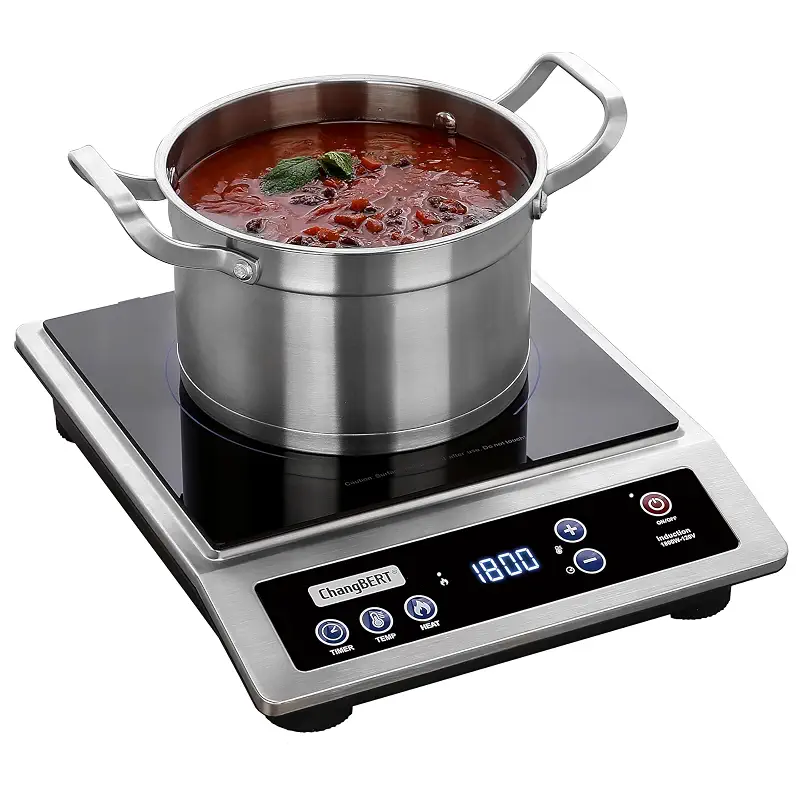
ChangBERT Induction Cooktop, Commercial Grade Portable Cooker, Large 8” Heating Coil, Premium Stainless Steel Countertop Burner with NSF Certified, 10 Hours Timer Powerful 1800W Professional Hot Plate
4.4(1,384)
Commercial-grade induction cooktop with 1800 watts and enlarged coil delivers fast water boils and precise temperature control for tech-savvy canners.
Ideal for: Canners with magnetic cookware and modern kitchens who value fast boil times, easy cleanup, and precise wattage/temperature control.
The ChangBERT induction cooktop represents a different philosophy: instead of cycling electricity through a heating element, it energizes your cookware directly via magnetic induction. The 1800-watt output is genuinely powerful, and owners report boiling water in under three minutes flat. The nine power levels and eighteen temperature presets offer granularity that cast iron or tube burners simply don't match. For canners who want to dial in 190 degrees for a precise simmer or jump to 460 for a rolling boil, this delivers.
The flat glass surface wipes clean instantly, and there's no external heat: just the pot gets hot, not the cooktop itself. NSF commercial certification means it's built for restaurant-volume use. The sealed button controls (not touch screen) are genuinely forgiving when your hands are wet or greasy, a real advantage during canning prep.
Here's the catch: induction requires magnetic cookware, and not all pressure cookers qualify. If your canner has an aluminum or copper bottom, it won't work without an adapter disk. Temperature regulation, while precise in theory, can be trickier in practice, adding cold ingredients to a pot can cause overshoot before the unit recalibrates. Owners report that holding a true simmer is more finicky than on electric coil models, and some note the heating coil only effectively covers a 4 to 5 inch zone despite the 8-inch marketing claim. If you use best stackable cookware that's induction-compatible, this pairs well.
Pros
1800-watt induction delivers fastest water boils among portable options
Flat glass surface cleans instantly with a single wipe
Nine power levels and eighteen temperature presets for precise control
Cons
Requires magnetic cookware; many pressure cookers need adapter or won't work
Temperature regulation can overshoot or drift when ingredients are added mid-cook
Key features
1800-watt induction with 83% energy efficiency and rapid heat response
Large 8-inch magnetic coil optimized for even heat distribution
Nine preset power levels (200-1800W) and eighteen temperature settings (120-460°F)
NSF certified commercial grade with 10-hour countdown timer and auto-pan detection
#4 Pick
Best Budget-Friendly Cast Iron
Cuisinart
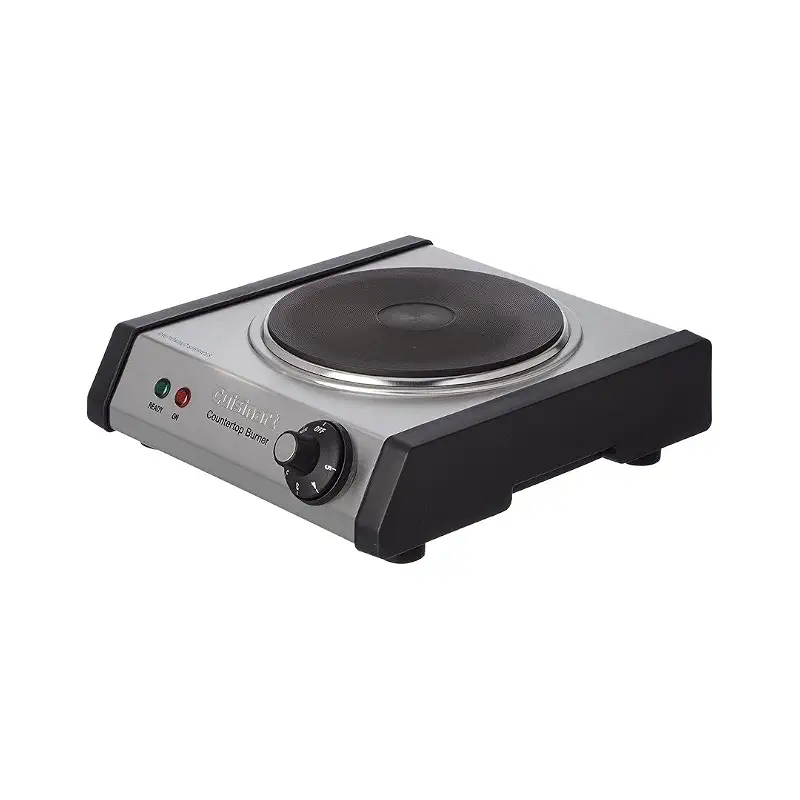
Cuisinart CB-30P1 Cast-Iron Single Burner, Stainless Steel
4.4(4,529)
Affordable 1300-watt cast iron burner that works steadily for occasional canners and everyday cooking.
Ideal for: Occasional home canners and RV cooks who want reliable cast iron heat without premium pricing.
The Cuisinart is the entry point into portable hot plate canning. At nearly half the price of the Cadco models, it offers 1300 watts of cast iron heat with a 6-position temperature dial. Owners who use this for pressure canning report it works, though with caveats: it reaches pressure eventually, but more slowly than higher-wattage alternatives. The main advantage is straightforward simplicity: no thermostat fussing, just turn the dial and wait.
The compact footprint (11.5 by 11 inches) fits tight spaces better than the 14-inch Cadco CSR-3T. Buyers praise durability; multiple owners report three-plus years of regular use without failure. The cast iron plate holds heat well, which helps maintain steady pressure once achieved. However, some canners find the lower wattage frustrating; boiling a gallon of water can take 25 to 30 minutes on high, which eats into canning day efficiency.
Where this differs from the professional Cadco KR-S2: the Cadco is genuinely commercial-grade and handles industrial-scale use, while the Cuisinart is a solid home-hobbyist tool. Compared to induction cooktops, this has no learning curve and works with any cookware, but it lacks temperature precision and takes longer to reach pressure. For someone canning once or twice a season, this represents solid value.
Pros
Compact 11-inch footprint saves counter space
Durable cast iron construction holds heat and maintains pressure well
Simple 6-position dial requires no complicated adjustment
Cons
1300 watts is the lowest output here; slower boil and pressure times
Entire unit exterior gets quite hot during use; requires care when moving
Key features
1300-watt cast iron plate element with large cooking surface
Six-position adjustable thermostat with ready and on indicator lights
Brushed stainless steel housing with non-slip rubber feet
Coil-less cast iron design wipes clean in seconds
#5 Pick
Premium Induction for Professionals
Changbert
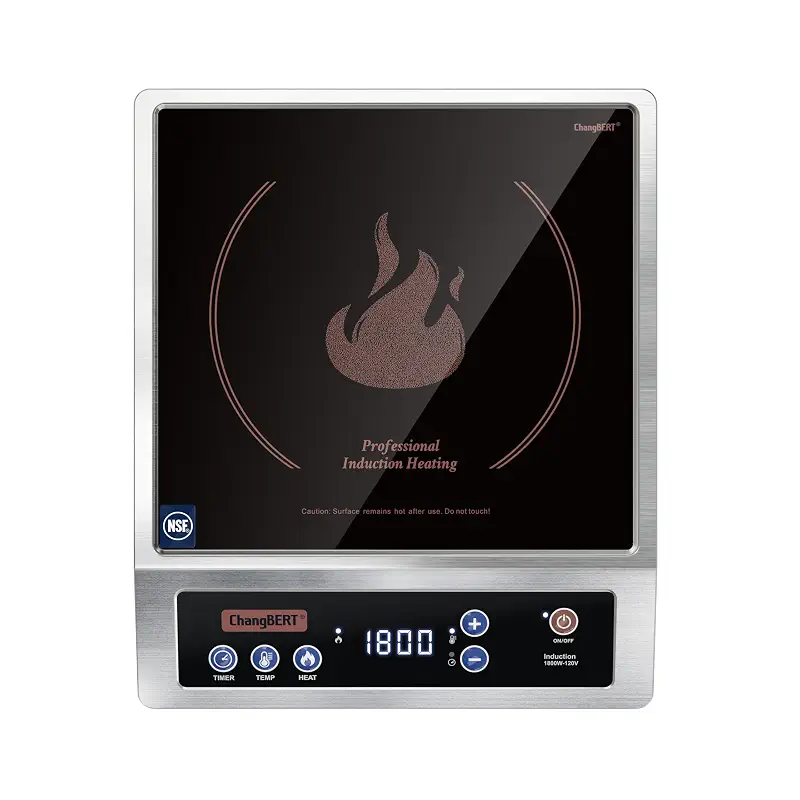
ChangBERT Professional Induction Cooktop, NSF Certified Countertop Burner, Large Coil for Even Heating, Precise Temperature Control, 10 Hours Timer, 1800W Powerful Hot Plate for Home & Commercial Use
4.6(24)
NSF commercial induction with optimized cooling, dual IGBT circuitry, and quieter operation for high-volume canners and serious food prep.
Ideal for: Professional caterers, cooking schools, and high-volume home canners prioritizing stable output and quiet operation with magnetic cookware.
The ChangBERT Professional is the premium sibling of the entry-level induction model, and the upgrades are real. Dual IGBT technology and optimized internal cooling mean this unit maintains stable output during extended cooking sessions without the fan noise that plagues cheaper induction burners. Owners report near-silent operation compared to competitors, which matters if you're cooking outdoors or in open kitchens. The five-foot power cord and heavy-duty construction signal this is built for caterers, cooking schools, and ultra-serious home canners.
The 1800-watt peak and large 8-inch magnetic coil align with the standard induction model, but the Professional version holds temperatures more steadily and recovers faster when you add cold ingredients mid-cook. The sealed button control panel (not touch screen) is genuinely user-friendly, and the ten-hour timer opens possibilities for slow sous-vide cooking alongside canning. NSF commercial certification isn't marketing fluff: it means consistent performance across heavy workloads.
The primary caveat mirrors all induction: magnetic cookware is non-negotiable, and not every pressure canner qualifies. The heating coil, while larger than most, still effectively covers a 4 to 5 inch zone despite claims of an 8-inch surface. If you're comparing this to the Cadco CSR-3T tubular model, you're trading the induction speed and precision for the Cadco's simpler, more forgiving temperature hold on traditional cookware. For electric vs induction for canning decisions, this represents the peak of induction capability.
Pros
Dual IGBT circuitry maintains stable output during extended cooking
Quieter operation thanks to optimized cooling without loud fan noise
Sealed button controls with tactile feedback work reliably with wet or greasy hands
Cons
Requires compatible magnetic cookware; many traditional cookers won't work directly
Premium pricing reflects commercial-grade engineering not all home users need
Key features
1800-watt professional induction with continuous-duty circuitry for long sessions
Large 8-inch magnetic coil with optimized winding for even heat distribution
Nine power levels (200-1800W) and eighteen temperature settings (120-460°F)
NSF certified commercial grade with 10-hour timer and five-foot heavy-duty power cord
How to Choose a Hot Plate for Pressure Canning
Four trade-offs that actually matter when matching a hot plate for pressure canning to your kitchen.
Wattage and Heat Output Matter
Pressure canning demands sustained, high heat: typically 1300 to 1800 watts for reliable performance. The pressure canning heat requirements determine how fast your canner reaches pressure and how stable it holds once there. Lower wattage (1300 watts) works but adds 20 to 30 minutes to your total time. If you're processing large batches or using a 30-quart cooker, 1500+ watts prevents the frustrating slow creep toward pressure. Cast iron and tubular elements deliver their rated wattage consistently; induction cooktops are efficient but require magnetic cookware.
Cookware Compatibility and Cooktop Type
Electric coil and tubular burners work with any cookware: cast iron, aluminum, glass-bottomed canners, everything. Induction cooktops are powerful and precise but only work if your pressure canner bottom is magnetic (ferrous metal). Test with a magnet before buying an induction unit. If you have an aluminum-bottom canner or plan to use one in the future, stick with traditional electric or cast iron. If your cookware is steel or cast iron, induction offers speed and temperature control that coil burners can't match.
Counter Space and Portability
Tubular element hot plates like the Cadco CSR-3T can run 14 inches wide and need dedicated real estate. Cast iron and induction models are more compact and easier to tuck away between canning seasons. If you have a small kitchen, limited counter space, or want to can outdoors, a smaller footprint is worth prioritizing. However, compact doesn't mean unstable: look for rubber feet and a solid base, especially if you're placing a 30-pound pressure cooker on top.
Temperature Control and Durability
Professional-grade models with Robertshaw thermostats or dual IGBT induction circuitry hold temperatures more faithfully than basic dial controls. This matters if you're doing long canning sessions or trying to maintain a precise simmer between pressure pulses. Commercial certification (NSF, UL) usually means the unit has been stress-tested for extended use, which translates to reliability. A burner that lasts five or six canning seasons costs less per season than replacing a cheaper model annually.
Maintenance and Cleanup
Cast iron and tubular coil burners require occasional wipe-downs and can trap grease around trim rings. Induction cooktops have flat glass surfaces that wipe clean instantly but need careful handling to avoid chips or cracks. All models get hot during use, so plan for cool-down time before storing. Check whether the manufacturer specifies any special care for residue left by pressure canner bottoms; some burners benefit from a quick scrub after the first use.
Frequently asked
Quick answers to the questions readers ask most.
Can I use any pressure cooker on these hot plates?
Most pressure cookers work on electric coil and tubular burners: the main issue is ensuring the canner base sits flat on the element. Induction cooktops require a magnetic (ferrous metal) canner bottom. Cast iron and aluminum canners won't work on induction without an adapter disk. Always check your canner's specifications and test with a magnet before purchasing an induction burner.
How long does it take to reach 15 psi on these burners?
Reach time depends on wattage and cooker size. At 1500 watts with a 23-quart canner and water already in the pot, expect 25 to 45 minutes to reach 15 psi. Lower-wattage models (1300 watts) can add 10 to 15 minutes. Induction cooktops typically boil water faster than cast iron burners but may take similarly long to reach full pressure depending on your canner's thermal mass and the model's temperature stability.
Are these burners safe to leave unattended during processing?
All models here include auto-shutoff features or indicator lights, but pressure canning requires active monitoring. Never leave a pressure cooker unattended on any burner. These hot plates are designed for consistent heat output during processing time, but you must stay alert to pressure fluctuations, adjust dials as needed, and follow your canning method's timing instructions precisely.
Can I use a hot plate for everyday cooking too, or just canning?
These burners work well for everyday cooking, making soup, boiling pasta, frying, and simmering. In fact, many owners use them as a second burner during holidays or to free up stovetop space. Induction cooktops excel at pancakes and omelets with even browning. Cast iron models hold heat well for simmering soups. If you plan hybrid use, choose a model that fits your everyday cookware and counter space.
Do I need to do anything special with a new hot plate before pressure canning?
Yes. New cast iron elements often have a protective coating that can smell during the first run. Place the burner outside or in a well-ventilated area, run it on high heat for 10 to 15 minutes without a pot, then let it cool. After the first use for canning, inspect your canner's bottom and wipe off any film or residue. This initial prep prevents odors and surface marks during your first real canning session.