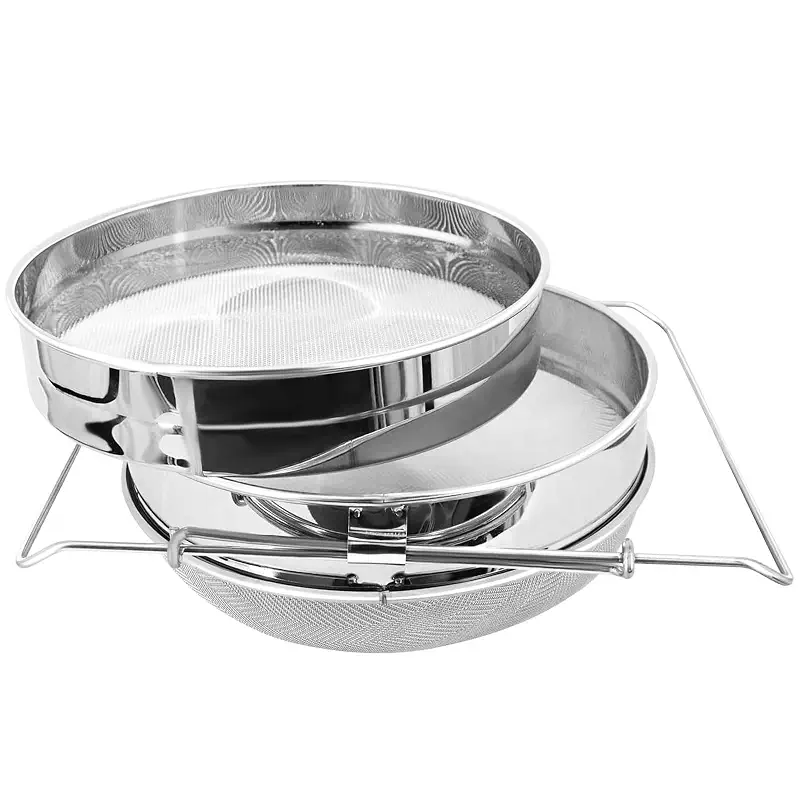
Ideal for: Commercial-scale and serious hobby beekeepers processing multiple hives per season.
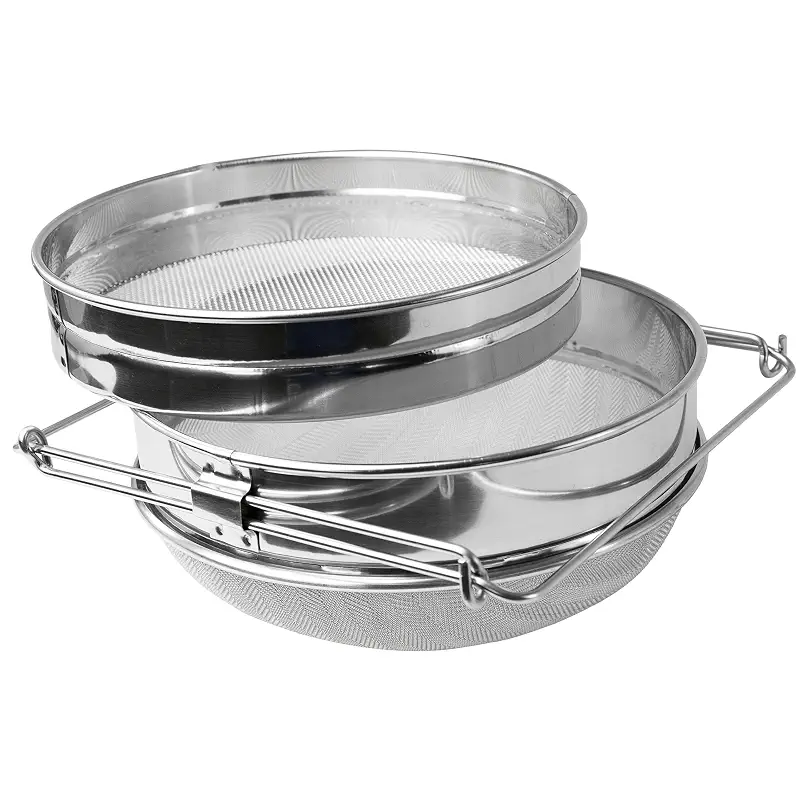
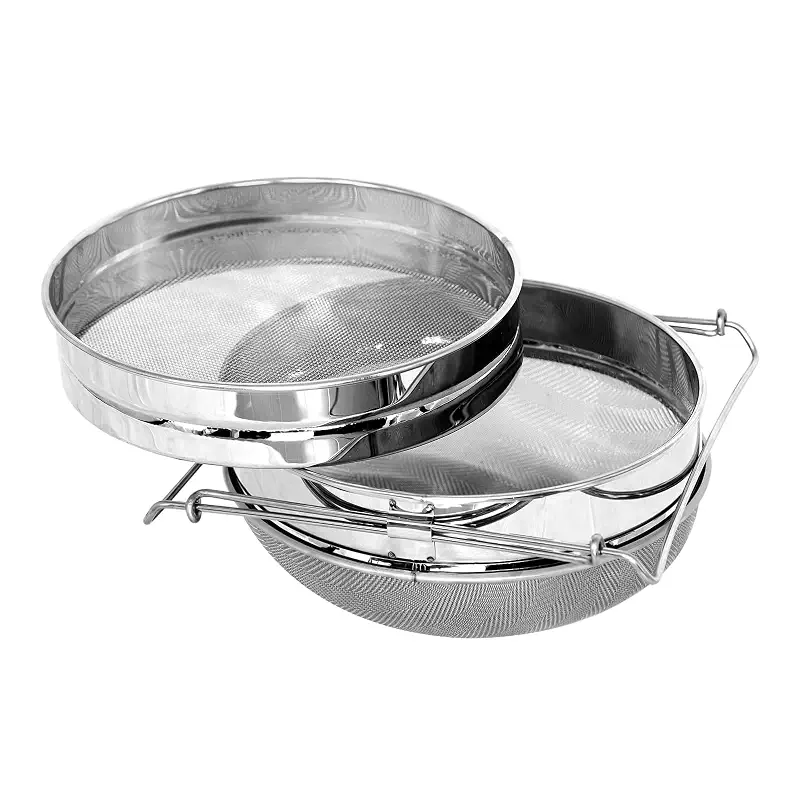
The Beeknows strainer stands out for its food-grade 304 stainless-steel mesh and thoughtful two-stage design. The 1875-micron upper sieve catches beeswax and large debris, while the 650-micron lower mesh refines the final product to a clear finish. At 9.4 inches wide with extendable arms reaching 16 inches, it fits securely over 5-gallon buckets without tipping. Owners consistently praise its durability compared to plastic alternatives and note that it cleans faster than competing models, often rinsing completely under cold water in seconds.
What sets this strainer apart from the VIVO model (which uses 201 stainless steel) is the heavier 304-grade construction. The trade-off is minimal: both perform equally well for most home operations, but the Beeknows holds up longer if you're straining dozens of gallons per season. A few owners mention that if you're processing more than one hive's worth of honey in a single session, you might want a second strainer to keep the workflow moving while one is being cleaned.
One practical note: if your harvest includes very fine pollen and you prefer a lighter-colored final product, this sieve won't go finer than 650 microns on the second stage. For some home producers, that's exactly what they want; others seeking ultra-fine filtration might consider the mesh-bag option instead.
Pros
304 stainless steel resists rust better than competitors
Extendable arms secure to 16-inch reach for larger containers
Cleans thoroughly under cold water in seconds
Cons
Heavier than plastic strainers, requires sturdy bucket placement
650-micron fine mesh does not remove very fine pollen
Key features
Dual-stage filtration: 1875-micron coarse and 650-micron fine mesh
Food-grade 304 stainless steel with rust-resistant construction
9.4-inch-diameter mesh bowl, 16-inch adjustable arm span
Fits 5-gallon buckets, honey pans, and extraction containers
Dishwasher-safe and quick to rinse under running water
The VIVO double-sieve strainer has become something of an industry standard, backed by nearly 3,000 reviews from beekeepers who have put it through real harvests. It uses 201 stainless steel (a step down from 304 grade, but still durable) and delivers the same 1875/650-micron two-stage filtration that owners depend on for clean results. The 9-inch bowl diameter and 15.5-inch arm reach fit standard 5-gallon buckets reliably, and the construction feels solid in hand.
Where this model shines is workflow efficiency. Multiple owners suggest buying two VIVO strainers if you're processing more than five gallons in one session: rotate one over your bucket while the other drains and cleans in the background. The suggestion comes up often enough in reviews that it points to a real consideration: high-volume producers save time with two units rather than stopping to clean mid-harvest. One owner with years of experience noted that the fine mesh can benefit from a warm-water soak if honey begins to crystallize during cleanup, but that's a minor trade-off for the filtering power.
Compared to the Beeknows, the VIVO costs less and has proven itself across thousands of real-world harvests, making it the safer choice if you're uncertain about build quality. The 201 steel is adequate for home use, though the Beeknows' 304 grade will outlast it in long-term storage and repeated use.
Pros
Nearly 3,000 reviews prove performance across diverse harvests
Efficient two-stage filtration with steady honey flow
Compact low-profile design fits under honey gates
Cons
201 stainless steel corrodes slightly faster than 304 grade
Fine mesh may require warm-water soak if honey crystallizes during cleanup
Ideal for: Small-scale beekeepers or home cooks seeking affordable 304 stainless-steel filtration.
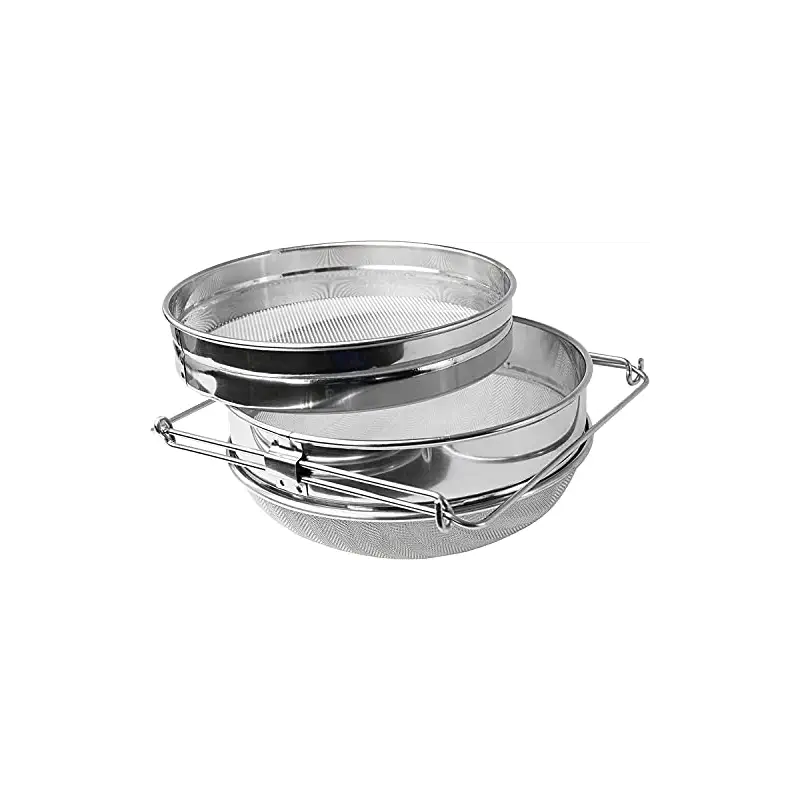
The BeeCastle strainer brings together the key features buyers want (food-grade 304 stainless steel, dual-sieve filtration, and adjustable arms) at a lower cost than the Beeknows or VIVO models. At 9.4 inches wide and adjustable from 9 to 16 inches, it matches the Beeknows' footprint and should fit most 5-gallon buckets without balance issues. The 1875/650-micron mesh pairing filters beeswax and fine particles in one pass, leaving honey ready for bottling.
With only 38 reviews, the BeeCastle has a smaller feedback pool than competitors, but the owners who have reviewed it report consistent results: clean honey, easy cleanup, and sturdy construction. One user noted it was "a bit small for a 5 gallon bucket," which likely means the arms don't extend as far as the larger models, so there's a real trade-off in stability if you're pouring from height. If you're filtering directly over a 5-gallon container without an extractor flow, you may want to secure the arms carefully.
For hobbyists processing one or two hives per season, the BeeCastle delivers the essentials at mid-range cost. If you're comparing it to the Beeknows, you save money but get a slightly less stable fit on very large buckets; compared to the mesh-bag option below, you get reusable durability and faster flow-through.
Pros
Food-grade 304 stainless steel for long-term durability
Adjustable arms extend 9 to 16 inches for flexible container fit
Simple cold-water rinse restores cleanliness between uses
Cons
Fewer customer reviews means less real-world feedback on edge cases
Arm stability may be compromised on very large or uneven buckets
Key features
Dual-sieve filtration: 1875-micron coarse, 650-micron fine mesh
Food-grade 304 stainless steel with corrosion tolerance
9.4-inch diameter mesh bowl, 16-inch maximum arm extension
Adjustable grip for 5-gallon buckets, honey pans, and pails
Efficient wax and impurity removal in a single pour
#4 Pick
Best Multi-Purpose
Beextm
BEEXTM Honey Strainer Filter Stainless Steel Double Sieve for 5 Gal Bucket | Adjustable Arms 9"-16", 1875+650 Micron Dual Mesh, Food Grade, Easy Clean, for Beekeeping & Kitchen, for Honey, Yogurt, etc.
4.7(343)
Oversized 304 stainless-steel double sieve equally suited to honey, yogurt, and kitchen straining tasks.
Ideal for: Home beekeepers and kitchen cooks seeking one versatile strainer for multiple filtering tasks.
The Beextm strainer is pitched as a kitchen-and-hive tool, and the feedback confirms it works well for both. The 9.8-inch mesh bowl and 4.3-inch depth (larger than most competitors) give you extra capacity per pour, which matters if you're straining small batches of yogurt whey or multiple small jars of honey. The 304 stainless-steel construction and 1875/650-micron dual mesh deliver the same clarity as the single-purpose models, but the generalist design means you're not over-engineering for honey alone.
Owners frequently mention using this strainer for purposes beyond honey: home canning, yogurt straining, and other kitchen filtering tasks. One buyer noted using it for both honey extraction and final refinement in canning work, appreciating a single tool that handles multiple jobs. The arms adjust from 9 to 16 inches and secure firmly to bucket rims, so stability is solid even during multi-purpose use where you might be pouring at different angles.
Compared to the Beeextm model (focused specifically on honey), this strainer's larger bowl and kitchen-forward marketing might seem redundant, but the key difference is purpose: if you plan to filter honey occasionally and use the strainer for other kitchen work regularly, Beextm justifies the investment. For pure-honey beekeepers, the single-purpose Beeknows or VIVO will do the job just as well at similar or lower cost.
Pros
Oversized 9.8-inch bowl catches more per pour than standard models
304 stainless steel proven durable for kitchen and hive use
Adjustable 9-to-16-inch arms fit various container sizes securely
Cons
Larger footprint requires more storage space when not in use
650-micron fine mesh is adequate but not ultra-fine for specialty applications
Key features
Extra-large 9.8-inch diameter mesh bowl with 4.3-inch depth
Dual-stage 1875-micron and 650-micron filtration system
Food-grade 304 stainless steel, dishwasher-safe construction
Extendable arms adjust 9 to 16 inches for secure bucket grip
Versatile for honey, yogurt, milk, tea, and kitchen straining
#5 Pick
Best Budget-Friendly
Spmktqk
SPMKTQK Honey Strainer, Honey Filter Bag Ultra-Fine Mesh Strainer 4Pcs | Beginner Honey Extractor Equipment in a 5 Gallon Bucket,honey extractor Reusable and Washable With adjustable drawstring
4.7(234)
Four reusable mesh-bag strainers that cost less than one metal sieve but require multiple batches for fine filtration.
Ideal for: Budget-conscious beekeepers using overnight gravity filtering or processing honeycomb in bulk.
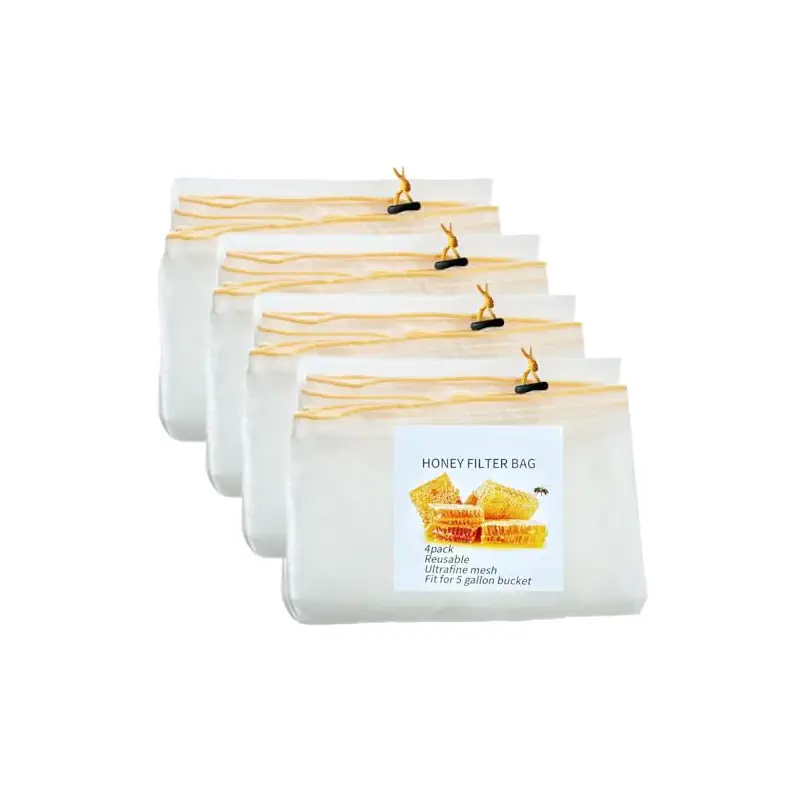
The Spmktqk mesh-bag option takes a fundamentally different approach: instead of a rigid double-sieve frame, you get four cloth strainer bags with a 125-micron mesh and heavy-duty elastic bands. At 4.7 stars across 234 reviews, they're well-regarded for what they are: a bulk-filtering solution for high volumes of honey or honeycomb. The nylon is food-grade, washable, and reusable; owners report they hold up to repeated use despite one reviewer noting occasional tearing under stress.
The appeal lies in cost and bulk handling. If you're extracting whole honeycomb frames, you can dump cappings directly into a mesh bag and let gravity work overnight while the honey seeps into a bucket below. Multiple owners use one bag per 5-gallon bucket to run the filtering process in parallel rather than serially. The trade-off: 125-micron mesh is much finer than the 650-micron lower sieve on double-sieve models, so you'll catch more pollen and fine particles, but the flow is slower, making this better suited to patience-based overnight filtering than to active processing.
Compared to metal double-sieves, mesh bags shine for raw or minimally filtered honey where you want maximum clarity and don't mind waiting. However, if you need to process honey quickly during extraction (when the extractor output doesn't pause), a rigid sieve like the Beeknows or VIVO keeps your workflow moving. The mesh bags are also lighter and easier to store, making them ideal for casual beekeepers with limited space.
Pros
Pack of four bags reduces cost per straining session
Lightweight and compact storage compared to rigid sieves
Cons
Very slow flow rate requires overnight soaking or passive gravity drainage
Mesh may tear after single intense use with high-viscosity honey
Key features
Four reusable nylon mesh-bag strainers with 125-micron ultra-fine mesh
Heavy-duty elastic band fits 5-gallon buckets securely without slipping
Food-grade polyester fabric resists stretching and wicks honey efficiently
Washable and reusable for lasting value across multiple harvest seasons
Ideal for overnight gravity filtering or capping and frame processing
How to Choose the Right Honey Strainer
Four trade-offs that actually matter when matching a honey strainer to your kitchen.
Sieve vs. Mesh Bag: Filtration Speed and Clarity
Metal double-sieves and cloth mesh bags serve different workflows. Rigid sieves (whether 304 stainless steel or 201) handle active pouring during extraction, keeping honey flowing steadily into containers while you work. Mesh bags excel at passive, overnight gravity filtering and catch finer particles (125 micron vs. 650 micron), producing lighter, clearer final honey. For a detailed comparison, the sieve and mesh bag comparison breaks down micron sizes, flow rates, and when each approach makes sense. Most commercial and serious hobby beekeepers choose sieves for speed; casual producers often prefer bags for final polish.
Stainless-Steel Grade and Durability
All metal strainers here use either 201 or 304 stainless steel. The 304 grade is more corrosion-resistant and lasts longer in humid environments or with repeated exposure to residual honey and wax. If you plan to use the strainer year-round or process more than five hives annually, 304 steel is worth the investment. The 201 grade is adequate for casual use and storage between seasons, so budget-conscious beekeepers often find it sufficient. Cost difference is typically modest per unit.
Mesh Size and Final Honey Clarity
Double-sieve models filter in two stages: a coarse upper mesh (1875 micron) catches beeswax and capping debris, while the fine lower mesh (650 micron) refines the product. The honey straining process guide walks through what each mesh does in detail. Mesh bags use a single ultra-fine filter (125 micron), removing more pollen and particulate but requiring much longer filtering time. For clear, bottling-ready honey without overnight waiting, a 650-micron sieve strikes the balance; for maximum clarity and raw character, mesh bags excel.
Container Fit and Arm Stability
Most strainers fit 5-gallon food-grade buckets via adjustable arms (typically 9 to 16 inches wide). Check the diameter of your primary container: standard buckets are 10 inches wide, and most strainer arms reach this comfortably. If you use honey pans, bottling tanks, or buckets with lids or gates, verify that the strainer sits at a stable height without tipping. Larger bowl diameters (9.8 inches vs. 9 inches) offer marginal advantage for high-volume pours, while compact designs save storage space if kitchen room is limited.
Cleaning and Maintenance
Rigid sieves rinse quickly under cold water immediately after use; warm soapy water removes crystallized honey. Mesh bags soak in warm water or air-dry outdoors (bees will clean residual honey if you leave them by the hive). Dishwasher-safe models simplify deep cleaning, though hand rinsing extends mesh life. Consider how much cleanup effort fits your workflow: if you harvest in batches across weeks, easy-rinse metal is preferable; for multi-day extraction sessions, having a backup strainer (or four mesh bags) keeps the process moving while one cleans.
Frequently asked
Quick answers to the questions readers ask most.
Can I use a honey strainer for other foods besides honey?
Yes. Double-sieve models work well for yogurt, nut milk, coffee, and tea filtering. Mesh bags are excellent for straining whey, broth, and canning work. The key is cold-water rinsing immediately after use: honey residue hardens and blocks mesh, but fresh rinsing takes seconds. Avoid long-term storage with food residue; clean fully and dry before putting away. Most stainless-steel and nylon options are food-grade and dishwasher-safe, making cross-use simple if you have the storage room.
How long does honey straining typically take?
Active pouring through a double-sieve takes 5 to 10 minutes per 5 gallons, depending on how fast you pour and how much wax buildup accumulates in the upper mesh. If the flow slows, a rubber spatula gently moves wax particles to keep honey moving. Overnight gravity filtering through mesh bags takes 12 to 24 hours but requires no active work. Most beekeepers combine both methods: sieve during active extraction, then final polish through a mesh bag for ultra-clear results.
Do I need two strainers, or is one enough?
One sieve works fine for processing a single hive (typically 5 to 10 gallons per season). If you're managing two or more hives and harvest on the same day, a second strainer lets you filter into one bucket while cleaning the first, keeping workflow smooth. Alternatively, buying a four-pack of mesh bags gives you parallel filtering capacity without buying a second expensive sieve. Most commercial producers use two metal sieves for this reason.
What mesh size do I actually need?
For honey, a 650-micron fine mesh on a double-sieve removes wax and debris without excessive slowdown, leaving subtle pollen for flavor. A 125-micron mesh (fabric bags) removes more pollen, producing very clear, light-colored honey: ideal if you're selling and want visual appeal. For yogurt or cheese, finer meshes work better. If you're unsure, start with a 650-micron sieve; you can always polish with a mesh bag afterward if the honey isn't clear enough.
Are stainless-steel strainers worth the extra cost over plastic?
Yes, for long-term use. Stainless steel resists warping, staining, and degradation from heat or honey residue, lasting 10+ years with basic care. Plastic strainers can warp or absorb stains and odors. If you harvest annually, a metal strainer pays for itself within three seasons through durability and ease of cleaning. Mesh bags are polyester-based but designed for repeated use and are equally durable if rinsed promptly after each session.