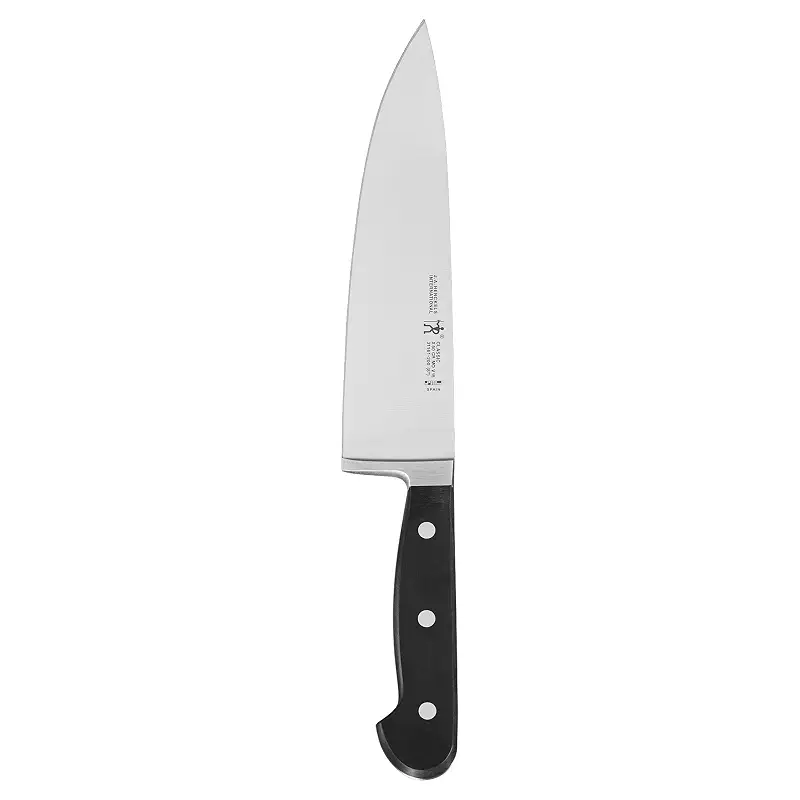
HENCKELS Classic 8-Inch Chef Knife, Razor-Sharp, German Engineered | Fully Forged Construction Provides Balance with Traditional Triple-Rivet Handles Enables Comfortable Easy Cutting.
4.7(5,425)
Fully forged German steel with lasting sharpness and comfortable balance at an entry-level investment.
Ideal for: Home cooks seeking reliable performance without premium pricing; kitchen beginners graduating to quality tools.
The Henckels Classic 8-inch has earned its reputation as a workhorse. It's forged from stainless steel with a seamless transition from blade to handle, which means it won't flex unpredictably when you're working through root vegetables or trimming meat. The triple-rivet handle sits comfortably in most hands and feels naturally weighted without demanding wrist strength. What I appreciate most is that owners consistently report this knife holding its edge through weeks of daily use before needing a hone. It's not fancy, but it does what it promises.
Compared to pricier German options, this knife trades some refinement in the handle finish for genuine cutting performance. The blade itself is every bit as capable as knives costing significantly more. The trade-off is that finishing details around the rivets and handle-to-blade junction aren't as polished as you'd find on premium lines, but that's where you'd be paying for aesthetics rather than function.
This is the pick for home cooks who want to move beyond discount knife-store sets without overcommitting financially. If you sharpen regularly and avoid the dishwasher, owners report getting years of reliable service. It's also a smart choice for anyone learning knife skills, since a tool this responsive teaches good technique without the anxiety of damaging something expensive.
Pros
Fully forged construction delivers lasting balance and edge retention
Holds sharpness through weeks of regular use with minimal maintenance
Comfortable triple-rivet handle fits most hand sizes naturally
Cons
Handle finishing details not as refined as premium German lines
Requires regular honing to maintain peak performance
Key features
Fully forged German stainless steel with seamless tang-to-handle transition
8-inch blade length suitable for most everyday cutting tasks
Triple-rivet handle with traditional curved design for comfort
Lifetime warranty covering defects in material and workmanship
#2 Pick
Best for Edge Retention
Zwilling
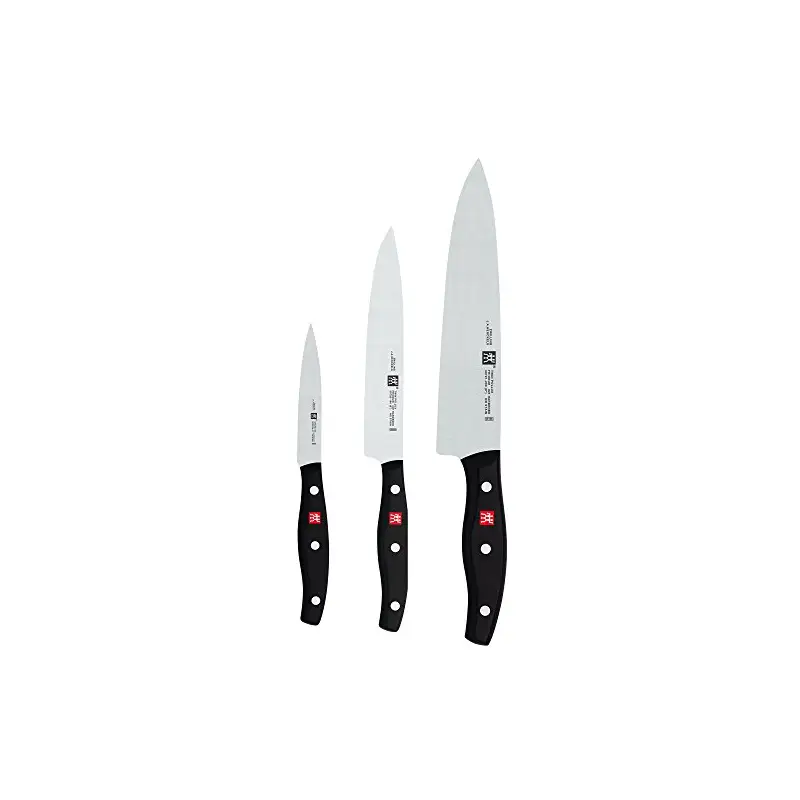
ZWILLING Twin Signature 3-Pc Knife Set Made in Germany | Ultra Sharp Blades Made with Special Formula Friodur Ice Hardened Steel for Durability. Dishwasher Safe and Comfortable Grip.
4.7(1,685)
Premium ice-hardened steel and three essential blades built to stay sharp longer with minimal maintenance.
Ideal for: Cooks who use knives daily and prefer spending less time on maintenance and sharpening.
Zwilling's heritage runs nearly 300 years deep in Solingen, Germany, and it shows in the Twin Signature set. The Friodur ice-hardening process is their signature technique, and it does what it claims. Owners who cook daily report that these knives maintain their sharpness for substantially longer than conventionally hardened blades. The 57 Rockwell Hardness rating sits at an optimal middle ground between holding an edge and remaining resharpnable on home sharpening stones. What separates this set is consistency. All three knives feel equally well-made and purposeful.
The set includes an 8-inch chef's knife for general work, a 6-inch utility for precision tasks, and a 4-inch paring knife for detailed work. That trio covers nearly every kitchen need without forcing you to buy more than you'll use. The blades are precision-stamped rather than forged, which makes them slightly lighter than fully forged options like the Henckels, but the reduced weight is actually welcome for extended prep sessions. The ergonomic handles are triple-riveted and feel secure in the hand without excess bulk.
Where this set differs from the Henckels Classic is in manufacturing philosophy. Zwilling owns its German factories and controls every production step, whereas some competitors outsource portions. If edge retention and longevity matter more to you than saving on the initial purchase, this set justifies the step up. For specialized cutting tasks like preparing poultry, the best knife to cut raw chicken would typically be a sharp utility blade or boning knife rather than the chef's knife, though the 8-inch in this set handles that work capably if your primary knife is what you reach for.
Pros
Ice-hardened Friodur steel holds edge significantly longer than standard blades
Three knives cover all essential kitchen tasks from chef work to detail paring
Lightweight stamped construction reduces hand fatigue during extended prep
Cons
Higher price point than single-knife entry options
Lighter weight may feel less substantial to cooks who prefer heft
Key features
Friodur ice-hardened German stainless steel with 57 Rockwell Hardness
Precision-stamped blades with 15-degree edge angle per side
Dishwasher-safe handles with ergonomic triple-rivet design
#3 Pick
Best for Sharpness Out of the Box
F.Dick
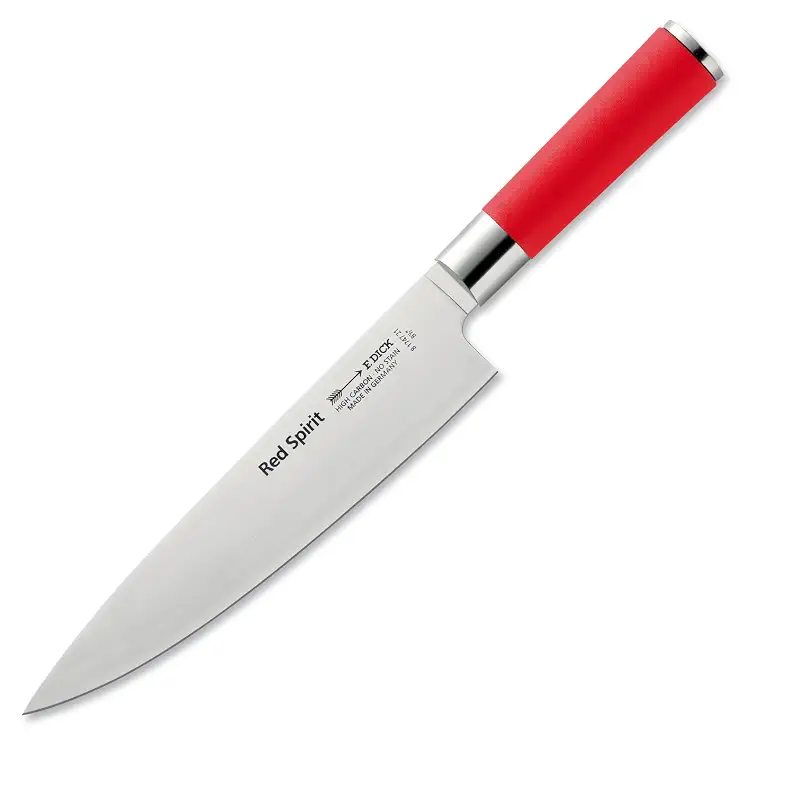
F. DICK – Red Spirit Chef Knife - Classic kitchen knife with 8.3" blade & 56 HRC - Ideal for meat & vegetables - High carbon - Stainless steel - Ultra sharp - Ergonomic handle - Made in Germany
4.7(599)
Extraordinarily sharp German blade ground extra slim, ideal for cooks who prioritize cutting precision.
Ideal for: Experienced home cooks and professionals who maintain their knives and value cutting precision.
F.Dick's Red Spirit line pushes sharpness to the forefront. The blade is ground noticeably thinner than most German chef knives, which translates to a cutting edge that feels almost effortless when you pick it up. The 56 Rockwell Hardness is the sweet spot that F.Dick engineered specifically for balancing initial sharpness with reasonable edge retention and home-sharpening ease. Every step of production happens at their factory in Deizisau, Germany, from steel processing through final edge finishing. Owners who work with knives regularly report that this blade cuts as well as or better than options costing substantially more.
The handle is ergonomic and heat-resistant, designed for comfort during prolonged use. This knife weighs more than stamped alternatives, which some cooks love for the sense of control and others find tiring during repetitive work. If you prefer heavier blades that do more of the work for you, this is your match. The downside is that the Red Spirit's exceptional sharpness demands respect and regular maintenance. A sharp knife is safer when used properly, but it requires more attention than a more forgiving blade.
Against the Henckels Classic, the F.Dick trades some price for noticeably superior edge performance. Where the Henckels is forgiving and reliable, the F.Dick rewards precision and regular honing. This is the pick for cooks who understand knife care and want a blade that responds to that investment.
Pros
Blade ground extra slim for exceptional sharpness and cutting ease
56 HRC hardness balances edge retention with home resharpening capability
Crafted entirely in Germany with multi-step quality control process
Cons
Requires regular honing to maintain its exceptional edge performance
Heavier weight not ideal for cooks preferring lighter, faster blade work
Key features
High-carbon stainless steel blade ground slim for precision cutting
56 Rockwell Hardness for optimal edge retention and resharpening balance
Ergonomic handle resistant to heat and acid for professional kitchen use
Manufactured entirely in Deizisau, Germany with multi-step production oversight
#4 Pick
Best German Knife Set for Balance
WMF
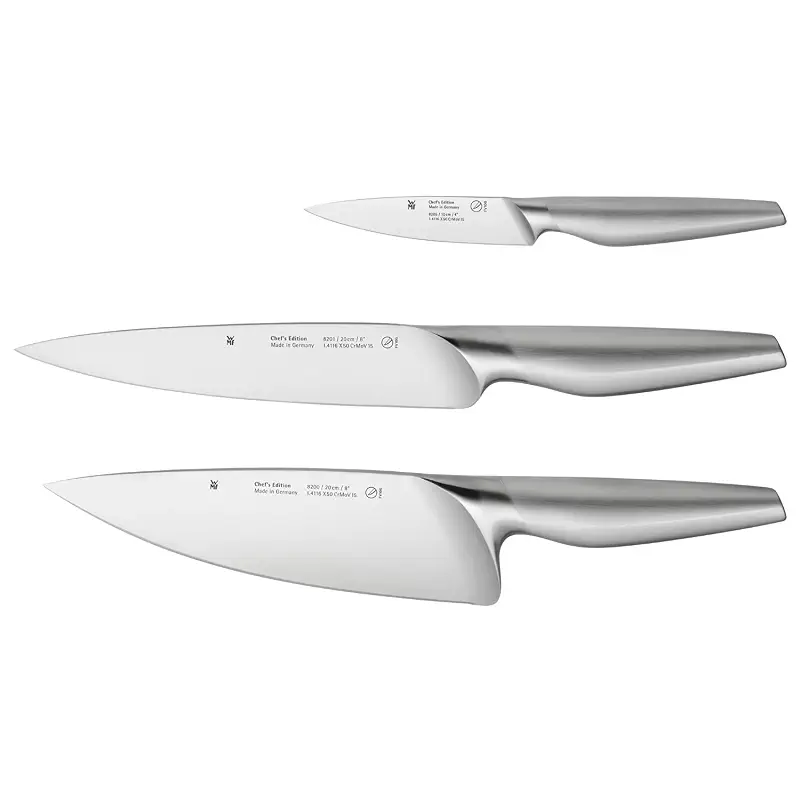
WMF Set of kitchen knives Chef`s Edition 3 pieces, Made in Germany
4.4(112)
Professional-grade forged steel set with seamless handle-to-blade integration and lasting sharpness.
Ideal for: Cooks seeking professional-grade balance and durability in a compact three-knife set.
WMF's Chef's Edition takes a more conservative approach to knife design, but that restraint pays dividends. The set includes a chef's knife, carving knife, and larding knife, each forged from special steel and finished with Cromargan stainless steel handles. The forged bolster creates a harmonious weight distribution that many cooks find more intuitive than lighter stamped designs. The seamless transition between handle, bolster, and blade isn't just aesthetic; it makes the knife feel like one unified tool rather than blade-plus-handle joined together.
Owners note that these knives arrive sharp and remain sharp through regular use when properly maintained. They're not as aggressively sharp as some Japanese-influenced designs, but that's by design. The WMF philosophy favors controlled, sustainable sharpness over the initial wow factor. These are knives built for cooks who prefer a steady blade they can trust through hours of prep work. The weight is substantial without being burdensome, making them suitable for extended use without hand fatigue.
Compared to the Zwilling Twin Signature set, the WMF offers fewer pieces and a different weight philosophy. Where Zwilling went lighter for maneuverability, WMF went heavier for stability. If you value that grounded feeling and don't mind a three-knife set rather than a full block, this performs exceptionally well. The main drawback is availability and limited reviews compared to more widely marketed options, but German-made construction here is as solid as any in this category.
Pros
Forged construction with seamless handle-to-blade transition for unified feel
Substantial weight distribution provides control and stability during extended use
Cromargan stainless steel handles resist wear and maintain appearance
Cons
Only three pieces limits specialty cutting tasks compared to larger sets
More expensive per knife than comparable entry-level German options
Key features
Forged special steel blades with Cromargan 18/10 stainless handles
Seamless bolster-to-blade junction for unified balance and control
Set includes chef, carving, and larding knife for core kitchen tasks
Made in Germany with performance-cut technology for lasting sharpness
#5 Pick
Best Complete Kitchen Set
Henckels
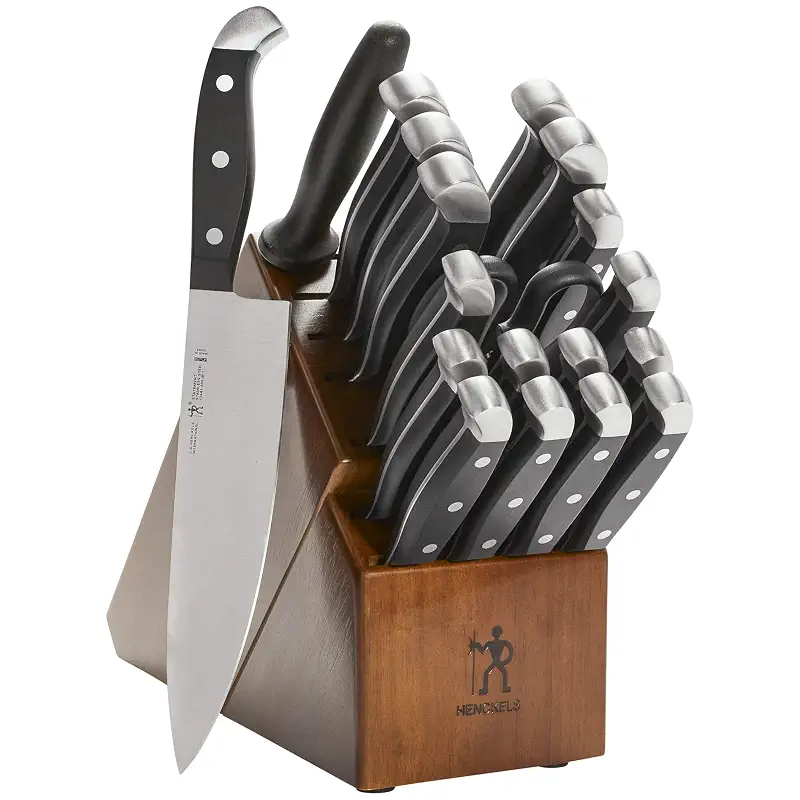
Henckels Statement 20-Pc Knife Set, Razor-Sharp, German Engineered, Brown | Informed by 100+ Years of Mastery. Effortless Cutting with Lightweight with Comfortable Grip, Dishwasher safe.
4.5(24,708)
Twenty-piece stamped-steel set with everything needed for comprehensive food prep, from paring to bread slicing.
Ideal for: Home cooks wanting comprehensive knife coverage without shopping multiple times; kitchens prioritizing tool completeness.
Henckels Statement kit takes the opposite approach from the WMF minimalist philosophy. You get 20 pieces including chef, bread, santoku, carving, boning, utility, paring, steak knives, kitchen shears, sharpening steel, and storage block. If you've been buying knives piecemeal or frustrated with incomplete sets, this addresses that comprehensively. The stamped construction keeps individual knives lighter than forged alternatives, which many cooks appreciate when moving between different blade lengths throughout a cooking session. The single-piece, precision-stamped design is durable and manufactured to consistent standards.
Owners report that the chef's knife and santoku get the heaviest rotation, while the bread knife and boning knife handle their specific tasks reliably. The included sharpening steel and block provide everything needed to maintain the set without additional purchases. The steak knives are a lower grade of steel than the main blades and can develop rust spots if neglected, but that's a typical compromise in bundled sets. The real value here is completeness; you won't need to shop around for specialized knives as your cooking expands.
Where this set differs from the Zwilling Twin Signature is scope. Zwilling focuses on three essential knives perfected. The Henckels Statement offers breadth and coverage. If you cook diverse cuisines or like having the right blade for every task, the 20-piece set justifies its counter space. The german steel hardness guide shows how these blades compare in terms of durability, and this set offers reasonable edge retention at a fraction of what you'd pay buying equivalent quality piecemeal.
Pros
Twenty pieces cover every cutting task from detail work to bread slicing
Includes sharpening steel and storage block for maintenance and organization
Lightweight stamped construction reduces fatigue during varied prep tasks
Cons
Steak knives are lower grade steel and susceptible to rust if not dried promptly
Requires regular honing to maintain edge sharpness across the full set
Key features
Twenty-piece set includes chef, santoku, bread, carving, boning, utility, paring knives
Single-piece precision-stamped blade construction with full tang design
Includes 9-inch sharpening steel and wooden storage block
Dishwasher-safe blades and triple-rivet curved handles for comfort
How to Choose the Right German Knife
Blade Length and Kitchen Tasks
The 8-inch chef's knife is the workhorse for most home kitchens, handling everything from herbs to meat. Smaller utility knives (6-inch) excel at precision work where an 8-inch blade feels unwieldy. Paring knives (3-4 inch) are ideal for detail work like peeling and segmenting fruit. Serrated bread knives cut cleanly through crusty loaves without crushing the interior. Santoku knives (7-inch) suit cooks who prefer a slightly shorter blade with a straighter edge profile compared to Western chef knives. Consider which tasks dominate your cooking; if you're chopping herbs daily, an 8-inch chef's knife will become your best friend.
Forged vs. Stamped Construction
Forged knives are shaped from solid steel under pressure, resulting in a blade that's thicker, heavier, and typically more durable over decades of use. Stamped knives are cut from a sheet of steel, making them lighter and often more maneuverable. Neither is objectively superior; it depends on preference. Cooks who like the feel of weight and stability often prefer forged blades. Those who find extended prep tiring gravitate toward stamped designs. Forged knives typically cost more upfront but may offer longer lifespan. Stamped knives offer better value for home cooks who maintain them properly.
Understanding German vs Japanese Knives
German knives prioritize durability and ease of resharpening, with edges typically between 15-20 degrees per side. Japanese blades often feature sharper angles (10-15 degrees) and hold their edge longer but demand more careful maintenance. Where german vs japanese knives differ is in philosophy: German designs favor versatility and robustness across varied tasks. Japanese designs often specialize in single purposes. For most Western home cooks accustomed to varied kitchen work, German blades feel intuitive and forgiving. The german steel hardness guide explains the Rockwell Hardness ratings you'll see in specs. German knives typically range 54-57 HRC, balancing edge retention with resharpening ease.
Maintenance and Longevity
A sharp knife is safer than a dull one; dull blades slip unpredictably and demand force you don't need. Invest in a ceramic honing steel to realign the edge between uses, and use it weekly if you cook regularly. Hand wash your knives immediately after use rather than running them through the dishwasher; the high heat and tumbling dulls blades and stresses handles. Store knives in a block, on a magnetic strip, or with blade guards to protect the edge and prevent accidents. Regular honing prolongs time between sharpenings. When you do sharpen, use whetstones or professional services rather than electric sharpeners, which remove more steel than necessary.
Frequently asked
Are German knives really better than other options?
German knives excel at durability, ease of resharpening, and balanced performance across varied tasks. They're not objectively 'better' than Japanese or other styles; they're engineered for different priorities. German blades are typically more forgiving and robust, making them ideal for home cooks who want a reliable tool without constant fussing. Japanese knives prioritize edge sharpness and specialty performance. Choose based on your cooking style rather than brand prestige.
Can I put German kitchen knives in the dishwasher?
Most German knife manufacturers make dishwasher-safe blades, but hand washing is always better. Dishwashers expose knives to extreme heat, harsh detergents, and jostling against other items, all of which dull edges faster and stress handles. Hand wash with warm water and mild soap immediately after use, dry promptly, and your knives will stay sharp and look better longer.
How often should I sharpen my German knife?
Frequency depends on use, but most home cooks sharpen 2-4 times per year if they hone weekly with a ceramic steel. Honing realigns the edge between sharpenings and is a quick 30-second task. Sharpening removes steel to create a new edge and should happen less often. If you cook daily and don't hone regularly, you might sharpen every 3-4 months. Pay attention to cutting performance; when you notice the blade requiring more pressure, it's time to sharpen.
What's the difference between a chef's knife and a santoku?
Chef's knives are Western-style with a curved blade profile, designed for rocking motions and versatile cutting. Santokus are Japanese-influenced with a straighter edge and are better for precise slicing and chopping on a cutting board. Chef's knives are slightly longer (typically 8 inches versus 7 inches for santoku) and heavier. Both work in Western kitchens; santokus suit cooks who prefer the feel of a straighter blade and don't use rocking motions as much.
Is a full knife set worth buying, or should I buy individual knives?
Most home cooks need only three knives: an 8-inch chef's knife, a 6-inch utility knife, and a 4-inch paring knife. Full sets offer convenience and savings on individual knives, but you'll likely use only a few pieces regularly. If you cook diverse cuisines or enjoy specialized tools, a larger set makes sense. If you're building your collection, start with one excellent chef's knife and add others as you identify actual needs rather than theoretical ones.