Best Frying Pans for Gas Stove: Top Picks for Even Heat
Find the best frying pans for gas stoves with even heating and reliable performance. Compare nonstick, stainless steel, and hybrid options for your kitchen.
Ideal for: Home cooks seeking affordable nonstick performance on a budget.
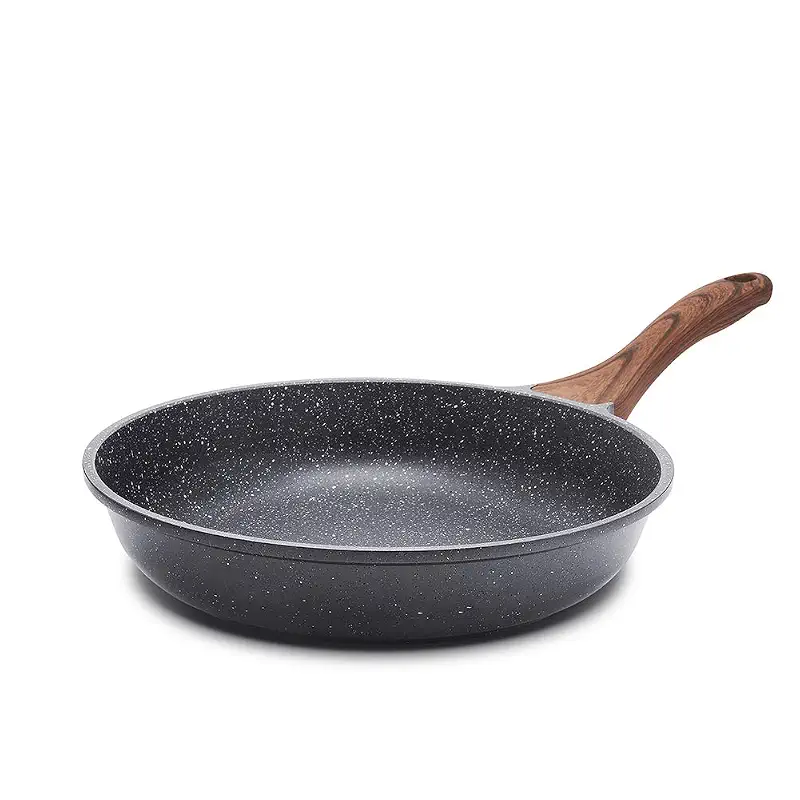
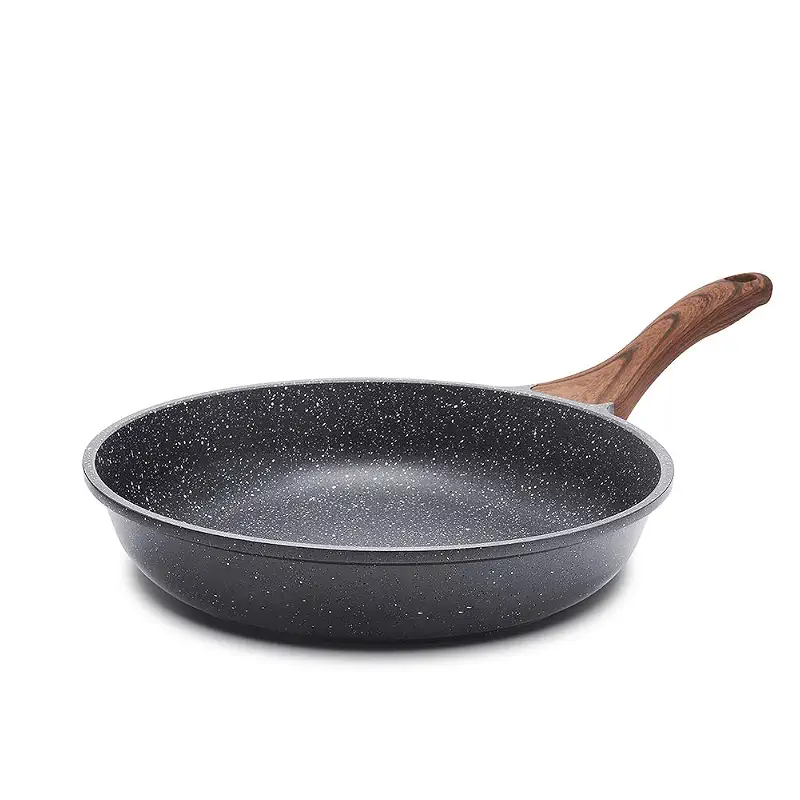
I'd recommend this Sensarte pan if you're new to nonstick cooking or need a reliable workhorse without spending much. The Swiss granite ceramic coating delivers genuine nonstick performance on gas: eggs slide cleanly without sticking, and cleanup takes seconds. Owners consistently praise how the medium-weight cast aluminum distributes heat evenly across the gas burner, avoiding the hot spots that plague thinner pans. The bakelite handle stays reasonably cool, and the pan includes a quality screwdriver for handle assembly, a detail that signals real attention to user experience.
The tradeoff is temperature ceiling: this pan maxes out at 302°F oven-safe, so it's not suited for oven-finishing steaks or serious searing work. Also, the nonstick coating rewards careful use: metal utensils and abrasive scrubbing will wear it faster. Most owners who follow the break-in instructions report the pan holds up well over months of regular use, though some note the coating eventually loses its grip if pushed to high heat repeatedly. Compared to the Misen 5-ply stainless steel option or the best granite cookware on the market, this sacrifices durability and heat capacity for simplicity and price.
Best for everyday eggs, omelets, pancakes, and shallow sautéing. If you cook mostly at low to medium-high heat on gas and value easy cleanup over longevity, this delivers exceptional value.
Pros
Swiss ceramic coating slides food cleanly without sticking
Medium weight handles gas-stove heat spots effectively
Includes quality screwdriver and assembly instructions
Cons
Low oven-safe temperature limits stovetop-to-oven cooking
Nonstick coating degrades with high heat and metal utensils
Key features
Swiss ILAG nonstick ceramic coating, PFOA-free and food-safe
Cast aluminum body with magnetic stainless steel base for gas compatibility
Bakelite handle with woodgrain design, oven-safe to 302°F
Available in sizes from 8 to 12.5 inches
#2 Pick
Best Hybrid Nonstick-to-Stainless Design
Oatofp
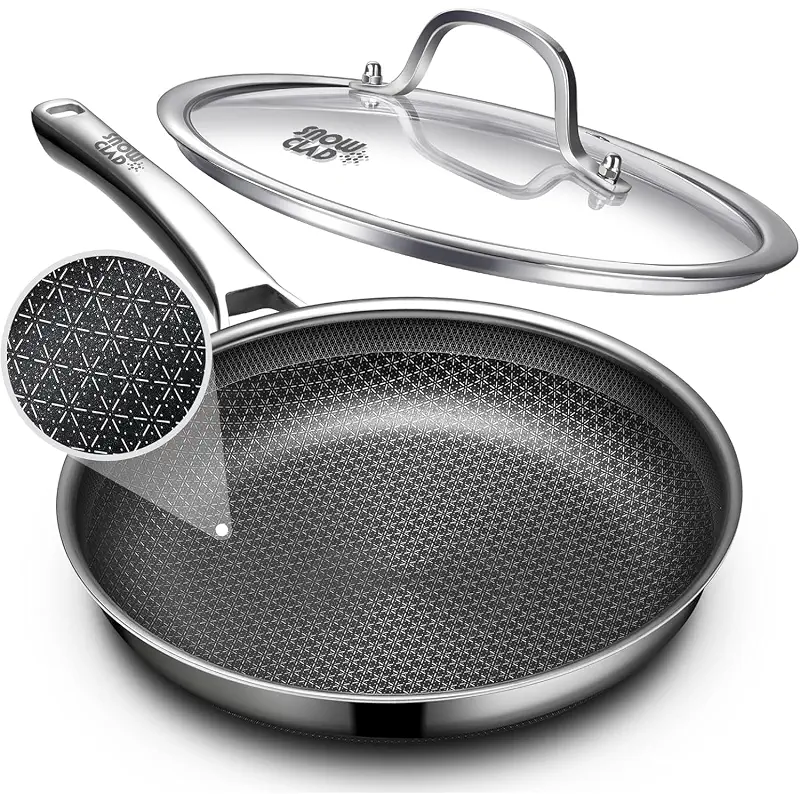
OATOFP Non Stick Frying Pans 12 inch, Hybrid Improved Version Frying Pan Nonstick with Lid, Stainless Steel Skillet, Dishwasher and Oven-Safe Chef & Quiche Pans, PFOA Free Cookware
4.6(125)
Hybrid laser-etched coating blends nonstick ease with some stainless steel browning capability.
Ideal for: Cooks balancing nonstick ease with occasional pan-searing and browning.
The Oatofp hybrid pan uses a clever precision-laser surface treatment that marries nonstick convenience with a touch of stainless behavior. What impressed me in owner feedback is how this approach avoids the all-or-nothing choice between pure nonstick and pure stainless: you get food release like a ceramic pan, but the etched surface lets you achieve a modest sear if you want it. On gas, the 12-inch size gives you genuine cooking real estate, and the included glass lid lets you monitor food without lifting it.
Owners report even heating without hot spots and call cleanup effortless: typically a warm rinse and a soft brush. The stainless-steel body makes this more durable than pure-ceramic nonstick, and reviewers note the hybrid coating withstands gentle scrubbing. One caveat: this is still a relatively young product in the market, and long-term durability data is light. Where the Oatofp differs from the Sensarte nonstick is that it targets cooks who occasionally want browning options without committing to full stainless steel's maintenance. The 12-inch size also positions it as a larger pan for family meals, whereas the Sensarte excels at smaller portions.
Perfect for cooks who want nonstick simplicity but occasionally crave stainless-style browning. For the pan for frying fish crowd, the included lid and larger size suit meal-prepping families or anyone frying for multiple plates at once.
Pros
Hybrid laser-etched surface offers both nonstick and sear capability
Included glass lid and 12-inch diameter fit multi-portion cooking
Heats evenly across the pan with no gas-stove hot spots
Dishwasher safe and gentle scrubbing tolerant
Cons
Hybrid coating is newer, so long-term durability remains unproven
Hybrid design means neither pure nonstick ease nor full stainless browning
Extended coating reaches edges for uniform performance throughout
High-grade stainless steel body, PFOA-free and dishwasher safe
12-inch diameter with tempered glass lid included
#3 Pick
Best for Professional Searing and Heat Retention
Misen
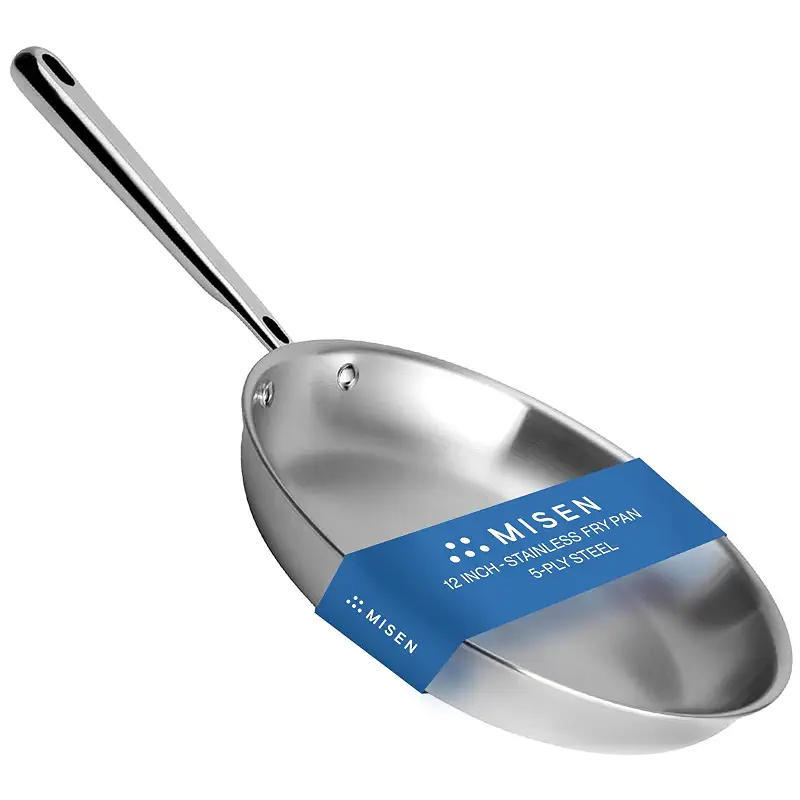
Misen 5-Ply Stainless Steel 12" Frying Pan - Professional Cookware for Induction, Gas and Electric - Dishwasher Safe, Oven Safe to 800°F - Durable, Versatile, Even Heating
4.4(2,558)
5-ply stainless steel built for high-heat searing, but requires seasoning and careful use.
Ideal for: Experienced cooks who prioritize searing capability and oven-to-stovetop versatility.
I'd gravitate to the Misen if you're serious about browning meat on gas and want a pan that will outlast several kitchen renovations. The 5-ply construction (three stainless layers sandwiching two aluminum cores) is engineered to resist warping and distribute heat evenly even under intense flame. It can handle 800°F oven temperatures, so you can sear on the stovetop and finish in a hot oven, a technique that separates home cooks from people who cook for a living. The 20 percent larger cooking surface than standard skillets means fewer crowded batches.
However, there's a stark divide in owner experience here. Buyers who preheat properly, use adequate oil, and respect stainless steel's learning curve report excellent browning and a pan that performs like a professional tool. Others found the finish gets sticky over time and food began adhering badly despite proper oil and temperature. The interior scratches easily, and one experienced reviewer noted the pan deteriorated significantly after a few months of regular use, eventually warping. This suggests either inconsistent manufacturing or a finish that underperforms if not treated with precision. Compared to the Sensarte nonstick, the Misen demands more technique but offers vastly superior heat retention and durability when it works.
Best for confident cooks who already understand stainless steel behavior and want a workhorse that handles restaurant-level searing. If you're comfortable with a learning curve and oil management, this pan rewards skill.
Pros
5-ply construction resists warping and enables even heating under high flame
800°F oven-safe rating supports stovetop sear into oven finishing
20 percent larger cooking surface reduces crowding on gas burners
Works on induction, gas, and electric cooktops
Cons
Interior finish scratches easily and can become sticky with regular use
Requires proper preheating and oil technique; steep learning curve for beginners
Key features
5-ply stainless steel (3 stainless, 2 aluminum) with 3.0mm thickness
Oven safe to 800°F, designed to resist warping on high gas heat
Ergonomic handle stays cool; induction, gas, and electric compatible
Dishwasher safe with sealed edges for easy cleanup
#4 Pick
Best Large Pan with Included Lid and Helper Handle
Sensarte
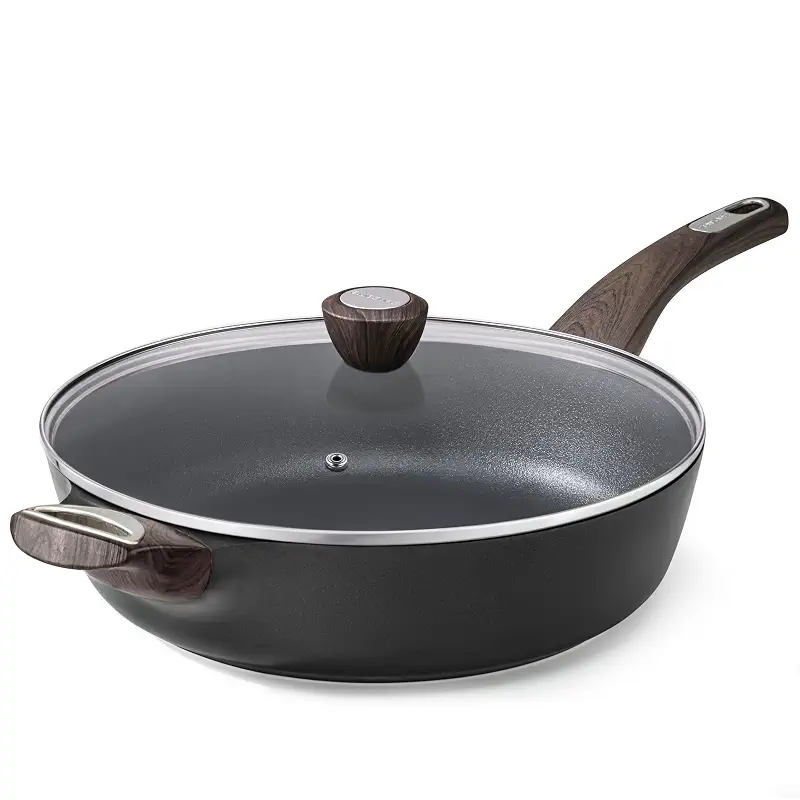
SENSARTE Nonstick Frying Pan Skillet with Lid, 12 Inch Large Deep Frying Pan, 5 Qt Non Stick Saute Pan with Cover, Induction Pan, Healthy Non Toxic Cooking Pan with Helper Handle, PFOA PFOS Free
4.5(7,759)
Deep 12-inch nonstick skillet with dual handles and glass lid for serious cooking volume.
Ideal for: Home cooks preparing multi-serving meals and stir-fries on gas burners.
If you cook for family or like having room to maneuver on the burner, this Sensarte deep skillet is a genuine workhorse. The 5-quart capacity and 12-inch diameter give you space to sauté vegetables without overcrowding, and the dual handles (one on each side) make a loaded pan far easier to move. The ceramic nonstick coating is the same Swiss ILAG formula as the brand's smaller pans, so you get the same reliable food release; the deeper walls also contain splatter better on open gas flames. The included tempered glass lid has an air vent that prevents explosive steam buildup, a practical detail many cooks overlook.
Owners consistently report using this pan daily, which speaks to the durability of the nonstick finish under regular gas-stove exposure. The cast aluminum body heats quickly and distributes warmth evenly. Like the smaller Sensarte, it's oven-safe only to 302°F, so this isn't suited for finishing work in a hot oven. Also, some buyers report the helper handle attachment can be finicky during assembly, though customer support was responsive in reported cases. Compared to the Oatofp hybrid, this pan fully commits to nonstick convenience and adds the helper handle and larger size, making it a better pick if you prioritize ease over occasional searing.
Ideal for cooks who tackle multi-ingredient meals, stir-fries, or braised dishes regularly on gas. The lid and dual handles make it genuinely friendly for big-batch cooking.
Pros
Deep 12-inch pan with dual handles reduces strain on larger batches
Swiss ceramic nonstick coating delivers reliable food release on gas
Included tempered glass lid with air vent prevents steam buildup
Cast aluminum heats quickly and distributes evenly across gas flame
Cons
Low oven-safe temperature limits stovetop-to-oven versatility
Helper handle assembly reported finicky in some cases
Key features
5-quart capacity with 12-inch diameter and deeper sidewalls for gas cooking
Swiss ILAG ceramic nonstick, PFOA and PFOS-free, safe to 302°F oven
Dual handles and included tempered glass lid with air vent
Cast aluminum body compatible with all stovetops including induction
#5 Pick
Best Entry-Level Ceramic Nonstick Skillet
Sensarte
SENSARTE Nonstick Frying Pan Skillet, Swiss Granite Coating Omelette Pan, Healthy Stone Cookware Chef's Pan, PFOA Free (9.5 Inch)
4.4(34,752)
Compact 9.5-inch ceramic nonstick pan balances ease of use with reliable gas-stove performance.
Ideal for: Solo cooks and couples seeking reliable nonstick in a mid-size format.
This 9.5-inch Sensarte offers a middle ground in the Sensarte lineup: larger than an omelet pan but not as capacious as the 12-inch deep skillet. I think it's well-suited for single-household cooking and smaller dinner parties where you still want legitimate cooking surface. The Swiss ceramic coating and cast aluminum body are identical to the smaller 8-inch model, which means you get the same nonstick reliability and even gas-heat response owners praise throughout the Sensarte range. The medium weight makes it comfortable to handle on a gas stove without feeling flimsy, and the bakelite handle stays cool enough for bare-handed gripping when you follow proper technique.
Owners report the pan truly lives up to the nonstick claim: eggs and pancakes release cleanly, and cleanup is faster than hand-washing stainless steel. One recurring note: the success of this ceramic coating depends on following the initial seasoning instructions and respecting the 302°F oven limit. Like other Sensarte nonstick pans, this one trades durability and high-heat versatility for ease and low buy-in cost. Where it differs from the Oatofp hybrid is the pure-nonstick approach: no searing capability, but also no hybrid compromise. This is the pan for cooks who want simple, reliable nonstick without overthinking technique.
Best for home cooks who appreciate the ergonomics of a slightly larger 9.5-inch pan but don't need the capacity of the 12-inch model. If you cook mostly breakfast and lunch foods on gas, this hits the sweet spot.
Pros
Swiss ceramic nonstick coating delivers clean food release on gas burners
9.5-inch size splits the difference between small and large skillet capacity
Medium weight offers comfortable handling without feeling light or flimsy
Includes screwdriver and clear assembly instructions for bakelite handle
Cons
Oven-safe only to 302°F, restricting stovetop-to-oven finishing options
Ceramic coating performance depends on proper break-in and temperature discipline
Key features
Swiss ILAG ceramic nonstick coating, PFOA-free and food-safe
Cast aluminum body with magnetic stainless steel base for all gas stoves
Bakelite woodgrain handle, oven-safe to 302°F, dishwasher safe
9.5-inch diameter fits between omelet pans and full-size skillets
How to Choose a Frying Pan for Gas Cooking
Four trade-offs that actually matter when matching a frying pans for gas stove to your kitchen.
Nonstick vs Stainless Steel: What Gas Cooks Actually Need
Gas stoves create uneven, intense heat that can challenge both finishes. Nonstick pans are forgiving: they don't require oil technique and heat distributes reasonably well in budget options like ceramic-coated aluminum. Stainless steel rewards skill: proper preheating and oil management unlock excellent browning, but the learning curve is real. For gas cooking, nonstick and stainless steel comparison shows that nonstick wins on simplicity and stainless wins on browning capacity and longevity. If you cook eggs and quick meals daily, nonstick is your friend. If you sear steaks and finish dishes in the oven, stainless steel is worth the extra effort.
Pan Material and Heat Distribution on Gas Cooktops
Gas flames create hot spots, so your pan's bottom thickness matters more than on electric burners. Aluminum distributes heat faster than stainless steel alone, which is why many budget nonstick pans use cast aluminum: it spreads the flame's energy more evenly. Thicker pans (3-5mm) resist warping under intense gas heat. Heat distribution on gas cooktops also depends on the pan's diameter and depth: shallower pans heat faster but concentrate heat more; deeper pans take longer but protect food from direct flame. For gas, aim for medium-weight aluminum or hybrid constructions that split the difference between speed and stability, and the best comal options follow this same logic by prioritizing even heat across their flat cooking surface.
Handle Design and Oven-Safe Temperature Limits
Gas cooks often move pans frequently and occasionally finish dishes in the oven. Dual handles make larger pans safer to move, especially when full. Bakelite and silicone handles stay cooler than stainless steel, which matters on gas where the rim can absorb heat. Check oven-safe temperature: nonstick pans max out around 300-350°F, limiting stovetop-to-oven searing. Stainless steel pans rated to 500-800°F are genuinely versatile. If you sear on the burner and plan to finish in a hot oven, stainless steel is mandatory. For everyday nonstick use, 300°F is fine: you won't be using it for high-heat oven work anyway.
Size, Depth, and Capacity for Your Cooking Style
Gas stove cooking surfaces are usually smaller and hotter than electric, so pan diameter matters. An 8-inch pan works for omelets; a 9.5-10 inch handles most breakfasts and light lunches; a 12-inch skillet is essential if you're sautéing vegetables for a family or making stir-fries. Deeper pans with tall sidewalls reduce splatter from open flame and let you simmer or braise. If you cook for one or two people most nights, a 9-inch pan is likely enough. For families or batch cooking, go 12 inches and consider one with a helper handle or a lid to make it easier to manage.
Maintenance and Coating Longevity
Nonstick ceramic coatings on gas require gentle care: avoid metal utensils, abrasive scrubbing, and sustained high heat. Hand washing extends their life significantly compared to dishwasher use. Stainless steel is more forgiving (it can handle harsh scrubbing and dishwashers) but demands proper seasoning (preheating and oil use) to perform. Budget nonstick pans typically last 18-36 months with good care; premium stainless steel pans last decades. If you resent hand-washing or use metal utensils frequently, stainless steel is a better bet. If you love simplicity and plan to replace your pan every few years, nonstick is fine.
Frequently asked
Quick answers to the questions readers ask most.
Do nonstick pans work well on gas stoves?
Yes, ceramic and PTFE nonstick coatings perform reliably on gas burners. The key is avoiding high heat (stick to medium-high) and letting the pan preheat gently. Gas flames are intense, so nonstick pans with cast aluminum bodies distribute heat more evenly than thin versions and resist hot spots better. Hand-wash nonstick pans to preserve the coating, and use only silicone or wood utensils.
Why do some stainless steel pans stick on gas stoves even with oil?
Stainless steel requires proper surface preparation. Preheat the dry pan until a water droplet beads and bounces, then add oil and let it smoke slightly before adding food. Many cooks skip preheating or add food too early. Also, lower-quality stainless (thin gauge or poor construction) has rough finishes that grip food. Heavier 5-ply pans perform better because their construction is more precise.
Is cast iron better than aluminum for gas cooking?
Cast iron heats slowly and unevenly on gas, developing hot spots as the metal absorbs flame heat directly. Aluminum and stainless steel spread heat faster and more uniformly. Cast iron excels on electric coils where heat is gentler and more distributed. For gas, aluminum-bodied nonstick or stainless steel pans are superior choices because they respond quickly to flame changes.
Can I use a nonstick pan on high heat to sear meat?
Not recommended. Most ceramic nonstick coatings are rated to 300-350°F, well below the temperature needed for serious searing (500°F+). High heat degrades the coating and may release harmful fumes. For searing on gas, choose a stainless steel skillet rated to 500-800°F. Use nonstick only for low-to-medium cooking.
What size pan do I actually need for everyday gas cooking?
A 10-12 inch pan covers most households. For single-person cooking, 8-9.5 inches is sufficient. A 12-inch skillet is ideal for sautéing vegetables, stir-fries, and browning larger portions without crowding. Many cooks find owning two sizes (9.5-inch for eggs and quick meals, 12-inch for family dinners) gives you flexibility without wasting space.