Best Food Processor for Making Salsa: Top Picks Compared
Find the best food processor for making salsa. Compare top models for consistent chopping, large capacity, and easy cleanup. Expert recommendations inside.
Ideal for: Home cooks in small kitchens, solo meal-prepping, everyday salsa makers.
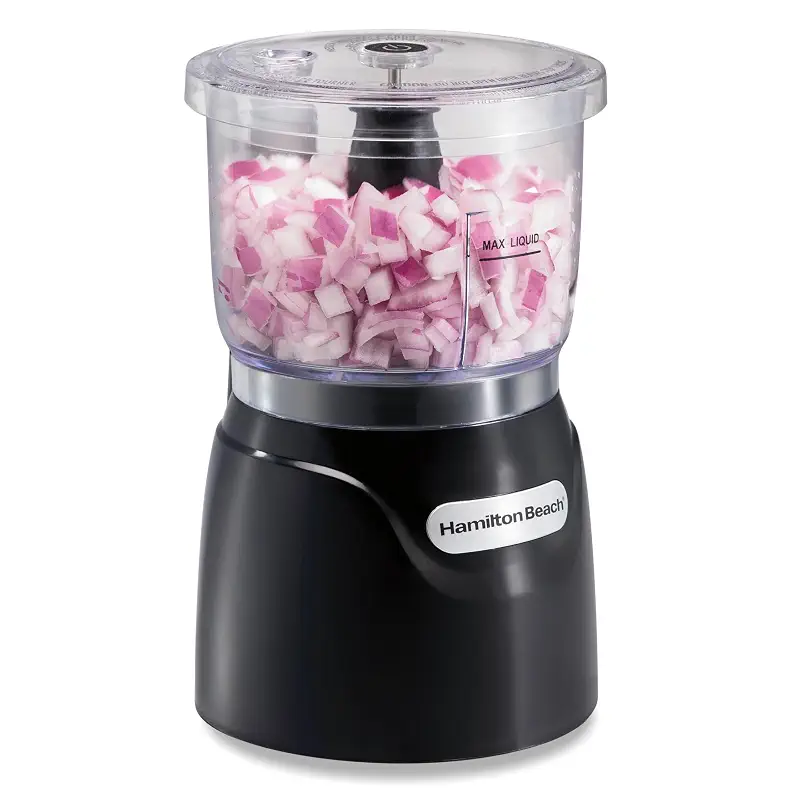
The Hamilton Beach 3-cup electric vegetable chopper is built for cooks who make salsa regularly but work with modest quantities. Its 350-watt motor punches above its weight class: reviewers consistently report that garlic minces in two pulses and onions chop evenly in seconds. The stack-and-press design means no twist-locking fuss; just load, press the lid, and watch it work. For anyone making salsa for one to four people, this saves meaningful prep time without demanding valuable counter or cabinet real estate.
Where it falls short compared to larger processors is simple math: the 3-cup capacity means you'll batch multiple times if you're prepping for a party or canning. The powerful motor can also over-process soft ingredients like tomatoes if you're not careful with timing: a quick pulse matters here. But if you're making fresh salsa two or three times a week in a smaller kitchen, the ease of assembly, cleanup, and storage make this the no-fuss choice.
Owners rave about its durability and quiet operation for a small appliance. The removable blade and dishwasher-safe parts keep cleanup to a rinse. It's not fancy, but it delivers consistent results and has earned a reputation for longevity that justifies its entry-level price.
Pros
Rapid, even chopping for small-batch salsa
Compact footprint, easy to store and use
Simple one-touch press-and-release operation
Cons
3-cup capacity requires multiple batches for large quantities
Can over-process soft ingredients without careful pulse control
Key features
350-watt motor with stainless steel chopping blade
Stack-and-press design with no twist-locking assembly
3-cup capacity ideal for everyday prep
Dishwasher-safe bowl, lid, and removable blade
Oil dispenser on lid for emulsifying dressings and dips
Ideal for: Serious home cooks, entertaining hosts, weekly meal preppers, anyone making large batches of salsa.
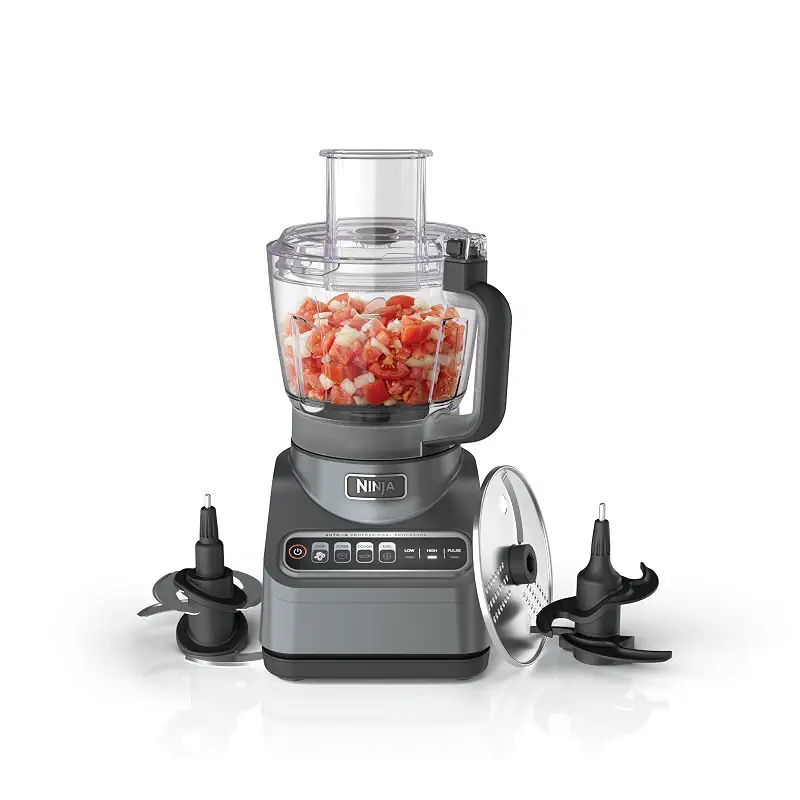
The Ninja Professional Plus Food Processor brings serious power and usability to salsa making. Its 1000-peak-watt motor and Auto-iQ preset programs eliminate guesswork: select chop, slice, puree, or dough mode, and the machine optimizes speed and duration for that task. For salsa, this means consistent, evenly chopped tomatoes and peppers without the judgment calls that slow down batch processing. The 9-cup bowl holds enough whole vegetables to process an entire bushel of tomatoes without stopping midway, a meaningful advantage for anyone who cans or meal-preps in volume.
Compared to the Hamilton Beach 3-cup chopper, the Ninja trades simplicity for versatility; this isn't a one-button press device. The lid has a gasket and safety locking mechanism that requires proper alignment, and the feed chute design keeps vibrations away from the bowl walls: details that matter for durability over years of heavy use. The stainless steel precision blades handle both delicate herbs and tough root vegetables without tearing.
One real consideration: noise. Reviewers note it's not a quiet machine, especially on high speed. The suction-cup base keeps it stable on the counter, which is essential given the power it brings to bear. If you're filling it several times a week or tackling larger entertaining projects, the Auto-iQ presets and capacity justify the larger footprint and higher investment compared to smaller processors.
Pros
1000-watt motor crushes tough ingredients without strain
1500-watt powerhouse combines blending and food processing in one appliance; ideal for kitchens where counter space is precious and versatility matters most.
Ideal for: Multi-purpose cooks with limited counter space, smoothie and salsa makers, home beverage enthusiasts.
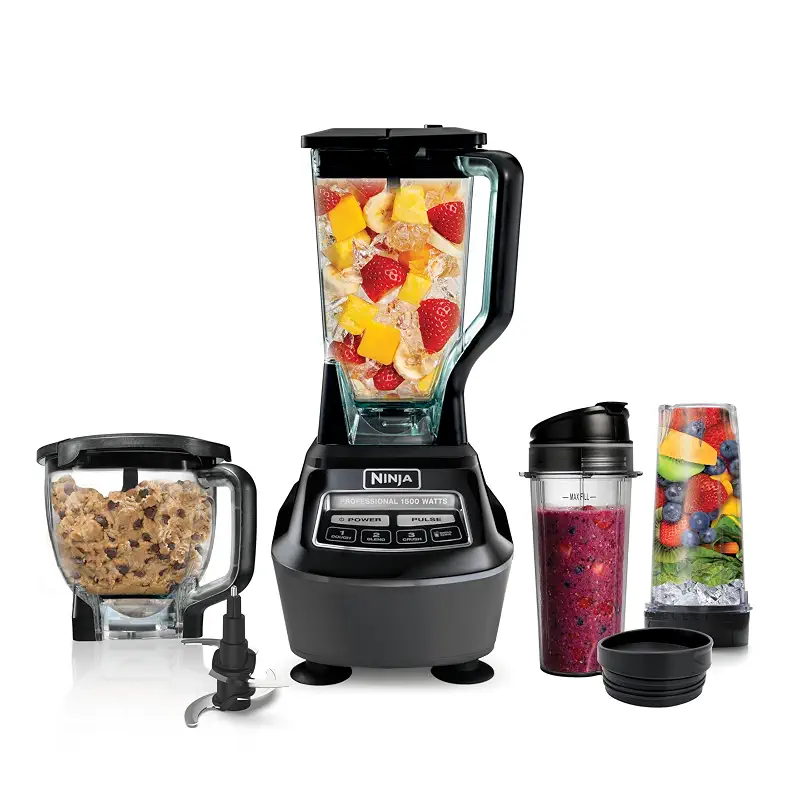
The Ninja Mega Kitchen System is an appliance consolidation play. It pairs a 1500-watt blender base with an 8-cup processor bowl, two. Nutri Ninja cups, and four different blade types: all feeding from one motor. For salsa, the 8-cup processor bowl handles vegetable prep with a dedicated chopping blade and dough blade. But the real value emerges when you want to move beyond salsa: blend frozen margaritas, puree soup, make nut butters, and grind grains all without storing separate machines. If you're looking for a best blender for frappes that also processors vegetables, this system consolidates both roles into one base.
If your kitchen lacks wall space or you cook in a range of styles beyond salsa prep, this system pays for itself through consolidation. Reviewers highlight the exceptional stability (the base is notably heavier and sturdier than its blender-only cousin) and the gasket-sealed design that prevents leaks during high-speed blending. The 72-ounce pitcher with total crushing blades handles ice and frozen fruit effortlessly, a feature the standalone food processors cannot claim.
Trade-off: noise is substantial: multiple reviewers describe it as a V8 engine at full throttle. The learning curve is steeper than a dedicated food processor; you must select the right blade and bowl attachment for each task. And if you only make salsa, you're paying for blending capability you don't need. But compared to the Ninja Professional Plus food processor alone, this system expands what your kitchen can do without adding appliances to your countertop or storage.
Pros
1500-watt motor handles both blending and food processing without compromise
8-cup processor bowl plus blender pitcher in one base
Exceptional stability and motor power for large batches
Cons
Significantly louder operation than single-purpose processors
Steeper learning curve with multiple blade and bowl swaps
Key features
1500-watt dual-motor system with blending and processing functions
pitcher with total crushing blades for frozen drinks
8-cup precision processor bowl with chopping and dough blades
Two Nutri Ninja cups with spout lids for on-the-go smoothies
Stainless steel blades optimized for crushing, blending, chopping, and dough mixing
#4 Pick
Best Premium Choice: Commercial-Grade Build & Long Lifespan
Ideal for: Long-term home cooks, frequent users, those prioritizing durability and quiet operation over preset convenience.
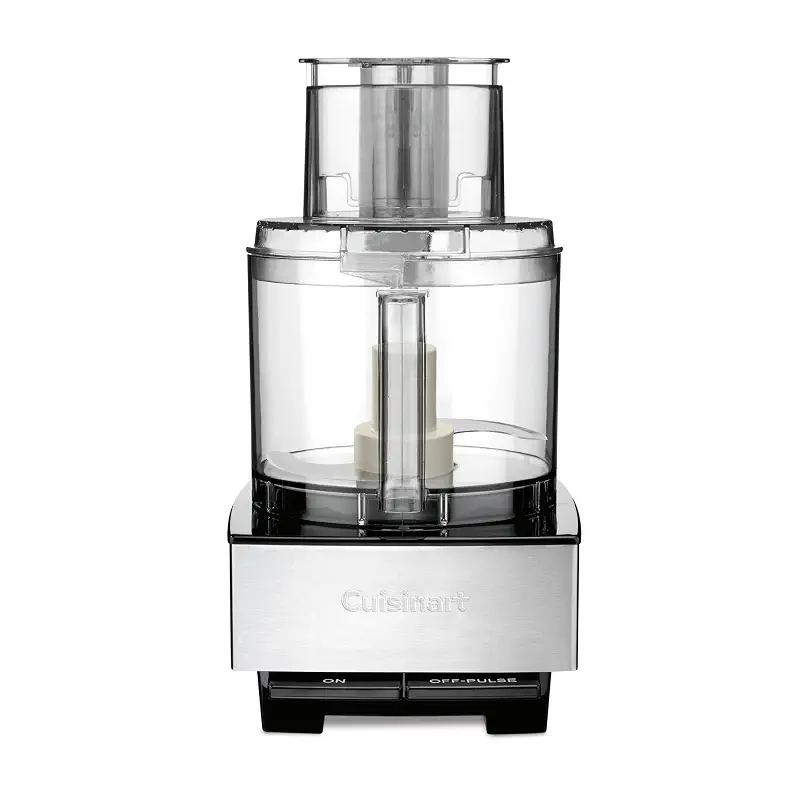
The Cuisinart Food Processor occupies a special place in the category: it's built to be used daily, sometimes for years without complaint. The 720-watt motor is remarkably quiet compared to the Ninja Professional Plus, a difference that matters if you're mixing salsa while others sleep or cook. The 14-cup bowl is the largest in this lineup, a real advantage if you're canning salsa or hosting a taco bar. The stainless steel construction and metal components throughout project durability; reviewers report units still running after two decades of regular use.
Where Cuisinart deviates from the Ninja is simplicity. There are no presets, no Auto-iQ intelligence: just on/off and pulse buttons. You control timing and speed yourself, which demands slightly more attention but gives you finer control over chop texture. The included slicing and shredding discs are fixed, not adjustable, so you get what the manufacturer determined was optimal. Some cooks find this limitation; others appreciate the straightforwardness.
Assembly is more involved than the Hamilton Beach chopper but less complex than the Ninja processors. The safety locking mechanism is intricate, and reviewers recommend reading the manual to seat components correctly. Cleanup is simpler than you'd expect: the bowl has few crevices, and food processor blades & discs snap off easily. If you make salsa weekly for five or ten years, the Cuisinart's quiet operation and proven durability make the higher upfront cost irrelevant per year of ownership.
Pros
Remarkably quiet 720-watt motor for frequent daily use
14-cup capacity is the largest here for bulk salsa prep
Proven durability with many units running 20+ years reliably
Cons
Complex locking mechanism requires careful assembly and cleanup
Fixed, non-adjustable slicing and shredding disc thickness
Key features
720-watt motor with on/off and pulse controls for manual speed management
14-cup stainless steel bowl for large-batch processing
4mm slicing disc and medium shredding disc included
Stainless steel chopping/mixing blade with detachable stem for easy cleaning
Extra-large feed tube accommodates whole vegetables with dual pushers
#5 Pick
Best Value: Budget-Friendly with Built-In Scraper
Hamilton Beach
Hamilton Beach Food Processor & Vegetable Chopper for Slicing, Shredding, Mincing, and Puree, 10 Cups + Easy Clean Bowl Scraper, Stainless Steel (70730)
4.5(41,363)
Affordable 10-cup processor with a clever side-scraper that keeps ingredients near the blade without stopping to pause and wipe.
Ideal for: Budget-conscious cooks, casual salsa makers, kitchens prioritizing value and simplicity.
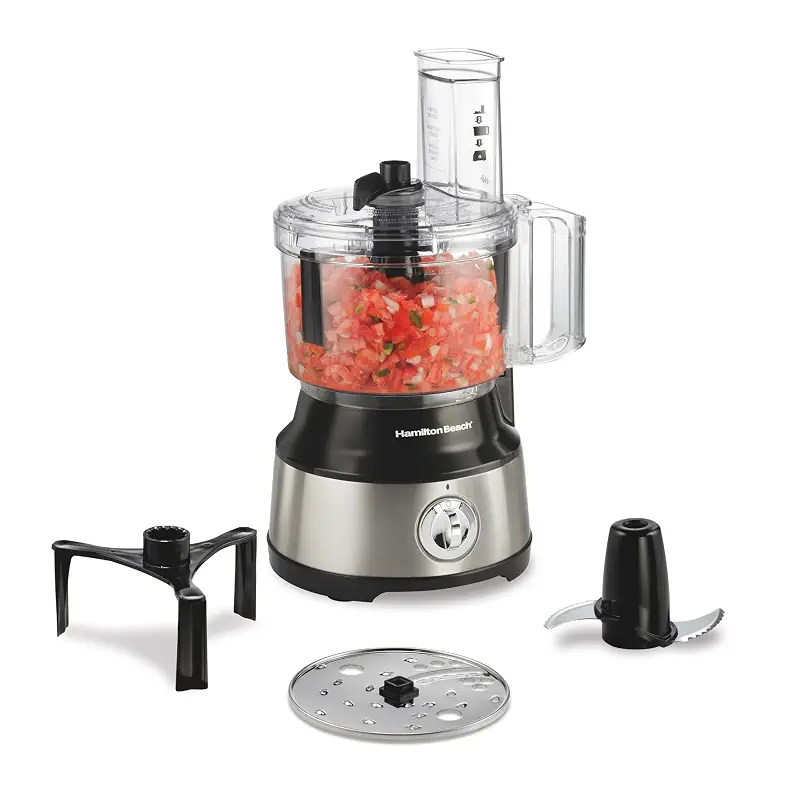
The Hamilton Beach Food Processor with bowl scraper offers a no-frills path to speedy salsa prep. Its 450-watt motor is less powerful than the Ninja or Cuisinart models, but reviewers confirm it handles onions, tomatoes, and peppers without struggle. The 10-cup capacity sits between the Ninja Professional Plus (9 cups) and Cuisinart (14 cups), a sweet spot for most household salsa batches. At a lower entry price than the other mid-size processors, it appeals to cooks who want capable performance without premium features.
The built-in side scraper is the standout design choice here. As the blade runs, you can rotate the scraper along the bowl's sides to push loose food back toward the blade: no need to stop, unlatch, and manually scrape midway through. It's a small feature that compounds across dozens of batches, saving minutes of downtime and keeping results consistent. The two speeds plus pulse give you enough control for both chunky salsa and smooth sauces; the high-speed motor powers through tough ingredients like carrots or hard cheese without bogging.
Where it trades features: the motor is noticeably lighter than the Cuisinart or Ninja, a byproduct of its lower price. Owners report durability when used reasonably, but the lightweight feel suggests it's not engineered for the same lifespan as a Cuisinart. The lid and assembly are simpler than the Ninja, without Auto-iQ presets or gasket sealing. If you're making salsa twice a month in a budget-conscious kitchen, the scraper feature and 10-cup capacity make this a practical and cost-effective choice.
Pros
Built-in bowl scraper eliminates pausing to manually scrape sides
10-cup capacity handles most home-sized salsa batches without reloading
Two speeds plus pulse offer adequate control at an attractive price point
Cons
Lighter-duty construction suggests shorter lifespan than Cuisinart models
450-watt motor is less powerful for tougher ingredients or heavy use
Key features
450-watt motor with two speeds and pulse function for varied control
10-cup BPA-free bowl with built-in side scraper for continuous prep
Stainless steel slicing/shredding disc and chopping blade included
Suction-cup feet keep processor stable on countertop
Dishwasher-safe bowl, lid, pusher, and all removable blade attachments
How to Choose a Food Processor for Salsa
Four trade-offs that actually matter when matching a food processor for making salsa to your kitchen.
Capacity: Batch Size Matters More Than You Think
Salsa processors fall into three capacity buckets: 3–5 cups for solo cooks and small families, 9–10 cups for household entertaining and weekly meal prep, and 14+ cups for canning and large gatherings. If you make salsa twice a month, a 3-cup chopper means one run per recipe. A 10-cup processor handles four times the volume in a single pass, cutting your prep time dramatically. The bowl itself must fit whole tomatoes and peppers without pre-cutting; a feed chute wide enough to accommodate them without mandoline-style slicing saves your hands and minutes. Think about your typical salsa batch size, then pick a capacity that handles it comfortably without leaving the processor idle between batches.
Motor Power: Consistency Depends on Wattage
Motor wattage correlates directly with your ability to process tough vegetables without bogging or over-processing soft ones. A 350-watt motor (Hamilton Beach 3-cup) excels at speed but can pulverize tomatoes if you hold the button too long. A 1000+ watt motor (Ninja Professional Plus) gives you forgiveness: you can load more volume without worrying the blade will choke. For salsa specifically, you want enough power to handle onions and peppers quickly, but not so much that ripe tomatoes turn to juice in two seconds. The sweet spot for most salsa makers is 450–720 watts, which handles both speed and finesse. If you're processing roots, whole carrots, or dense vegetables alongside tomatoes, aim higher.
Food Processor Blades & Discs: Choose the Right Tool for Your Salsa
Most food processors include a chopping blade and slicing/shredding disc. For salsa, the chopping blade is your workhorse: it's designed to mince and dice uniformly, which is exactly what fresh salsa requires. Slicing discs are less critical for salsa but useful if you plan to shred cheese or vegetables for other recipes. Some processors offer adjustable disc thickness; others are fixed. Fixed discs mean less control but also fewer moving parts to clean and maintain. The blade itself matters: stainless steel is sharper and more durable than plastic, but both work well if cared for. The key is that the blade must reach the bowl's center and sides evenly; uneven blades create inconsistent chunk sizes, leading to watery or chunky salsa rather than the balanced texture you want.
Noise and Convenience: Operational Reality Counts
Food processors are not quiet appliances, but some are significantly louder than others. A Cuisinart at 720 watts sounds like a gentle whirr; a Ninja at 1000+ watts sounds like an air compressor. If you make salsa early in the morning or have sleeping children nearby, noise matters. Assembly complexity also affects convenience: the Hamilton Beach 3-cup requires a simple stack-and-press; the Ninja Professional Plus demands careful locking and alignment, which slows down repeated use. The built-in scraper feature on some models (like the Hamilton Beach 10-cup) saves the pause-and-scrape step, a small ergonomic win for frequent cooks. Consider your household rhythm: early risers might prioritize the quieter Cuisinart, even if it costs more. Multi-use cooks might tolerate Ninja noise if blender presets save time overall.
Storage and Counter Real Estate
Food processors are bulky. A 14-cup Cuisinart or a 10-cup Hamilton Beach takes up meaningful cabinet or closet space. If your kitchen is tight, a 3-cup Hamilton Beach or a compact Ninja processor occupies less room. An all-in-one system like the Ninja Mega Kitchen System consolidates blender and processor into one base, saving space but adding weight and complexity. Think about where you'll store it and how often you'll retrieve it. If you pull it out twice a week for salsa prep, keeping it on the counter makes sense; if it's a monthly task, tucking it away is reasonable. The frequency of use often determines the ideal size: regular cooks justify larger capacity and counter presence, while occasional users benefit from compact, tucked-away options.
Frequently asked
Quick answers to the questions readers ask most.
Can I use a food processor to make chunky versus smooth salsa?
Absolutely. All five processors here handle both textures through pulse control and timing. For chunky salsa, pulse in short bursts (2 to 3 seconds on, release, repeat) until you reach your desired chunk size. For smoother salsa (closer to sauce), run continuously for 15–30 seconds depending on motor power and vegetable softness. Start with short pulses and check frequently; you can always pulse longer, but you can't unchop vegetables. The Cuisinart and Hamilton Beach models with manual pulse buttons give you the most granular control for this.
Do I need to peel and seed tomatoes before processing for salsa?
No. A food processor easily handles whole tomatoes, skins and seeds included. Seeding is optional and depends on your salsa style: many cooks prefer the seeds' flavor and texture in fresh salsa. For a smoother, less watery result, you can seed beforehand, but the processor doesn't require it. Peeling is rarely necessary; the skins blend into the salsa and add fiber. If you're processing large quantities, leave tomatoes whole, cut them in half at most, and let the blade do the work.
How often should I replace food processor blades?
With proper care, food processor blades last years: often the lifespan of the machine itself. Stainless steel blades are more durable than plastic and resist dulling from repeated use. Rinse blades immediately after use to prevent food buildup, which can cause corrosion. Avoid using the dishwasher for blades if you can hand-wash them; the heat and detergent accelerate wear over time. Most home cooks never replace blades if they treat them gently. If your processor stops chopping uniformly after years of use, blade replacement is usually an affordable fix.
Is a food processor safe for beginners, or do I risk cutting myself?
Food processors are safe when you respect the blade design and assembly. Never reach into the bowl while the motor runs, and always unplug before cleaning. Most modern processors have safety interlocks that prevent operation if the lid isn't locked correctly. The blade itself is enclosed in the bowl during operation, so contact during normal use is impossible. Hand-washing blades requires care (they're extremely sharp) but again, the danger is only during washing, when you're intentionally handling them. If you're nervous, wash blades on the top rack of the dishwasher to avoid direct contact. Children should never operate a food processor unsupervised.
Can I make salsa in a blender instead of a food processor?
A blender can make salsa, but the results differ. Blenders create smoother, more uniform textures because the high-speed blades and narrow pitcher container pulverize ingredients quickly. Most home cooks prefer the chunkier, more rustic texture that a food processor delivers by controlling pulse timing. A blender is better for salsas you want to smooth into sauces; a food processor excels at the fresh, hand-chopped texture traditional salsa demands. If you own a blender for frappes picks or smoothies, it can handle salsa in a pinch, but a dedicated processor is worth the investment if salsa is a regular part of your kitchen.