Best Quiet Food Processor: Top Picks for Peaceful Prep
Find the best quiet food processor for your kitchen. Compare top-rated models that deliver power without the noise. Read expert reviews and buyer insights.
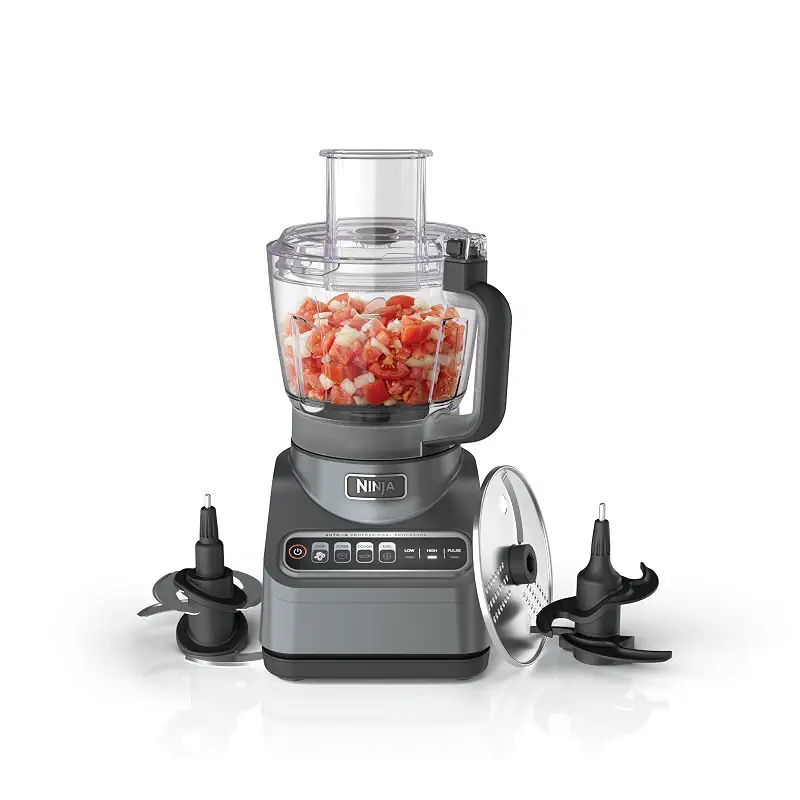
The Ninja Professional Plus delivers serious power with a 1000-watt motor and consistently quieter operation than expected, plus excellent results on everything from vegetables to dough.
Ideal for: Home cooks who prioritize quiet operation without sacrificing power or large-batch capacity.
Owners who've traded in older Cuisinart models for this one are often shocked at how well the Ninja balances raw horsepower with surprisingly calm operation. The 1000-peak-watt motor sounds like it should shake the kitchen, but the design, including the large suction cups that lock it in place and the sealed lid with a gasket: keeps vibration and noise well under control. The 9-cup capacity is genuinely useful for family-sized batches, and the Auto-iQ preset buttons take the guesswork out of chopping, slicing, and pureeing. One owner noted it wasn't as loud as expected, which becomes clear when you look at how the bowl sits on the base: there's no hole in the bottom like older designs, so water and food don't drip out during operation, and vibrations don't travel straight through to the counter.
Where the Ninja edges past the Cuisinart in this lineup is that quieter operation, paired with the convenience of the preset programs. Some users do mention the flashing lights at the end of a cycle can be distracting (especially for anyone with sensory sensitivity), and the feed chute won't accommodate whole large vegetables like cucumbers without cutting first: a minor frustration if you're used to full-sized food processors.
This is the pick if you want a loud-free workhorse that's still simple enough for daily use without overthinking each task.
Pros
Surprisingly quiet given the 1000-watt motor
Powerful enough to handle frozen fruit and dough effortlessly
Sealed bowl design prevents spills and vibration leaks
Large 9-cup capacity for family meals
Cons
Flashing end-cycle lights can be startling
Feed chute requires pre-cut vegetables for optimal feed
Key features
1000-peak-watt motor with sealed bowl and gasket lid
Four Auto-iQ preset programs for chopping, slicing, pureeing, dough
9-cup stainless-steel bowl with three removable blades
Suction-cup base keeps processor anchored during use
All removable parts dishwasher safe and BPA-free
#2 Pick
Best Value with Dual Bowls
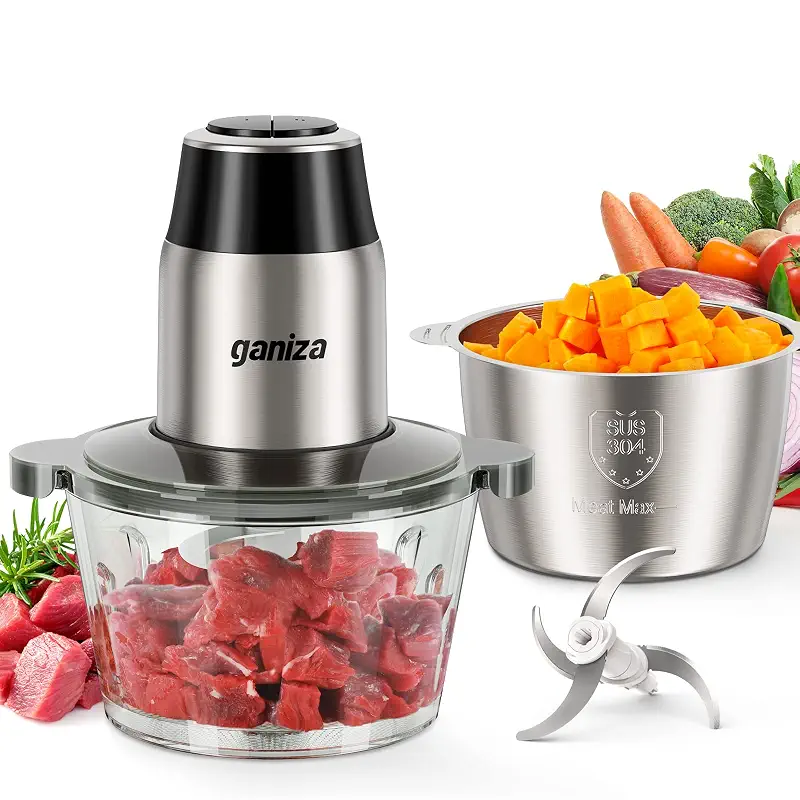
Ganiza
Ganiza Food Processors with 2 Bowls, 450W Meat Grinder Vegetable Chopper | 2-Speed Electric Food Chopper with 8 Cup Glass & 8 Cup Stainless Steel Bowls -Includes 2 Sets of Blades for Fruits/Meat/Nuts
4.4(7,494)
The Ganiza delivers impressive meat-grinding capability and dual-bowl flexibility at an entry-level price, though it requires careful attention to prevent overheating.
Ideal for: Budget-conscious cooks who want dual-bowl flexibility and meat-grinding capability without premium pricing.
What makes the Ganiza stand out in this category is the inclusion of both a glass and stainless-steel bowl with two full sets of blades: a feature that pushes the value proposition hard against products costing significantly more. Owners who bought this as a backup to a more expensive processor often find themselves reaching for it first because the separate bowls eliminate cross-contamination worries and let you prep meat in one bowl while chopping vegetables in the other without washing between tasks. The 450-watt copper motor handles meat nearly as well as a dedicated grinder, and the blades are genuinely sharp; one user reported grinding a pound of pork in under two minutes without the motor straining.
The trade-off is thermal management. This processor has automatic overheating protection that kicks in after sustained use, which means you'll need to pulse in short bursts (15-20 seconds) rather than run continuous cycles. Compared to the Ninja Professional Plus, which runs longer without throttling, the Ganiza demands a bit more discipline in how you use it. But within that constraint, the motor stays cool and the noise profile is reported as "not much noise while operating." The two bowls also make storage easier if counter space is tight: they nest together.
I'd choose this over the Koios if budget is the primary driver and you plan to use it primarily for vegetables and occasional meat rather than all-day prep.
Pros
Includes glass and stainless-steel bowls with two blade sets
Sharp blades grind meat quickly and cleanly
Dual-bowl design prevents flavor and odor cross-contamination
Compact size with nesting bowls for storage
Cons
Overheating protection requires short pulse cycles
Lid made of thin plastic compared to glass bowls
Key features
450-watt full-copper motor with automatic overheating protection
Two 8-cup bowls: glass and 304 stainless steel
Two complete blade sets with protective cases
Two-speed control for meat, vegetables, and nuts
Removable, dishwasher-safe parts for easy cleanup
#3 Pick
Best for Quiet, Compact Prep
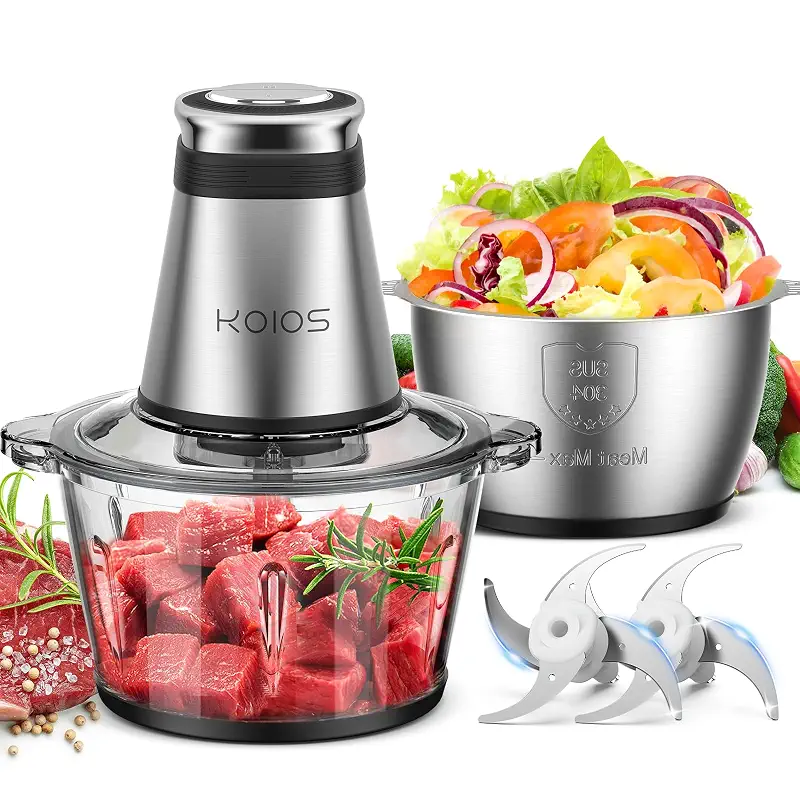
Koios
KOIOS Food Processor, 500W Electric Food Chopper with 2 Bowls (8 Cup+8 Cup) & 2 Bi-Level Blades&, Small Electric Grinder Meat Processor for Nuts, Meat, Onion, Garlic, Baby Food, Black
4.6(1,388)
The Koios delivers balanced power and impressive efficiency in a compact footprint, with rubber rings that dampen vibration and reduce noise during operation.
Ideal for: Apartment dwellers and early risers who need quiet operation with dual-bowl flexibility in a compact design.
If you've been eyeing the Ganiza but want a slightly more refined experience with better noise isolation, the Koios bridges that gap. The 500-watt copper motor is a step up from the Ganiza's 450 watts, and the rubber rings built into the bowl base serve a specific engineering purpose: they dampen the vibration against the counter, which is a major contributor to how loud a food processor sounds during operation. Owners consistently praise how quietly this runs for the wattage: one reviewer noted it was especially useful for early morning or late night prep without waking others. The bi-level blade design chops, grinds, and purees efficiently, and the dual 8-cup bowls (glass and stainless steel) mean you get the same cross-contamination protection as the Ganiza.
Where the Koios asks more of you is in discipline: processing tasks shouldn't exceed 30 seconds, and you're advised to rest the motor for 20 seconds between cycles if handling larger quantities. This is actually smart design for longevity, not a weakness, but it does mean you're pulsing rather than running continuous. Compared to the Ninja's hands-off approach with preset programs, the Koios requires you to know what texture you want and pulse accordingly. The compact size and light weight make it easy to store or move, which appeals to cooks in smaller kitchens.
I'd pick the Koios if quiet operation and space-saving are equally important, and you're comfortable with the pulse-and-rest rhythm.
Pros
Rubber rings reduce vibration and noise significantly
No preset programs; manual speed and texture control only
Key features
500-watt full-copper motor with bi-level S-shaped blades
Rubber rings on bowl bases dampen vibration and noise
Two 8-cup bowls: glass and 304 stainless steel
Two-speed control with pulse option
Automatic safety switch prevents motor operation without bowl installed
#4 Pick
Most Versatile with Three Speeds
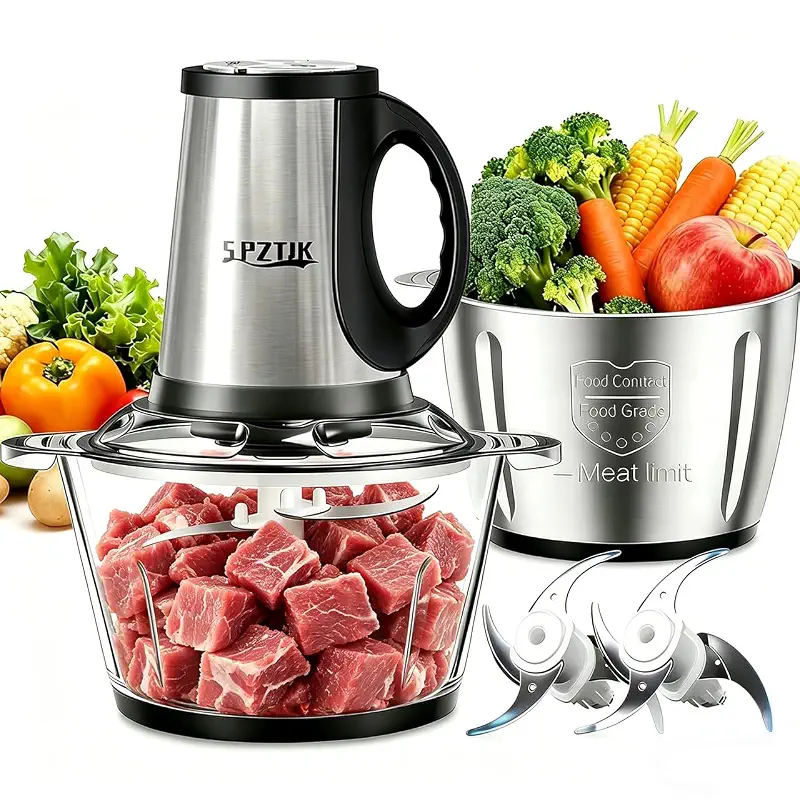
Spztjk
SPZTJK 3-Speed Electric Food Processor: Meat Grinder, Vegetable Chopper & Baby Food Maker - 300W, 2 Bowls (8 Cup Stainless Steel+8 Cup Glass), Quiet Operation
4.5(790)
The Spztjk offers the quietest operation in this lineup with engineered quiet design, three-speed precision, and dual bowls: ideal for those who prioritize peaceful kitchen moments.
Ideal for: Quiet-focused cooks in households where early mornings or late nights are common, with lighter prep needs and baby food making.
This is the processor that takes noise reduction as a core design philosophy rather than an afterthought. At 300 watts, the Spztjk is the lowest-powered motor in this lineup, yet owners report it handles meat, vegetables, and even baby food without strain. The engineering secret is in the three-speed control, which lets you match motor intensity to the task: low speed for vegetables and baby food, high speed for meat and nuts. This granular control means you're never running the motor harder than the job requires, which is a quiet-operation win. Owners consistently note this is "quiet" and "easy to use," which becomes significant when you're comparing food processor experiences across generations of the same household.
The design also includes a full-copper motor built to last 3 times longer than standard motors, and the dual 8-cup bowls (glass and stainless steel) with rubber feet prevent the base from sliding or vibrating excessively across the counter. Where the Spztjk asks more of you is acceptance of lower power: it won't pulverize ice or handle prolonged nut grinding as aggressively as the Ninja or even the Ganiza. But for daily vegetable prep, salsa, baby food, and occasional meat processing, it's genuinely adequate and significantly quieter.
Compared to the Spztjk, the Koios offers more wattage but less granular speed control; pick the Spztjk if three-speed precision and whisper-quiet operation matter more than raw horsepower.
Pros
Engineered for quiet operation with 300-watt motor design
Three-speed control matches power to task for efficiency
Dual bowls with rubber feet prevent vibration and sliding
Full-copper motor rated for extended lifespan
Cons
Lower wattage limits handling of very hard ingredients
No preset programs; requires user judgment on speed selection
Key features
300-watt full-copper motor with three-speed control
Engineered for quiet operation ideal for early mornings
Dual 8-cup bowls: 304 stainless steel and glass
Patented automatic stopping design with spring-loaded blades
Overheating protection system with automatic shutoff
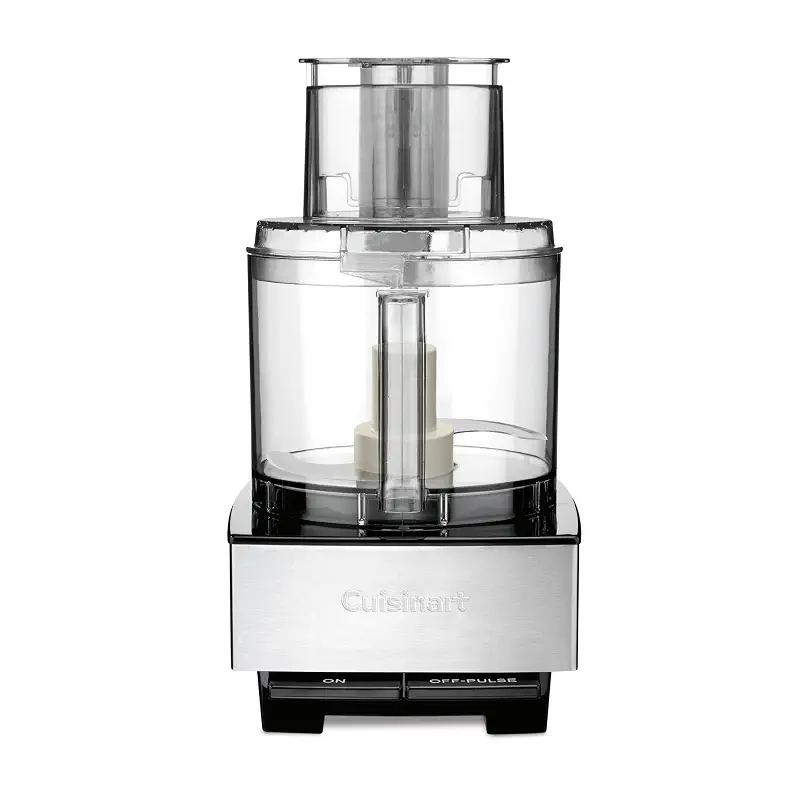
The Cuisinart 14-cup is the quietest large-capacity processor available, with legendary build quality and a motor so refined it's almost silent, though it trades cutting-edge features for timeless reliability.
Ideal for: Home cooks and entertainers who batch-cook or prep large quantities and demand premium build quality and whisper-quiet operation.
The Cuisinart has been the kitchen standard for so long that many cooks assume all food processors are either versions of it or trying to replace it. After years of that reputation, Cuisinart's 14-cup model delivers exactly what it promises: a massive bowl, a 720-watt motor that sounds far quieter than its wattage suggests, and engineering so solid that owners report they're replacing decades-old Cuisinart models with this new one out of habit, not necessity. The motor is genuinely quiet: one owner specifically praised it as "insanely quiet in operation compared to any kitchen appliance I've used." This is a testament to the sealed design, the weight of the base, and the precision of the motor housing.
The 14-cup capacity is the largest in this roundup, making it the obvious choice if you're batch-cooking or prepping for a large family, but that size means it won't fit under standard kitchen cabinets. The locking mechanism on the lid is more complex than the Ninja's, which translates to slightly more involved cleaning: food can hide in the safety columns where the shaft sits. The processor also doesn't have preset buttons; you're choosing on-or-pulse, which is simple but requires you to know when to stop.
Where the Cuisinart differs from the food processor noise levels discussion is that large capacity actually helps with perceived noise: when you're processing 8 cups of vegetables at once instead of smaller batches, the motor load is distributed more evenly, and vibration doesn't spike as sharply. I'd pick the Cuisinart over the Ninja if you're cooking for crowds regularly and value quiet versus convenience features.
Pros
Insanely quiet motor for its 720-watt power rating
14-cup capacity handles large batches without refilling
Legendary durability with three-year bowl and five-year motor warranty
Heavy base provides stability and reduces vibration
Cons
Complex locking mechanism makes cleaning more involved
Large size prevents storage under standard cabinets
Key features
720-watt motor engineered for whisper-quiet operation
14-cup stainless-steel bowl for large-batch processing
Includes standard slicing disc, shredding disc, and chopping blade
Extra-large feed tube with dual pushers for small and large foods
On/pulse button controls with immediate motor braking
How to Choose a Quiet Food Processor
Four trade-offs that actually matter when matching a quiet food processor to your kitchen.
Motor Wattage Isn't Everything
Higher wattage doesn't automatically mean louder operation. The Cuisinart's 720-watt motor is quieter than some 450-watt models because of how the motor housing is sealed and how the bowl sits on the base. Look for processors with sealed designs, suction-cup or rubber-footed bases, and lids with gaskets: these features absorb and isolate vibration, which is the primary source of noise. A well-designed 500-watt motor can outperform a poorly engineered 1000-watt one in both noise and results.
Bowl Material and Stability Matter
Glass bowls are heavier and dampen vibration better than plastic; stainless steel offers durability and won't absorb odors from onions or garlic. Dual-bowl processors (like the Ganiza and Koios) let you keep the motor running on one bowl while prepping the other, which can actually reduce overall noise by eliminating back-and-forth assembly. The base design is equally important: processors with rubber feet or damping rings will vibrate less against your counter, and that's where most of the objectionable noise actually originates.
Speed Control Reduces Noise
Food processor noise levels depend partly on how hard the motor is working. Processors with multiple speeds or pulse control (like the Spztjk's three-speed design) let you run the motor only as fast as the task requires. Pulsing vegetables needs far less power than grinding meat, so speed control means quieter operation for the majority of your prep. Preset programs (like the Ninja's Auto-iQ buttons) also help because they're calibrated to the specific task rather than running at full throttle.
Capacity and Continuous-Use Limits
Larger-capacity processors like the Cuisinart 14-cup actually handle noise better because the food load distributes evenly across the blade and bowl. Smaller processors with strict pulse limits (like the Koios at 30 seconds max) require you to work in shorter bursts, which can feel like a rhythm constraint but also protects the motor and keeps thermal stress low. Consider whether you'll be processing large batches (where bigger capacity saves time and noise) or small frequent tasks (where smaller, nimble processors excel).
Real-World Testing and Brand Reputation
Buying a quiet versus standard food processors means reading buyer feedback carefully. Look for comments about early-morning use, late-night prep, and whether the processor would disturb sleeping family members. Brands with long histories like Cuisinart and Ninja have refined their designs through decades of feedback, and that shows in motor engineering and noise dampening. Newer brands (Ganiza, Koios, Spztjk) often compete on value and specific features rather than legendary quietness, though several achieve impressive quiet operation through smart design choices.
Frequently asked
Quick answers to the questions readers ask most.
Which food processor is actually the quietest?
The Spztjk is engineered specifically for quiet operation at 300 watts, making it the lowest-noise option, while the Cuisinart 14-cup delivers the quietest large-capacity experience at 720 watts due to sealed motor design and base weight. If you want quiet-plus-power, the Ninja Professional Plus balances a 1000-watt motor with surprisingly calm operation through its sealed bowl and suction-cup base. Quiet operation depends more on design (bowl sealing, base damping, motor housing) than raw wattage alone.
Will a quiet food processor handle meat grinding?
Yes, but with caveats. The Ganiza, Koios, and Spztjk all handle meat grinding, though they puree it rather than grind it to loose bits like a dedicated meat grinder. The Ninja and Cuisinart do the same. For true ground meat texture, you may prefer a dedicated meat grinder, but for meatballs, tartare, or baby food, these food processors excel. The key is pulsing in short bursts rather than running continuously, which also keeps noise and heat lower.
Do I really need a dual-bowl processor?
Dual bowls (glass and stainless steel) are most useful if you prep both raw meat and vegetables regularly: they eliminate the need to wash between tasks and prevent flavor contamination. The Ganiza and Koios both offer this feature. If you mostly chop vegetables or make sauces, a single large bowl like the Cuisinart 14-cup or Ninja 9-cup is simpler and still quiet with proper design. Dual bowls do add storage considerations and complexity, so weigh that against your actual prep routine.
Can I leave a quiet food processor on the counter?
Most quiet food processors are designed to sit on the counter permanently. The Ninja, Cuisinart, and Koios have sturdy, attractive bases. The Ganiza and Spztjk are more compact. The main consideration is vertical clearance: the Cuisinart 14-cup is too tall to fit under standard cabinets, while the others fit easily. If counter space is tight, a smaller processor like the Spztjk or Koios stores in a cabinet without much hassle.
How long can I run a food processor without it overheating?
The Ninja and Cuisinart can run longer with less risk of overheating; most owners process for 1-2 minutes without issues. The Ganiza, Koios, and Spztjk have explicit limits: pulse for 20-30 seconds, rest 20 seconds, repeat. This is actually smart: shorter bursts keep the motor cool, prevent over-processing, and maintain blade sharpness. For large batches on a budget model, plan to work in cycles rather than one continuous run, which also keeps noise from building up.