Kitchen & Dining · Small
Best Food Processor for Kneading Dough: 5 Top Picks
Find the best food processor for kneading dough. Compare top models with dough blades, motor power, and bowl capacity for bread and pizza dough.
Affiliate disclosure: As an Amazon Associate I earn from qualifying purchases.
At a glance
2
Best for Large BatchesCuisinart
4
Best for Small SpacesKitchenAid
5
Best Compact PerformerCuisinart
Detailed reviews
The Ninja PrecisionPro brings real strength to the dough-kneading task with its 1000-watt motor and a dedicated dough blade that owners praise for consistent results. The Auto-iQ preset takes guesswork out of timing, and the 9-cup bowl handles most home bread batches without being so large that it dominates counter space. What we like most from user feedback is that the bowl design eliminates the center spindle hole that older models had, which means you can fill it with water to soak without leaking. The suction cups on the base keep it planted during vigorous mixing, a real comfort when you're working with stiff dough.
The trade-off is noise: several owners mention it's not whisper-quiet when running. That's honestly true of most machines this powerful, but if you're sensitive to appliance sound, that's worth factoring in. Compared to the Cuisinart 14-cup, this is smaller and lighter, making it better for kitchens where storage or counter real estate matters.
We'd point first-time food processor buyers here because the intuitive controls and preset programs mean less fiddling with speed settings while learning.
Pros
- 1000-watt motor powers through thick dough without struggle
- Auto-iQ presets remove guesswork from dough kneading
- Suction cups keep base stable during vigorous mixing
- Sealed bowl design prevents leaking when soaking
Cons
- Notably louder than some competitors during operation
- Feed chute narrower than some models, requires pre-cutting larger items
Key features (5)
- 1000-peak-watt motor with intelligent Auto-iQ preset programs
- 9-cup bowl with sealed design and large feed chute
- Stainless steel dough blade for mixing pizza and bread doughs
- Suction cup feet for counter stability during use
- BPA-free, dishwasher-safe parts including blade and bowl
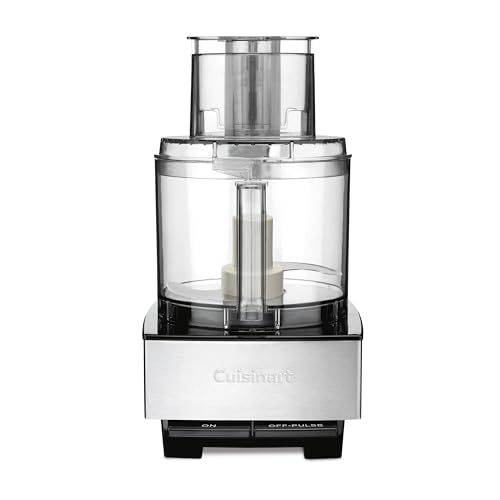
The Cuisinart 14-cup is the heavyweight here, and that matters if you're a high-volume baker or cook for a crowd regularly. The 720-watt motor runs remarkably quiet compared to competitors, which owners who knead dough regularly genuinely appreciate. The large capacity means you can handle two loaves' worth of dough in one pass, or prep significantly larger quantities of vegetables if you shift between tasks. Brushed stainless steel construction gives it a professional look, and the brand's reputation for durability is backed by real owner experience. We read accounts of units lasting 15 to 25 years with careful use.
The bowl assembly is more complex than some rivals, and that complexity carries a genuine cleaning drawback: the safety locking mechanism has grooves and crevices where food can hide if you're not careful with your wash routine. One owner flagged that the blade can occasionally lift out of the shaft if thick dough gets lodged underneath, which is a rare but real concern for heavy dough work. Compared to the Ninja PrecisionPro, this lacks the preset buttons and is taller, so it won't fit under many kitchen cabinets.
Choose this if you batch-cook regularly or knead dough multiple times per week and don't mind the larger footprint.
Pros
- Quiet 720-watt motor ideal for frequent, sustained dough kneading
- Largest bowl capacity handles multiple loaves or big batches
- Heavy brushed stainless steel base feels professional and durable
- Proven track record; owners report units lasting 15+ years
Cons
- Complex safety locking mechanism difficult to clean thoroughly
- Taller profile may not fit under standard kitchen cabinets
Key features (5)
- 720-watt motor with on and pulse buttons, no presets
- 14-cup capacity for large-batch dough and vegetable prep
- Stainless steel blade, slicing disc, and shredding disc included
- Detachable disc stem for easy cleaning and storage
- 3-year limited warranty plus full 5-year motor coverage
The GE Food Processor brings genuine value for cooks who want 12-cup capacity without premium pricing. The 550-watt motor with three-speed control plus pulse gives you more granular control than some pricier rivals, which actually matters when you're kneading dough: higher speed for initial mixing, lower speed for final development. The machine includes nine accessories, which is generous: grating disc, french fry disc, dough blade, emulsifier disc, fine and medium shredding discs, mini bowl, and spatula. That mini chopping bowl is surprisingly useful for garlic or herbs when you don't want to fire up the full 12-cup unit.
Where we see the trade-off: owner feedback hints at durability concerns with plastic components. One reviewer mentioned pieces of the plunger breaking off after normal use, and the overall construction feels lighter than the Cuisinart models. The 550-watt motor is adequate for occasional to moderate dough work, but if you're kneading regularly or handling very stiff batches, the Ninja or Cuisinart will push through with more muscle. Compared to the KitchenAid in the same price range, the GE offers more accessories and better assembly mechanics.
We'd recommend this for occasional bread makers or families new to food processors who want to test the waters without a major investment.
Pros
- Three-speed motor offers control for different dough stages
- 12-cup capacity plus mini bowl for smaller prep tasks
- Nine accessories included. French fry disc rarely seen in this category
- Suction cup feet and cord storage reduce countertop clutter
Cons
- Plastic components show durability concerns in owner reports
- 550-watt motor less powerful than larger competitors for tough doughs
Key features (5)
- 550-watt motor with three-speed settings and pulse control
- 12-cup capacity with large feed tube and measurement markings
- Nine stainless steel accessories including dough blade and french fry disc
- Mini chopping bowl for smaller prep without full-size cleanup
- Dishwasher-safe bowl and accessories with cord storage built-in
The KitchenAid 9-cup appeals to cooks who value smart storage and a smaller footprint. All blades and the whisk fit directly inside the work bowl when not in use, which is genuinely clever if your kitchen cabinets are tight. The four-blade multipurpose design minces meat in seconds, and it handles dough kneading alongside vegetable prep without needing to swap tools as often. The whisk accessory gives it flexibility beyond chopping and slicing, and the leak-resistant bowl design with one-click assembly sounds convenient.
However, owner reviews reveal real quality concerns that we think deserve weight. One experienced baker described the plastic construction as "cheap" and flagged that the flimsy handle created problems with the bowl connection within the first year, requiring warranty replacement. The deep bowl is actually a drawback for dough work: the blade doesn't pull from the bottom efficiently, which means cold ingredients (like butter for pie crust or biscuits) soften before they're fully incorporated. Another owner noted the machine shakes under heavy dough loads, which signals that the motor struggles or the design lacks stability when really stressed.
Compared to the Ninja PrecisionPro, which is also 9 cups, the KitchenAid trades durability for marginally better storage. We'd skip this if dough kneading is a primary use or if you plan to keep the machine more than a few years.
Pros
- Compact 9-cup size fits tight spaces and under most cabinets
- All blades and whisk store inside bowl for complete organization
- Four-blade design handles meat mincing and variety of prep tasks
- One-click bowl assembly and leak-resistant design for quick cleanup
Cons
- Thin plastic construction shows wear and breakage within first year
- Deep bowl design limits efficiency for cold-ingredient dough mixing
Key features (5)
- Three-speed motor with four-blade multipurpose design
- 9-cup work bowl with one-click assembly and latched lid
- Whisk accessory for butter, cream, and emulsified sauces
- Dough blade for bread and pizza crust kneading
- In-bowl accessory storage and integrated cord wrap in base
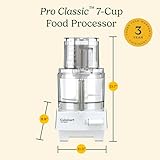
The Cuisinart Pro Classic 7-cup is the smaller sibling to the 14-cup, and it inherits the brand's heritage for solid construction without the oversized footprint. The 600-watt motor runs quiet and handles regular dough work easily: owners who've used it for kneading report consistent, reliable performance. The design is refreshingly simple: on/off/pulse controls with no presets to learn, which appeals to cooks who prefer mechanical straightforwardness. The bowl is high-quality plastic with a reasonable 7-cup capacity suitable for single-loaf bread batches or regular vegetable prep.
We should note the real trade-off: the bowl scratches and can show wear faster than metal alternatives, and one owner mentioned avoiding large dough tasks because of torque concerns on the bowl connection. The paddle switch requires firm pressure to engage, which feels less refined than some competitors. Another owner sharpened the shredding disc out of the box, finding it not as sharp as the main blade initially. These are minor tuning issues rather than defects, but they signal that this model rewards patient users who'll maintain and learn its quirks.
Compared to best pizza dough mixers in the stand-mixer category, this trades capacity and hands-free operation for countertop footprint and simplicity. We'd choose this over the KitchenAid if you value proven longevity and quiet operation for regular (not industrial-scale) dough kneading.
Pros
- 600-watt motor runs remarkably quiet during extended kneading sessions
- 7-cup capacity handles single-loaf bread batches efficiently
- Simple on/off/pulse design with no learning curve
- Proven track record; older models lasting 25+ years with care
Cons
- Plastic bowl scratches with regular use and shows wear faster
- Paddle switch requires firm pressure and feels less refined
Key features (5)
- 600-watt motor with on/off/pulse controls and heavy-duty performance
- 7-cup capacity ideal for single-loaf dough and everyday prep
- Stainless steel blade, medium shredding disc, and slicing disc
- Extra-large feed tube accepts whole fruits and vegetables
- Limited 3-year warranty with full 5-year motor coverage
How to Choose a Food Processor for Dough Kneading
Motor Power Matters More Than You'd Think
A food processor motor between 550 and 1000 watts handles dough, but the sweet spot for regular bread kneading is 600 watts or higher. The Ninja at 1000 watts and Cuisinart models at 600 to 720 watts power through stiff dough without bogging down. Lower-wattage motors (around 550 watts) work for occasional baking, but if you knead more than once a week, the extra muscle prevents strain on the motor and ensures the dough develops texture evenly rather than getting stuck in the bowl.
Bowl Capacity and Your Batch Size
Most home cooks do well with 9 to 12 cups. A 7-cup processor handles one standard loaf of bread; 9 to 12 cups manages two loaves or a large batch of pizza dough. The key is not overfilling: dough needs room to move and be kneaded, not compress against the lid. Consider kneading dough in food processor and how often you make large batches. If you meal-prep vegetables alongside occasional bread baking, the 12 to 14-cup models give you flexibility. If you're mostly a once-a-week baker in a small kitchen, 7 to 9 cups is plenty.
Dough Blade Design and Cleanup
All models here include a dedicated dough blade: a flat or slightly curved blade designed to fold rather than chop. Check that the blade sits low in the bowl so it actually reaches the bottom and incorporates ingredients from the start. Also consider food processor bowl size vs motor power for dough kneading when deciding: a well-designed blade in a proportional bowl ensures even mixing. Cleanup varies: simpler designs with fewer nooks dry faster, while complex safety mechanisms (like on some Cuisinart models) can harbor flour in grooves if you're not thorough.
Noise and Stability During Heavy Use
Dough kneading creates sustained vibration and noise. The Ninja and Cuisinart models are louder under load, but they have heavy bases or suction cups to stay planted. Lighter machines may creep or shake on the counter, which is frustrating and eventually wears on cabinet edges. If you live in a small space or bake early in the morning, quieter motors (Cuisinart 600-watt models) are genuinely valuable. Test a unit at a store if possible to hear it yourself; reviews can tell you the range, but your tolerance is personal.
Build Quality and Long-Term Durability
Older Cuisinart models from the 1980s–90s are legendary for lasting decades with minimal maintenance. The current Pro Classic line tries to recapture that spirit, though some owners note plastic bowls scratch easier than they'd like. The Ninja is newer, so long-term data is limited, but the sealed bowl design and suction-cup base suggest solid engineering. The GE and KitchenAid show durability concerns in owner feedback. If you plan to keep and use the machine for 10+ years, the Cuisinart Pro Classic or Ninja warrant the step-up investment.
Our picks at a glance
2
Best for Large BatchesCuisinart
4
Best for Small SpacesKitchenAid
5
Best Compact PerformerCuisinart
Frequently asked
Can I use a regular food processor blade for dough, or do I really need a dough blade?
A dedicated dough blade folds and develops gluten more gently than the standard chopping blade. The dough blade is designed to minimize over-processing, which can make bread tough. That said, all models here include a dough blade, so you're covered either way. Some bakers prefer the standard blade for speed, especially with softer doughs, but the included dough blade gives you the option to choose.
How much dough can I safely make in a 9-cup food processor at one time?
A 9-cup processor typically handles dough from 2 to 3 cups of flour comfortably, which yields one standard loaf of bread or one large pizza. Fill the bowl no more than halfway so dough has room to move during kneading. Overfilling forces the blade to work harder, stresses the motor, and prevents even kneading. Always check your specific model's manual for capacity guidelines.
Why does my dough sometimes jam or not mix evenly in the food processor?
Uneven mixing often happens when the bowl is overfilled, the dough is too dry to move freely, or the blade isn't positioned low enough to reach the bottom of the bowl. Start with the liquid ingredient first, then add dry slowly while pulsing, rather than dumping everything in at once. If the blade jumps out of the shaft (rare but reported), stop immediately and check the blade is seated correctly.
Is a food processor better than a stand mixer for kneading dough?
They're different tools. A stand mixer develops dough over a longer period and gives you hands-free operation, ideal for large batches or long fermentation. A food processor kneads quickly (minutes rather than 10 minutes) and takes up less counter space but requires more hands-on monitoring. For occasional home baking, a food processor is faster and cleaner. For frequent, high-volume baking, a stand mixer is the workhorse.
Do I need to hand-wash the dough blade and bowl, or can everything go in the dishwasher?
All models here list dishwasher-safe parts, but many owners hand-wash dough-stained bowls and blades to avoid buildup in grooves or residue hiding under the blade. Hand-washing with warm soapy water and a soft brush typically takes 5 minutes and extends the life of plastic components. If you use the dishwasher, inspect the blade and bowl regularly for stuck flour or dough, especially around the attachment point.