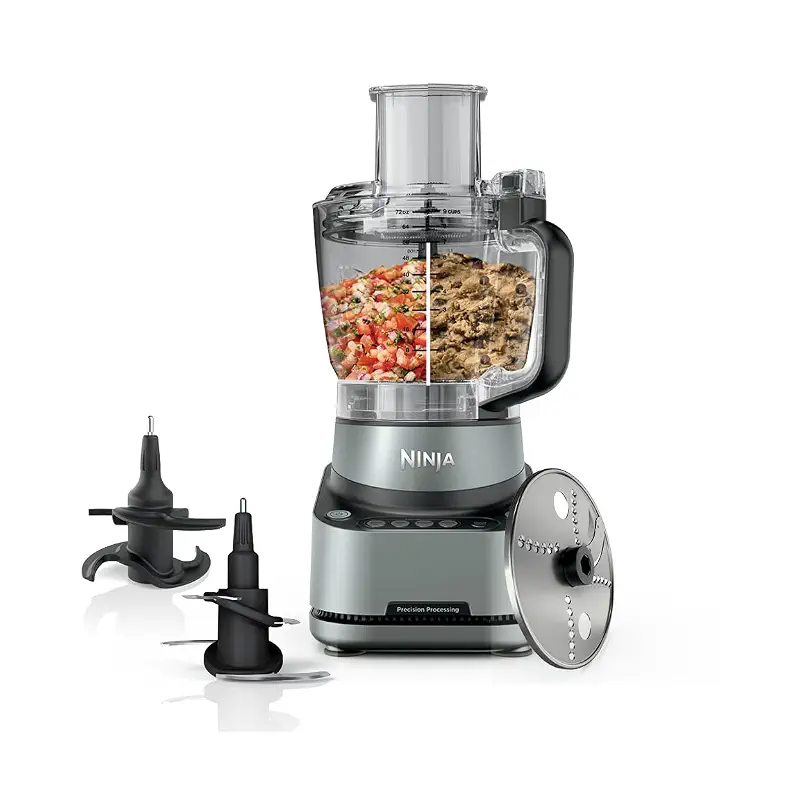
Best Food Processor for Bread Dough: Top Picks for Home Bakers
Find the best food processor for bread dough mixing and kneading. Compare powerful models for pizza, pasta, and daily baking needs. Expert reviews inside.
Ideal for: Home bakers who mix bread dough weekly and want one appliance for all prep tasks.
The Ninja PrecisionPro strikes the right balance between raw power and thoughtful design. That 1000-watt motor pushes through pizza dough, pastry batters, and tougher ingredients without hesitation, and the dedicated dough blade makes kneading intuitive. The nine-cup bowl holds enough for a family-sized loaf or two, and the Auto-iQ presets take guesswork out of timing, though you can override them with manual control if you prefer.
What sets this model apart is the engineering underneath: no center hole in the bowl bottom means water won't drain out during cleanup, and the gasket-sealed lid prevents overflow when you're mixing at capacity. The feed chute is wide and user-friendly, and suction cups anchor the base so firmly it won't migrate across your counter during operation. Owners consistently praise how evenly it chops and how little noise it makes for a motor this size.
The main trade-off compared to heavier machines is that you're paying for versatility. If dough is your only use case, you might find the extra chopping and pureeing functions unnecessary. The pusher design takes a learning curve, and a few buyers noted the flashing lights when finished could be distracting if you have sensory sensitivities.
Pros
1000-watt motor powers through stiff doughs in 30 seconds
Nine-cup bowl fits double batches or large family portions
Sealed design prevents overflow; no center shaft hole to leak
Stays anchored to counter with suction cups
Cons
Pusher fits so snugly in chute it can be hard to locate initially
Not the quietest machine; louder during higher-speed chopping
Key features
1000-peak-watt motor with Auto-iQ preset programs for dough, chop, slice, and puree
9-cup processing bowl with large feed chute and reversible slicing/shredding disc
Dedicated dough blade for mixing pizza doughs and pastry batters
Sealed gasket lid and suction-cup base prevent overflow and sliding
Dishwasher-safe blades, discs, and bowl for quick cleanup
Ideal for: Serious home bakers and households baking multiple loaves weekly who value durability over gadgetry.
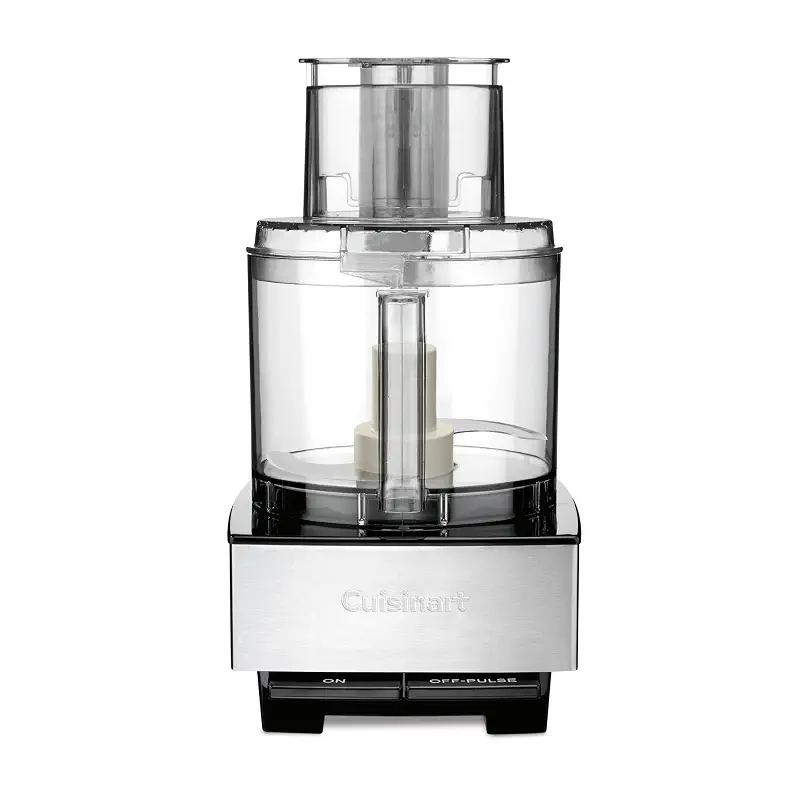
The Cuisinart's 14-cup bowl is genuinely generous, making it the go-to if you bake large batches, run a small baking business, or feed a crowd regularly. The 720-watt motor is less powerful than some competitors, but it's tuned for endurance and consistency. Owners report it handles meat grinding, nut butters, and yes, heavy doughs with the kind of quiet, steady performance that suggests this machine will outlast trendier options.
The three-year warranty on the unit and five-year motor warranty backs up that durability reputation. The included stainless-steel slicing and shredding discs feel more premium than plastic equivalents, and the detachable disc stem simplifies cleaning. One significant quirk: the blade can occasionally slip out of the shaft when grinding thick items like meat, which a few reviewers flagged as concerning for bowl longevity, though it's not a widespread issue.
Where this model diverges from newer rivals is simplicity. The on/off and pulse buttons are old-school tactile (no presets, no screens) which some cooks find liberating and others find less intuitive. The safety locking mechanism is also more fiddly to disassemble for cleaning than models with simpler designs. If you've owned a Cuisinart before, this will feel familiar; if you're upgrading from a compact chopper, the learning curve is minimal.
Pros
14-cup capacity largest in lineup; fits three loaves or bulk meal prep
720-watt motor runs unusually quiet for sustained, heavy-duty work
Stainless-steel discs feel premium; five-year motor warranty
Simple on/off and pulse buttons; no presets to override
Cons
Safety locking mechanism is complex and tedious to clean thoroughly
Blade occasionally slips out when grinding thick, dense foods
Key features
14-cup work bowl handles large batches and bulk meal prep efficiently
720-watt motor with on/off and pulse control for intuitive operation
Stainless-steel 4mm slicing disc and medium shredding disc included
Chopping and mixing blade suitable for dough, nut butters, and meat grinding
3-year unit warranty plus 5-year motor warranty for long-term reliability
Ideal for: Cooks who blend smoothies and soups as often as they knead dough and want one compact system.
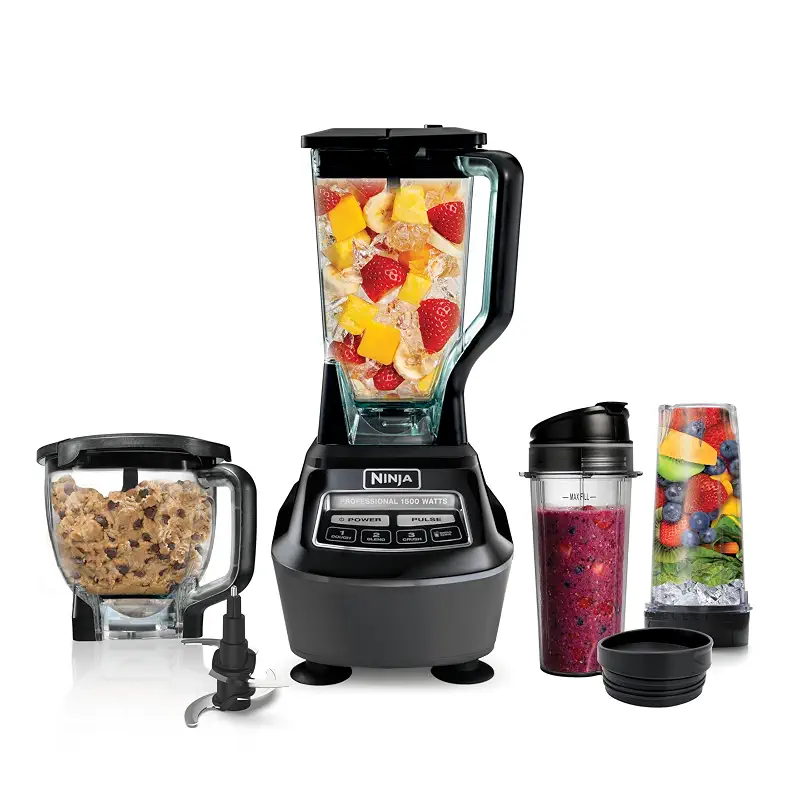
If your kitchen space is tight or you already own a standalone blender, the Ninja Mega Kitchen System consolidates two appliances into one footprint. That 1500-watt motor is the most powerful in this lineup, and it splits its focus between a 72-ounce blending pitcher and an eight-cup food processing bowl. The dough blade works well (users report mixing two pounds of dough in about 30 seconds) but this machine earns its place by excelling at tasks a standalone processor can't touch, like crushing ice or making nut butters and smoothie bases.
The appeal is genuine flexibility. Make salsa with the food processor bowl one minute, blend a frozen strawberry smoothie the next, all without swapping motors or finding storage space. The system ships with two 16-ounce single-serve cups with to-go lids, which sweetens the deal if you meal-prep shakes. Suction feet on the base keep it stable even under the force of that motor.
The catch is noise: this machine announces itself to the whole house and beyond. Owners half-joke about neighbors hearing it across the street, and several recommend earplugs if you blend early morning. The food processor bowl is smaller than the Ninja PrecisionPro or Cuisinart, so if dough is your primary task and you make large batches, you'll want to choose a dedicated processor. Also, the 1500-watt motor draws real electricity, so homes with older wiring or tight circuits should verify compatibility.
Pros
1500-watt motor handles ice crushing, nut butters, and heavy doughs equally
Eight-cup food processor bowl plus 72-ounce blender pitcher in one base
Two 16-ounce single-serve cups with to-go lids for on-the-go smoothies
Suction-cup feet stabilize base during high-power blending
Cons
Very loud operation; not suitable for early-morning or quiet-household use
Eight-cup processor bowl smaller than standalone competitors for large batch baking
Key features
1500-watt dual-motor system powers blending pitcher and food processor bowl
XL 72-ounce pitcher with Total Crushing Blades for ice and frozen fruit
8-cup food processor bowl with dough blade mixing up to 2 pounds in 30 seconds
Four functions: Blend, Mix, Crush, and Single-Serve with optimized blades for each
Two 16-ounce Nutri Ninja cups with to-go lids included; dishwasher-safe parts
#4 Pick
Best Budget Pick
Twomeow
Food Processor, 4 Programs & Pulse,1000W Max Power,12 Cups Total Volume for Slicing, Mincing, Dicing, Shredding, Puree, Dough and Vegetable Chopper Clean Bowl Scraper, Stainless Steel
4.4(139)
Twelve-cup capacity and 1000-watt motor at a fraction of premium-brand pricing; solid for occasional bakers.
Ideal for: Home bakers on a tight budget making dough weekly or twice monthly without heavy commercial use.
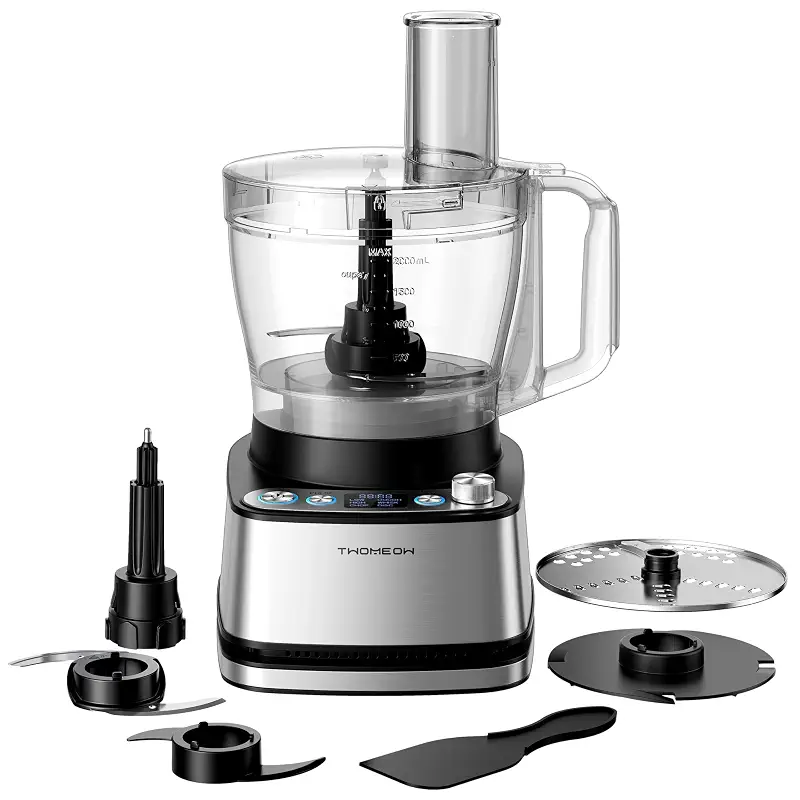
The Twomeow delivers genuine capability at a price point that makes food processors accessible to anyone hesitant about the investment. That 1000-watt motor and 12-cup capacity would cost considerably more under a major brand name. The four preset programs (chopping, dicing, slicing, shredding) plus pulse function give you enough control to handle pizza dough, cookie dough, and daily vegetable prep without fuss.
Owners who've moved from other budget processors rave about the quality jump: the dual power feature (pulse and preset modes together) offers more finesse than you'd expect, and the 12-cup bowl is genuinely spacious for the price. Cleanup is straightforward, and the safety double-lock mechanism prevents accidents. One buyer who regularly makes lamb kofta and meatballs rated it consistently for handling dense, sticky mixtures.
The trade-offs are worth naming. Build quality feels lighter than heavier competitors, which some find reassuring (less countertop real estate) and others interpret as less durability. The instruction booklet arrives with labeling errors and unclear diagrams, so you'll want to watch a YouTube demo before first use. There's also minimal information about the brand's customer service or warranty, so if something fails, your recourse may be limited. At this price point, it's best thought of as a entry-level tool rather than a lifetime investment.
Pros
12-cup capacity and 1000-watt motor at budget price point
Four preset programs plus pulse for flexible, intuitive control
Lightweight and compact for kitchens with limited counter space
Double-lock safety mechanism prevents accidental lid opening during operation
Cons
Instruction manual arrives with mislabeled diagrams and unclear assembly guidance
Limited brand visibility and customer service support compared to established makers
Key features
1000-watt motor with four preset programs for chopping, slicing, shredding, dicing
12-cup total capacity bowl suitable for family-sized dough batches and meal prep
Pulse function allows precise texture control for delicate chopping tasks
Double-lock safety mechanism with auto-shutoff if lid is not secured
Lightweight design and easy assembly; dishwasher-safe accessories
#5 Pick
Best Compact Workhorse
Hamilton Beach
Hamilton Beach Food Processor & Vegetable Chopper for Slicing, Shredding, Mincing, and Puree, 10 Cups + Easy Clean Bowl Scraper, Stainless Steel (70730)
4.5(41,363)
Ten-cup capacity and built-in bowl scraper make quick work of dough; proven durability across decades.
Ideal for: Occasional to weekly bakers in small or medium households who value reliability and quiet operation.
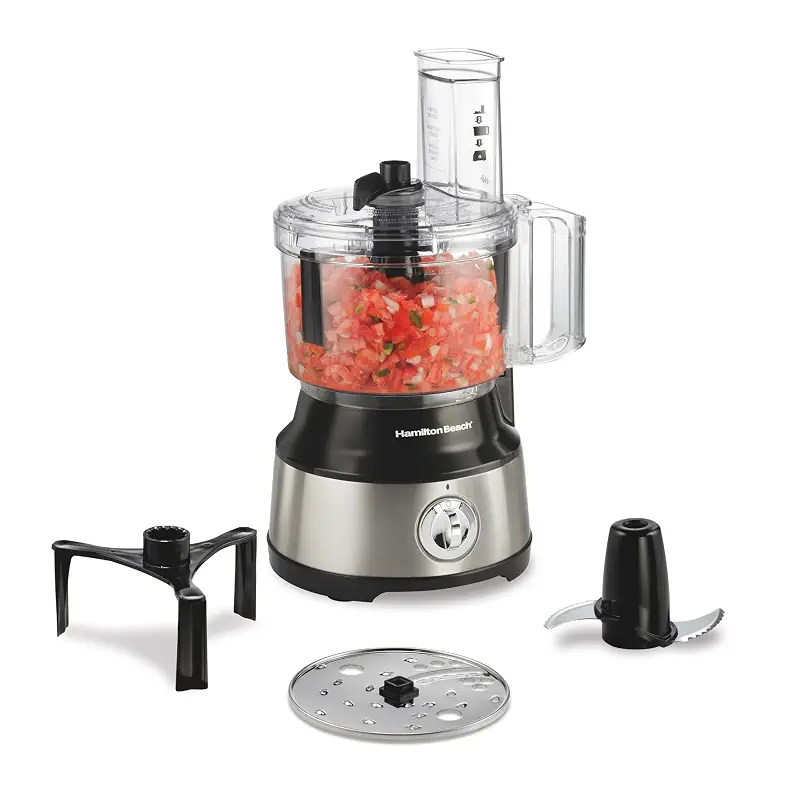
The Hamilton Beach is the lean alternative: lighter, less powerful than some rivals, but purposeful. Its 450-watt motor isn't trying to be a blender or crush ice; it's optimized for chopping, shredding, and yes, mixing dough, and it does each job without strain. The ten-cup bowl is plenty for a two-loaf bake, and the built-in side scraper (a small but genuine convenience) keeps ingredients flowing toward the blade while you're working, reducing the need to stop and manually scrape down sides.
Durability here is well-documented. One owner reported a unit from 2015 still running strong in 2025, regularly making homemade mayo, grated cheese, and vegetable slaws, and it's not a unique story in the reviews. The 450-watt motor runs quietly, the two speeds plus pulse give straightforward control, and the wide feed chute accommodates whole vegetables without much prep.
Compared to the heavier Ninja and Cuisinart models, this one feels deliberately scaled. If you make dough once or twice a month and do light to moderate chopping, it's more than adequate and saves counter space. But if you're mixing large batches or pushing the machine daily, the lower wattage will feel like it's working harder, and you might notice longer processing times. Some buyers report a plastic-y build feel, though the 10+ year track records suggest that's form over substance.
Pros
Built-in side scraper eliminates need to stop and manually scrape bowl
Ten-cup capacity handles two-loaf batches and light meal prep efficiently
450-watt motor runs quieter than higher-powered competitors; proven 10+ year durability
Wide feed chute reduces pre-cutting; two speeds plus pulse provide clear control
Cons
450-watt motor noticeably slower with heavy doughs compared to 1000+ watt models
Base feels lightweight and less substantial than heavier competitors
Key features
450-watt motor with two speeds and pulse for controlled, quiet processing
10-cup bowl capacity with large feed chute; built-in scraper sweeps sides during use
Stainless-steel slicing and shredding disc plus chopping blade for versatile prep
Suction-cup feet anchor base to counter; low and high speeds adapt to recipe needs
Dishwasher-safe parts. BPA-free in all food-contact zones
How to Choose a Food Processor for Bread Dough
Four trade-offs that actually matter when matching a food processor for bread dough to your kitchen.
Motor Power and Dough Speed
Bread dough is dense and sticky, so motor wattage matters. A 1000-watt motor can knead pizza dough in 20–30 seconds; a 450-watt motor takes longer but still works for occasional bakers. If you're mixing whole-wheat or rye doughs (heavier than white dough), aim for 800 watts or higher. The dough blade attachment guide walks you through whether your processor's blade fits your recipe, but in general, 1000+ watts gives you headroom and confidence, especially if you also want the processor to handle nut butters or grinding meat.
Bowl Capacity for Your Baking Volume
A 9- to 10-cup bowl fits a single loaf or small pizza batch (two to three pounds of dough). A 12- to 14-cup bowl handles double batches and larger family gatherings. That extra capacity saves time if you bake weekly: no need to process dough in two runs. Remember that 'cup' ratings apply mainly to dry goods; for dough (a wetter mix), the usable amount is often slightly less. If you rarely bake or live alone, a smaller processor saves counter and storage space. If you host frequently or feed six-plus people, go larger.
Safety and Ease of Assembly
Food processors are safe by design (blades won't spin without the lid locked) but some locking mechanisms are simpler than others. Push-and-twist designs are faster to assemble and clean than mechanisms with multiple contact points. Check that the pusher (the device you use to feed food down the chute) sits securely so it doesn't jam. Suction-cup feet on the base keep the machine from sliding during operation, which matters if you have a smooth countertop or tile.
Cleanup and Blade Handling
All food processor blades are sharp: treat them with care. Dishwasher-safe parts are convenient, though many experienced cooks hand-wash blades to avoid accidents. Some models have fewer crevices where dough can hide during cleanup; a bowl with a simple, smooth interior saves frustration. If your processor has a center shaft (common in traditional designs), food can get trapped there, complicating cleanup after kneading dough. Kneading dough in food processor guides show techniques to minimize this, but sealed designs with no center hole are objectively easier to rinse.
Versatility Beyond Dough
If dough is your only task, a basic processor with one blade is fine. But most people also chop vegetables, shred cheese, or puree soups. Models with multiple discs (slicing, shredding) and preset programs add flexibility without much extra cost. The best pizza dough mixers (those with dedicated dough blades) also excel at other prep work, so you're not buying a single-use tool. Hybrid blender-processor systems (like the Ninja Mega) let you make smoothies and soups without a second appliance, which helps in tight kitchens.
Frequently asked
Quick answers to the questions readers ask most.
Can I knead bread dough in a regular blender instead of a food processor?
Blenders aren't ideal for dough. They're designed for liquids and soft solids, so a stiff dough can stall the motor or create uneven results. Food processors have wider, flatter blades and bowls designed for dough's density. If you want a blender-processor hybrid, models like the Ninja Mega Kitchen System give you both capabilities in one base, but the food processor component is what actually handles dough effectively.
What's the difference between a dough blade and a chopping blade?
A dough blade (also called a dough hook or dough attachment) is flat and curved, designed to knead and fold dough without overworking it. A chopping blade is sharp and angled to slice and mince quickly. Some processors come with both; others only include one. If dough is a priority, verify your model ships with a dedicated dough blade. The dough blade attachment guide explains how each one performs in detail.
How much dough can a food processor actually handle at once?
Most processors mix 2–3 pounds of dough comfortably without strain. A 9-cup bowl fits a standard two-loaf bread recipe; a 12–14-cup bowl handles three to four pounds or a double batch of pizza dough. Check your model's manual for the maximum dough weight, going over it can strain the motor and produce uneven results. When in doubt, split larger batches into two runs.
Is a food processor loud? Will it wake my family in the morning?
Most are reasonably loud: equivalent to a coffee grinder or microwave. The Ninja Mega (1500 watts) is notably louder than the Hamilton Beach (450 watts). If early-morning baking is your routine and noise matters, choose a model under 1000 watts or plan your kneading for daytime. Suction-cup feet help reduce vibration noise, but there's no silent food processor.
Do I need to hand-wash the blades, or are they really dishwasher-safe?
Most blades are technically dishwasher-safe but many experienced cooks hand-wash them to avoid nicks and to control the water spray around sharp edges. Food can also stick to blades in the dishwasher, requiring a pre-rinse. If you hand-wash, use a soft sponge and rinse immediately after kneading (dough residue hardens quickly). Either way, store blades carefully in a container or with blade guards to prevent cuts when reaching into the cabinet.