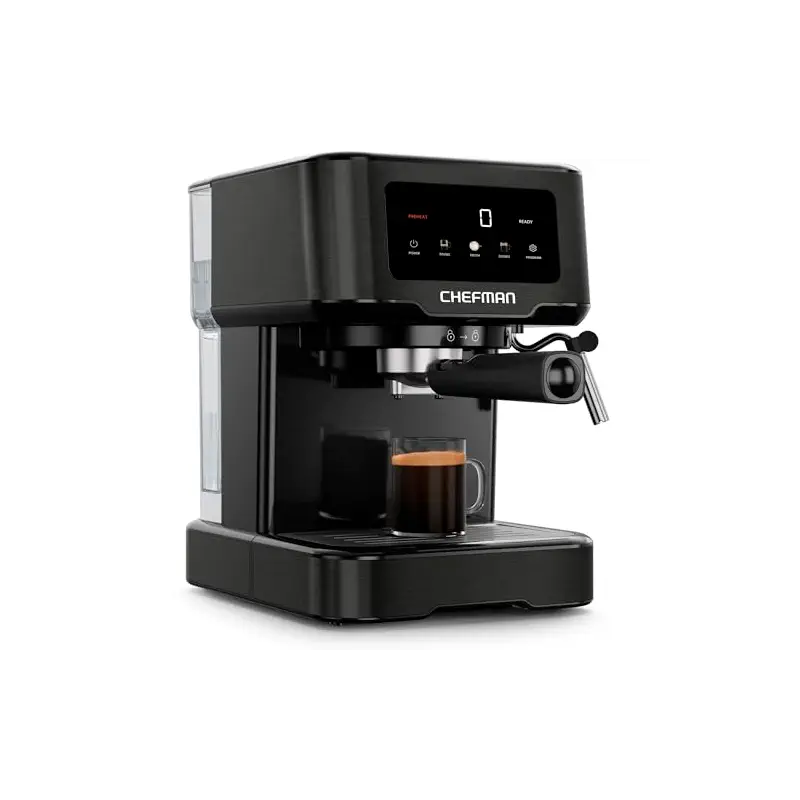
Ideal for: Budget-conscious first-time espresso makers who prioritize compact size and quick heat-up over advanced customization.
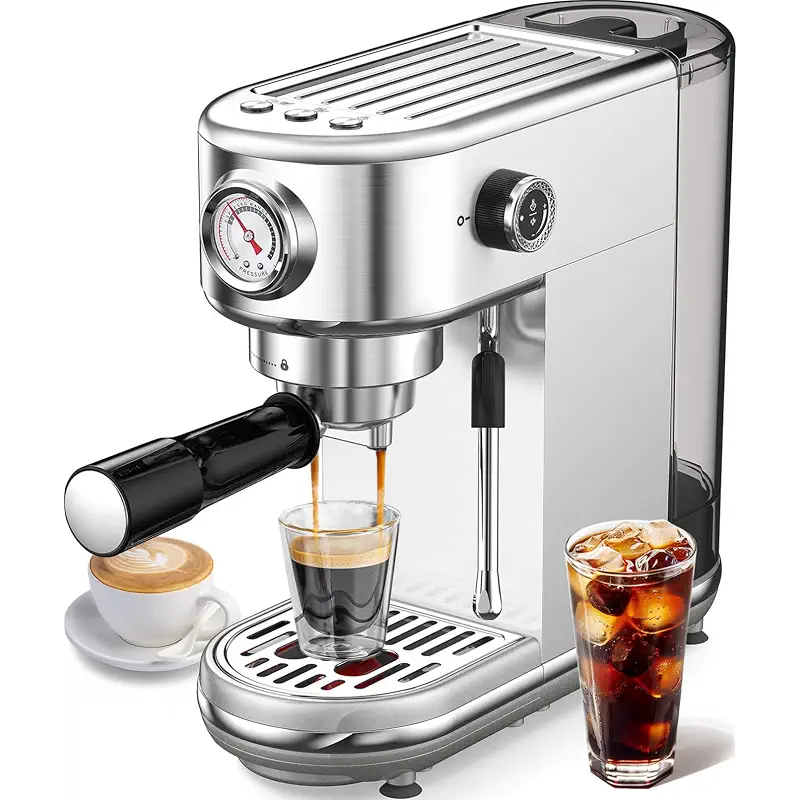
The Chefman CraftBrew strikes a balance many first-time buyers value: it heats in about 30 seconds, takes up minimal counter space, and includes a removable water tank that's actually convenient to refill. The 15-bar pump pulls respectable shots with decent crema, and the built-in steam wand produces usable microfoam. Owners consistently report that it works well for everyday drinks: cappuccinos and lattes come out clean and hot.
There's a legitimate noise complaint that surfaces across the reviews. Some owners describe it as very loud during brewing, which could be a real issue if you're making coffee while others sleep. One early-buyer did encounter a defective unit that failed to draw water, though subsequent reviewers had better luck. The plastic tamper included feels flimsy and benefits from an upgrade if you plan to dial in shots with precision.
Compared to machines with higher bar ratings like the atatix or Neretva, the Chefman is the lightest on your wallet and simplest to use right out of the box. If you want a no-fuss entry point and don't mind trading some fine-tuning capability for ease, this delivers.
Pros
Heats to brewing temperature in roughly 30 seconds
Very compact footprint, minimal counter clutter
Removable water tank makes filling and cleaning straightforward
Built-in timer and touch controls for repeatable shots
Cons
Notably loud operation during extraction and frothing
Included plastic tamper is flimsy, often warrants replacement
Key features
15-bar pump pressure with digital shot timer controls
1.5-liter removable water tank for easy refilling
Built-in milk frother and two-basket portafilter setup
Automatic descale alert after 500 brewing cycles
#2 Pick
Best for Learning and Precision
atatix
atatix Espresso Machine with Milk Frother, 20 Bar Pressure Espresso Maker
4.2(1,466)
A forgiving machine with intuitive temperature control and manual extraction modes that help beginners dial in excellent shots without frustration.
Ideal for: First-time espresso makers who want to build proper technique and appreciate manual control over fully automated brewing.
The atatix machine stands out for its NTC precision temperature control and the flexibility to pull shots manually up to 102 seconds, giving you hands-on learning. Owners who bought this as their first espresso machine report a steep learning curve that flattens quickly once they understand the brew cycle. The 20-bar pressure system is robust, and multiple reviewers praise how consistently it delivers rich crema and complex flavor when beans are dialed in correctly. The compact design and four suction-cup feet keep it rock-solid on the counter.
Customer service from atatix earned specific praise: one owner experienced a temperature issue after four months and received a replacement unit with overnight shipping within 24 hours of contact. That level of support matters if something goes wrong. The steam wand demands practice to get silky microfoam; it delivers dry, focused steam but won't forgive sloppy technique early on. The manual doesn't cover every detail, so YouTube videos are practically required.
Where this differs from the Chefman is the hands-on control: you're teaching yourself to brew, not just pressing a button. Compared to the Neretva, the atatix feels more approachable for a beginner willing to invest time. If you see espresso-making as a skill worth learning, this machine rewards that effort.
Pros
Manual and automatic extraction modes for learning flexibility
NTC temperature control locks to optimal brewing window
Responsive customer service with fast replacement process
Powerful steam wand delivers dense, glossy microfoam with practice
Cons
Instructions lack detail, requiring supplemental video tutorials
Steep learning curve for dialing grind and tamping correctly
Key features
20-bar pressure system with 30-second preheat time
Manual extraction mode up to 102 seconds for shot customization
NTC precision temperature control locked to 90-96°C sweet spot
Compact footprint with four suction-cup feet for stability
#3 Pick
Best Premium Pick Under 300
Neretva
Neretva 20 Bar Espresso Machine Super Compact Espresso Coffee Machine | Professional Stainless Steel Espresso Maker with LED Display and Powerful Steam for Home Baristas to Make Latte, Cappuccino
4.4(1,306)
A stylish, feature-rich machine with LED temperature display and pre-infusion that consistently pulls café-quality shots with minimal fuss.
Ideal for: Home baristas who want visible temperature control, premium aesthetics, and pre-infusion technology for improving consistency.
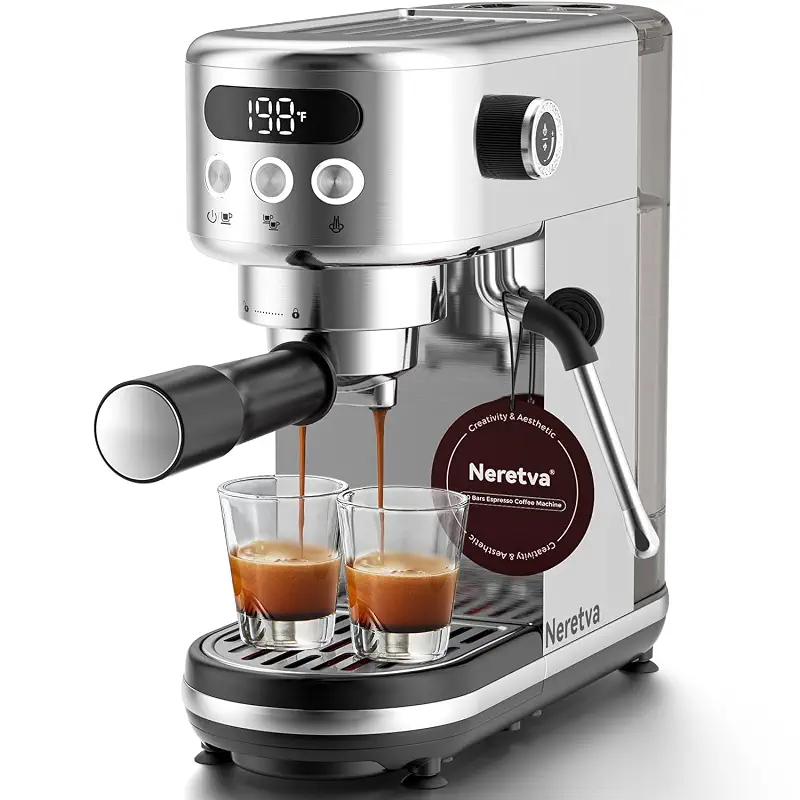
The Neretva 20 Bar offers more visible tech than most competitors at this price: an LED temperature display, pre-infusion pressure ramping, and stainless steel construction that feels genuinely premium. Owners rave about the quality of crema: many who upgraded from cheaper 5-bar machines were visibly struck by the difference in body and color. Heat-up time is competitive, and reviewers report it's far quieter than the Chefman. The compact design and built-in warming plate on top are thoughtful touches.
There's a steeper learning curve than the Chefman. Multiple owners note that the instruction manual is poorly written and ambiguous, making troubleshooting frustrating. The steam wand requires practice and can spray water if not angled precisely. Some early reviewers struggled with the portafilter orientation and error messages; later reviewers who read the manual and watched videos found the machine worked beautifully. One defective unit arrived with voltage incompatibility (a rare but worth-knowing edge case) and customer service was responsive. A few owners use a separate milk pitcher for frothing instead of the wand, which suggests the learning curve on steam technique is real.
Compared to the atatix, the Neretva feels slightly more polished aesthetically and comes with the pre-infusion feature that smooths extraction. The Casabrews (position 4) offers a built-in pressure gauge that some find more useful than the Neretva's LED readout. If you want the most sophisticated look and don't mind reading online reviews to troubleshoot, this delivers.
Pros
20-bar pressure with low-pressure pre-infusion for even extraction
LED temperature display shows precise brewing conditions
Stainless steel construction with sleek, high-end appearance
Relatively quiet operation compared to similarly priced competitors
Cons
Instruction manual is vague and poorly organized
Steam wand demands practice to avoid spray and inconsistent foam
Key features
20-bar pressure system with low-pressure pre-infusion ramp
LED temperature monitor for precise brewing control
1350W boiler with integrated warming tray on top
Compact stainless steel chassis fits any kitchen size
#4 Pick
Best Built-In Pressure Gauge
Casabrews
CASABREWS CM5418 Compact Espresso Machine with Milk Frothing Steam Wand | Stainless Steel, 20-Bar Pump, Built-in Pressure Gauge, Powerful Steam Wand for Cappuccino Latte for Home, 34oz Water Tank
4.3(8,070)
A rugged, no-nonsense machine with a visible pressure gauge that helps you dial in consistent shots and shows its durability after months of daily use.
Ideal for: Daily espresso drinkers who value visible pressure feedback, compact design, and long-term reliability over smart controls.
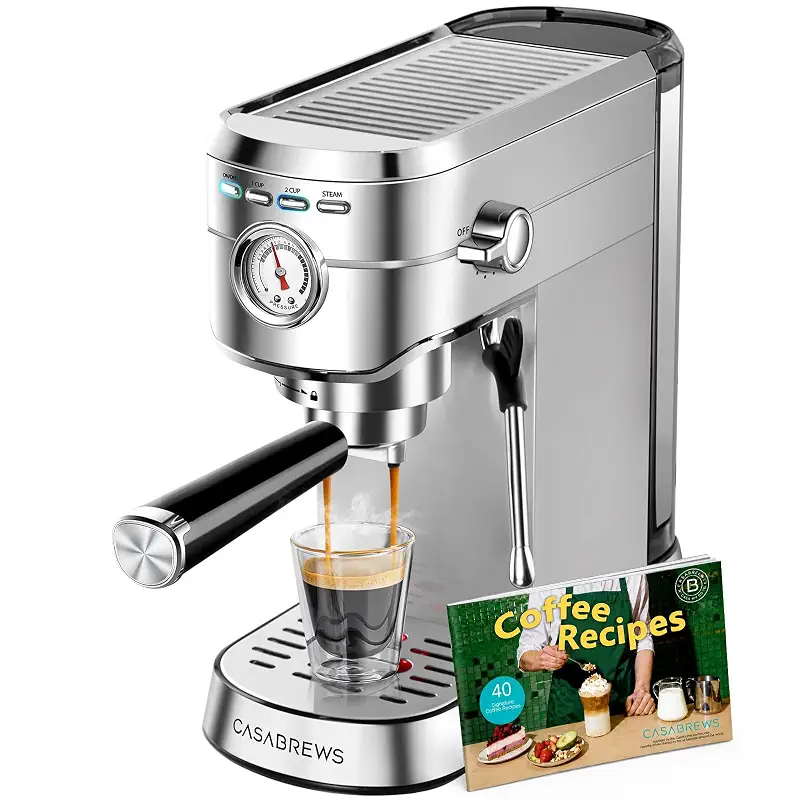
The Casabrews is built like a workhorse. Owners who have used it for over a year report zero degradation; multiple reviewers mention pulling espresso multiple times daily without issues. The built-in analog pressure gauge is genuinely useful: you can watch it climb as you tamp and see immediately whether you're in the sweet spot. The compact stainless steel body looks clean on any counter, and the 34-ounce water tank is proportionate to the machine's size. Milk frothing is functional and works well enough for cappuccinos and lattes, though it demands technique.
The biggest caveat is that the machine cannot brew immediately after steaming milk; it enters an overheat-protection mode that requires a cool-down sequence. If you want to make two drinks back-to-back for different people, you'll wait 10+ minutes or run the cooldown procedure. This is a real limitation for households with multiple coffee drinkers. One owner reported persistent leaking from the water tank seal after a couple of months, though most users haven't mentioned that issue. The portafilter and baskets feel lightweight compared to upgraded aftermarket parts, and many owners eventually replace them for better consistency.
Versus the Neretva, the Casabrews trades an LED temperature display for a mechanical pressure gauge and arguably feels more durable for long-term daily use. Versus the Chefman, it's heavier-duty and quieter, with a real gauge instead of a timer. If durability and tangible feedback matter more than smart features, this machine earns its reputation.
Pros
Analog pressure gauge shows exact extraction pressure in real time
Rugged stainless steel build proves durable after 12+ months heavy use
Fast heat-up and consistent pressure throughout brewing cycle
Compact footprint with proportionate 34oz water tank
Cons
Cannot brew immediately after steaming; requires cool-down sequence
Included portafilter and baskets are lightweight, often upgraded by owners
Key features
20-bar professional pump with built-in analog pressure gauge
1350W boiler with stable temperature maintenance
Single and double shot capability with programmable button volumes
Stainless steel body with removable 34oz water tank
#5 Pick
Best for Simplicity and Consistency
Lavazza
Lavazza BLUE Classy Mini Single Serve Espresso Coffee Machine LB 300, 5.3" x 13" x 10.2" 2 Coffee selections: simple touch controls, 1 programmable free dose and 1 pre-set
4.4(2,511)
A pod-based system that trades grind-your-own flexibility for foolproof, repeatable espresso pulls every time: no learning curve, just excellent crema.
Ideal for: Busy espresso drinkers who prioritize speed, consistency, and mess-free operation over customization and fresh-ground beans.
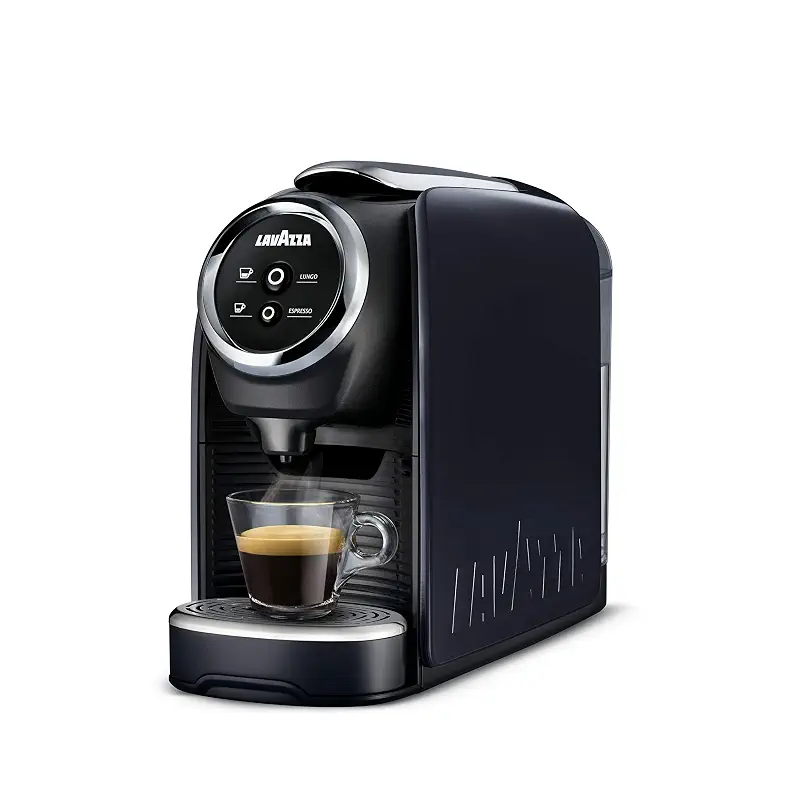
The Lavazza BLUE Classy Mini operates in a completely different lane from the other four machines: it uses proprietary pods, so there's zero grinding, tamping, or dialing. You fill the tank, drop a pod in, press a button, and get a properly extracted espresso in 20 seconds. Owners consistently praise the crema quality: multiple reviewers compared it favorably to or better than Nespresso machines that cost significantly more. The machine itself is beautifully designed (it won a Red Dot award), quiet, and takes up minimal space. Pods are widely available in different roast profiles, from balanced to bold.
The trade-off is that you cannot use third-party pods easily, and you're locked into Lavazza's (or compatible) cartridges. The water tank can be finicky to reinsert, and the waste-pod bin has no sensor, requiring manual monitoring. The machine will alert you every five brews to empty it, but a power outage resets the counter, risking an overstuffed bin. Some users report the spout drips for several seconds after brewing. Pods come in 100-packs, which is a large commitment if you're trying a new roast.
Unlike the manual machines above, the Lavazza is best for people who don't want to think about espresso: they just want it done right. Compared to the Chefman or Casabrews, you lose the ability to adjust grind or dial shots, but you gain absolute consistency and zero mess. If your morning routine is too rushed for technique, this is the smarter choice.
Pros
Produces excellent crema consistently every pull, no skill required
20-second heat-up and brew cycle fits rushed mornings
Beautiful Italian design, compact size, and whisper-quiet operation
Wide selection of Lavazza pod varieties at reasonable per-cup cost
Cons
Locked into Lavazza or compatible pods; no fresh-ground bean brewing
Pods sold in 100-packs, making flavor sampling expensive
Key features
Pod-based system with 9-bar pressure for true espresso extraction
20-second preheat and brew time for rapid morning service
Red Dot design award-winning Italian styling in dark blue finish
Auto-shutoff feature and integrated waste-pod container
How to Choose an Espresso Maker Under 300
Four trade-offs that actually matter when matching a espresso maker under 300 to your kitchen.
Pressure System and Shot Quality
Bar rating is the foundation of espresso: aim for at least 15 bars, though 20-bar machines are standard in this price range and pull noticeably richer, more complex shots. Higher pressure saturates the coffee grounds more thoroughly, extracting deeper flavors and producing thicker crema. The difference between a 5-bar and 20-bar machine is visible the moment you pull your first shot. That said, pressure alone doesn't guarantee good espresso; a well-built 15-bar pump with stable temperature control often outperforms a poorly engineered 20-bar system. Check owner reviews for consistency: do they report the same crema quality after months of use, or does performance drift?
Heating Speed and Temperature Stability
Most machines in this category heat to brewing temperature in 20–40 seconds, which is acceptable for daily use. Temperature stability matters more than headlines suggest. Some owners report that machines cool down too quickly between shots if the boiler is undersized, requiring a wait before pulling a second espresso. Look for reviewers who mention pulling back-to-back drinks without issues. Machines with pre-infusion or temperature-control displays give you visibility into what's happening inside, which helps troubleshoot inconsistency later. A thermoblock design is standard and efficient; a small single boiler is cheaper but sometimes less stable.
Milk Frothing and Steam Wand Practicality
A powerful steam wand is essential if you want cappuccinos and lattes, but power doesn't equal ease. Some machines produce excellent microfoam immediately; others require weeks of practice. The milk frothing technique guide will help you understand wand angle and milk pitcher position. Owners consistently note that wands which spray or sputter during early attempts are frustrating but learnable, while wands that refuse to produce texture at any point indicate a design or pressure issue. Consider whether your household needs back-to-back milk drinks; some machines require cooling time between steaming and brewing the next shot, which is inconvenient for families.
Bean Grinding and Burr Grinder Pairing
Manual espresso machines require freshly ground beans for best results. A low-quality grinder undermines even the finest machine, so pairing your espresso maker with the best espresso grinder under 200 ensures you can dial in consistent particle size across different roasts. If you're starting fresh, budget roughly 30–40 percent of your espresso machine cost for a dedicated burr grinder. Pod-based machines like the Lavazza skip this step entirely, which is why they appeal to buyers who don't want additional equipment.
Pod-Based vs. Manual Brewing
Pod-based machines (like the Lavazza) eliminate variables: grind, tamp, dose, and extraction time are locked in. You get consistency and zero learning curve, but you're locked into proprietary pods and cannot adjust for different beans or roasts. Manual machines (Chefman, atatix, Neretva, Casabrews) require you to grind, dose, and tamp, offering flexibility and a learning experience but demanding patience. If your priority is speed and simplicity, pods win. If you enjoy the ritual and want to explore bean varieties, manual is worth the learning investment.
Frequently asked
Quick answers to the questions readers ask most.
Can I make espresso drinks without a grinder?
Yes, but with caveats. Pre-ground espresso from a bag is inconsistent: different bags have different fineness, which affects extraction and crema. The Casabrews and Chefman come with pressurized baskets that forgive looser grounds and work adequately with grocery-store espresso. Serious espresso requires a burr grinder (separate purchase) to dial grind size precisely. The Lavazza pod system sidesteps this entirely by eliminating grinding: it's the simplest path if you don't want to buy another appliance.
How loud are these machines during brewing?
The Chefman is notably loud: multiple owners describe pump noise loud enough to wake sleeping household members. The atatix, Neretva, and Casabrews are significantly quieter; owners rarely mention noise as a complaint. The Lavazza is the quietest of all. If early-morning brewing while others sleep is a priority, skip the Chefman and lean toward the Neretva or Casabrews.
What's the real difference between 15-bar and 20-bar machines?
A 15-bar pump pulls decent espresso with moderate crema. A 20-bar pump extracts more oils and dissolved solids, producing thicker crema and fuller body. Side-by-side, a 20-bar shot looks and tastes noticeably richer. The Chefman (15-bar) is solid for beginners; all other machines here (atatix, Neretva, Casabrews) use 20-bar pumps and pull visibly superior shots. If you're serious about espresso, the 20-bar jump is worth the small price difference.
Do I need to descale these machines, and how often?
Yes, descaling prevents mineral buildup and pressure loss over time. Most machines alert you automatically: the Chefman prompts after 500 brews, others rely on owner intuition. Hard water requires more frequent descaling (monthly or every 50 brews); soft water extends intervals. Descaling solutions are inexpensive and take 15 minutes. Owners who descale regularly report consistent performance for years; those who skip it see pressure drop and temperature instability after 6–12 months.
Which machine is easiest for a complete beginner?
The Lavazza pod system requires no learning: fill, insert, press, drink. Among manual machines, the Chefman is most forgiving due to its pressurized basket and simple touch controls, though noise may be a factor. The atatix and Neretva require watching videos and reading online reviews to avoid frustration. The Casabrews sits in the middle: straightforward operation with a pressure gauge that teaches you what good extraction looks like. If you want to avoid YouTube entirely, choose the Lavazza; if you're willing to invest an hour in learning, the Chefman or Casabrews reward that effort.