Verdict, analysis, and key features for each pick.
#1 Pick
Best for Beginners
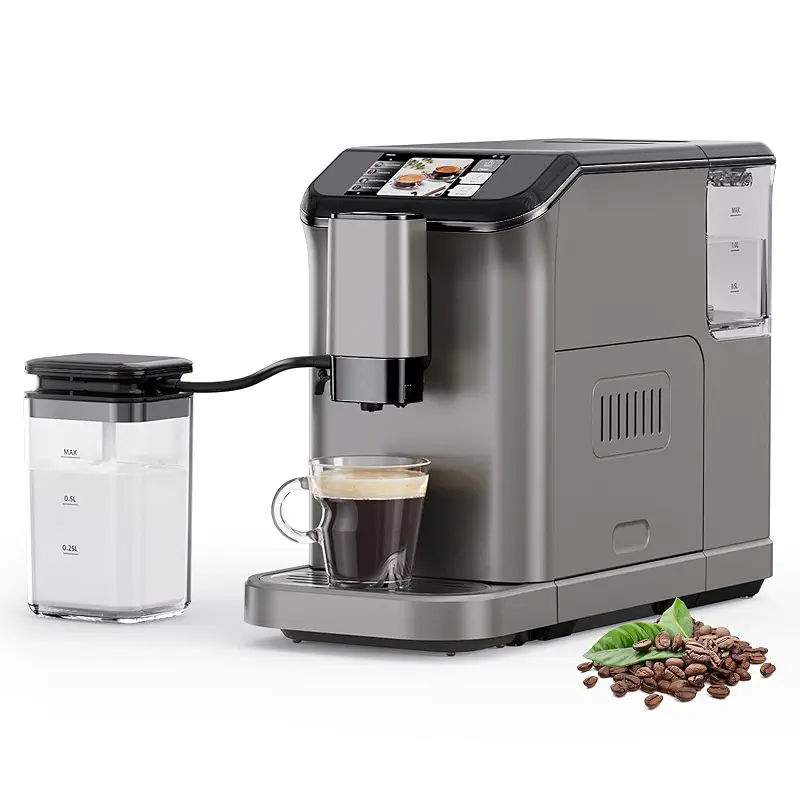
GarveeTech
Automatic Espresso Machine with 20 Bar Pressure – One-Touch Coffee Maker, Built-in Grinder & Milk Frother, 6 Custom Recipes, 1.5L Water Tank, Auto Self-Cleaning, 120V for Home & Office (Grey)
4.0(25)
Fully automatic one-touch operation with built-in grinder and frother; perfect for drinkers new to espresso.
The GarveeTech machine handles everything for you: grind, brew, and froth at the press of a button. That simplicity is both its strength and its main appeal. Owners who drink one or two cups a day consistently praise the compact footprint and the removable brew unit, which makes cleaning far less of a chore than pressurized baskets and gaskets that trap residue. One reviewer mentioned being able to impress coffee enthusiasts after dialing in the settings, which speaks to the machine's ability to produce quality shots despite its entry-level positioning.
The trade-off is customization. You cannot adjust brew temperature, and grind and water ratios have only a few preset options. Some buyers found this limiting, particularly those accustomed to pulling shots with more granular control. The milk frother also had reliability issues for at least one owner, stopping after a few weeks. Compared to the atatix machine, the GarveeTech sacrifices temperature control and manual extraction time for sheer ease of use, making it better suited to households that want café drinks without thinking about technique.
If you own an older machine or are upgrading from a pod system, this one won't demand much learning. The clear instructions and intuitive touch panel keep the barrier to entry low, though some of that convenience comes at the cost of the finesse that separates a good shot from a great one.
Pros
Fully automatic one-touch operation across 6 drink presets
Built-in conical burr grinder with adjustable coarseness
Removable brew unit simplifies cleaning and maintenance
Compact footprint suitable for tight kitchen spaces
Cons
No temperature adjustment; limited customization options
Milk frother durability concerns reported by some users
Key features
20-bar pressure system with automatic grind-and-brew cycle
Dual boiler design maintains separate brew and steam temperatures
1.5-liter water tank with removable tank for quick refills
Auto self-cleaning cycle with detachable brewing unit
Integrated conical burr grinder with 200-gram capacity
#2 Pick
Best Value for Espresso Enthusiasts
atatix
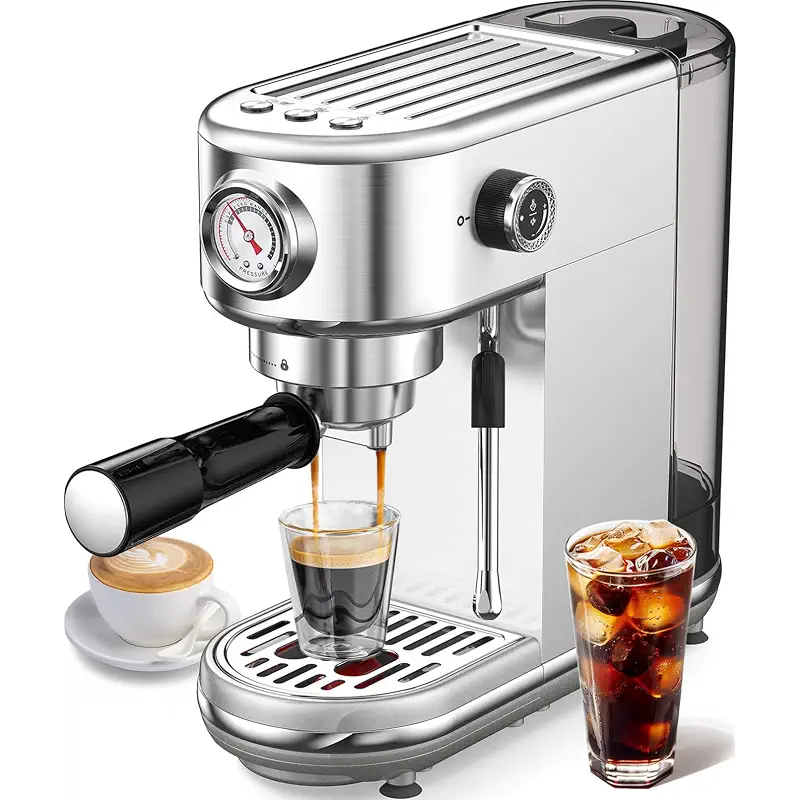
atatix Espresso Machine with Milk Frother, 20 Bar Pressure Espresso Maker
4.2(1,466)
Manual and automatic extraction modes with precision temperature control and excellent steam wand for serious shot work.
Ideal for: Home baristas with some espresso experience seeking dial-in flexibility and strong milk frothing.
The atatix strikes a thoughtful balance between simplicity and control. It offers both automatic 28-42 second shot modes and manual extraction up to 102 seconds, giving you room to dial in espresso exactly how you like it. The NTC temperature control system locks onto 90-96°C, which is the sweet spot for unlocking the subtle flavors in lighter and darker roasts without burning. Owners with prior espresso experience have reported dialing in their machines to pull some of the best shots they've ever tasted, and the rapid 30-second preheat time means less waiting in the morning.
The steam wand deserves its own mention. Reviewers consistently highlight the powerful, focused steam jet that produces dense, glossy microfoam suitable for latte art, not just hot milk. One buyer specifically noted the difference between weak steam and this machine's focused output. Unlike the Casabrews model, which some users found lacking in milk texture, the atatix frother performs reliably across different milk types. The compact size (smaller than many Keurig machines) and solid stainless-steel base with silicone feet keep vibration under control during extraction.
Owners do mention a learning curve if you're new to espresso; the manual adjustment and the need to dial in grind, tamp, and extraction time require some patience. First-time buyers should budget time for trial and error. But if you already grind your own coffee and want a machine that rewards technique, the atatix offers far more upside than the GarveeTech's preset buttons.
Pros
Manual and auto extraction modes for full shot control
NTC temperature precision locks 90-96°C for consistent flavor extraction
Ideal for: Daily espresso drinkers prioritizing reliability and value over advanced milk texturing.
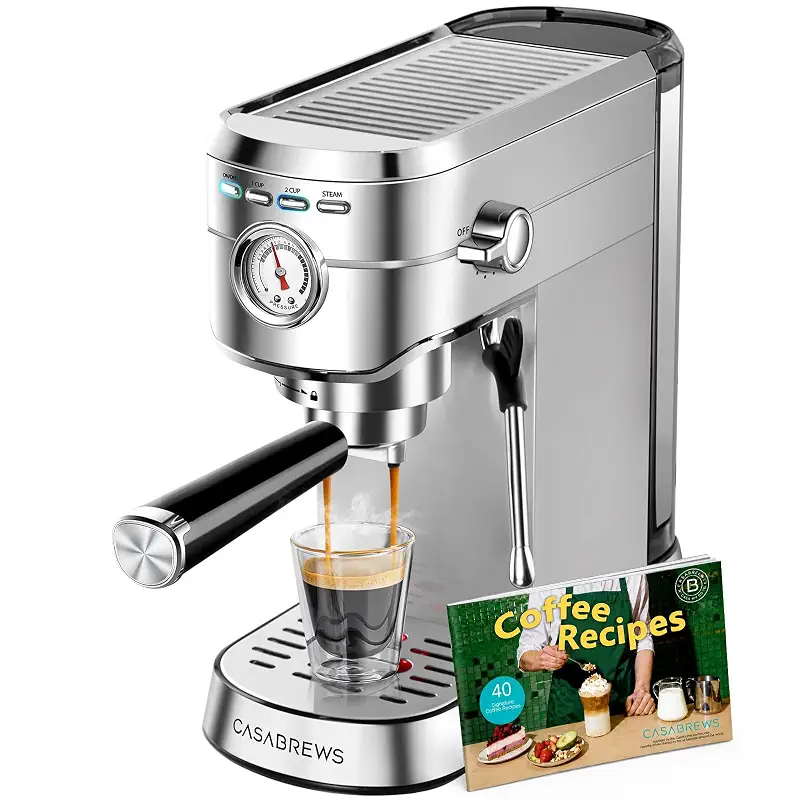
The Casabrews sits in that practical middle ground: semi-automatic (you control the shot length), but simple enough that beginners don't get lost. The built-in pressure gauge gives visual feedback on whether you're hitting the 9-10 bar sweet spot during extraction, removing guesswork that plagues many budget machines. Over 8,000 reviews creates a large owner base, and patterns in the feedback are reassuring. Owners consistently report good crema, quick heat-up, and machines still pulling quality shots after years of daily use. One owner with a 15-year-old Saeco noted that the Casabrews exceeded expectations at a fraction of the price.
However, the steam wand is a genuine weak point, particularly if you prioritize milk drinks. Multiple owners reported difficulty texturing milk and noted that the wand runs very hot without insulation, increasing burn risk. One detailed review described the wand as producing hot milk with little to no microfoam, forcing the reviewer to use a different machine's steam wand alongside the Casabrews espresso shots. If milk work is your priority, the atatix or Euhomy would be wiser picks. The machine also requires a cool-down period between milk steaming and espresso extraction, or it enters thermal protection and locks out. For households making multiple drinks back-to-back, this is a real friction point.
The build quality and pressure stability justify the reviews. Even users who upgraded internal components (portafilter, baskets) reported the base machine as solid and worth investing in. Casabrews customer service also earned praise for responsiveness well past warranty. If you're willing to work around the steam limitations, you get proven longevity and consistent espresso.
Consistent crema and rich flavor extraction reported by long-term owners
Stainless-steel construction with 8,000+ owner reviews confirming durability
Quick preheat and compact footprint suited to small kitchens
Cons
Steam wand struggles to produce dense microfoam; texturing milk is difficult
Requires cool-down period between milk steaming and espresso brewing
Key features
Semi-automatic 20-bar Italian pump with manual shot control
Built-in pressure gauge shows real-time bar reading during extraction
Powerful steam wand with manual control; rubber grip avoids hand scalding
Stainless-steel body resists rust; compact design fits tight counters
34-ounce water tank with detachable design for easy refilling
#4 Pick
Best Super-Automatic All-in-One
Euhomy
Automatic Espresso Machine, 20 Bar Coffee Maker with Grinder Built in Milk Frother, 15-Grind Settings Fully Automatic Espresso Machine with Touch Screen, Auto Self-Cleaning for Cappuccino & Latte | 20 Bar Coffee Maker, 15 Grind Settings, Touch Screen, Auto Self-Cleaning for Personalized Cappuccino and Latte
4.3(124)
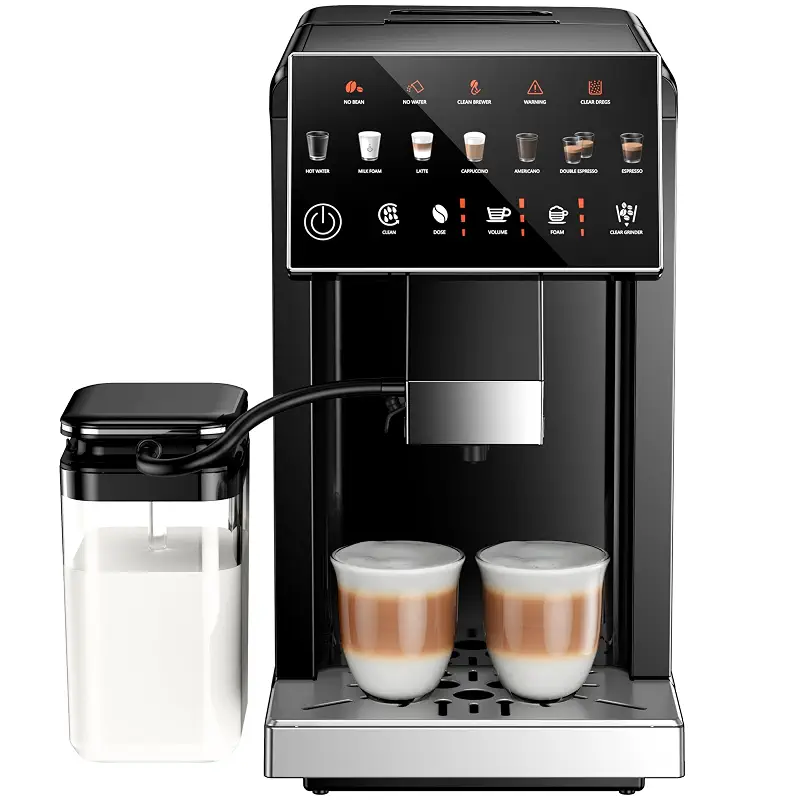
Touch-screen fully automatic espresso machine with integrated grinder, milk system, and self-cleaning; brew café drinks with minimal effort.
Ideal for: Busy households wanting café-quality milk drinks without manual steam technique or espresso knowledge.
The Euhomy goes further than the GarveeTech by adding a touchscreen interface, 15 grind adjustments, and an integrated automatic milk frothing system that steams and froths without a manual wand. You load beans, press a button, and milk-based drinks come out the spout. This is the convenience-first approach, and it appeals to households where someone wants a perfect cappuccino every time without learning steam technique. The 1.5-liter water tank and 200-gram bean hopper accommodate multiple drinks before refilling. Auto self-cleaning and one-touch bean purge reduce weekly maintenance friction.
The buyer feedback reveals some gaps. The milk system is less nuanced than a manual steam wand: reviewers praised the foam quality but noted it cannot match the velvety microfoam texturing that baristas achieve with hands-on control. The touchscreen is intuitive, but the machine delivers fixed drink profiles, not the shot-by-shot customization you'd get with the atatix. One owner mentioned the frother spins too fast, spilling milk if you're not careful. Additionally, the feature set is broader than the competition, which sometimes works against users new to espresso who simply want a shot and a steamed pitcher, not a menu of preset drinks.
Compared to the Casabrews model, which gives you semi-automatic control, the Euhomy prioritizes speed and simplicity over hands-on involvement. This trade-off works well if your household values consistency and ease; it's less appealing if you enjoy adjusting extraction time or experimenting with different roasts.
Pros
Fully automatic with integrated grinder, brew, and milk frothing system
15-grind adjustments plus touchscreen for customized drink volumes
Auto self-cleaning cycle and one-touch bean purge simplify maintenance
1.5-liter water tank and large bean hopper reduce refill frequency
Cons
Automatic milk system produces less textured microfoam than manual steam wands
Ideal for: Espresso purists seeking ceramic-grinder precision and reliable automation in a proven European brand.
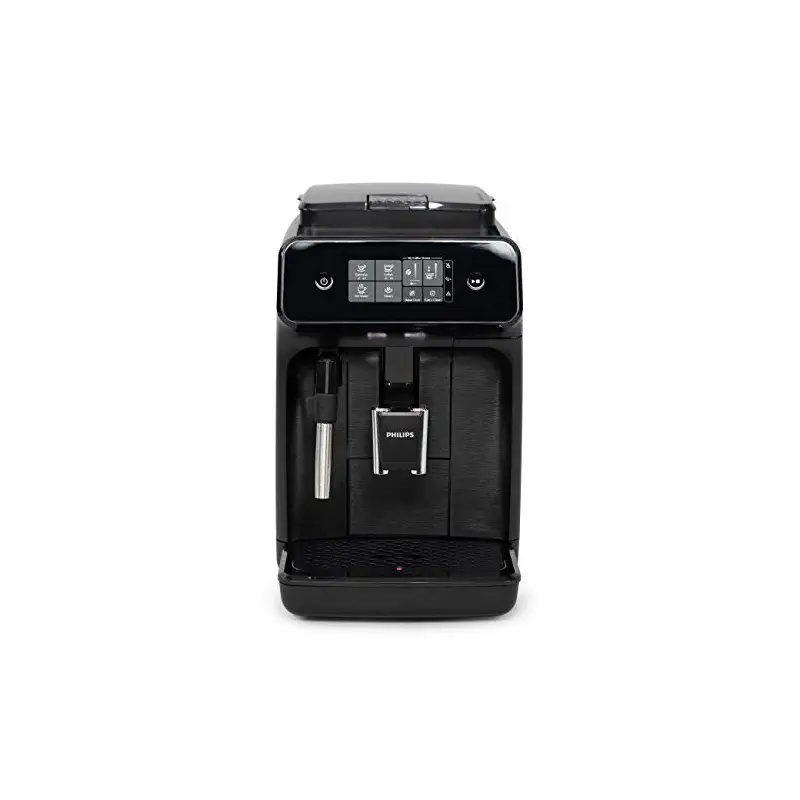
The Philips 1200 Series represents the intersection of automation and European engineering. The 100% ceramic grinders (rated for 20,000+ cups) grind fresher than blade grinders and more precisely than many budget burr systems. The 12-step adjustment range covers everything from ultra-fine espresso powder to coarser grinds, and the touch display lets you select drink type and strength with clarity. Owners consistently note that, once you dial in your preferred settings, the machine delivers consistent shots day after day. One owner with both a Saeco and a DeLongi reported the Philips as more reliable than either.
The learning curve is real. Philips doesn't include the full manual with refurbished units, so first-time owners need to find documentation online. The grinder is also loud: owners who have early sleepers in the household flagged this as a deal-breaker. And unlike the Casabrews, which shows pressure with a gauge, or the atatix, which gives manual control, the Philips commits you to preset profiles. Milk frothing works, but it's the simpler "classic" design that dispenses steam; owners report it can frost milk adequately for cappuccinos, though it doesn't match the microfoam artistry of a dedicated steam wand. The refurbished status is also a consideration. While most units arrived in excellent condition, at least one user received a machine that failed after two uses, highlighting the gamble inherent in buying renewed appliances.
Compared to the Euhomy, the Philips leans more toward espresso quality and less toward automated milk. It's a better choice if you already appreciate grind finesse and want a hands-off brewmaster; it's less ideal if milk drinks are your daily focus.
Pros
100% ceramic grinders rated for 20,000+ cups; extremely durable and precise
12-step grind adjustment allows fine-tuning for different roasts
Touch display with customizable strength and cup-size settings
Proven reliability across multiple generations; low failure rates reported
Cons
Loud grinding noise; early risers or noise-sensitive households may struggle
Refurbished units lack full manual; requires online documentation lookup
Key features
100% ceramic grinders adjustable in 12 steps for espresso to drip fineness
Intuitive touch display with My Coffee Choice customization
Durable build rated for 20,000+ cups before grinder wear
Adjustable coffee spout height accommodates different cup sizes
How to Choose an Automatic Espresso Machine Under 500
Four trade-offs that actually matter when matching a automatic espresso machine under 500 to your kitchen.
Decide Your Level of Control
Fully automatic machines (GarveeTech, Euhomy, Philips) grind, brew, and sometimes froth with one or two button presses: ideal if you want café drinks without technique. Semi-automatic models (Casabrews) and hybrid machines (atatix) hand you shot-length control; you pull a lever or press a button to start and stop extraction. This trade-off matters: more buttons mean more learning, but also more ability to dial in subtle flavors. Espresso enthusiasts typically prefer the flexibility, while busy households benefit from one-touch convenience. Grinder options for espresso vary too. Built-in grinders on fully automatic units do the work for you; standalone machines force you to own a separate grinder, but that choice also lets you upgrade to a higher-end one later.
Steam Wand Strength and Milk Frothing
If milk drinks (lattes, cappuccinos) are daily staples, the steam wand matters as much as the pump pressure. Manual steam wands (atatix, Casabrews) let skilled users produce dense microfoam and latte art, but they come with a learning curve. Automated systems (Euhomy, GarveeTech) bypass the learning curve but deliver milk texture that is adequate rather than artisanal. The Casabrews steam wand, while powerful on paper, frustrated owners seeking velvety microfoam. The atatix, by contrast, earned specific praise for producing thick, glossy foam. If you're unsure about your milk-frothing needs, a milk frothing technique guide can help you assess whether you care about texture nuance or just want hot, foamed milk, context that matters when narrowing down espresso machine under 300 picks to those with capable steam wands. Budget an extra 10–15 minutes into your mornings if you choose manual steam; it's faster than you'd think once you develop feel, but the first week demands practice.
Size, Counter Space, and Water Tank Capacity
Espresso machines come in two shapes: tall and narrow (most models) or compact and short (Casabrews, atatix). Measure your counter space and cabinet clearance before ordering. A 34-ounce tank (Casabrews) refills more often than a 44-ounce tank (atatix) if you're making multiple drinks or entertaining. However, a smaller footprint might justify more-frequent refilling if your kitchen is tight. Heavy machines (semi-automatics with solid bases) resist vibration and cup-shake during extraction; lighter fully automatic models may require you to hold the portafilter steady. If your household drinks multiple espresso-based drinks per session, opt for a larger tank or budget a refill mid-morning.
Pressure Gauge, Temperature Control, and Consistency
The 20-bar pumps in all five models deliver adequate pressure, but how that pressure is maintained and monitored differs. A built-in pressure gauge (Casabrews) shows you real-time bar reading; a stable pressure system (atatix) locks temperature and pressure without a gauge; fully automatic machines (Euhomy, Philips, GarveeTech) hide all that complexity behind presets. Temperature precision (atatix's NTC system locks 90–96°C) ensures that espresso flavor is accurate every shot. Machines without temperature control (GarveeTech) accept the brewing water temperature the boiler reaches, which can vary slightly. If you're using different roasts or water temperatures at different times of day, temperature control is a feature worth the extra investment.
Maintenance, Self-Cleaning, and Build Longevity
Fully automatic models (Euhomy, Philips, GarveeTech) simplify cleaning with auto self-cleaning cycles and removable brew units. Semi-automatics (Casabrews) require more hands-on cleaning of the group head and portafilter, but that transparency also means fewer hidden failures. Descaling and routine maintenance are necessary for all models; machines with accessible internals (removable brew units, detachable water tanks) cost less to maintain if parts need replacing. The Casabrews and atatix have strong owner reports of machines running reliably for years with proper care. Refurbished units (Philips) are gambles; while most arrive flawless, at least one buyer received a failed unit. If you buy refurbished, ensure the return window is long and the warranty or guarantee is clear.
Frequently asked
Quick answers to the questions readers ask most.
Do I need a separate grinder, or should I choose a machine with a built-in grinder?
Built-in grinders (GarveeTech, Euhomy, Philips) simplify setup and save counter space; they're fine for most home users. Separate grinders offer more grind precision and let you upgrade the grinder without replacing the whole machine, but they cost extra and take up room. If you're new to espresso, a built-in grinder is more convenient. If you plan to experiment with different roasts or already own a quality burr grinder, a machine without one (Casabrews, atatix) keeps costs down and lets you use your existing grinder.
What is the difference between semi-automatic and fully automatic espresso machines?
Semi-automatic machines (Casabrews, atatix) require you to push a button to start extraction and release it to stop; you control shot length. Fully automatic machines (GarveeTech, Euhomy, Philips) brew a preset amount at the push of a single button. Semi-automatics demand more attention and technique but reward customization. Fully automatics are faster and more convenient but offer less flexibility. Beginners often prefer fully automatic; enthusiasts gravitate toward semi-automatic for dial-in control.
How loud are automatic espresso machines?
Machines with integrated grinders (GarveeTech, Euhomy, Philips) are notably loud during the grind cycle: some owners specifically flagged the Philips as potentially waking sleeping household members. Semi-automatics without grinders (Casabrews, atatix) are quieter during extraction but still produce noise from the pump. Steam wand noise varies; the Casabrews was noted as loud during frothing. If noise is a concern, semi-automatic machines or hand-ground espresso are quieter options.
Can I make milk-based drinks on all of these machines?
Yes, all five have milk frothing, but the quality and ease vary. Manual steam wands (atatix, Casabrews) produce better microfoam for latte art but require practice. Automated systems (Euhomy, GarveeTech, Philips) froth milk quickly with minimal skill, though the texture is less nuanced. If milk drinks are important to you, the atatix steam wand received the most praise for producing silky, professional-quality foam.
How often do I need to clean and descale an automatic espresso machine?
Daily: empty the drip tray and run water through the group head to rinse espresso residue. Weekly: clean the portafilter and baskets thoroughly, and purge the steam wand (run steam briefly into a cup, then water). Monthly: run the machine's self-cleaning cycle if equipped (GarveeTech, Euhomy) or back-flush the group head with a blind basket (Casabrews, atatix). Every 2–3 months: descale with a descaling solution to remove mineral buildup. Machines with removable brew units (GarveeTech) are easier to maintain than models with complex internal gaskets.