Best Espresso Machine Under 300: Top Picks for Home Brewing
Find the best espresso machine under 300 for your kitchen. Compare compact 20-bar models with steam wands ideal for lattes, cappuccinos, and home baristas.
Ideal for: First-time espresso buyers who want proven reliability and strong long-term value without unnecessary complexity.
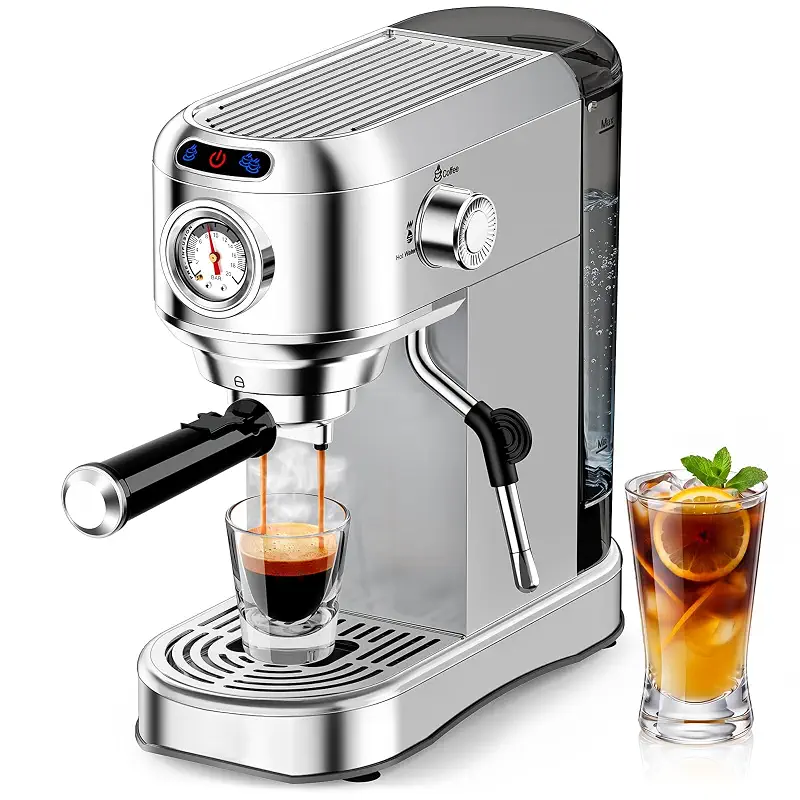
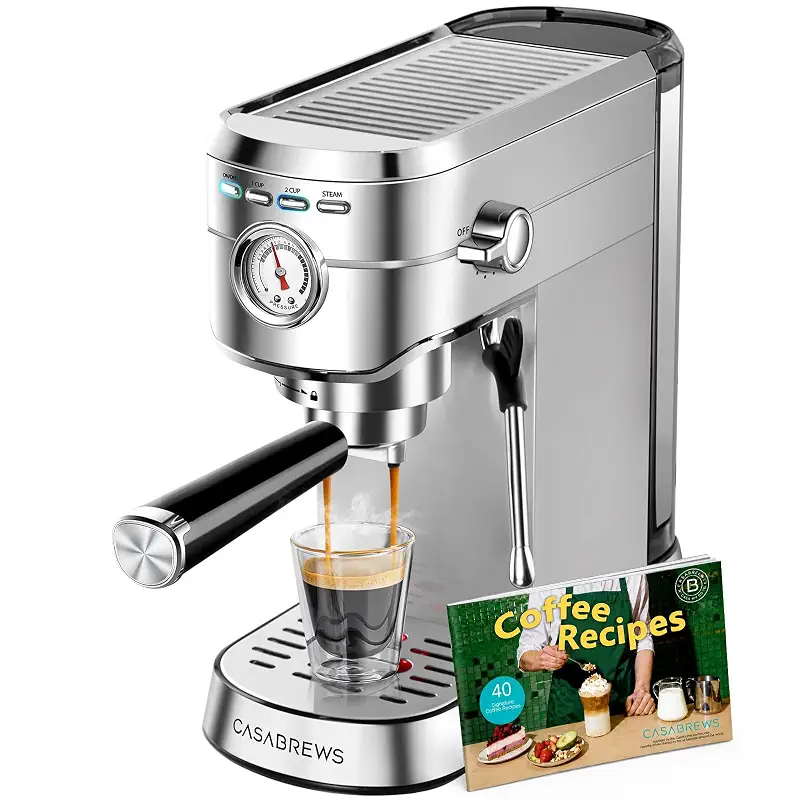
The Casabrews Compact stands out because it does the fundamentals well without overcomplicating things. The 20-bar pump delivers genuine extraction pressure, and the built-in pressure gauge gives you real feedback on what's happening inside the machine. Most owners report excellent crema on their first try, even with store-bought pre-ground espresso, which matters if you're not investing in a grinder yet, or in an espresso dosing funnel to keep counter spills contained when you do.
Where this machine earns its reputation is longevity and customer support. Buyers who've owned one for a year or more report it still heats quickly and maintains consistent pressure. If something does go wrong, Casabrews responds to support requests and sends replacements without dragging out the process. The 34-ounce water tank is large enough that you won't refill it constantly during a morning routine.
The steam wand works adequately for milk drinks, though a handful of owners found it takes practice to dial in smooth microfoam: it's not as forgiving as higher-end models. Also note the cooling-down requirement after steaming; the machine goes into overheat protection if you try to pull another shot right after frothing milk. That's a real limitation if you're making back-to-back drinks for multiple people.
Pros
Consistent crema with pre-ground and freshly ground coffee
Responsive customer service with fast replacements
Heats up quickly and maintains steady pressure
Compact footprint fits tight kitchen counters
Cons
Steam wand has a learning curve for quality milk texture
Requires cooldown between steaming and pulling shots
Key features
20-bar pressure pump with built-in pressure gauge for shot monitoring
Removable 34oz water tank with quick heating thermoblock design
Powerful steam wand for cappuccinos and lattes
Includes single and double shot baskets with portafilter
#2 Pick
Best for Beginners
atatix
atatix Espresso Machine with Milk Frother, 20 Bar Pressure Espresso Maker
4.2(1,466)
Auto and manual extraction modes make this forgiving for first-timers while still pulling professional-grade espresso.
Ideal for: Espresso newcomers who want foolproof buttons and automatic timing to build skills without constant manual adjustments.
The atatix machine brings something useful to the budget segment: both automatic and manual extraction modes. If you set it to auto, it pulls a timed single or double shot with no guesswork: hit the button and it stops itself at 28 or 42 seconds. Manual mode lets you dial in extraction time up to 102 seconds if you want to experiment and learn. That dual approach is exactly what a beginner needs to build confidence without feeling overwhelmed.
The precision temperature control system targets 90–96°C and locks on in 30 seconds, which matters more than casual reviewers might think. Inconsistent temperature is what makes espresso taste thin or bitter. Owners report rich flavor and smooth crema even on their first pull, and the steam wand produces dense, glossy microfoam for latte art. The 44-ounce water tank is larger than most in this price tier, reducing refill frequency.
Compare this to the Casabrews Compact, and the atatix trades the pressure gauge display for faster preheating and more foolproof operation. Where Casabrews appeals to hands-on adjusters, atatix hands you a working recipe upfront. Some first-time buyers noted the instruction manual could be clearer, and a few mentioned the machine vibrates during brewing: manageable but worth knowing if noise bothers you.
Pros
Auto mode with preset shot times removes guesswork
Heats to brewing temperature in under 30 seconds
Temperature control produces consistent, balanced extraction
Ideal for: Kitchen-limited households prioritizing minimal counter footprint over maximum durability certainty.
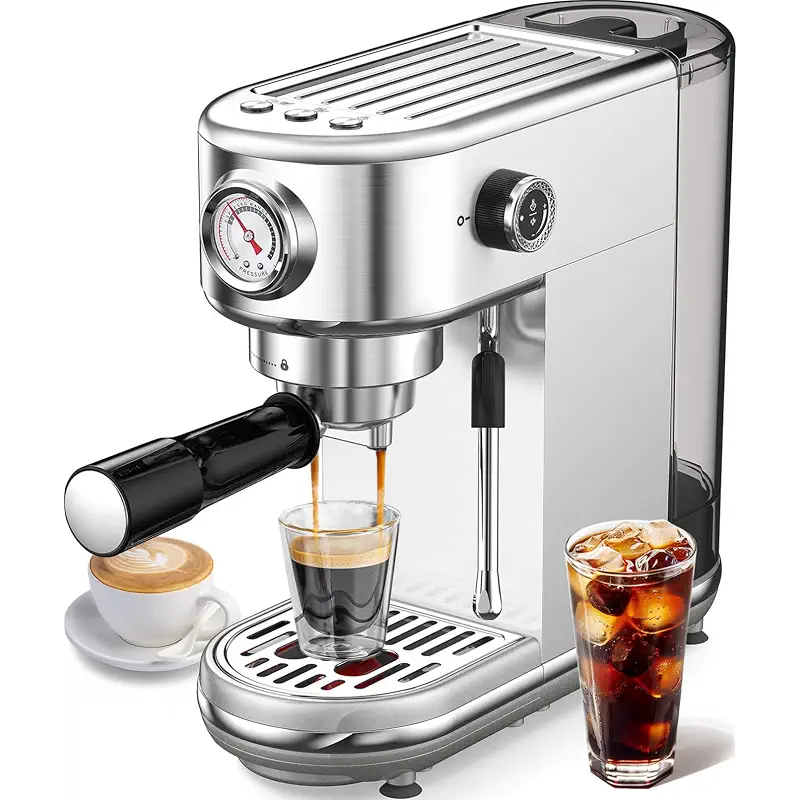
The Aercana machine is built for kitchens where counter space is genuinely tight. At roughly A4-paper size (5.3×12.2×11.5 inches), it sits smaller than most coffee makers while still delivering 20-bar pressure and a 1450-watt boiler that heats in about 20 seconds. The LED display shows temperature, and the pressure gauge lets you watch extraction in real time. Many owners love the sleek stainless steel look and compact form factor.
Where the Aercana gets complicated is material composition. One early reviewer received a unit where the body appeared plastic rather than stainless steel, creating immediate disappointment about durability. Other owners report sturdy build and long-term reliability, so this may be a QC variance rather than a design flaw. The steam wand produces quality microfoam, and the removable 34-ounce water tank is easy to refill.
Compared to the Neretva Super, which also targets small kitchens, the Aercana heats slightly faster (20 seconds versus 30 seconds) but has fewer total reviews to validate long-term durability. If counter space is your primary constraint and you're willing to accept some uncertainty about build materials, the compact footprint is genuinely valuable.
Pros
Smallest footprint among budget 20-bar machines under 300
Rapid 20-second preheat saves time on busy mornings
Clean stainless steel aesthetic on compact base
Pressure gauge and temperature display for shot monitoring
Cons
Mixed reports on material composition and build consistency
No milk pitcher included in box
Key features
20-bar pump with 1450W fast heating system reaching brew temp in 20 seconds
LED temperature display and visible pressure gauge for extraction feedback
Powerful steam wand for microfoam and latte art
A4-sized footprint with removable 34oz water tank
#4 Pick
Best for Learning and Latte Art
Neretva
Neretva 20 Bar Espresso Machine Super Compact Espresso Coffee Machine | Professional Stainless Steel Espresso Maker with LED Display and Powerful Steam for Home Baristas to Make Latte, Cappuccino
4.4(1,306)
Digital temperature display and pre-infusion function make dialing in shots easier; excellent support elevates confidence.
Ideal for: Home baristas willing to study technique who want precision feedback and pre-infusion to master shot dialing and milk art.
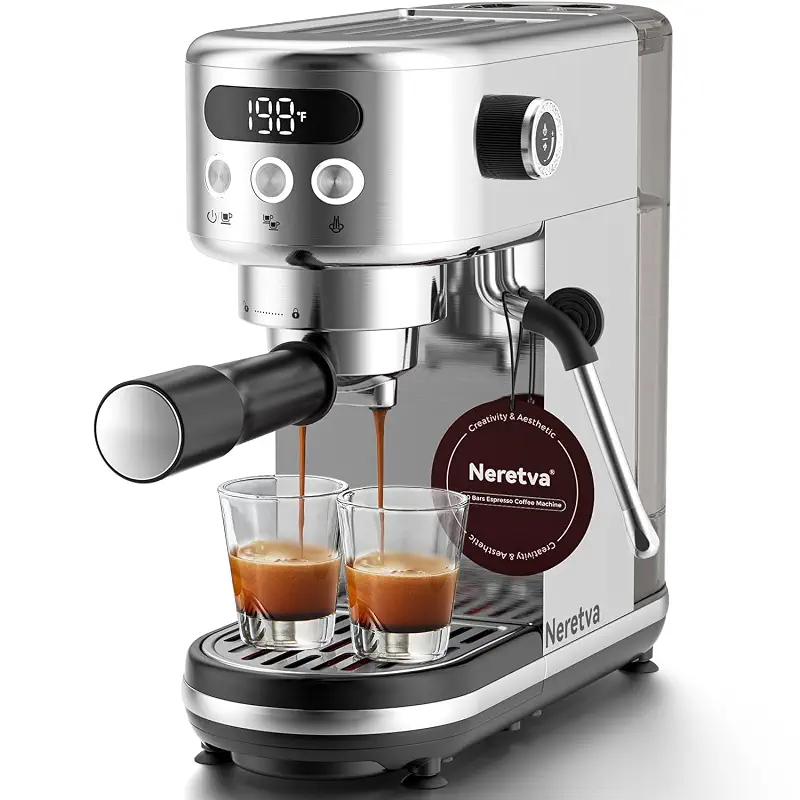
The Neretva 20 Bar brings features typically found on machines double the price: a digital temperature display that shows exact heat status, and a pre-infusion function that gradually ramps pressure instead of slamming the coffee puck all at once. That gentler start reduces channeling (air pockets that ruin extraction) and helps new baristas achieve balanced shots more consistently. Owners who studied the manual and watched YouTube videos report café-quality espresso by their third or fourth attempt.
The powerful steam wand creates velvety microfoam that lends itself to latte art, and the compact design fits snugly on any counter. Neretva's customer service is notably responsive: multiple buyers mentioned getting replies within hours and replacements shipped quickly. The machine does vibrate during extraction and runs loud, which some owners find annoying but others accept as normal for this price tier.
Where Neretva edges the Casabrews Compact is the pre-infusion and temperature monitoring, which reduce the learning curve for shot dialing. Where the atatix Beginner model has automatic buttons, Neretva requires more hands-on involvement but rewards that involvement with finer control. If you're serious about learning espresso technique and want real feedback from the machine, Neretva's $100 price tag represents strong value.
Pros
Digital temperature display shows exact brewing heat status
Pre-infusion function reduces air bubbles for balanced extraction
Responsive customer service with documented fast replacements
Excellent crema and microfoam for latte art practice
Cons
Noticeable vibration and noise during extraction cycle
Requires manual temperature management between brewing and steaming
Key features
20-bar pump with low-pressure pre-infusion for even coffee saturation
Digital temperature monitor showing precise brew and steam status
Powerful steam wand for dense, glossy microfoam ideal for latte art
Compact super-portable design with suction-cup base for counter grip
#5 Pick
Best Large Water Tank
Casabrews
CASABREWS 3700 Essential Stainless Steel Espresso Machine with Steam Wand | 20-Bar Italian Pump, Powerful Steam Wand, 43.9oz Removable Water Tank, Compact Espresso Maker for Home, Cappuccino & Latte
4.3(3,627)
43.9-ounce reservoir and proven long-term durability make this ideal for households making multiple drinks daily.
Ideal for: Multi-drink households needing larger water capacity and proven long-term reliability for daily heavy use.
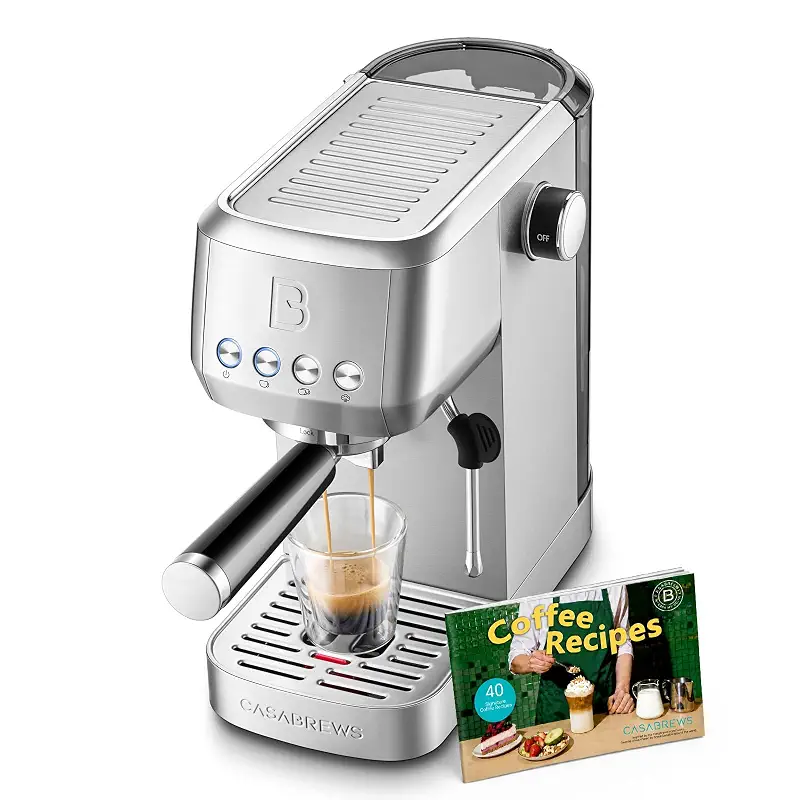
The Casabrews 3700 Essential holds the largest water tank in this lineup at 43.9 ounces, which genuinely matters if you're making espresso drinks for two people or pulling back-to-back shots throughout the day. A full tank supports multiple cappuccinos or lattes without refilling, and the detachable design makes cleaning straightforward. The stainless steel construction feels solid (no rattling or hollow areas) and owners who've run this machine hard report it stays consistent after months or even years of daily use.
The 20-bar pressure system and steam wand perform reliably, though one long-term owner noted the machine prefers a slightly coarser grind than traditional espresso and can be sensitive to tamping pressure. That trade-off means easier operation for casual users but less room for fine-tuning if you want to experiment with extraction variables. The steam control dial has been flagged by one reviewer as gradually shifting position during extraction, which could affect pressure stability, something worth monitoring on first use.
Compared to the Neretva, which prioritizes compact size and precise temperature display, the 3700 Essential prioritizes large-capacity brewing and proven durability. If your kitchen has room and you're making multiple drinks daily, the larger tank and heavier construction justify choosing this over smaller rivals.
Pros
Largest water tank at 43.9oz reduces refill frequency significantly
Stainless steel build feels solid and resists plastic creep
Proven durability across multiple years of daily use
Powerful steam wand for quality milk texture and foam
Cons
Less precise temperature feedback than some competitors
Sensitive to grind size; prefers coarser grounds than traditional espresso
Key features
20-bar pump with 1350W heating and 43.9oz removable water tank
Stainless steel construction with cup warmer on top deck
Powerful steam wand for microfoam cappuccinos and lattes
Includes single and double shot baskets plus tamper and spoon
How to Choose an Espresso Machine Under 300
Four trade-offs that actually matter when matching a espresso machine under 300 to your kitchen.
Water Tank Size and Refill Frequency
Tank capacity ranges from 34 ounces (Casabrews Compact, Aercana, Neretva) to 44 ounces (atatix) and 43.9 ounces (Casabrews 3700). If you're making a single shot for yourself, 34 ounces is fine: enough for preheating, one or two pulls, and steaming milk. If you're making drinks for two people or pulling multiple shots back-to-back, the larger reservoirs on atatix and Casabrews 3700 reduce the annoyance of constant refilling. Consider your morning routine: are you the only coffee drinker, or are you serving others regularly?
Grind Size and Flexibility
Budget machines under 300 vary in how forgiving they are with coffee texture. Most handle pre-ground espresso adequately if you're using what the grocery store offers. For freshly ground beans, finer grinds (traditional espresso texture) work better on machines like Neretva and atatix, while some users found Casabrews 3700 prefers slightly coarser grounds. If you already own a burr grinder and like experimenting, prioritize machines with more pressure feedback (visible gauge, temperature display). If you're new to grinding coffee, models with automatic extraction modes like atatix remove that variable entirely.
Milk Frothing and Steaming
All five machines have steam wands, but they vary in power and learning curve. The Neretva and atatix produce dense, velvety microfoam ideal for latte art with practice. Casabrews models froth adequately for everyday lattes and cappuccinos but take more deliberate technique to achieve silky texture. Aercana sits in the middle. If milk drinks are your main goal, prioritize models with powerful steam output and built-in guides. A separate milk pitcher with an electric frother (purchased separately) can reduce the learning curve: several experienced reviewers mentioned this workaround. Regardless of machine choice, understand that milk frothing with steam wand requires practice and patience; expect a week or two before your foam looks café-quality.
Counter Space and Noise
Espresso machines under 300 are compact relative to full-size drip brewers, but compactness varies. Aercana and Neretva prioritize minimal footprint, roughly the size of a Keurig. Casabrews models and atatix are slightly larger but still modest. All make noise during extraction (a loud pump whine followed by a hum) which typically lasts 20–30 seconds per shot. If noise sensitivity is high, these budget models won't be silent, but they're quieter than commercial espresso bars. Test noise tolerance by watching unboxing videos on YouTube before committing.
Customer Support and Warranty
Responsiveness varies by brand. Casabrews and Neretva both receive praise for answering support questions quickly and shipping replacements when needed, even beyond warranty periods. atatix similarly responds within 24 hours. These practices matter because a machine arriving defective or failing within the first month is less heartbreaking if the seller handles it smoothly. Check return policies before purchase: most offer 30-day returns through Amazon, but direct brand support can smooth out edge cases. When reading reviews, look for mentions of how the company handled problems, not just product performance.
Frequently asked
Quick answers to the questions readers ask most.
What does 20-bar pressure actually mean for espresso extraction?
Espresso machine bar pressure explained refers to the force pushing hot water through packed coffee grounds. True espresso extraction needs roughly 9–10 bar of actual pressure at the coffee puck; 20 bar is the pump's maximum output, but the machine regulates down to the working pressure. All five machines here claim 20 bar, meaning they all have sufficient pump capacity to pull good shots if the grind and tamping are dialed correctly. Higher bar numbers don't guarantee better espresso: consistency and temperature matter more.
Can I make decent espresso without a grinder?
Yes, all five machines can work with pre-ground espresso from the grocery store, especially if you use the pressurized baskets that come included. Pressurized baskets compensate for inconsistent grind texture by forcing water through at higher pressure. However, freshly ground beans (ground within hours of brewing) produce noticeably richer flavor and better crema. If espresso becomes a daily habit, investing in a budget burr grinder ($40–80) usually pays off in taste quality within a month.
How long does it take to heat up and make a drink from cold start?
Most models preheat in 20–30 seconds and pull a shot in another 25–40 seconds, so 1–2 minutes total from power-on to cup. Aercana reaches brew temperature fastest at 20 seconds. Casabrews Compact and Casabrews 3700 take slightly longer but remain under 30 seconds. This speed is one of the big advantages over stovetop Moka pots or pour-over methods. If you're making multiple drinks in succession, the machine stays hot, so subsequent shots are ready within seconds.
Do I need to do anything special when the machine arrives?
Yes. Remove any plastic protective plugs from the water tank base (especially Casabrews models: this is flagged in manuals). Run a full tank of water through the group head and steam wand with no coffee grounds to flush out manufacturing residue and plastic smell. Follow the manual's preheating steps. Many first-time users skip this step and report plastic taste in their first shot, which disappears after a flush cycle. This takes about 5 minutes and is non-negotiable.
What's the difference between milk frothing with steam wand and a separate milk frother?
Milk frothing with steam wand steams and froths milk in one pitcher using the machine's steam wand: faster and requires only the machine, but has a learning curve to avoid scalding milk or creating big bubbles. A separate electric frother heats and froths milk away from the machine, removing that learning curve and letting you focus on pulling espresso shots. Most reviewers of budget machines recommend learning the steam wand eventually (it's a useful skill), but a separate frother under $30 on Amazon makes your first week of milk drinks much less frustrating.