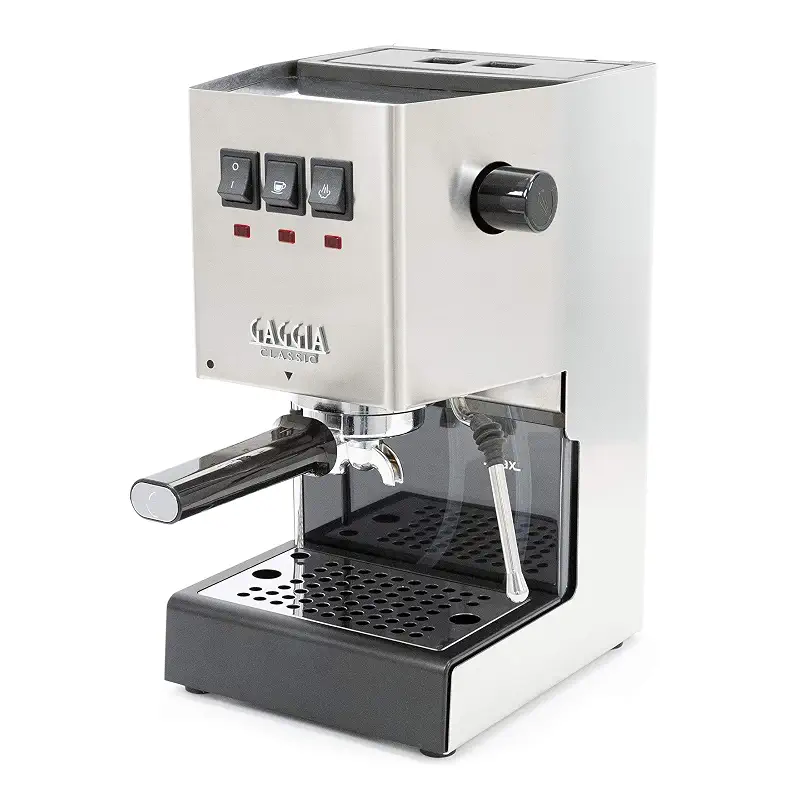
Ideal for: Home espresso enthusiasts willing to learn manual technique and dial-in their own shots.
The E24 sits at the sweet spot between accessibility and capability. It pulls 9-bar espresso through a commercial 58mm portafilter and three-way solenoid valve, which means you get the kind of pressure consistency and milk-steaming power that separates café-quality results from rushed mornings. What I appreciate from what owners report is that the machine doesn't hide its learning curve behind automation; instead, it makes every element visible and adjustable. You'll develop real skills here, and that pays dividends over time.
The Italian-made stainless steel construction and pump-mounted setup are built to last if you use filtered water and clean regularly. Owners report that descaling and basic maintenance feel straightforward, and there's a massive YouTube community documenting every adjustment and troubleshooting step. The commercial steam wand produces solid microfoam once you dial in the technique, though it does require attention; unlike some machines, you can't just forget it's running.
This model makes more sense than fully automatic machines if you value control and consistency. Compared to the Anima, you're trading push-button convenience for hands-on involvement and significantly better espresso flexibility. The trade-off is a steeper learning curve if you're new to espresso; budget a few weeks to stop pulling sour or bitter shots. If you're willing to invest that time, the shots speak for themselves.
Pros
Commercial 58mm portafilter with interchangeable baskets for flexibility
9-bar pump extraction produces rich crema and complex flavors
Italian-made stainless steel body designed for long-term durability
Three-way solenoid valve enables true steam and pressure control
Cons
Steep learning curve for temperature surfing and shot timing
Requires consistent maintenance and filtered water to avoid scale buildup
Key features
9-bar pump pressure system with three-way solenoid valve
Commercial stainless-steel 58mm portafilter and dual baskets
Commercial steam wand for milk texturing and microfoam
Made in Italy with durable heavy-gauge housing
Pressurized basket option for pre-ground coffee or ESE pods
Ideal for: Office workers and busy households who want espresso and milk drinks ready in seconds, every day.
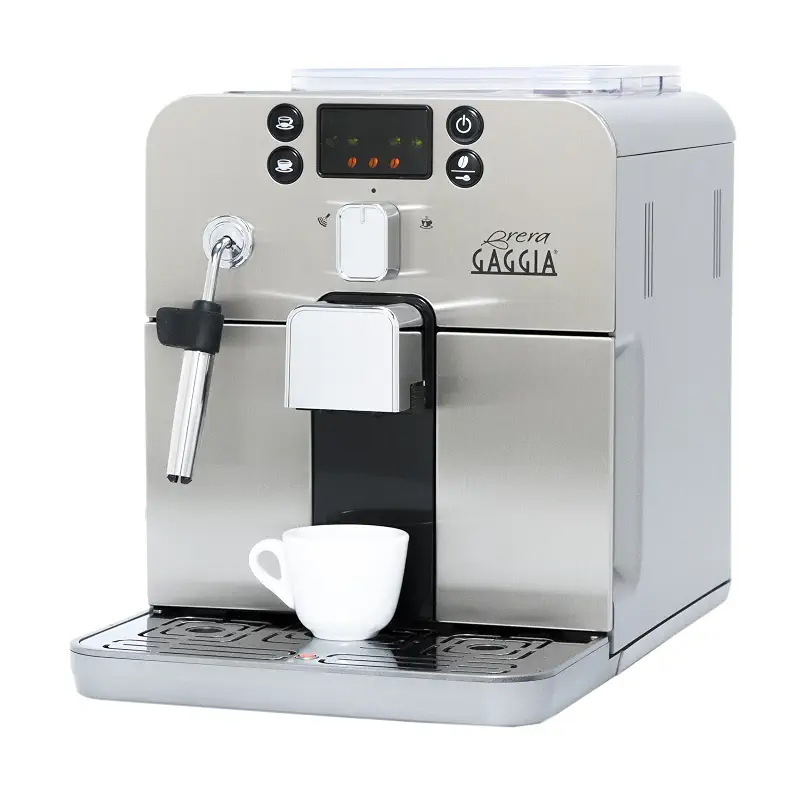
The Brera is Gaggia's answer to people who want café-quality drinks without the barista homework. It grinds, doses, tamps, brews, and froths milk all on command: hit a button, wait 30 seconds, enjoy. The super-automatic approach means no channeling risk, no temperature surfing, and no portafilter wrestling. What owners consistently praise is how fast the machine heats up and how little space it claims on a counter. The Pannarello wand injects air directly into milk, which simplifies frothing compared to manual wands and produces decent microfoam for lattes and cappuccinos.
The bean hopper is limited to 250 grams, and the water tank to 40 ounces, which matters if you're brewing for a household of more than two people. But if it's just you and a partner, the daily routine becomes remarkably friction-free. I'd note that programmable settings give you some control over extraction length and grind size, so you're not entirely locked out of dialing in your preferences.
Where the Brera differs from the E24 is philosophy: this machine prioritizes consistency and speed over control. You can't pull a double ristretto followed immediately by a lungo the way you might with a manual machine. If you're comparing this to the Accademia, the Brera costs less and takes up less space, but the Accademia offers 19 drink presets and touchscreen customization: a trade-off between simplicity and options.
Pros
One-button operation with programmable shot length and strength
Fast heat-up time and compact footprint under nine inches wide
Pannarello steam wand simplifies milk frothing for lattes and cappuccinos
Accessible bean hopper and water tank for quick refilling and cleaning
Cons
Small bean and water capacity suitable only for one to two users per day
Heavier roasted and oily beans can clog the automatic grinder mechanism
Key features
Fully automatic bean-to-cup grinding and espresso extraction
Programmable shot volume, strength, and pre-infusion settings
Pannarello steam wand for milk frothing and hot water dispensing
Ideal for: Patient learners who enjoy tinkering and want a platform for hands-on espresso skill development.
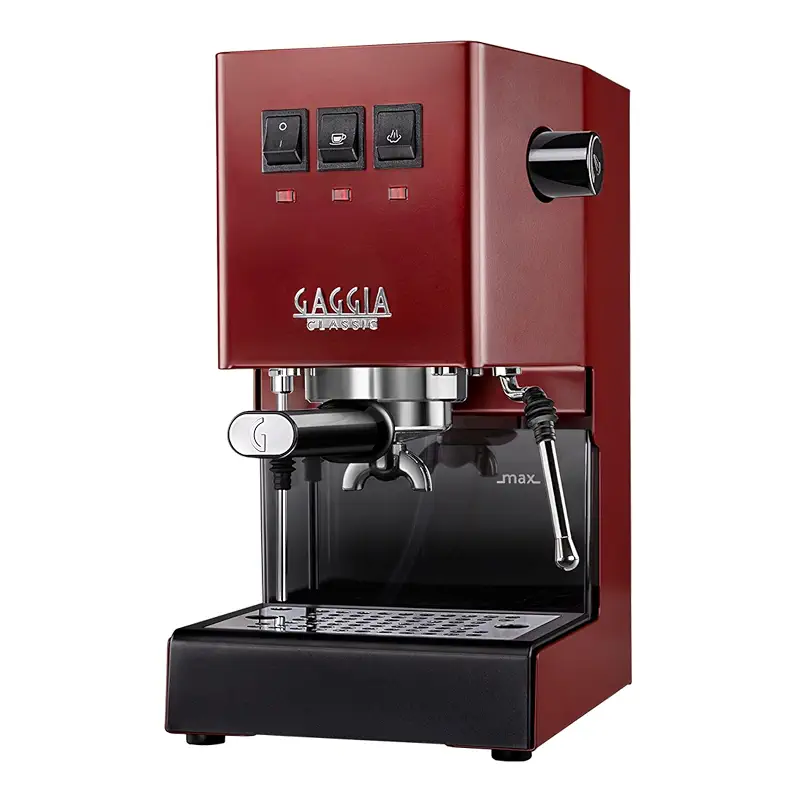
The Classic Pro carries forward the same solenoid valve and 58mm portafilter DNA as the E24, but with a modern red or stainless finish and a few quieter pump refinements. This is a machine that rewards technique and patience. The cherry-red model has become something of a cult favorite among espresso communities online, and for good reason: it produces excellent shots and sits at a price point that doesn't force you to compromise on core features. You get the commercial steam wand, the three-way solenoid, the solid Italian housing.
However, owners note that the learning curve is real. Pre-heating often takes 30 minutes or longer (a practice called temperature surfing), and the first few weeks involve pulling sour or bitter shots while you dial in grind size, tamp pressure, and timing. The steam knob placement at the side takes some getting used to if you're coming from other machines. Some users report that portafilter insertion feels oddly tight until the machine breaks in. These are quirks, not flaws, but they matter if you're impatient. Pairing the Classic Pro with an espresso grinder under 200 keeps your total investment reasonable while letting you dial in shots precisely.
Where this differs from the Brera is that you're doing all the work yourself; there's no automatic grinder or dosing. But compared to the E24, the Classic Pro sits in the same performance bracket at a similar price: your choice comes down to aesthetics and which reviews resonate more with your brewing philosophy. Many owners also upgrade this machine with aftermarket OPV springs, PID temperature controllers, and IMS shower screens, which means it's genuinely buildable if you want to invest further down the road.
Pros
Commercial solenoid valve and three-way system for pressure control
Stainless-steel 58mm portafilter accepts single, double, and pressurized baskets
Upgradeable platform supports PID controllers, OPV springs, and precision screens
Made-in-Italy solid construction designed for multi-year daily use
Cons
Requires lengthy pre-heating and temperature surfing before optimal brewing
Paint chipping reported on some units; color durability varies by finish
Key features
9-bar pump with three-way solenoid valve for manual pressure control
Commercial stainless-steel 58mm portafilter with multiple baskets
Solid housing made in Italy with quieter pump mounting than earlier models
Commercial steam wand with dedicated steam knob for milk texturing
Modular design allows upgrades like PID controllers and IMS shower screens
#4 Pick
Best Premium Fully-Automatic
Gaggia
Gaggia Accademia Luxury Italian Fully Automatic Espresso Machine with 19 Customized drink settings,0.5 Liters,RI9782/46 Brushed Stainless
3.7(49)
A touchscreen-driven luxury machine with 19 drink presets and extensive customization, designed for households that want café variety without thinking about it.
Ideal for: Affluent households wanting café-variety automation and don't mind premium pricing for touchscreen customization.
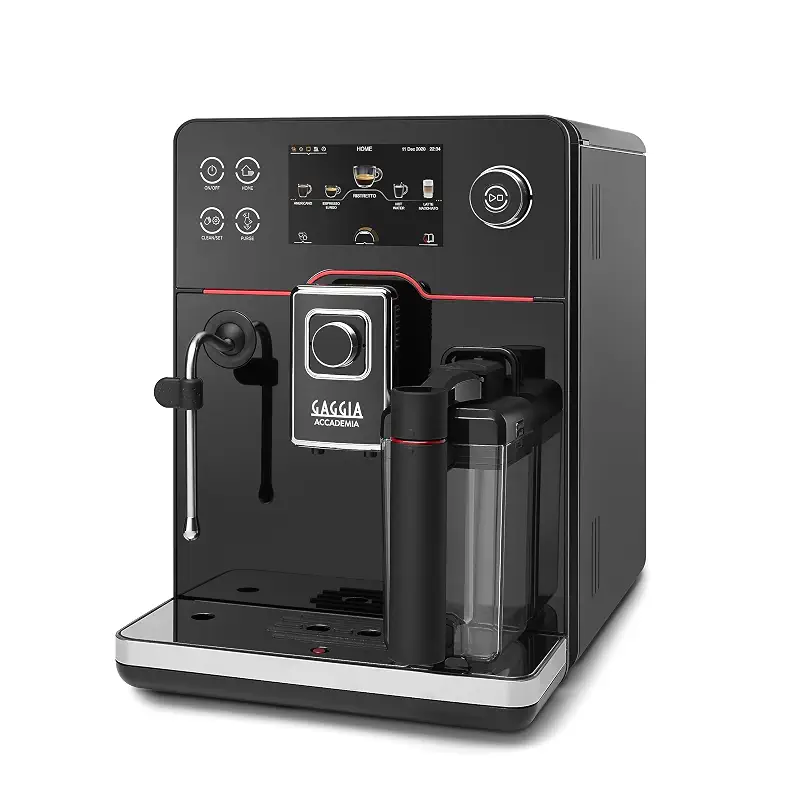
The Accademia is Gaggia's top-tier fully automatic, built around a glass touchscreen display and a glass front panel that lets you watch your drink come to life. It has 19 beverage options (everything from espresso to flat whites to café au laits) all customizable for strength, volume, temperature, and foam level. For households that enjoy ritual and variety, this is compelling: you can program a "Morning Special" and hit one button every day, or experiment with a different preset each afternoon.
Owners report that the coffee quality is strong, and the auto-frothing carafe takes the guesswork out of milk drinks if you choose convenience over manual control. Maintenance is easier than manual machines because there's no portafilter to clean between shots, and the machine auto-sanitizes the frother after each use. The stainless-steel housing and design language feel premium compared to the plastic-heavy Brera and Anima models.
But there are real drawbacks worth naming. Several owners note that warranty service is handled by a third party (Whole Lot of Latte), and repair costs can exceed $500 if components fail outside the honeymoon period. The machine also takes up significant counter space and is heavy enough that moving it around for water refills requires strength. More critically, the milk temperature doesn't always reach the heat level some users prefer, though a quick microwave warm-up solves that. The steep price also puts it in competition with other fully automatics in the category; you're paying for Gaggia's brand and Italian pedigree as much as incremental feature gains over the Brera. Reserve this for households where multiple people will use it daily and benefit from the preset flexibility.
Pros
19 customizable drink presets with touch interface for easy programming
Auto-frothing carafe removes milk-steaming learning curve for milk drinks
Premium stainless-steel construction with glass touchscreen display
Automatic steam sanitization after each milk beverage reduces manual cleaning
Cons
High repair costs and limited warranty service availability in some regions
Requires frequent water and bean top-ups for households of more than two users
Key features
Glass touchscreen display with 19 on-demand beverage presets
Commercial steam wand and auto-frothing carafe for milk customization
Massive beverage customization by strength, volume, temperature, and foam
Premium painted stainless-steel housing with glass front panel
Automatic milk-line and frother sanitization cycle after each use
#5 Pick
Best Value Compact Super-Automatic
Gaggia
Gaggia Anima Coffee and Espresso Machine, Includes Steam Wand for Manual Frothing for Lattes and Cappuccinos with Programmable Options,Black
4.1(491)
A slim, mid-range super-automatic with programmable options and manual steam wand, blending automation with just enough hands-on control.
Ideal for: Budget-conscious households wanting super-automatic espresso with optional manual milk frothing and compact design.
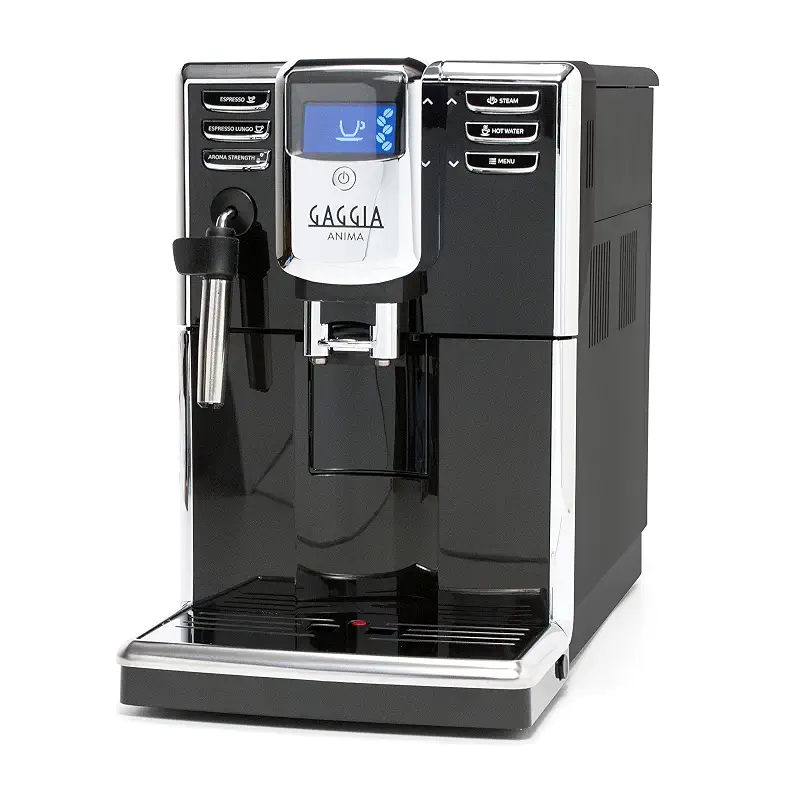
The Anima occupies a clever middle ground: it's fully automatic for grinding and espresso extraction, but keeps a manual Pannarello steam wand for milk frothing if you want to build that skill. The slim nine-inch footprint is genuinely useful for tight kitchens, and the stainless-steel front panel feels less plasticky than other machines at this price. Owners with decade-long track records report that build quality has held up well over years of daily use.
What distinguishes it from the Brera is the larger water reservoir (60 ounces versus 40) and the option to froth milk manually, which appeals to people who want some barista involvement without the full manual machine commitment. The removable brew unit is easier to clean than sealed systems, and the low-energy standby mode is a quiet win for power consumption. Temperature control offers three settings, and you can program shot length and strength separately for espresso and lungo drinks.
The machine does require occasional maintenance. Gaggia recommends monthly cleaning cycles with descaling tablets and occasional oiling of the brew unit, which is more upkeep than the Accademia advertises but less fussy than a manual portafilter machine. The internal drip tray holds about four large cups before needing emptying, so solo drinkers or couples won't refill it daily. Compared to the Brera, you're getting more water capacity and a bit more customization; compared to the Classic Pro, you're trading manual control for one-button simplicity. The sweet spot here is for people who want automation without paying Accademia money, and who value a slim countertop footprint.
Pros
Slim nine-inch profile fits tight kitchen spaces without clutter
Pannarello steam wand allows manual milk frothing for hands-on learners
Removable brew unit and accessible bean hopper simplify daily cleaning
Larger 60-ounce water reservoir reduces refilling compared to Brera
Cons
Brew unit requires occasional oiling and monthly deep cleaning with tablets
Internal drip capacity limited; frequent emptying needed for high-volume use
Key features
Fully automatic bean-to-cup grinding with programmable shot strength and volume
Pannarello steam wand for manual milk frothing or hot water dispensing
Three adjustable temperature settings and pre-infusion programming options
Slim stainless-steel housing with LED display and intuitive button controls
Removable brew unit and low-energy standby mode for easy maintenance
How to Choose a Gaggia Espresso Machine
Four trade-offs that actually matter when matching a gaggia espresso machine to your kitchen.
Manual Control vs. Automation
A manual versus automatic gaggia comparison reveals two distinct philosophies. Manual machines (E24, Classic Pro) give you full control over pressure, timing, and milk texturing, but demand skill and daily learning. Super-automatic and fully-automatic models (Brera, Anima, Accademia) handle grinding and extraction at the push of a button, trading control for consistency and speed. Your choice depends on whether you see espresso-making as a craft to develop or a task to finish quickly each morning.
Counter Space and Bean/Water Capacity
Gaggia's lineup ranges from genuinely compact (Anima at nine inches) to substantial (Accademia, which requires real estate and strength to move). Consider your daily cup count: solo drinkers or couples can refill smaller reservoirs daily, but households brewing for three or more will frustrate with constant maintenance. The E24 and Classic Pro take up moderate space; super-automatics compress function more but often with smaller bean hoppers (250 grams) that need frequent refilling if you buy whole beans weekly.
Milk Frothing Style
Commercial steam wands (E24, Classic Pro) require technique but produce silky microfoam once mastered and are essential if you care about latte art. Pannarello wands (Brera, Anima) inject air and simplify the learning curve, though some purists argue they produce less elegant foam. The Accademia's auto-frother removes learning entirely but costs the most and limits customization. Choose based on how much time you want to spend on milk and whether you value hands-on skill development.
Maintenance and Descaling
All Gaggia machines need regular care. Manual machines benefit most from gaggia espresso descaling instructions to prevent scale buildup in the boiler and pump. Super-automatics require monthly cleaning cycles with proprietary tablets and occasional brew-unit oiling. Fully automatics like the Accademia auto-sanitize milk lines but cost more to repair if components fail. Budget time and money for descaling supplies regardless of which model you choose; filtered water extends all machines' lifespan significantly.
Budget and Long-Term Value
The E24 and Classic Pro sit in the $400–500 range and are genuinely built to last 5–10 years with care and upgrades. The Brera and Anima cost $600–800 and suit people prioritizing convenience over tweaking. The Accademia exceeds $2000 and attracts households willing to pay for premium aesthetics and automated variety. Consider not just purchase price but descaling costs, potential repairs, and opportunity cost of your morning minutes: a cheaper manual machine is false economy if you hate using it.
Frequently asked
Quick answers to the questions readers ask most.
Which Gaggia machine is best for someone who has never made espresso before?
Start with the Brera or Anima if you want zero learning curve; push a button, get espresso. If you're willing to invest a few weeks learning, the Classic Pro or E24 teach real technique and reward your effort with better shots long-term. Avoid the Accademia as a first machine: it's pricey and doesn't accelerate your learning the way a manual machine does.
Do I need a separate grinder, or does the machine grind beans?
The Brera, Anima, and Accademia have built-in burr grinders. The E24 and Classic Pro require a separate burr grinder; most owners pair them with a mid-range grinder like a Baratza Sette or Eureka Mignon. A dedicated grinder gives manual machine users control over grind size, which is essential for dialing in shots. For super-automatics, the integrated grinder works fine if you're using medium roasts and keeping the hopper clean.
How often do I need to descale, and what's the process?
Descale every 200–300 shots or monthly, whichever comes first. Use filtered water to extend time between descaling. For manual machines, run a descaling solution through the group head and steam wand, then flush thoroughly. Super-automatics have automated descale cycles; run them with the proprietary tablet and follow the LED prompts. Always refer to your machine's manual. Gaggia provides detailed descaling cycles specific to each model.
Can I make other drinks besides espresso and cappuccino on a Gaggia machine?
Yes. Manual machines (E24, Classic Pro) let you pull lungo shots and use the steam wand for hot water for Americanos or tea. Super-automatics like the Brera and Anima offer programmable lungo buttons. The Accademia goes furthest with 19 preset drinks. All machines can froth cold milk if you refrigerate it first, though not all excel at cold-foam drinks.
What's the warranty coverage, and is it worth paying for extended plans?
Gaggia includes a standard one-year warranty handled directly by Gaggia or via third-party servicers depending on the model. Repair costs outside warranty can exceed $500. For machines costing $400–600, extended plans often aren't worth the premium. For the $2000 Accademia, an extended plan reduces risk if components fail. Check where repairs are serviced in your area before buying: limited local service centers can turn even warranty claims into shipping hassles.