Best Espresso Machine Under 200: Compact Home Brewers Compared
Find the best espresso machine under 200. Compare 5 top-rated 20-bar pumps with steam wands for home cappuccinos and lattes. Reviews and buying guide included.
Ideal for: Home brewers seeking straightforward espresso without pod waste or premium prices.
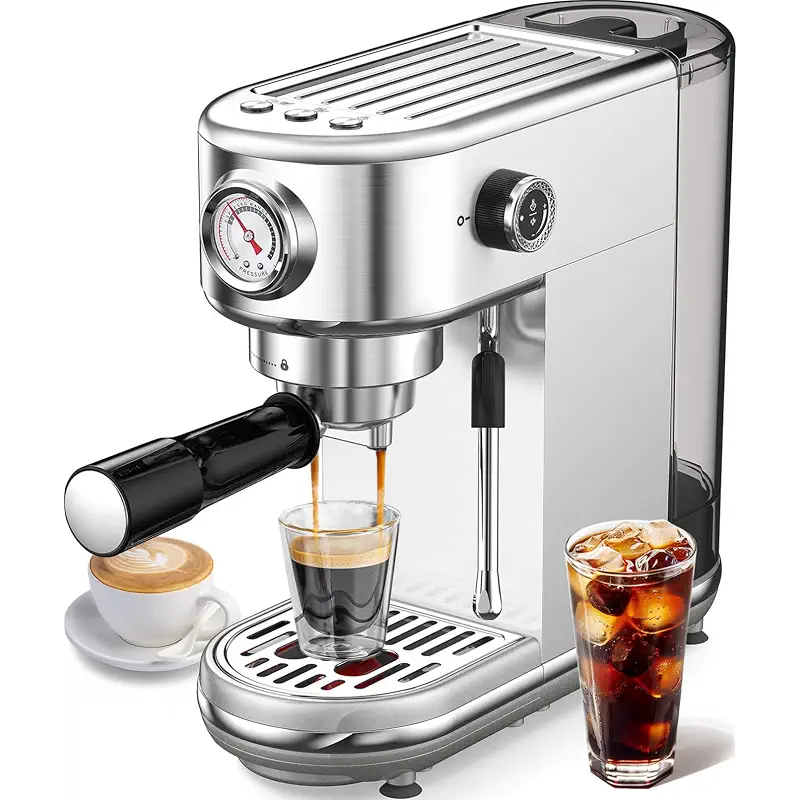
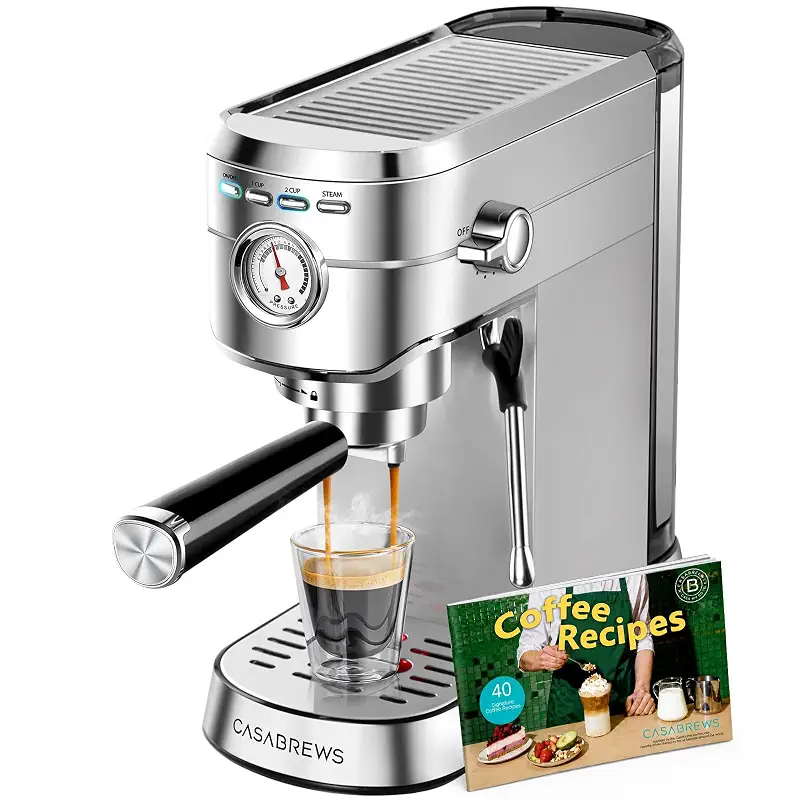
The Casabrews Compact strikes the balance that matters most: it brews genuinely good espresso, froths milk acceptably, and doesn't frustrate beginners with a steep learning curve. Owners consistently report clean crema, quick heat-up, and the ability to pull a passable shot with store-bought pre-ground espresso if your grinder isn't dialed in yet. The 34oz tank is practical for a household that wants two or three drinks without refilling. The built-in pressure gauge helps you see what the machine is doing, though it's more educational than essential.
The steam wand is the honest weak point here. Multiple owners note it doesn't produce silky microfoam the way pricier machines do; instead, you get hot milk with moderate texture: fine for everyday cappuccinos, frustrating if you're chasing latte art. The plastic portafilter and tamper feel lightweight compared to aftermarket metal options, and some buyers upgrade both immediately, often alongside picking up the best espresso dosing funnel to keep grounds contained during the process. That said, Casabrews stands out for responsive customer service even outside warranty, which counts for a lot in a budget purchase.
Where the Casabrews excels is reliability over months of daily use. Compared to the Neretva's digital display and pre-infusion features, this machine keeps the interface simpler, which many first-timers prefer. If you grind your own beans and want a workhorse that won't demand constant troubleshooting, this is the natural pick.
Pros
Consistent crema and extraction with proper grind
Quick heat-up and compact counter footprint
Responsive post-purchase customer support
Cons
Steam wand produces adequate but not silky microfoam
Plastic tamper and portafilter need early replacement for serious use
Key features
20-bar Italian pump with visible pressure gauge for shot monitoring
34oz removable water tank with fast heat-up cycle
Powerful steam wand for texture and frothing capability
Compact stainless-steel body fits tight counter spaces
Semi-automatic single and double-shot buttons with preset timing
#2 Pick
Best for Precision Temperature Control
atatix
atatix Espresso Machine with Milk Frother, 20 Bar Pressure Espresso Maker
4.2(1,466)
NTC precision temp control and manual extraction mode let you dial in shots; standout customer service sealed the deal.
Ideal for: Coffee enthusiasts ready to learn shot timing and grind adjustment for better extraction.
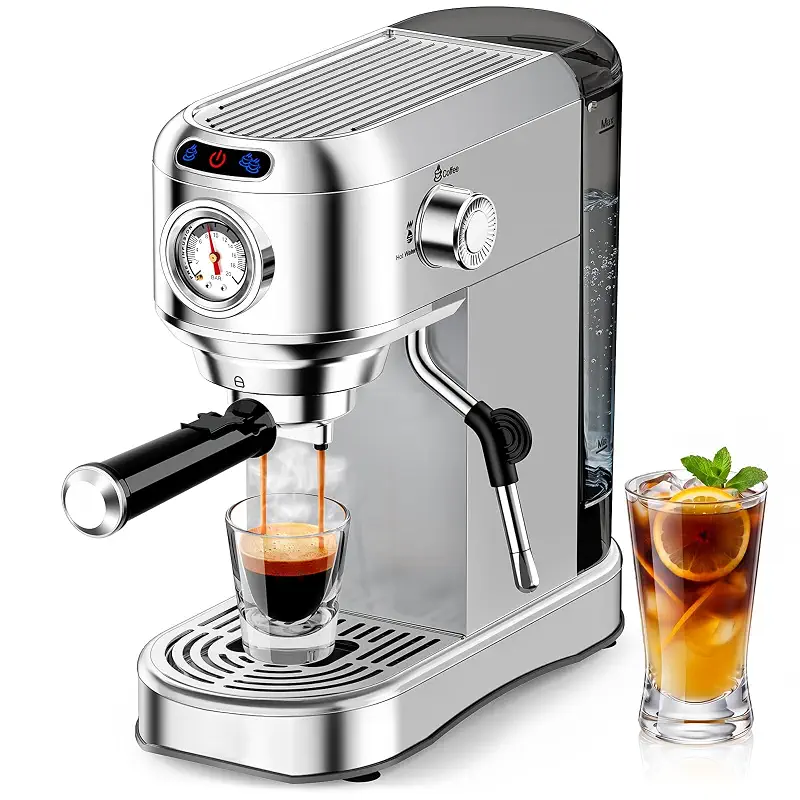
The atatix machine earns its place by adding features that budget competitors skip: a temperature-locking system that holds 90–96°C (the sweet spot for espresso extraction), 30-second preheat, and a manual extraction mode that runs up to 102 seconds for long pulls or concentrated shots. That precision matters when you're using beans at different roast levels or learning to adjust extraction time yourself. Multiple owners report that dialing in felt less frustrating than on other entry-level machines, and crema quality improved markedly once they matched grind to the machine's pressure profile.
The 44oz water tank is the largest in this lineup, meaning fewer refills during a busy morning. The brushed stainless finish looks more premium than the Casabrews, and the suction-cup base keeps the machine planted during pulls: a detail that matters when you're trying to hold steady pressure. One early buyer experienced a temperature failure at four months; atatix replaced it within 25 hours with two-day shipping and no haggling. That responsiveness is rare at this price.
Compared to the Aercana, which trades temp control for simplicity, the atatix demands more engagement from you, reading the pressure gauge, understanding when to pull back on the grind. It's not harder per se, but it's less "set and forget." The manual mode can also overwhelm beginners who just want automatic button pushes. For brewers comfortable with experimentation, though, this is the most capable machine under 200.
Pros
Precise temperature control prevents extraction inconsistency
Manual mode allows custom extraction up to 102 seconds
Largest water tank in the lineup reduces refilling frequency
Cons
Manual extraction mode adds learning curve for beginners
Requires more engagement than fully automatic competitors
Key features
NTC temperature-locking system maintains 90-96°C ideal brewing window
20-bar pressure with 30-second full preheat time
Manual and automatic extraction modes for shot customization
44oz removable water tank and four silicone suction-cup feet
Powerful steam wand for velvety microfoam texturing
#3 Pick
Best Compact Design
Aercana
Espresso Machine 20 Bar, Compact Espresso Coffee Machine with Milk Frother, Stainless Steel Coffee Maker with 34oz Removable Water Tank, Cappuccino Machine for Home, Office, Latte (Silver)
4.4(137)
Smallest footprint and sleek stainless aesthetic, though build-quality claims need scrutiny before purchase.
Ideal for: Minimalist kitchens and solo drinkers who prize compact elegance and quick steam performance.
The Aercana measures just 5.3×12.2×11.5 inches (roughly postcard-sized) and looks unmistakably premium with its brushed stainless steel finish and visible pressure gauge. If counter space is your primary constraint or if the machine will spend most of its life on a shelf waiting for guests, this form factor is genuinely impressive. Heat-up takes only 20 seconds, and owners consistently praise the steam wand output: powerful, focused steam that textures milk into glossy microfoam faster than machines three times the price.
One critical caveat: a one-star review claims the exterior is plastic, not stainless steel. Multiple five-star reviews counter that, describing solid stainless build and durable construction. This disagreement matters: read the exact photos in Q&A sections before ordering to confirm the finish matches your expectations. The 34oz tank is moderate, not small, so you're not constantly refilling. The 20-bar pump and visible gauge work identically to the Casabrews system, meaning extraction is straightforward and crema-production reliable with good beans.
Compared to the atatix's advanced temperature control, the Aercana forgoes precision features and keeps the interface utilitarian: which some buyers will see as a strength (fewer things to break or confuse) and others will see as a limitation if they want to experiment with grind and timing. The compact size also means less top-surface real estate for a warming tray. For a single-cup household or someone who values aesthetics and takes up minimal space over extensive milk-frothing capability, this is the clear choice.
Pros
Smallest footprint of the entire lineup, roughly postcard-sized
Powerful steam wand with focused, dry steam output
20-second heat-up among the fastest in budget category
Cons
Build-material claims disputed in reviews; verify photos before ordering
Smaller top surface limits cup-warming capability
Key features
Ultra-compact 5.3×12.2×11.5 inch footprint fits tight spaces
20-bar professional pump with visible pressure gauge
34oz removable water tank with drip tray for easy daily cleaning
1450W rapid heating system reaches ideal temp in 20 seconds
Powerful steam wand for rich microfoam and latte art
#4 Pick
Best for Daily Durability
Casabrews
CASABREWS 3700 Essential Stainless Steel Espresso Machine with Steam Wand | 20-Bar Italian Pump, Powerful Steam Wand, 43.9oz Removable Water Tank, Compact Espresso Maker for Home, Cappuccino & Latte
4.3(3,627)
Heavy-use owners report consistent performance over years; excellent steam wand makes this ideal for milk-drink devotees.
Ideal for: Multi-cup households and milk-drink lovers expecting years of reliable use from one machine.
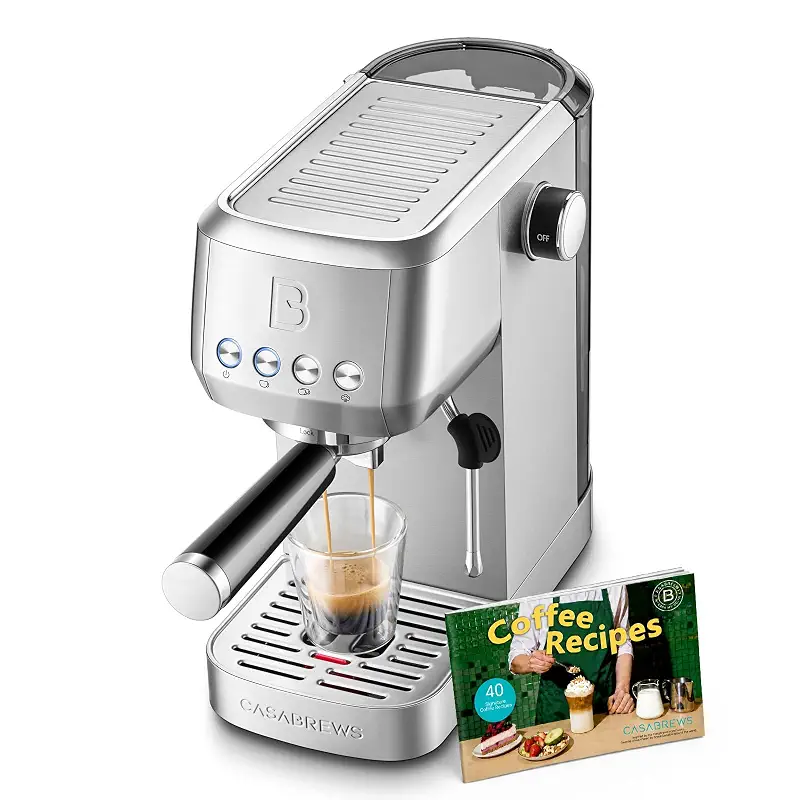
The Casabrews 3700 Essential doesn't break new ground on features (it's the same 20-bar pump and basic semi-automatic layout as the ) but it earns distinction through real-world longevity that buyers document in detail. One owner reports two-plus years of frequent daily use with no degradation; another ran 200+ pulls in the first two months with zero issues. That track record matters in a category where many budget machines fail within a year. The larger 43.9oz tank compared to the 's 34oz means you can brew four or five drinks without refilling, a genuine convenience for households with multiple coffee drinkers.
The steam wand consistently outperforms budget expectations. Owners describe it as powerful, non-wobbly, and capable of producing legitimate microfoam for cappuccinos and lattes. For anyone whose primary drink is a milk-based espresso (rather than just shots), this wand elevates the experience noticeably. The stainless-steel body feels genuinely solid: no cheap plastic exterior, which sets it apart from the Aercana's disputed build quality. One early review flagged a stuck steam dial that leaked pressure, but that's an outlier; far more recent feedback (over 3,600 reviews) suggests Casabrews resolved that defect years ago.
Where the 3700 differs from the atatix is in learning curve and customization. This machine has no manual mode; it's purely single-shot and double-shot buttons with preset timing. If you're happy dialing in your grinder and pressing a button, that simplicity is a feature. If you want to experiment with 60-second pulls or adjust extraction time on the fly, the atatix offers more. The 3700 is the machine for someone who wants espresso to be part of a solid daily routine, not a lab project.
Pros
Documented durability over 2+ years of daily heavy use
Superior steam wand for glossy microfoam and latte art
Larger 43.9oz tank reduces refilling frequency
Cons
No manual extraction mode limits shot-time experimentation
20-bar professional pump with 1350W rapid heating system
43.9oz removable water tank, largest in budget range
Powerful steam wand excels at microfoam production
Compact stainless-steel design with cup-warming top surface
Single and double-shot buttons with preset timing for consistency
#5 Pick
Best with Digital Display and Pre-Infusion
Neretva
Neretva 20 Bar Espresso Machine Super Compact Espresso Coffee Machine | Professional Stainless Steel Espresso Maker with LED Display and Powerful Steam for Home Baristas to Make Latte, Cappuccino
4.4(1,306)
LED temperature display, low-pressure pre-infusion, and compact size appeal to tech-forward learners, though steam wand has a learning curve.
Ideal for: Tech-forward first-time espresso makers who want visible feedback and professional extraction aids without manual complexity.
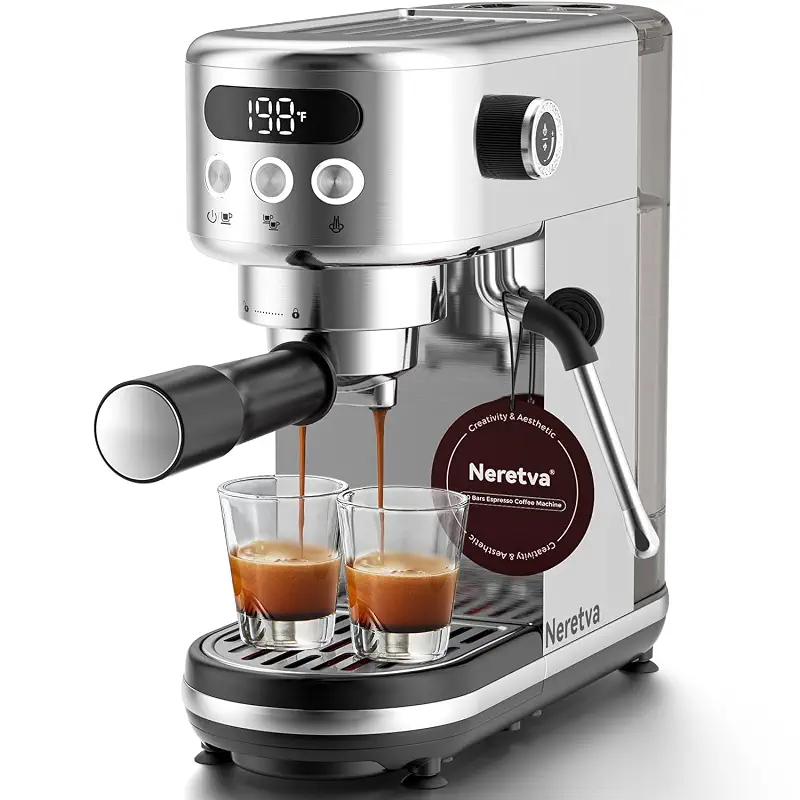
The Neretva 20 Bar brings visible technology to a sub-200 budget: an LED display that shows real-time temperature, a pre-infusion function that gradually increases pressure at the start of extraction to reduce channeling, and a more refined industrial design than most competitors. Pre-infusion is a professional feature that helps even beginners pull balanced shots by ensuring water saturates the puck evenly before hitting full pressure. Temperature display removes guesswork about when the machine is ready, which appeals to learners who tire of watching a timer or heating light.
Owners consistently report excellent crema and espresso quality, often comparing shots favorably to café drinks. Multiple buyers upgraded from cheaper machines specifically for the 20-bar jump and found the Neretva delivered. The compact form factor mirrors the Aercana, and the machine is similarly sleek. The suction-cup base, while preventing wobble during pulls, requires patience to reposition, not a deal-breaker, but more friction than a stable weight base.
The steam wand demands practice. Several owners initially struggled with froth quality and eventually learned to barely touch the milk surface before bringing the wand deeper. Once mastered, owners report solid results, but it's not as intuitive as the Casabrews 3700's wand. The manual that ships with the machine earns criticism for vagueness; most buyers supplement it with YouTube videos. Compared to the atatix's manual extraction mode, Neretva offers automatic single and double buttons only, so customization is limited. For someone attracted to the digital display and pre-infusion concept but unwilling to tinker extensively with grind and timing, this machine bridges the gap between pure automation and full manual control.
Pros
LED temperature display shows real-time brewing status
Low-pressure pre-infusion reduces channeling and improves extraction balance
Compact design and suction-cup stability prevent vibration during pulls
Cons
Steam wand requires practice to achieve consistent microfoam texture
Included manual lacks clarity. YouTube supplementation often necessary
Key features
20-bar professional pump with 1350W heating element
LED temperature display with precise readings for monitoring
Pre-infusion function gradually increases pressure during extraction
Stainless-steel construction with suction-cup base for stability
How to Choose an Espresso Machine Under 200
Four trade-offs that actually matter when matching a espresso machine under 200 to your kitchen.
Pressure System and Extraction Quality
All five machines here carry a 20-bar pump, which is the professional standard. What varies is how consistently they maintain that pressure and how forgiving they are with grind size. A espresso pump pressure explained system needs to saturate the coffee puck evenly, which is why the pressure gauge (found on most of these machines) serves as a learning tool rather than just a spec. Some machines, like the atatix and Neretva, add features like temperature control or pre-infusion that help beginners pull balanced shots without trial-and-error. Others, like the Casabrews 3700, rely on a simpler button-and-timer approach. Neither is wrong; it depends on whether you want feedback and customization or just reliable automation.
Steam Wand Performance for Milk Drinks
The steam wand separates machines that handle just espresso shots from those suited to cappuccinos and lattes. The Casabrews 3700 and Neretva both earn praise for powerful, dry steam that froths milk quickly into velvety microfoam; the original Casabrews Compact and atatix produce adequate froth but require more patience or skill. If your daily drink is milk-based, prioritize wand feedback and power over price alone. Testing the wand in real time is impossible at this budget, so lean on recent reviews from buyers making the same milk drinks you plan to make.
Tank Size and Refilling Frequency
Budget espresso machines range from 34oz to 44oz water tanks. For a single-cup household, 34oz is enough to brew, steam, and flush. For couples or multi-drink mornings, the larger tanks (44oz on the atatix, 43.9oz on the Casabrews 3700) reduce refilling interruptions. Larger tanks also mean less constant water-level anxiety and fewer mid-morning empty-tank failures. If you're making three or more drinks daily, prioritize machines with 40oz-plus capacity. Pairing a good machine with the best espresso grinder under 200 transforms both the machine's potential and your daily routine; a $40 burr grinder lets you dial in extraction and match your beans properly.
Compact Size vs. Feature Trade-Offs
Ultra-compact machines like the Aercana and Neretva free up counter space and look polished, but they typically lack a top-surface warming tray and offer fewer customization options. Mid-size machines like the Casabrews 3700 reserve counter real estate but include warming surfaces and simpler, more reliable button-and-timer interfaces. Evaluate your kitchen layout first: if space is truly limited, go compact. If you have breathing room and multiple family members using the machine, a slightly larger unit with more water capacity and features usually pays off in daily convenience.
Learning Curve and Customer Support
Budget machines are only budget purchases if they last and don't demand constant troubleshooting. Casabrews and Neretva both earn praise for responsive customer service beyond the warranty period, which matters when a valve sticks or heating fails. Temperature-control machines like the atatix empower learners but require more coffee knowledge to dial in properly. Simple button-based machines like the Casabrews 3700 are more forgiving. Choose based on your patience for YouTube tutorials and your willingness to experiment with grind sizes.
Frequently asked
Quick answers to the questions readers ask most.
Can I use pre-ground store-bought espresso in these machines, or do I need a grinder?
You can use pre-ground espresso, and several owners confirm these machines accept it. Results won't match freshly ground beans, and you'll lose the ability to dial in extraction time. A $40 burr grinder is the single best upgrade; paired with fresh whole beans, it transforms the machine's output. Budget espresso machines don't require a grinder to function, but they demand one to truly shine.
How long do these machines typically last?
Real-world reports range from 2–3 years of daily use to occasional failure within 12 months. The Casabrews 3700 shows the strongest durability profile (owners document 2+ years of heavy use), while other brands are less predictable. Most failures occur in the heating element or valve. Responsiveness to warranty claims matters here; machines with proven customer service (Casabrews, atatix, Neretva) are safer bets than unknown brands.
What's the difference between a pressurized basket and a non-pressurized basket?
Pressurized baskets (what these machines include) add internal resistance that lets you pull shots with any grind size, including pre-ground coffee. Non-pressurized baskets require precise espresso grind and tamping, rewarding skill with better crema but punishing beginners. Budget machines lean heavily on pressurized baskets; upgrading to non-pressurized later is cheap and popular once you're confident with the basics.
Why do some machines require cooling down between steaming milk and pulling another shot?
Most budget machines use a single boiler, meaning the heating element must switch between espresso-brewing temperature (around 195°F) and steam temperature (around 260°F). Switching from steam back to espresso without cooling can overheat the group head and produce sour shots. Higher-end machines use dual boilers or heat exchangers to avoid this; budget machines accept the pause. Allowing 30–60 seconds between tasks or briefly running water through the group head speeds the transition.
Do I need to descale these machines regularly?
Yes. Mineral buildup inside the boiler reduces heating efficiency and can damage the pump. Most manufacturers recommend descaling monthly if you have hard water, quarterly if soft. Use a commercial espresso-machine descaler (under $15 on Amazon), run it through the group head per instructions, then flush thoroughly with fresh water. Skipping this is the fastest way to shorten machine life.