Kitchen & Dining · Small
Best Espresso Machine Under 150
Compare seven home espresso machines by pump, steam wand, grinder and upkeep, so you can match one to the drinks you make.
Affiliate disclosure: As an Amazon Associate I earn from qualifying purchases.
At a glance
2
Best for Small KitchensAercana
4
Best Temperature Controlatatix
5
Best for Espresso ShotsCasabrews
Detailed reviews
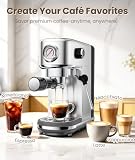
This is the pick for someone who mostly wants lattes and cappuccinos without a steep learning curve. The 15-bar pump and Thermoblock heater keep the hardware simple, and the one-touch presets for a single or double shot mean you do not have to time anything yourself. The chrome pressure gauge gives a visual cue while you brew, and the double-height drip tray lets you use anything from a small espresso cup to a tall latte glass.
The dual-mode frother handles dairy and plant-based milk, and owners report excellent cappuccinos, easy setup and a small, classy stainless look on the counter. A common complaint is temperature: owners report coffee that does not get hot enough, a slow warm-up, and a steamer that is hard to use for heating milk. Preheating the cup is worth the extra minute, and the machine suits people who value ease of use over a perfectly tuned shot.
Pros
- 15-bar pump with visible pressure gauge
- One-touch single and double espresso presets
- Frother works with dairy and plant milks
Cons
- Coffee may not come out hot enough
- Warm-up can take a long time
- Steamer is hard to use for milk
Key features (4)
- Thermoblock heating for quick, steady brewing temperature
- Double-height drip tray for espresso cups and tall glasses
- Chrome pressure gauge tracking extraction
- Compact stainless-steel body with a small countertop footprint
This one is built for tight counters and quick mornings. The 1450 W heater is described as ready in roughly 20 seconds, the body is slim, and the 34 oz tank detaches for refilling and cleaning. Owners report rich espresso with a nice layer of crema, a steam wand that handles lattes and cappuccinos, and cleanup that stays simple.
Both this and the Casabrews Compact Espresso Machine carry a visible pressure gauge, but here the gauge comes with the faster heat-up. Owners also report that the body feels like plastic rather than the stainless steel it is described as, and that releasing the filter basket from the portafilter is fiddly. Because of the overheat protection, you need to let the machine cool after frothing before pulling another shot, which slows back-to-back drinks.
Pros
- Heats up in roughly 20 seconds
- Visible pressure gauge on the front
- Slim body suits small kitchens
- Steam wand for lattes and cappuccinos
Cons
- Body feels like plastic, not stainless
- Filter basket is fiddly to release
- Needs cooldown after frothing before brewing
Key features (4)
- 20 bar pump with a front-mounted pressure gauge
- 1450 W heating system for rapid preheat
- Detachable 34 oz water tank and drip tray
- Overheat protection requiring a cooldown after steaming
We think this is the easiest machine on the page to recommend to someone buying a first espresso maker and wanting the essentials covered. A 20 bar pump, a 1350 W heater and a steam wand sit alongside a 43.9 oz removable tank that cuts down on refills, and the box includes one-cup and two-cup filters, a portafilter and a tamper with a spoon. Owners report easy cleaning, a handsome stainless look, a very good cup of coffee and good milk froth, and owners who run it many times a day report no trouble.
Its tank is larger than the 34 oz one on the Casabrews Compact Espresso Machine, which helps when you are making several drinks in a row. Being a single boiler, it needs a short pause when you switch from brewing to steaming. Durability reports run in both directions: owners report years of service, while others report the heating element failing within a year. A common complaint is that the steam dial can drift open during extraction and bleed pressure, and owners report it handling very fine grinds poorly, so start with a slightly coarser grind.
Pros
- 43.9 oz removable water tank
- 20 bar pump with steam wand
- Removable drip tray keeps cleanup easy
- Compact stainless look suits small counters
Cons
- Heating element reported failing within a year
- Steam dial may drift during extraction
- Short wait switching from brewing to steaming
Key features (4)
- 20 bar pump with 1350 W heating system
- Detachable 43.9 oz tank and removable drip tray
- One-cup and two-cup filters with portafilter and tamper
- Single-boiler design with manual steam wand
Only the Amzchef Espresso Machine and the Breville Barista Express Espresso Machine also make temperature control a headline feature, and this model does it in a compact body. The 20 bar pump is regulated to a 9 bar extraction pressure, and NTC plus PID control is described as holding the water at 198°F, which is the kind of stability that makes consecutive shots more predictable.
One-touch buttons cover single and double shots, and a manual long-extraction mode lets you hold the button for up to 102 seconds to build a larger espresso base for an Americano. The 44 oz removable tank suits busier mornings, and the stainless steel drip tray and detachable parts keep cleanup quick. The steam wand is meant for dry, consistent steam for cappuccinos, lattes and flat whites. It ships with a portafilter, single and double filters, a coffee spoon and a manual.
Pros
- NTC and PID control holding 198°F
- Regulated 9 bar extraction pressure
- 44 ounce removable water tank
- Manual long extraction for Americano bases
Key features (4)
- 20 bar pump regulated to 9 bar for extraction
- One-touch single and double shot buttons
- Stainless steel drip tray with detachable parts
- Anti-fingerprint stainless body, BPA-free materials
This is the better fit for people who mostly drink straight shots and like seeing what the machine is doing. It pairs a 20 bar Italian pump with a built-in pressure gauge, and owners report great shots with a rich crema and no bitterness, along with a slim stainless body that leaves counter space. The 34 oz tank detaches for refilling, though owners note it is on the small side.
Pick it over the Casabrews Essential Espresso Machine if a visible pressure gauge matters to you, and accept the smaller tank as the trade. Milk drinks are less of a strength: owners report a steam wand that heats milk without much texture, and the machine goes into overheat protection if you brew right after frothing, so it needs a cooldown in between. Durability reports run both ways, with owners describing a sturdy machine that keeps going and others reporting it failing within a year. Owners also suggest swapping the light tamper and accessories for sturdier ones.
Pros
- Built-in pressure gauge for extraction feedback
- Rich crema and clean flavor
- Slim body leaves counter space
- Single and double filter baskets included
Cons
- Durability reports range from sturdy to failing
- Needs cooldown between frothing and brewing
- Steam wand may heat milk without texture
Key features (4)
- 20 bar Italian pump with 1350 W boiler
- Built-in pressure gauge on the front
- Detachable 34 oz water tank
- Portafilter, tamper with spoon and two filters included
This machine does more than any pick here besides the Breville. A built-in grinder with 44 settings sits beside adjustable brew temperature from 190 to 201°F, a touch screen showing grind time, brew time and temperature, and a cold brew mode. The 60 oz tank supports several servings, and the 8 mm steam wand pairs with a 1350 W heater for latte art.
Its grinder puts it in the same bean-to-cup camp as the Breville Barista Express Espresso Machine, though it adds a cold brew mode that the Breville does not mention. Owners report that fresh grinding makes a noticeable difference in flavor, that controls are straightforward, and that lattes and cappuccinos come out well. A common complaint is coffee that is not hot enough, unlike the milk, and owners report milk that warms nicely without much froth in a tall cup. Owners also report a grinder that jammed and overheated straight out of the box, so check it carefully in the first days.
Pros
- Built-in grinder with 44 grind settings
- Adjustable brew temperature from 190 to 201°F
- Cold brew mode and 60 oz tank
- Touch screen with one-touch brewing
Cons
- Coffee may not come out hot enough
- Milk may warm without much froth
- Grinder reported to jam out of the box
Key features (4)
- Integrated grinder with 44 adjustable settings
- Temperature control from 190 to 201°F
- One-touch cold brew mode with descaling function
- 8 mm stainless steel steam wand on 1350 W system
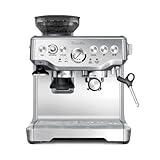
Its integrated conical burr grinder separates it from every other pick except the Amzchef Espresso Machine, which also grinds on board, and the Breville goes further by grinding straight into the portafilter. Add PID temperature control, low-pressure pre-infusion, 1600 W of power, a 67 oz tank and a manual steam wand for hand-textured microfoam, and you have the most hands-on machine on the page. The box includes a milk jug, tamper, dose trimming tool and cleaning accessories, so it is ready to use from day one.
Owners report easy cleaning because the machine signals when maintenance is due, a handsome stainless design, and great shots and lattes. Durability reports are the weak spot: owners report units lasting for years and paying for themselves quickly, while others report failures after about a year and a half or three years. At 30.43 pounds it is the heaviest machine on the page, and owners who use the grinder and frother for every drink report more upkeep than with espresso alone.
Pros
- Integrated conical burr grinder with dose control
- PID temperature control with pre-infusion
- 67 oz tank and 1600 W power
- Manual steam wand for latte art
Cons
- Heaviest machine on the page at 30.43 pounds
- Some units reported failing after a few years
- Grinder and frother use adds upkeep
Key features (4)
- Conical burr grinder feeding the 54mm portafilter directly
- Digital PID temperature control and low-pressure pre-infusion
- Manual steam wand with included stainless milk jug
- Dose trimming tool, tamper, cleaning disc and water filter
Side by side
| Pick | Item weight | Item dimensions |
|---|
#1 Best Overall
De'Longhi | 9.28 pounds | 11.22 × 13.98 × 15.94 inches |
#2 Best for Small Kitchens
Aercana | — | 12.2 × 5.32 × 11.5 inches |
#3 Best Value
Casabrews | 8.14 pounds | — |
#4 Best Temperature Control
atatix | 7.5 pounds | 12.24 × 7.5 × 11.18 inches |
#5 Best for Espresso Shots
Casabrews | 8.59 pounds | — |
#6 Most Versatile
Amzchef | 13.89 pounds | 12.5 × 10.82 × 13.38 inches |
#7 Premium Pick
Breville | 30.43 pounds | 13.8 × 12.5 × 15.9 inches |
How to Choose an Espresso Machine
Does a bigger bar number mean better espresso?
The bar figure on the box is a pump rating, not the pressure that reaches the coffee. Espresso extracts best at around 9 bar, so a 20 bar pump matters less than how steadily the machine delivers and regulates that pressure. The Atatix Espresso Machine says its 20 bar pump is regulated down to 9 bar for extraction, which is the more meaningful claim. A visible gauge, such as the one on the Aercana Espresso Machine 20 Bar, lets you see whether a shot is flowing freely or stalling, and that feedback helps you adjust grind and tamp.
Which steam wand suits the milk drinks you make?
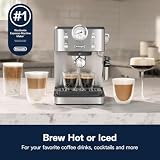
A manual wand rewards practice and gives you more control over texture, while a simpler frother is quicker to learn but gives less microfoam. If you switch between dairy and plant-based milk, the dual-mode frother on the De'Longhi Classic Signature Espresso Machine is built for both. Heavy milk-drink households should also weigh how a single-boiler machine handles steaming, since a short pause or longer recovery between steaming and brewing is the usual trade at this size.
If you mostly drink straight shots, wand strength matters much less than the machine's extraction consistency.
Should the grinder be built in?
A built-in grinder saves a step and keeps beans fresh until the moment you brew, but it adds size, weight and upkeep. The Amzchef Espresso Machine offers 44 grind settings, and the Breville Barista Express Espresso Machine grinds directly into the portafilter. Without a grinder you need ground coffee, and the grind has to match what the machine can push water through, because owners report that very fine grinds can stall a pump. If you want to step up to a machine with more control, the best espresso maker under 300 is the next list worth reading.
What build and cleaning details are worth checking?
Daily upkeep and materials decide how a machine feels after the first few months. A few simple checks before you buy are worth the time.
- Body material: confirm how much is metal and how much is plastic
- Water tank: size, and whether it detaches for refilling
- Drip tray: removable, and tall enough for your cups
- Cooldown: whether frothing locks out brewing for a while
- Portafilter: how securely the basket stays put when knocking out the puck
Our picks at a glance
2
Best for Small KitchensAercana
4
Best Temperature Controlatatix
5
Best for Espresso ShotsCasabrews