Kitchen & Dining · Gadgets
Best Deba Knife for Fish Filleting and Japanese Cooking
Find the best deba knife for fish preparation. Compare Japanese single-bevel blades, from budget-friendly to premium options. Buyer reviews and expert guidance included.
Affiliate disclosure: As an Amazon Associate I earn from qualifying purchases.
At a glance
5
Best for Bone WorkHoshanho
Detailed reviews
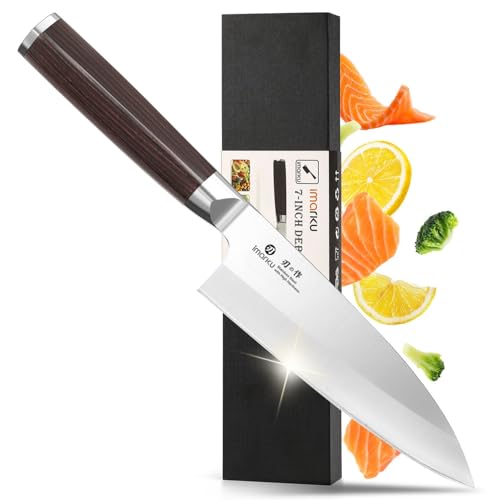
The imarku 7-inch deba hits the balance point that most home cooks are after: serious sharpness from the factory, a reassuring heft that powers through bone without requiring superhuman leverage, and a handle that won't exhaust your hand after an hour of prep. Owners consistently praise the blade's edge retention and the knife's ability to handle not just fish but also poultry and tough root vegetables. The 12 to 15 degree single bevel produces the clean surface that matters if you're slicing sashimi or want transparent-thin prosciutto.
The main trade-off is that it ships without a sheath, which is a practical miss at this price point given how sharp it arrives. You'll want to store it carefully or budget for a blade cover separately.
Compared to the Sakai Takayuki, which demands more maintenance ritual, the imarku is more forgiving for everyday use while still delivering professional results. That practical balance is why it leads this roundup.
Pros
- Exceptional sharpness right out of the box
- Thick spine handles bone and cartilage cleanly
- Well-balanced despite significant weight
- Single bevel produces clean, even slices
Cons
- No sheath included despite premium pricing
- Heavy blade may tire hands during extended prep
Key features (4)
- Japanese high-carbon stainless steel with 12 to 15 degree single bevel
- 7-inch blade length, approximately 4mm spine thickness for structural strength
- FSC-certified Pakkawood handle resists corrosion and moisture damage
- Hand-sharpened for immediate use without factory honing required
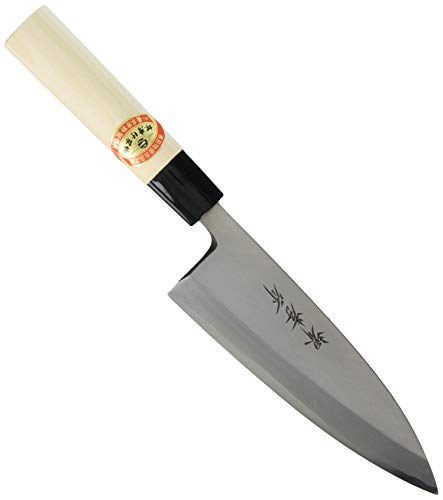
Sakai Takayuki represents the traditional end of the deba spectrum. White steel holds an edge longer than stainless and delivers a finer cutting surface, but it trades ease of care for performance. Owners report that this knife arrives genuinely sharp and feels like knives costing double the price. The craftsmanship is audible the moment you hold it.
The commitment it demands is real. White steel requires careful drying immediately after use and periodic oiling to prevent discoloration and rust. If you bought a yanagiba knife years ago in Tokyo and loved it, this model delivers that same aesthetic and feel at a fraction of the price. One buyer compared it favorably to a 40,000-yen professional knife.
If you're comparing this to the KAI Seki Magoroku Kinju ST, you're choosing between traditional white steel (more demanding upkeep, finer edge) and modern stainless (lower maintenance, slightly thicker spine). Choose the Sakai if you enjoy the ritual of knife care; pick the KAI if you want performance without ceremony.
Pros
- Yasuki white steel holds edge longer than stainless
- Finer cutting surface than budget stainless alternatives
- Exceptional build quality and hand finishing
- Comes sharp enough for immediate use
Cons
- Requires prompt drying and periodic oiling after each use
- Occasional finish imperfections reported on arrival
Key features (4)
- Yasuki white steel blade with hand-sharpened single bevel edge
- 165mm blade length, natural wood handle with resin ferrule
- Demands careful maintenance to preserve finish and prevent rust
- Comparable quality to professional Tokyo workshop knives
The KAI Seki Magoroku Kinju ST owns the high-review-count territory for good reason. The 4mm blade thickness is substantial, giving you momentum through fish bones without technique finesse, and the concave grind on the back (uraoshi) mimics expensive handmade knives. Owners making sushi at home rave about how it glides through raw fish without tearing delicate flesh.
One caveat: the concave back requires proper maintenance. After initial use, many owners discover that professional uraoshi sharpening on a progression of stones is necessary to avoid chipping. That's not a defect, it's how single-bevel geometry works, but it's a hidden step some buyers don't anticipate. Once sharpened correctly, the durability through years of use is impressive.
Where this trades off against the imarku is sheer beginner-friendliness. The KAI performs equally well for sashimi prep but demands more sharpening knowledge. If you're already comfortable with whetstones or planning to learn them, the Kinju's professional feel makes the learning worthwhile.
Pros
- 4mm thick spine cuts through bone with minimal technique required
- Concave back mimics expensive hand-finished knives
- Excellent edge durability after proper sharpening
- Arrived razor-sharp and ready for immediate use
Cons
- Requires uraoshi sharpening on progression of stones to avoid chipping
- Heavy blade may fatigue hands during all-day professional use
Key features (4)
- Molybdenum vanadium stainless steel with 180mm blade length
- Concave ground back for professional-grade performance
- Made in Japan with nylon ferrule and natural wood handle
- Thick spine (approximately 4mm) provides structural strength through bone
The KAI is the gateway deba. At its price point, it's almost aggressively good, and it actually outcuts some hand-forged knives costing ten times more. Owners describe it as a bargain that won't disappoint, and Japanese professional chefs note the sharpness surpasses expectations for the investment. The 6.5-inch blade handles whole fish, chicken, and tough vegetables capably.
The single-bevel design is the real learning curve here, not the knife's fault. Some buyers expecting a dual-bevel chef's knife struggle with technique. The weight is genuinely hefty, which some find authoritative and others find tiresome. The handle is functional rather than premium, which tracks with the price.
Versus the imarku above it, the trades some refinement in handle materials and sheath inclusion for a few dollars less upfront. If you're testing whether a deba fits your workflow before committing to a better model, this is the low-risk entry. If you prep fish several times a week, you'll probably want to upgrade later, but the will still have earned its cost.
Pros
- Exceptional sharpness from factory at entry-level pricing
- Molybdenum vanadium stainless is durable and rust-resistant
- Available in both right and left-hand configurations
- Robust enough for professional use despite modest cost
Cons
- Handle lacks premium materials and may feel utilitarian long-term
- Nylon ferrule can loosen slightly with heavy use
Key features (4)
- Molybdenum vanadium stainless steel, 165mm blade length
- Single-bevel right-hand or left-hand grind, natural wood handle
- Made in Japan with factory edge ready for immediate use
- Compact 6.5-inch size suitable for home and professional kitchens
The Hoshanho 6-inch deba stands out because it's the only entry here with a dual-bevel (V-shaped) edge instead of traditional single-bevel geometry. That matters: it's more forgiving for the technique-learning phase and handles smaller bones and cartilage in poultry and game with confidence. The 10Cr15CoMoV core encased in alternating stainless layers is a semi-custom approach that gives you hardness and corrosion resistance.
Owners consistently report it arrives unbelievably sharp, and its handling is praised for balance and comfort despite significant weight. One caveat: the butt cap edge on the handle was reported as dangerously sharp on arrival, requiring careful smoothing. That's a production inconsistency, not a design flaw, but it's worth checking when the package arrives.
Comparing this to the best kiritsuke knife you might own, which excels at push-cutting vegetables and boneless proteins, the Hoshanho is the raw-power counterpoint. Where a kiritsuke's flat edge prioritizes precision slicing, the Hoshanho's dual bevel powers through dense bone structures. At 6 inches and dual-bevel, it's less specialized and more versatile than traditional debas, which makes it a bridge tool for cooks who want deba versatility without committing to single-bevel mastery.
Pros
- Dual V-shaped bevel more forgiving than single-bevel for beginners
- Substantial weight powers through bone and cartilage cleanly
- Layered steel construction balances hardness with corrosion resistance
- Comfortable ergonomic handle with good grip in wet conditions
Cons
- Butt cap edge can arrive dangerously sharp, requires careful handling
- Heavy blade may feel cumbersome for extended vegetable prep
Key features (4)
- 10Cr15CoMoV steel core with 8 alternating forged stainless steel layers
- 6-inch blade, 4.5mm thickness, dual V-shaped bevel (12 to 15 degrees)
- Cryogenic liquid nitrogen quenching for enhanced hardness and wear resistance
- Laminated rosewood handle with better balance than solid handles
How to Choose the Right Deba Knife
Understand the Single-Bevel Difference
A deba's power comes from its single-bevel design, which is almost always right-handed (the bevel is on the right face only). This geometry reduces drag through bone and produces a cleaner surface on delicate fish. If you've only used dual-bevel chef's knives, a single bevel requires a slightly different grip: keep the blade perpendicular to the board rather than angled. It's not difficult to learn, but it's a real departure from Western knife habit. Some deba models offer left-hand configurations, so check your preference before ordering.
Blade Material: Stainless, White Steel, or Layered
Stainless steel (molybdenum vanadium types here) is forgiving. It resists rust and discoloration, requires minimal maintenance, and suits busy home kitchens. White steel (Yasuki) holds an edge longer and produces a finer cutting surface, but it demands prompt drying and periodic oiling. Layered high-carbon steel splits the difference with hardness and decent corrosion resistance. If you're new to debas, start with stainless. The deba knife filleting technique becomes your focus, not blade maintenance rituals.
Blade Length and Weight Matter
Most debas range from 6 to 7 inches. The 6-inch models (like the KAI and Hoshanho) suit home kitchens and beginners; they're manageable for an hour of prep without hand fatigue. The 7-inch imarku and Sakai are professional-grade and deliver more momentum through bone, but they demand a steady hand and adequate counter space. Weight is intentional. A heavier blade does more work for you, but if you're hand-filleting six fish in a session, fatigue becomes real. Handle the knife (if possible) before ordering, or read enough owner reviews to match your hand size and stamina.
Maintenance and Sharpening Expectations
Factory-sharp debas need no break-in, but long-term maintenance varies. Stainless debas benefit from regular stropping and occasional honing stone work. Single-bevel blades sometimes need uraoshi (concave) sharpening on a progression of whetstones, which is a skill worth learning if you cook with fish regularly. White steel and layered blades require more deliberate care. If you're not comfortable with sharpening, invest in a stainless model and plan annual professional honing, or learn through a deba versus gyuto comparison to understand whether a second general-purpose knife might serve you better.
Our picks at a glance
5
Best for Bone WorkHoshanho
Frequently asked
Can I use a deba knife on vegetables and meat, or only fish?
A deba works capably on poultry, root vegetables, and even tough cuts of meat, though it's optimized for fish. Its thick spine handles chicken bones well, and the single bevel slices cabbage or onions cleanly. That said, if you prep vegetables more than fish, a gyuto (dual-bevel chef's knife) is more versatile. Many cooks own both: the deba for specialized fish work and a gyuto for everyday tasks.
What's the difference between a deba and a yanagiba?
A deba is short and thick, designed to power through bone and cartilage while filleting. A yanagiba is long and thin, designed to produce clean, paper-thin slices of raw fish or meat with minimal pressure. Use a deba to break down a whole fish; use a yanagiba to slice sashimi. Many sushi chefs own both.
Do I need a sheath for storage?
Yes, ideally. A sharp deba left unguarded is a hand injury waiting to happen. Some models include one; most don't. Budget for a blade cover or wooden saya if your preferred model doesn't ship with one. Alternatively, store it in a knife block or with the blade edge facing away from foot traffic.
Is a single-bevel deba difficult to use if I've only owned double-bevel knives?
There's a learning curve, but it's not steep. The key is keeping the blade perpendicular to the cutting board instead of angling it. Most cooks adapt within a few uses. If you're hesitant, the Hoshanho dual-bevel deba is a friendlier entry point, though it's less specialized than traditional single-bevel designs.
How often should I sharpen a deba?
Frequency depends on use and steel type. Stainless debas typically need stropping every few uses and a honing stone every few months. White steel debas need more frequent stropping and oiling. If you use a deba weekly for fish prep, professional sharpening once a year is reasonable. Single-bevel blades may need uraoshi sharpening, which is a specialized skill; many owners eventually send them to a professional sharpener.