Verdict, analysis, and key features for each pick.
#1 Pick
Best Overall Value
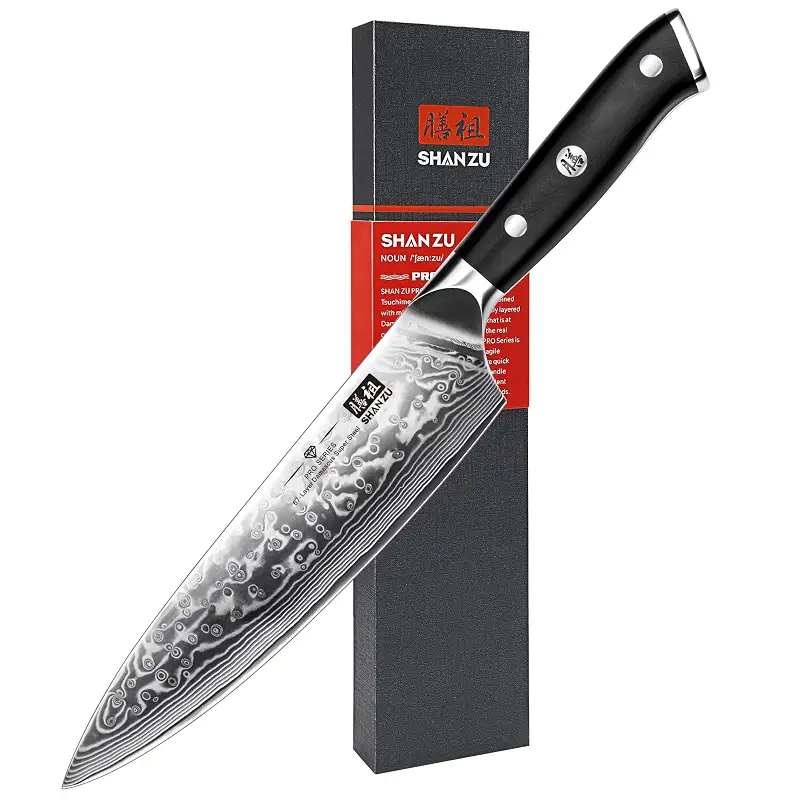
Shan Zu
SHAN ZU Chef Knife 8 Inch Japanese Steel Damascus Kitchen Knife | Professional Kitchen Knives Ultra Sharp High Carbon Super Steel Kitchen Utility Knife
4.8(5,606)
Sharp out of the box, real damascus construction, and comfortable G10 handle make this the entry point most home cooks should start with.
Ideal for: Home cooks and weeknight dinner makers who want real damascus without premium price tags.
This 8-inch from Shan Zu sits at the sweet spot between price and performance. The 67-layer damascus is genuinely folded steel (not etched) which means the pattern reinforces the blade structure and edges, not just decorates it. Owners report that it arrives razor-sharp and holds that edge through weeks of regular chopping, slicing, and mincing. The G10 fiberglass handle is more durable than wood and less slippery when wet, and the balance favors precision cuts over brute force.
Where it trades off is in the refinement and longevity of a handcrafted piece like the Shun Premier. The blade is thicker and heavier than premium Japanese gyutos, which some cooks prefer for rocking motions but others find tiring during long prep sessions. One recurring note from owners: it's not designed for bones or hard impacts. Treat it like the precision tool it is, not a hammer.
Compared to the Atumuryou models also in this lineup, the Shan Zu prioritizes value: you're paying less and getting almost the same sharpness and construction quality. If your main concern is getting a genuinely sharp, genuinely damascus blade into your kitchen without spending heavily, this is the knife that delivers.
Pros
Real 67-layer damascus construction, not laser-etched pattern
Arrives extremely sharp and holds edge through regular kitchen use
Durable G10 handle resists moisture and slipping better than wood
Full tang design with solid balance for controlled cutting
Cons
Heavier blade than some japanese knives, tiring during extended prep
Not suitable for cutting bones or hard impacts without risk of chipping
Key features
67-layer damascus Japanese steel with 10Cr15MoV core, 62 HRC hardness
8-inch blade at 2.2mm thickness, 15-degree cutting angle for precision
Frosted G10 fiberglass handle with full tang for stability
Includes 12-month warranty and comes in protective gift box
#2 Pick
Premium Professional Choice
Shun
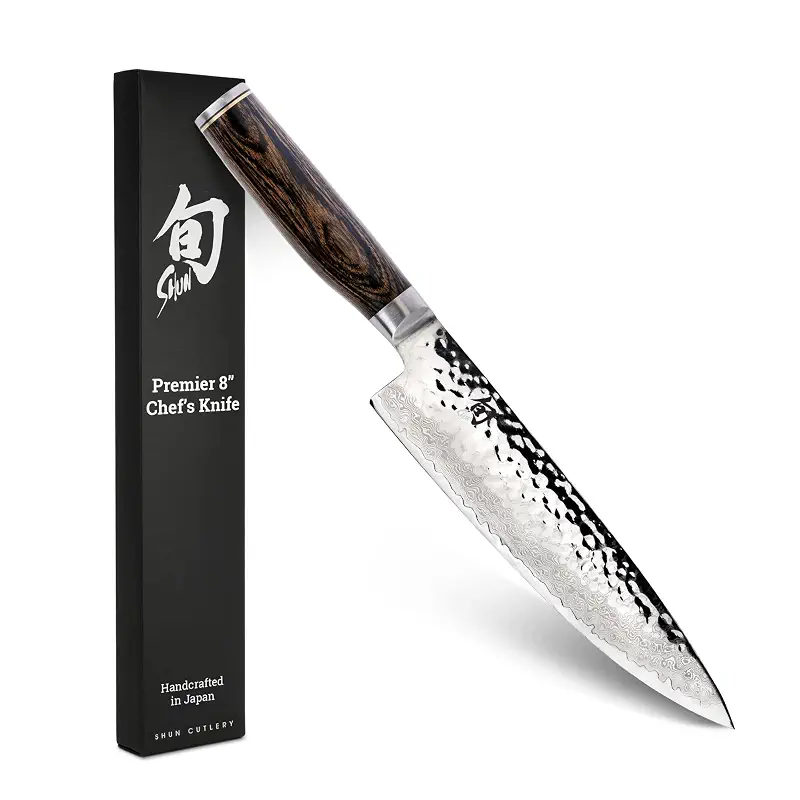
Shun Premier 8" Chef's Knife, Handcrafted Japanese Kitchen Knife for Professional and Home Chefs, VG-MAX Core with Damascus Stainless Steel Cladding, Pakkawood Handle | Handcrafted Japanese Kitchen Knife, VG-MAX Core, Damascus Stainless Steel Cladding, Pakkawood Handle
4.8(2,135)
Shun Premier is the benchmark for handcrafted japanese chef knives: exceptional balance, edge retention, and aesthetic that justifies the investment.
Ideal for: Serious home cooks and culinary professionals who will maintain their knife and use correct cutting technique.
The Shun Premier represents what japanese knife-making looks like when craftsmanship is the priority. Each blade is hand-forged in Japan, and the VG-MAX steel core with 68 layers of damascus cladding holds its edge far longer than stamped blades. The 16-degree edge angle is sharper than most German knives, and owners (including professional cooks with decades of experience) consistently report that it glides through food with almost no resistance. The hammered tsuchime finish reduces food drag, though some reviewers note it doesn't work miracles on sticky ingredients like raw potato.
The trade-off is cost and care. This is not a knife you drop or throw in a knife block with other tools. The blade is thinner and more brittle than german steel, so you're paying partly for the understanding that you'll treat it with respect. Shun backs every knife with free sharpening and honing for life, which softens the maintenance burden. Compared to the value-oriented Shan Zu, the Premier is more refined in every dimension (lighter, thinner, better-balanced) but it also demands more from the owner. For someone who cooks seriously or has professional kitchen experience, that tradeoff reads as absolutely worth it.
If you compare this to the Atumuryou 8-inch handcrafted model, both are beautiful and sharp, but Shun's ecosystem (free sharpening service, decades of brand reputation, wider handle size) gives it the edge for most buyers stepping into premium territory.
Pros
Hand-forged in Japan with VG-MAX steel and 68 layers of damascus cladding
Exceptional edge retention through professional-grade heat treatment
Lightweight, thin blade glides through food with minimal effort required
Free lifetime sharpening and honing service backs long-term ownership
Cons
Thin, brittle blade requires careful handling and proper cutting technique
Relatively high investment for a single knife compared to value alternatives
Key features
VG-MAX steel core with 68 layers of damascus cladding, 16-degree edge
Hammered tsuchime finish reduces food drag on blade surface
Contoured Pakkawood handle with elegant bolster for secure pinch grip
Handcrafted in Japan with lifetime warranty and complimentary sharpening
#3 Pick
Best Handcrafted Design
Atumuryou
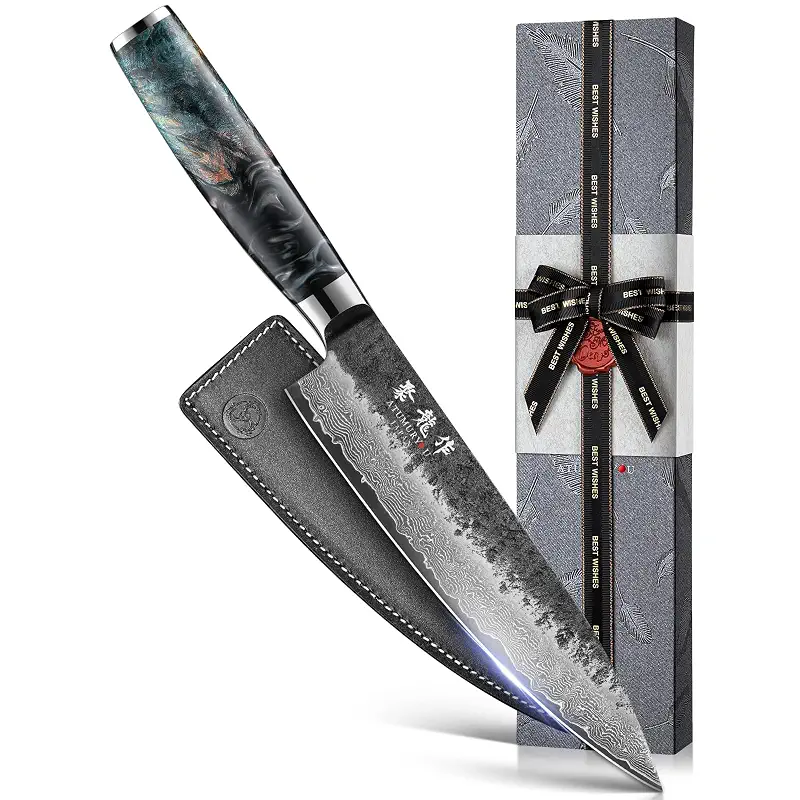
8'' Japanese Chef Knife, Razor Sharp Hand-Forged Damascus VG10 Steel Core | Kurouchi Forged Finish, 67-Layer Damascus Cladding, For Professional & Home Chefs, Leather Sheath Included, Premium Gift Box
4.6(369)
Atumuryou delivers genuine hand-forged craftsmanship with unique stabilized wood handles and premium presentation at a price below premium brands.
Ideal for: Collectors and home cooks who view their chef knife as both functional tool and kitchen display piece.
This Atumuryou model shares the same damascus core and 67-layer construction as competitors but distinguishes itself through the handle. Each grip is hand-finished with multicolor resin-stabilized wood, meaning no two knives look identical. Owners consistently praise the quality of that handle: it's both beautiful and ergonomically solid, with good grip even when wet. The blade itself is sharpened to a keen edge and holds it well through regular kitchen work. The included leather sheath and premium gift box signal that this knife is positioned as a statement piece, not just a tool.
The real consideration is that handcrafted means small variations: some buyers noted minor surface scratches or slight blade irregularities on arrival, which is the trade-off for artisanal production. It's still fully functional, but if you expect factory perfection, the Shun Premier's industrial consistency may feel safer. The Shan Zu, while also good, lacks the unique handle artistry and comes with less ceremony. If you value the story of who made your knife and want something visibly different from mass-produced alternatives, this one stands out.
Compared to the other Atumuryou in the lineup (B0FMRTSJF5), this model has the hand-forged kurouchi finish and includes the leather sheath, making it the more complete artisanal choice.
Pros
Unique stabilized wood handles: no two knives identical due to hand-finishing
Hand-forged kurouchi finish on blade signals traditional japanese craftsmanship
Includes genuine leather sheath for protection and portable storage
Premium gift box presentation makes it ideal for special occasions
Cons
Hand-forged production means minor surface variations and irregularities
Thinner blade edges may dull faster under heavy professional kitchen use
Key features
Hand-forged damascus steel with kurouchi (black) finish and 67 layers
62 HRC hardness with full tang construction for balanced control
Multicolor resin-stabilized wood handle, unique on every knife produced
Includes leather sheath, premium gift box, and artisan authenticity mark
#4 Pick
Best for Consistent Sharpness
Shan Zu
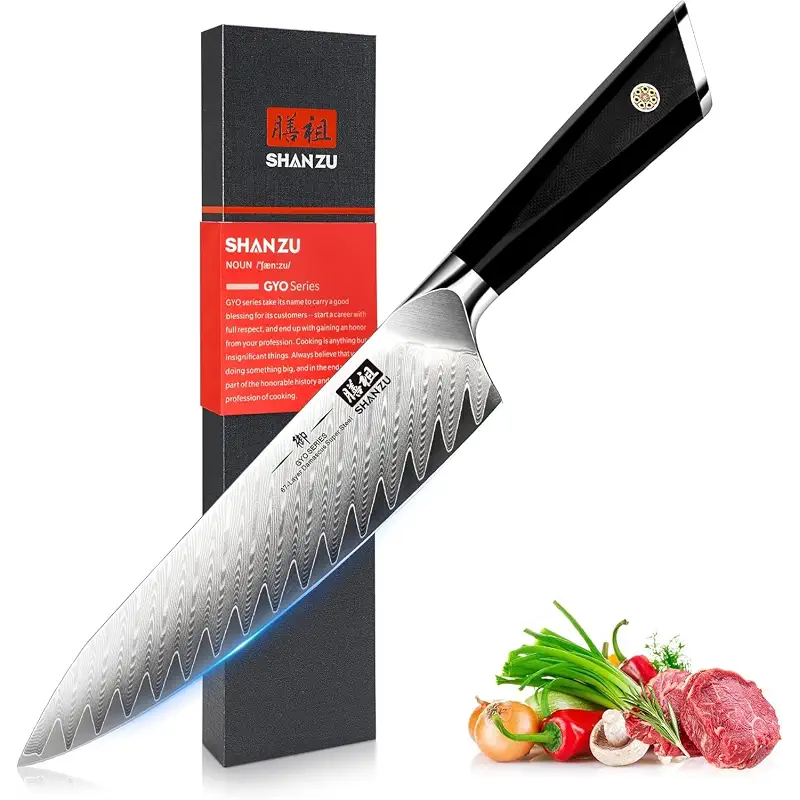
SHAN ZU Damascus Chef Knife 8 inch, 67-Layer High Carbon Steel | Ultra Sharp Japanese Chef Knife,Professional Kitchen Utility Knives with G10 Ergonomic Handle Cooking Knife with Gift Box
4.7(2,247)
Shan Zu's Gyo Series delivers real damascus layers with exceptional edge retention and modern handle design at an outstanding price-to-performance ratio.
Ideal for: Home cooks who prioritize edge retention and want minimal maintenance between kitchen sessions.
This second Shan Zu offering is the Gyo Series variant: same brand, slightly different execution. The 67-layer damascus and 10Cr15CoMoV core are nearly identical to the first Shan Zu model, but reviewers emphasize that this version holds its edge even longer, staying sharp through six months or more of regular home kitchen use without sharpening. The blade profile has a slight K-tip (reverse tanto) geometry, which some precision-focused cooks prefer for detailed work. The G10 handle is modern and minimalist: less organic than wood, but consistently reliable and dishwasher-safe if needed.
Owners note that the balance point sits right at the bolster, which can feel slightly back-heavy if you're used to pinch-gripping the spine during chopping. It's a stylistic choice rather than a flaw. Where it diverges from the Shun Premier is in the approach: this knife prioritizes cutting performance and durability over the handcrafted artistry and lifetime service that come with a premium brand. The magnetic properties are weaker than some expect, so a sheath or knife block works better than magnetic strips.
If you're choosing between this and the other Shan Zu model (B071JV1GDP), the Gyo Series justifies a small step up through edge retention; if you're comparing to the Atumuryou options, this trades some visual uniqueness for more predictable, factory-consistent quality and a longer edge lifespan.
Pros
Exceptional edge retention through six months of regular use without sharpening
67-layer damascus with K-tip blade geometry for precise, controlled cuts
Modern G10 handle is dishwasher-safe and consistent in every unit produced
24-month warranty and responsive customer support included
Cons
Balance point slightly back-heavy for some grip styles during extended use
Weaker magnetic properties than expected: needs sheath or block storage
Key features
67-layer damascus with 10Cr15CoMoV core steel, 62 HRC hardness rating
K-tip (reverse tanto) blade geometry for precision tip work and detail cuts
Frosted G10 fiberglass handle with modern ergonomic design and end cap
Sharp 15-degree V-edge on both sides; includes gift box packaging
#5 Pick
Best Modern Handcrafted Finish
Atumuryou
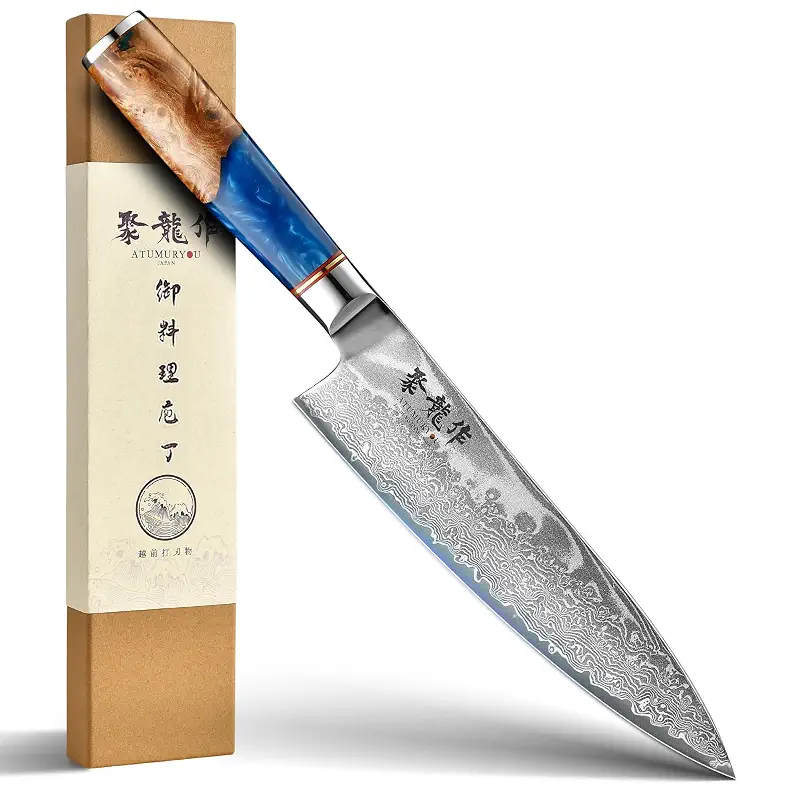
Japanese Chef Knife, 8 Inch Damascus Kitchen Knife with VG10 Steel, Ultra Sharp Professional Cooking Knives with Resin Wood Handle, Gift Box for Home & Restaurant
4.8(124)
This Atumuryou variant combines hand-sharpened damascus with a resin-wood handle in a refined package that feels premium without the premium brand overhead.
Ideal for: Cooks who want artisanal sharpening and refined aesthetics without premium brand pricing.
Atumuryou's second model here uses the same core materials ( steel, 67-layer damascus) but presents them with a different handle aesthetic and sharpening approach. This version uses hand-sharpened edges via traditional japanese techniques, and owners report that it arrives sharper than factory-ground alternatives and holds that edge across varied cutting tasks. The resin-wood handle design is ergonomic with slip-resistant dimpling, and the packaging quality signals luxury without the ceremonial presentation of the kurouchi-finished model.
What you're paying for is the hand-sharpening ritual and consistent craftsmanship. It doesn't have the one-of-a-kind handle variation of the other Atumuryou, but that's a trade-off for more predictability. Compared to the Shun Premier, this knife lacks the lifetime brand support and decades of proven reputation, but it costs significantly less and still delivers sharp, balanced cutting. Compared to the Shan Zu options, it emphasizes artisanal hand-finishing over value pricing. Owners note it works well in professional kitchen settings and holds up through daily hard use, though the handle is new enough that long-term durability data is still limited.
If you're torn between the two Atumuryou models in this lineup, this one sacrifices the unique handles and leather sheath for a cleaner, more minimalist presentation and hand-sharpened edges.
Pros
Hand-sharpened using traditional japanese techniques for exceptional edge quality
steel core with 67-layer damascus and 62 HRC hardness rating
Ergonomic resin-wood handle with slip-resistant dimpled grip surface
Professional kitchen tested; holds edge through extended daily use
Cons
Limited long-term durability data compared to established premium brands
Handle construction newer to market; less field history than competitor options
Key features
Hand-sharpened damascus with 67 layers, 62 HRC hardness core
Razor-sharp surgical-precision edge maintained through proper technique
Ergonomic stabilized wood and resin handle with slip-resistant dimpling
Includes gift box; suitable for home and professional kitchen settings
How to Choose a Damascus Chef Knife
Four trade-offs that actually matter when matching a damascus chef knives to your kitchen.
Real Damascus vs. Laser-Etched Patterns
The single most important distinction in this category is whether the blade actually contains folded steel layers or just has a pattern printed on the surface. Real damascus steel cladding explained: authentic blades are built by stacking carbon steel sheets, heating them, folding them repeatedly, and forging them together until a permanent pattern emerges in the metal structure itself. This process creates durability and toughness. Laser etching, by contrast, burns a pattern into the surface that will eventually wear away. Every knife in this lineup uses real layered damascus, but when shopping elsewhere, look for language about folding, forging, and layering, not etching or surface treatment.
Blade Thickness and Edge Angle Matter for Your Cutting Style
Japanese chef knives typically use 15- to 17-degree edge angles, while German knives run 20 degrees or steeper. A thinner, sharper angle cuts more precisely but is more fragile; a thicker angle is more durable but requires more force. If you rock the blade while chopping (common in western technique), a heavier blade with a slight curve helps; if you use pushing and pulling strokes (traditional japanese style), a thinner blade excels. The Shun Premier and Atumuryou handcrafted models lean thin and precise, while the Shan Zu options offer more heft. Consider whether your kitchen style favors control or momentum.
Handle Material Reflects Durability and Maintenance
Wood handles look beautiful but require hand-washing, regular oiling, and careful drying to prevent splitting and mold. G10 fiberglass is dishwasher-safe, resists moisture, and won't degrade, but it feels less organic in the hand. Resin-stabilized wood blends the best of both: natural feel with enhanced water resistance. The Shun Premier's Pakkawood is warmer than G10 but still practical for busy kitchens. Your choice depends on whether you hand-wash knives anyway (in which case wood is fine) or need something that survives occasional dishwasher cycles.
Edge Retention and Sharpening Commitment
A knife that holds its edge for six months requires less frequent maintenance but may cost more upfront. Budget options may need honing every few weeks. Higher hardness (measured in HRC, typically 60–63 in this range) keeps an edge longer but makes the blade more brittle and harder to sharpen at home. If you own whetstones or plan to learn, a harder blade is rewarding. If you prefer professional sharpening services, look for brands like Shun that offer free or affordable options. damascus knife care and maintenance involves hand-washing, proper storage, and avoiding bones and frozen items: non-negotiable for any premium damascus knife.
Price and What It Covers
Value damascus options (Shan Zu) deliver sharp, durable blades at a fraction of premium prices but lack brand ecosystem and warranty depth. Handcrafted artisanal options (Atumuryou) split the difference, emphasizing unique details and hand-finishing. Premium brands (Shun) charge for reputation, lifetime services, and consistent quality assurance. There's no wrong choice: only what makes sense for your budget and how much you cook. A home cook using a knife two or three times a week will see little functional difference between a value and premium option; a daily cook will notice edge retention and balance.
Frequently asked
Quick answers to the questions readers ask most.
Is real damascus steel worth the cost difference over a regular stainless blade?
Real damascus is worth it for edge retention, durability, and the structural reinforcement the layered steel provides. The layers aren't just visual; they distribute stress and make the blade less prone to chipping. If you cook frequently, the edge lasts longer and the blade stays true longer. For occasional cooking, a regular high-carbon stainless works fine, but damascus holds its value and performs noticeably better over months of use.
Can I use a damascus chef knife to cut bones?
No. Damascus blades, particularly the thinner japanese versions, are designed for vegetables, meat, and fish, not bone impact. Cutting bones risks chipping the edge or cracking the blade. Use a dedicated boning knife or cleaver for bone work. Treating your damascus as a precision vegetable and meat slicer will keep it sharper and safer for years.
How often do I need to sharpen a damascus knife?
With proper use and weekly honing (using a honing steel), most damascus chef knives stay functional for three to six months before needing professional sharpening. Higher hardness steels (62 HRC and above) hold their edge longer. Hand-sharpened blades may stay sharp longer initially. The key is regular honing; sharpening is less frequent maintenance.
What's the difference between a 62 HRC and 63 HRC hardness rating?
The difference is small but real. 63 HRC holds an edge slightly longer but is marginally more brittle and harder to sharpen at home. 62 HRC is a sweet spot: sharp enough for extended use but forgiving enough for most owners to maintain. Both are excellent; the difference matters most if you sharpen your own blades frequently.
Should I hand-wash or can I use the dishwasher?
Always hand-wash. Dishwashers expose blades to harsh detergents, high heat, and collision with other items: all risks to edge sharpness and handle integrity. Wash with mild soap and warm water, dry immediately, and store in a sheath or knife block. Hand-washing takes thirty seconds and adds years to your knife's life.