Verdict, analysis, and key features for each pick.
#1 Pick
Best Overall
PYD Life
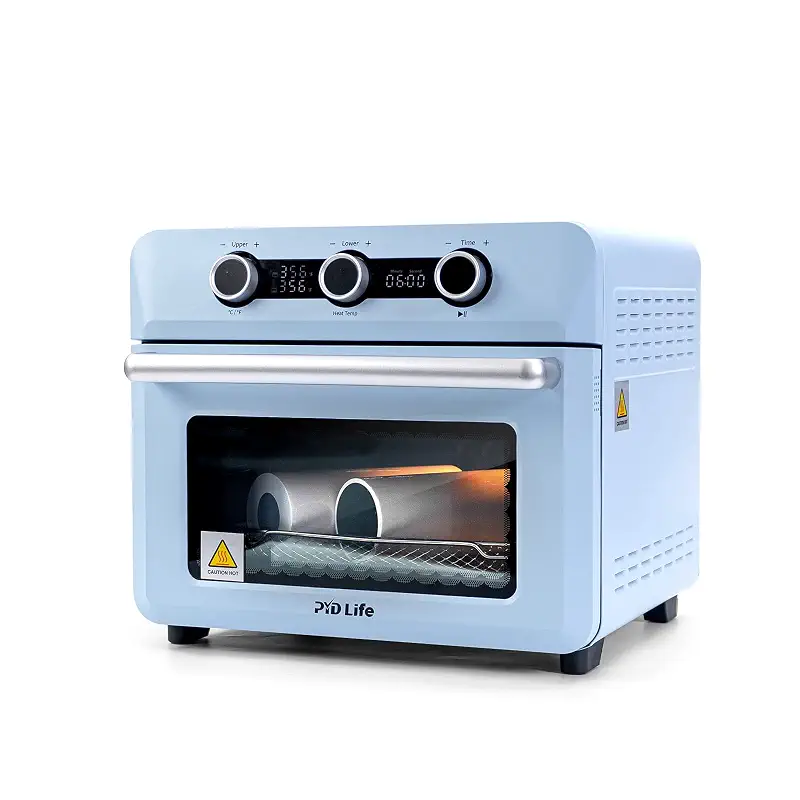
PYD Life Sublimation Oven Machine Convection Oven for Tumblers Mugs 25 L | 120 V 1600 W Light Blue Oven for Sublimation Blanks Cups Water Bottles Pens Bulk Printing
4.7(705)
Fast heating, consistent 360° air circulation, and four-to-six-piece batch capacity make this the workhorse choice for small production.
Ideal for: Small business owners and serious crafters who process 4-6 tumblers per batch and prioritize even color saturation.
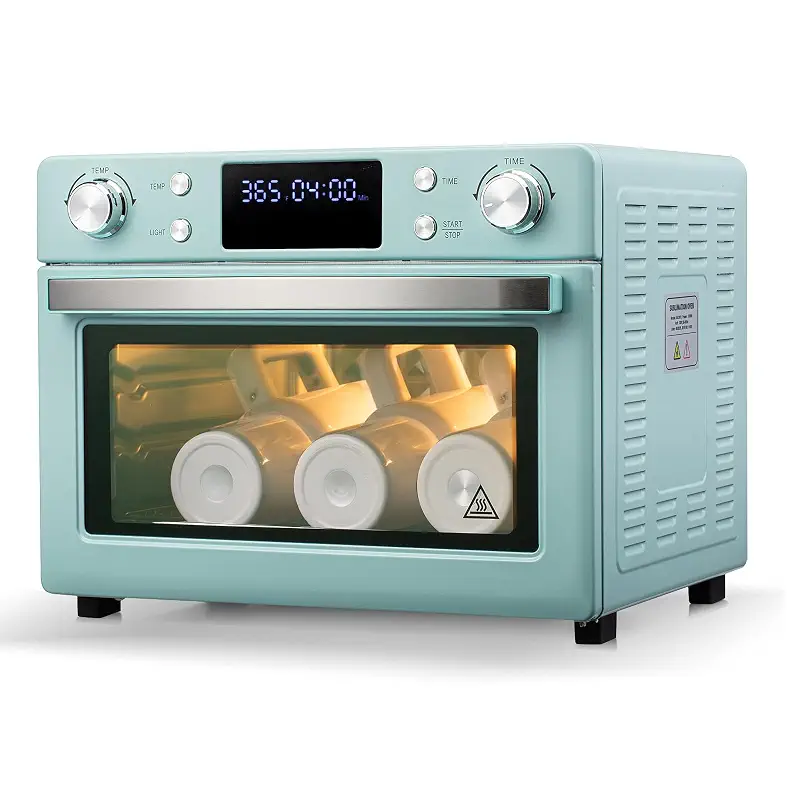
The PYD Life stands out because it solves what most crafters struggle with: temperature dead zones that leave ghosted or faded areas on tumblers. The dual heating tubes (top and bottom) paired with active convection push warm air around the chamber continuously, so a 20 oz skinny tumbler comes out evenly saturated without halfway rotation. Owners report the machine heats to temperature in under a minute, then holds it stable: critical for repeatability when you're processing multiple batches.
Batch throughput matters in this category, and this model fits four to six 11 oz ceramic mugs or four 20 oz conical tumblers at once using heat-shrink sleeves. That's a real productivity jump from single-item presses. The 25 L capacity is generous enough for tapered and oversized blanks that don't fit traditional equipment. The ceramic enamel interior resists staining, and the glass door provides good visibility without opening the chamber mid-cycle.
One practical note: owners recommend spot-checking internal temperature with an independent thermometer before running expensive sublimation blanks, as the panel display can drift by 5°F. The 1600 W draw also requires a dedicated circuit or stable power line, sharing with other heat tools may trip breakers. Still, the quality and consistency buyers report make it the safest pick for both beginners and small-batch producers.
Pros
Heats to target temperature in under 60 seconds
Dual-tube convection eliminates hot spots and ghosting
Processes four to six tumblers simultaneously with shrink wrap
Cons
Panel temperature reading may drift by 5°F; verify with external thermometer
Requires stable 1600 W power circuit to prevent breaker trips
Key features
1600 W dual heating tubes with 360° air circulation system
25 L capacity fits 40 oz tumblers with handles and oversized blanks
Temperature range 0–446°F, timer 1–60 minutes
Ceramic enamel interior resists staining and oxidation
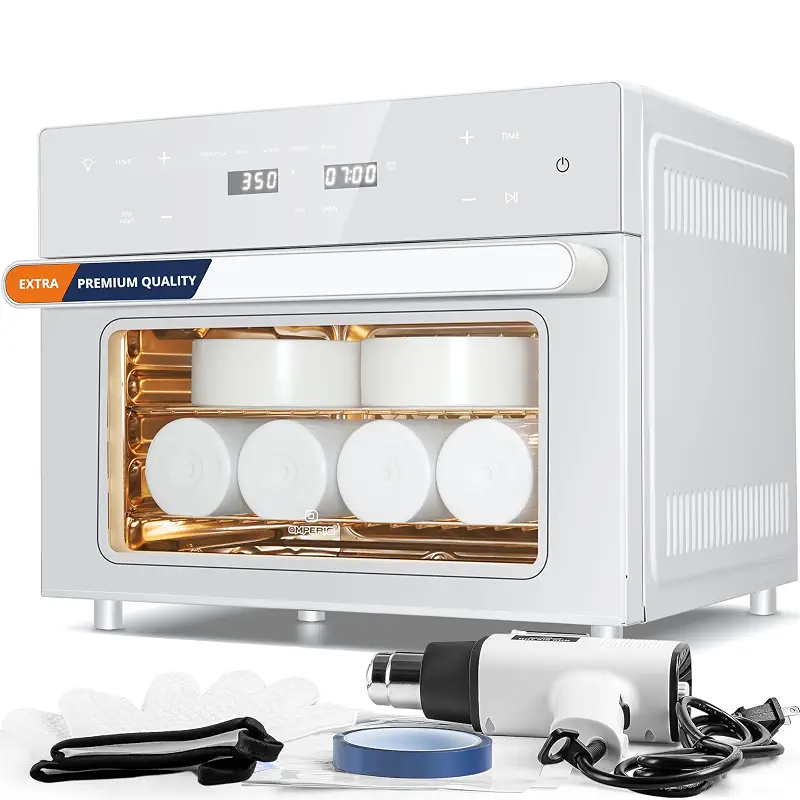
Ideal for: Beginners and crafters who want a complete system with no additional purchases, plus stainless-steel durability in a visually polished design.
The Omperio shines if you're buying your first dedicated oven and want everything included out of the box: a heat gun, premium thermal gloves (two pairs instead of one), 25 shrink-wrap sleeves, and heat tape. That removes the "what else do I need to order?" problem many beginners face. The 32 Qt capacity is slightly larger than some competitors, and the stainless-steel exterior and cold-bent-steel construction feel more durable than plastic-housed alternatives.
Touchscreen control is a quality-of-life feature here: buttons are intuitive, and the digital display shows preheating status, active countdown, and completion alerts. Owners consistently note the manual is thorough with pictures and temperature-timing charts, making it genuinely beginner-friendly. The patented "hot and cold air" circulation system (double-blade fans) keeps the exterior cooler than many rivals, which matters in small workspaces or if you're running it near other tools.
Where the Omperio differs from the best toaster oven for sublimation alternatives is that this is purpose-built for sublimation, not a repurposed kitchen appliance. Interior volume is optimized for tumbler depth, and owners report no off-putting chemical smell during cure (a common complaint with press-based heat). One downside is the touchscreen defaults to 350°F instead of the often-ideal 355°F, so you'll adjust manually each cycle until you find your sweet spot. The 1800 W demand is slightly higher, but no more than the PYD Life.
Pros
Touchscreen controls with preheating and completion status alerts
Complete starter kit includes heat gun, two gloves, shrink wrap, and tape
Stainless-steel interior and cold-bent-steel exterior for lasting durability
Cons
Touchscreen defaults to 350°F; requires manual reset for optimal 355°F sublimation temps
Slightly larger footprint than compact models, may crowd tight workspaces
Key features
32 Qt capacity with 1800 W power, 110/120 V input
Touchscreen digital display with preheat countdown and status indicators
Includes heat gun, two thermal gloves, 25 shrink sleeves, and heat tape
#3 Pick
Best for Large Capacity
AceSubli
Sublimation Oven Machine 25L 110V 1700W Blue with Digital Display, Large Capacity Convection Oven with LED Light for Sublimation Blanks Tumblers Mugs Cups Bottles Bulk Transfer with Glove
5.0(6)
Extended batch size supports up to three 40 oz tumblers or four skinny tumblers per cycle, maximizing hourly output.
Ideal for: Small-business owners and high-volume crafters who need to process 3–4 tumblers per batch and value rack flexibility.
The AceSubli prioritizes throughput without sacrificing evenness. At 25 L with height-adjustable racks, it fits three large 40 oz handled tumblers: roughly 30% more volume than many competitors in the same category. Multiple rack slots let you position trays at different heights; the upper zone runs slightly hotter, which some crafters use deliberately to finesse color intensity on special designs.
Built-in LED lighting is a small but useful touch: you can peek inside without cracking the door and losing preheat. The 1700 W heater delivers crisp temperature increments (5°F steps), so dialing in your exact settings for different blank types is straightforward. Auto-shutdown after 3 minutes of inactivity and a 3-minute preheat hold (then automatic stop) are safety features that prevent overcooking if you step away.
Compared to best mini heat press alternatives, this oven's batch capacity means fewer load cycles per hour: a meaningful difference if you're juggling multiple custom orders. One owner noted slightly uneven heating on one side of a tumbler their first try, but attributed it to not rotating halfway; the machine handled multiple batches evenly after that learning curve. The stainless-steel chamber is robust. Digital controls use four buttons and dual rotary knobs rather than a touchscreen, so there are fewer electronic points of failure, though some may find the interface less intuitive than newer models.
Pros
25 L capacity fits three 40 oz tumblers or four skinny tumblers at once
Adjustable racks allow height positioning for intentional heat tuning
Built-in LED light for real-time visibility without opening door
Cons
Button and rotary-knob interface requires learning curve compared to touchscreen models
Requires optimal preheat timing to avoid uneven results on first use
Key features
1700 W power with 25 L capacity and adjustable racks
Temperature range 200–450°F in 5°F increments, timer 1–90 minutes
Stainless-steel interior chamber with built-in LED light
Auto-preheat (3 min hold), pause function, 3-minute auto-shutoff safety
#4 Pick
Best Budget-Friendly
Offnova
OFFNOVA Sublimation Oven Machine, 20L 110V 1250W Convection Oven for Sublimation Blanks Mugs Tumblers Cups Water Bottles Bulk Printing, with Oven Glove and Shrink Wrap
4.5(81)
One-touch Mode Button preset and compact 20 L footprint deliver quick results at entry-level pricing without compromising core performance.
Ideal for: Hobbyists and part-time crafters who want quick setup, preset controls, and room-efficient footprint without bulk.
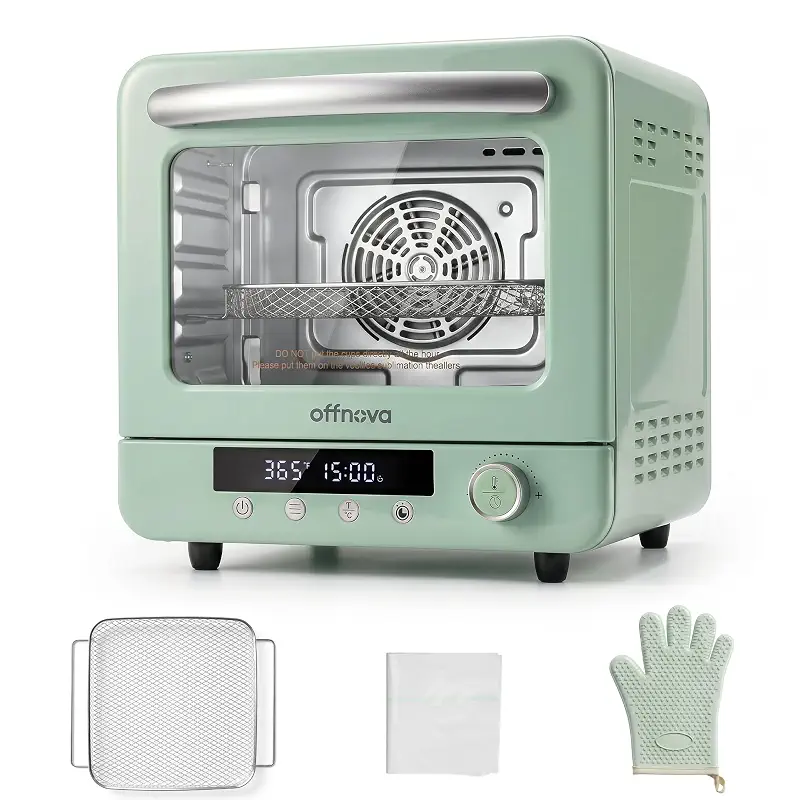
The Offnova's main selling point is simplicity: a dedicated Mode Button that defaults to 365°F for 15 minutes: the settings that work for most standard tumblers. Press once, and the oven begins preheating without menu diving. For crafters who want to avoid fussing with controls, this is friction reduction that matters. The 1250 W heater and 20 L chamber are on the smaller end, but adequate for up to four ceramic mugs or two large 40 oz tumblers per cycle.
3D heating via a hidden rear heating element and a high-speed motor (2000 RPM) maintains even temperature throughout the cycle. An NTC temperature sensor and dynamic balancing algorithm keep fluctuations minimal: important for consistent color payoff batch to batch. The Teflon-coated interior resists rust and cleans easily, a small durability win. Owners report trouble-free operation at this price point, and the package includes an oven glove and five shrink wraps to get started.
The trade-off versus the PYD Life or Omperio is smaller batch volume and less total capacity. Some buyers also report initial button responsiveness issues (one owner's time knob stuck), though the company's customer service replaced units for affected customers. Sizing works best for 20 oz and 30 oz tumblers; oversized or handled 40 oz blanks are a tight fit. If you're just testing the sublimation waters before investing heavily, this is the lowest entry barrier.
Pros
One-touch Mode Button preset (365°F, 15 min) eliminates guesswork for standard tumblers
Compact 20 L footprint saves counter and storage space
Teflon-coated interior resists rust and wipes clean easily
Cons
Smaller capacity limits batch size to two 40 oz tumblers or four smaller mugs
Button controls sometimes exhibit initial stickiness; verify functionality on arrival
Key features
1250 W with 20 L capacity, fits 20 oz and 30 oz tumblers efficiently
One-touch Mode Button defaults to 365°F for 15 minutes
3D heating via hidden rear element with 2000 RPM circulation motor
NTC sensor maintains stable temperature. Teflon interior for easy cleaning
#5 Pick
Most Compact
Vevor
VEVOR Sublimation Oven Machine, 13 Qt, Fits 20oz Tumblers, with 50 Shrink Films, 1 Tape and 2 Heat Gloves, Oven for Sublimation Blank Tumblers, Mugs, Bowls, Off-White
4.0(22)
Smallest footprint in the lineup at 13 Qt, ideal for tight studios and single-mug test runs with full beginner-friendly accessory set.
Ideal for: Hobbyists with space constraints, gift-makers, and testers who want to try sublimation without a large upfront investment or footprint.
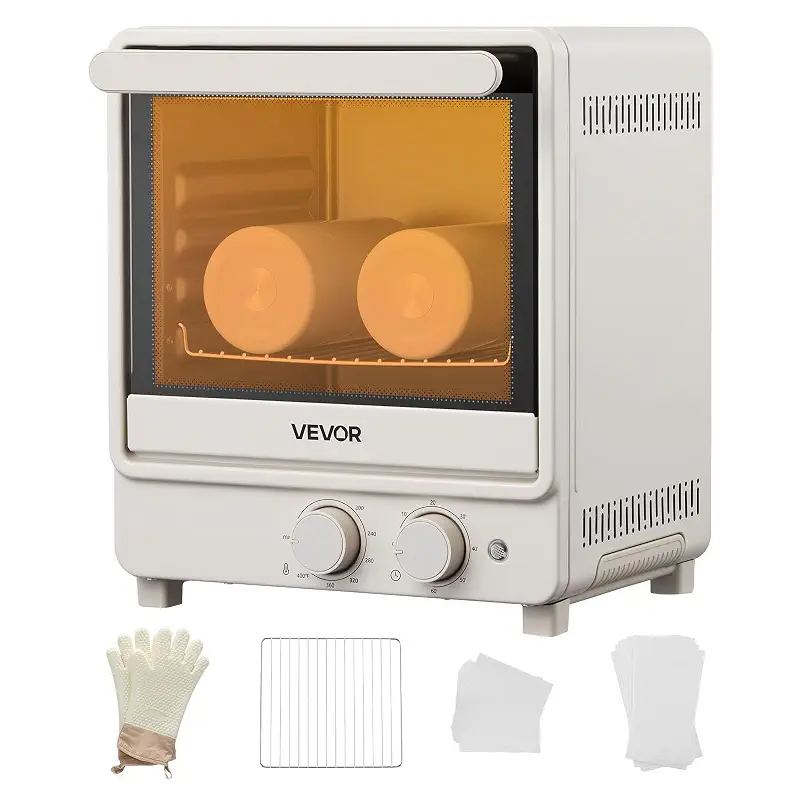
The Vevor is the entry point if counter or storage space is your constraint. At 13 L (about half the volume of the PYD Life), it's genuinely slim and easy to tuck onto a shelf between projects. Simple panel dials (0–400°F, 0–60 seconds) require no menu navigation: straightforward enough that a first-timer won't hesitate to plug in and experiment. The 360° all-around heating principle is the same as larger models, just in a smaller envelope.
The package includes fifty shrink films, a roll of tape, and two heat-resistant gloves: excellent value for a beginner kit. One or two 20 oz tumblers fit comfortably; a single large 40 oz tumbler fills the chamber but leaves little room for batch stacking. Owners praise the simplicity and say it completes jobs faster than a mug press for their personal use or small gifts. The interior resists rust, and cleanup is minimal.
The downside is scale: if your projects grow beyond occasional gifting, you'll outgrow this quickly. One buyer reported the temperature reading ran 20°F hot, requiring manual downward adjustment to hit true target: a quirk to verify on your first run. Compared to larger models, heat retention is less stable during door opening and closing, so batch timing matters more. The Vevor makes sense as a test-drive before committing to a full-size oven, or for crafters who genuinely make one or two items at a time.
Pros
Compact 13 L size fits small studios, shelves, and tight workspaces
Simple dial controls and pre-loaded accessories lower first-use anxiety
Full beginner bundle includes fifty shrink films, tape, and two gloves
Cons
Temperature reading may run 20°F high; requires downward manual adjustment
Single-item or two-item batches; capacity limits production scaling
Key features
Compact 13 L chamber, 1250 W power, 0–400°F range, 0–60 second timer
360° all-around heating for even, vivid color transfer
Simple panel dials with beep alert and auto power-off
Includes fifty shrink films, heat tape, and two heat-resistant gloves
How to Choose a Sublimation Oven for Tumblers
Four trade-offs that actually matter when matching a convection oven for sublimation tumblers to your kitchen.
Batch Size and Capacity Matter
The first question is how many tumblers you process per cycle. A hobby crafter making gifts for friends can work with 13–20 L and one tumbler at a time. Small-business owners need 25+ L to fit four to six pieces per batch: the productivity difference is dramatic if you're handling dozens of orders monthly. Larger chambers also accommodate tapered or handled tumblers that don't fit compact presses. Consider your typical order size and future growth before choosing.
Even Heat and Temperature Stability
Uneven heating causes ghosting: faded areas where ink didn't fully transfer. Look for machines with dual or rear heating elements plus active convection fans that maintain 360° airflow. Temperature control should hold within 5°F of your setting; check buyer feedback for accuracy. Many owners recommend verifying actual internal temperature with an independent oven thermometer before running expensive sublimation temperature settings by material through your first production run.
Control Interface and Ease of Use
Sublimation ovens come with button panels, rotary knobs, or touchscreens. Button interfaces (simple, fewer failure points) suit repeatable workflows where you use the same settings daily. Touchscreens offer precision but introduce electronic complexity. Preset Mode Buttons eliminate guesswork if you're new to the process. Choose based on your comfort with technology and how much you value convenience versus control.
Build Quality and Workspace Fit
Stainless-steel interiors and cold-bent-steel exteriors resist rust and last longer than plastic housings. Ceramic enamel linings reduce staining. Compact footprints suit home studios; larger machines need dedicated counter or mobile cart space. Check the exterior dimensions (depth, width, height) against your workspace and ensure you can pull a tumbler out safely without bumping into walls or other tools. A glass door with interior lighting lets you monitor progress without opening the chamber.
Frequently asked
Quick answers to the questions readers ask most.
Can I use a regular kitchen convection oven for sublimation?
A regular oven can work in a pinch, but purpose-built sublimation ovens deliver better results because they're designed for tumbler depth and consistent small-batch heating. Kitchen ovens have wider internal cavities that create hot and cold zones, leading to patchy color transfer. Sublimation machines use dual heating elements and stronger convection to saturate all surfaces evenly. For occasional projects, a kitchen oven may suffice; for quality-critical or repeat work, a dedicated machine is worth the investment.
What temperature and time should I use for different tumbler sizes?
Most sublimation ovens use 355–365°F for 5–7 minutes, but timing varies by tumbler size and material. A 20 oz ceramic mug typically needs 5–6 minutes at 355°F, while a 40 oz stainless-steel tumbler may need 6–8 minutes. Glass requires slightly lower heat to avoid thermal shock. Start conservative, test your settings on a cheap blank first, then adjust upward if color seems faint. Keep a log of what works: every oven's actual temperature may drift slightly from the display.
Do I need to rotate the tumbler during sublimation?
No. That's one advantage of convection ovens over presses: the constant 360° airflow eliminates the need to flip or rotate mid-cycle. If you're using heat-shrink sleeves (which most sublimators are), rotation would break the seal anyway. Even heating from all sides is why convection ovens are preferred for full-wrap designs and tapered tumblers that presses struggle with.
What size shrink wrap sleeves should I buy?
Shrink-wrap size depends on your tumbler diameter and height. A standard 20 oz skinny tumbler (2.5" diameter) needs a smaller sleeve than a 40 oz handled tumbler (3.5–4" diameter). Most ovens' manuals or seller guides include sleeve sizing charts. Buy a sample pack first to see what fits your blanks, then order in bulk. Heat guns are essential to shrink the sleeve tightly around the tumbler before sublimation.
How do I know if my oven is heating evenly?
Test with a cheap blank first. Sublimate a plain white tumbler at your intended settings, then check for color consistency across the entire wrap. Faded spots or ghosting signal hot or cold zones. If one side comes out paler, your tumbler may have been positioned too close to a heating element, or the oven's convection isn't mixing air evenly. Adjust placement in the next batch, or try raising the rack if your oven has adjustable slots.