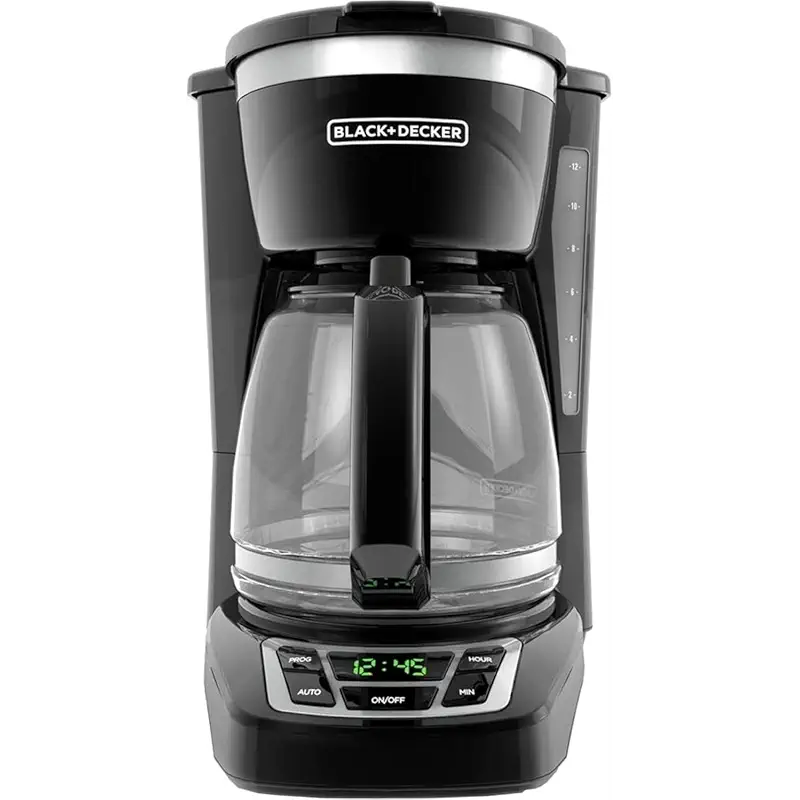
Ideal for: Daily coffee drinkers who brew full pots and want programmable convenience without fuss.
The Black+Decker Vortex sits at the sweet spot for everyday coffee drinkers. It brews a full 12-cup carafe, includes a sneak-a-cup feature so you can pour mid-brew without mess, and lets you program a 24-hour delay so coffee is ready when you wake up. Owners consistently mention it as dependable over years of daily use, and that matters when you're making this investment.
I'd choose this over specialty machines if you prioritize simplicity and volume. The digital controls feel solid, the carafe pours cleanly, and the two-hour auto-shutoff adds a safety margin. What you're not getting is brew strength options or a removable reservoir: you fill it from the top, which is fine for most kitchens.
The one real limitation is that the warming plate keeps coffee hot for only about two hours, and a few owners noted that if you're a slow sipper or drink coffee later in the day, you'll need to reheat it. For a household that goes through a pot in one sitting, that's no issue at all.
Pros
Programs 24 hours in advance; brews quickly and reliably
Sneak-a-cup technology stops drips mid-brew
Durable: owners report 4+ years of trouble-free service
Large, easy-to-read display and simple button layout
Cons
Warming plate shuts off after only 2 hours
No reusable filter option; requires paper filters
Key features
12-cup glass carafe with measurement markings and secure handle
24-hour programmable delay brew with QuickTouch buttons
Sneak-a-Cup feature pauses flow for mid-brew pouring
2-hour auto-shutoff for safety; 2-hour keep-warm cycle
Washable brew basket; works with standard paper filters
#2 Pick
Best for Precise Temperature Control
Cuisinart
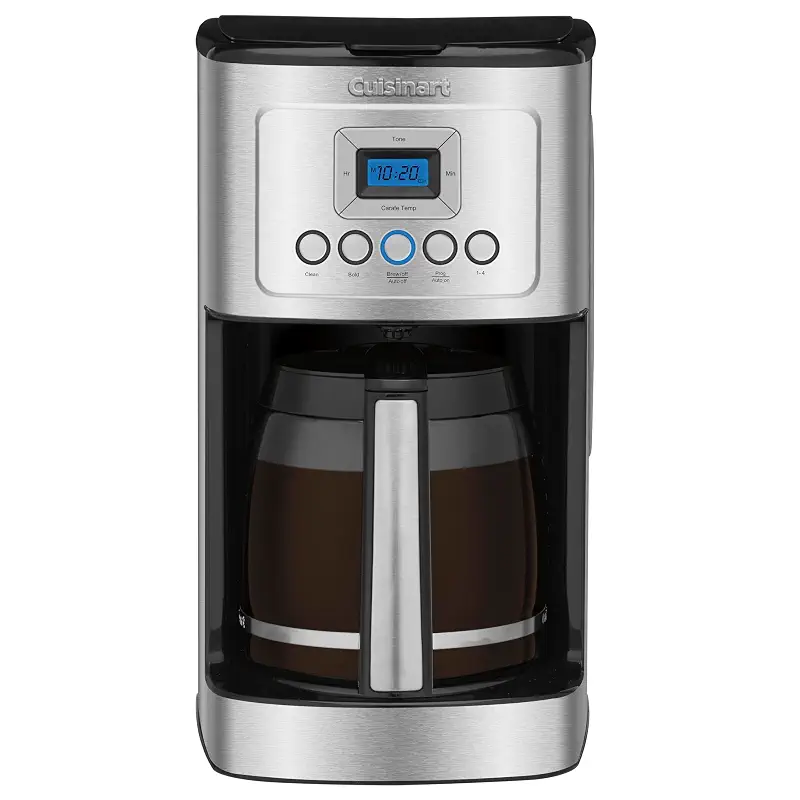
Cuisinart Coffee Maker, Programmable, Stainless Steel, 14-Cup Glass Carafe | PerfecTemp coffee machine with 1-4 cup settings, strength control, auto-off & a reusable gold tone filter, DCC-3200
4.4(44,079)
14-cup brewer with adjustable warming plate temps and brew strength settings for flavorful coffee.
Ideal for: Coffee enthusiasts who want hotter brews, strength control, and a larger carafe for entertaining.
The Cuisinart PerfecTemp stands apart because it actually solves a problem many coffee drinkers face: lukewarm coffee. The adjustable carafe temperature control (Low, Medium, or High) lets you dial in exactly how hot you want your pot to stay, and owners love this flexibility. It also brews hotter water than many competitors, which means better extraction and richer flavor in the cup.
Compared to the Black+Decker, the Cuisinart adds brew strength control (Regular or Bold) and a reusable gold-tone filter, which saves money over time and reduces waste. The 14-cup capacity and 24-hour programmable delay are also here. One trade-off: this machine is larger and requires a bit more counter space.
I should note that a small number of owners reported manufacturing inconsistencies, particularly with units made in China having fast-running clocks. That's unusual, but it's worth being aware of. Most owners report years of reliable service and excellent coffee quality.
Pros
Adjustable warming-plate temperature (Low, Medium, High)
Brews noticeably hotter than many competitors
Reusable gold-tone permanent filter included
Regular and Bold brew strength modes
Cons
Larger footprint requires more counter space
Occasional quality-control issues reported with certain batches
Key features
14-cup glass carafe with easy-pour design
PerfecTemp technology brews hotter for better extraction
Adjustable carafe warming temperature (Low, Medium, High)
Ideal for: Households wanting hot coffee, iced coffee, and specialty drinks from one compact machine.
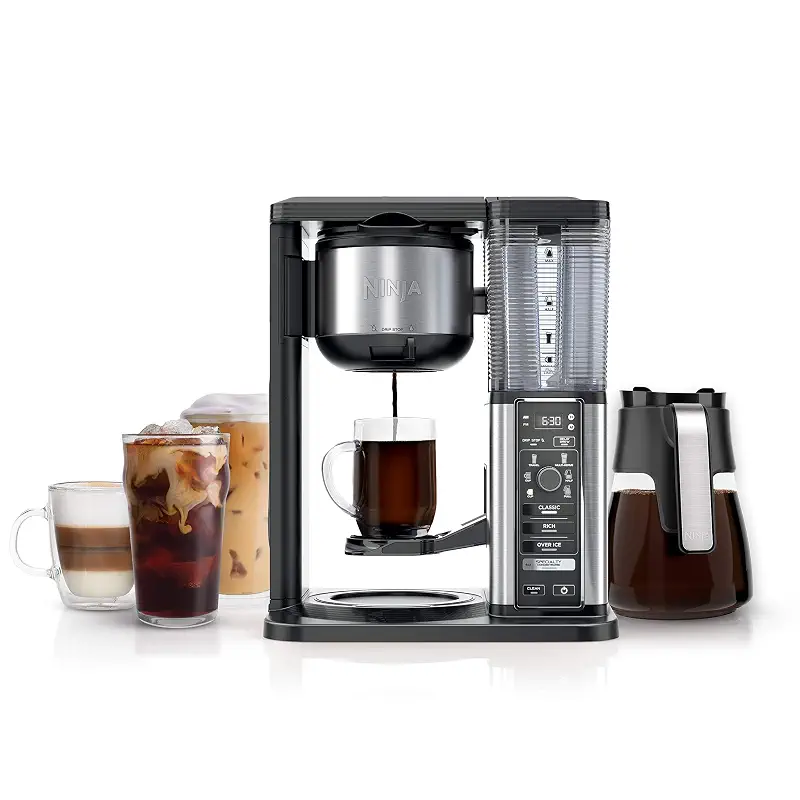
The Ninja is a different animal from traditional drip makers. It offers four brew styles (Classic, Rich, Over Ice, Specialty Brew), a built-in milk frother, and six brew sizes from a single cup to a full carafe. Owners rave about the versatility: one reviewer used it four to five times daily and found something different to make each time.
What sets this apart is the Specialty Brew mode, which concentrates the coffee so you can pour it over frothed milk for cafe-quality drinks at home. The Over Ice setting avoids the dilution problem that plagues many iced-coffee makers. The removable water reservoir and dishwasher-safe components make cleanup easier than expected. Where the Ninja trades off against the Cuisinart is in the absence of a traditional warming plate; you get one hour of keep-warm, then it powers off.
The permanent filter can leave some sediment in the cup if you don't use paper filters, and the full-carafe water line sits very close to the top, so you can't fill from a fridge dispenser without spilling. These are manageable quirks for someone who values the brew versatility.
Pros
Four brew styles plus iced and specialty coffee options
Built-in fold-away milk frother for lattes and cappuccinos
Six brew sizes from single cup to full carafe
Removable water reservoir and mostly dishwasher-safe parts
Cons
Only one hour of keep-warm; auto-shuts off after that
Permanent filter can leave sediment without paper filters
Key features
Four brew styles: Classic, Rich, Over Ice, Specialty Brew
Fold-away milk frother for hot and cold foam
Six brew sizes from Cup to 10-cup full carafe
40-oz removable water reservoir for easy sink filling
Automatic shutoff after 1 hour; permanent and paper filter compatible
#4 Pick
Best Single-Serve Pod Brewer
Keurig
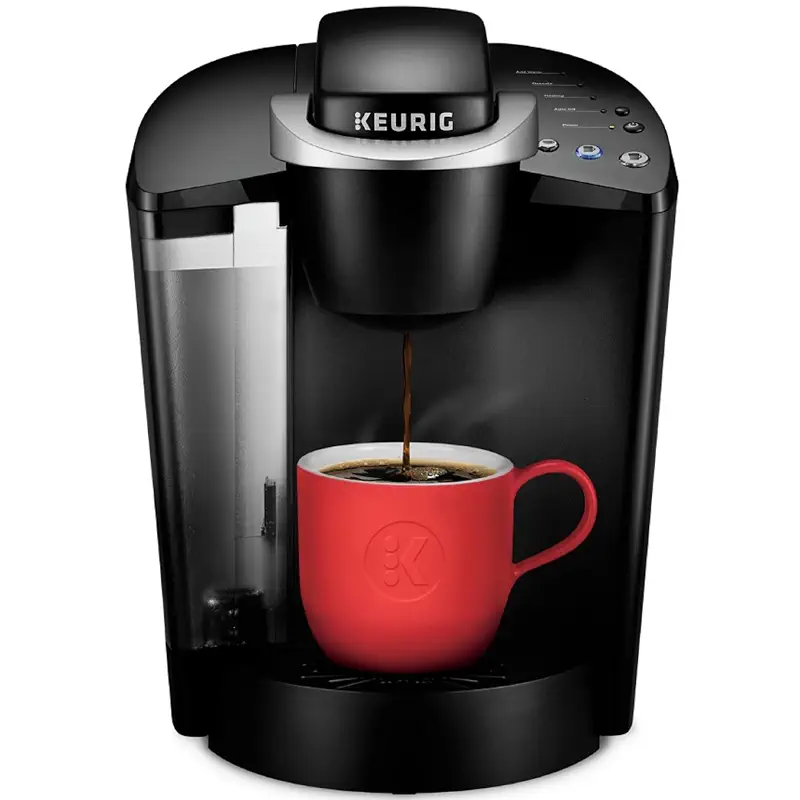
Keurig K-Classic Single Serve K-Cup Pod Coffee Maker, with 3 Brew Sizes, 48oz Removable Reservoir, Black
4.6(109,614)
Compact machine brewing individual cups in under a minute with three size options and a large water reservoir.
Ideal for: Solo drinkers, office workers, and anyone prioritizing speed and variety over volume.
The Keurig K-Classic is the simplest way to make a single cup of coffee without waste or fuss. Three brew sizes (6, 8, 10 ounces), a 48-ounce removable water reservoir, and simple button controls define it. Use any K-Cup pod or fill the reusable filter with your own grounds. Owners who've had it for years appreciate the reliability and the fact that you don't make coffee you won't drink.
This is where drip versus pod coffee makers really diverge. The K-Classic trades the ritual and volume of a full pot for speed and variety. You can make a strong espresso-like 6-ounce brew or a longer 10-ounce mug without brewing a second cup you don't need. The learning curve is nonexistent. However, if your household drinks 3+ cups each morning, a drip brewer like the Black+Decker or Ninja Fresh Brew (which offers both options) may make more sense economically and environmentally.
One thing to know: K-Cup pods cost more per cup than ground coffee, and the plastic waste bothers some people. But the convenience and machine reliability are real, and the reusable filter option lets you use your own beans.
Pros
Brews a single cup in under a minute with no waste
Three cup sizes (6, 8, 10 oz.) for strength or volume control
Large 48-oz removable reservoir; brews 6+ cups before refilling
Compatible with reusable K-Cup filter for your own grounds
Cons
K-Cup pods cost more per cup than ground coffee
Plastic pod waste if you don't use reusable filters
Key features
Brews single cups in three sizes: 6, 8, or 10 ounces
Simple one-button operation with color-coded brew sizes
48-oz removable water reservoir; auto-off after 2 hours
Ideal for: Coffee enthusiasts wanting hotter, more flavorful brews in a 12-cup format with programming.
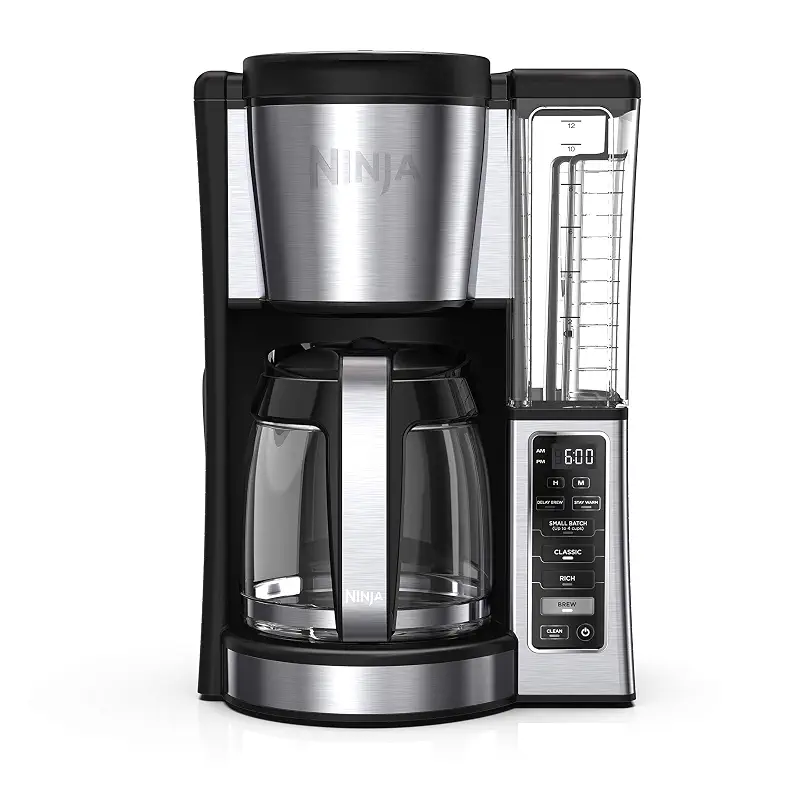
The Ninja Fresh Brew brings café-quality extraction to a traditional drip maker. It brews hotter and includes a small-batch function so 2-4 cups taste as rich as a full pot: no watering-down flavor. The removable 60-ounce water reservoir makes filling intuitive, and the adjustable warming plate keeps coffee hot and fresh for up to four hours without scorching it.
Where this diverges from the Black+Decker is in brew customization. You get Classic or Rich modes, a pause-and-serve feature for mid-brew pouring, and a descaling button that guides you through cleaning. The included measuring scoop shows exactly how much coffee to use for your brew size, which takes the guesswork out of the equation. Owners consistently mention that the coffee tastes noticeably less bitter than cheaper machines.
The main considerations are the permanent mesh filter (which works better with a slightly coarser grind) and the fact that this machine is taller and more substantial than basic models. If your cabinet clearance is under 15 inches, measure first. Some owners also use paper filters to avoid any ground sediment, which is an option. If aesthetics matter and you're drawn to sleek finishes, the Ninja Fresh Brew's stainless-steel design contrasts nicely with models like the best white coffee maker, which offer a different visual style for minimalist kitchens.
Pros
Hotter brewing technology extracts more flavor and prevents bitterness
Up to 4-hour adjustable warming plate keeps coffee fresh
Rich and Classic brew strength modes for flavor control
24-hour programmable delay brew with mid-brew pause feature
Cons
Taller design requires 15+ inches of cabinet clearance
Permanent filter may need coarser grind to avoid sediment
Key features
12-cup glass carafe with smart brew-through lid design
Hotter brewing technology with even saturation and temperature control
Small batch function ensures flavor for 1-4 cup brews
60-oz removable water reservoir with easy sink filling
Classic and Rich brew modes; 24-hour programmable delay
How to Choose the Right Coffee Maker Under 300
Four trade-offs that actually matter when matching a coffee maker under 300 to your kitchen.
How Much Coffee Do You Brew Each Time?
If you drink one or two cups and move on, a single-serve pod brewer like the Keurig K-Classic saves you money and eliminates waste: no full pot sitting on the warmer. If your household goes through 6-12 cups daily, a drip brewer with a large carafe (like the Black+Decker or Ninja Fresh Brew) makes more sense economically. The Ninja bridges both worlds with six brew sizes, so you can adjust based on need.
What Flavor Profile Matters to You?
Budget drip makers can produce bitter coffee if the water doesn't heat hot enough or distributes unevenly. The Cuisinart and Ninja Fresh Brew specifically address this with hotter brewing temperatures and even saturation technology. If you're comparing drip versus pod coffee makers, remember that pods offer consistency and convenience, while drip machines give you more control over grind size and brew strength. Cold brew and iced coffee devotees should look at the Ninja for its dedicated Over Ice setting.
Counter Space and Design Preferences
Single-serve machines like the Keurig occupy minimal footprint. The Black+Decker and Cuisinart are mid-sized. The Ninja Fresh Brew is taller and requires checking your cabinet clearance. If design matters (stainless steel accents, compact shape, modern look) the Ninja models score high. The Keurig is the most compact if you're tight on space. Budget an extra 2-3 inches for steam clearance behind any machine.
Maintenance and Ease of Use
Programmable delay brew is offered on all the drip models here, which is convenient. Removable water reservoirs (found on the Ninja, Cuisinart, and Keurig) make filling easier than pouring into the top. Permanent filters save money but may need slightly coarser ground coffee. Paper filters eliminate sediment but cost more over time. Most owners descale every few months with vinegar and water, a simple process the Ninja automates with a dedicated clean button. Understanding coffee maker brew strength goes a long way toward dialing in your preference without trial and error.
Frequently asked
Quick answers to the questions readers ask most.
What's the difference between a 12-cup and 14-cup coffee maker?
The number refers to standard 5-ounce servings, not real mugs. A 12-cup brewer holds roughly 60 ounces of water; a 14-cup holds about 70 ounces. You'll get 3-4 actual mugs from a 12-cup machine and 4-5 from a 14-cup. The Cuisinart's larger capacity is useful if you entertain or have a big household; the Black+Decker's 12-cup size handles most daily routines.
Can I use reusable filters instead of paper filters?
Yes, most drip machines here support reusable permanent filters (metal or mesh). The Cuisinart includes a gold-tone reusable filter. Permanent filters work fine but may leave fine sediment in your cup: slightly coarser ground coffee helps. Paper filters cost more over time but eliminate sediment and catch oils that some find affect taste. Many owners use both depending on their mood.
How often do coffee makers need descaling?
Every 3-6 months, depending on water hardness. Hard water builds mineral deposits faster, so descale sooner if you notice slower brewing. The process is simple: fill the reservoir with equal parts white vinegar and water, run a full brew cycle, let sit, then run plain water through to rinse. The Ninja Fresh Brew has a dedicated descale button that guides you. Don't skip this: buildup reduces heat efficiency and coffee quality.
Why does my coffee taste bitter?
Bitterness usually comes from water that's too hot or grounds that brew too long. Budget machines sometimes don't heat water to the ideal 195-205°F range. The Cuisinart and Ninja Fresh Brew address this with hotter brewing technology. Also check your grind size: too fine, and water over-extracts the coffee. Use the measuring scoop your machine includes (the Ninja and Cuisinart both provide one) and start with the classic brew setting rather than bold if bitterness is an issue.
How long do coffee makers typically last?
With regular use and monthly descaling, a mid-range drip brewer lasts 5-10 years. Keurig owners in these reviews report 9+ years from a single machine. The heating element is usually the first component to wear out. Pod machines tend to outlast drip brewers because they have fewer moving parts, but this depends entirely on water quality and maintenance. Warranty coverage (usually 1-3 years) protects against early defects.