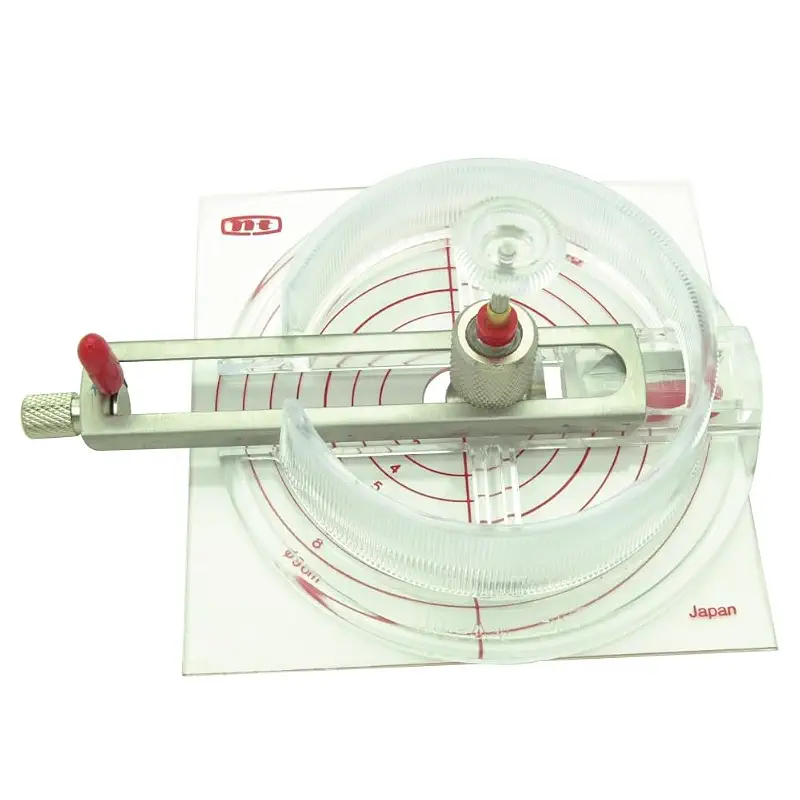
Ideal for: Scrapbookers, label makers, and crafters prioritizing pinhole-free circles in paper and thin materials.
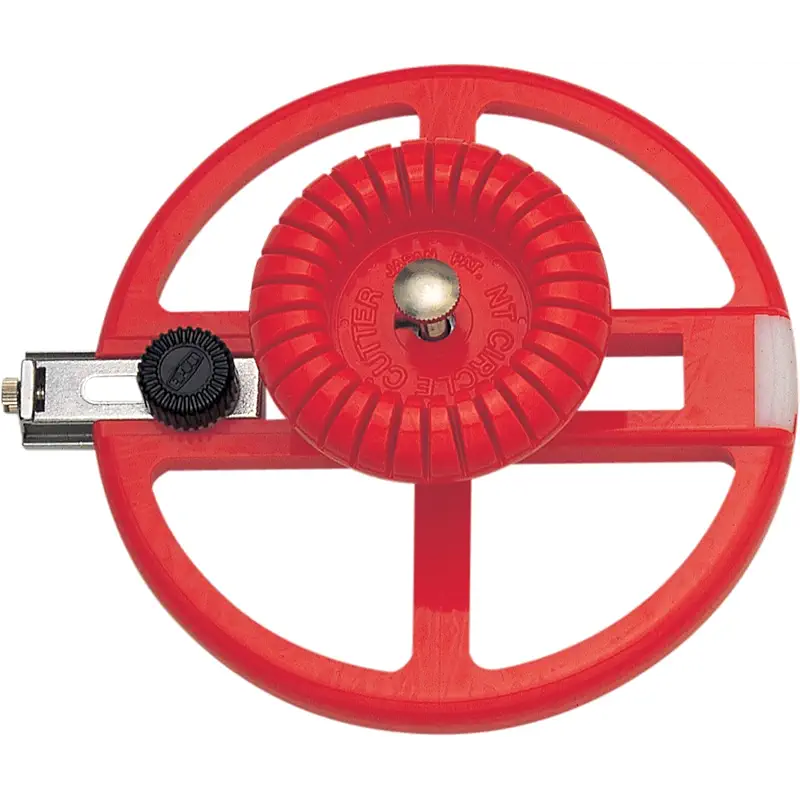
The NT Cutter iC- is the workhorse choice for anyone serious about clean circles without visible puncture marks. Its 3/4-inch to 6-3/4-inch range covers the most common craft and hobby cuts, and the no-pinhole design means finished work doesn't need touch-up. The mechanism takes practice to master. You need to dial in blade depth carefully, apply steady downward pressure on the center point while rotating smoothly, and recognize that multiple gentle passes cut cleaner than one aggressive stroke. Owners report that once the rhythm clicks, speed and accuracy become reliable.
This tool excels with paper, photo stock, thin leather, and vinyl up to about 0.02 inches thick. It struggles with thick materials or anything that resists a rotating motion. The included six blades and built-in storage are genuine conveniences, and the carbon steel blades hold an edge well enough that most users get dozens of cuts per blade. Compared to rotary models like the OLFA, this demands more hand control and feels more mechanical, but the pinhole-free finish appeals to anyone who cares about the final appearance of their work.
Budget-conscious buyers and detail-focused crafters who don't mind the learning curve will appreciate the value here. If you're cutting the same size repeatedly for stickers, labels, or scrapbook layouts, marking the adjustment bar with a permanent marker (as one owner suggests) makes resizing painless.
Pros
No center pinhole marks the finished piece
Six replacement blades included with built-in storage
Cuts clean, consistent circles with practice
Works well on paper, leather, and thin vinyl
Cons
Steep learning curve requires patience and multiple practice cuts
Blade depth adjustment is finicky and affects cut quality
Key features
Adjustable diameter range 3/4" to 6-3/4" with metric scale
No center pinhole, preserving the final appearance of the cut
Carbon tool steel blades stay sharp through many cuts
Six replacement blades included in compartment storage
#2 Pick
Best for Heavy Materials
NT Cutter
NT Cutter Heavy-Duty Circle Cutter, 1-3/16” ~ 6-5/16” Diameter (C-2500P) | 1 Circle Cutter
4.0(403)
Rugged pin-based cutter designed for demanding tasks like drywall, carpet, and veneer; overkill for paper but invaluable for construction.
Ideal for: Construction professionals, flooring installers, and DIYers cutting circles in drywall, carpet, tile, and veneer.
The NT Cutter Heavy-Duty is built for professionals and serious DIYers tackling installation and repair work where circle holes must be clean and efficient. Its slightly larger range (1-3/16 to 6-5/16 inches) and heavier construction handle materials up to 2mm thick (ceiling tiles, thin veneer, rubber flooring, and carpet with backing) that would wear down lighter cutters quickly. The non-slip circular grip and robust polycarbonate resin body suggest durability on job sites.
Where the standard NT Cutter (position 1) targets the scrapbooking crowd, this model solves construction and utility problems. Owners successfully cut rounded corners in ABS plastic for appliance repair, scored acrylic, and punched holes in drywall without issue. The trade-off is size and weight; the grip is noticeably larger, and at this capacity level, it's genuinely heavy-duty rather than nimble. A few reviews flag missing blades on arrival and vague instruction translation, which points to inconsistent quality control and a steep learning curve for newcomers.
Skip this if you mainly cut paper or thin cardstock. The steep price for a tool you'll use occasionally on occasional projects doesn't pencil out. But for contractors, flooring installers, or anyone regularly cutting circles in construction materials, the durability and performance justify the investment.
Pros
Robust construction handles tough materials up to 2mm thick
Non-slip grip and sturdy design for heavy-duty use
Successfully cuts veneer, tile, rubber, and thin plastics
Two extra blades included in compact storage
Cons
Instructions largely in Japanese; minimal English guidance on setup
Some units arrive without blades despite packaging claim
Key features
Heavy-duty polycarbonate grip for stable, non-slip control
Cuts materials 1.5–2.0mm thick including veneer and carpet
Diameter range 1-3/16" to 6-5/16" for mid-size circles
Carbon tool steel blades manufactured in Japan for edge retention
#3 Pick
Best Rotary Blade Design
OLFA
OLFA 18mm Rotary Circle Cutter (CMP-3) - 1.5-8.75" Circles, Ratchet | 18mm Rotary Circle Cutter, ratchet-dial handle, cuts 1.5-8.75 in circles - Cuts various materials - Quilters and Crafters
4.4(2,248)
Fast, forgiving rotary cutter with ratchet mechanism for reduced wrist strain; the easiest learning curve for most users.
Ideal for: Quilters, fabric crafters, and anyone cutting soft materials where a rotary blade is faster and more comfortable.
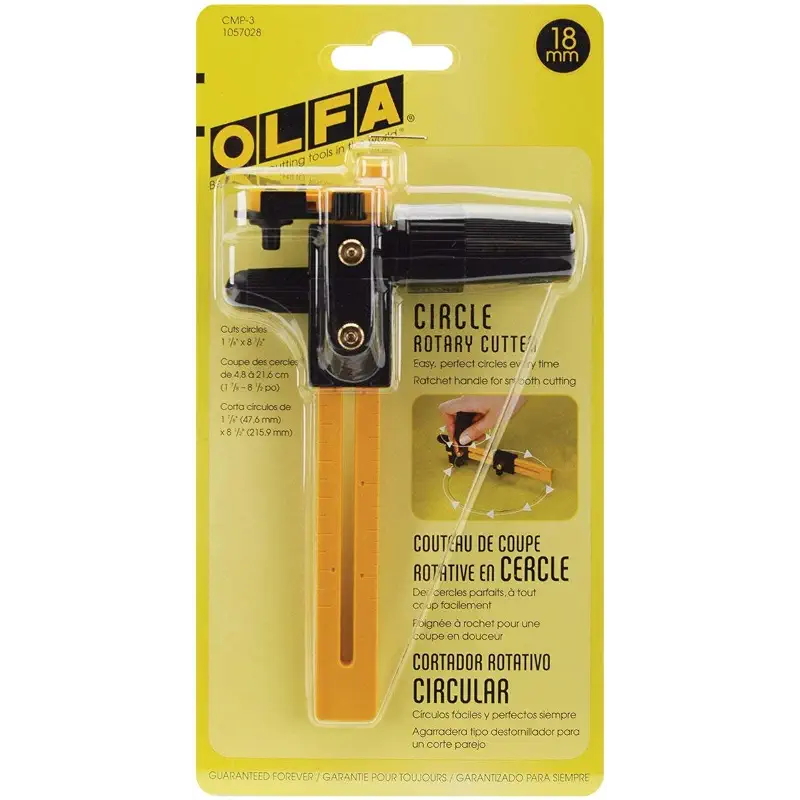
The OLFA Rotary Circle Cutter stands apart through its rolling 18mm blade and spring-loaded ratchet handle, which let you cut by rotating the tool itself rather than the material. This design feels more intuitive than pin-based cutters and places less strain on wrist and hand. The blade guard and pivot-point guard address safety concerns that pin-based designs sidestep. For quilters and fabric crafters especially, this rotary approach has become the standard, and OLFA's heritage in cutting excellence (they invented the snap-off utility knife) shows in the blade quality and mechanism reliability.
OLFA's 1.5-inch to 8.75-inch range is generous, though it skews larger than typical paper-cutter needs. The included RB18 blade is sharp out of the box, and replacement blades are readily available. Owners report that with a few practice cuts, the motion becomes natural; rotate the entire tool while keeping the center pin steady. Some users find better results rotating the material instead while holding the cutter still, which contradicts the instructions but works. The ratchet mechanism does reduce fatigue compared to continuous twisting, though full control over cut smoothness still depends on technique and hand pressure.
Compared to the NT Cutter Heavy-Duty model, this trades pinhole-free cuts for ease of use and comfort. If you're cutting dozens of fabric circles for a quilt, the rotary versus pin-based circle cutters choice hinges on material and personal preference. This tool excels with quilting cotton, felt, and similar fabrics but drags slightly on stretchy or thick materials like denim or minky.
Pros
Ratchet mechanism reduces wrist fatigue and twisting strain
Rolling 18mm blade delivers fast, clean cuts in one pass
Quick-change blade system with built-in blade cover
Ideal for left and right-handed users
Cons
Leaves a small center pinhole; requires practice to cut smoothly
May drag on thick or stretchy fabrics without extra pressure
18mm rotary blade pre-loaded; quick-change system for replacements
Cuts circles 1.5" to 8.75" diameter in one rotating pass
Built-in pivot-point guard and blade cover for safe storage
#4 Pick
Best for Fabric Quilting
Fiskars
Fiskars Fabric Circle Cutter, Cut Circles in Fabric Without Tracing | 11 Size Options from 2" to 12" in Diamter, Rotating & SoftGrip Handle for Smooth Cutting, Quilting, Crafts & Sewing Supplies
4.6(641)
Unique half-fold template design eliminates pinholes and tracing; rotary handle reduces twisting strain for high-volume fabric cutting.
Ideal for: Quilters, hexagon quilt makers, and fabric crafters cutting many same-size circles without pinholes.
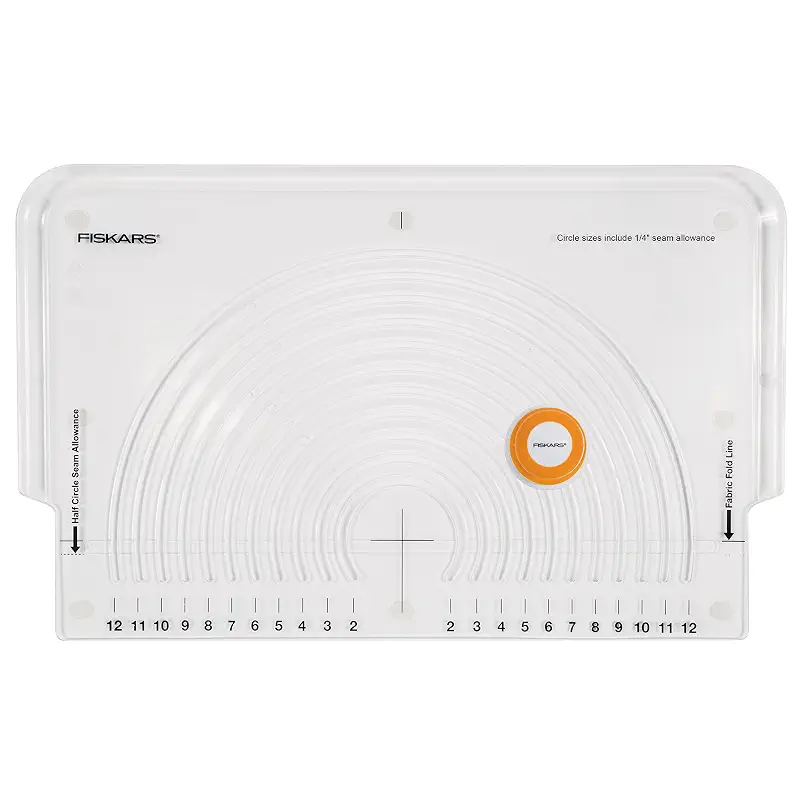
The Fiskars Fabric Circle Cutter takes a distinctly different approach: a template with 11 pre-set sizes (2 to 12 inches) and a push cutter that glides along grooved tracks. By folding fabric in half and aligning the template edge, you can cut circles without a center pinhole or hand-drawn guide. This half-fold geometry means your finished circles don't bear any mark of the cutting process, a benefit that appealed to owners making yo-yos and circle appliqués.
The rotating handle lets you make smooth passes without reaching or twisting your arm. With practice, this tool cuts through quilting cotton and batting cleanly and fast. Owners praise its ease once you settle into the technique, and the built-in 1/4-inch seam allowance is a genuine convenience for quilters. The tool does have quirks: the cutting knob can pop out if you're not careful, and the blade must penetrate fully or cuts will be incomplete. The first few circles may be frustrating, but the learning curve is milder than the pin-based cutters.
Compared to rotary versus pin-based circle cutters options, the Fiskars splits the difference by combining a guided template with a rotary motion. It's bulkier and more rigid than a handheld rotary cutter, but the consistency appeals to high-volume quilters. For lighter-weight fabrics like quilting cotton and felt, this shines. Heavier materials like denim or thick fleece demand more pressure and may not cut cleanly. The higher price is justified if you're cutting dozens of circles in a single project.
Pros
Half-fold template design eliminates pinholes and center marks
11 pre-set diameter sizes from 2" to 12" simplify size selection
Rotating handle reduces wrist fatigue and twisting strain
Built-in 1/4" seam allowance convenient for quilters
Cons
Requires practice; cutting knob can pop out or blade may not penetrate fully
Bulkier than handheld rotary cutters and less portable
Key features
Half-fold template design with 11 pre-set circle sizes 2" to 12"
Push cutter with rotating handle glides along grooved tracks
Built-in 1/4" seam allowance for quilting projects
Soft-grip handle reduces hand fatigue during repetitive cutting
#5 Pick
Best Budget Option
MyLifeUNIT
MyLifeUNIT Circle Cutter, Circular Rotary Cutter for Paper Crafts Scrapbooking (Included 6 Blades), Cutting Diameter 4 in to 12.6 in
4.1(351)
Affordable rotary cutter for cardstock and light paper; delivers consistent circles at a low price with six spare blades included.
Ideal for: Casual scrapbookers, students, and hobbyists cutting paper and cardstock on a tight budget.
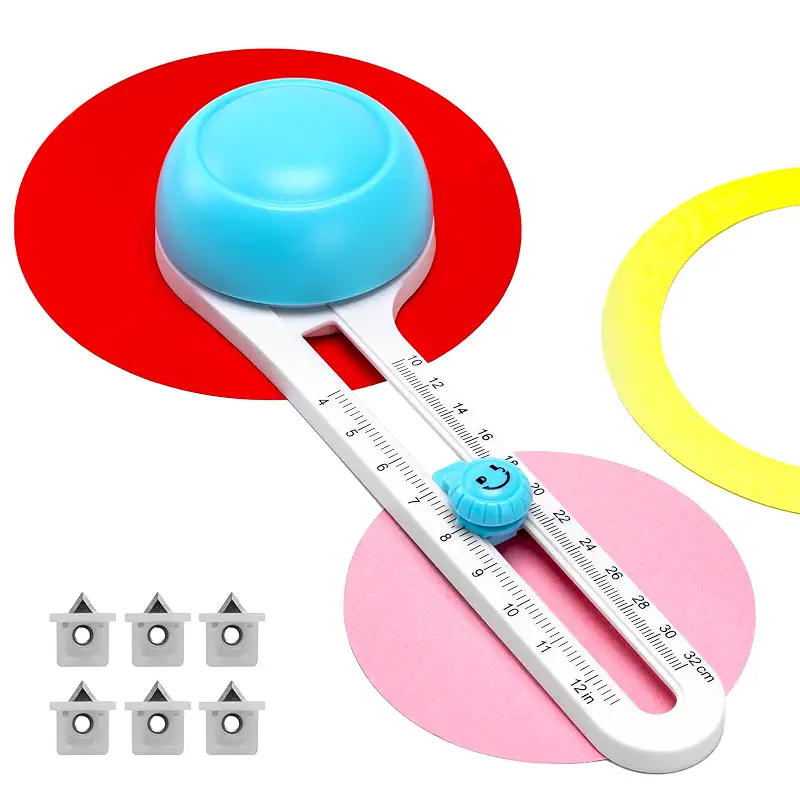
The MyLifeUNIT Circle Cutter offers genuine value for casual crafters and budget-conscious scrapbookers. At its core, it's a simple rotary cutter with an adjustable-radius mechanism that spans 4 to 12.6 inches: broad enough for most hobby and DIY projects. The inclusion of six replacement blades in dedicated storage is excellent value and rare at this price point. The carbon steel blade starts sharp and stays that way through many cuts on its intended materials: printing paper, cardstock, kraft paper, and photo stock up to 0.05 inches thick.
The trade-offs emerge quickly with heavier materials. The mechanism can feel loose, and the blade doesn't lock perfectly in place, so some users report the radius drifting during a cut if pressure isn't perfectly maintained. The instruction booklet assumes you'll figure out assembly, and a few owners received incomplete units. Once assembled, the cutting motion is straightforward: set your radius, lock the knob, place the center point, and rotate. For light paper and cardstock, this works reliably. For thicker cardboard or adhesive-backed materials, results deteriorate.
Where the Fiskars Fabric Circle Cutter targets quilters and the NT Cutter Heavy-Duty suits contractors, this sits at the entry level of the craft cutter market. If you're cutting paper circles for school projects, scrapbook layouts, or one-off DIY tasks, the low cost and included spare blades make sense. For frequent, precision work or tougher materials, step up to one of the stronger tools.
Pros
Six replacement blades included in storage compartment
Adjustable diameter 4" to 12.6" covers common sizes
Carbon steel blade sharp and durable on paper and cardstock
Very affordable entry point for circle cutting
Cons
Loose mechanism can drift during cutting if pressure isn't perfect
Instructions minimal; assembly assumed; some units arrive incomplete
Key features
Adjustable rotary cutter spans 4" to 12.6" diameter circles
Six carbon steel replacement blades in built-in storage
Ideal for paper, cardstock, kraft, and photo paper up to 0.05" thick
Standard inch guide ruler for accurate sizing setup
How to Choose a Circle Cutter
Four trade-offs that actually matter when matching a circle cutter to your kitchen.
Pin-Based vs. Rotary: Which Mechanism Fits Your Work?
The design of rotary versus pin-based circle cutters determines how you'll actually make the cut and what materials work best. Pin-based cutters (like NT Cutter models) hold a center point steady while you rotate the handle around it; they excel at leaving no trace mark and work on paper, leather, and thin materials, but they demand hand strength and a steady rhythm. Rotary cutters (OLFA, MyLifeUNIT) spin a rolling blade as you turn the tool itself, reducing wrist fatigue and working faster on fabrics and soft materials. Guided template cutters (Fiskars) eliminate pinholes and offer preset sizes but are bulkier and less portable. Choose based on your primary material and whether you value speed, precision, or ergonomic comfort.
Material Thickness and Suitability
Each cutter has a thickness sweet spot. Light rotary and budget models handle paper and cardstock best (up to 0.05 inches). Mid-range pin-based cutters cut paper, light leather, and thin vinyl cleanly (0.5–2mm). Heavy-duty models punch through veneer, carpet, and construction materials (up to 2mm). Check your material thickness before buying; undersized tools wear out quickly on thick stock, while oversized tools feel clumsy on paper. If you're mixing materials, choose the tool rated for your toughest job, then use lighter pressure on delicate materials.
Size Range and Frequency of Use
Consider whether you need specific sizes or flexibility. Fiskars offers 11 preset diameters ideal for quilters doing one size repeatedly. Adjustable pin-based cutters (NT Cutter iC-, MyLifeUNIT) give you any size within their range, useful if you're experimenting or need variety. Heavy-duty and rotary models often skip the smallest sizes (under 1.5–2 inches), which matters for detailed scrapbooking. If you're cutting hundreds of circles, a tool you enjoy using reduces fatigue and mistakes. If you cut occasionally, a compact adjustable model saves drawer space.
Learning Curve and Setup Complexity
Pin-based cutters demand practice; the first few cuts may frustrate you until you understand blade depth, center pressure, and rotation speed. Rotary cutters feel more intuitive but still need a few trial runs. Template guides (Fiskars) remove guesswork but are less flexible. How to set up and use a circle cutter for the first time involves reading instructions carefully, marking your practice material, and adjusting blade depth incrementally. Budget 15–30 minutes for your first tool before deciding it doesn't work. Many owners who rated their first attempts 1–2 stars revised to 5 stars once they mastered the technique.
Blade Quality and Replacement Availability
A sharp blade is non-negotiable; dull blades tear rather than cut and frustrate new users into thinking the tool is broken. Japanese-made carbon steel blades (NT Cutter, OLFA) hold an edge longer than cheaper alternatives. Check replacement blade cost and availability before buying; a cheap cutter with expensive, hard-to-find blades becomes expensive. Tools that include extra blades (NT Cutter iC- with six, MyLifeUNIT with six) offer good value upfront. OLFA and Fiskars support easy, affordable blade swaps, which matters if you cut frequently.
Frequently asked
Quick answers to the questions readers ask most.
Will a circle cutter leave a visible mark in my finished project?
Pin-based cutters leave a tiny center hole unless the cutter has a no-pinhole option (NT Cutter iC-). Rotary cutters (OLFA, MyLifeUNIT) leave a pinhole too, though smaller. Template cutters with half-fold design (Fiskars) eliminate center marks entirely. If a visible mark matters for your finished work, choose no-pinhole or template designs. For scrapbook pages, labels, and appliqués, this detail affects the final appearance.
Can I cut fabric with a paper circle cutter?
Yes, but results depend on the cutter and fabric type. Rotary cutters (OLFA, Fiskars) are designed for fabric and work well on quilting cotton, felt, and lightweight materials. Pin-based cutters can handle thin fabric but lack the ease and speed of rotary tools. Heavy materials like denim or fleece demand extra pressure and may not cut cleanly. The OLFA and Fiskars are optimized for fabric; paper-focused tools like MyLifeUNIT work but feel clumsy on cloth.
How do I prevent the material from shifting while I cut?
Use a cutting mat under your work; it grips materials and protects your work surface. Apply steady downward pressure on the center point (pin-based) or hold the template firmly (Fiskars). For fabric, smooth out wrinkles and stretch before cutting. Rotate the material, not the cutter, if you find the tool pulls or shifts the stock. Multiple gentle passes beat one aggressive cut, especially on thick or slippery materials. Some owners clamp their material or use a non-slip pad underneath for added stability.
What's the difference between 18mm and other blade sizes I see listed?
Blade diameter (like OLFA's 18mm rotary blade) determines cut speed and pressure requirements. Larger rotary blades cut faster and stay sharp longer but need more hand force. Smaller pin-based blades require steadier, lighter pressure. For casual cutting, blade size matters less than tool design and your comfort. OLFA's 18mm is industry-standard for fabric rotary cutters. When shopping, prioritize tool fit and material match over blade size alone.
How often do I need to replace the blade?
Blade life depends on material and frequency. Paper and cardstock may yield 50–100+ cuts per blade. Thicker materials, rough surfaces, or dusty paper wear blades faster. A blade that starts tearing instead of slicing is dull and should be swapped immediately. Tools with included spare blades let you keep cutting; those without create frustration mid-project. Keeping replacement blades on hand is smart. Most cutters signal when a blade needs replacing through ragged edges or increased cutting resistance.