Kitchen & Dining · Gadgets
Best Ravioli Cutter: Wheels, Stamps & Press Molds Reviewed
Find the best ravioli cutter for your kitchen. Compare wheels, stamps, and press molds to make perfect homemade ravioli. Expert reviews and buyer feedback.
Affiliate disclosure: As an Amazon Associate I earn from qualifying purchases.
At a glance
1
Best Overall ValueFusiontec
2
Best Stamp Set for VarietyTacgea
3
Best Professional-Grade WheelNorpro
4
Best Italian-Made WheelTredoni
5
Best All-in-One Press Mold SetMumsung
Detailed reviews
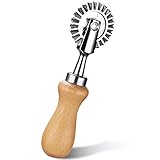
The Fusiontec pastry wheel cutter has earned its reputation through consistent performance and accessibility. Owners appreciate that it cuts through rolled dough without sticking and produces a clean, decorative crimped edge on the first try. The 1.3-inch diameter is practical for standard ravioli, and the five-inch length makes it easy to store and maneuver. The wood handle is comfortable during long crimping sessions, and the aluminum wheel frame holds up through repeated use without wobbling too much.
What sets this tool apart is its straightforward design. You're not paying for unnecessary features; you get a wheel that does one job well. Some reviewers note the wheel can feel a bit wobbly until you apply steady pressure, and a couple found the small size required more effort than expected. But the overwhelming majority report making ravioli, crackers, and pie lattice work with ease. Where the Tredoni trades larger diameter for Italian craftsmanship, this Fusiontec prioritizes accessibility and value without sacrificing durability.
If you're new to ravioli making or simply want a dependable wheel in your drawer, this is the straightforward pick. It's not the heaviest or most premium option, but owners consistently report getting professional-looking results without investing heavily. The money-back warranty also signals confidence in what you're buying.
Pros
- Cuts through dough cleanly without sticking
- Fluted edge creates attractive crimped finish
- Affordable entry point for fresh pasta
Cons
- Small size requires steady pressure and technique
- Wheel can feel slightly wobbly during use
Key features (5)
- 1.3-inch diameter fluted wheel with wood handle
- Five-inch overall length fits standard kitchen drawers
- Food-grade aluminum frame resists bending
- Works for ravioli, crackers, cookies, and pie lattice
- Hand-wash recommended to protect wood handle
The Tacgea ravioli stamp set appeals to makers who want options without buying separate tools. You get four different shapes (round, square, heart, and roller wheel) which means you can match your ravioli size to the occasion or filling type. The wooden handles are comfortable, and the aluminum frames feel solid. Owners report clean cuts and reliable sealing, and the variety keeps ravioli-making from feeling repetitive.
The trade-off is technique. These are stamps, not crimpers with decorative fluted edges. To use them effectively, you roll out dough, add filling, layer a second sheet, and press down hard to cut and seal. This requires more hand strength than rolling a wheel along the edge, and several reviewers mentioned sore forearms after making larger batches. The roller wheel included in the set does wobble slightly, similar to single-wheel tools, but owners find it useful for cutting pasta strips. Compared to the Norpro's dual-head design, this set prioritizes shape variety over cutting options, making it better if you want hearts and rounds alongside squares.
Buy this if you enjoy experimenting with different ravioli presentations or if you make dumplings and want a compact multi-tool set. Just go in knowing you'll need genuine pressure to get clean seals.
Pros
- Four different shapes and roller wheel in one set
- Comfortable wooden handles reduce hand strain
- Stamps create uniform, professional-looking ravioli
Cons
- Requires significant hand pressure for clean seals
- Roller wheel wobbles and limits cutting precision
Key features (5)
- Four-piece set: round, square, heart, and roller wheel
- Food-grade aluminum frames with wooden handles
- Fluted edges crimp and seal dough simultaneously
- Compact storage; easy to clean
- Works for ravioli, pasta, cookies, dumplings, and lasagna
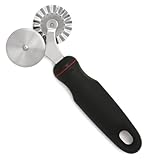
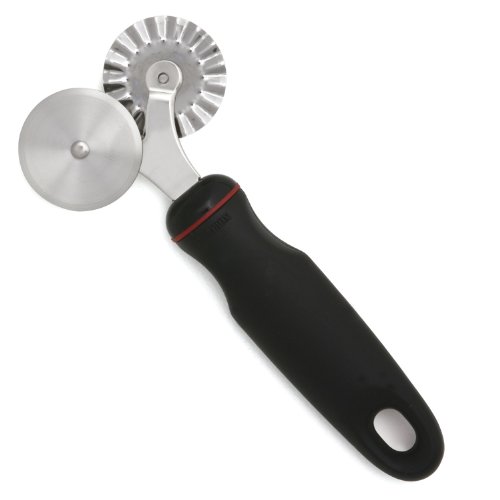
The Norpro Grip-EZ is the gold standard for ravioli wheel cutters. Its dual-head design gives you a fluted wheel for decorative crimped edges on one end and a smooth blade for clean straight cuts on the other, eliminating the need to swap tools. The soft Santoprene grip is ergonomically contoured, and reviewers consistently praise how it reduces fatigue even during long pasta-making sessions. The stainless steel blades glide through dough without sticking or tearing, and the heft of the tool signals durability.
This cutter commands a strong reputation among both occasional and serious pasta makers. Owners report that it outperforms cheaper alternatives, cutting more cleanly and rotating smoothly through hundreds of uses. A few reviewers note that the larger size (seven inches overall) takes more space in a drawer, but most view that as a fair trade for the comfortable grip and cutting performance. Where the Fusiontec addresses cost sensitivity, the Norpro appeals to cooks who make ravioli regularly and want a tool that won't wear out or disappoint.
This is the cutter to choose if you're serious about fresh pasta or if you've had cheaper wheels that frustrated you. The investment in ergonomics and stainless steel pays off through years of consistent use.
Pros
- Dual-head design: fluted and straight wheels in one tool
- Ergonomic non-slip grip reduces hand fatigue significantly
- High-grade stainless steel resists rust and wear
Cons
- Larger size requires more drawer or storage space
- Higher investment than single-wheel alternatives
Key features (5)
- Dual stainless steel wheels: fluted and smooth blades
- Soft Santoprene handle fits left or right hand
- Seven-inch length with contoured grip design
- Smooth rolling action cuts without catching or tearing
- Compact footprint despite dual functionality
The Tredoni pastry wheel carries the mark of Italian craftsmanship. Made in Italy with an emphasis on durability, this tool feels heavier and more substantial than budget alternatives. The 1.6-inch diameter is slightly larger than many competitors, giving you a wider crimped border that creates that classic professional ravioli edge. Owners who make ravioli, dumplings, and empanadas report consistent, clean seals and edges that hold through cooking without bursting.
What distinguishes this wheel is its reliability under demanding use. Several reviewers mentioned using it for both delicate pasta sheets and firm dumpling dough without any loss of cutting quality. The handle is solid wood with a pleasant grip, and the tool doesn't wobble during use. One caveat: the ridges on this wheel are thicker and less sharp than some competitors, which means they crimp effectively but require a different hand motion than knife-sharp wheels. Reviewers found this intuitive after a single use, but it's worth noting if you're upgrading from a thinner-edged tool.
Compared to the Norpro's ergonomic grip, the Tredoni prioritizes traditional craftsmanship and a slightly larger working diameter. If you value Italian manufacturing and want a tool that will outlast short-term trends, this wheel justifies its position in your kitchen.
Pros
- Made-in-Italy construction with superior durability
- 1.6-inch diameter creates generous crimped borders
- Reliable seals on both delicate and firm doughs
Cons
- Thicker, less sharp ridges require adjusted technique
- Hand wash only; dishwasher will damage the finish
Key features (5)
- 1.6-inch stainless steel wheel with crimping ridges
- Solid wood handle with ergonomic, pleasant grip
- Made in Italy with emphasis on long-term durability
- Works for ravioli, dumplings, pies, pastries, and cookies
- No wobbling; precise control through every cut
The Mumsung ravioli press mold set is engineered for efficiency. Instead of crimping individual ravioli one at a time, you roll dough onto the eight-cavity mold, distribute filling, press the lid down, and release eight uniform ravioli in seconds. The food-grade plastic is thickened and drop-resistant, and the mold doesn't stick to dough when lightly floured. Owners who make ravioli regularly or cook for groups praise how much faster the process becomes compared to wheel-cutting methods.
The set's versatility is genuine. You get the eight-cavity mold, a 2.6-inch empanada press (useful for dumplings and turnovers), a wheel cutter for pasta strips, a wooden rolling pin, and a cleaning brush. This breadth means you can pivot between ravioli, dumplings, and decorative pie work without hunting for separate tools. However, this approach has a ceiling: the uniform cavity size means all your ravioli are identical, which some cooks prefer and others find limiting. One reviewer noted the ravioli came out slightly thick, which is a user-error issue but worth mentioning if you're particular about pasta texture.
Where the wheel versus press mold comparison matters, this mold prioritizes speed and uniformity over decorative crimping options. If you're batch-cooking ravioli or want production efficiency, this set delivers. If you prefer varying ravioli sizes or enjoy the rhythmic simplicity of wheel-cutting, a standalone wheel remains better.
Pros
- Eight-cavity press makes eight ravioli simultaneously
- Included empanada press and wheel cutter add versatility
- Dough releases easily when lightly floured
Cons
- Requires learning curve; technique matters for consistent seals
- All ravioli are uniform size; no variation options
Key features (5)
- Eight-cavity 1. square mold for batch production
- 2.6-inch empanada press for dumplings and turnovers
- Ravioli wheel cutter, wooden rolling pin, and cleaning brush included
- Food-grade plastic resists sticking and drop damage
- Complete kit stores compactly in branded box
How to Choose a Ravioli Cutter
Wheel Cutters vs. Press Molds
Your choice between these approaches shapes the entire experience. Wheel cutters (the Fusiontec, Tredoni, and Norpro) let you hand-crimp individual ravioli, giving you control over size and seal pressure. You roll dough, add filling, layer another sheet, and run the wheel along the edge. It's meditative and gives you a decorative fluted edge. Press molds like the Mumsung let you produce multiple ravioli at once by pressing a mold into layered dough. This is faster for batch cooking but locks you into uniform sizes. Many experienced cooks keep both methods on hand. Consider your workflow: do you prefer making small quantities often, or do you batch-cook ravioli for freezing? The wheel versus press mold comparison will shape that decision.
Material and Durability
Wheels come in three material combinations: aluminum frames with wood handles (Fusiontec, Tacgea), stainless steel wheels (Norpro, Tredoni), and plastic press molds (Mumsung). Stainless steel wheels resist rusting and handle frequent use better than aluminum; they'll last decades. Wood handles require hand-washing and occasional oiling to stay supple, while plastic molds are dishwasher-safe and nearly indestructible but don't feel as substantial in hand. For long-term use, stainless steel wheels win. For occasional ravioli making, aluminum or plastic is perfectly adequate. Check reviews for reports of wobbling wheels or cracking molds; these are real durability signals.
Ergonomics and Hand Comfort
If you make ravioli regularly or have arthritis or hand fatigue, grip comfort matters enormously. The Norpro's padded Santoprene handle is engineered for extended use; owners note significantly reduced fatigue. Wooden handles on wheels and stamps can feel pleasant but require a firmer grip. Press molds require downward pressure rather than rolling, which distributes effort differently. Try to assess whether a tool feels balanced and comfortable during light, repetitive hand motions. Buyer reviews consistently mention hand fatigue or lack thereof, so read those closely. Just as you'd evaluate the best tomato dicer for cutting capability and comfort, the same principle applies when choosing your ravioli tool.
Size and Storage
Ravioli wheels range from five to seven inches; larger tools offer better leverage but take more space. Press molds are compact and often include storage boxes. If your kitchen drawer space is limited, single-wheel cutters or the Mumsung set are practical. If you have room and make pasta frequently, a larger, heavier wheel like the Norpro or Tredoni rewards that investment through better control. Check your drawer depth before buying a longer wheel; it should slide in easily.
Cutting Performance and Dough Type
All these tools handle standard pasta dough, but thickness and firmness vary. Fresh egg pasta (thin and tender) releases easily from wheels. Dumpling dough (thicker, firmer) requires more pressure and benefits from a heavier tool. Press molds excel with thick dough because the entire mold presses down together. If you work with delicate ravioli sheets, a smooth-cutting wheel like the Norpro glides through without resistance. If you make dumplings or empanadas regularly, the ravioli crimping technique guide will help you optimize your technique, and a heavier tool rewards your effort with cleaner seals.
Our picks at a glance
1
Best Overall ValueFusiontec
2
Best Stamp Set for VarietyTacgea
3
Best Professional-Grade WheelNorpro
4
Best Italian-Made WheelTredoni
5
Best All-in-One Press Mold SetMumsung
Frequently asked
Do I need a special ravioli cutter, or can I use a knife?
A knife works for cutting ravioli shapes, but it won't crimp the edges: a critical step for sealing filling inside. An uncrimped edge often splits open during boiling. A ravioli cutter's fluted or crimping edge presses dough together while cutting, creating a seal that holds. For dumplings, this seal is essential. A knife alone leaves you forking the edges shut, which is tedious for large batches.
Can these cutters handle thick dumpling dough or just pasta?
Most wheel cutters handle both, though thicker dough requires more pressure. Press molds are actually better for dense dumpling dough because the entire mold presses down together, distributing force evenly. If you're making delicate ravioli, a wheel's rolling action feels natural. For dumplings or empanadas, a press mold or the heavier wheels (Tredoni, Norpro) shine. Lighter tools like the Fusiontec work for dumplings if you press firmly.
Why do some wheels wobble, and does that affect cutting quality?
Wobbling usually means the wheel's axle is slightly loose or the frame isn't perfectly aligned. A minor wobble doesn't prevent cutting but can make straight lines harder. Some reviewers report fixing wobble with pliers. For precision, stiffer tools like the Norpro and Tredoni feel rocksolid from the start. If wobble bothers you, read reviews for that specific tool and check buyer reports of looseness.
Are wooden handles sanitary and easy to clean?
Yes, wooden handles are sanitary if you hand-wash them and don't soak them for long periods. Water exposure can cause swelling or finish damage over time. Most owners recommend rinsing quickly and drying immediately. Some finishes are more water-resistant than others: the Tredoni's Italian finish is notably durable. If you want easy dishwasher cleaning, plastic press molds are simpler. Wooden handles develop character with use and age well if treated gently.
Can I make ravioli of different sizes with the same tool?
Wheel cutters let you vary ravioli size easily by adjusting spacing and filling amount. You roll the wheel along any edge you want. Press molds lock you into the cavity size, so all ravioli from one press are identical. Some cooks keep a wheel and a mold to switch between uniform batch production and custom sizes. If size variety matters to you, wheels offer that flexibility.