Verdict, analysis, and key features for each pick.
#1 Pick
Best Overall for Left-Handed Cooks
Lefty's The Left Hand Store
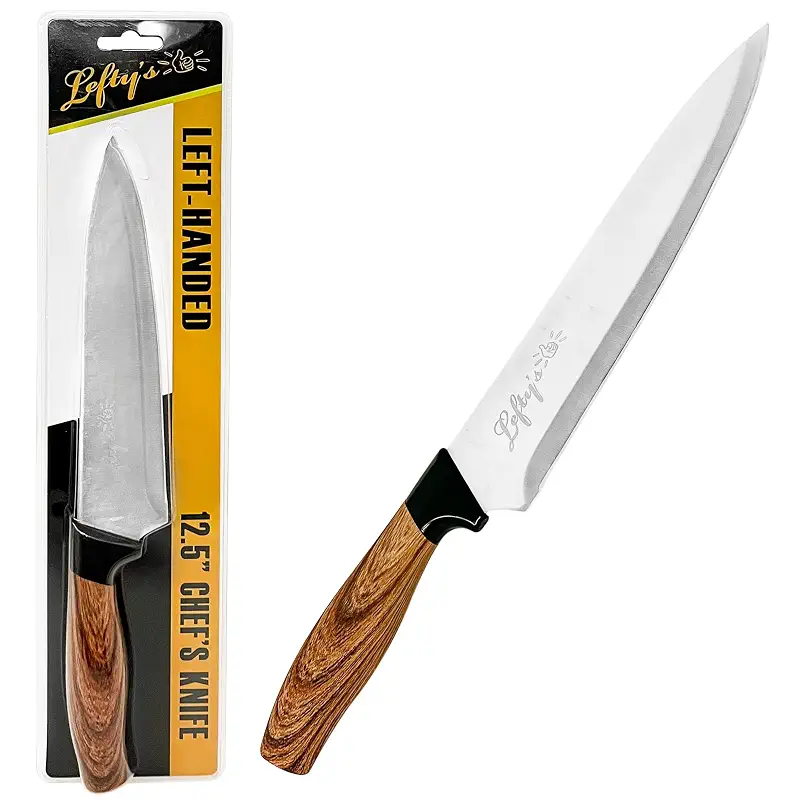
Lefty’s Left Handed Chef Knife - Stainless Steel Durable Blade - Extra Sharp - Great for Cutting, General Purpose, Kitchen items - Gifts for Left-Handed People, Lefty, Adults, Man, and Women
4.5(26)
Sharp, well-balanced general-purpose left-handed chef knife with responsive handle and enthusiast-friendly edge.
Ideal for: Left-handed home cooks seeking an affordable, dedicated left-hand chef knife for daily cutting tasks.
Lefty's Left Handed Chef Knife is purpose-built for left-handed users and delivers on the core promise: a blade sharpened on the correct side so you're cutting, not tearing. Owners report the knife arrives razor-sharp out of the box and maintains that edge through repeated use, making vegetable prep and meat cutting smooth without excessive pressure. The wooden-effect handle feels secure in the left hand, and the 8-inch blade length is versatile enough for most kitchen tasks without being unwieldy.
That said, this knife has a documented QA problem. A significant minority of reviewers received units with the bevel on the wrong side, which defeats the entire point of buying a left-handed knife. Before purchasing, verify with the seller or contact the manufacturer about their current batch. Also, some users note that the handle is shorter than traditional chef knives, which can cause wrist strain during extended prep sessions if you have large hands.
Compared to the Keemake Damascus option further down the lineup, this knife prioritizes accessibility and left-hand specificity over luxury materials or multi-layer aesthetics. If your priority is functional left-handedness at a straightforward price, this makes sense; if you're after showpiece craftsmanship, look elsewhere.
Pros
Blade sharpened on correct side for left-handed grip
Arrives extremely sharp and responsive on vegetables
Comfortable wooden handle with soft grip feel
Dishwasher safe stainless steel construction
Cons
Inconsistent production batches with blade bevel orientation issues
Handle length may feel short for larger hands during extended use
Key features
8-inch blade designed and beveled for left-hand use
Stainless steel alloy with water-resistant construction
12.5-inch overall length with ergonomic wooden handle
Dishwasher safe and low-maintenance care
#2 Pick
Best Left-Handed Set for Complete Kitchen Coverage
Lefty's The Left Hand Store
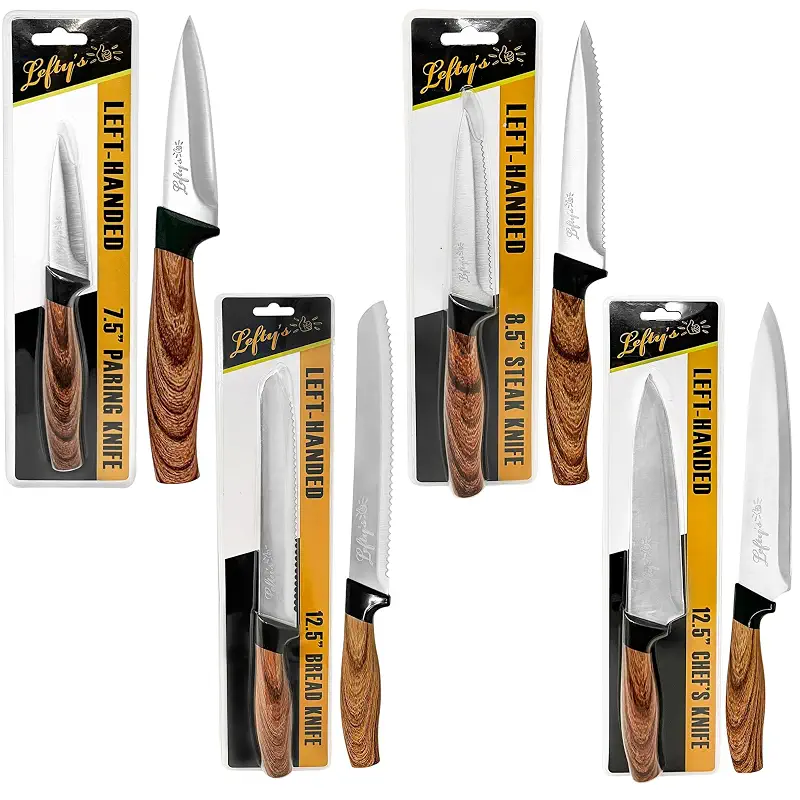
Lefty’s Left Handed Knives Set of 4 - Paring Steak Chef and Bread knife - Extra Sharp - Great for Cutting, General Purpose, Kitchen - Gifts for Left-Handed People, Lefty, Adults, Chef, Cook and Women
4.0(27)
Four-knife set with paring, steak, bread, and chef knives all oriented for left-hand use; versatile but quality variable.
Ideal for: Left-handed cooks who want multiple knife types at once and don't mind spending time on quality control.
Lefty's Four-Knife Set gives you a range of blade shapes and sizes without buying separately, which appeals to left-handers tired of piecing together right-handed tools. The set includes paring, steak, bread, and chef knives, each with its own purpose. Owners who receive well-made units praise the sharpness and the mental relief of not having to flip a knife or contort their grip to see what they're cutting.
However, this set carries more risk than buying the single chef knife. Multiple reviewers report quality control problems: some knives arrived dull or even rusted out of the box, and a few received units where the blade geometry caused the knife to veer sideways during cutting rather than track straight. The shorter handle length is also more pronounced when you're using smaller paring knives, which can trigger wrist fatigue faster than you'd expect. One owner noted the handles feel uncomfortable after extended use, particularly compared to longer European-style handles.
Where the single chef knife is a contained bet, this set multiplies the odds of receiving a problematic unit. If you go this route, inspect upon arrival and test each blade's orientation before relying on it for meal prep.
Pros
Four different blade types in one purchase
Each blade shaped and beveled for left-hand use
Sharp when quality control succeeds
Wooden handles with soft grip for left-hand feel
Cons
Significant quality control inconsistency across units
Handles feel uncomfortably short during extended cutting
Key features
Paring knife 7.5 inches, steak knife 8.5 inches, bread and chef knives 12.5 inches
Each blade oriented for left-handed cutting and visibility
Stainless steel alloy throughout with dishwasher-safe construction
Set includes four distinct cutting styles for versatility
#3 Pick
Best Specialized Left-Handed Bread Knife
Lefty's The Left Hand Store
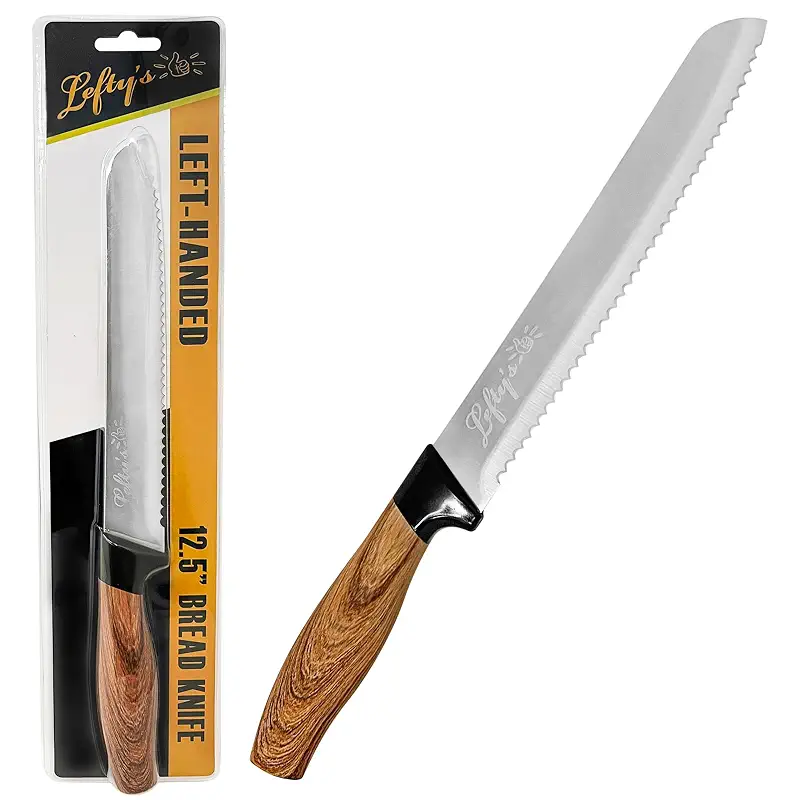
Lefty’s Left Handed Bread Knife - Stainless Steel Durable Blade - Extra Sharp - Great for Cutting, General Purpose, Kitchen items - Gifts for Left-Handed People, Lefty, Adults, Chef, Man and Women
3.6(13)
Serrated left-handed bread knife that excels when orientation is correct; inconsistent in execution across batches.
Ideal for: Dedicated bread bakers and pastry cooks who are left-handed and want a serrated knife suited to their hand.
The Lefty's Bread Knife is the one piece from their lineup purpose-built for sourdough, crusty loaves, and delicate pastry work. When production is done right, owners report it slices through thick crusts cleanly and produces thin, uniform cuts without crushing the interior crumb. One sourdough baker noted it was significantly sharper than other serrated knives they'd owned, making the entire baking-to-slicing workflow more satisfying.
The critical catch: multiple buyers received units where the serrations were on the wrong side, making the knife worthless for left-handed cutting. The product's small review count (13 total) and mixed ratings suggest either ongoing manufacturing issues or a batch-specific problem that Lefty's has not fully resolved. Some users also report the blade dulls faster than expected after light use, which for a serrated knife means the entire unit becomes problematic.
If you compare this to the Keemake Damascus chef knife, you're weighing specialization (bread alone) against versatility (multiple cutting tasks). The Keemake is not specifically left-handed, but its consistent craftsmanship and broader utility make it a safer bet if serrated bread cutting is just one part of your routine. For those drawn to specialty Japanese blades, top yanagiba knives offer another slicing option, though they too require sourcing in left-hand versions or adapting to right-hand geometry.
Pros
Serrated blade extremely sharp when correctly oriented
Designed to slice crusty bread without crushing interior
Left-hand handle ergonomics when production quality holds
Stainless steel resists discoloration and staining
Cons
Significant batch inconsistency with blade bevel orientation
Serrated edge dulls faster than expected with regular use
Key features
8-inch serrated blade with left-hand orientation
12.5-inch overall length with wooden ergonomic handle
Stainless steel construction, dishwasher safe
Specialized design for bread, pastry, and delicate cutting tasks
#4 Pick
Best Premium Versatile Alternative
Keemake
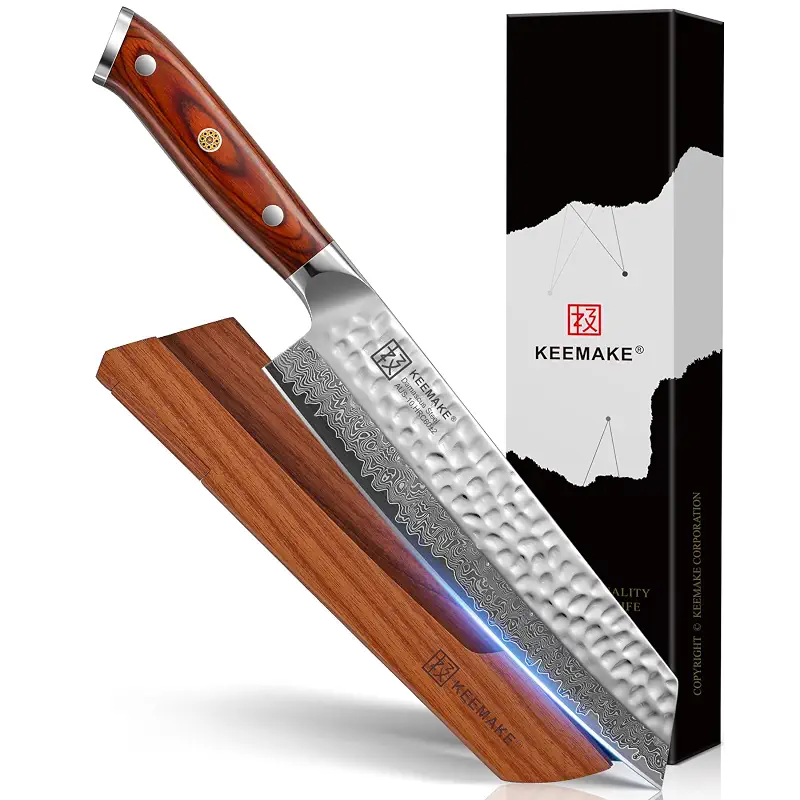
8 Inch Damascus Chef Knife, Japanese Kitchen Knife with VG10 Steel | Ultra Sharp 10° Edge Kiritsuke Knife with Sheath, 67 Layers Hand Forged Hammered Cooking Knives for Meat, Vegetable, Fruit
4.6(540)
High-end Japanese Damascus chef knife with stunning aesthetics and multi-purpose blade; not left-hand specific but beautifully made.
Ideal for: Left-handed cooks who prioritize blade quality and craftsmanship over hand-specific geometry, or flexible cutters willing to adapt grip.
The Keemake 8-inch Damascus Chef Knife takes a different approach entirely. Instead of designing specifically for left-handers, it delivers exceptional blade quality, balance, and finish that work well for any hand orientation. The 67-layer Damascus steel core gives it a distinctive look while the 10-degree edge and steel provide sharp performance that persists through regular use. Owners consistently report the knife arrives exceptionally sharp and maintains its edge through weeks of heavy kitchen work, a marked contrast to the quality control struggles of the Lefty's line.
The trade-off is that this knife does not reverse the bevel for left-handed grip, so you're still working with a right-handed blade geometry. However, many ambidextrous cooks and those flexible with technique find that the overall build quality and balance offset the hand-specificity gap. The Pakkawood handle is sturdy and reasonably ergonomic, and the included ash wood sheath protects both the edge and your hands during storage. If you value craftsmanship and don't need a blade angle that matches traditional left-handed technique, this knife delivers far more consistency than the Lefty's options.
The Victorinox Fibrox Pro at the bottom of this list also sidesteps the left-hand issue but targets budget buyers instead of premium seekers. Choose the Keemake if you want museum-quality materials and edge retention; choose Victorinox if you want solid performance without the investment.
Pros
67-layer Damascus blade with distinctive layered appearance
10-degree edge arrives razor-sharp and holds through weeks of use
Excellent weight balance and control in hand
Includes protective ash wood sheath for safe storage
Cons
Blade bevel is right-handed, not reversed for left-hand grip
Food occasionally sticks to blade during slicing tasks
Key features
steel core with 67-layer Damascus exterior and 62 HRC hardness
Kiritsuke blade shape for versatile slicing, dicing, and chopping
Pakkawood handle with triple rivets and full-tang construction
8-inch blade length with self-standing ash wood sheath
#5 Pick
Best Budget-Friendly Universal Option
Victorinox
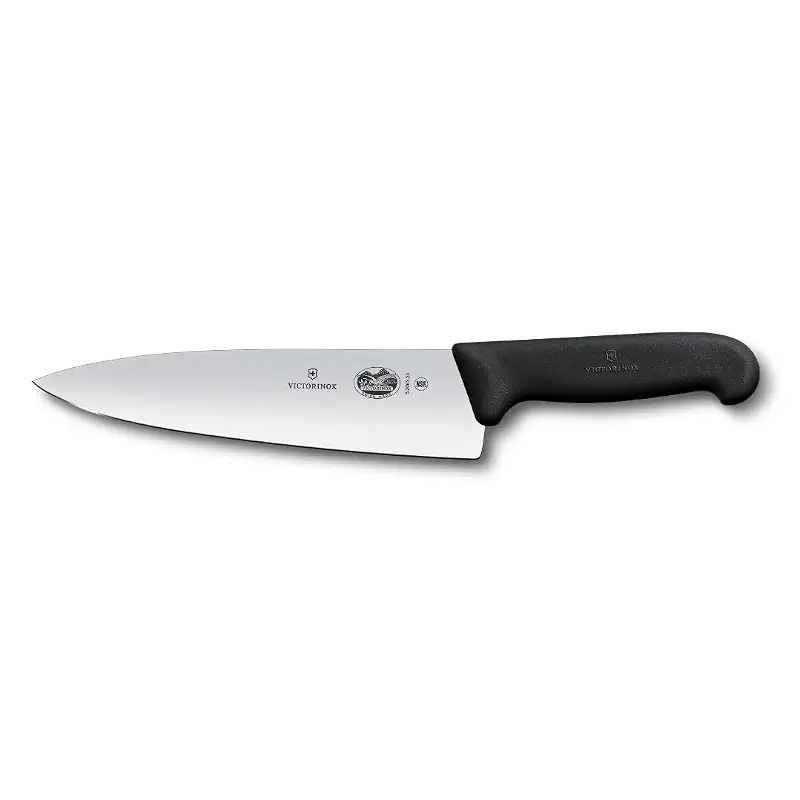
Victorinox Fibrox Pro 8 Inch Chef’s Knife, Dishwasher Safe, Black | Ergonomic TPE non-slip handle for professional chopping, slicing, and dicing. Swiss made, dishwasher safe kitchen tool
4.8(14,880)
Affordable Swiss-made chef knife with widespread professional endorsement; works for any hand with sharp, balanced performance.
Ideal for: Budget-conscious cooks of any handedness seeking a sharp, reliable general-purpose chef knife with professional-grade performance.
The Victorinox Fibrox Pro 8-inch has become the default recommendation from America's Test Kitchen and countless home cooks, and for good reason: it delivers sharp, responsive cutting at a fraction of premium-knife costs. The blade is thinner and lighter than forged alternatives, which translates to less hand fatigue during extended prep work and easier edge maintenance over time. Owners report it slices tomatoes paper-thin without tearing, dices onions with minimal effort, and handles meat and vegetables with equal competence. The ergonomic TPE handle stays grippy even when wet, and the straightforward stainless steel construction means no fussing with oils or special care.
The catch for left-handers is the same as the Keemake: this is a right-handed blade with no reverse bevel. However, many left-handed cooks find that Victorinox's lightweight design and sharp edge make the hand-specific geometry less critical than with heavier or duller knives. If you're willing to use a universal-geometry knife in exchange for excellent sharpness and reliability at the entry-level price, this becomes a pragmatic choice. Comparing directly to Lefty's single chef knife, you sacrifice left-hand specificity but gain far better quality control, lower long-term cost, and the ability to find replacement blades or sharpening services widely available. The trade-off depends on whether you've found success adapting to right-handed tools in the past or whether you absolutely require left-hand geometry to cut comfortably.
Pros
Arrives sharp and holds edge through weeks of regular use
Lightweight and well-balanced for reduced hand fatigue
Non-slip TPE handle stays secure even when wet
Dishwasher safe stainless steel with minimal maintenance
Cons
Right-handed blade bevel only; not designed for left-hand grip
Thinner blade can require a lighter touch and more frequent sharpening than heavier knives
Key features
8-inch stainless steel blade with tapered edge sharpened to professional standard
Lightweight at 5.7 ounces with excellent balance and control
Thermoplastic elastomer (TPE) handle ergonomic and non-slip
Dishwasher safe with Swiss manufacturing and lifetime warranty
How to Choose a Left-Handed Chef Knife
Four trade-offs that actually matter when matching a chef knives for left handers to your kitchen.
Understand Left-Hand Blade Geometry
A true left-handed knife has the blade bevel reversed so that when held in the left hand, the sharpened edge meets the food at the correct angle and you see exactly what you're cutting without awkward flipping or wrist twisting. Learning about left-handed knife ergonomics basics helps you spot the difference between a knife marketed as left-handed and one that actually delivers it. Check product photos and buyer reviews carefully; several products in this lineup have shipped with the bevel on the wrong side despite claiming left-hand design. If you're flexible with hand position or have used right-handed knives successfully in the past, some premium all-purpose options like the Keemake can work well even without reversed geometry.
Decide Between Specialization and Versatility
Single-purpose knives like serrated bread blades excel at one task but limit your kitchen workflow. Multi-task chef knives handle chopping, dicing, slicing, and mincing, making them the workhorse of any kitchen. Sets offer multiple sizes in one purchase but increase quality-control risk and storage demands. For left-handers, specialization matters more because finding truly left-handed tools already narrows your options, so many cooks choose a versatile left-handed chef knife and add other tools as needed rather than committing to a full set upfront.
Check Quality Control and Warranty Support
Batch inconsistency affects several left-hand brands, with some units arriving dull, rusted, or beveled incorrectly. Before ordering, research recent reviews and contact the seller about current stock. Look for clear return policies and responsive customer support. The Victorinox and Keemake lines both ship from larger producers with stronger QA, while smaller left-hand specialists require more due diligence. Swiss and Japanese manufacturers like Victorinox typically back their products with warranties against defects; confirm this applies to your specific purchase.
Balance Handle Comfort with Blade Edge Retention
A comfortable handle reduces wrist fatigue during long prep sessions, but edge retention matters equally. Budget knives hold an edge for weeks to a few months; premium damascus and high-carbon options can go months with proper care. Stainless steel is low-maintenance but may dull faster than high-carbon alternatives. Left-hand specific handles are often shorter than traditional chef knives, which some left-handers appreciate for control but others find limiting. Test or research whether handle length suits your hand size before committing, as this is one of the few aspects you cannot easily modify after purchase.
Frequently asked
Quick answers to the questions readers ask most.
Is a true left-handed knife worth the extra cost compared to a universal knife I can adapt to?
If you've spent years flipping or contorting a right-handed knife, a true left-handed option eliminates that friction entirely. The blade angle and handle ergonomics work with your natural grip rather than against it, so you cut faster, more cleanly, and with less hand strain. However, quality matters more than hand-specificity: a high-quality universal knife like the Keemake often outperforms a poorly made left-handed option. Test both approaches if possible; some left-handers prefer one premium versatile knife over a mediocre left-hand specific one.
Why do some reviews say the blade is beveled on the wrong side if the product claims to be left-handed?
Manufacturing inconsistency or batch errors. Some left-hand knife makers have shipped units with the bevel matching right-handed geometry, which completely defeats the purpose. This is a quality-control failure, not a design flaw. Always check recent reviews before purchasing, look for photos showing the blade angle, and contact the seller if uncertain. Products with many reviews and consistent five-star ratings are more likely to represent current production quality than newer items with sparse feedback.
Do I need a sharpening tool specifically designed for left-handed knives?
No. A knife sharpener works on either hand orientation because you're sharpening the edge itself, not the handle. However, if you use a honing steel (the rod you swipe the blade along between uses), the hand orientation is reversed: left-handers swipe right-to-left instead of left-to-right. Whetstones and electric sharpeners work identically for any blade orientation. The main consideration is blade hardness and steel type, which affect which sharpener grit or tool you need, but this applies to all knives regardless of hand.
Can a right-handed person use a left-handed knife effectively?
Yes, which is why some reviews mention right-handed family members borrowing the knife successfully. The blade will work, though the geometry won't be optimized for their natural grip. A right-hander using a left-handed knife might notice the edge pulls slightly to one side or requires slightly adjusted hand position to cut straight. It's functional but not ideal. This flexibility makes left-handed knives less of a waste if your cooking interests change or you gift one later.
What size blade length is best for left-handed home cooking?
Eight inches is the standard chef knife length and handles 90 percent of kitchen tasks comfortably for home cooks. Ten-inch blades are longer and heavier, suited to professional kitchens with high-volume prep. Shorter blades like six inches work for small hands or detailed tasks but slow down volume work. For left-handers, handle length matters as much as blade length because many specialized left-hand options have shorter handles, which can affect wrist angle and fatigue during extended cutting sessions. Check both dimensions when comparing products.