Verdict, analysis, and key features for each pick.
#1 Pick
Best Overall Kitchen Set
Lefty's The Left Hand Store
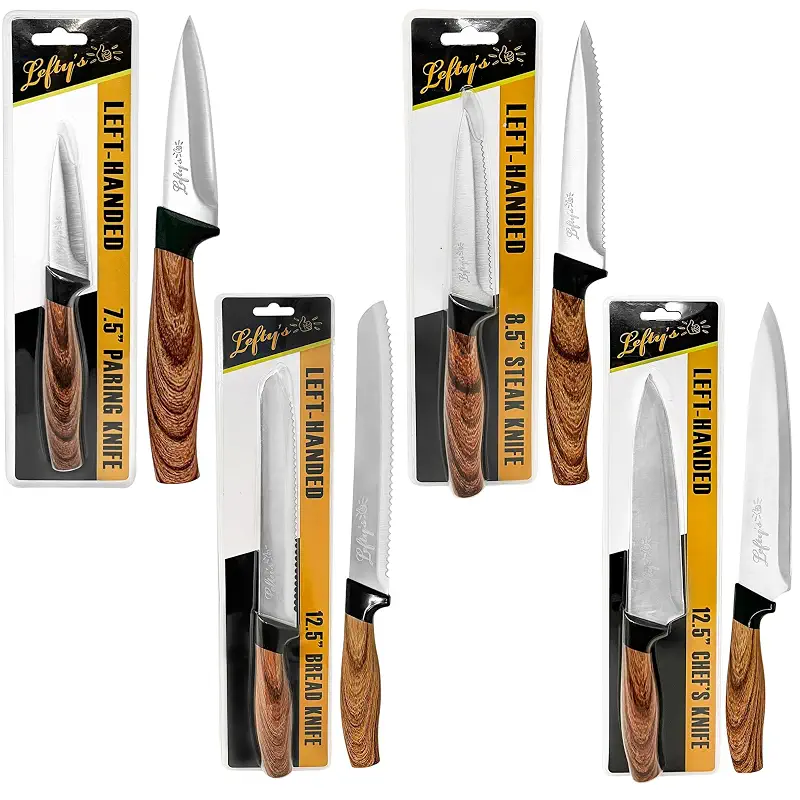
Lefty’s Left Handed Knives Set of 4 - Paring Steak Chef and Bread knife - Extra Sharp - Great for Cutting, General Purpose, Kitchen - Gifts for Left-Handed People, Lefty, Adults, Chef, Cook and Women
4.0(27)
Four-knife set with proper left-hand bevel, reaching lefties who want a complete starter lineup.
Ideal for: Left-handed home cooks seeking an affordable matched set for daily kitchen tasks.
Lefty's kitchen set tackles the most common left-hander pain point: finding a matched set rather than hunting down individual pieces. The four-knife bundle includes paring, steak, bread, and chef knives, each with the blade bevel ground for left-hand use. This matters more than casual cooks realize; when the sharpened edge is on the correct side, you actually see what you're cutting instead of wrestling the food away from the blade edge.
Owners report the steak and bread knives perform reliably, though the paring and chef knives have generated mixed feedback. Some users praise the comfort of the wooden-effect handle and the immediate improvement in cutting technique once they switch from right-handed knives. Others note the larger knives veer during cuts if you're applying inconsistent pressure, which can happen with any blade but feels especially frustrating when you've finally found something supposedly designed for you. Handle length also divides opinions; some lefties find the grip comfortable, while others report wrist fatigue after extended use.
Compared to the specialty-focused options like the Spyderco Para Military 2, this is a straightforward kitchen starter rather than a premium investment. The stainless steel construction is durable and dishwasher-safe, though a few owners flagged rust spots after repeated cycles. If you want one set that covers everyday slicing, dicing, and bread work, this is the path forward; just manage expectations that no four-knife set excels at everything.
Pros
Left-hand bevel on all four knives
Wooden-effect handles feel comfortable and attractive
Dishwasher-safe stainless steel construction
Covers paring, steak, bread, and chef work
Cons
Larger knives can drift off-line during cutting
Handle length may cause wrist strain on extended use
Key features
Set of four knives with left-sided blade bevel
Stainless steel alloy with wooden-effect handles
Sizes range from 7.5-inch paring to 12.5-inch chef knife
Dishwasher safe and waterproof construction
#2 Pick
Best For Precision Detail Work
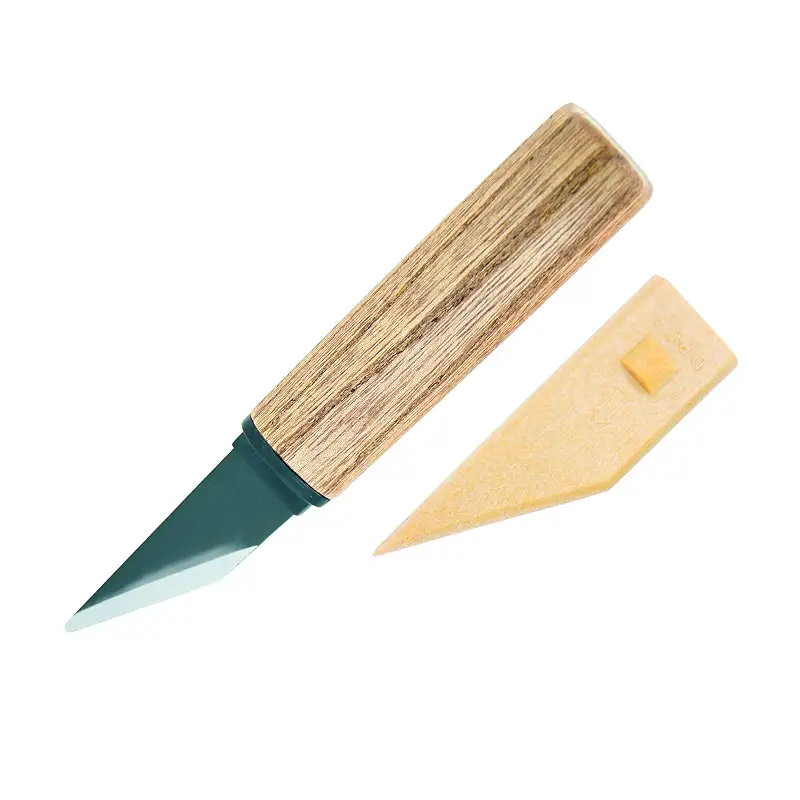
Product of Gifu Japan
Kiridashi Knife Jpanese Pocket Knife Left Handed Knife with Sheath | Marking Knife Wooden Pocket Knife
4.3(115)
Japanese kiridashi delivers excellent sharpness and steel quality in a compact single-edge blade.
Ideal for: Precision workers, carvers, and detail-oriented cooks who value edge retention and steel quality.
The kiridashi is not a kitchen knife in the traditional sense; it's a precision tool that Japanese craftspeople have refined for carving, marking, and detail work. What makes this left-handed variant relevant to knife enthusiasts is the quality-to-value ratio. Japanese hand-polished high-carbon steel arrives genuinely sharp from the manufacturer, and owners consistently report reaching scary-sharp status with minimal stropping.
This knife occupies a different role than kitchen sets. Woodworkers use it for marking joints; leatherworkers use it for edge beveling and detail cuts; artists grab it for intricate carving. The partial bolster protects your hand while leaving the entire blade edge accessible for sharpening, a detail that speaks to design maturity. One owner noted the hollow-ground bevel takes an edge remarkably fast and holds it through heavy carving sessions. The plastic sheath is utilitarian but functional, and the one-handed deployment works well once you learn the motion.
If you're comparing this to the kitchen-focused Lefty's paring knife, the kiridashi trades everyday versatility for precision and steel longevity. It's not your main kitchen workhorse; it's the specialist tool you reach for when kitchen knives feel too blunt for detailed garnish work or when you need something that cuts leather or wood. The price-to-quality story here is genuinely strong for the category.
Pros
Hand-polished high-carbon Japanese steel takes excellent edge
Exceptionally sharp straight from manufacturer
Partial bolster allows full blade sharpening
Holds sharp edge through demanding detail work
Cons
Specialty tool, not an everyday kitchen knife
Requires care to prevent rust on high-carbon blade
Key features
Hand-polished high-carbon steel blade from Japan
Hollow-ground single-edge bevel for precision work
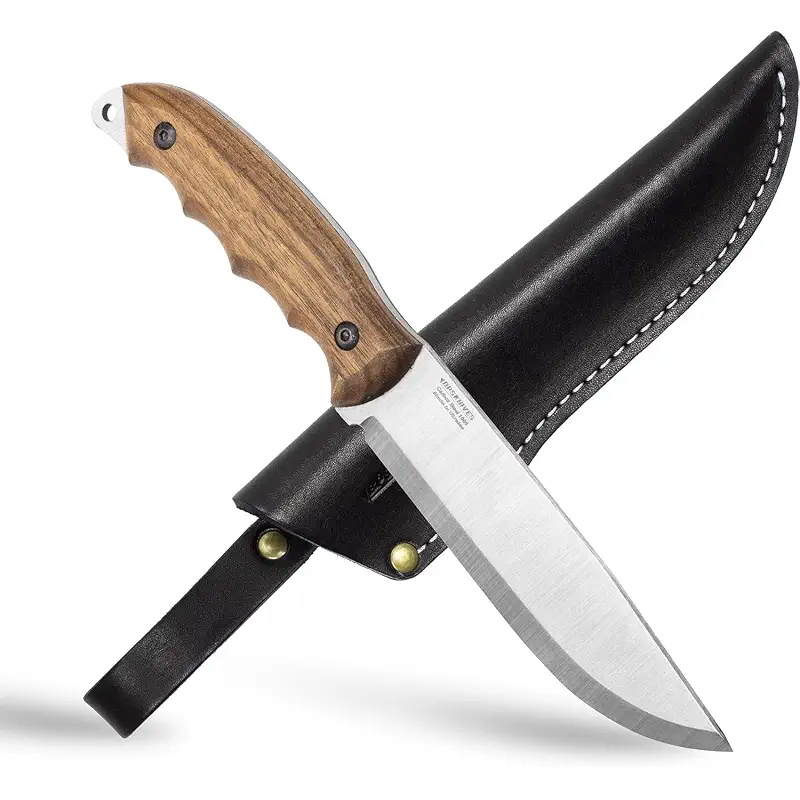
Ideal for: Outdoor enthusiasts, hunters, and campers who need a left-hand-carry fixed blade for field tasks.
The Bpsknives HK5 CSH enters a different world than kitchen prep. This is a bushcraft and survival tool: full-tang construction, walnut-wood handle, leather left-hand sheath, and a Scandinavian grind that prioritizes reliability over flair. The 1066 high-carbon steel at 57-59 HRC hardness is purpose-built for camp tasks, outdoor food prep, and the occasional demanding cut that a kitchen blade would choke on.
Owners appreciate the fact that a left-handed carry option exists at all; most outdoor knives default to right-hand sheath carry, forcing lefties into awkward cross-body draws. The Scandi grind is more forgiving than full-flat grinds when you're sharpening in the field with basic stones. One reviewer with BSP experience noted that fit and finish aren't pristine from the factory; the blade bevel isn't perfectly even on both sides, and walnut scales showed no protective finish, so you'll need to maintain the wood yourself. Those who know how to reshape a blade shrug this off; those expecting mail-ready perfection may feel disappointed.
Compare this to the Spyderco Para Military 2 if you're torn between folding convenience and fixed-blade durability. The Spyderco excels in pocket carry and urban EDC; this knife is for the woods, the boat, or the hunting pack. The leather sheath and belt loop are serious touches, and the made-in-Ukraine build commands respect in the bushcraft community.
Pros
Full-tang construction with walnut handles
Left-handed leather sheath with belt loop carry
Scandinavian grind easier to sharpen in field
High-carbon steel holds edge under demanding use
Cons
Fit and finish rough from factory; bevel may need evening
Walnut handles lack protective finish and require maintenance
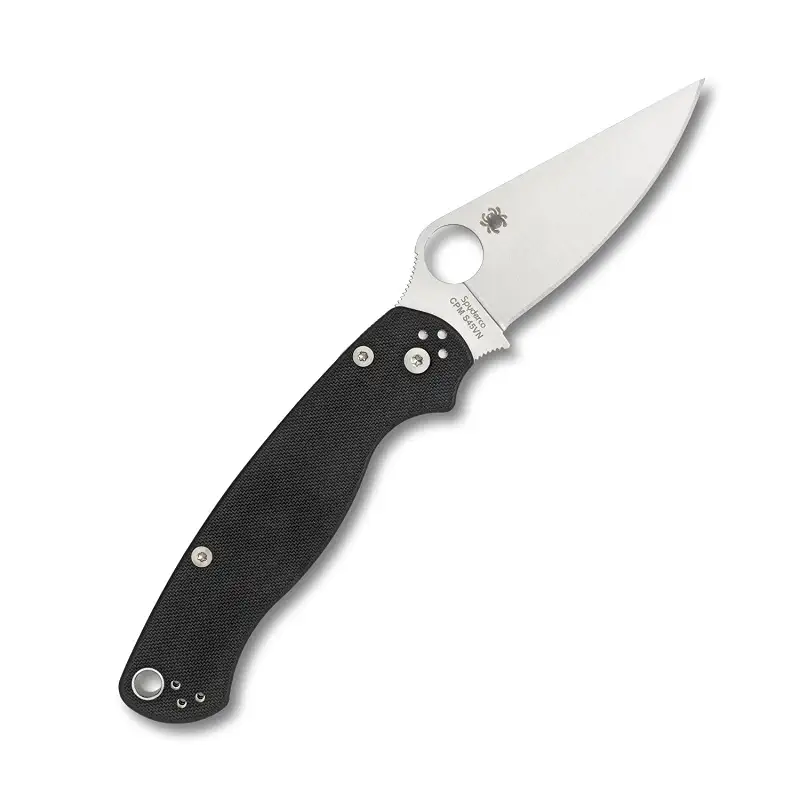
Ideal for: Left-handed professionals, outdoor workers, and serious knife enthusiasts who demand premium materials and lock reliability.
The Spyderco Para Military 2 left-handed model is the premium option in this lineup, and the reason is tangible: a left-hand compression lock that actually works as intended. Right-handers can fumble a left-hand blade lock; lefties have spent decades doing the same with reverse-engineered designs. This knife fixes that asymmetry. Owners who carry folding blades professionally rave about the compression lock's strength and the ergonomic confidence it brings to one-handed opening and closing during active work.
The full-flat-ground CPM steel is excellent. stays sharp longer than most stainless steels and resists corrosion far better than high-carbon options. The handle is textured enough for wet-hand grip without feeling like sandpaper, and the finger choil (that scoop just above the blade) transforms how the knife feels when you choke up close to the edge. Owners consistently praise the comfort during extended cutting tasks, whether that's fishing work, cooking outdoors, or processing game. The four-position clip supports tip-up, tip-down, and either-pocket carry, giving you flexibility in how you stash it.
Where the Spyderco differs from the Lefty's kitchen set is price and specialization. You're paying more for a tool that favors one task exceptionally well rather than a budget generalist. The wide profile from the signature Spydie hole means it occupies noticeable pocket real estate, which is worth knowing if you carry a lot of gear. But if you're a left-handed outdoors worker, fisher, or someone who uses a folding blade hard, this is the knife that won't betray you.
Pros
Left-hand compression lock optimized for left-handed use
CPM steel with excellent edge retention and corrosion resistance
handle with textured comfort and low weight
Four-position clip supports multiple carry styles
Cons
Wide profile takes substantial pocket space
Premium pricing reflects specialty engineering
Key features
Full-flat-ground CPM stainless steel blade
Left-hand compression lock for secure, ambidextrous deployment
handle with nested stainless liners
Four-position pocket clip and lanyard hole for carry versatility
#5 Pick
Best Single Paring Knife
Lefty's The Left Hand Store
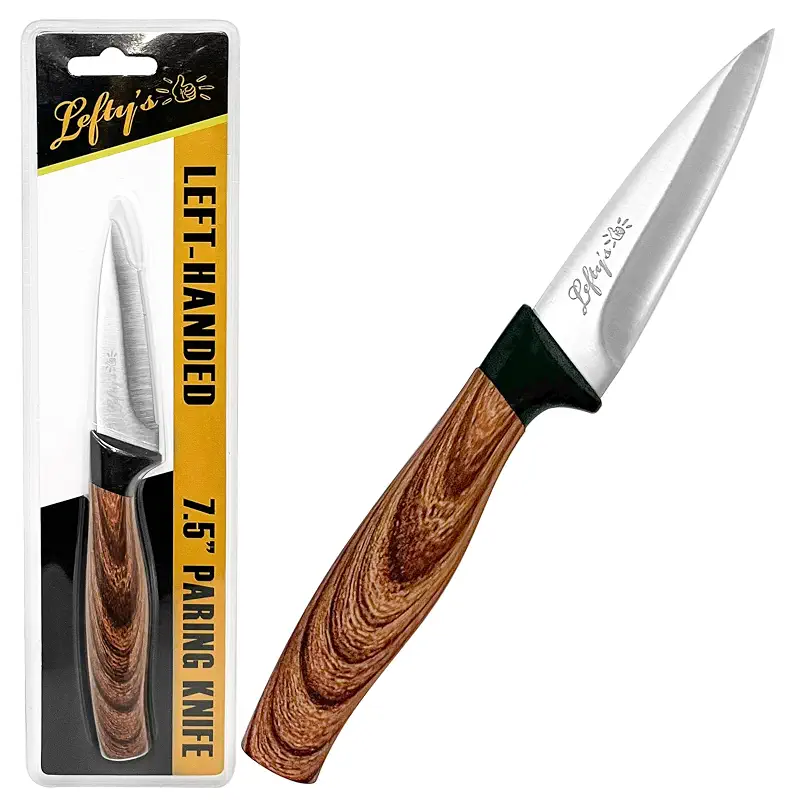
Lefty’s Left Handed Paring Knife - Stainless Steel Durable Blade - Extra Sharp - Great for Cutting, General Purpose, Kitchen items - Gifts for Left-Handed People, Lefty, Adults, Chef Man and Women
4.3(73)
Focused left-hand paring knife with correct bevel, ideal for lefties tired of hunting solo blades.
Ideal for: Left-handed home cooks who need a reliable paring blade or prefer buying kitchen knives individually.
Sometimes you don't need a set; you need one excellent tool that does one job well. The Lefty's paring knife exists because finding a single left-handed paring blade in regular stores is a Sisyphean task. Home cooks who inherit or own one treasured left-handed paring knife know the relief: finally, a blade that doesn't fight you when you're peeling an apple or deveining shrimp.
This knife has the same DNA as the four-knife set, but focused and narrower in scope. The 7.5-inch overall length with a 3.5-inch blade is standard paring geometry, and the left-hand bevel means you see what you're cutting without contortion. Owners describe it as a revelation after years of using right-handed tools, and the wooden-effect handle is comfortable for extended detail work. The stainless steel takes a reasonable edge and is forgiving in a home kitchen. One owner noted the blade doesn't hold sharpness as long as her older left-handed paring knife, suggesting this version may not match vintage lefty-tool steel quality, but for the price, the convenience factor dominates her satisfaction.
The trade-off between this single knife and the Lefty's four-knife set is clear: get exactly what you use, or get breadth and save money per piece. If you already own a chef knife and bread knife, or if you prefer to buy kitchen tools one at a time, this focused option avoids the set-based compromises. The beginner guide to left-handed knives will help you determine whether a set or individual pieces fit your kitchen workflow better.
Pros
Left-hand bevel on correct side for intuitive cutting
Standard 7.5-inch paring size with 3.5-inch blade
Comfortable wooden-effect handle for detail work
Stainless steel is durable and dishwasher safe
Cons
Edge retention not as strong as vintage left-handed knives
Single-knife purchase means higher per-unit cost than sets
Key features
Left-sided blade bevel for left-hand cutting geometry
Stainless steel with wooden-effect ergonomic handle
7.5-inch overall length, 3.5-inch blade
Waterproof, dishwasher-safe construction
How to Choose a Left Handed Knife
Four trade-offs that actually matter when matching a left handed knives to your kitchen.
Understand Blade Bevel and Grind
The bevel is everything. A right-handed knife has its edge sharpened on the right side of the blade when held in the right hand; a left-handed knife flips that geometry. The left-handed versus right-handed knife differences come down to which side the sharpened edge lands. A Scandinavian grind (beveled on one side only) is easier to sharpen in the field; a full-flat grind (beveled on both sides symmetrically) offers precision but requires more finesse when stropping. If you're new to knife maintenance, a Scandi grind is more forgiving. If you're a detail worker or chef, full-flat grinds reward technique.
Kitchen vs. Specialty Tools
Kitchen knives and pocket knives serve different masters. A kitchen blade should feel natural in a left-hand grip for extended dicing and prep work, which means handle length and balance matter. Bushcraft and folding blades prioritize one-handed deployment, steel durability, and field sharpening. A beginner guide to left-handed knives typically starts with one kitchen workhorse (chef or paring knife) before branching into specialty blades. Don't buy a outdoor fixed blade expecting it to slice an onion neatly, and don't rely on a kitchen paring knife for camp tasks.
Steel Type and Edge Retention
Stainless steel resists rust and requires less maintenance, making it ideal for home kitchens and casual use. High-carbon steel holds a sharper edge longer and is easier to reshape in the field but demands more upkeep to prevent rust. Japanese high-carbon blades (like the kiridashi) arrive incredibly sharp but need regular oiling or stropping. American and European stainless options are more forgiving for cooks who aren't obsessive about maintenance. For camping and outdoor work, the durability and edge-holding of high-carbon often outweighs the rust risk.
Handle Comfort and Fit
A comfortable grip isn't luxury; it's the difference between efficient cutting and hand fatigue. Wooden handles offer warmth and can be reshaped to your hand, but require occasional maintenance. (a resin-fiber composite) is durable, weather-resistant, and provides consistent grip even when wet. Stainless liners inside handles add weight but improve durability. If you have smaller hands or shorter reach, test the handle length before committing; a blade with a too-long handle forces awkward wrist angles during detail work, and a too-short handle makes you vulnerable to blade-to-finger contact.
Your Use Case and Budget
A home cook needs reliability over prestige; a professional woodworker or leatherworker needs precision and steel that holds an edge through demanding work. Outdoor enthusiasts weighing fixed blades versus folders should consider carry method and how often one-handed deployment matters. Budget-friendly sets get you four blades at modest cost but risk uneven quality across the lineup. Premium single tools like professional folding knives cost more but excel in their niche. Match your spending to how often and how hard you'll use the blade.
Frequently asked
Quick answers to the questions readers ask most.
Why is a left-handed knife better than just flipping a right-handed knife?
When you flip a right-handed knife to use in your left hand, the sharpened edge lands on the outside of your cut, pushing food away from the board instead of drawing it toward you. You spend extra energy controlling the blade and often can't see the cut line clearly. A proper left-handed blade has the bevel on the correct side, so the edge draws food toward the center and lets you see exactly where you're cutting. After years of fighting right-handed knives, the difference is night-and-day.
Are left-handed knives more expensive than right-handed ones?
Most left-handed kitchen knives cost about the same as comparable right-handed versions, but specialty tools like left-hand folding knives or Japanese blades sometimes carry a small premium because fewer people buy them. The bigger cost difference comes from brand and steel type, not handedness. Budget kitchen sets are affordable; premium pocket knives cost significantly more regardless of hand orientation.
Can I use a left-handed knife in my right hand if I'm ambidextrous?
Technically yes, but it's awkward. The bevel is ground for left-hand use, so when you hold it in your right hand, the edge angles away from your cut again. You'd reintroduce the same control issues that make right-handed knives frustrating for lefties. If you're ambidextrous, a symmetrical blade (full-flat or Scandi grind) works better than a single-bevel design.
What's the difference between a Scandinavian and full-flat grind?
A Scandinavian grind has a single flat bevel, which means less steel removal and a blade that's easier to sharpen, especially in the field. A full-flat grind is beveled on both sides, creating a sharper edge and better control during detail work, but it requires more careful sharpening technique. For bushcraft and outdoor work, Scandi grinds are more forgiving. For precise kitchen work or carving, full-flat excels.
How do I care for a left-handed knife to keep it sharp longer?
Hand-wash instead of dishwasher (unless the specs say dishwasher-safe); high-carbon steel blades should be dried immediately to prevent rust. Hone regularly with a steel or honing rod to realign the edge between sharpening sessions. Store on a magnetic strip or in a knife block rather than loosely in a drawer, which dulls the blade and risks damage. For stainless steel, dishwasher use is fine but hand-washing and air-drying extends edge life. Stropping on leather between uses maintains sharpness between full sharpening sessions.