Best Cheese Press for Home Cheesemaking: Top 5 Models
Find the best cheese press for your home kitchen. Compare wooden lever presses, screw-style models, and manual fruit presses: expertly reviewed for beginners and serious cheesemakers.
Verdict, analysis, and key features for each pick.
#1 Pick
Best Overall
PetriStor
BIG Dutch Wooden Cheese Press - Cheese Making Kit (Wooden Cheese Press with Lever and 2 Cheese Molds 1,3 Qt, 2 Qt, 2 Cheeseclothes)-Cheese Press for Home Cheese Making pressure up to 400 lbs
4.9(39)
Heavy-duty lever press with 400-pound capacity and included molds: ideal for serious home and semi-professional cheesemaking.
Ideal for: Serious home cheesemakers and small-batch producers who prioritize capacity and leverage advantage.
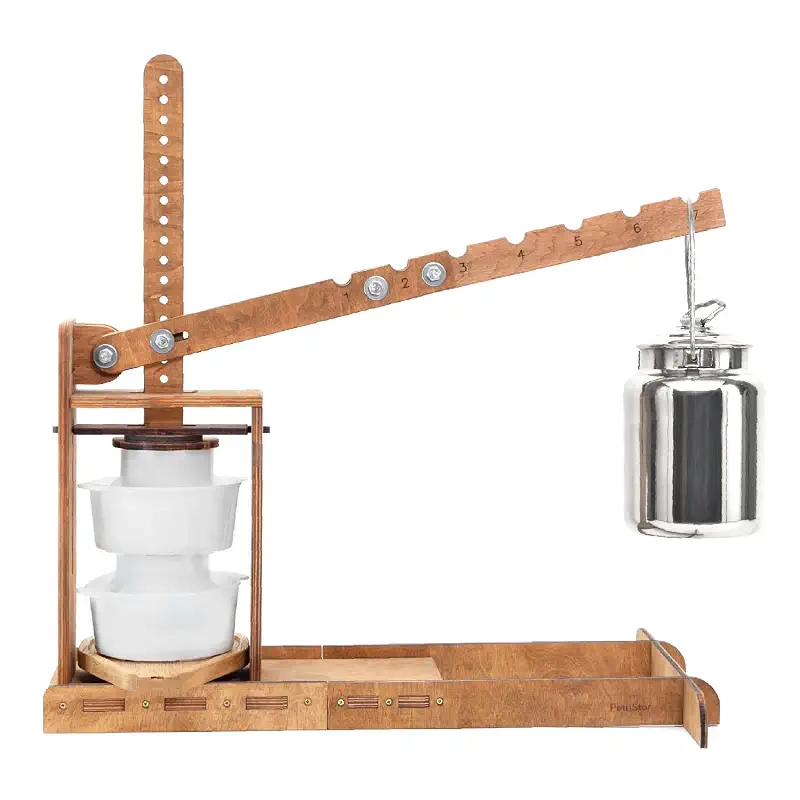
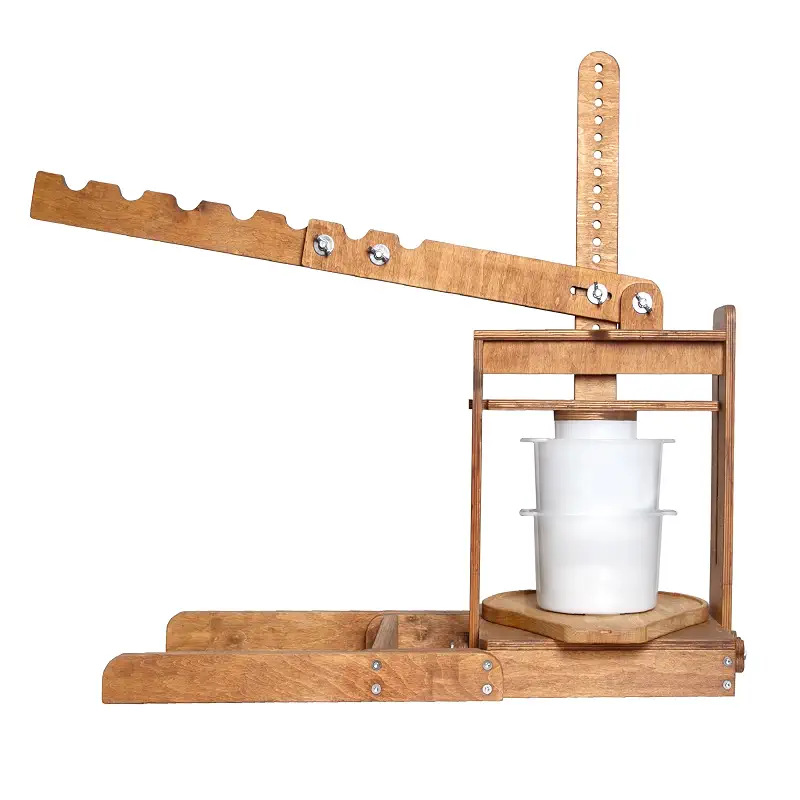
The PetriStor BIG Dutch Wooden Cheese Press stands out for sheer capacity and leverage design. Its long lever arm multiplies force elegantly: even small added weights generate substantial pressure through a mechanical advantage that reaches up to 16 times amplification, depending on arm length. The kit arrives with two cheese molds (1.3 and 2 quart), cheesecloth, and a wooden drip tray, so you're ready to start right away. Buyers consistently praise the construction quality and the fact that the press feels stable and well-balanced during use, with minimal risk of tipping even under heavy load thanks to a reinforced stabilizing base.
The main trade-off is footprint and setup. This press is large and best placed over a sink or on a dedicated surface; you won't easily tuck it into a cabinet between uses. Assembly is straightforward, but the manual is minimal: some buyers report needing to look up weight-to-pressure conversions online to dial in the exact force they need. Compared to the manual screw models further down this list, the lever mechanism demands less physical effort to generate pressure, which many home cheesemakers find less taxing over long pressing sessions.
If you're committing to hard cheeses like cheddar or gouda and making batches regularly, the investment in this press pays dividends. The wood construction (moisture-resistant plywood with vegetable-oil wax coating) should last years with basic care, though some owners recommend a stainless-steel drip tray as an optional upgrade to avoid long-term water damage to the base.
Pros
400-pound pressure capacity with adjustable leverage multipliers
Two molds and cheesecloth included in kit
Heavy-duty, stable construction resists tipping under load
Cons
Large footprint requires dedicated counter or sink space
Minimal documentation on weight-to-pressure conversion ratios
Key features
Lever-based design with 7 adjustable arm-length options up to 400 lbs pressure
Includes two cheese molds, cheesecloth, and wooden drip tray
Moisture-resistant plywood coated with vegetable-derived oil wax
Stabilizing base prevents tipping during pressing
#2 Pick
Best for Moderate Capacity
PetriStor
Dutch Wooden Cheese Press - Cheese Making Kit (Wooden Cheese Press with Lever and 2 Cheese Molds 1.2L)-Cheese Press for Home Cheese Making pressure up to 200 lbs
4.0(148)
Mid-range lever press with 200-pound capacity and oak drip tray: solid choice for regular home cheesemaking on a moderate budget.
Ideal for: Home cheesemakers who make cheese regularly and want moderate pressure without investing in the largest model.
The PetriStor Dutch Wooden Cheese Press (standard model) delivers the same lever-based force amplification as its bigger sibling but with a 200-pound capacity ceiling and a more compact footprint. The oak drip tray is a welcome upgrade over plastic: it's sturdier and more aesthetically pleasing, though still vulnerable to water damage over extended use. The press comes with two molds and uses the same leverage-multiplier principle, so buyers new to cheesemaking will spend the same learning curve figuring out which arm length and weight combination suits their curds.
Owners report solid performance over a year or more of regular use, and the lever amplification means you can apply serious pressure with a water jug rather than stacking bricks. However, several reviewers flag a real problem: whey drainage is messy. The wooden base absorbs liquid, and without a tilted setup or dedicated collection tray, whey pools and seeps unpredictably. One experienced buyer worked around this by propping up the back on a wooden spoon to create a slope toward the sink: practical but inelegant. This press is longer and less wieldy than the manual screw models, so it's harder to tuck away and can monopolize counter or sink space during pressing.
Compared to the compact wooden press (model B07KR3CLW2), this version offers more power and larger molds, making it better suited to substantial batches. But if you value minimal mess and easy storage, the screw-driven press might frustrate you less.
Pros
200-pound pressure capacity with leverage multiplier system
Oak drip tray more durable than plastic alternatives
Well-balanced and easy to assemble
Cons
Large, unwieldy frame requires dedicated pressing space
PetriStor Wooden Cheese Press for Cheese Making Supplies 12 in Metal Guides and Cheese Mold with Follower Piston 1.3Qt - Small Home Supply Cheese Press Machine - Prensa Para Queso Casero
4.3(376)
Small wooden screw press (50-pound capacity) in a space-saving footprint: perfect for apartment kitchens and beginner cheesemakers.
Ideal for: Apartment dwellers, beginners, and cheesemakers making small-batch soft and medium cheeses.
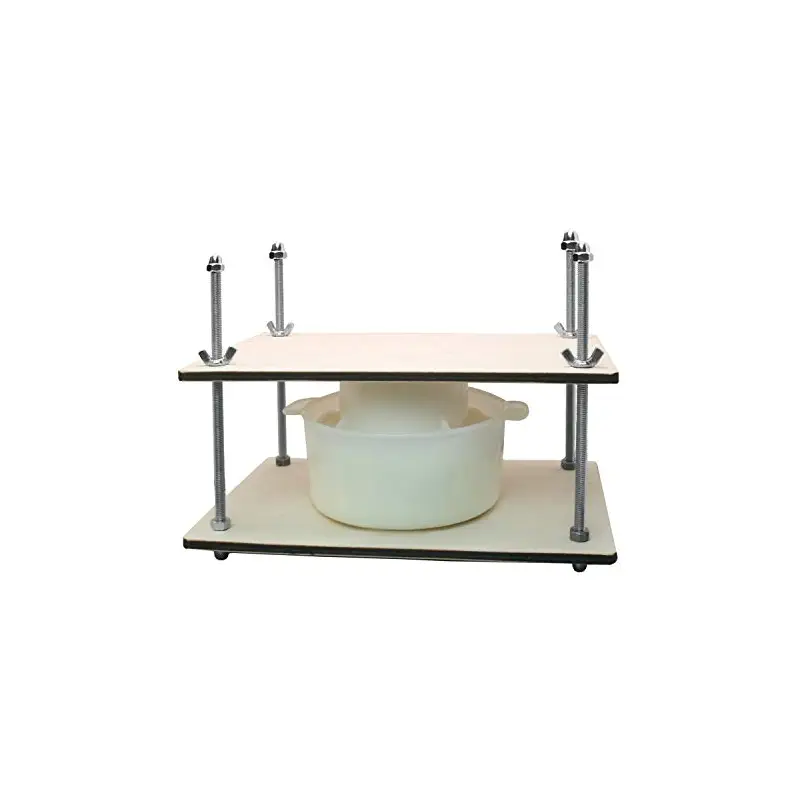
The PetriStor Wooden Cheese Press with Metal Guides is the lightest, most storage-friendly option on this list. At roughly 12 by 8 inches and rated for 50 pounds of pressure, it suits small cheese rounds (about 1–2 pounds) and fits easily in a cabinet after use. The design uses four vertical metal guides and a threaded bolt system: you place the mold and follower piston between the top and bottom boards, add weight or tighten the bolt, and let it work. Buyers consistently praise how quick it is to assemble, use, and clean. One reviewer who'd never made cheddar before used it to produce a 1-pound round on her first try; another owner with weak hands found it so easy to operate that she made five batches without strain.
The trade-off is power and scaling. Fifty pounds is enough for soft and medium cheeses but won't suit recipes requiring prolonged high pressure. You'll also need to supply your own weight or crank force: the press comes with wing nuts and bolts but no recommended weight set or lever system. Some buyers find the wing-nut assembly fiddly, though that's more a matter of patience than design flaw. The wooden base is durable but still prone to water damage if you don't place a plate underneath to catch whey; the included instructions don't explicitly warn about this. Where this press really shines is for beginners or anyone with space constraints: it proves you can make excellent cheese without a room-sized lever press.
If you compare this to the stainless-steel manual press from Ejwox, this wooden model is simpler, more compact, and easier to store, but the Ejwox offers more versatility for herb pressing and vegetable dehydration as a bonus function.
50-pound capacity sufficient for 1–2 pound cheese rounds
Super-fast to assemble and remarkably easy to clean
Cons
No weights or crank provided; you supply your own loading method
Wooden base absorbs water; whey needs to be caught in a separate tray
Key features
Vertical metal guides with threaded bolt and adjustable height
Compact wood construction (12x8x8.4 inches, 50-lb capacity)
Includes 1.3-quart cheese mold with follower piston
Quick assembly and disassembly for easy storage
#4 Pick
Most Versatile
Ejwox
Manual Cheese Press, 0.8 Gallon Heavy Duty Food Press for Cheese, Tofu & Vegetable Dehydration – Stainless Steel Basket Herb & Tincture Press with Filter Bags, Not for Hard Fruits
4.2(630)
Stainless-steel screw press for cheese, tofu, herbs, and vegetable dehydration: the most multi-purpose tool in this lineup.
Ideal for: Home cooks who want one tool for cheese, tofu, herb pressing, and vegetable dehydration; occasional cheese makers.
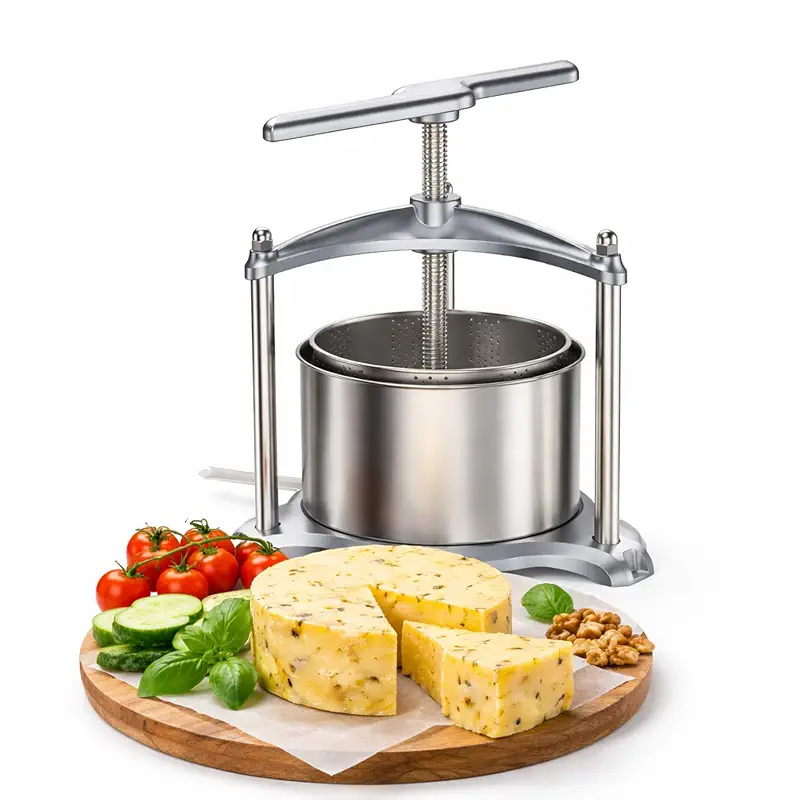
The Ejwox Manual Cheese Press is built around a stainless-steel basket and frame with a heavy-duty screw mechanism that applies direct downward force. It's rated for soft ingredients (curds, tofu, vegetables, berries, herbs) and handles cheese pressing as capably as vegetable dewatering or tincture extraction. The 0.8-gallon capacity is modest but practical for home use. Buyers love it for dual purposes: one reviewer pressed grape juice for jelly and found the smooth screw operation saved her aging hands compared to manual squeezing; another used it to dewater cabbage for dumplings. The included stainless-steel basket and filter bags are food-safe, and disassembly makes cleaning straightforward. The frame feels sturdy enough for home workshop use.
However, several reviews highlight real limitations. The press generates pressure through manual cranking, which demands arm strength and patience, not ideal if you need to hold heavy pressure for an hour while cheese sets. The inner basket has an open bottom (by design, for drainage), but this means splashing and mess if you're not careful or if you use the press for firmer items. One buyer accidentally bent the press plate trying to juice firm plums; the company sent a replacement, but this shows the press isn't engineered for hard fruits or sustained heavy loads. The stainless-steel inner basket can develop small metal shavings from the screw threads if not lubricated, so food-safe oil maintenance matters.
Compared to the wooden lever presses above, the Ejwox trades leverage convenience for compactness and multi-use appeal. It's better suited to occasional cheese making plus other kitchen tasks rather than dedicated hard-cheese production. If you want wooden vs. stainless steel cheese options, this represents the metal side and covers wider kitchen use cases.
Pros
Stainless-steel construction withstands frequent cleaning and disinfection
Multi-purpose: cheese, tofu, herbs, vegetables, tinctures, juice
Compact, disassembles for easy storage and cleanup
Cons
Manual screw requires sustained arm strength; not ideal for long pressing
Can bend if used on overly firm items; not rated for hard fruits
Key features
Heavy-duty screw system with stainless-steel basket and pressing plate
0.8-gallon capacity for soft-to-medium batches
Detachable inner and outer barrels for easy disassembly and cleaning
Includes two food-grade filter bags
#5 Pick
Best for Juice and Wine
Vevor
VEVOR 0.8 Gal/3L Fruit Wine Press, 2 Stainless Steel Barrels, Manual Juice Maker, Cider Apple Grape Tincture Honey Olive Oil Making Press with T-Handle for Outdoor Kitchen Home
4.0(326)
Large-capacity stainless-steel manual press (0.8 gallon) optimized for fruit juice and wine extraction: less ideal for traditional cheese.
Ideal for: Home winemakers and cider makers who occasionally press cheese; not recommended as a primary cheese press.
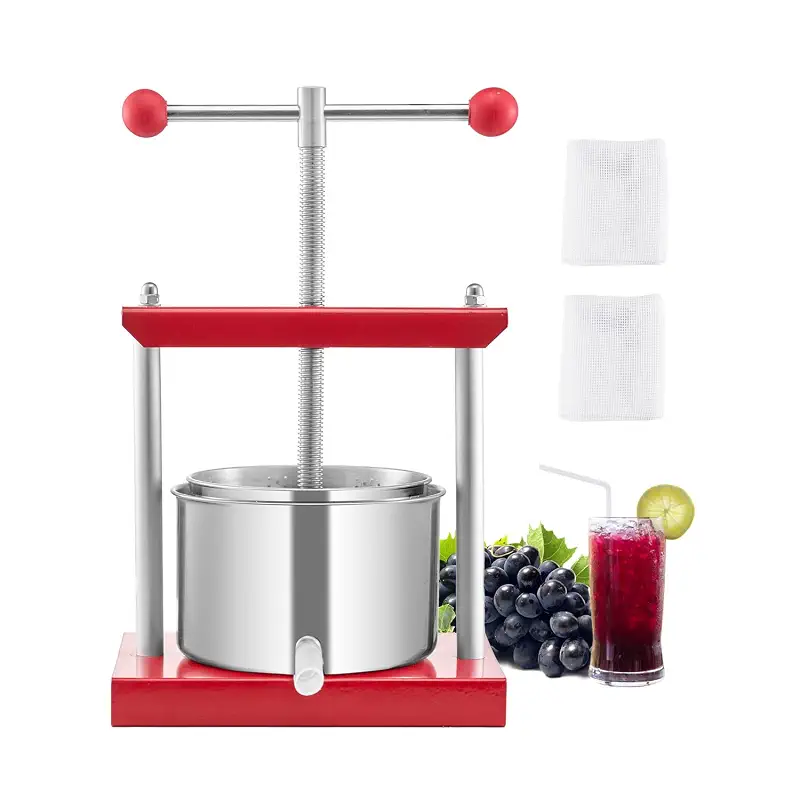
The Vevor 0.8-Gallon Fruit Wine Press is engineered primarily for extracting juice and pressing grapes, apples, and similar produce, though it can technically handle soft cheese curds and tofu. It features a 0.1-inch thickened stainless-steel pressing plate, a T-handle for downward cranking, and both inner and outer barrels in stainless steel. The 3-liter capacity is the largest on this list, and the sturdy metal frame with bolt-down holes allows permanent mounting to a countertop or outdoor prep table. Two food-grade filter bags and detailed instructions come in the box. Buyers impressed by the durability and heft report smooth operation and efficient juice extraction when they follow the prep steps (pre-cutting fruit, using filter bags).
But there are significant caveats for cheese work. The press lacks any leverage mechanism: all force comes from manual cranking, which requires real arm strength and patience. Multiple reviews mention metal shavings contaminating the output because the screw threads shed particles without proper oil lubrication; you must apply food-safe oil to the shaft before each use. The drain spout sits slightly above the bottom of the outer barrel, so tilting is necessary to collect every drop: inconvenient during an active pressing session. The pot also spins freely on the frame, so you're juggling rotation while pressing. These quirks are manageable for seasonal juice making but frustrating for the slower, more patient process of cheese pressing.
Compared to the Ejwox press, this Vevor model is heavier and more robust but bulkier and harder to store. It's built for high-volume fruit extraction, not the finesse and control that traditional cheese pressing rewards. If your primary goal is cheese, look to the wooden lever presses; if you're serious about cider, wine, or herb tinctures, this is more purpose-built.
0.8-gallon capacity is the largest here; efficient for bulk juice extraction
Disassembles and dishwasher-safe for fast cleanup
Cons
Manual cranking without leverage exhausts arms quickly; not ideal for cheese
Metal shavings from unlubricated screw threads require food-safe oil maintenance
Key features
0.1-inch thickened stainless-steel pressing plate and dual barrels
3-liter capacity with T-handle manual crank operation
Bolt holes for permanent table or counter mounting
Includes two food-grade filter bags and instruction guide
How to Choose a Cheese Press
Four trade-offs that actually matter when matching a cheese press to your kitchen.
Capacity and Cheese Style
Soft cheeses like ricotta and paneer need gentle pressure and short pressing times; a 50-pound compact press handles these well. Medium cheeses like gouda require 100–200 pounds over several hours. Hard aged cheeses like cheddar demand sustained 200+ pounds for extended periods. Start with your cheese goal and work backward. A 2-pound batch fits the small wooden press; a 4–5 pound batch needs the mid-range lever model. If you're experimenting, the compact press costs less and takes up minimal counter space, so it's a smart entry point before committing to a large lever system.
Leverage vs. Manual Screw
Lever-based presses (the wooden Dutch models) use mechanical advantage: a long arm multiplies force so a 5-pound weight can deliver 80+ pounds of pressure with ease. Manual screw presses rely on hand cranking, which demands arm strength and patience but offers simpler assembly and smaller footprints. If you have hand weakness, arthritis, or plan to press batches regularly, the lever advantage is worth the extra size. If you make cheese occasionally and value storage convenience, a screw press suffices.
Material and Durability
Wooden presses are traditional and absorb fewer vibrations, but the base and drip tray soak up whey over time and need maintenance or protective barriers (a stainless-steel tray underneath helps). Stainless-steel presses resist water damage and are easier to sanitize, but they're heavier and messier when juice splashes. Choose wood if you'll store the press carefully and don't mind simple upkeep; choose stainless steel if you want minimal maintenance and multi-purpose use (herbs, vegetables, juice all leave less mess in metal).
Workspace and Storage
Large lever presses monopolize counter and sink space during pressing: they're 2–3 feet long and need clearance overhead for the lever arm. If your kitchen is compact, the 12-inch wooden screw press or the Ejwox stainless model tucks away in a cabinet. Bigger presses belong in a dedicated cheese-making area or over a sink during use. Before buying, measure your available flat surface and cabinet depth to ensure fit. Lever presses are also harder to take apart for storage, so think of them as semi-permanent countertop fixtures.
Cheese Press Setup and Usage
All presses require a drip tray or catch system to prevent whey from soaking the counter and damaging wood bases. You'll also need a mold, cheesecloth, and thermometer for most recipes. The large lever presses come with molds and cloth; smaller presses may require separate purchases. Before your first batch, read through a cheese recipe to understand how long the press will sit in use: some recipes need 30 minutes, others 24 hours. This tells you whether you can work around the press on your counter or need to isolate it in a dedicated space.
Frequently asked
Quick answers to the questions readers ask most.
Do I need a separate cheese mold, or does it come with the press?
Most wooden lever presses include one or two molds in the kit. The small compact press and the stainless-steel screw presses may come with a mold or require you to purchase one separately. Always check the product listing under 'What's in the Box.' If no mold is included, you'll need to buy a food-grade plastic mold (common sizes are 5.5-inch diameter for small batches or 6.2-inch for larger rounds) and cheesecloth separately.
Can I use a cheese press for anything besides cheese?
Yes. Screw-based and stainless-steel presses work well for tofu, dewatering vegetables (cabbage, zucchini for dumplings), pressing herbs and flowers for infusions, and extracting juice from soft fruits. Lever-based wooden presses are optimized for cheese but can technically handle soft tofu and herbs. The Vevor fruit press excels at wine and cider but is awkward for cheese. Choose based on your primary use; multi-purpose doesn't mean equally good at all tasks.
How do I prevent whey from soaking the wooden press base?
Place a separate drip tray or baking sheet underneath the press during use to catch all whey before it reaches the wooden base. Some owners use a stainless-steel hotel pan or a plastic sheet to protect the wood. After each use, wipe down the base with a damp cloth and allow it to air-dry fully. If you want permanent protection, upgrade to a stainless-steel drain tray or consider a stainless-steel screw press instead, which handles water splashing more gracefully.
What's the difference between wooden and stainless steel cheese presses?
Wooden vs. stainless steel cheese options serve different priorities. Wooden lever presses deliver force through mechanical advantage (long arms multiply small weights into large pressure), are lighter, and have a traditional aesthetic. Stainless-steel screw presses rely on manual cranking, are simpler to sanitize, and handle multi-purpose use (vegetables, herbs, juice). Wooden bases absorb water and need maintenance; stainless steel resists moisture but is heavier and messier when liquids splash. Choose wood for dedicated cheese making; choose stainless steel for occasional cheese plus other kitchen tasks.
How much pressure do I need for different cheese types?
Soft cheeses (ricotta, paneer, chèvre) need little to no pressure, just gentle overnight draining. Medium cheeses (gouda, jack) need 20–100 pounds for 4–12 hours. Hard aged cheeses (cheddar, parmesan) require 150–400 pounds for 12–48 hours or longer. Use the pressure-multiplier chart that comes with lever presses to estimate how much weight to add at different arm lengths. If your press lacks a chart, search online for the specific model's multiplier table. Start light and increase gradually while monitoring curds to avoid over-pressing.