Best Camping Cooking Knife: Sharp, Portable Blades for Outdoor Prep
Find the best camping cooking knife for your next trip. Compare santoku blades, folding designs, and portable options ideal for outdoor food prep and BBQ.
Ideal for: Camp cooks who prep full meals; backyard BBQ hosts; vehicle-based camping with organized cooking stations.
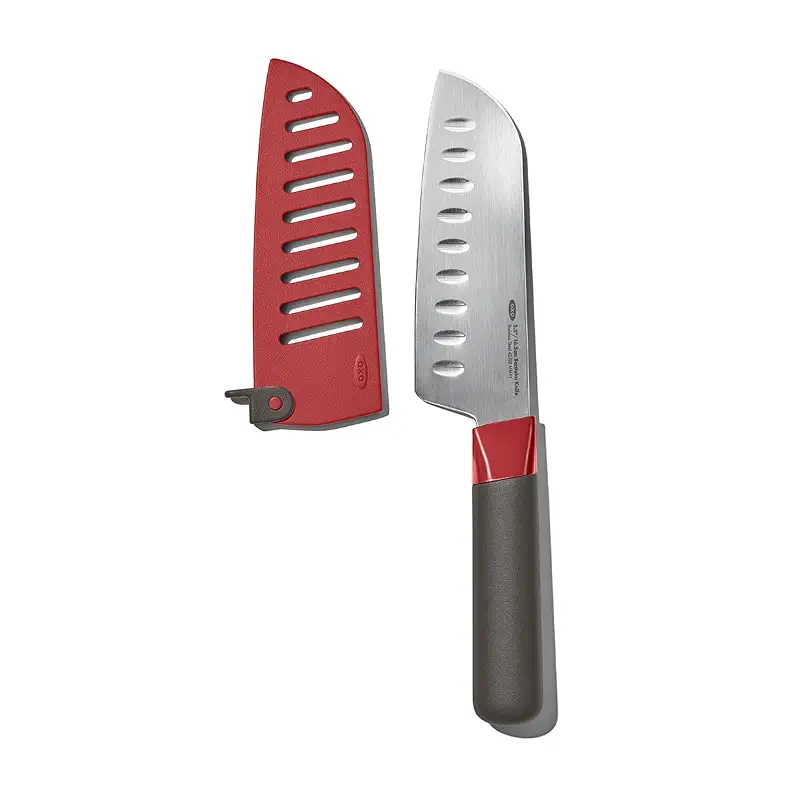
The OXO Outdoor Santoku strikes the right balance between portability and real cooking utility. Unlike generic folding knives designed primarily for EDC use, this fixed blade was built with camp kitchens in mind. The 5.5-inch santoku profile excels at the kinds of cuts you actually perform outdoors: rocking through herbs, slicing vegetables thin, and mincing without crushing. The locking sheath is not an afterthought here; it's central to the design philosophy, keeping the edge protected in a pack or hanging from a carabiner while also securing the blade safely when you're moving around camp.
Owners consistently praise the balance and comfort, noting the handle stays secure even with damp hands, a real concern when working near water or cooking in humid conditions. The blade stays sharp for extended trips (reviewers report taking it on week-long outings before needing to hone at home), and the Japanese stainless steel doesn't demand babying. Where the OXO edges ahead of the folding options below is in pure cutting performance: the wider blade surface and fixed design give you better control when working on a cutting board over a camp table. If you're the kind of cook who actually preps substantial meals outdoors, this is the knife that feels like an extension of your hand.
The one trade-off is portability. At 5.5 inches with sheath, it's slightly bulkier than a folded pocket knife. But for vehicle camping, base camp setups, or car-side cooking, that mass is an asset, not a liability. Hand washing is required to maintain the edge and prevent corrosion.
Pros
Locking sheath designed for blade protection and safe transport
Santoku shape excels at rocking cuts and vegetable prep
Comfortable, non-slip grip remains secure with wet hands
Maintains edge over week-long trips without resharpening
Cons
Fixed blade is larger when packed compared to folders
Requires hand washing to prevent corrosion over time
Key features
5.5-inch Japanese stainless steel santoku blade
Locking sheath protects blade and retains edge between uses
Non-slip handle grip optimized for outdoor conditions
Excellent for slicing, dicing, mincing, and scooping
Ideal for: Budget-conscious backpackers; hikers who want real cutting power without weight; occasional campsite prep cooks.
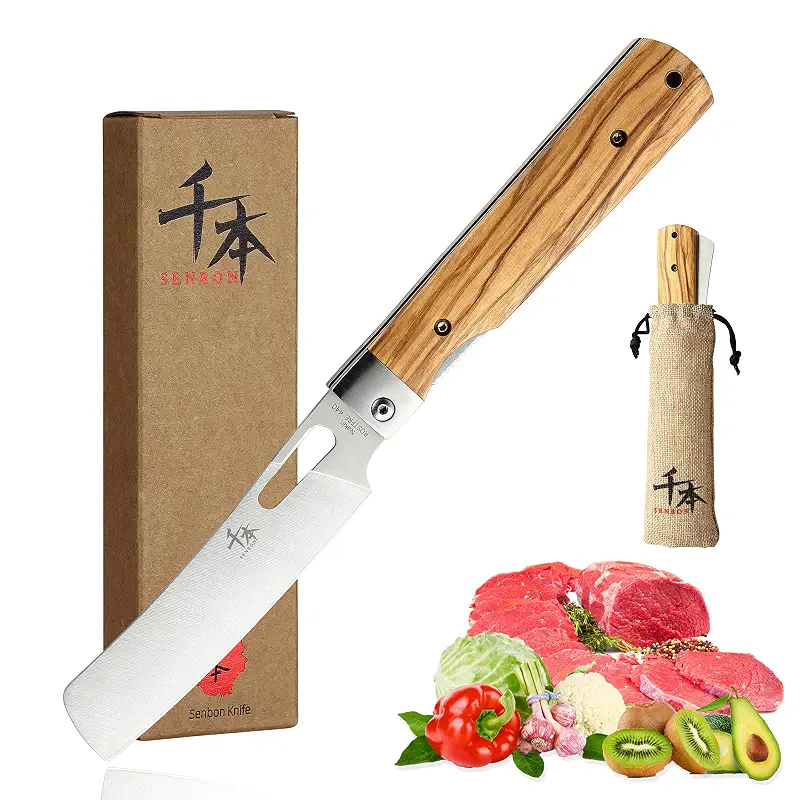
The Senbon delivers stunning cutting performance at an entry-level price point. Out of the box, the 4.8-inch blade arrives genuinely sharp, with a thin primary bevel that slices through tomatoes and herbs with minimal effort. Owners familiar with premium knives are routinely surprised by the quality, often noting they'd expect to pay triple the price. The olive wood handle adds authentic character and feels warm in hand, a small but real comfort when you're cooking outdoors for hours.
As a pure folding design, the Senbon is compact enough for a pack pocket or a small camp kit, making it ideal if you're hiking into base camp or need minimal bulk. The liner lock holds firmly, and the mechanism is straightforward and reliable for the intended use. One caveat: the thin blade geometry that makes it so sharp also means it's not suited for heavy chopping or batoning wood. Think of this as a precision prep knife rather than a workhorse; it excels when you're doing detail work like slicing vegetables or breaking down fish, but won't tolerate abuse. A few buyers mentioned receiving units with slightly loose handle scales or minor blade warp, though these issues are repairable and rare.
Compared to the OXO fixed blade, you trade sheer comfort and control for portability and price. If you're car camping and want to avoid hand-sharpening a santoku every trip, the Senbon's easier maintenance and compact size make real sense.
Pros
Exceptionally sharp out of box for the price point
Compact when folded for pack and pocket carry
Natural olive wood handle adds durability and beauty
Reliable liner lock and straightforward mechanism
Cons
Thin blade not suitable for heavy chopping or wood work
steel requires periodic honing to maintain edge
Key features
4.8-inch blade, 5.4-inch folded length for packability
stainless steel with hand-sanded, thin-bevel edge
Natural olive wood handle polished by hand for grip and durability
Liner lock secures blade safely during storage and transport
Ideal for precision cuts on vegetables, fruits, and light proteins
#3 Pick
Best Premium Folder
Huusk
Huusk Japanese Folding Santoku Knife - Pocket Chef Knife | Portable Kitchen Knives, Hand Forged Blade, Wooden Handle, Gift Box, For BBQ, Camping and Travel
4.5(448)
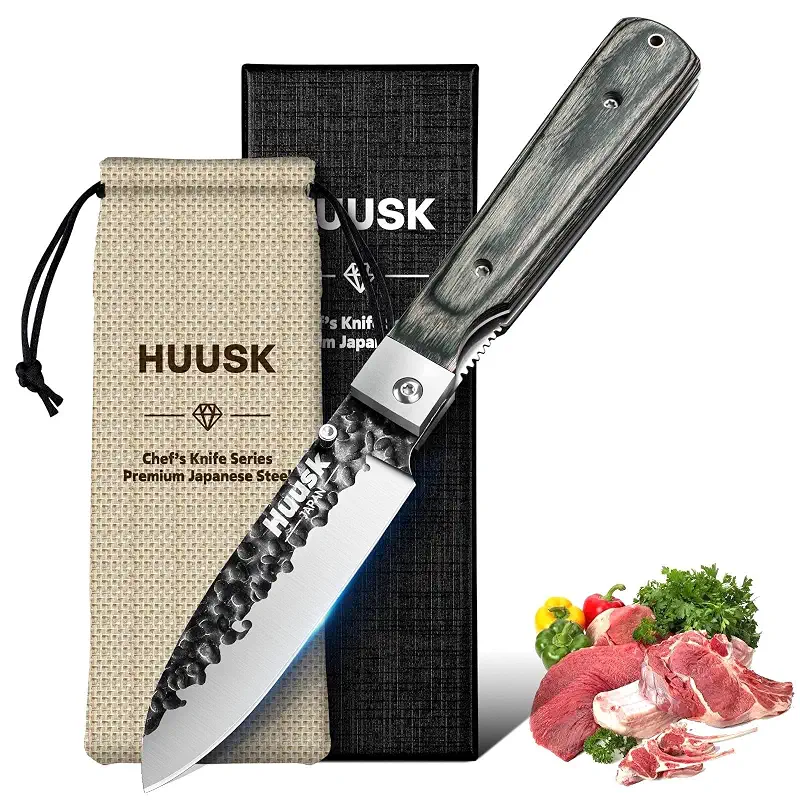
Handcrafted folding santoku with high-carbon steel and premium wood; sharp edge and beautiful finish justify higher price.
Ideal for: Serious outdoor cooks with knife-maintenance skills; gift-givers seeking a premium camping tool; backpackers who prioritize quality over bulk.
The Huusk brings artisanal craftsmanship to a portable folding blade. Each knife is hand-forged by smiths with over a decade of experience, and you feel that labor in the balance and edge quality. The ATS-34 high-carbon steel is a significant material step up from budget ; it holds a sharper, more refined edge and responds well to field honing if you pack a small whetstone. Out of the box, owners describe the blade as unusually sharp, and the wide santoku geometry means it rocks through prep work with minimal effort.
The wood handle is sealed and finished to a high standard, emitting a subtle fragrance that users genuinely appreciate. The folding design makes it packable, yet the hand-polished feel elevates it beyond disposable gear. You're paying for quality and design, not just utility. One trade-off: because the steel is harder and the edge thinner, resharpening requires more care than with softer stainless blades. Owners report it takes time and skill to restore the edge, though once done, it lasts well. If you're experienced with knife maintenance or willing to learn, this investment pays dividends. If you prefer a knife you can hone in minutes with basic equipment, the Senbon or OXO may be smarter.
Where this differs from the Senbon folder is in materials and longevity. Compared to the OXO fixed blade, you gain portability and a more refined handle at the cost of some cutting-board comfort. For the cook who values aesthetics and long-term durability, the Huusk justifies its premium positioning.
Ideal for: Hikers and backpackers seeking reliable cutting power; multi-use cooks who prep at home and in camp; value-conscious gear builders.
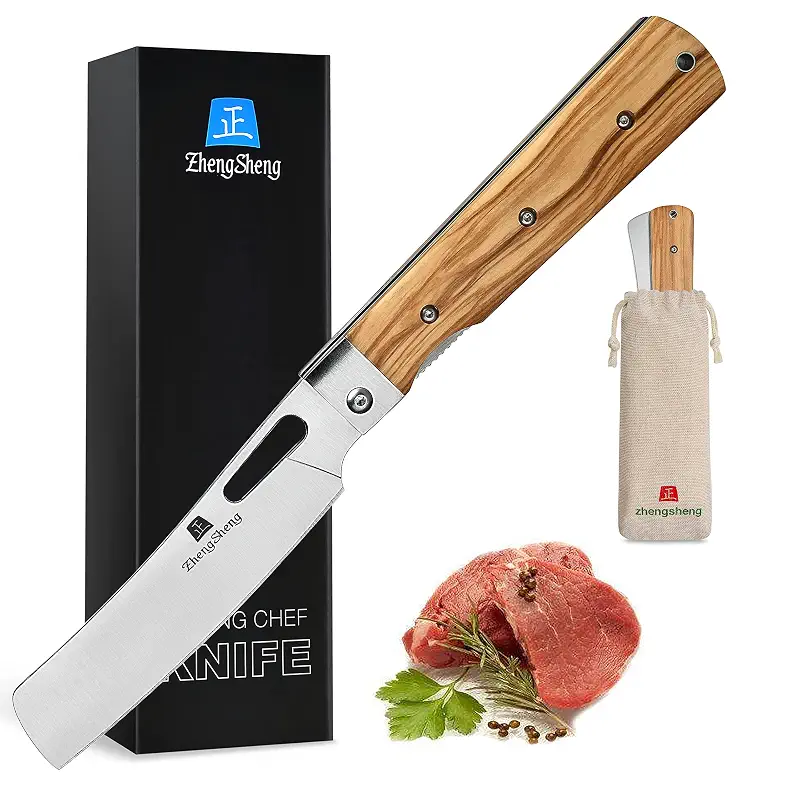
The ZhengSheng folds easily into a pack yet delivers real cutting authority that surprises buyers accustomed to flimsy camping knives. The 4.8-inch blade comes razor-sharp and performs admirably on vegetables, fruits, and meat prep. What sets this option apart is the consistency of build quality and owner satisfaction across a large review sample. Users report using it both outdoors and in home kitchens, which speaks to its genuine versatility. The olive wood handle is natural and comfortable, with good anti-slip properties even when your hands are slightly damp.
This folder sits squarely between the budget Senbon and the premium Huusk. It shares the same blade material and size with the Senbon but appears to have tighter QC tolerances based on reviews, fewer reports of loose scales or warping. The value proposition is strong: you get reliable sharpness and build quality without the premium Huusk's material upgrade or the OXO's fixed-blade comfort. The weight is heavier than expected for some buyers, but most see it as confidence-inspiring rather than problematic. The folding design means you're still making a trade-off versus a fixed blade when working at a camp table, but for backpackers and hikers who need both portability and real cutting power, this knife closes that gap.
Compared to the OXO fixed blade, you lose some cutting-board ergonomics but gain significant packability. If you're splitting time between dorm cooking and outdoor trips, like several reviewers, the ZhengSheng's dual-purpose design and lower price make it hard to beat.
Pros
Sharp blade with hand-sanded finish arrives ready to use
Olive wood handle provides natural grip and anti-slip security
Solid liner lock holds blade stable during extended use
Consistent quality across large user base, minimal defects reported
Cons
Heavier than some expect for a folding knife; balance is handle-forward
steel requires periodic sharpening for sustained performance
Key features
4.8-inch blade, 5.4-inch folded length optimized for pack carry
stainless steel with hand-sanded, wire-draw surface finish
Natural olive wood handle with professional hand-polish and grinding
Liner lock mechanism keeps blade secure in folded and open position
Suitable for camping, BBQ, hiking, and daily kitchen prep
#5 Pick
Best Multi-Blade Set
Cokuma
COKUMA Kitchen Knife, 3-Pcs Knife Set With Sheath, 8 Inch Chef Knife, 4.5 Inch Utility Knife, 4 Inch Paring Chef Knife, Stainless Steel, Black
4.5(2,202)
Three-knife set with sheaths covers most camp cooking scenarios; budget-friendly entry point for cooks without existing gear.
Ideal for: New cooks building camp kitchen from scratch; car campers with dedicated cooking space; home cooks wanting affordable backup knife set.
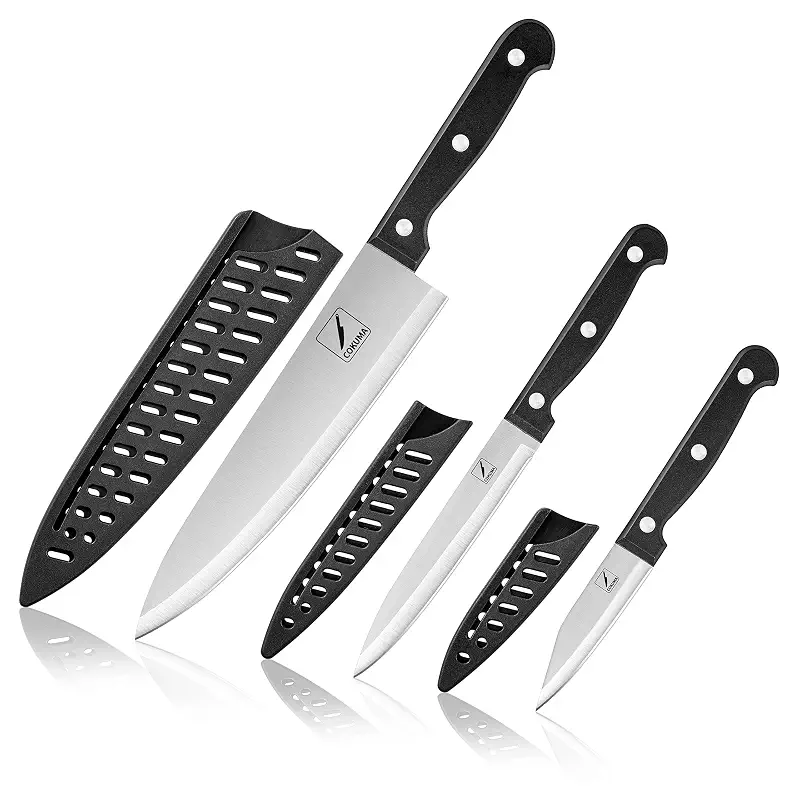
The Cokuma set arrives as a complete package: an 8-inch chef knife, a 4.5-inch utility blade, and a 4-inch paring knife, each with its own sheath. For a new cook building a camp kit from scratch, this eliminates the question of what individual knives to buy and allows you to experiment with size and blade type without multiple transactions. The German high-carbon 3CR13MOV steel holds a decent edge, and the hand-polished finish reflects genuine craftsmanship at the price point. Owners regularly comment on sharpness and balance, and the ergonomic ABS handles provide comfortable grip during extended prep work.
The real advantage here is versatility. The 8-inch chef knife handles larger vegetables and proteins, the utility blade tackles mid-range tasks, and the paring knife excels at detail work like deveining shrimp or peeling garlic. If you're cooking elaborate meals over a campfire or car-camping where weight and bulk aren't constraints, having three blade sizes eliminates reach-and-grab hesitation. The sheaths make transport safe and organized. The downside: this set doesn't fold, so it requires dedicated pack space and isn't practical for ultralight backpacking. Also, some owners note the blades show rust spots if not dried immediately after washing, requiring more attentive maintenance than stainless folding knives. Compared to the OXO santoku alone, you gain versatility but lose portability and the tailored camp-cooking design philosophy.
This set makes most sense if you're outfitting a base camp kitchen or a permanent cooking station where the full blade range will see regular use.
Pros
Three-knife set covers chef, utility, and paring tasks comprehensively
German high-carbon steel holds edge across varied prep work
Ergonomic ABS handles balance blade weight for comfortable use
Individual sheaths keep blades organized and transport safe
Cons
Fixed blades require substantial pack space; not portable for backpacking
Stainless steel prone to rust spots without immediate drying
German-forged 3CR13MOV high-carbon steel with hand-polished finish
Integrated ABS handles with ergonomic shape for balanced, comfortable cutting
Includes three matching sheaths for safe transport and storage
Suitable for home and campsite kitchens; requires hand washing
How to Choose a Camping Cooking Knife
Four trade-offs that actually matter when matching a camping cooking knife to your kitchen.
Fixed Blade vs. Folding: Portability and Control
Fixed-blade knives like the OXO santoku offer superior cutting control and comfort when working at a prep station, making them ideal if you're car camping or returning to the same base camp repeatedly. They don't compact, but they're faster to deploy and deliver the ergonomics of a kitchen knife. Folding options sacrifice some board comfort for packability, making them smarter if you're hiking between camps or packing light. Consider the folding versus fixed blade tradeoffs in your actual travel style. Are you cooking from a vehicle with a dedicated table, or moving frequently? Your answer determines whether portability or precision matters more.
Blade Material: Stainless vs. High-Carbon Steel
Most camping knives use stainless or premium high-carbon alloys like ATS-34. Stainless blades (Senbon, ZhengSheng, Cokuma) resist corrosion and require less fussy maintenance in wet conditions. High-carbon blades (Huusk) hold a sharper, finer edge and respond beautifully to honing, but demand immediate drying and periodic care. If you're a backpacker worried about rust in humid climates or moisture-prone packs, stainless gives you peace of mind. If you value cutting precision and have the discipline to maintain a blade, high-carbon repays the effort with years of refined performance.
Blade Size and Shape: What You'll Actually Cut
A santoku's wide, gently curved profile excels at rocking through herbs and vegetables with minimal bruising, making it the first choice for detailed prep. Standard chef-knife geometry handles proteins and tougher cutting tasks with more authority. Paring blades and utility knives fill niche roles. Ask yourself: are you mostly prepping vegetables, or breaking down meat? Are you dicing herbs for camp meals, or slicing larger ingredients? The OXO santoku specializes in vegetable work; the Cokuma set's three sizes cover broader ground if your meals vary widely.
Handle Comfort and Weather Resistance
Natural wood handles (Senbon, ZhengSheng, Huusk) feel premium and warm in hand, but require occasional oil coating to remain weather-resistant. Synthetic or ABS handles (OXO, Cokuma) demand no maintenance and grip securely even with damp hands. If you're cooking over water, fishing camps, or humid conditions, a guaranteed non-slip grip matters more than aesthetic appeal. Test your actual hands-on scenario: are you working from a rain-exposed setup, or in fair weather at a sheltered table? That determines whether weather-proof synthetic or beautiful wood best fits your reality.
Maintenance and Field Care
Every camping knife benefits from camping knife cleaning and care in the field, but demands vary. Stainless blades tolerate rushed drying; high-carbon and premium steels require immediate attention. Consider your packing discipline: can you store a small whetstone and oil cloth, or do you prefer a knife that survives neglect? The OXO and Cokuma are most forgiving; the Huusk rewards careful maintenance with superior edge retention. Be honest about your actual camp-cooking setup. A knife that demands daily care is wasted on someone who'll throw it in a pack still wet.
Frequently asked
Quick answers to the questions readers ask most.
Can I use a camping knife for indoor kitchen work too?
Yes. The ZhengSheng and Senbon folding knives work well for home prep tasks, and many owners use them as backup or dorm-room blades. The OXO santoku is genuinely excellent for everyday kitchen cutting and isn't exclusively a camp tool. The Cokuma set is explicitly designed for dual-purpose use. The Huusk folder is beautiful enough to keep on your kitchen counter. The boundary between camping and home knives is blurry; choose based on blade size and handle style, not location.
How do I keep a camping knife sharp in the field?
Most camp cooks don't actively sharpen in the field. Instead, they use a small carbide pull-through or a ceramic honing rod to maintain a dull edge, then fully sharpen at home after the trip. Stainless blades () tolerate longer intervals between sharpening than high-carbon steel. If you're serious about field maintenance, pack a pocket whetstone and a leather strop; most camping knife sharpening happens after you return, not during the trip.
What's the ideal blade length for camp cooking?
Most camp cooks find 4.5 to 5.5 inches ideal. Anything shorter feels cramped for vegetable prep; anything longer becomes awkward in tight camping spaces and packs. An 8-inch chef knife (like in the Cokuma set) works well if you're cooking from a vehicle or established base camp with a full-size cutting board. For hiking and backpacking, stay between 4 and 5.5 inches.
Do I need a dedicated camping knife, or can I just bring my kitchen knife?
A dedicated camping knife makes real sense if you're packing it repeatedly or cooking in wet, rough conditions. Your home kitchen knife isn't designed for moisture exposure or rock-surface prep, and dragging it through camp increases damage and dullness. That said, many occasional campers simply bring a favored blade wrapped in a dish towel. If you're car camping once or twice a year, your existing knife is fine. If you camp monthly, a dedicated blade pays for itself in reduced maintenance and longer life.
Should I buy a folding knife or a fixed blade for backpacking?
Folding knives (Senbon, ZhengSheng, Huusk) are smarter for backpacking because they pack into tight spaces and don't require dedicated sheath space. Fixed blades (OXO, Cokuma) excel for base-camp cooking where you have a prep station and table. If you're moving daily between camps and cooking minimally, a folding blade eliminates bulk. If you're staying in one spot and cooking substantial meals, a fixed blade's ergonomics and speed justify the extra pack volume.