Best Camp Kitchen Knives for Outdoor Cooking & Prep
Find the best camp kitchen knife for your outdoor cooking needs. Compare santoku, folding, and fixed-blade options with expert guidance for campsite meal prep.
Ideal for: Camp cooks who value kitchen-grade performance, multi-day trips, and stationary or semi-mobile setups.
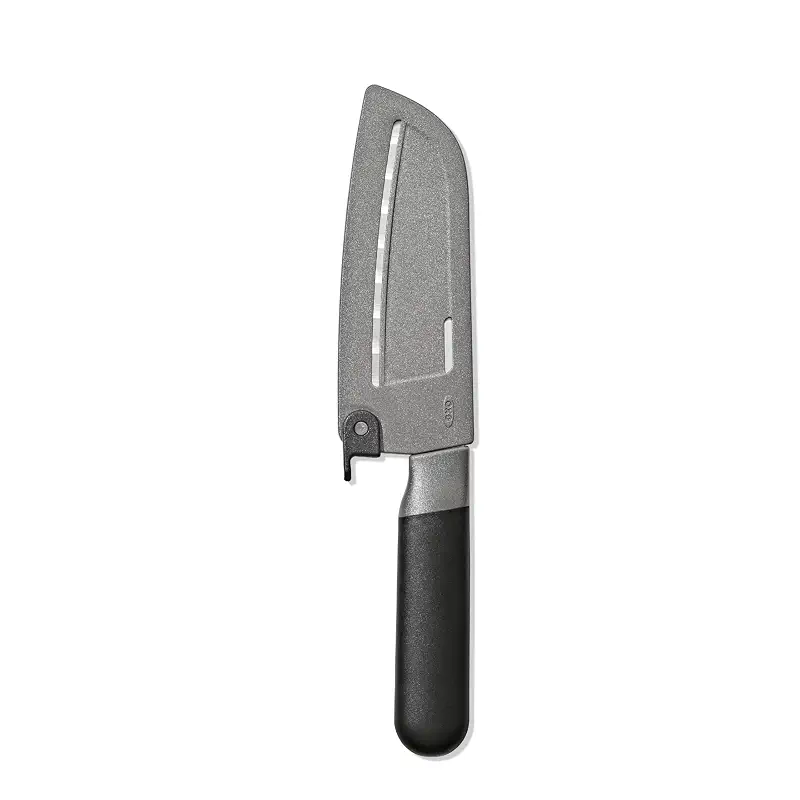
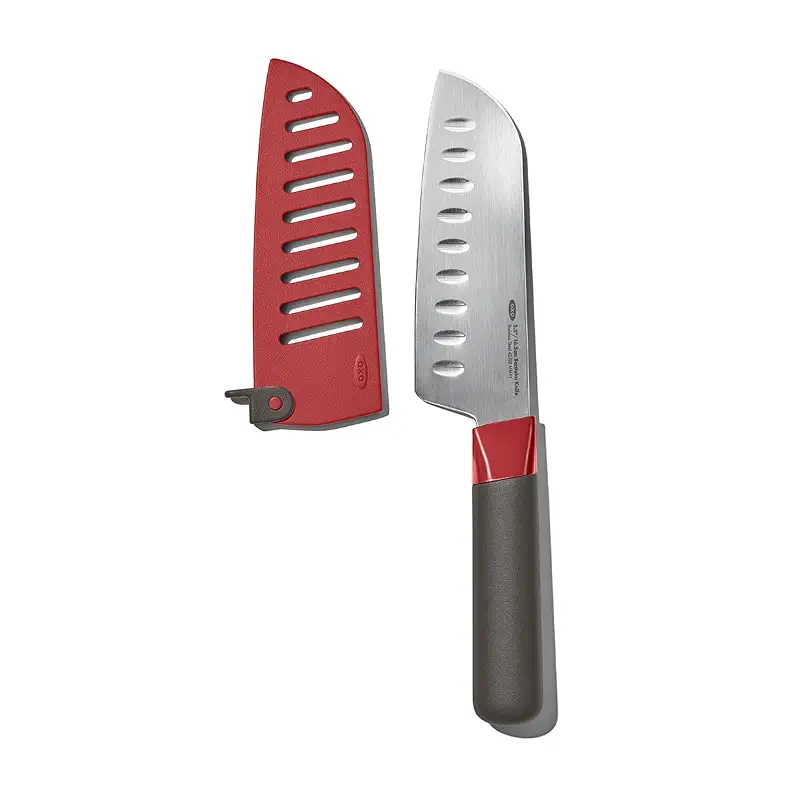
The OXO Outdoor Santoku checks all the boxes for camp cooking. Buyers consistently praise its sharpness out of the box and the secure locking sheath, which protects both the edge and your gear. The 5.5-inch blade is long enough to handle onions and peppers without feeling unwieldy, and the non-slip handle works even with wet or soapy hands, a real win around a camp sink or riverside. The santoku shape excels at the work most camp cooks actually do: slicing vegetables, prepping proteins, and mincing herbs. Owners report using it for multi-day trips without touching a stone, and the blade geometry keeps food from sticking as you work.
The main trade-off is weight and fixed size. If you're on a thru-hike counting ounces, this knife is heavier than an ultralight folding option. But for car camping, base camp cooking, or anyone running a serious outdoor kitchen, that weight comes with superior control and a handle designed for extended use. Compared to the MSR Alpine, this knife sacrifices lightweight packability for a blade that feels more like a real kitchen knife.
One owner did mention needing to resharpen every other trip, which is realistic for stainless steel under regular use. Hand washing and prompt drying (as OXO specifies) will keep it in top shape.
Pros
Sharp santoku blade excels at slicing, dicing, mincing
Locking sheath protects blade edge and fingers
Non-slip handle grips securely even when wet
Cons
Heavier than folding or ultralight alternatives
Stainless blade requires regular sharpening over time
Key features
5.5-inch Japanese stainless steel santoku blade
Locking sheath with secure mechanism keeps edge protected
Comfortable, non-slip handle works with wet hands
Hand wash; designed for repeated camp trips
#2 Pick
Best Lightweight
MSR
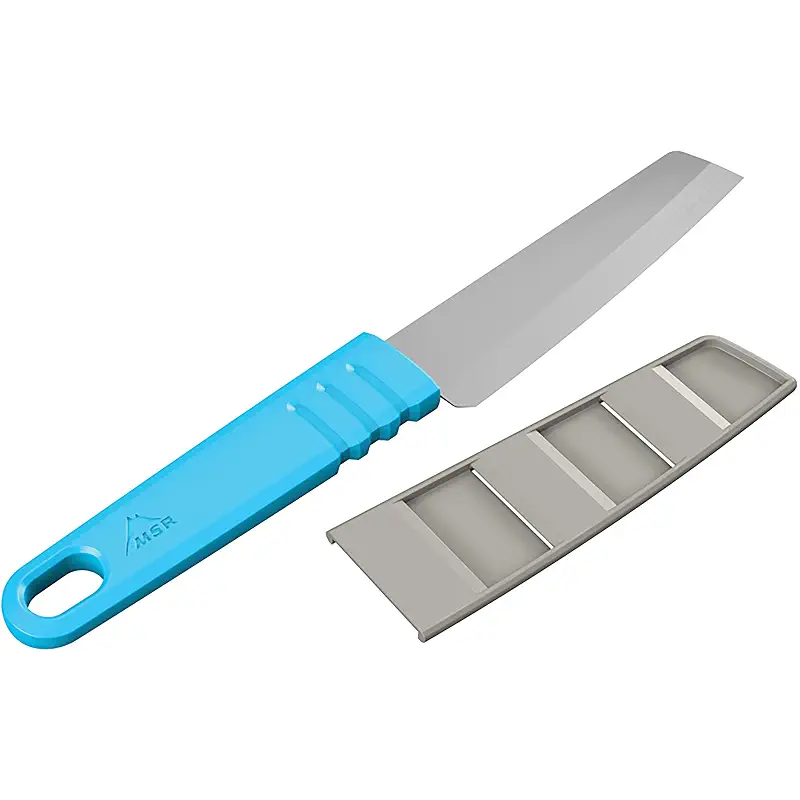
MSR Alpine Camping Kitchen Knife,Blue
4.5(84)
Ultra-compact santoku at just 1.7 ounces; ideal for ultralight backcountry trips where every ounce counts.
Ideal for: Ultralight backpackers, kayak campers, and minimalist cooks who need a sharp blade without pack weight.
The MSR Alpine Camping Kitchen Knife is built for minimalist hikers and kayakers. At 1.7 ounces with a ventilated sheath, it barely registers in a pack, yet owners who've carried one for years report consistent edge retention and reliability. The 4.5-inch blade is shorter than the OXO but still handles basic camp meal prep, slicing dehydrated vegetables, cutting cheese, or trimming trail meat. The santoku geometry makes it feel more natural for precision work than a simple pocket blade.
Where MSR succeeds is durability on extended wilderness trips. Owners cite having the same knife survive 14+ years in a moto-camp kit or becoming a permanent part of their camping rotation. The 440-series stainless steel holds an edge reasonably well for the weight class, and the ventilated sheath prevents moisture buildup. One buyer stroked a well-used strop and found it cut fine after light maintenance, confirming it responds to sharpening.
The trade-off versus the OXO Outdoor is that the MSR blade is thinner and more delicate. It excels at slicing but isn't designed for heavy chopping or aggressive prep work. If you're cooking one-pot meals with pre-chopped ingredients or mostly eating no-cook trail food, this shines. But if you're running a full camp kitchen with multiple courses, the OXO's heft and grip will feel more natural.
Pros
Weighs only 1.7 ounces with ventilated sheath
Proven durability; owners report decades of use
Compact 4.5-inch blade still handles most camp prep
Cons
Thin blade not suited for heavy chopping or aggressive use
Shorter blade limits effectiveness on larger vegetables
Ideal for: Budget-conscious campers, travelers, and cooks who want a folding option with surprisingly good edge retention.
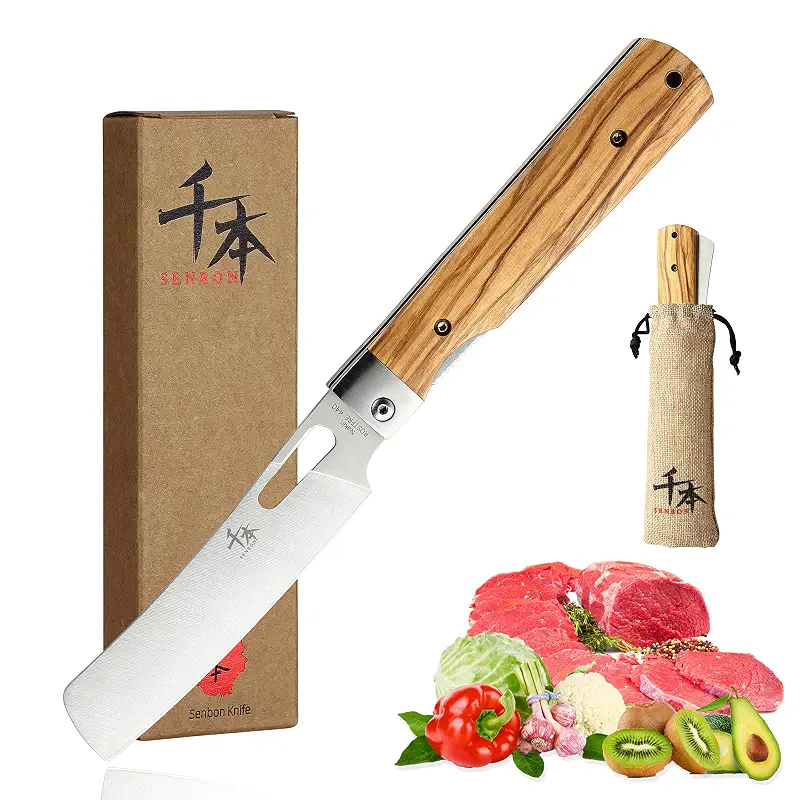
The Senbon folding knife has earned over 1,700 reviews and a 4.6-star average by delivering real quality at a price that feels too low. The stainless blade arrives razor-sharp, and owners consistently note the edge outperforms expectations for the cost. The olive wood handle is aesthetically appealing and tactile; the hand-sanded finish and wiredrawing treatment on the steel suggest care in production. At 180 grams (6.3 ounces) with the handle and lock, it's portable without being fragile.
The folding design is the key advantage for pack organization. You can stow it in a cargo pocket, roll it in utensils, or clip it to a bag loop without worrying about the blade dulling from rubbing. Owners report using it for both camp prep and everyday kitchen tasks at home, and several mention the lock-back mechanism feels rock-solid, not a cheap fidget toy. One reviewer who has owned theirs for over five years says it still cuts through pork shoulder with ease. For poultry work at camp, the blade handles trimming and breaking down fowl, though it's not optimized the way a best knife to cut raw chicken would be in a home kitchen, folding knives trade some precision for portability.
The downside is the thin blade geometry and stainless composition mean it requires more technique than a fixed knife. One buyer noted the blade can warp slightly and may need straightening, and the soft steel is not suited for heavy chopping. You'll also get better control with a fixed blade like the OXO Outdoor if you're doing high-volume prep at camp. Handle fit and scale alignment vary; one reviewer received a loosely fitted scale that needed shimming.
Pros
Razor-sharp blade out of the box
Folds securely; stores anywhere without dulling edge
Olive wood handle looks and feels premium for the price
Cons
Thin blade and soft steel unsuited for heavy chopping
Loose handle scales reported on some units; may need adjustment
Key features
4.8-inch stainless blade, hand-sanded and wiredraw finished
Folding liner-lock design; secure and compact storage
Natural olive wood handle with professional hand finishing
180-gram weight; folds to 5.4 inches for pocket carry
#4 Pick
Best Premium Folding Option
ZhengSheng
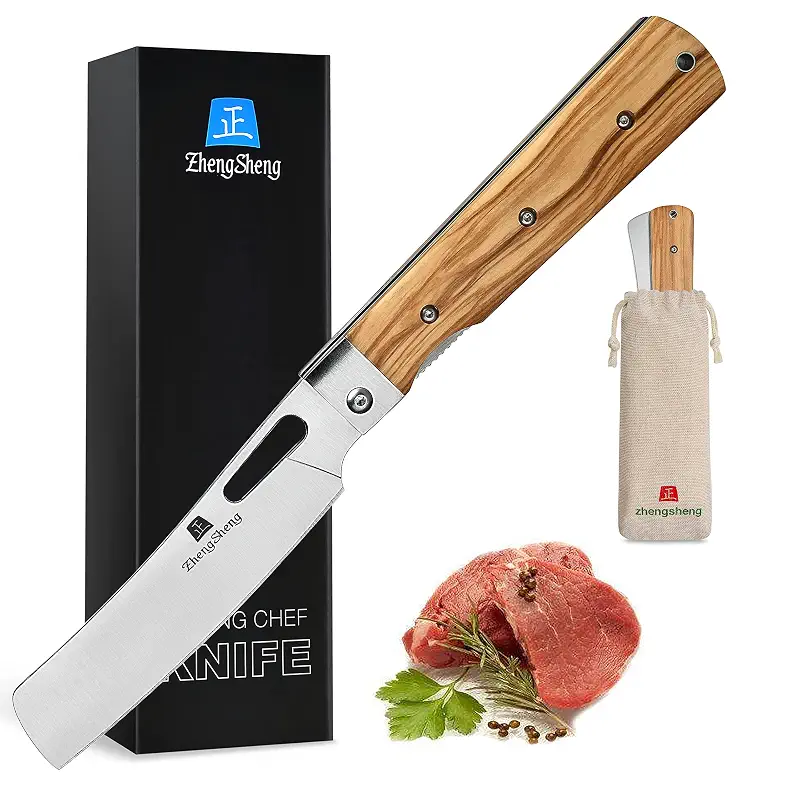
ZhengSheng Folding Chef Knife 4.8” Ultra Sharp 440A Stainless Steel Blade Natural Olive Handle Pocket Foldable Japanese Style Kitchen Knife for Outdoor Camping BBQ trip Cooking
4.6(1,225)
Solidly made folding chef knife with excellent blade lock and consistent edge; premium value in the folding category.
Ideal for: Campers who want a folding knife with proven reliability and better-than-average build quality.
The ZhengSheng folding knife is a close cousin to the Senbon but has earned particular praise for build quality and blade stability when open. Owners consistently mention that the lock-up feels rock-solid and the blade comes extremely sharp, handling vegetables, streaks of meat, and paper-thin tomato slices without hesitation. The natural olive handle and wiredraw treatment match the Senbon, but reviewers of the ZhengSheng note a slightly higher level of consistency in fit and finish. The 4.8-inch blade and 180-gram weight are identical to the Senbon, so portability is equivalent.
Where this knife differentiates itself is in owner sentiment around durability and reliability. Multiple buyers mention using it as a general-purpose knife that replaces two or three kitchen knives they'd normally reach for, suggesting the blade geometry and edge retention are solid across task types. The folding mechanism opens easily, and the sheath/pouch is well-made and durable. One owner notes it's heavier than expected, which actually speaks to solid construction rather than a flaw. For camp cooking where you're breaking down proteins or handling prep work that demands precision, the ZhengSheng delivers better control than many folders in this weight class.
Compared to the Senbon, quality control seems tighter (fewer reports of loose scales), and reviewers describe higher confidence in the blade's performance. The trade-off is that you're paying a small premium; the ZhengSheng sits between the value Senbon and the fixed-blade camp knives. If blade lock reliability and build consistency matter more to you than the absolute lowest price, this folding option rewards the extra investment.
Pros
Rock-solid blade lock when open; extremely stable
Consistent blade sharpness across production runs
Well-made drawstring pouch and sturdy overall construction
Cons
Heavier (180g) than some ultralight fixed-blade alternatives
Balance and handle geometry won't suit every user preference
Key features
4.8-inch stainless blade with secure liner-lock
Natural olive wood handle with hand-polished finish
Full length 10.25 inches; folds to 5.4 inches for packing
Includes well-made drawstring storage pouch
#5 Pick
Best Compact Fixed Blade
OXO
OXO Good Grips 5 in Santoku Knife with Locking Sheath
4.6(16)
Smaller santoku with locking sheath; perfect for minimal camp setups or grilling without sacrificing OXO reliability.
Ideal for: Campers who grill frequently, car campers with limited prep needs, and cooks who prefer fixed blades over folders.
The OXO Good Grips 5-inch Santoku is a lighter, more compact sibling to the 5.5-inch Outdoor model. At 5 inches, the blade is noticeably smaller, making it ideal for camp cooks with limited prep volume or those who grill more than they chop. Owners praise its sharpness out of the box and the comfortable grip, which maintains control even during fast chopping or when hands are wet. The locking sheath is identical in security to the Outdoor version, so your fingers and pack stay safe.
The trade-off is working surface. A 5-inch blade means fewer one-pass cuts on larger vegetables; you'll rock onions more carefully and make multiple passes on squash. For single-burner camp cooking where you're preparing modest quantities (a couple of servings rather than feeding a crew) this size is efficient. One owner specifically mentioned buying it for outdoor grilling and found it handled vegetables and steaks exactly as hoped. Multiple reviewers note it feels lightweight without feeling cheap, though one did comment that a previous OXO santoku felt more substantial.
The fixed versus folding distinction matters here: compared to the Senbon and ZhengSheng folders, you get the control and feel of a real kitchen knife without the sheath-fumbling of a folding blade. The downside is that it takes up more pack space than a folder of similar blade length, and the smaller size limits repetitive prep. If you're running a stationary camp kitchen or car camping where pack space is abundant, this hits the sweet spot between the full-size Outdoor and an ultralight MSR.
Pros
Sharp-edged santoku geometry optimized for slicing and chopping
Locking sheath keeps blade protected and edge durable
Lightweight yet sturdy; comfortable grip in wet conditions
Cons
Smaller 5-inch blade limits efficiency for high-volume prep
Some reviewers found handle feels lighter than previous OXO models
Key features
5-inch stainless steel santoku blade with rounded, safe tip
Locking protective sheath keeps edge sharp between uses
Soft non-slip handle comfortable for extended cutting sessions
Lightweight design balances control with camp portability
How to Choose a Camp Kitchen Knife
Four trade-offs that actually matter when matching a camp kitchen knife to your kitchen.
Fixed Blade vs. Folding: Pack Space and Control Trade-Offs
The choice between fixed versus folding camping knives depends on your trip style and pack discipline. Fixed-blade knives like the OXO Outdoor offer superior control and feel more like a kitchen tool, but they take up sheath space and require careful packing to avoid dulling the edge. Folding knives like the Senbon and ZhengSheng compress to pocket size and protect the blade by nature, but you sacrifice some hand control and must trust a lock mechanism. For car camping or base camp cooking, fixed blades reward you with better technique and less fussing. For backpacking or multi-activity trips where your pack gets opened and closed constantly, a folder reduces fumbling and protects your edge from random contact. Understanding fixed versus folding camping knives helps you pick the right balance for your camp style.
Blade Material: Stainless Steel vs. Carbon Steel
Every knife on this list uses stainless steel (usually or Japanese variants), which resists rust and requires minimal maintenance: a practical choice for camp environments where you can't always dry immediately. Stainless is softer than high-carbon steel, so edges don't last quite as long between sharpenings, but most camp cooks accept that trade-off for convenience. If you're gone more than a few days, you'll likely sharpen when you return rather than on the trip itself. All five knives hold an edge reasonably well during a typical vacation; the real difference emerges over months of use.
Santoku vs. General-Purpose Blade Shape
Four of these five knives feature santoku-styled blades: flat-edged, with a rounded tip and slight curve. The santoku excels at slicing and chopping and feels stable during repetitive work. You can also scoop and press with the flat edge, which feels natural at a camp table. The santoku's geometry works equally well for vegetables, herbs, cheese, and light meat prep, so it covers most camp meals without needing a second knife. A general-purpose chef's blade would give you a pointed tip for detail work, but for the camp context (where you're usually prepping straightforward cuts for one-pot meals or grilling) the santoku's limitations are rarely felt.
Weight and Pack Integration
Camp cooking needs fall into rough categories. Ultralight backpacking rewards the MSR Alpine (1.7 ounces), which handles basic meal prep and barely registers in your kit. Car camping and base-camp cooking benefit from the full-size OXO Outdoor (heavier but more comfortable for extended use). Folding knives sit in the middle: portable enough for day trips and urban camping, yet sharp and large enough for real meal prep. Think about how long you'll use the knife during each trip and how your hands feel after 20 minutes of continuous chopping. A slightly heavier fixed knife often wins over a lighter folder if you're cooking more than opening packages.
Sheath Design and Care
The locking sheath on both OXO knives and the ventilated MSR design reflect years of outdoor-gear iteration. A good sheath protects your blade from dulling and keeps the knife accessible without fumbling. Folding knives trade sheath security for compactness; you're relying on a lock mechanism instead of a separate cover. Neither approach is wrong, but a locking fixed-blade sheath offers peace of mind when your pack is jostled or your knife is rolled into a cooking kit. For camping knife cleaning and maintenance, plan to hand wash and dry immediately if possible; even stainless steel benefits from quick care, especially around salt-water environments or camp-cooking soot.
Frequently asked
Quick answers to the questions readers ask most.
What size blade do I need for camp cooking?
For most camp meals, a 4.5- to 5.5-inch blade handles 80% of prep work: chopping onions, slicing peppers, prepping proteins. Anything shorter feels cramped for onions; anything longer becomes cumbersome in a small camp space. The MSR Alpine (4.5 inches) and OXO Outdoor (5.5 inches) bracket the ideal range depending on your trip volume.
Will stainless steel rust at camp?
Stainless steel resists rust far better than carbon steel, especially when rinsed and dried promptly. In typical camping conditions (lake trips, car camping, weekend getaways) you won't see rust or corrosion. Extended salt-water exposure or neglect in humid environments can eventually show surface discoloration, but active use and quick drying prevent real problems. Always hand wash and dry as soon as possible after cooking.
Can I use a camp knife for heavy chopping?
Fixed-blade santoku knives like the OXO models handle chopping well, though they're optimized for slicing. Folding knives, especially with thin blades like the Senbon and ZhengSheng, are not designed for heavy chopping or prying. Stick to slicing, dicing, and mincing. If you need to break down a large squash or chop tough root vegetables repeatedly, a fixed blade and proper technique (rocking rather than hacking) will serve you better.
How often do I need to sharpen a camp knife?
On a typical vacation (7-10 days), you won't need to sharpen if the knife arrived sharp. After a month of regular camp use, you'll notice edge dulling. Most owners sharpen when they return home rather than on the trip. Stainless steel knives sharpen less quickly than carbon steel but respond well to a ceramic rod or fine stone. A quick 30-second stropping before each cooking session extends time between sharpenings.
What's the difference between a camp knife and a regular kitchen knife?
Camp knives prioritize portability, edge retention, and rust resistance over sharpness precision. They're often smaller and lighter, with sheathing or folding for safe packing. A regular kitchen knife is heavier, assumes you have a knife block and honing steel at home, and often uses carbon steel for superior edge geometry. For camp prep (20-30 minutes per day), a good camp knife outperforms a bulky kitchen knife. For serious home cooking, kitchen knives win on feel and edge quality.