Kitchen & Dining · Cookware
Best Bone Cleaver
Weight, blade thickness, handle shape and rust care decide which cleaver suits chicken joints, pork ribs or beef bones in a home kitchen.
Affiliate disclosure: As an Amazon Associate I earn from qualifying purchases.
At a glance
6
Balanced MiddleweightMad Shark
7
Front-Heavy ChopperKvlniqs
Detailed reviews
We'd point most home cooks to the Mueller Meat Cleaver 7 Inch as the all-round pick. The blade is forged from German high-carbon steel and ground to an 18° edge on each side of a double bevel, an angle meant to resist chipping on bone, and the broad blade can also scoop and carry chopped ingredients like a bench scraper. The seamless full-tang stainless steel handle is dishwasher safe, though hand washing is recommended to keep the edge longer.
Owners report a blade that stays sharp through months of regular use, clean cuts through steaks, roasts and vegetables, and a weight that feels solid without wearing out the wrist. Cuts through the bone in a roast and through poultry come up in that feedback, and so does a note of caution: it suits boneless slabs better than heavy beef bone. The handle is the other point to weigh, since owners describe the rounded shape and slightly handle-heavy balance as something that takes getting used to.
Pros
- Stays sharp through months of use
- Seamless full-tang stainless steel handle
- Cuts steaks, roasts and poultry cleanly
Cons
- Rounded handle takes getting used to
- Dense beef bone is a stretch
- Hand washing recommended to protect the edge
Key features (4)
- Forged German high-carbon stainless steel blade with an 18° edge on both sides
- Seamless full-tang stainless steel handle with a contoured grip
- Wide blade that doubles as a bench scraper
- Dishwasher-safe construction, hand washing advised for edge life
At 2.16 pounds, the Rococo Meat Bone Cleaver Knife is the heaviest of the seven, a touch ahead of the Juvale 8 Inch Meat Cleaver at 2.1 pounds, and that mass is the point. The 5mm blade and the 25° V-shaped edge are aimed at ribs, beef bones and frozen food, and the handle and blade are one piece without soldering, so there is no joint to work loose. An Oxford cloth cover comes with it, which suits camping and hunting use as much as the kitchen.
Owners report that it goes through turkey necks, pork ribs and beef bones for broth in a blow or two, keeps its edge through repeated bone work, and does not chip or bend. The heft is the draw and also the catch: owners point out that it is overkill if chicken is all you cut. Care is the other cost, since the maker wants it cleaned and dried every time it is used so it does not rust, and a casual rinse will not do.
Pros
- 5mm blade for splitting bones
- One-piece full tang with no soldered joint
- Stays sharp after repeated beef bone work
Cons
- Heavier than needed for chicken alone
- Needs drying after every use against rust
Key features (4)
- Blacksmith-forged high-carbon stainless blade with a thick 5mm profile
- 25° V-shaped edge that reduces resistance when cutting through bone
- Integrated full tang handle with a non-slip grip
- Oxford cloth cover included for carrying outdoors, camping and hunting
The Hoshanho 7'' Butcher Knife takes the opposite route to the Rococo Meat Bone Cleaver Knife: at 0.5 pounds it is the lightest of the seven, with a 3mm blade where the Rococo carries 5mm. The steel is 10Cr15CoMoV Japanese high-carbon stainless heat-treated to 60 HRC, both sides are sharpened at 25°, and the pakkawood handle is described as resistant to cracking from temperature swings. The thick back is meant to crush bone, and the same blade is pitched at vegetables and fish.
Owners report an edge that stays sharp, a balance that sits comfortably in the hand, and easy work through large chunks of meat and bones. Durability is the open question: a common complaint is the blade chipping soon after first use and even breaking in use, although it is also described as a durable heavy-duty chopper. We'd suit it to cooks who want control more than swing weight and mostly cut chicken, pork ribs and vegetables.
Pros
- Lightest of the group at 0.5 pounds
- Balanced, comfortable pakkawood handle
- Slices vegetables as well as bones
Cons
- Blade chipping reported soon after first use
Key features (4)
- Japanese 10Cr15CoMoV high-carbon stainless blade hardened to 60 HRC
- 3mm thick blade with a thick back for crushing bone
- Pakkawood handle described as resistant to cracking and thermal expansion
- Both sides of the blade sharpened at a 25° angle
Length is the calling card of the Juvale 8 Inch Meat Cleaver: its 8-inch blade is the longest of the group, longer than even the Syokami Meat Cleaver Knife 7.7 Inch, and its 2.1 pounds puts it second only to the Rococo Meat Bone Cleaver Knife in weight. The ergonomic wood handle is meant for extended use, the stainless steel blade is built for heavy-duty tasks, and a hanging hole lets it live on a rail within reach.
Owners report that the weight drives through chicken bones and pork ribs, that the edge arrives well sharpened and keeps up with regular use, and that it breaks down turkeys cleanly. Size is where opinions diverge: a long, heavy blade appeals to people who like substance, while a common complaint is that it feels oversized. We'd treat it as the pick for cooks with the arm and counter space to match the blade.
Pros
- Longest blade of the seven at 8 inches
- Weight carries it through chicken bones
- Edge arrives sharp and keeps its bite
Cons
- Large size can feel oversized
Key features (4)
- 8-inch stainless steel blade built for heavy chopping
- Ergonomic wood handle for comfortable long sessions of chopping
- Integrated hanging hole for convenient wall or rail storage
- Hefty weight that helps the blade drive through bone
Two edge angles share one blade on the Syokami Meat Cleaver Knife 7.7 Inch: a shallower 15° grind per side up front for slicing vegetables, boneless meat and herbs, and 30° per side at the rear for chopping small bones. That is a different idea from the single 18° edge on the Mueller Meat Cleaver 7 Inch, and it suits cooks who slice as much as they chop. Shock-absorbing holes soften the rebound when you chop, the FSC-certified wood handle is textured for a secure grip even when wet, and a three-hole herb stripper is built into the blade.
At 1.06 pounds it is among the lighter options, yet owners describe it as heavy in the way a cleaver should be, with a razor edge that handles frozen sausage meat, corn, garlic, poultry and turkey breakdown. Owners also note that the uncoated wood handle will not enjoy sitting in water. On durability, a common complaint is the blade chipping or even breaking on first use, so we'd keep it to small bones and meat rather than heavy beef bone.
Pros
- Two edge angles for slicing and chopping
- Non-slip FSC-certified wood handle
- Built-in herb stripper adds prep use
Cons
- Blade chipping or breaking reported on first use
- Uncoated wood handle dislikes sitting in water
Key features (4)
- Front section ground at 15° on each side for slicing
- Rear section at 30° per side for small bones
- Shock-absorbing holes that help disperse impact during heavy chopping tasks
- Gear-textured FSC-certified wood handle with a three-hole herb stripper
Between the featherweight Hoshanho 7'' Butcher Knife and the heavyweight Rococo Meat Bone Cleaver Knife, the Mad Shark 7.5 Inch Meat Cleaver sits in a practical middle: 1.33 pounds, a 3.8mm blade and a 3.54-inch wide face that keeps fingers clear of the board and carries chopped food to the pan. It is forged from German 5CR15MOV high-carbon stainless with a 56+ hardness rating, the handle is injection-molded ABS around a full tang, and a shock-absorbing hole in the spine cuts the sting of heavy impact.
Owners report that it outworks their other knives on frozen foods, handles chicken, steak and rib bones, and even doubles as a vegetable chopper, with a nice heft and easy cleanup. It is listed as dishwasher safe, though the blade still needs to be cleaned and dried after use to avoid corrosion. We'd pick it for a mixed-use kitchen where bone is one job among several.
Pros
- Thick 3.8mm blade with solid heft
- Full tang with shock-absorbing hole
- Handles frozen food and chicken bones
Cons
- Blade needs drying after washing to avoid corrosion
Key features (4)
- German 5CR15MOV high-carbon stainless blade with a 56+ hardness rating
- 1.33-pound weight and 3.8mm thickness for denser bones
- 3.54-inch wide blade that also moves ingredients from board to pan
- Full tang blade with an injection-molded ABS handle formed around it
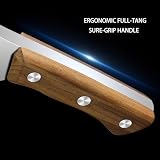
It is cut from similar cloth to the Rococo Meat Bone Cleaver Knife, with a 25° V-shaped edge, a forged-as-one-piece full tang and a double-sided axe-style design, but at 1.2 pounds the Kvlniqs Meat Bone Cleaver Knife is far lighter. The blade is 30Cr13 stainless, front-heavy to build drop into each swing, and the blunt back can crack through tough bones. The natural teak handle, 5.7 inches long, is held on by three rivets, and the pitch includes home kitchens, barbecue and camping.
Owners report that it feels heavy and solid straight out of the box, cuts through meat with little effort, and handles chicken wings and chicken bones easily. Its blade measures 6 inches, the shortest of the seven, so reach is modest, though the front-heavy balance makes up much of that. The care note is a simple one: store it dry after cleaning to keep it sharp.
Pros
- Front-heavy balance helps chopping
- Blunt back cracks tough bones
- Full tang with three rivets
Key features (4)
- Hand-forged 30Cr13 stainless steel blade with a 25° V-shaped sharp edge
- Front-heavy design that builds chopping force with little wrist effort
- Full tang forged as one piece with a natural teak handle
- Double-sided design with a blunt back for cracking bones
Side by side
| Pick | Item weight | Size |
|---|
#1 Best Overall
Mueller | 1.12 pounds | 7" |
#2 Heavy-Duty Pick
Rococo | 2.16 pounds | 6.3" |
#3 Lightest Pick
Hoshanho | 0.5 pounds | 6.9" |
#4 Longest Blade
Juvale | 2.1 pounds | 8" |
#5 Most Versatile
Syokami | 1.06 pounds | 7.7 Inch |
#6 Balanced Middleweight
Mad Shark | 1.33 pounds | 7.5" |
#7 Front-Heavy Chopper
Kvlniqs | 1.2 pounds | 6" |
How to Choose a Bone Cleaver
How much weight and thickness does bone work need?
Bone is dense and has a grain, so a cleaver gets through it by momentum and thickness rather than sharpness alone. A workable weight for home use runs from roughly one and a half to two and a half pounds, and a spine of 3mm or more resists the chipping that thin blades suffer on a joint. By those marks the Rococo Meat Bone Cleaver Knife (5mm blade, 2.16 pounds) is the strongest fit for ribs and beef bones, and the Mad Shark 7.5 Inch Meat Cleaver (3.8mm, 1.33 pounds) is the middle option for poultry-heavy cooks. The Hoshanho 7'' Butcher Knife, at 0.5 pounds with a 3mm blade, trades swing weight for easy handling.
Because bone work rewards mass behind the edge, the heavier cleavers here also belong in any discussion of the best meat cleaver for cutting bone.
Does carbon or stainless steel fit the way you wash up?
Higher-carbon steels tend to hold an edge but can rust if put away wet, while stainless resists rust yet may need sharpening more often. Both work on bone, so the deciding factor is the care you will actually keep up. The Rococo Meat Bone Cleaver Knife asks to be cleaned and dried every time so it does not rust, and the Mad Shark 7.5 Inch Meat Cleaver is listed as dishwasher safe but still needs the blade dried to avoid corrosion. The Mueller Meat Cleaver 7 Inch is dishwasher safe too, though hand washing keeps its edge longer. Wood handles such as the one on the Syokami Meat Cleaver Knife 7.7 Inch are best kept out of standing water.
Handle, balance and blade shape: what changes in the hand?
A cleaver is gripped hard and swung, so the handle matters more than the spec sheet suggests. Owners describe the rounded handle on the Mueller Meat Cleaver 7 Inch as something that takes getting used to, while the Kvlniqs Meat Bone Cleaver Knife pairs a teak handle of 5.7 inches with three rivets for a secure hold. Check how blade and handle are joined: a full tang with no soldered joint, as on the Rococo Meat Bone Cleaver Knife, removes the common failure of a handle working loose. Shock-absorbing holes on the Syokami Meat Cleaver Knife 7.7 Inch and the Mad Shark 7.5 Inch Meat Cleaver soften the rebound when chopping.
Blade shape is the other split. A broad, thick chopper is a poor slicer, so if most of your prep is slicing rather than chopping, the best serbian cleaver is a more natural place to look than a bone-first design.
Which bones are realistic for a home cleaver?
Chicken joints, turkey carcasses and pork ribs are well within reach of any thick-spined cleaver. Dense leg bones from large animals are a harder job that even a heavy cleaver may not manage cleanly, and a thin vegetable-style cleaver will chip on any joint. For beef bones we'd reach for the Rococo Meat Bone Cleaver Knife; for chicken and roasts the Mueller Meat Cleaver 7 Inch is easier to control.
| Bone job | What helps most |
|---|
| Chicken joints | Sharp edge, moderate weight |
| Pork ribs | Thick spine, steady swing |
| Beef bones | Heavy, thick blade, steady board |
| Frozen meat | Mass behind a thick edge |
Our picks at a glance
6
Balanced MiddleweightMad Shark
7
Front-Heavy ChopperKvlniqs
Frequently asked
What is the hole in a cleaver blade for?
It can do more than one job. On the Mad Shark 7.5 Inch Meat Cleaver and the Syokami Meat Cleaver Knife 7.7 Inch, the holes are meant to absorb impact and soften rebound when chopping. On the Juvale 8 Inch Meat Cleaver, the hole is there so the blade can hang on a rail within reach.
Can one cleaver handle bones and vegetables?
Yes, though weight decides how comfortable the vegetable work is. The Syokami Meat Cleaver Knife 7.7 Inch is the clearest answer, with a 15° front section for slicing and a 30° rear section for small bones. The Hoshanho 7'' Butcher Knife is also pitched at vegetables and fish, and at 0.5 pounds it is the lightest to wield.
What should I chop on when cutting bone?
Pick a sturdy board you do not mind marking. Owners of the Rococo Meat Bone Cleaver Knife report that cuts through bone can come close to scarring the board, so a heavy blade on a delicate board is a poor pairing.