Best Blender for Dry Grinding | Top Grinders for Spices & Seeds
Find the best blender for dry grinding spices, coffee, nuts & seeds. Compare models with powerful motors, removable bowls, and easy cleanup for dry grinding needs.
Ideal for: Home cooks grinding spices, coffee, and seeds multiple times per week with emphasis on ease of cleanup.
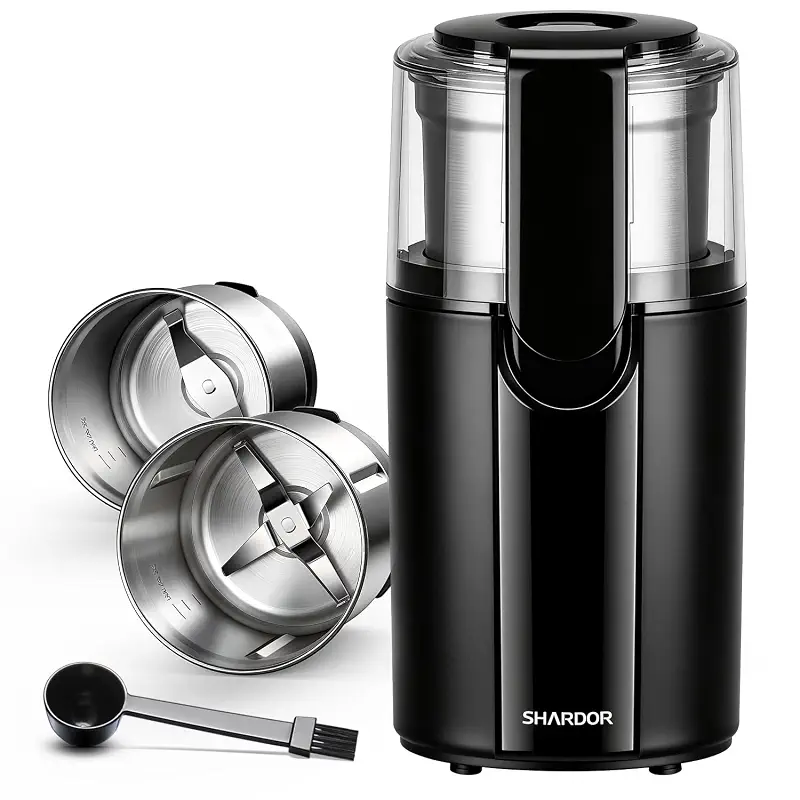
This electric grinder earned a strong reputation among home cooks who grind spices regularly. The two interchangeable stainless steel bowls (one with 2 blades for dry work and one with 4 blades for wet ingredients) give you flexibility without needing separate appliances. The 200W motor is built specifically for grinding, not blending, so it delivers focused power where dry grinding needs it most. Cleanup is straightforward because both bowls are removable and dishwasher safe, which matters more than reviewers initially expected. The main trade-off compared to higher-wattage blender combos is pure volume: if you're grinding large batches regularly, you'll spend more time running multiple cycles. But for household spice blending, coffee beans, and seeds, the design is thoughtful and durable.
Pros
Removable stainless steel bowls for genuine convenience
Dual-blade cups for dry and wet grinding options
Grinds consistently fine in 15 seconds or less
Cons
Smaller capacity requires multiple batches for large quantities
Some units develop loose-blade issues after extended use
Key features
200-watt motor with dual stainless-steel grinding cups
2-blade cup for spices and seeds, 4-blade cup for wet ingredients
Removable bowls that go into the dishwasher
Push-and-hold lid control for adjustable grind fineness
#2 Pick
Most Powerful for Tough Ingredients
BOSS
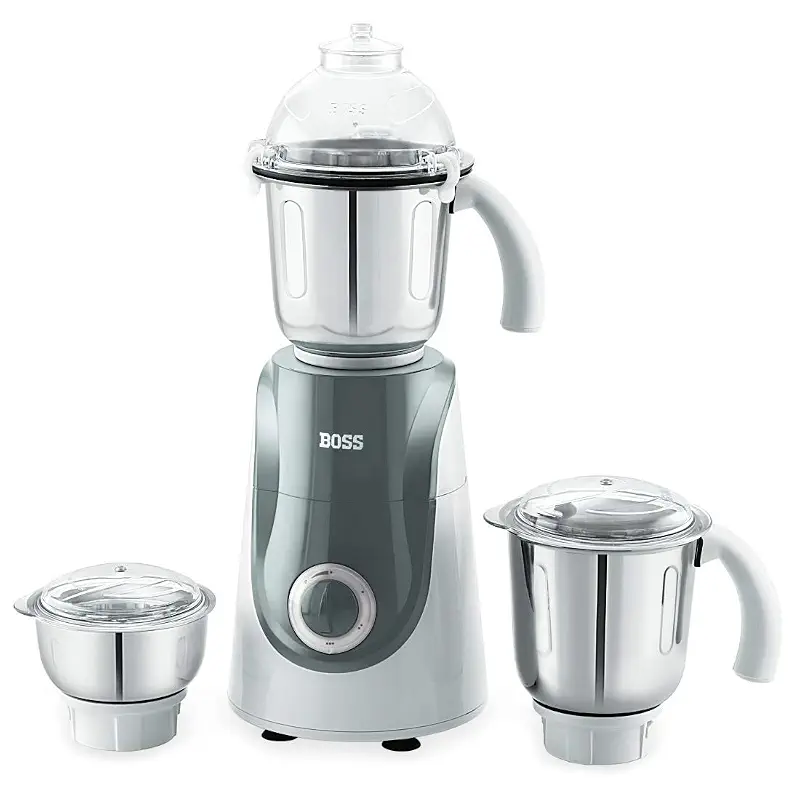
Boss Crown Wet & Dry Mixer Grinder Powerful 750W with 3 Stainless Steel Jars, 110V for USA
3.6(345)
Heavy-duty 750W wet-dry mixer designed for dense spice blends and batter grinding, but quality control is inconsistent.
Ideal for: Indian cooking enthusiasts grinding masalas and tough spices who accept higher-wattage trade-offs for power.
The 750-watt motor in this unit is substantially more powerful than entry-level grinders, which appeals to anyone grinding turmeric, masala blends, and other hard spices regularly. The three jars (wet, dry, and chutney) give you dedicated containers so flavors don't cross-contaminate. Variable speed with pulse function offers better control than fixed single-speed designs. However, buyer feedback reveals meaningful durability and quality concerns. Several owners reported the unit shutting off during heavier grinding sessions, loose handles that loosen after use, and one arrived damaged out of the box. The overheating protection is valuable for heavy work, but it also means you can't push continuous grinding without breaks. If you're willing to accept the quality-control risks and work within the motor's cooling cycles, the raw power is genuine. Just read the fine print on returns before committing.
Pros
Powerful 750-watt motor for dense, hard spice grinding
Three dedicated jars reduce flavor cross-contamination
Variable speed control with pulse function for precision
Cons
Quality-control issues reported across handle durability and motor shutoffs
Ideal for: Busy households making smoothies and grinding coffee daily while wanting to minimize appliance clutter.
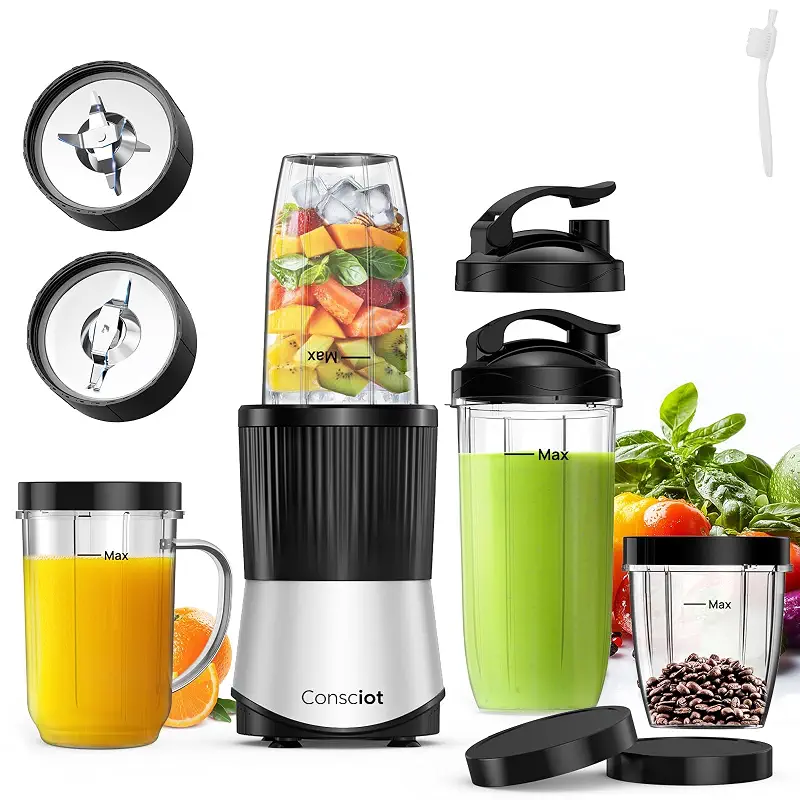
This 16-piece combo sits at the intersection of blender and grinder, making it appealing for kitchens that want one powerful motor base for both jobs. The 900-watt motor spins up to 25,000 RPM, and the asymmetric blade design pulls ingredients toward the center efficiently. The removable flat blade is purpose-built for grinding coffee, nuts, and grains, while the cross blade handles smoothies and frozen fruit. The package includes multiple cup sizes, which reduces the number of dishes you generate when making several recipes in one session. Cleaning is quick: most parts are dishwasher safe and the motor base has a leak hole to prevent fluid damage. The caveat is that this is a blender-first, grinder-second design. Some owners report that very fine grinding (like powder-fine spices) takes longer than a dedicated spice grinder, and a few found the locking mechanism can stick slightly. If you're already drawn to the blender-grinder combo concept, this delivers solid value and longevity has been strong across multiple years of ownership.
Pros
Powerful 900W motor with 25,000 RPM blade speed
Interchangeable cross and flat blades for both blending and grinding
Multiple cup sizes reduce dishwashing for varied recipes
Cons
Fine powder grinding takes longer than dedicated spice grinders
Cup locking mechanism occasionally sticks
Key features
900-watt full copper motor with asymmetric blade design
Interchangeable cross and flat blades for grinding and blending
16-piece kit with four portable to-go cups and multiple lids
Dishwasher-safe components with overheat protection and suction-cup feet
Ideal for: Meal-prep cooks who chop vegetables, grind spices, and blend smoothies regularly in one session.
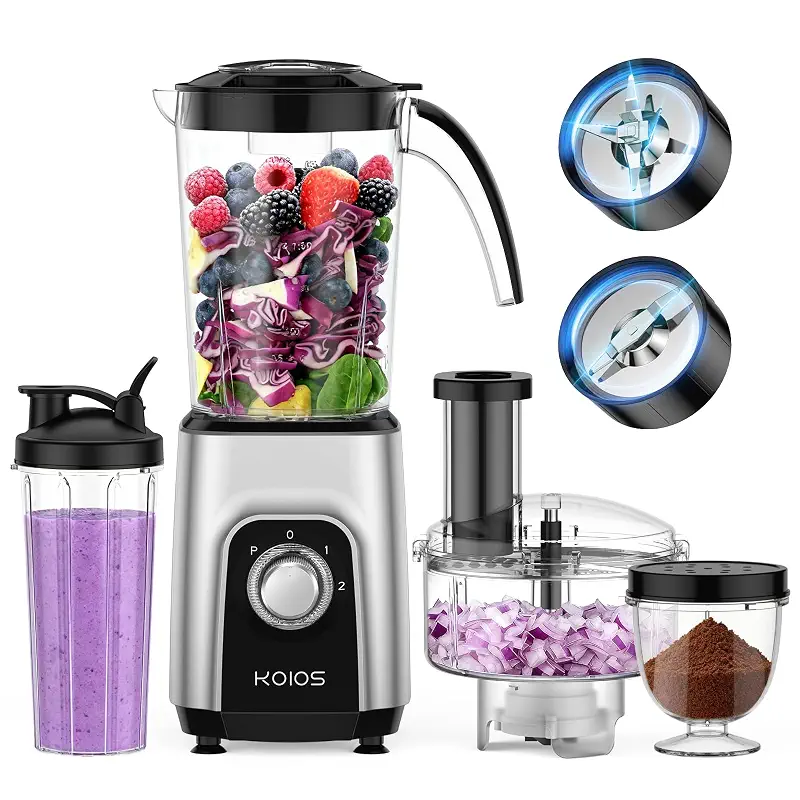
This Koios model positions itself as a complete kitchen workhorse: blender, food processor, meat grinder, and spice grinder all from a single 1000-watt motor. The appeal is real for anyone who hates counter clutter or spends time doing varied prep work. Owners consistently praise the time savings when chopping vegetables and grinding spices in the same session without swapping appliances. The detachable bowls and blades mean you can run the spice cup while the vegetable bowl soaks, which streamlines workflow. The grinding cup specifically is smaller (11oz), which works well for spice batches but limits volume for larger projects. Durability feedback is mixed: some owners have relied on this unit daily for over a year with no complaints, while others report early motor failure or unusual noises. The push-down force required for the food processor function is notable and may not suit everyone, especially those with limited hand strength. Compared to a dedicated spice grinder like the Cuisinart, this grinds less finely because the motor is optimized for blending smoothies, not pulverizing spices. It's a capable all-rounder, but you're making concessions in pure grinding performance for versatility.
Pros
Powerful 1000W motor handles blending, chopping, and grinding
Food processor and grinder in one base saves counter space
Detachable bowls allow concurrent prep tasks
Cons
Grinding fineness sacrificed for blending versatility
Mixed durability reports with some early motor failures
Key features
1000-watt motor base supporting blender, processor, grinder functions
32oz pitcher, two 22oz cups, separate chopper and grinding bowls
Stainless-steel blades with safety interlock and manual speed dial
All cups, lids, and blades dishwasher safe for rapid cleanup
#5 Pick
Best Dedicated Spice Grinder for Precision
Cuisinart
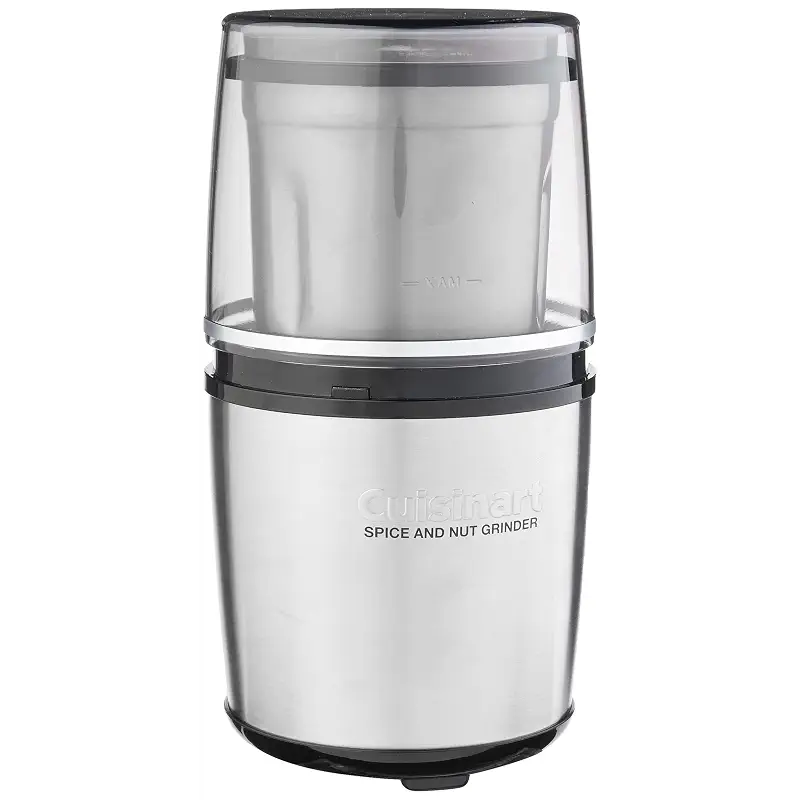
Cuisinart Spice and Nut Grinder, Push-Top Lid for On/Off, Dishwasher Safe | Electric grinder with heavy-duty motor, stainless steel blades, push-top operation & compact, easy-to-clean design, SG-10
4.3(4,393)
200-watt specialized grinder excels at pulverizing spices and nuts to ultra-fine texture with best-in-class cleanup.
Ideal for: Spice enthusiasts and home cooks grinding whole spices daily who prioritize precision texture and effortless cleanup.
The Cuisinart sits at the opposite end from the all-in-one combos: it's a purpose-built spice grinder with a smaller footprint and a motor calibrated specifically for grinding, not blending. The push-top lid is simple but effective, and the storage compartment built into the lid itself is a thoughtful touch for people who like to keep duplicate batches of their favorite spice blends handy. Owners consistently praise how completely and quickly this unit pulverizes hard spices like nutmeg, cinnamon, and black pepper without the residual dust that coffee grinders often leave behind. The removable bowl and lid are fully dishwasher safe, eliminating the tedious brush-cleaning that plagues other grinders. The trade-off is capacity: the 90-gram bowl is modest, so if you're grinding in bulk, you'll run multiple batches. Also, this is purely a dry-grinding tool: wet ingredients like ginger paste risk leaking into the motor base. Reviewers with 1-2 years of regular use report consistent performance, though a few noted the unit locking up if you exceed the motor's tolerance on dense nuts. Compared to the Shardor, this lacks the dual-bowl flexibility but delivers finer, more uniform powder for spices where texture genuinely matters.
Pros
Pulverizes spices to ultra-fine, uniform powder consistency
Fully dishwasher-safe bowl and lid eliminate tedious cleaning
200-watt motor optimized for grinding, not multi-use compromise
Cons
Small 90-gram capacity requires multiple batches for larger quantities
Not suitable for wet ingredients or high-oil nut butters
Key features
200-watt motor with heavy-duty stainless-steel grinding blades
Simple push-top lid on/off control with built-in safety interlock
90-gram capacity bowl with extra storage space in lid
Fully removable, dishwasher-safe lid and bowl for thorough cleaning
How to Choose the Best Dry Grinder for Your Kitchen
Four trade-offs that actually matter when matching a blender for dry grinding to your kitchen.
Dedicated Grinder vs. Blender Combo
A blender versus spice grinder comparison reveals distinct trade-offs. Dedicated spice grinders like the Cuisinart use motors tuned specifically for grinding, producing finer, more uniform texture with less heat generation. Blender combos add versatility for smoothies and frozen drinks, but their motors prioritize speed and blending action over grinding precision. Choose a dedicated grinder if you grind spices several times per week and texture consistency matters. Pick a combo if you're already making smoothies daily and dry grinding is occasional.
Motor Power and Grinding Speed
Wattage matters, but not uniformly across categories. A 200-watt dedicated grinder outgrinds a 750-watt blender at producing fine spice powder because blade design and motor tuning differ. For dry grinding alone, 200-250 watts is sufficient. For combo appliances handling both blending and grinding, aim for 800+ watts. Higher wattage helps with harder ingredients like peppercorns and turmeric, but it also generates more heat and noise. If you're grinding soft seeds or pre-roasted spices, mid-range wattage is adequate.
Bowl Capacity and Removability
Larger capacity (1000+ mL) means fewer refills during bulk grinding but more counter footprint. Smaller bowls (90-450 mL) suit households grinding spices a few times per week. Removable bowls are essential for actual convenience: they go in the dishwasher, eliminating the brush-and-rinse frustration of fixed-bowl designs. Some combo models include three or four separate bowls, which speeds up prep if you're working with multiple ingredients in one session but also demands more storage space.
Ease of Cleaning and Maintenance
This often surprises buyers: cleanup is a bigger factor in long-term satisfaction than initial performance claims. Grinders that trap residue in corners require tedious brush work after every use. Removable, dishwasher-safe bowls cut cleanup from five minutes to 30 seconds. Check whether the blade assembly comes apart for deep cleaning. Also, verify that the motor housing has drainage or sealed bearings so accidental liquid doesn't seep into the motor. A dry grinding technique guide can help you understand best practices, but a well-designed grinder should make cleanup straightforward without special tricks.
Noise, Heat, and Durability Expectations
Entry-level grinders are noisier because they use plastic motor housings and plastic gears. Steel and copper components reduce vibration and sound but add cost. Heat buildup during extended grinding signals the motor approaching its limit: most units have thermal overload protection that shuts the motor off to cool. This is a safety feature, not a flaw, but it means heavy grinding in one session requires breaks. Read owner reviews specifically for durability beyond the first year. Some units show wear (loose handles, blade slippage) after 6-12 months of daily use; others last years with no decline in performance.
Frequently asked
Quick answers to the questions readers ask most.
Can I use a regular blender for dry grinding spices?
Yes, but it's not ideal. Blenders are designed for wet blending and generate high speed but less focused grinding action, so spices take longer to reach fine powder and may heat up. A blender combo with an interchangeable flat blade works better than a smoothie-only blender. If dry grinding is frequent, a dedicated grinder delivers finer texture with less wear on your blender motor.
What's the difference between 2-blade and 4-blade grinding cups?
A 2-blade cup uses two sharp edges for chopping dry, hard ingredients efficiently. A 4-blade cup uses four edges for more surface contact, which works better on moist or sticky ingredients like garlic or ginger. Most combo grinders include both, letting you choose based on what you're grinding. For purely dry work (spices, nuts, seeds), the 2-blade cup is faster and cleaner.
Will grinding coffee in a spice grinder ruin it?
Occasional coffee grinding won't ruin a spice grinder, but regular coffee grinding leaves oily residue that's hard to fully remove and can impart coffee flavor to future spices. If you grind coffee and spices regularly, use separate appliances or at least thoroughly clean (ideally with rice in a dry grinder) between switching tasks.
Is a 750-watt or 1000-watt grinder necessary for home cooking?
Not for typical household spice grinding. A 200-250 watt dedicated grinder handles daily spice and seed grinding efficiently. Higher wattage becomes useful if you're grinding large batches of dense spices like turmeric or cardamom regularly, or if you want the grinder to double as a blender. For occasional use, 200-400 watts is sufficient.
Why do some grinders leak during wet grinding?
Spice grinders have a seal between the motor housing and the bowl. During wet grinding, liquid can seep through the gap and enter the motor, potentially causing damage. Dedicated dry grinders aren't sealed for liquid contact. If you need to grind wet ingredients like ginger paste, use a dedicated wet grinder or food processor with a sealed design, not a dry-grinding unit.