Best Yogurt Maker for L. Reuteri: Top Picks for Probiotic Fermentation
Find the best yogurt maker for L. reuteri fermentation. Compare temperature control, jar capacity, and timer features for consistent probiotic yogurt at home.
Ideal for: Budget-conscious home fermenters prioritizing temperature precision and durability over jar count.
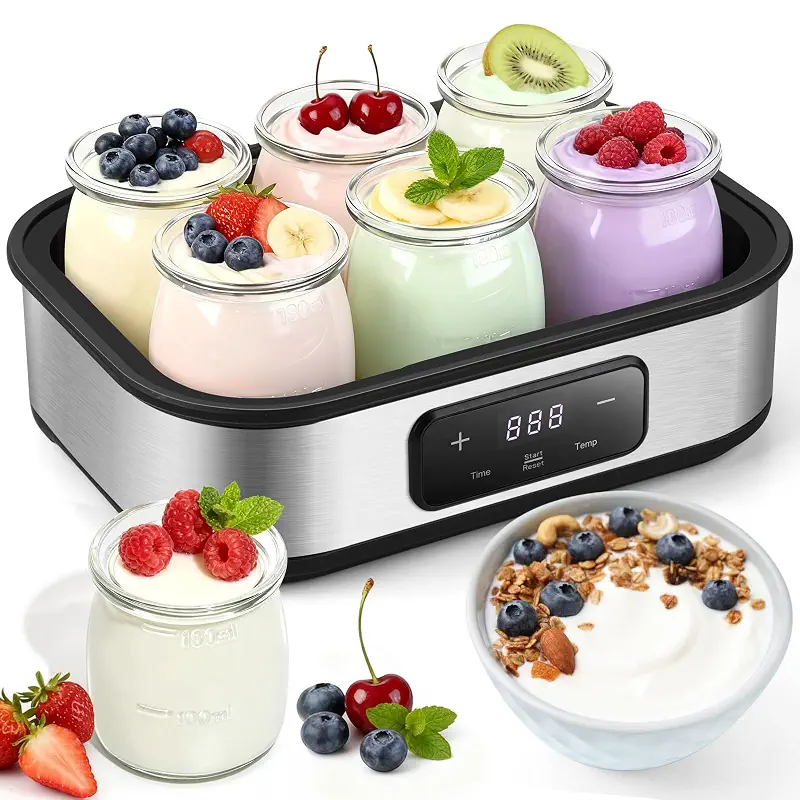
The Anzktos machine delivers the core features serious fermenters need without unnecessary frills. The ±2°F accuracy matters deeply when working with temperature-sensitive cultures like L. reuteri; this unit maintains that consistency reliably. Six 6-ounce glass jars provide enough capacity for weekly yogurt production, and the temperature range of 68–122°F covers everything from mild styles to extended 36-hour ferments for reuteri cultures.
Owners consistently praise the straightforward operation and creamy results from the first batch onward. The compact footprint suits kitchens short on counter space, and the glass jars are dishwasher-safe. One practical limitation: the timer lacks an audible alert when fermentation finishes, so you'll want to set a phone reminder. One buyer's unit experienced timer malfunction after several months of regular use, though this appears isolated rather than systemic.
If you're weighing this against pricier alternatives, the Anzktos holds its own on temperature precision: the main factor that determines L. reuteri success. Where models like the GDOR add extra jars and slight refinements, this machine proves those additions aren't mandatory for consistent results.
Pros
±2°F temperature accuracy ideal for reuteri cultures
Some reports of timer malfunction after extended use
Key features
Digital temperature control maintained within ±2°F precision
Adjustable settings from 68–122°F and up to 48-hour fermentation
Six 6-ounce borosilicate glass jars with BPA-free lids
Auto-off function prevents over-fermentation
#2 Pick
Best for L. Reuteri Specialists
GDOR
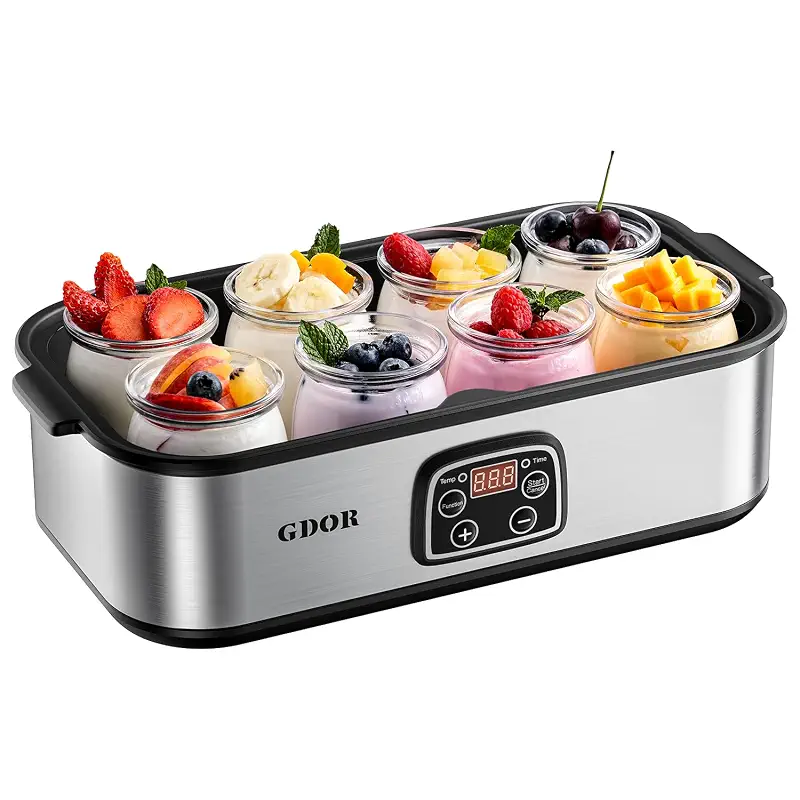
GDOR Yogurt Maker Machine with Adjustable Temp & Time, 48H Timer Digital, 8×6oz BPA-Free Glass Jars for Homemade Probiotic Yogurt, Auto Shut-Off, Stainless Steel Body
4.8(27)
Eight individual jars, proven performance with extended L. reuteri cycles, and robust build quality justify the premium for serious yogurt makers.
Ideal for: Experienced fermenters and L. reuteri enthusiasts seeking batch variety and proven reliability for long fermentation cycles.
The GDOR stands out for owners specifically targeting L. reuteri and strained yogurt products. Multiple reviewers have successfully fermented pure L. reuteri cultures at extended times (36+ hours), and the machine's stable temperature hold earned consistent praise. The temperature range extends to 131°F, which opens flexibility for different culture types, and the eight 6-ounce jars allow multiple flavor experiments in a single batch, or simpler back-to-back production cycles.
The stainless steel body feels more durable than plastic-based competitors, and owners appreciate the clear digital display for easy adjustments. Glass jars are food-grade and dishwasher-safe, though one buyer noted the 6-ounce size is small for hearty appetites and advised purchasing additional jars separately. The auto-off function removes guesswork. Compared to the Anzktos model, you're gaining two extra jars and a slightly more robust enclosure; the temperature precision is comparable, but the GDOR's proven track record with extended L. reuteri fermentation makes it the obvious choice if that's your primary goal.
The trade-off is cost and counter footprint. If you're making smaller batches or kitchen space is tight, the more compact Anzktos delivers comparable temperature control at lower investment.
Pros
Eight glass jars enable multiple flavors or continuous production
Proven stability during extended 36+ hour L. reuteri ferments
Stainless steel construction feels more durable long-term
Temperature range extends to 131°F for versatility
Cons
Six-ounce jar size is small for larger appetites
No storage-ready lids supplied; separate purchase needed
Key features
Eight 6-ounce BPA-free glass jars for batch flexibility
Digital temperature control from 68–131°F with 48-hour timer
Stainless steel housing with clear digital display
Auto shut-off and consistent heat maintenance for stable fermentation
#3 Pick
Best Starter Culture
Coolinario
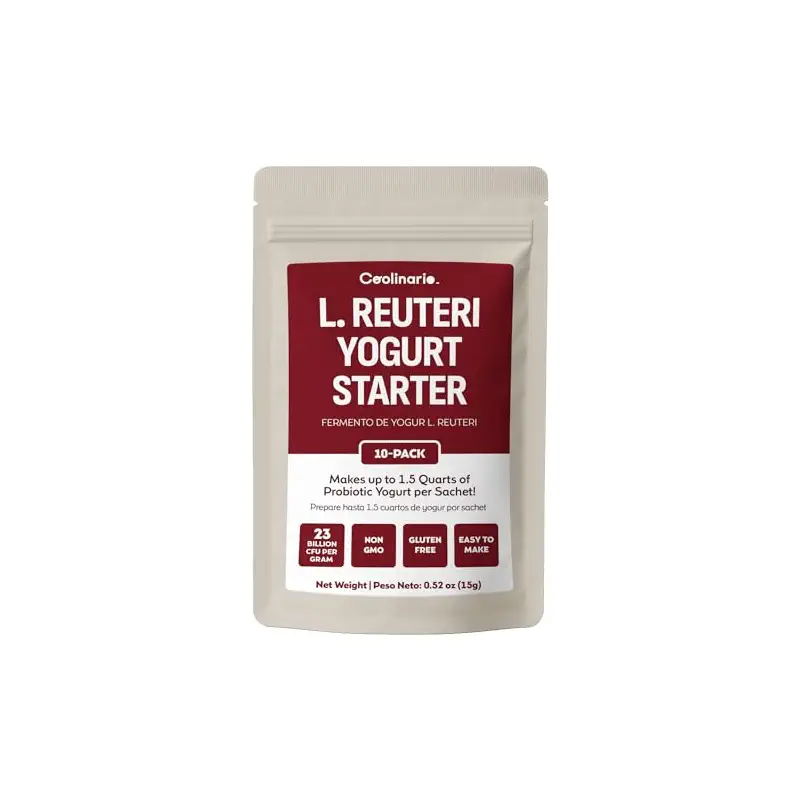
Coolinario L Reuteri Yogurt Starter (10-PK, 1.5g Sachets) Reuteri Probiotic | Yogurt Starter Culture with Lactobacillus Reuteri Probiotics, Non-GMO, No Preservatives, Gluten Free, Creamy & Delicious
4.4(1,563)
Multiline blend containing L. reuteri plus supporting strains; 10 sachets provide reliable culture for dozens of batches with minimal learning curve.
Ideal for: Home fermenters seeking reliable, multi-strain probiotic yogurt with minimal technical complexity and repeatable results.
The Coolinario L. reuteri starter is not a machine but a culture pack, and it pairs seamlessly with either of the yogurt makers above. Each of the 10 sachets contains a blend of L. reuteri alongside traditional yogurt bacteria (L. bulgaricus, S. thermophilus, L. casei, L. plantarum), which means you're not making a pure L. reuteri yogurt but rather a multi-strain probiotic blend. This matters if your goal is isolating a specific strain's benefits; however, for most home fermenters seeking reliable, tangy, gut-friendly yogurt with minimal fuss, the blend works beautifully.
Owners report creamy texture and strong tanginess after standard 8-hour fermentation, with the option to extend to 24–36 hours for thicker results. The sachet format removes guessing on starter quantity: each packet is sized for two liters of milk. One buyer's confusion centered on whether 8-hour or 36-hour fermentation was appropriate. Coolinario's label emphasizes 8 hours, but L. reuteri specifically benefits from longer times. If you're pairing this with a yogurt maker capable of extended cycles (like the GDOR or Anzktos) you can experiment safely beyond the suggested timeframe. The main limitation is clarity: the package doesn't specify the exact L. reuteri cell count or how the blend behaves at temperatures above 110°F, leaving room for trial-and-error.
For beginners, it's forgiving and affordable. For specialists, consider sourcing a pure L. reuteri culture if strain isolation matters to your protocol.
Pros
Ten sachets provide months of starter supply
Blend of strains produces consistently creamy, tangy yogurt
Easy-to-follow ratio; one sachet per two liters of milk
Non-GMO, gluten-free, no preservatives or additives
Cons
Not a pure L. reuteri culture; contains supporting bacterial strains
Limited documentation on exact cell counts or long-fermentation behavior
Key features
Multi-strain probiotic blend including L. reuteri and supporting cultures
One sachet (1.5g) per two liters of milk: simple dosing
Non-GMO, gluten-free, and preservative-free formulation
Produces smooth, creamy yogurt with natural tangy flavor
#4 Pick
Best for Large-Batch Fermentation
cewajbaa
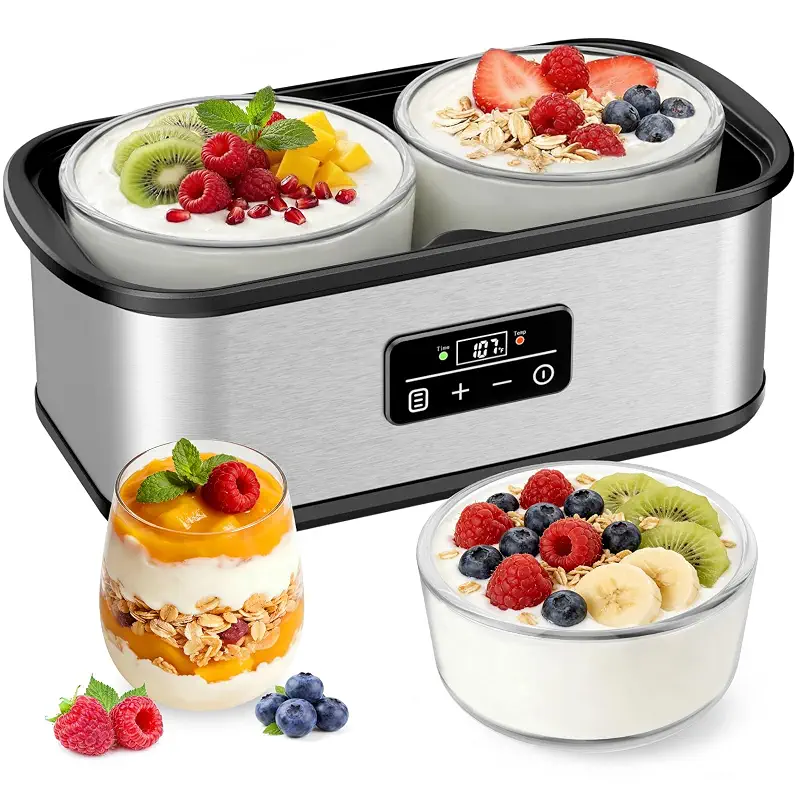
Probiotic Yogurt Maker with 48H Time and 68-127℉ Temp Control, Yogurt Maker Machine with Auto-off, Make Homemade Delicious Yogurt For Family & Friend
4.6(8)
Two large glass bowls and precise temperature control designed for family sharing; excellent alternative to jar-based systems for high-volume users.
Ideal for: Large families or high-volume yogurt consumers seeking batch efficiency and straightforward fermentation without individual portioning.
The cewajbaa machine takes a different approach: instead of multiple small jars, it uses two large quart-sized glass bowls. This design suits households that consume yogurt daily or prefer batch-and-store over individual portions. The temperature range of 68–127°F and 48-hour timer handle L. reuteri cycles competently, with owners reporting perfect results on first attempts and consistently smooth texture after fermentation.
The transparent top cover lets you monitor fermentation visually without opening the unit, and the auto-off feature removes anxiety about over-fermentation. Glass bowls are BPA-free and dishwasher-safe. One practical drawback: the bowls hold one quart right up to the rim, meaning milk spills easily during transfer or lid placement; a slightly taller design would prevent this. The control panel requires firm pressing to adjust numbers, which feels less refined than digital buttons on competing models but remains functional.
Compared to the GDOR's eight small jars, this sacrifices flexibility (you can't make multiple flavors simultaneously) but gains efficiency if you're processing large volumes at once. Compared to the Anzktos six-jar setup, the cewajbaa's larger capacity means fewer refills per week, though you lose the portability of individual servings. It's the right choice for a household of 3+ who eat yogurt regularly and don't mind storing larger batches in the refrigerator.
Pros
Two 1-quart glass bowls perfect for family-sized batches
Transparent top cover enables visual fermentation monitoring
Digital temperature and time controls with 48-hour capacity
Dishwasher-safe glass bowls save cleanup time
Cons
Bowls fill to the brim; spill risk during milk transfer or lid placement
Control panel requires firm pressure; less responsive than button interfaces
Key features
Two large-capacity quart-sized borosilicate glass bowls
Adjustable temperature (68–127°F) and up to 48-hour fermentation
Transparent top cover for real-time fermentation observation
Auto-off and LED display for intuitive operation
#5 Pick
Best for Precision Reuteri Fermentation
Dwszrwl
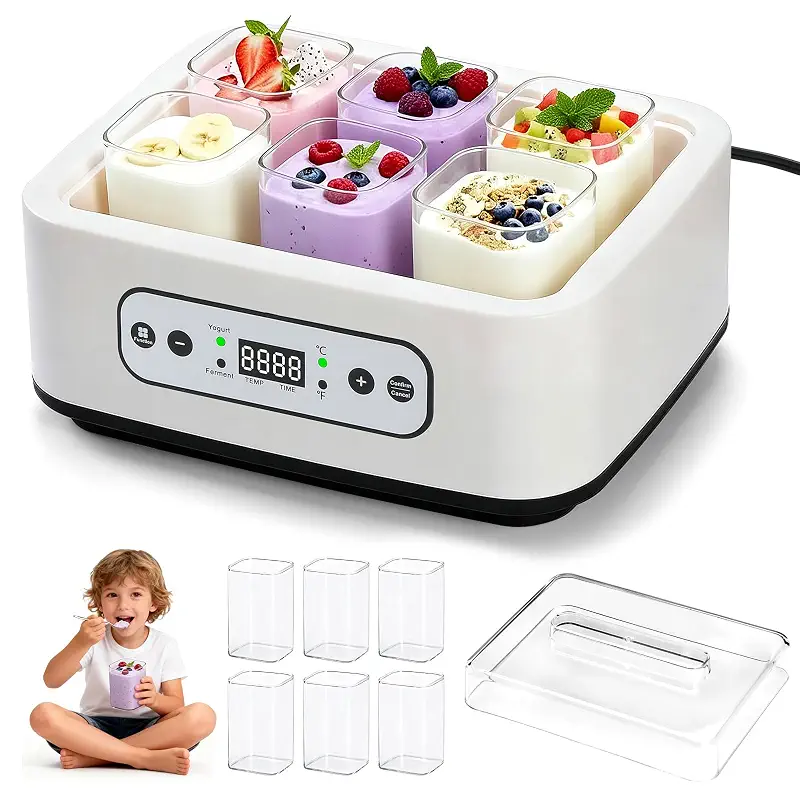
Yogurt Maker Machine -Probiotic Yogurt Makers 36 Hour L Reuteri with Temperature Control & Adjustable Time,Curd Yoghurt Maker + 6 Cups with High Temperature Resistance and Easy Cleaning
4.3(28)
Built specifically for 36-hour L. reuteri cycles with ±2°F accuracy and borosilicate jars; ideal for fermenters prioritizing strain-specific protocol adherence.
Ideal for: Experienced fermenters targeting extended L. reuteri cycles who value high-quality glass construction and don't mind troubleshooting initial setup.
The Dwszrwl machine is explicitly designed around L. reuteri fermentation, and its specifications reflect that focus. The ±2°F temperature accuracy matches the Anzktos precision, but this unit emphasizes the 36-hour cycle directly in its marketing and feature set. The six borosilicate glass jars are high-quality and scratch-resistant, with secure-snap lids suitable for daily storage. The digital interface allows fine-tuned adjustments, though the instruction manual is sparse: several buyers had to research online for starter preparation and fermentation timing.
Owners report excellent yogurt texture and taste when they work through the initial learning curve. One critical drawback: a small number of units have experienced temperature drift, with one buyer reporting the unit holding 88°F when set to 93°F, causing a batch failure. This is concerning because L. reuteri's success depends on holding temperature within a narrow band; if the unit fails calibration, you'll lose your culture and ingredients. Warranty and customer support details aren't clear from available reviews.
The Dwszrwl competes directly with the Anzktos on price and basic specs but differentiates on marketing and jar material. The borosilicate construction is genuinely superior to standard glass, but whether the modest durability gain justifies choosing this model over the Anzktos (which also delivers ±2°F precision) depends on your risk tolerance for potential temperature-control failures. The sparse instructions are a real friction point for newcomers; the GDOR or Anzktos have better-documented support.
Pros
±2°F temperature accuracy optimized for reuteri protocols
High-quality borosilicate glass jars resist scratching and damage
Explicit 36-hour cycle support for extended fermentation
Compact footprint with secure jar lids for refrigerator storage
Cons
Instruction manual lacks detail; significant online research required
Some units report temperature drift and calibration loss over time
Key features
Six 6-ounce high-borosilicate glass jars with secure-snap lids
Temperature accuracy within ±2°F for sensitive L. reuteri cultures
Adjustable fermentation time and digital temperature controls
Compact design suitable for kitchen counter or cabinet storage
How to Choose a Yogurt Maker for L. Reuteri
Four trade-offs that actually matter when matching a yogurt maker for l reuteri to your kitchen.
Temperature Stability Is Non-Negotiable
L. reuteri thrives in a narrow temperature band, typically 90–100°F, and deviation by even 3–5°F can stall fermentation or allow unwanted bacteria to dominate. Look for machines advertising ±2°F accuracy or better; this specification separates reliable units from mediocre ones. Budget models sometimes skimp on probe quality, so read owner feedback carefully. A yogurt maker that drifts 5–10°F over time will frustrate you quickly. Temperature sensors and heating elements degrade, so prefer units with proven track records over new brands with no long-term reviews.
Timer Length Determines Your Culture Options
Standard yogurt ferments in 8–12 hours, but L. reuteri and other specialty strains often require 24–48 hours for optimal probiotic counts. A machine with a minimum timer of 36 hours opens the door to how to make l. reuteri, extended fermentation experiments. Some older or budget models cap out at 12–24 hours, which forces you into short, hot ferments that may not develop the flavor or probiotic density you're seeking. The 48-hour timer is now standard on most new machines; verify this before purchasing.
Jar Count vs. Batch Size Strategy
Six-jar machines produce approximately one quart per cycle: ideal for individuals or couples and offer portioning flexibility. Eight-jar models scale slightly higher; two large-bowl systems (one quart each) suit families consuming yogurt daily. Think about your household's weekly consumption and whether you want to flavor-customize batches or simply repeat the same recipe. If you're experimenting with reuteri yogurt makers vs standard yogurt makers, specialty strains benefit from consistent environmental conditions; fewer, larger batches can actually be simpler to monitor than juggling eight individual jars.
Glass Quality and Durability Considerations
Standard soda-lime glass works fine for most home fermenters, but borosilicate glass resists thermal shock and scratching better, extending jar life significantly. BPA-free plastic lids are acceptable, though glass lids offer superior long-term reliability. Check whether jars are dishwasher-safe: hand-washing glass jars daily becomes tedious. A few dollars more upfront for durable jars saves money over years of use, especially if you're fermenting regularly.
Support and Documentation Matter More Than Specs
Budget machines occasionally ship with thin or unclear instructions. Before purchase, search for owner reviews mentioning setup difficulty and customer support responsiveness. Brands that provide recipe guides, temperature charts for different cultures, and responsive customer service reduce your troubleshooting time significantly. Clear documentation on fermenting L. reuteri specifically (temperatures, timing, signs of success) accelerates your learning curve.
Frequently asked
Quick answers to the questions readers ask most.
Can I use a standard yogurt maker for L. reuteri, or do I need a specialized unit?
Standard yogurt makers with adjustable temperature and a 36+ hour timer can absolutely work for L. reuteri. The key requirement is stable, precise temperature control (ideally ±2°F accuracy) and a long enough fermentation window. All five machines reviewed here meet those criteria. Specialized branding doesn't guarantee better performance; it's the actual temperature stability and timer length that matter. If you already own an older yogurt maker, test it before buying a new one: it may work fine.
What temperature should I set for L. reuteri fermentation?
Most L. reuteri cultures ferment optimally between 90–100°F, depending on the specific strain and your starter culture's documentation. Many home fermenters use 98–99°F as a reliable starting point. Your culture supplier should provide guidance; follow their recommendation first, then adjust based on results. Fermentation times typically range from 24–36 hours at this temperature, though extended ferments up to 48 hours can develop more tanginess and probiotic depth. Keep a thermometer handy to verify your machine's actual temperature versus its display setting.
How many batches can I make from one starter sachet?
A single sachet of freeze-dried L. reuteri culture (like Coolinario) typically ferments two liters of milk into yogurt. Once fermented, you can use a small portion of that yogurt as starter for your next batch, potentially making 5–10 additional batches before the culture weakens and you need a fresh sachet. Many experienced fermenters freeze portions of successful batches to preserve starter strength and ensure consistent quality over time.
Is borosilicate glass worth the extra cost, or is regular glass sufficient?
Borosilicate glass is more durable: it resists thermal shock, scratching, and staining better than standard soda-lime glass. If you ferment yogurt multiple times per week for years, borosilicate jars will outlast standard glass and maintain clarity longer. For casual fermenters making one batch per week, standard BPA-free glass works fine. Consider borosilicate an upgrade if durability and aesthetics matter to you; it's not essential for successful fermentation.
What should I do if my yogurt doesn't set or comes out thin?
Thin yogurt usually results from insufficient fermentation time, temperature fluctuations, low-quality starter, or milk that wasn't heated enough beforehand. Try heating your milk to 180°F for 10–30 minutes before cooling and fermenting; this denatures whey proteins and firms up the final product. Extend fermentation time by 4–6 hours and verify your machine's actual temperature with an external thermometer. If your starter is old or weak, use a fresh sachet or source new culture. Straining yogurt through cheesecloth for 2–4 hours also creates a thicker, Greek-style texture if the base yogurt ferments successfully.