Best Wok for Stir-Fry: Top Carbon Steel and Hybrid Picks
Find the best wok for your kitchen. Compare pre-seasoned carbon steel and hybrid nonstick options that work on all stovetops, from budget picks to premium choices.
Verdict, analysis, and key features for each pick.
#1 Pick
Best Overall
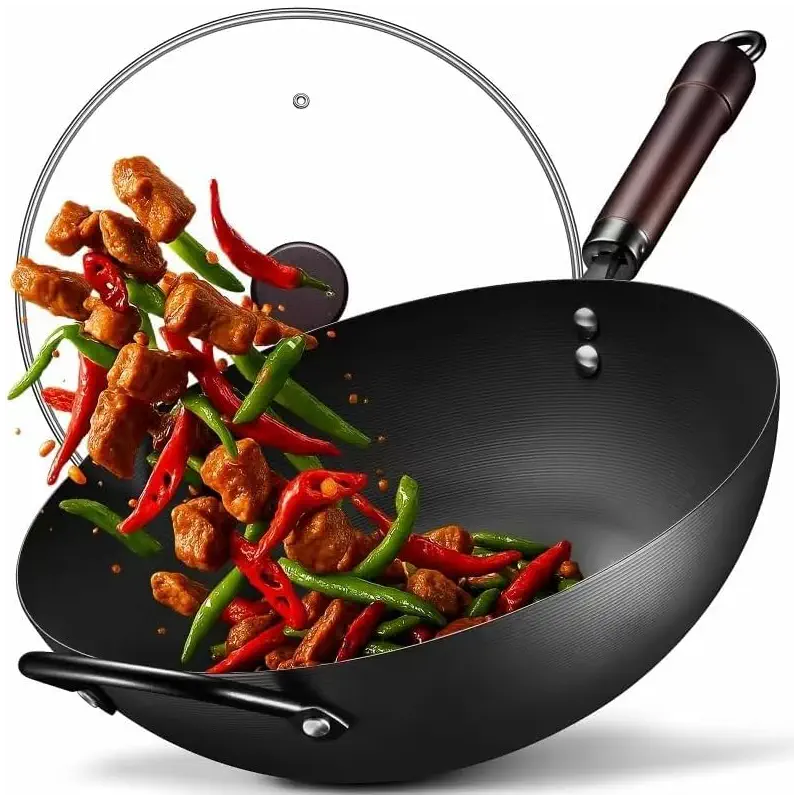
Yosukata
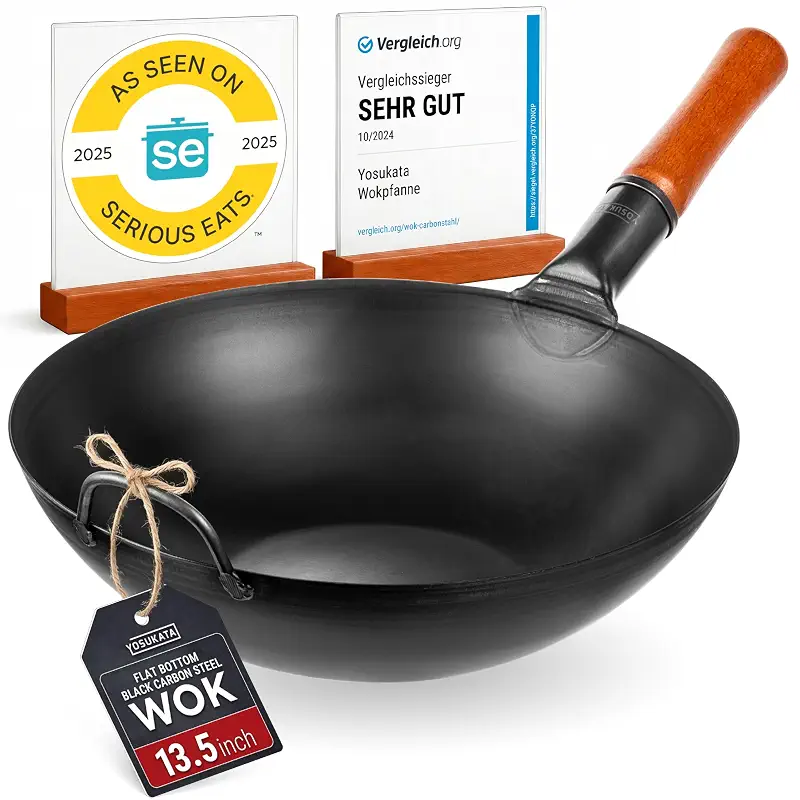
YOSUKATA 13.5" Pre-Seasoned Flat Bottom Black Carbon Steel Wok for Stir Fry | Pow Wok for Stir Fry, BBQ, Grill, Camping – Traditional Chinese Cookware for Induction, Electric, Gas, Open Fire
4.2(5,489)
Authentic carbon steel wok with genuine seasoning depth and proven durability for serious home cooks.
Ideal for: Home cooks who embrace carbon steel tradition and cook stir-fries frequently.
The Yosukata earns its reputation among buyers who prioritize traditional wok cooking. Pre-seasoned at over 600°F, it starts ready to cook but demands the commitment that any true carbon steel pan requires: proper initial seasoning and ongoing maintenance. What I find compelling in the reviews is how consistently satisfied owners describe the nonstick performance once they've invested the time upfront. The 13.5-inch flat bottom sits stable on modern stovetops, and the ergonomic wooden handle strikes a balance between heat insulation and grip security.
The tradeoff is real: this wok isn't forgiving of shortcuts. Several reviews highlight the frustration buyers face if they skip the detailed seasoning steps or don't account for the black residue that comes off during initial preparation. Owners who follow instructions report beautiful results, but those expecting plug-and-play performance will feel let down. The wok's versatility across gas, induction, electric, and open-fire cooking appeals to cooks who want one tool for kitchen and camping alike.
Compared to modern hybrid designs like the Dotclad, this wok demands more active care but rewards you with deeper seasoning and a cooking surface that improves with time. If you cook with acid-based sauces regularly, you'll need to re-season occasionally, so factor that into your decision.
Pros
Builds natural nonstick patina that improves with use
Affordable entry point to authentic wok cooking
Works on every stovetop type, indoors and outdoors
Lightweight enough for daily tossing and flipping
Cons
Requires proper seasoning protocol before first use
Susceptible to rust without consistent oil maintenance
Key features
13.5-inch diameter with 3-inch depth flat bottom
Pre-seasoned at 600°F, no PTFE or synthetic coatings
Black carbon steel construction with wooden handle
Compatible with gas, electric, induction, and open flame
#2 Pick
Best for Induction Cooking
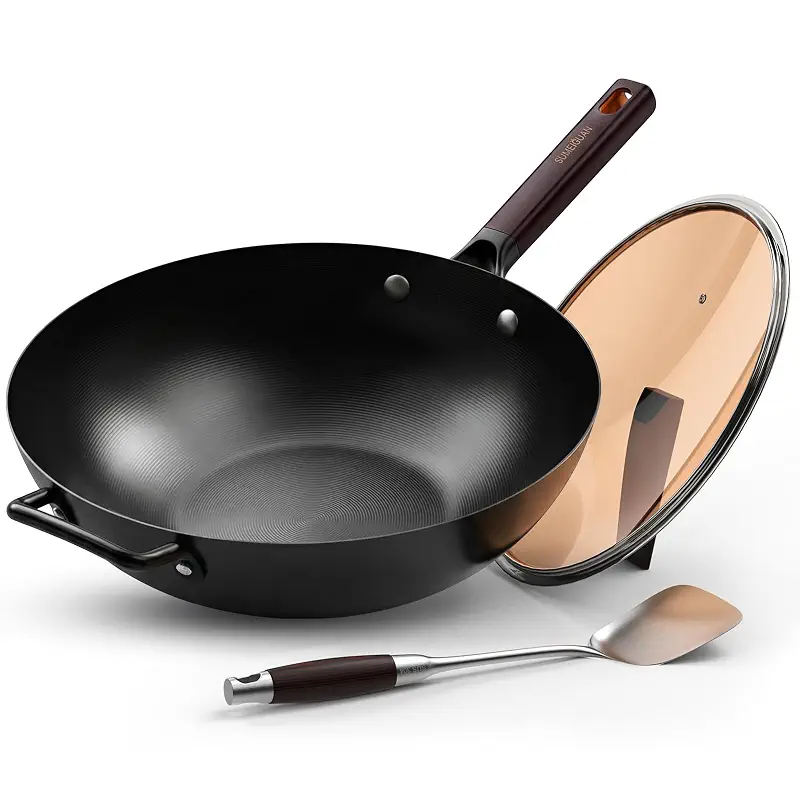
Sumeiguan
13.5" Pre-Seasoned Flat Bottom Carbon Steel Wok with Lid Spatula | Naturally Nonstick Woks & Stir-fry Pan, Black Traditional Chinese Cookware for Induction, Electric, Gas, Great for BBQ, Grill
4.4(344)
Engineering-focused flat-bottom wok with advanced rust resistance, lid, and spatula included.
Ideal for: Cooks with induction or flat electric stoves who want stability and minimal rust worry.
The Sumeiguan addresses a specific modern pain point: the instability and uneven heating that round-bottom woks suffer on flat electric and induction cooktops. The 17-centimeter flat base delivers direct contact with the heat source, and multiple owners specifically praise how this eliminates the "hot spot in the center" problem they'd experienced before. The nitriding technology mentioned in the specs translates to real durability: reviewers report that the wok resists rust and corrosion far better than traditional carbon steel, which matters if you're less disciplined about oiling between uses.
What sets this apart in the lineup is the complete package: glass lid, stainless steel spatula, and clear instructions that include detailed seasoning guidance. First-time wok users find the printed manual reassuring, and the handle attachment using industrial-grade screws feels more robust than riveted designs. At roughly 1.7 kg, it's manageable but not featherweight, and several owners note the weight provides stability during vigorous cooking.
Where the Sumeiguan differs from the Yosukata is the engineering trade-off: nitriding treatment means less traditional seasoning buildup over time, so you won't develop that deep patina. Compared to carbon steel vs. hybrid nonstick options, this occupies middle ground: more durable than plain carbon steel but without the nonstick convenience of coated pans. If you're on an induction cooktop and value reliability over seasoning depth, this is the logical choice.
Pros
17cm flat base provides stable contact and even heating
Nitriding treatment resists rust and corrosion effectively
Includes lid, spatula, and clear seasoning instructions
Quick heat response on induction burners
Cons
Cannot boil or steam water-heavy dishes without seasoning damage
Heavier than some carbon steel models, harder for weak wrists
Key features
13.5-inch diameter with 17cm wide flat base, 11cm sides
Advanced nitriding treatment for rust and corrosion resistance
6.4-quart capacity, suitable for 3 to 6 servings
Includes tempered glass lid and stainless steel spatula
#3 Pick
Best Value with Accessories
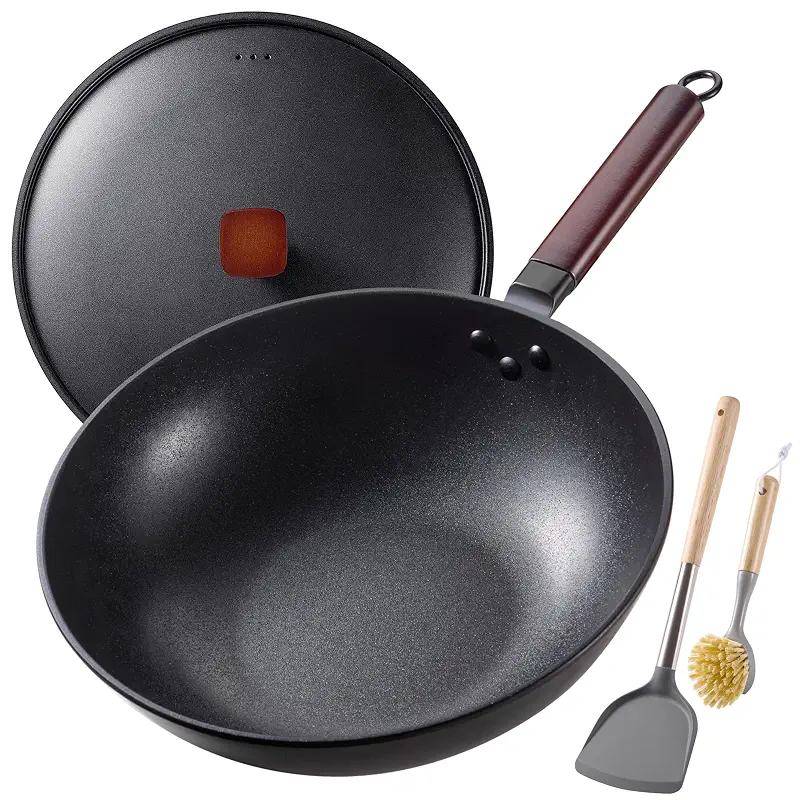
Teewe
Teewe Carbon Steel Wok, 13" Woks & Stir-fry Pans Nonstick with Lid | Pre-Seasoned Flat Bottom Chinese Wok, Wok Pan with Spatula and Dish Brush for Induction, Electric, Gas, All Stoves
4.4(1,174)
Modern carbon steel wok with enhanced nonstick technology, complete with lid, spatula, and brush.
Ideal for: Busy home cooks who want a complete wok set without extra purchases.
The Teewe represents a middle path between traditional and contemporary. It uses a nitriding-based nonstick technology applied during pre-seasoning at very high temperature, creating what Teewe describes as a granular-textured surface layer: visible in product images as a rough, bumpy finish rather than a smooth coating. Buyers appreciate that this roughness doesn't feel cheap; reviews describe the cooking performance as genuinely nonstick, and many note they can use very little oil without sticking, which appealed to health-conscious cooks. The included silicone spatula and cleaning brush signal that Teewe expects daily use right out of the box.
Where this wok shines is practicality for families. At 13 inches with solid depth, it handles 3 to 5 servings comfortably. The lid and spatula mean you're not buying separately, and owners specifically praised the quality of the spatula: it doesn't feel like a cheap add-on. One important caveat: several reviews warn against dry-heating or exceeding 300°C (about 572°F), a limitation you don't see flagged as prominently with pure carbon steel. This matters if you cook at very high heat or use it over open flame; the technology works best within a moderate-to-medium-high range.
Compared to the Dotclad hybrid, the Teewe maintains a more traditional wok shape and heat-conduction profile. Compared to the Yosukata, you trade some seasoning depth potential for built-in convenience and less fussy initial prep. If you're shopping across cookware categories, woks are just one piece of the puzzle; top stackable cookware sets offer similar versatility for cooks who want multiple pieces to nest compactly.
Pros
Genuinely nonstick from first use, minimal oil required
Complete set: lid, spatula, and cleaning brush included
Lightweight and responsive to heat changes
Quick and even heating on all cooktop types
Cons
Should not exceed 572°F; unsuitable for very high-heat cooking
Nonstick surface requires gentle hand-washing to preserve
Key features
13-inch diameter, 3.9 inches deep flat-bottom design
Nitriding technology pre-seasoned at 1000°F for durability
Carbon steel body with naturally nonstick granular surface
Full accessory set: glass lid, silicone spatula, cleaning brush
#4 Pick
Best for Restaurant-Style Searing
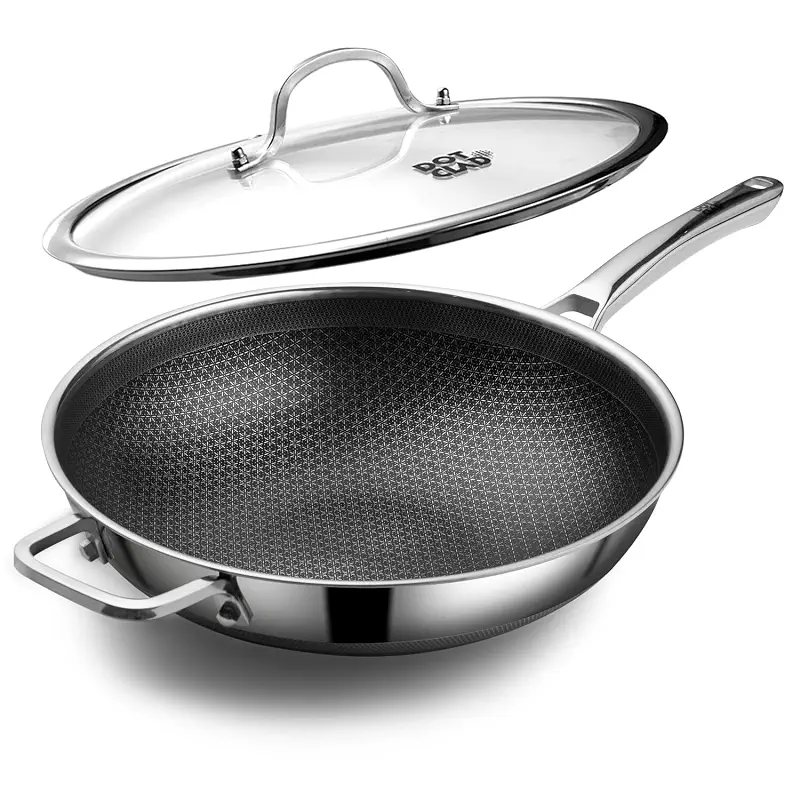
Dotclad
DOTCLAD Wok pan,Hybrid 12 inch Wok with Lid, PFOA Free Cookware,non stick Stainless Steel Woks & Stir-fry pans Nonstick, Dishwasher and Oven Safe, Works on Induction
4.4(2,380)
Hybrid stainless steel and nonstick wok with unique dot-clad surface for high-heat performance.
Ideal for: Cooks seeking high-heat browning without carbon steel maintenance.
The Dotclad enters the category with a fundamentally different engineering approach: a laser-etched hybrid surface combining stainless steel and nonstick properties. This isn't carbon steel, and that distinction matters. The dot-clad pattern (50% more surface area than conventional hex-clad designs, per specs) creates pockets that trap heat and oil, enabling browning and searing that reviewers consistently describe as restaurant-quality. One owner who had struggled for years to replicate that elusive smoky wok flavor finally achieved it with this pan: an emotional testimonial that speaks to the performance gap.
What makes the Dotclad different is that it delivers high heat without the seasoning maintenance carbon steel demands. You get a beautiful sear on proteins and vegetables with less oil than a carbon steel wok requires, and cleanup is straightforward: wipe while warm, hand-wash gently to preserve the dot pattern. The stainless steel rim may develop a brown patina, but reviewers report it wipes away easily. The handle stays cool even under high heat, and the glass lid with steam vent is sturdy.
The tradeoff is heat management: reviewers note this wok functions best at medium-high rather than the screaming-hot temperatures traditional wok cooking demands. One detailed review flagged issues with the lid's channel trapping soapy water, a genuine design flaw worth considering if you plan to use the lid during cooking. Where the Dotclad diverges from carbon steel vs. hybrid nonstick comparisons is that it sacrifices the traditional wok aesthetic and seasoning depth for reliability and restaurant-grade searing.
Stainless steel body requires no seasoning or oil maintenance
Heats quickly and evenly across entire cooking surface
Cool-to-touch handle even at high temperatures
Cons
Lid design has water-trapping channel that requires careful drying
Works best at medium-high heat, not traditional screaming-hot wok temperatures
Key features
12-inch diameter with laser-etched dot-clad hybrid surface
Multi-layer composite stainless steel for heat distribution
Works on all stovetops including induction and gas
Includes tempered glass lid with steam vent and ergonomic handles
#5 Pick
Best Premium Carbon Steel
FGJ
FGJ Wok, 13 Inch Carbon Steel Woks & Stir-fry Pans Nonstick Roasting Pan | Pre-Seasoned 5.8QT Flat Bottom Chinese Wok Roasting Pan with lid,PFOA/PTFE free Cookware Compatible with All Cooktops
4.4(582)
High-quality carbon steel wok with advanced nitrogen treatment, glass lid, and excellent heat response.
Ideal for: Carbon steel purists seeking premium build and deep seasoning development.
The FGJ occupies the premium carbon steel position, differentiated by its nitrogen-treatment pre-seasoning at over 1000°F and a reputation for minimal rust issues out of the box. Where many carbon steel woks arrive with some black residue or require extensive initial seasoning cycles, FGJ reviewers report that the cooking surface is battle-ready immediately. The natural nonstick performance begins strong and continues to improve as the seasoning deepens: exactly how traditional wok cooking is supposed to work. The included glass lid and sturdy wooden handle round out the package.
What I notice in the reviews is consistency: owners are impressed by the weight, build quality, and how evenly the wok heats. One reviewer who had struggled with an enamel-coated wok previously expressed shock at how premium this feels for the price point. Fried rice and stir-fries brown beautifully, and the flat bottom provides stability across modern stovetops. At 5.8 quarts, capacity is generous for family cooking.
The risk here is durability. Two one-star reviews flag rusting issues after a few months and even holes developing: a stark contrast to the five-star testimonials. This suggests either defect variability in the batch or that rust prevention requires uncompromising maintenance discipline (immediate drying, frequent oiling). Compared to the Sumeiguan's nitriding advantage or the Teewe's nonstick tech, the FGJ is purer carbon steel, which means superior seasoning potential but also greater rust risk if care lapses. Korean cookware brands often apply similar nitrogen treatments to woks and other cookware, prioritizing durability alongside heat performance. If you're meticulous about maintenance, you'll love it; if you're inconsistent, the Sumeiguan may be the safer bet.
Pros
Nitrogen-treated pre-seasoning creates strong initial nonstick base
Excellent heat distribution with quick temperature response
Includes glass lid and detachable wooden handle for flexibility
5.8-quart capacity ideal for family-sized meals
Cons
Some users report rust or durability issues with inconsistent maintenance
Requires disciplined seasoning upkeep to prevent corrosion
Nitrogen-treated at 1000°F for advanced rust resistance
Naturally nonstick surface improves with continued use
Includes tempered glass lid and detachable wooden handle
How to Choose the Right Wok for Your Kitchen
Four trade-offs that actually matter when matching a wok ii to your kitchen.
Material Matters: Carbon Steel vs. Hybrid Nonstick
The material you choose dictates both how the wok cooks and how much maintenance it demands. Traditional carbon steel builds a seasoned surface over time, developing deeper nonstick properties and exceptional heat retention: ideal for high-heat stir-frying. But it requires initial seasoning and ongoing oil care to prevent rust. Hybrid nonstick woks use stainless steel or advanced coatings to skip that step, offering convenience and durability without the fuss. Compare carbon steel vs. hybrid nonstick options by honestly assessing whether you'll commit to seasoning upkeep. If you cook daily and enjoy the ritual, carbon steel rewards you. If you prioritize simplicity and consistency, hybrid or coated designs are your answer.
Flat Bottom vs. Round Bottom: Stovetop Compatibility
Modern kitchens are built around flat cooktops (electric, induction, glass) which flat-bottom woks handle naturally. Round-bottom woks, traditional in restaurant kitchens, wobble and distribute heat unevenly on these surfaces unless you use a wok ring, which defeats the purpose. Every flat-bottom wok in this lineup sits stable and heats evenly across the entire base. Gas stove cooks have more flexibility, but even then, flat bottoms are safer and more stable. Check your stovetop type before deciding, especially if you're switching to induction; induction requires magnetic cookware, and not all carbon steel woks are induction-compatible without a special base.
Size and Capacity for Your Household
Wok size typically ranges from 12 to 14 inches in diameter. A 13-inch wok is the practical sweet spot: large enough to cook 3 to 6 servings without overcrowding, yet manageable for daily tossing and storage. If you regularly cook for more than six people or do serious meal prep, step up to 14 inches; if you live alone or cook for two, a 12-inch wok won't waste counter or storage space. Depth matters too: deeper sides (3.5 to 4 inches) contain splatter and allow more vigorous stirring, while shallower woks cook faster but splash more. For stir-frying, aim for at least 3 inches of depth.
Seasoning and Maintenance Expectations
If you're buying a carbon steel wok, understand that pre-seasoning is a starting point, not a finished product. The manufacturer applies an initial layer, but you'll need to follow seasoning steps before cooking: typically washing out a protective oil coating, then applying heat and oil to build the patina. How to season and maintain your carbon steel wok becomes your responsibility; skip this step and you'll inherit rust and sticking problems. Hand-wash all woks immediately after use and dry thoroughly. Acidic foods (tomato sauce, vinegar, lemon) can compromise seasoning, so re-season occasionally. Modern nonstick hybrid woks require only gentle hand-washing and no oil maintenance, a trade-off some cooks gladly make.
Heat and Handle Design for Safety and Comfort
A good wok handle should stay cool enough to grip without a towel, especially during active stir-frying. Wooden handles insulate naturally and feel warmer to the touch than metal, but they require drying and occasional oiling to prevent splitting. Some woks feature detachable handles, which is convenient for storage and dishwasher-safe cleanup, though this adds complexity. Long handles (8 to 10 inches) give you leverage and protection from steam; short handles demand more caution. Test the handle angle and weight distribution if possible: you'll be lifting and tilting this pan dozens of times per cook session, so ergonomics matter as much as specs.
Frequently asked
Quick answers to the questions readers ask most.
Can I use a carbon steel wok on an induction cooktop?
Yes, but only if the wok is magnetic. Most carbon steel woks are induction-compatible, but verify before buying. Flat-bottom woks work best on induction because they make full contact with the heating coil. Some woks are pre-treated for induction compatibility; others work but heat slower. If induction is your only option, the Sumeiguan or Teewe are engineered specifically for induction performance.
Why does my new wok have black residue when I wash it?
That black stuff is loose manufacturing oil and carbon particles left over from pre-seasoning. Wash the wok in hot soapy water with a sponge, scrubbing gently, and repeat until no more black comes off (typically 2 to 3 washes). This is normal and expected. Don't panic: you're not damaging the wok; you're preparing it for seasoning.
What's the difference between pre-seasoned and unseasoned woks?
Pre-seasoned woks arrive with a factory-applied layer of seasoning that jumpstarts the cooking experience. You still need to season them further before use, washing, then oiling and heating. Unseasoned woks require more work upfront but allow you to build your ideal seasoning profile from scratch. All five woks here are pre-seasoned, meaning they're ready to cook faster than bare steel.
Should I hand-wash or dishwasher-clean my wok?
Hand-wash only. Dishwashers expose woks to prolonged moisture and harsh detergents, which degrades seasoning and causes rust. Wash in hot water immediately after cooking while the pan is still warm, using a soft sponge or brush. Dry thoroughly with a towel or low heat on the stove. This takes two minutes and extends your wok's life dramatically.
Can I use my wok for boiling or steaming?
Carbon steel woks are less forgiving of prolonged water exposure than cast iron. Boiling or steaming can leech oil from the seasoning and cause gray discoloration or peeling. If you must boil noodles or steam vegetables, follow up with a light re-seasoning (warm the wok, wipe with oiled paper towel, cool, dry). Hybrid and nonstick woks handle boiling and steaming without risk.