Best WDT Tools for Espresso Distribution and Consistency
Find the best WDT distribution tool for espresso. Compare top-rated needle stirrers, from premium retractable designs to budget-friendly options for home baristas.
Verdict, analysis, and key features for each pick.
#1 Pick
Best Overall
Subminimal
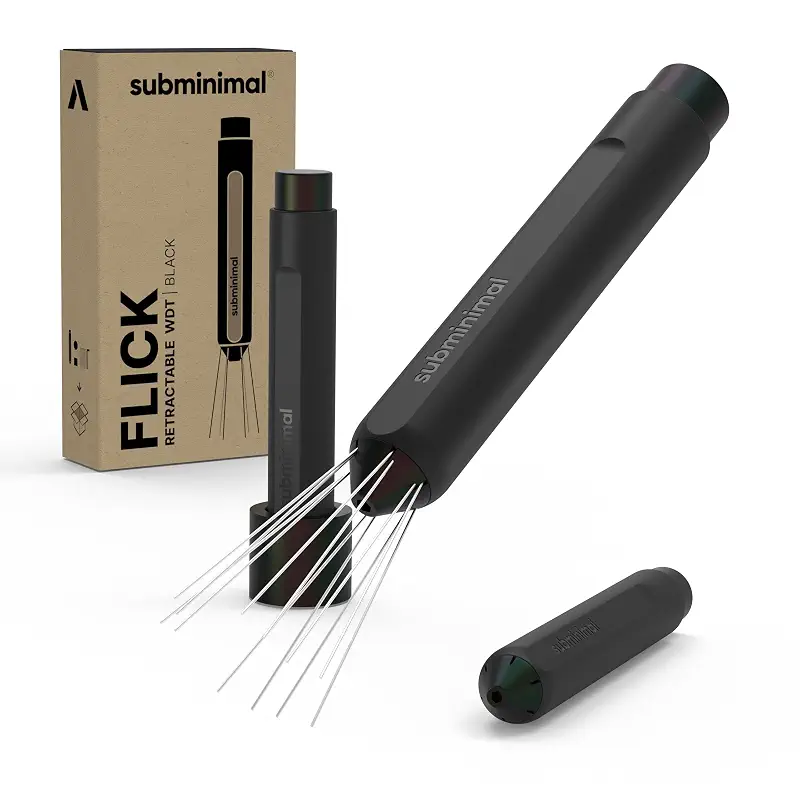
Subminimal Flick WDT Espresso Distribution Tool - Retractable Needle Tamper | Barista stirrer tool, coffee & espresso machine parts, includes two sets of replacement needles and base, magnetic release
4.7(803)
Premium retractable design with satisfying mechanics, excellent build quality, and protective needle storage.
Ideal for: Home baristas who value build quality, durability, and protection from bent needles.
The Subminimal Flick WDT stands out for its clever engineering. The retractable needle mechanism means the tool stays protected and ready to use without worrying about bent tines or needle damage during storage: a real problem with traditional fixed-needle designs. The magnetic release feels intuitive, and owners consistently praise how solid the build feels in hand. There's a playful element to the flick motion that makes the tool enjoyable to use, which matters when you're reaching for it multiple times daily.
The package includes two sets of replacement needles and mounting options (magnetic wall attachment, aluminum base, or standalone), giving you flexibility in how you store and display it. The slightly thicker stock needles come with an alternative curved hairpin-style set, letting you adapt the tool to your preference. One consideration: at three times the price of basic needle tools, the Flick asks you to value build, durability, and user experience alongside pure function.
Compared to the Normcore with its walnut handle and traditional 9-prong spread, the Flick trades a broader needle pattern for compact design and needle protection. If counter space is limited or you travel with your coffee gear, the Flick's retractable design has a real advantage. For anyone serious about espresso prep, this feels like the tool that rewards repeated daily use.
Pros
Retractable needles protect against damage and bending
Satisfying flick mechanism and premium feel in hand
Magnetic mount and stand options for flexible placement
Ideal for: Coffee enthusiasts who want a showpiece tool that performs professionally and complements high-end espresso gear.
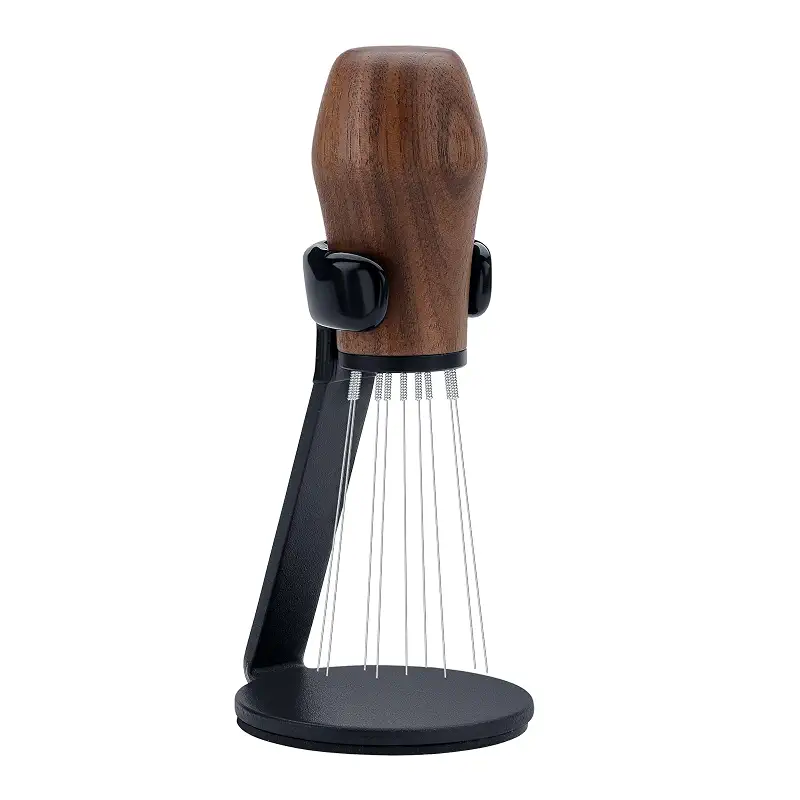
The Normcore V3 signals quality the moment you hold it. The walnut wood handle and CNC-machined aluminum body feel like a tool that belongs in a thoughtfully curated coffee setup, not tucked away in a drawer. The 9-prong needle configuration (offered in both 0.25mm and 0.3mm gauges) gives you broad coverage across the portafilter, and the ability to swap needle gauges lets you fine-tune your distribution style as you dial in.
Owners report that this tool delivers noticeably more even extractions and reduced channeling compared to simpler alternatives. The weighted stand keeps needles protected and the tool accessible, and the overall craftsmanship reflects Normcore's reputation for premium espresso accessories. One caveat worth noting: some buyers experienced slight tolerance issues during needle installation, with a few slots requiring patience to seat needles without bending them. This appears to be a QC variance rather than a design flaw, but it's worth being gentle during setup.
Where the Subminimal Flick prioritizes protection through retraction, the Normcore V3 commits to a traditional open design with premium materials and hand-feel. If you value beauty on your coffee bar and don't mind needles that sit exposed, this trades the Flick's compactness for a tool that feels like an investment piece.
Pros
Beautiful walnut handle with professional CNC-machined aluminum
Two needle gauges included for customization and dialing
Weighted stand keeps needles safe and tool readily accessible
Cons
Needle slot tolerance can require careful installation to avoid bending
Open design means needles need gentle handling and storage care
Key features
Nine needle slots with 0.25mm and 0.3mm stainless steel options
Handcrafted American walnut handle paired with anodized aluminum body
Included weighted stand with rubber-gripped base for counter stability
Professional-grade tool favored by baristas for consistent extractions
#3 Pick
Best Value
Wissxoer
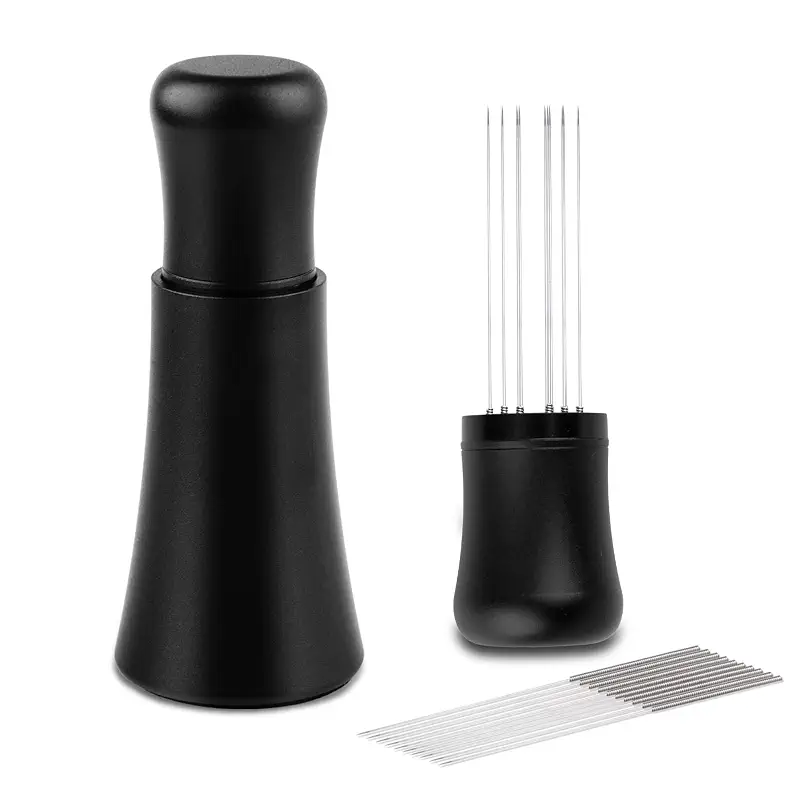
WDT tool, Espresso Distribution tools, 10 x 0.35mm 304 Stainless Steel Needles Installed with 10 Extra needles for Espresso Stirrer Replacement, Aluminum Alloy Handle with Stand (Matte black)
4.7(1,325)
Affordable all-aluminum design with ten needles installed, ten replacements, and sturdy stand for budget-conscious baristas.
Ideal for: Budget-conscious home baristas seeking reliable WDT performance without premium pricing.
The Wissxoer delivers serious value without sacrificing function or build. Ten 0.35mm needles come installed plus ten spares, giving you genuine replacements rather than just an upsell. The all-aluminum handle and base feel solid, with a matte finish that resists fingerprints and maintains a clean look on your counter. The removable needle design lets you dial the configuration to your preference: start with all ten, experiment with fewer, and adjust based on your grind and basket size.
Owners rave about how efficiently this tool breaks up clumps and distributes grounds evenly. The stand is particularly well-regarded; it's heavy enough to prevent tipping and designed so the tool nests neatly after each use, keeping your coffee station organized. One small consideration: the open base design means fine coffee dust can accumulate underneath, though this is minor and doesn't affect performance.
Compared to premium options like the Normcore V3 or Subminimal Flick, the Wissxoer doesn't prioritize hand-feel or design prestige. But for daily function and value-for-money, it punches above its price category. If you're building your first espresso kit or upgrading from a improvised needle setup, this tool offers exceptional return on investment.
Pros
Twenty total needles provide genuine spares and customization options
All-aluminum construction feels sturdy and resistant to corrosion
Heavy, stable base keeps tool protected and espresso station organized
Cons
Open base design allows dust accumulation underneath
Matte aluminum lacks the aesthetic refinement of walnut or retractable designs
Key features
Ten 0.35mm stainless steel needles installed with ten replacements
Removable needle configuration lets you dial from 3 to 10 needles
Heavy-duty aluminum alloy stand protects needles and nests tool neatly
Food-safe stainless steel with matte black finish for clean counter display
#4 Pick
Best for Beginners
Apexstone
Coffee Stirrer Tool, Coffee Stirring Tamper WDT Distribution Tool, Needle Distribution Tool Espresso, WDT Tool Espresso with Stand Black, WDT Tool Espresso Needle
4.6(112)
Entry-level tool with simple seven-needle setup, three replacements, and ergonomic grip for first-time users.
Ideal for: New home baristas or espresso machine owners exploring WDT for the first time.
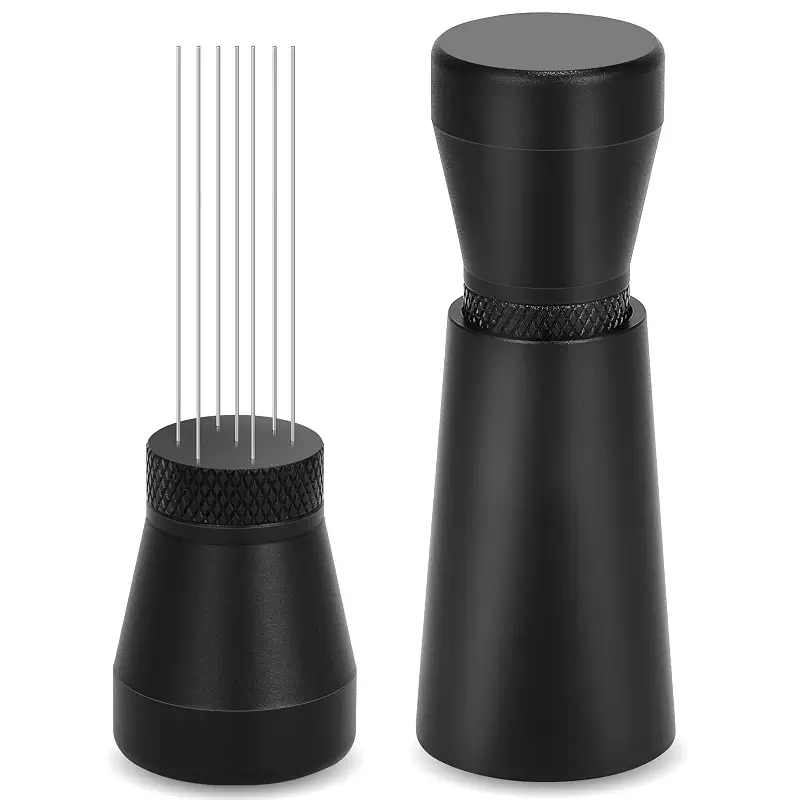
The Apexstone WDT strips the concept down to essentials without cutting corners on build. Seven 0.3mm needles offer a manageable starting point for someone new to distribution: fewer needles than the Wissxoer or Meion, but enough to cover a standard 58mm basket effectively. The ergonomic handle design prioritizes comfortable grip over flashy mechanics, and the aluminum base is straightforward and stable.
This tool includes three replacement needles and a small storage vial, which is practical for beginners who might bend a needle or two while learning. The assembly and disassembly are intuitive, so you're not wrestling with QC tolerance issues like some Normcore buyers reported. Owners appreciate the no-nonsense approach and note that it handles daily use reliably without fuss.
Where this sits differently from the Wissxoer is simplicity. The Wissxoer gives you twenty needles and full reconfiguration; the Apexstone assumes you'll keep seven needles in and move on. That trade-off makes sense for someone just starting out: fewer variables, less decision paralysis. However, if you think you'll want to experiment with needle counts as you refine your technique, the Wissxoer or Meion offer more flexibility.
Ergonomic handle with comfortable grip for learning curve
Three replacement needles and storage vial included for basics
Cons
Fewer total needles and replacements than mid-range alternatives
No magnetic or premium mounting options for display
Key features
Seven 0.3mm stainless steel needles offer straightforward distribution
Ergonomic aluminum handle designed for comfortable daily grip
Sturdy aluminum base with three replacement needles and storage vial
Intuitive assembly and disassembly for beginners without frustration
#5 Pick
Most Versatile
Meion
WDT Espresso Distribution Tool Espresso Stirrer Tools for Barista, 0.35mm 7 Needles Espresso Coffee Stirrer with Extra 7 Replaceable Needles, Aluminum Alloy Handle with Stand (Black)
4.6(1,593)
Seven needles with seven spares, removable configuration, storage tube, and anti-slip grip for flexible daily use.
Ideal for: Developing home baristas who want needle flexibility and durability without premium pricing or overwhelming choices.
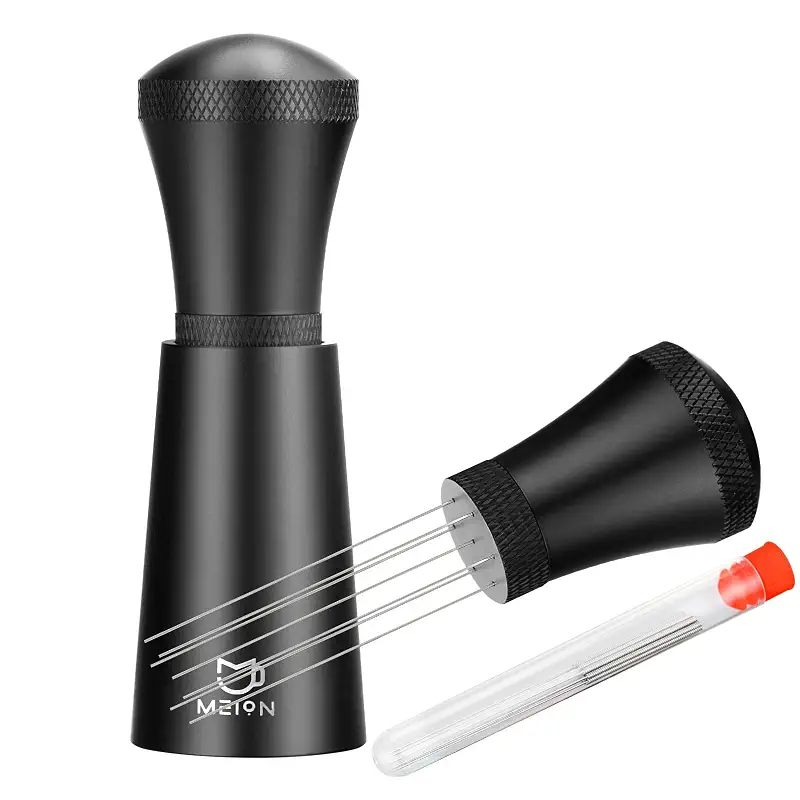
The Meion WDT splits the difference between the simplicity of the Apexstone and the expansive options of the Wissxoer. Seven 0.35mm needles installed, seven more in reserve, and a dedicated storage tube mean you're not fumbling for spares or improvising on the counter. The anti-slip handle pattern makes the tool reliable in wet hands, and the all-aluminum construction maintains durability without sacrificing clean aesthetics.
What sets the Meion apart is versatility without overcomplexity. You can run all seven needles, dial back to three or four in a custom pattern, or swap them out as they wear. The needle gauge sits between the Apexstone's 0.3mm and the Wissxoer's 0.35mm equivalent range, and owners report excellent clump-breaking and even distribution. The included storage tube keeps backup needles organized rather than loose in a drawer, which speaks to thoughtful design.
Compared to the WDT needle configuration guide and other tools in this lineup, the Meion feels purpose-built for baristas who want room to experiment without drowning in options. It's the sweet spot between the Apexstone's beginner-friendly setup and the Wissxoer's full reconfiguration. If you're past the learning phase but still dialing in your technique, this tool grows with your practice.
Pros
Removable needles allow customization from three to seven in any pattern
Fourteen total needles with dedicated storage tube keeps spares organized
Anti-slip handle provides reliable grip in wet hands during prep
Cons
Hollow base design allows coffee dust accumulation underneath
No magnetic mounting or premium aesthetic like walnut-handled options
Key features
Seven 0.35mm stainless steel needles with seven replacements included
Removable needle design supports 3 to 7 needle configurations
Anti-slip handle pattern for secure grip during daily coffee prep
Dedicated storage tube keeps replacement needles organized and accessible
How to Choose the Right WDT Tool for Your Setup
Four trade-offs that actually matter when matching a wdt to your kitchen.
Needle Count and Configuration
Needle count ranges from seven to ten in this lineup, and more needles doesn't always mean better results. Seven needles in a triangle or spread pattern often outperform ten needles cramped together, which can trap grounds rather than distribute them. The real value is in removable needles: tools like the Meion and Wissxoer let you experiment and settle on three to five needles once you dial in your grind. Start with fewer needles, add more if clumping persists, and adjust based on your grinder and basket size.
Needle Gauge and Material
Needle diameter ranges from 0.25mm to 0.35mm across these tools. Thinner needles (0.25mm) offer surgical precision for very fine distributions; thicker needles (0.35mm) are more durable and less prone to bending. Most buyers find 0.3mm to 0.35mm strikes the right balance: thin enough to break clumps without over-agitating, sturdy enough to withstand daily use. All these tools use 304 stainless steel, which resists rust and is food-safe.
Storage and Protection
Bent needles are the most common complaint with traditional WDT tools. The Subminimal Flick solves this through retraction; the Normcore and others rely on a weighted stand to keep needles safe when not in use. If you travel with your gear, live in a cramped kitchen, or want a tool that survives being tossed in a bag, retractable design is worth the premium. A WDT tool usage guide will help you understand how to protect needles during cleaning and storage, but design matters as much as technique.
Build Quality and Aesthetics
Budget tools like the Apexstone and Wissxoer prioritize function and value; mid-range options like the Meion add refinement; premium picks like the Normcore V3 prioritize hand-feel and display appeal. If your espresso setup includes high-end gear, walnut and CNC-machined aluminum feel cohesive on the counter. If you're building a kit on a budget, an aluminum tool that works reliably carries the same distributing power without the prestige markup. For coffee enthusiasts exploring broader beverage options beyond espresso, the best home nitro cold brew system offers an entirely different extraction approach, but both require precision preparation in their own way.
Replacement Needles and Long-Term Value
Check how many spare needles come with each tool and whether replacements are readily available. The Wissxoer and Meion come with generous spares; the Apexstone offers just three. Some tools allow needle customization or swapping between gauges, which extends usable life. Warranty support also matters: tools like the Apexstone offer a one-year guarantee, which protects your investment if manufacturing defects appear after purchase.
Frequently asked
Quick answers to the questions readers ask most.
Do I really need a WDT tool, or is a paperclip or toothpick enough?
A dedicated WDT tool works faster and more evenly than improvised needles, and it's designed to resist bending under repetitive use. A paperclip or toothpick might distribute grounds, but they're fragile and make it harder to maintain consistent technique. If you're serious about repeatable espresso, a proper WDT (even a budget one like the Apexstone) is a worthwhile upgrade that pays dividends in shot consistency.
How many needles should I actually use?
Start with three to five needles in a triangle or spread pattern. More needles can trap grounds rather than distribute them evenly. Most baristas find that three needles covering the basket diameter deliver the best balance of clump-breaking and ground movement. Tools with removable needles let you experiment and dial this in for your specific grind and basket size.
Can I use a WDT tool with a portafilter basket other than 58mm?
Yes. The needle spread on these tools ranges from about 30mm to 31mm in diameter, making them suitable for smaller baskets like the 45.5mm Flair Pro 3 and standard 58mm espresso baskets. A dosing funnel paired with your WDT prevents spillage and works with any basket size. Check the product specs if you're using a specialty basket smaller than 45mm.
What's the difference between 0.3mm and 0.35mm needles?
The difference is minimal in practice. 0.3mm needles offer slightly finer precision and distribute with minimal disruption; 0.35mm needles are marginally more durable and less prone to bending during aggressive stirring. Either gauge works well for home espresso. If you break needles frequently, thicker 0.35mm is forgiving; if you prefer surgical precision, thinner 0.3mm delivers it.
How often should I replace WDT needles?
With daily use, needles typically last several months before bending or losing sharpness. Tools that include generous spares (like the Meion or Wissxoer with seven to ten backups) keep you supplied for a year or more of casual use. Replacement needles are widely available on Amazon if you need them, though buying a new tool sometimes costs less than a needle set.