Best Ways to Beat Your Meat: Top Tools for Tender Results
Master ground beef breakdown and meat tenderizing with our guide to the best meat choppers, mallets, and needle blade tools. Compare top-rated options.
Ideal for: Cooks who brown ground meat multiple times a week and value speed and even texture.
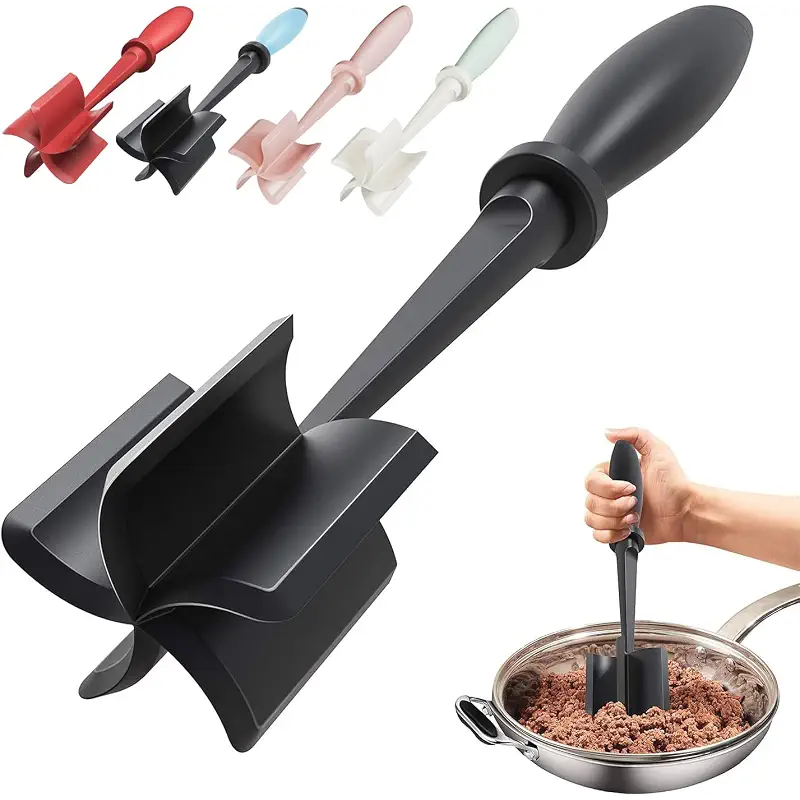
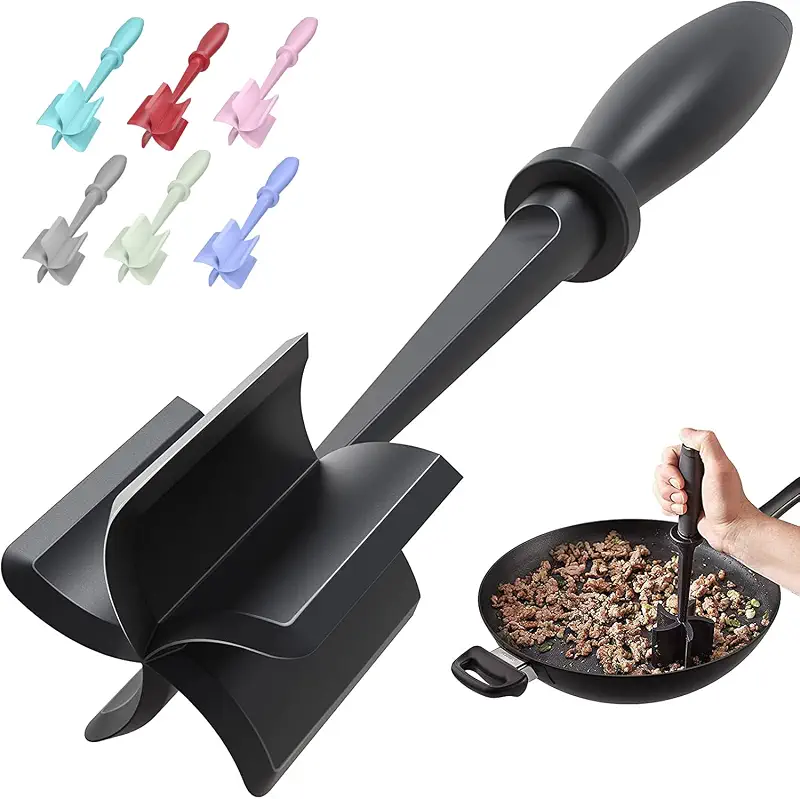
I'd recommend the Pgyard as the go-to choice for anyone browning ground beef regularly. The five-blade pinwheel design covers more pan surface with each press than single-blade tools, cutting cook time noticeably and creating uniform texture that helps meat brown evenly. Owners consistently note how much faster it chops compared to the back-of-a-spoon method, and the nylon construction won't scratch nonstick surfaces the way metal tools do.
The heat resistance up to 447°F means you can leave it resting in the pan without worry, and cleanup takes seconds. For everyday cooks juggling multiple dishes, that efficiency compounds: one less thing requiring attention mid-prep. The comfortable grip matters too; if you're breaking up a pound of meat for chili or pasta sauce, hand fatigue disappears.
Where it falls slightly short is in heavier mashing tasks (potatoes, beans). The blade design excels at ground meat but isn't quite as powerful as a dedicated masher for whole vegetables. If your cooking revolves around beef, turkey, and sausage, that's a non-issue. For cooks who also want one tool for potatoes and fruit, a traditional potato ricer might still earn counter space.
Pros
Five-blade design covers more surface per press
Heat resistant nylon safe for nonstick cookware
Creates uniform crumbles for even cooking
Fast cleanup, dishwasher safe
Cons
Less effective for whole vegetables or potatoes
Food can climb blade edges; needs occasional spatula help
Key features
Five wide beveled pinwheel blades for rapid ground meat breakdown
Heat-resistant food-grade nylon, safe to 447°F
Ergonomic handle with non-slip grip to reduce hand fatigue
Dishwasher-safe with anti-dirt, non-stick surface design
#2 Pick
Best Premium Dual-Sided Mallet
Kitexpert
KITEXPERT Meat Tenderizer Hammer with Comfortable-Grip Handle, Dual-side Mallet for Kitchen, Heavy Duty Pounder For Tenderizing Steak, Beef and Fish
4.8(6,225)
Ergonomic aluminum hammer with textured and smooth sides handles both tenderizing and flattening with balanced weight and professional-grade durability.
Ideal for: Home cooks who grill or pan-sear steaks, chicken breasts, and other cuts needing pre-cook tenderizing.
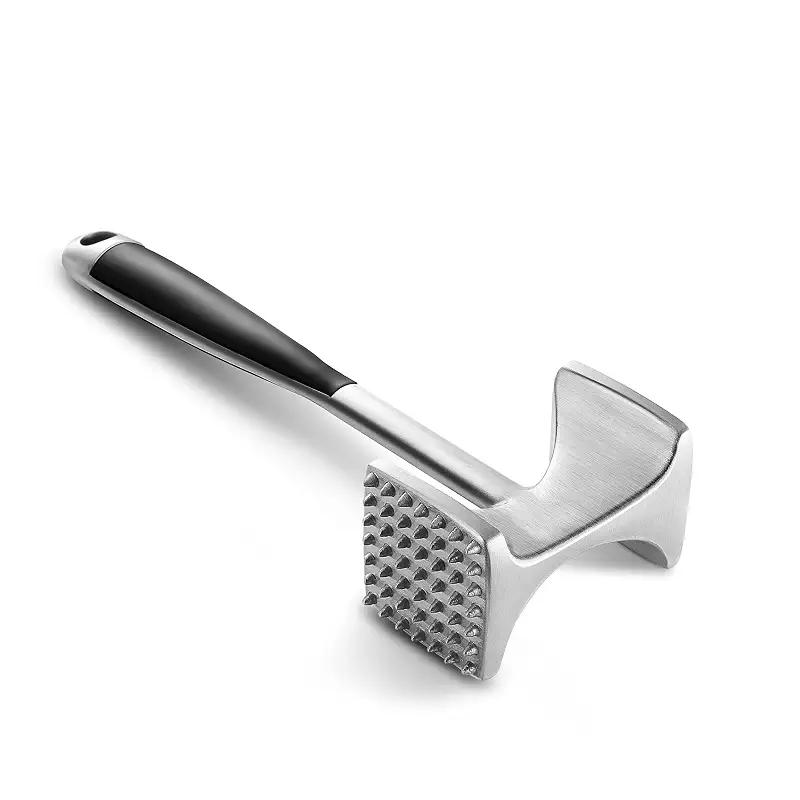
The Kitexpert stands out for serious home cooks who tenderize steaks and pound chicken regularly. The dual-sided design gives you textured spikes on one face for breaking down tough muscle fiber and a smooth side for flattening cutlets without tearing: a versatility most single-purpose tools skip. At 9.5 ounces, the weight feels purposeful without straining your wrist; the mallet and gravity do the work together, not against each other.
Owners praise the ergonomic handle that actually fits your hand, a detail that separates competent tools from ones you actually reach for. The aluminum construction keeps it lightweight enough for extended prep sessions but substantial enough to deliver real tenderizing force. Where the Shadowgallery Upgrade Meat Chopper excels at breaking up already-cooked ground meat, this hammer works on raw cuts before cooking, addressing a different cooking need entirely.
The one trade-off: it's a single-task specialist. If your cooking involves mostly ground meat, the pinwheel chopper covers more ground (literally). But for anyone who seasons with marinades or works with tougher cuts regularly, the investment pays for itself in tenderer, more flavorful results.
Pros
Balanced weight distributes force efficiently without wrist strain
Dual-sided design: textured and smooth surfaces in one tool
Ergonomic grip fits hand naturally for better control
Dishwasher-safe aluminum construction resists rust
Cons
Specialized for raw cuts, not ground meat breakdown
Heavy enough that it demands proper storage space
Key features
Dual-sided head: textured spikes and smooth face for versatile use
Aluminum construction at 9.5 ounces, balanced for gravity-assisted force
Ergonomic handle designed for natural grip and fatigue reduction
Dishwasher-safe, recommended hand wash for longevity
Ideal for: Budget-conscious cooks building their first set of meat-prep tools or outfitting a rental kitchen.
The Shadowgallery delivers nearly identical functionality to the Pgyard at a notably friendly price. The five-blade pinwheel design, heat resistance to 428°F, and food-grade nylon construction check the same boxes. For cooks who want to break ground beef into uniform crumbles without overextending budget, this lands squarely in the value sweet spot. The ergonomic handle curves to fit your palm, and buyers report it feels more durable than the plastic-y tools littering discount bins.
One consistent note from reviews: food sometimes climbs the blade edges during mixing, requiring a spatula to push it back down. It's a minor rhythm adjustment rather than a defect, but if you're multitasking and can't hover over the pan, it's worth knowing. The Pgyard's slightly wider blades may handle this marginally better, but the difference is negligible for most kitchens. Heat resistance sits just under the Pgyard (428 versus 447°F), but still safe for everyday stovetop use.
This is the smart choice if you're stocking a first kitchen or cooking on a tighter budget. You're not sacrificing performance: just the brand premium.
Pros
Five-blade design creates even crumbles like premium competitors
Upgraded food-grade nylon feels durable and lasts well
Heat resistant to 428°F, safe for nonstick cookware
Comfortable ergonomic handle reduces hand strain
Cons
Food occasionally climbs blade edges, requires minor intervention
Surface finish slightly less premium than top-tier options
Key features
Five wide beveled pinwheel blades for efficient ground meat breakdown
Upgraded food-grade nylon, heat-resistant to 428 degrees Fahrenheit
Ergonomic handle designed to fit hand curve and improve grip
Dishwasher-safe with anti-dirt surface, rust-proof construction
#4 Pick
Best for Tough Cuts and Marinade Absorption
Lzonstk
Meat Tenderizer with 48 Stainless Steel Ultra Sharp Needle Blades Heavy Duty Cooking machine for Tenderizing Beef, Turkey, Chicken, Steak, Veal, Pork, Fish etc
4.7(3,479)
Forty-eight stainless steel needle blades pierce meat to create channels for marinades, reducing cook time and transforming budget cuts into tender results.
Ideal for: Grilling enthusiasts and budget-conscious cooks who buy tougher cuts and rely on marinades and technique.
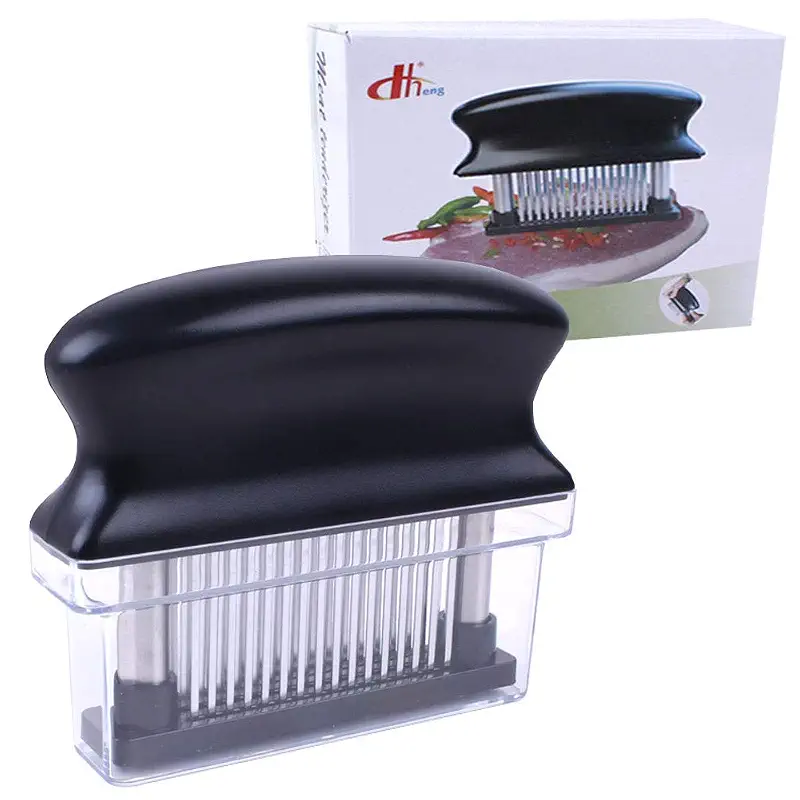
The Lzonstk takes a fundamentally different approach from choppers and mallets. Instead of flattening or breaking meat into bits, the needle blade design perforates muscle tissue, creating channels that let marinades penetrate deeper and heat distribute more evenly. Buyers report that tough, inexpensive cuts become surprisingly tender after treatment, and marinade flavor reaches throughout instead of just coating the surface. The claim that it lowers cooking time by up to 40 percent aligns with owner experiences: the channels do meaningful work.
At 48 stainless steel blades, this feels like a specialist tool, and it is. If you regularly work with London broil, round roast, or chicken breast and want restaurant-quality results without premium cuts, the investment makes sense. Where the Kitexpert hammer works best on inherently tender meat that needs flattening and tenderizing, this needle blade system rebuilds tougher meat into submission. The spring-loaded mechanism expands on pressure and retracts when released, making it surprisingly safe and foolproof to use.
The trade-off is specificity. This doesn't help with ground beef, won't flatten cutlets, and demands more cleaning attention than simpler tools. It's not a multi-purpose kitchen gadget: it's a budget-meat rescue mission.
Pros
Forty-eight sharp steel blades create deep marinade absorption channels
Spring-loaded mechanism expands on press, retracts when released
Dramatically improves texture and tenderness of tough, inexpensive cuts
Includes protective storage case; dishwasher-safe
Cons
Specialized tool, not useful for ground meat or flattening cutlets
Requires careful cleaning to prevent blade dullness over time
Ideal for: Home cooks seeking a durable, premium mallet for regular tenderizing and flattening of whole cuts and poultry.
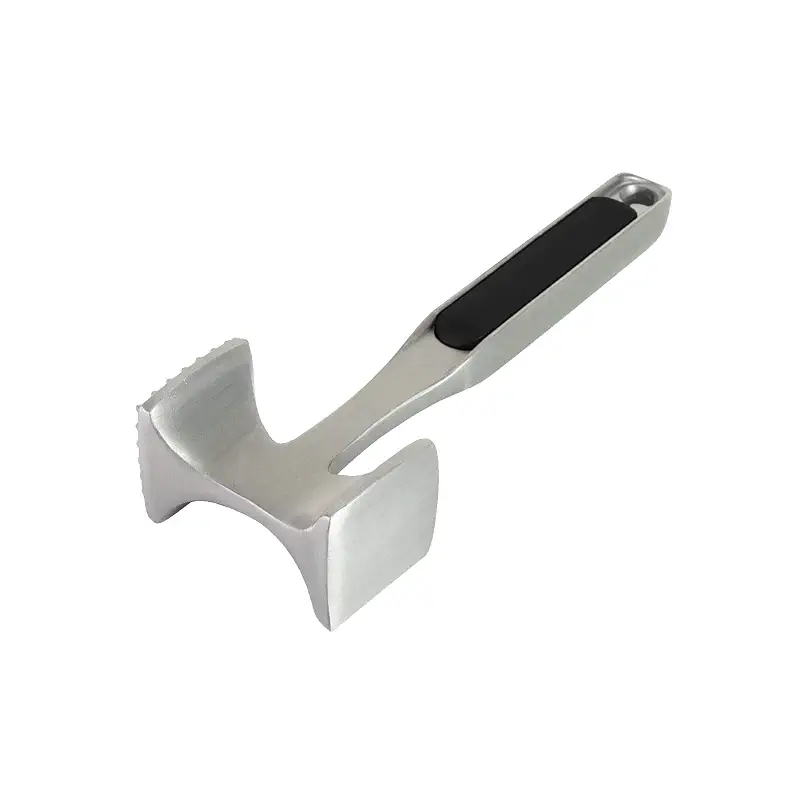
This KitchenAid mallet is the premium choice for cooks who tenderize regularly and want a tool that won't fail. The aluminum construction feels genuinely solid: no flex, no looseness, no cheap components compromising years of service. The weighted head provides momentum so you're not muscling the mallet; the tool does the work. Owners consistently compare it favorably to lighter, cheaper mallets that require excessive force or feel flimsy after a season.
The textured side is aggressive enough to break down connective tissue in serious cuts, while the smooth side flattens chicken and veal without shredding. The hang hole in the handle is thoughtful: you're not burying this in a drawer with spatulas and whisks. Unlike the hammer versus needle blade tenderizers, which occupy different niches, this mallet bridges between casual flattening and serious meat work. If you meal-prep chicken breasts weekly or grill marinated steaks regularly, the comfort and durability justify stepping up from entry-level options.
The only limitation is category: this is a mallet, not a chopper. Ground beef needs a different tool. But for any cook who works with whole cuts, this is the investment piece that lasts a lifetime.
Pros
Substantial aluminum weight provides momentum without wrist strain
Dual-textured head: spikes and smooth side for all tenderizing needs
Balanced design and ergonomic handle reduce hand fatigue
Built for durability with KitchenAid's reputation backing it
Cons
Higher entry cost than budget alternatives
Hand wash recommended; not dishwasher-safe for longevity
Key features
Lightweight aluminum construction, substantial head weight for efficient force
Dual-sided design: textured spikes and smooth flattening face
Ergonomic non-slip handle with convenient hang hole for storage
Lifetime limited warranty backing decades of everyday kitchen use
How to Choose the Right Meat Tool for Your Kitchen
Four trade-offs that actually matter when matching a ways to beat your meat to your kitchen.
Ground Meat vs. Whole Cuts
The first decision shapes everything. Are you breaking down ground beef, turkey, or sausage as it cooks? A pinwheel chopper (Pgyard or Shadowgallery) is your answer: fast, efficient, and purpose-built for that job. If you're working with whole cuts (steaks, chicken breasts, pork chops) you need a mallet or needle blade tool instead. Ground meat has already lost its fiber structure; whole cuts haven't. This distinction alone eliminates three-quarters of confusion.
Mallet Design: Flat vs. Textured
Dual-sided mallets like the Kitexpert and KitchenAid offer versatility. The textured (spiky) side breaks down tough muscle fiber and opens the meat to marinade absorption. The smooth side flattens cutlets to uniform thickness without tearing. If you only flatten chicken breasts, a smooth mallet works. But if you grill marinated steaks or tenderize before cooking, textured faces earn their place. Consider how you actually cook, not what a tool theoretically could do.
Specialty Tools: Needle Blades and Budget Leverage
Needle blade tenderizers (like the Lzonstk) occupy a niche but a valuable one. They're not replacing mallets or choppers: they're solving the problem of tough, inexpensive meat cuts. If your cooking strategy involves buying budget cuts and improving them through marinades and technique, needle blades reduce cook time and improve tenderness dramatically. Skip this if you buy premium cuts or mostly work with ground meat. But for grilling enthusiasts on budget, proper meat tenderizing technique combined with a quality needle blade is transformative.
Material and Heat Resistance Matter
Nylon choppers resist heat to 428-447°F, aluminum mallets don't need that spec (they stay in your hand, not the pan), and stainless steel needle blades are nearly indestructible. Nylon is safe for nonstick cookware, won't scratch your pans, and cleans easily. Metal mallets are heavier and more durable for years of use. Choose based on what you'll actually do: if you rest the tool in the pan while cooking, heat resistance matters. If you hand it after each use, durability and comfort matter more.
Frequently asked
Quick answers to the questions readers ask most.
Can I use a meat chopper on nonstick pans without damage?
Yes. Nylon choppers like the Pgyard and Shadowgallery are specifically designed for nonstick surfaces and won't scratch them. Metal tools and traditional metal mallets can scratch, so if you have nonstick cookware, stick to nylon for chopping. Metal mallets (like the KitchenAid) are primarily for pounding raw meat on a cutting board, not in the pan, so they sidestep the issue.
Is a meat mallet worth it if I mostly cook ground beef?
No. Mallets tenderize whole cuts before cooking; choppers break up already-cooking ground meat. If ground beef is 90 percent of your meat prep, a pinwheel chopper is your tool, and a mallet would collect dust. Mallets shine for grilled steaks, baked chicken, or marinated pork: if that's not your routine, don't force it.
How do needle blade tenderizers actually improve meat?
They perforate muscle tissue, creating tiny channels that allow marinades to penetrate deeper and heat to distribute more evenly during cooking. This reduces cooking time and improves tenderness in tough cuts. Think of it as pre-breaking the fibers so cooking finishes faster. They work best on whole cuts like roasts and thick steaks, not ground meat.
What's the easiest meat tool to clean?
Pinwheel choppers are the simplest: food doesn't stick to nylon, and they rinse clean in seconds or go straight in the dishwasher. Mallets require hand washing to preserve the handle, but the head itself is straightforward. Needle blade tenderizers demand more attention because food can lodge between blades, but they include brushes and come with protective cases to help.
Can I use these tools for non-meat foods?
Yes, but with limits. Choppers work on soft vegetables, fruits, and gelatin. Mallets crush ice, crack nuts, and smash garlic. Needle blades are meat-specific and less useful elsewhere. If you want one tool to do everything, a mallet is most versatile, but it won't replace a dedicated potato ricer or masher for serious vegetable work.