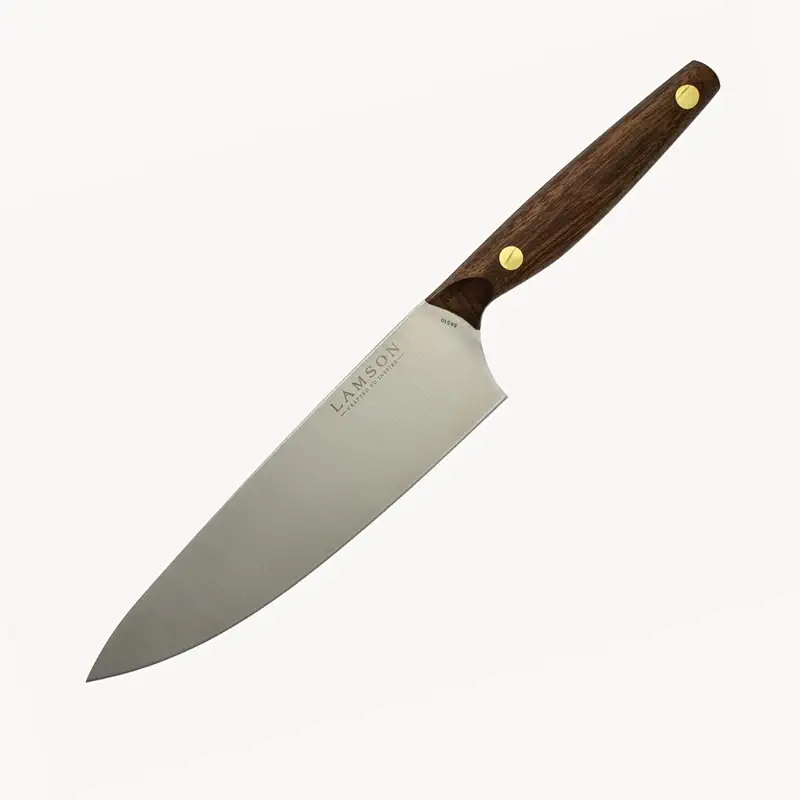
Ideal for: Home cooks who want American-made quality with reliable edge retention and beautiful aesthetics.
The Lamson Vintage 8" chef's knife earns its place at the top because it balances aesthetics with serious kitchen performance. Owners consistently praise the weight and balance: the blade does much of the work for you, which matters over a full day of prep. The hi-carbon stainless steel holds an edge well and resists corrosion without demanding the constant upkeep that pure carbon steel requires. The walnut handle is dense and comfortable, though owners note the knife can be front-heavy, which actually adds to cutting power if you prefer a rocking motion rather than a slicing stroke.
One trade-off: it arrives razor-sharp, which is excellent for performance but demands respect in the kitchen. The synthetic resin handle feels premium, though each one arrives slightly different in appearance. For someone building a serious home knife collection or upgrading from entry-level cutlery, this knife justifies its investment in both function and American-made pride.
Compared to the Ontario Old Hickory's carbon steel and the Hoshanho's Japanese approach, this sits in a sweet middle ground: stainless enough for everyday care, but with a weight and finish that feels special every time you pick it up.
Pros
Exceptional sharpness and balance right out of the box
Full bolster tapered at base for easier honing
Made in USA with visible craftsmanship and finish
Cons
Front-heavy design requires adjustment if you prefer lighter blades
Very sharp edges demand careful handling and proper technique
Key features
Hi-carbon stainless steel blade tempered to 58 Rockwell hardness
8-inch chef's knife with full bolster and double riveted walnut handle
Polished finish with tapered bolster for precision honing
Made entirely in the USA with hand finishing and proprietary sharpening
#2 Pick
Best Budget Pick
Ontario Knife Company
Ontario Knife Company Old Hickory OH7026 kitchen knife,Brown
4.6(909)
Tough 1075 carbon steel at an unbeatable price, ideal for camp or casual kitchen use with willingness to maintain a patina.
Ideal for: Budget-conscious cooks, campers, and knife enthusiasts who don't mind carbon steel maintenance.
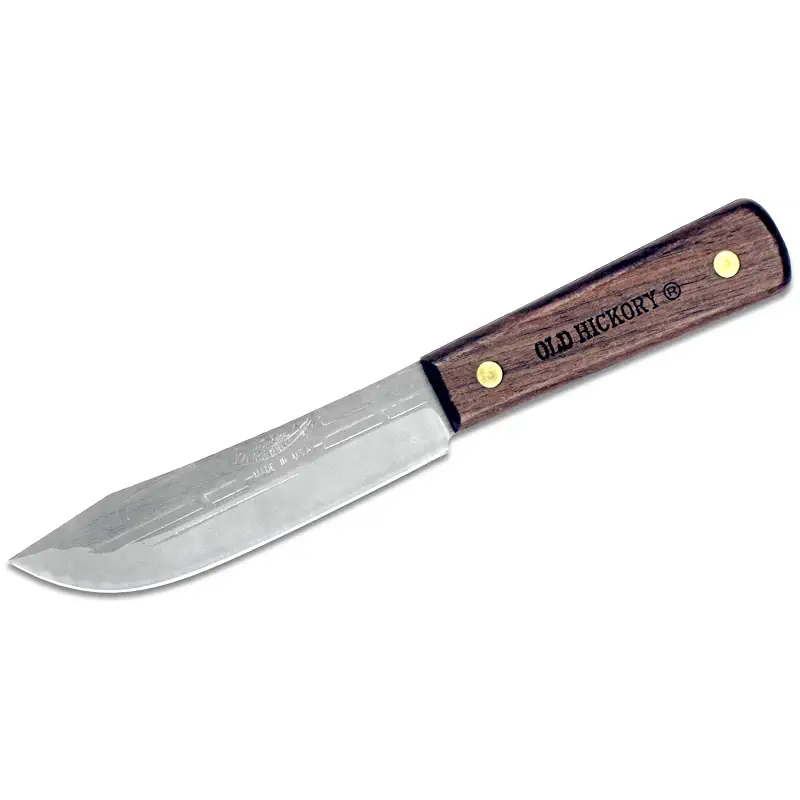
Ontario's Old Hickory line represents working-knife value that's hard to beat. The 1075 carbon steel is a pragmatic choice: tougher than premium 1095 yet sharpens easily and holds an edge through a full camping trip or a week of home cooking. Owners love that this knife arrives sharp enough for serious tasks and costs so little that damage or loss stings far less than a premium blade would. The high belly and generous curve make it comfortable on a low or awkward cutting surface, which is particularly useful if you're working outdoors.
The trade-off is upkeep. Carbon steel demands respect: it rusts if neglected, so owners develop a routine of light oiling and forced patina (sometimes using cold gun bluing for aesthetics). This isn't complicated, but it's a step beyond the wash-and-go experience of stainless knives. Compared to the Lamson Vintage 8", this trades polish and American finishing pride for ruggedness and cost. It's the knife you grab without anxiety, sharpen yourself when needed, and hand to a friend without worry.
If you're new to kitchen knives or want a backup blade for heavy work, this is the sensible start.
Pros
Extremely affordable with excellent out-of-the-box sharpness
Tough 1075 steel that sharpens quickly and easily
Includes sheath for safe transport and storage
Cons
Carbon steel requires regular oiling and patina management to prevent rust
Demands more frequent maintenance than stainless alternatives
Key features
1075 carbon steel blade with excellent edge-holding for the price
Generous belly and curve ideal for rocking and slicing motions
Comes with protective leather sheath for transport
Simple wood handle that sharpens easily with basic tools
Ideal for: Home cooks wanting matched Lamson knives without the larger investment of a full set.
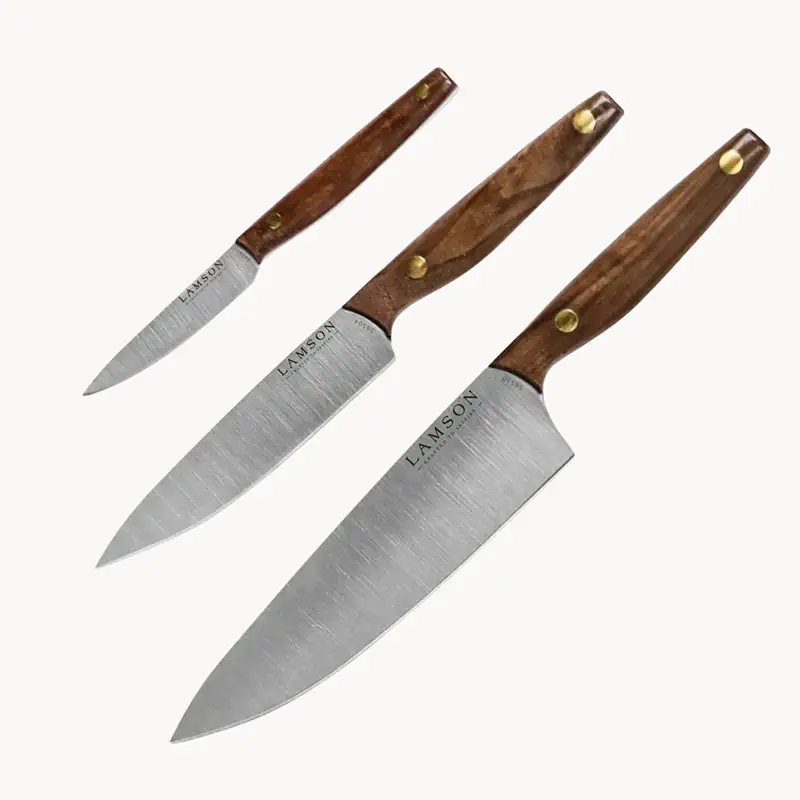
The Lamson Vintage 3-Piece set bundles the 8" chef's, 6" utility, and 3.5" paring knife in a coordinated package. The chef's and utility knives draw the same praise as the standalone Lamson 8": sharp, balanced, and beautifully finished. The pinch-grip bolster design suits both traditional and modern cutting techniques, and walnut handles tie the set together visually and tactilely. For cooks who prefer matched tools and don't want to shop separately, this set saves decision fatigue.
Owner reviews split on the paring knife: some find it perfectly weighted and handy, while others with larger hands feel it lacks heft and control. One reviewer noted the blades weren't as sharp as expected and dulled faster than anticipated, which is a real concern given Lamson's reputation. Another reported unresponsive customer service when quality issues arose, which flags a potential gap in support. The best path forward is realistic expectations: the chef's and utility knives deliver solid performance, but inspect the paring knife fit before committing, and test sharpness immediately upon arrival.
Where the 5-piece Deluxe set adds breadth, this three-piece focuses on the core tools most kitchens actually use daily.
Pros
Chef's and utility knives earn strong marks for balance and finish
Coordinated walnut handles and brassing create cohesive kitchen look
Versatile trio covers most everyday cutting tasks
Cons
Paring knife fits some hands poorly and may lack weight for control
Sharpness can vary; some units arrive duller than expected
Key features
Three complementary knives: 8" chef's, 6" utility, 3.5" paring
Hi-carbon stainless steel with tapered bolster for traditional or pinch grip
Precision laser-cut blades tempered to 58 Rockwell hardness
Matching walnut handles with brass rivets and traditional vintage styling
#4 Pick
Best Premium Set
Lamson
Lamson Vintage 5-Piece Deluxe Chef’s Set - Walnut Handle
5.0(5)
Five comprehensive Lamson vintage knives including cleaver, covering every specialized cutting task with matched American craftsmanship.
Ideal for: Dedicated home cooks and entertainers wanting a complete matched knife system made in America.
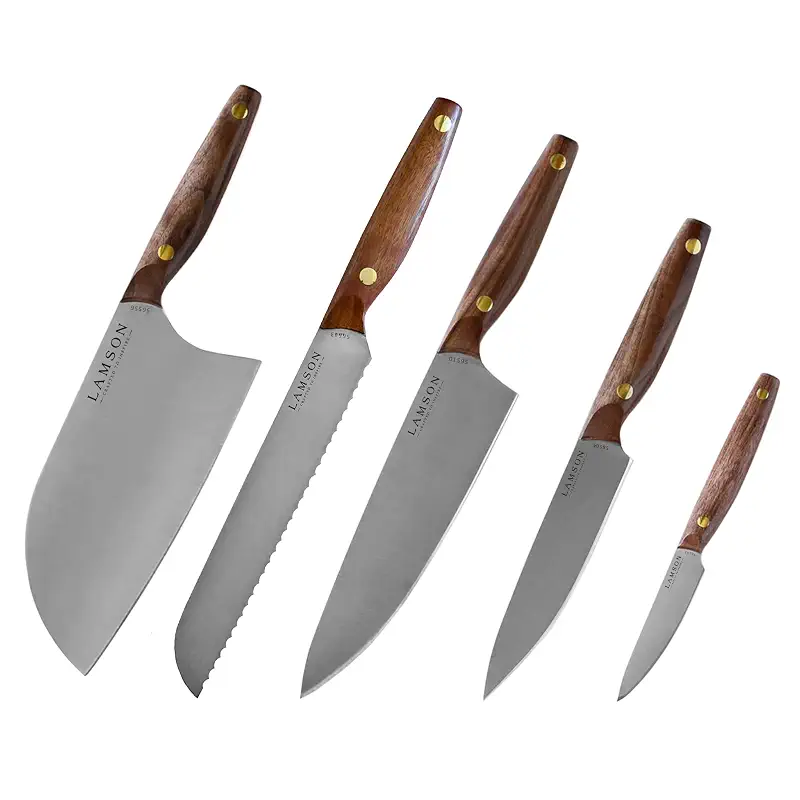
The Lamson Vintage 5-Piece Deluxe set expands the collection to include a cleaver and bread knife alongside the core chef's, utility, and paring blades. This is the choice for cooks who want one matched system for everything: butchering and breaking down proteins with the cleaver, slicing rustic loaves without crushing them, and handling produce and finishing work with the remaining three. Owners rave about the feel, sharpness, and American-made pride: the set arrives ready to work and looks beautiful sitting in a block or displayed on a magnet.
The trade-off is scope and cost. Not every cook needs a cleaver, and a bread knife is specialized enough that casual kitchens might never use it. If you're buying more knife than you'll realistically deploy, the 3-piece set offers better value. That said, for home cooks who entertain regularly, preserve their own food, or simply love the visual and tactile experience of matched, heirloom-quality tools, this set rewards the investment. Compared to building a collection piecemeal, the 5-piece delivers coordination and confidence: you know every blade shares the same forging standard and finish.
Owner feedback is minimal but uniformly positive, suggesting these sets find their way into kitchens where they're truly used and appreciated.
Pros
Comprehensive five-knife lineup covers specialized and everyday tasks
All blades match in quality, aesthetic, and hand-feel
Polished hi-carbon stainless with tapered bolster across the set
Cons
Larger investment suitable only if you'll actually use all five knives
Cleaver and bread knife are specialized and not all kitchens need them
Key features
Five knives: cleaver, chef's, utility, bread, and paring in one set
Hi-carbon stainless steel blades tempered to 58 Rockwell
Ergonomic walnut handles with sleek bolster and brass rivets
Precision laser-cut, hand-finished, and proprietary-sharpened in Massachusetts
#5 Pick
Best Japanese Alternative
Hoshanho
HOSHANHO Kitchen Knife in Japanese High Carbon Steel, Professional High-Class Chef's Knife 8 inch, Non-slip Ultra Sharp Cooking Knives with Ergonomic Handle | Multifunctional, 10Cr15CoMoV, Home Gifts
4.7(2,722)
Japanese hi-carbon steel chef's knife with aggressive 13-degree edge and ergonomic wood handle: excellent sharpness at a competitive price point.
Ideal for: Experienced home cooks and professionals seeking Japanese-style sharpness with reliable edge retention.
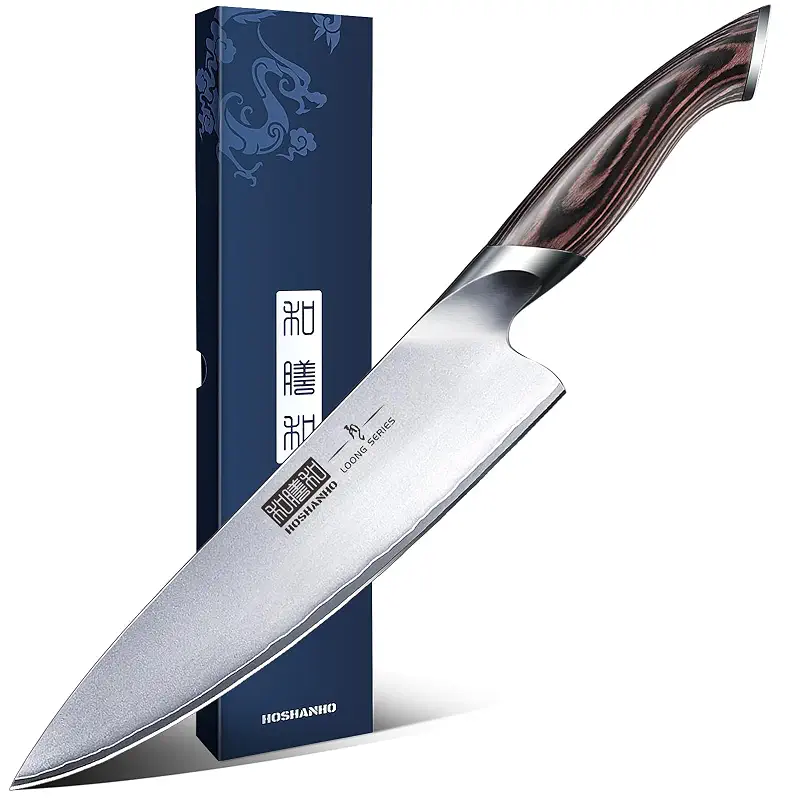
The Hoshanho 8" knife brings Japanese steel geometry to the vintage-style category, and the 13-degree edge angle is noticeably sharper than Western chef's knives typically ship with. The steel is harder than American hi-carbon stainless (60 HRC versus 58), which means it holds an edge longer but also requires slightly more careful honing. Owners (including professional chefs and serious home cooks) report that this blade cuts with minimal effort and maintains its edge through extensive use. The sloped bolster and wood handle encourage proper pinch grip, and the matte blade finish is both functional and visually appealing.
One consideration: this is a more specialized tool than the Lamson offerings. The sharper angle and harder steel demand better cutting technique and a respectful sharpening routine. Dishwashers are absolutely forbidden (true of all quality kitchen knives, but worth emphasizing here). For cooks comfortable with hand-washing and occasional stropping, the Hoshanho delivers performance that rivals knives costing twice as much. Compared to the American Lamson knives, you're trading some visual polish for aggressive cutting geometry and edge retention. Where the Lamson feels like an heirloom, the Hoshanho feels like a working tool that happens to be beautifully made.
This is the knife for cooks who've used quality blades before and know how to care for them.
Pros
Exceptionally sharp 13-degree edge that cuts with minimal effort
60 HRC hardness holds edge longer than softer stainless alternatives
Ergonomic sloped bolster and wood handle encourage safer pinch grip
Cons
Sharper angle requires better technique and more frequent honing attention
Higher hardness makes it less forgiving if struck or misused
Key features
Japanese high-carbon steel hardened to 60 HRC
Hand-sharpened to 13 degrees per side for aggressive cutting geometry
Ergonomic wood handle with sloped bolster for proper pinch grip
Matte finish blade with ice-tempering and heat-treating for corrosion resistance
How to Choose a Vintage Kitchen Knife
Four trade-offs that actually matter when matching a vintage kitchen knife brands to your kitchen.
Steel Type and Maintenance
The choice between carbon and stainless steel shapes your entire ownership experience. Carbon steel (like Ontario Old Hickory's 1075) is tougher and sharpens easily, but rusts if neglected and requires regular oiling or forced patina. Stainless steel (Lamson and Hoshanho) resists corrosion and demands less fussing, though it's harder to sharpen at home. Japanese hi-carbon stainless splits the difference: resistant to rust but requiring more careful honing than pure stainless. Consider how to clean and maintain: if you prefer wash-and-done, stainless makes sense; if you enjoy ritual upkeep, carbon becomes part of the craft. The vintage aesthetic appeals across both, but maintenance burden differs sharply.
Hand Fit and Balance
Vintage kitchen knives vary dramatically in how they sit in your palm. Some knives (like the Lamson Vintage 8") arrive front-heavy, which can be an asset or burden depending on whether you rock-chop or slice. Wood handles feel warmer and grip better when dry than synthetic resin, though synthetic holds up longer if your kitchen runs wet. Smaller hands may struggle with full-size chef's knives; paring and utility blades become more practical. The bolster design matters too: a tapered bolster (Lamson) eases honing, while a full bolster (traditional Western style) provides more weight and protection. Visit a shop if possible and hold candidate knives before deciding; online returns exist, but hand-fit is personal.
Edge Sharpness and Geometry
Vintage versus modern knife design reflects different philosophies about how a blade should work. Vintage Western knives (like Ontario Old Hickory) have generous belly and curve for rocking motions, while Japanese-style blades (Hoshanho) favor a straighter edge and sharper angle for pushing and slicing without lifting. Sharpness out of the box varies: the Lamson and Hoshanho arrive aggressively sharp, while some Lamson set units have arrived duller. If hand-sharpening intimidates you, pick a knife you're confident you'll touch up regularly, or accept that you'll send it out for professional work annually. Harder steel (like Hoshanho's 60 HRC) holds edge longer but demands more skill to resharpen correctly.
Set vs. Individual Knives
Building a matched set appeals aesthetically, but practical kitchens often use only two or three blades regularly. The Lamson 3-piece covers most tasks (chef's for vegetables and meat, utility for smaller work, paring for delicate detail), while the 5-piece adds specialty knives that sit unused in many homes. Starting with a single excellent chef's knife and adding only if you discover a real need is a cheaper path to a working block. That said, matched vintage sets have appeal beyond function: they look heirloom-worthy and feel cohesive in hand. Weigh whether that aesthetic value justifies the investment, or whether you'd rather spend less on individual blades you'll actually use daily.
American-Made vs. Japanese Imports
Lamson and Ontario Old Hickory are American-made, which carries cultural and economic appeal for many buyers. American knives tend toward heavier, fuller bolsters and gentler geometry, reflecting Western kitchen tradition. Japanese-made knives (like Hoshanho) bring precision heat-treating and sharper angles, reflecting a different cutting philosophy. Neither is objectively better: it depends on whether you prioritize feeling like you're using an American heirloom, or whether you value the specific performance attributes of Japanese steel and geometry. Price overlaps considerably. Hoshanho often costs less than Lamson despite comparable quality, while Ontario Old Hickory undercuts both. Your choice here is as much cultural as technical.
Frequently asked
Quick answers to the questions readers ask most.
What's the difference between vintage and modern kitchen knives?
Vintage versus modern knife design reflects shifting kitchen priorities. Vintage Western knives prioritize weight, a generous belly curve for rocking motions, and simple steel: they're built for butchering and rough prep work. Modern knives (including modern takes on vintage styles) often favor lighter weight, straighter blades, and harder Japanese steels for cleaner slicing and longer edge retention. Vintage-style knives available today blend the aesthetic of classic designs with modern metallurgy and heat-treating, giving you the look of heritage with better rust resistance and edge-holding than original vintage blades.
Do I really need a full knife set, or can I get by with just a chef's knife?
Most home cooks use only a chef's knife and a paring knife for 90 percent of work. A full set (cleaver, bread knife, utility, etc.) is luxury if you regularly butcher whole animals or bake rustic loaves. Start with a quality 8-inch chef's knife and add a paring knife if detailed work frustrates you. Buy a utility knife only if you find yourself reaching for something between the chef's and paring sizes, which happens in some kitchens and not others. This approach costs less and prevents you from maintaining blades you don't use.
Can I put vintage kitchen knives in the dishwasher?
No. No quality kitchen knife (vintage or modern) belongs in a dishwasher. The combination of high heat, harsh detergent, and banging against other dishes dulls edges, corrosion and mineral spotting on stainless blades, and loosens handles over time. Hand-wash with warm soapy water, dry immediately, and store in a block, on a magnetic strip, or with a blade guard. This takes two minutes and extends your knife's life by years. Treating a good knife this way is part of owning quality tools.
How often should I sharpen a vintage kitchen knife?
A well-maintained vintage knife sharpened correctly can go weeks or months between true sharpenings, depending on how much use it sees. Home cooks typically sharpen a few times a year; professionals sharpen weekly. Between sharpenings, use a honing steel (or strop for some Japanese knives) to realign the edge, which takes 30 seconds and feels good when done right. If you're not confident sharpening by hand, send your knife to a professional sharpener once or twice a year. Carbon steel sharpens more easily than stainless, so it may demand attention more often, but it also forgives beginner mistakes better.
What's the best way to clean and maintain vintage kitchen knives?
How to clean and maintain vintage kitchen knives depends on the steel type, but the basics are universal: wash by hand in warm soapy water immediately after use, dry thoroughly with a soft cloth, and store safely (block, magnet, or sheath). Carbon steel requires extra attention: oil or create a patina to prevent rust, and wipe dry after use if moisture is present. Stainless steel is more forgiving but still benefits from prompt drying. Never use abrasive pads or high-heat drying. Store knives away from humidity if possible. A knife that gets this care (hand-washed, dried, and kept dry) lasts decades and improves with use.