Best Vintage Coffee Grinder: Manual Options for Fresh Beans
Find the best vintage coffee grinder for home use. Compare manual hand-crank models with ceramic cores, cast iron wheels, and adjustable grind settings.
Ideal for: Budget-conscious buyers wanting retro aesthetics and occasional home grinding.
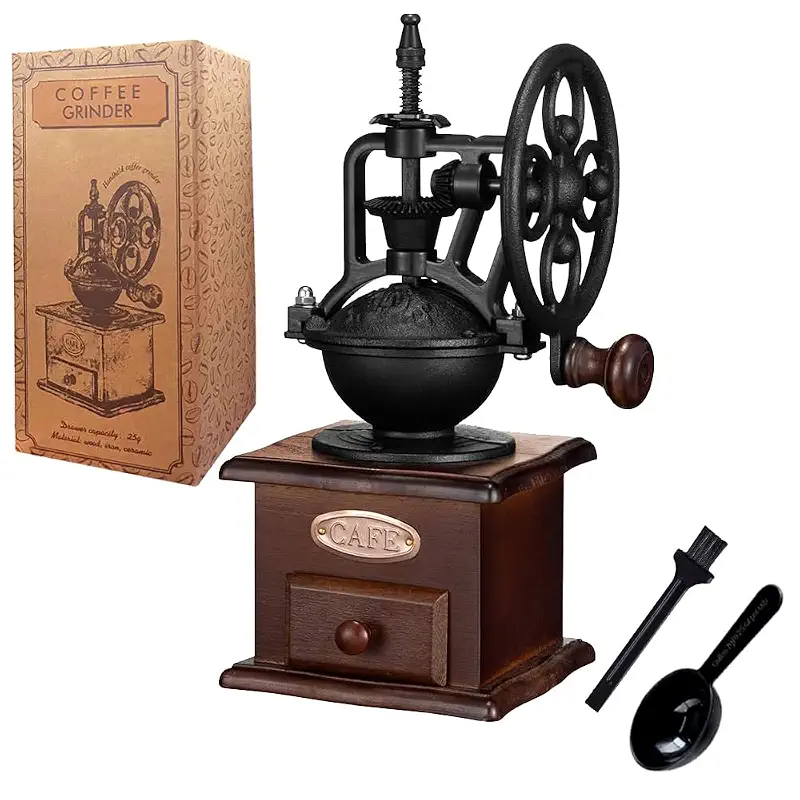
The Bailiqi grinder delivers a retro-inspired design at an accessible price point, making it attractive for buyers curious about hand-grinding without a major investment. The pine-wood body with ceramic core and cast-iron components appeals to folks who want a decorative piece that also functions. The adjustable polygonal mechanism lets you dial coarseness for different brew methods.
What tempers enthusiasm is consistency in shipping and assembly quality. Several buyers reported missing pieces (brush, scooper) or damaged components on arrival, and customer service resolution proved inconsistent. You're taking a bit of a gamble on the condition you receive.
Compare this to the Xinquilify if you prioritize durability and longevity; the Bailiqi works best if you value appearance and lower entry cost, accepting that you may need to inspect it carefully upon arrival and potentially troubleshoot fitment.
Pros
Pine wood and ceramic core keeps beans cool during grinding
Inconsistent shipping and missing components reported
Customer service resolution can be slow or unhelpful
Key features
High-quality pine wood body with ceramic core grinding mechanism
Rotating polygonal adjuster for precise grind control
Cast iron components for durability and retro appeal
Suitable for beans, spices, and dry ingredients
#2 Pick
Best for Smooth, Effortless Grinding
Xinquilify
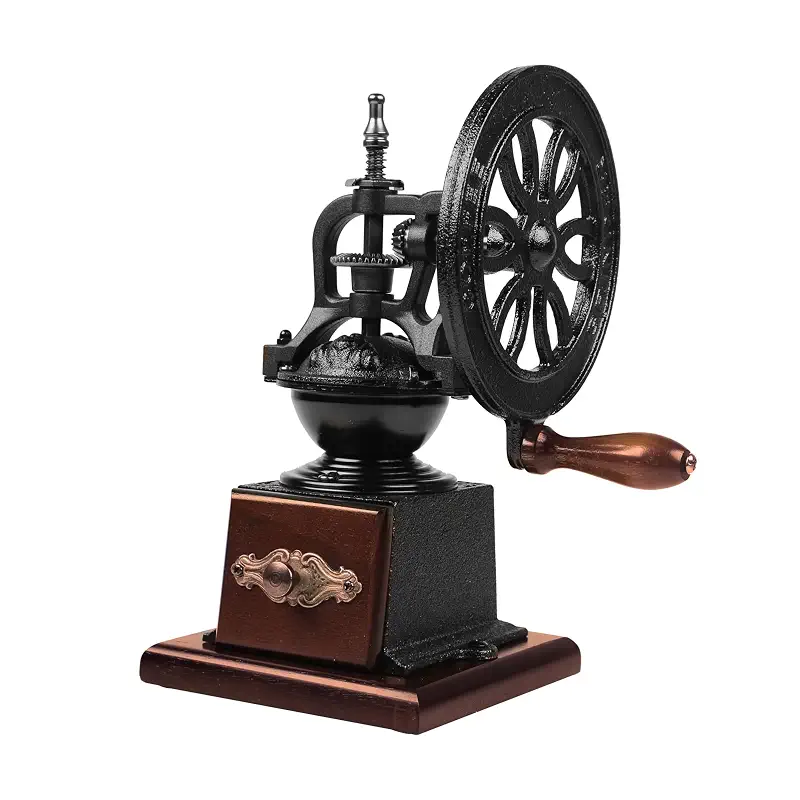
Antique Cast Iron Coffee Grinder Hand Crank Flywheel | Cast Iron Flywheel, Hand Crank Manual Grinder, Carbon Steel Grinding Core, Adjustable Grind, 10.63 x 5.71 in
4.1(8)
Horizontal flywheel design with carbon steel core delivers consistent grind with minimal hand fatigue: ideal for daily use.
Ideal for: Daily grinders who value smooth operation, consistent results, and long-term reliability.
The Xinquilify stands out for its thoughtful engineering of the flywheel mechanism. Unlike vertical-wheel grinders that strain your shoulder, this horizontal mount lets the weight of the wheel do much of the work, making hand-cranking feel less like labor. Owners consistently praised the smooth turning action and the longevity-first feel of metal gears paired with carbon steel grinding core. For pour-over enthusiasts who roast their own beans, the grind consistency rivals electric burr grinders.
The trade-off is speed. Three to four minutes per two tablespoons of beans is the reality, and capacity limits mean you won't batch-grind for multiple cups. The grinder also needs periodic oiling on the flywheel shaft to stay smooth. It's compact but requires a sturdy table; movement during grinding came up in a few reviews.
Where the Bailiqi prioritizes affordability, the Xinquilify commits to engineering that pays dividends over years of use. If you embrace hand-grinding as ritual rather than rush, this delivers.
Pros
Horizontal flywheel minimizes hand and shoulder strain
Metal gear mechanism ensures grind consistency rivals electric burrs
Compact footprint with substantial cast iron construction
Cons
Grinding time of 3–4 minutes per small batch feels slow
Small hopper capacity limits batch grinding for large servings
Key features
Horizontal cast iron flywheel for reduced hand fatigue
Carbon steel grinding core with adjustable coarse-to-fine settings
Metal gear-driven mechanism for long-lasting performance
Wooden base and collection drawer catch ground coffee neatly
#3 Pick
Best Premium Italian Craftsmanship
Classic Cuisine
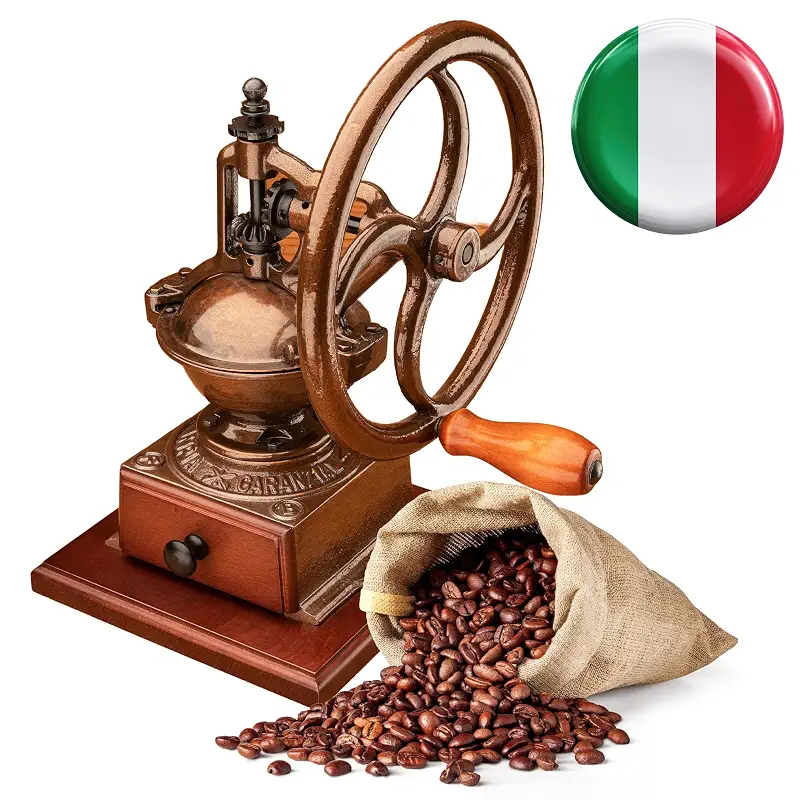
Classic Cuisine Manual Burr Coffee Grinder, Copper, 12.2” x 9.06” x 13.78” | Heavy Cast Iron Coffee Bean Burr Grinder with Adjustable Grind Settings, Hand Crank, and Vintage Design, Italian Made
4.2(7)
Heavy-duty conical burr grinder made in Italy with cast iron stability, stunning design for coffee enthusiasts who want heirloom quality.
Ideal for: Coffee purists seeking heirloom-grade Italian engineering and consistent burr grinding.
Classic Cuisine's Tre Spade grinder represents the premium end of the vintage manual market, built in Italy with 130-plus years of toolmaking heritage. The conical burr mechanism with tempered steel teeth crushes beans uniformly without heat, preserving flavor in a way that matters for specialty coffee. At 14 pounds, the cast iron weight keeps it rock-solid during grinding, and the beechwood base adds genuine warmth to any kitchen counter.
The 125-gram hopper and large grinding chamber mean you can prep enough grounds for several cups in one session. Adjusting grind fineness is simple: pull the tap, rotate the gear (clockwise fine, counterclockwise coarse), lock it, and crank. Multiple owners described it as a pleasure to use and looking at, with one calling it potential family heirloom.
The significant drawback is the die-cast construction, which one buyer discovered breaks under normal use and cannot be welded. Shipping damage was also reported (drawer front detached). The learning curve on grind adjustment is steeper than competitors, though once set, it stays locked. For someone committed to hand-grinding as a centerpiece ritual, this excels; for casual use, the premium price tag and weight may not justify the investment.
Pros
Conical burr mechanism grinds beans uniformly without heating
14-pound cast iron base provides exceptional stability
125-gram hopper capacity supports multiple servings per session
Cons
Die-cast components can break and cannot be repaired by welding
Heavier weight and larger footprint demand dedicated counter space
Key features
Tempered steel conical burr for uniform grind without heat damage
Heavy cast iron construction with beechwood base for stability
Adjustable coarse-to-fine settings via gear-driven mechanism
Made in Italy by Tre Spade with 130-year heritage
#4 Pick
Best Compact Japanese Design
Kalita
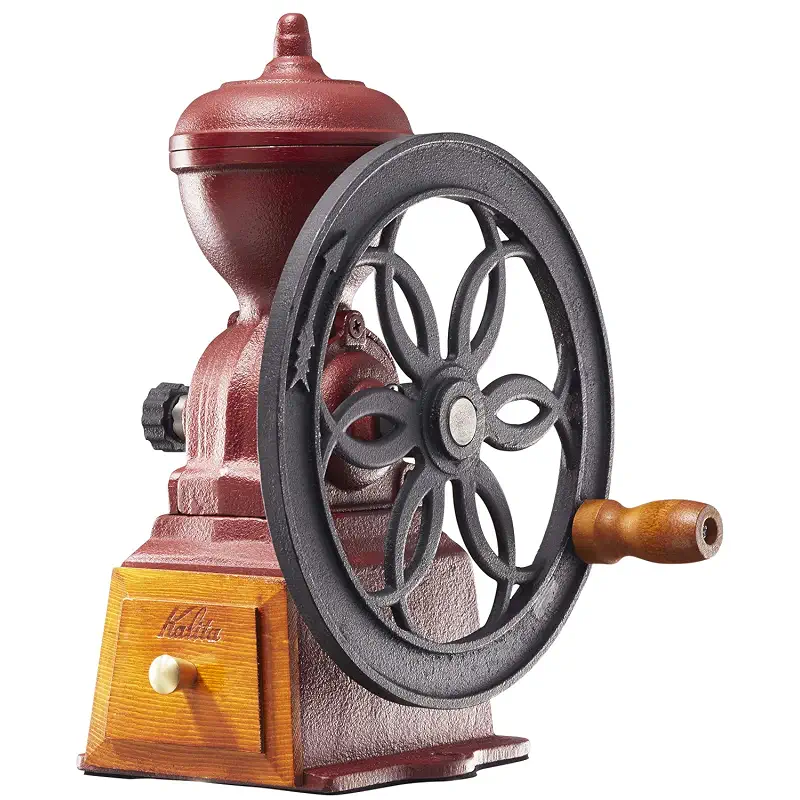
Kalita Coffee Mill, Cast Hand Grinding, Manual Diamond Mill, Red, N #42137 Antique Coffee Grinder, Adjustable Grinder, With Lid, Coffee Shop, Cafe
4.3(217)
Kalita's hard-cast iron mill delivers exceptional build quality and adjustability in a space-saving footprint: beloved by collectors.
Ideal for: Space-conscious coffee drinkers who appreciate Japanese precision and daily hand-grinding ritual.
The Kalita is the smallest grinder in this lineup but punches well above its 50-gram hopper size. Japanese manufacturing precision shows in every component: the hard-cast iron mortar, the smooth adjustment nut, and the substantial feel despite compact dimensions. Multiple Japanese reviews praise the craftsmanship and the meditative quality of hand-grinding, with one noting how it resurrects memories of post-war coffee culture.
The flip-top hopper lid keeps beans fresh and looks sleek in storage, and the grinder is stable enough to mount to a larger board if you want permanent placement. Adjustment from coarse to fine happens via the side nut, and owners report the large spinning wheel maintains smooth momentum even through finer grinds. At under 7 inches wide, it fits tight kitchen spaces.
Compared to the Classic Cuisine burr grinder, the Kalita trades larger capacity and premium Italian heritage for compact size and pure mechanical elegance. If your kitchen lacks counter real estate or you prefer grinding smaller batches throughout the day, this Japanese workhorse delivers. The learning curve on the adjustment nut is worth the payoff.
Pros
Compact 6.9-inch width fits tight kitchen spaces and shelves
Hard-cast iron construction with smooth, reliable adjustment
Flip-top hopper lid protects beans and enhances storage aesthetics
Cons
50-gram hopper capacity means frequent refilling for large servings
Adjustment mechanism requires learning curve; documentation is sparse
Key features
Hard-cast iron mortar with adjustable mesh settings
Compact 6.9 x 7.1 x 9.6 inch dimensions for small spaces
Flip-top hopper lid with dust protection and visual appeal
Japan-made with high-quality craftsmanship and build
#5 Pick
Best Ferris-Wheel Handle Design
Xdalula
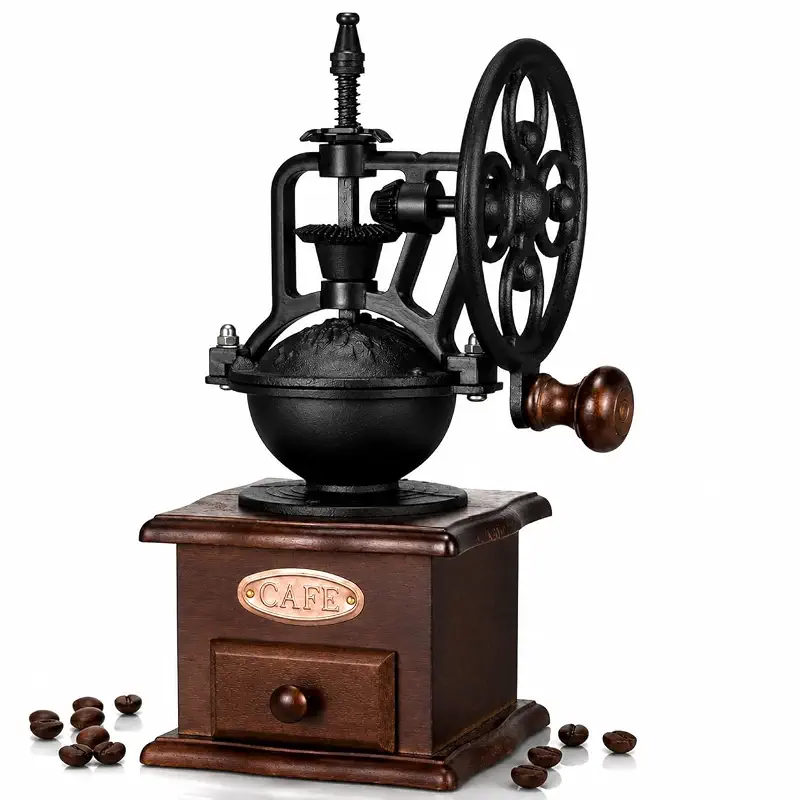
Vintage Manual Coffee Grinder Maker - High Hardness Ceramic Core Coffee Bean Grinder With Solid Wood Base And Drawer Powder Box Classic Coffee Grinders For Home Use
4.0(73)
Unique ergonomic turntable with ceramic core grinds smoothly and fits compact kitchens: fun to use with cute retro style.
Xdalula's grinder stands out for its creative Ferris-wheel turntable design, which pairs an enlarged metal wheel with a wooden handle for comfortable, non-slip grip. The high-strength ceramic core keeps grinding cool, preserving aroma and flavor without the heat that some other mechanisms introduce. The octagonal adjustment screw lets you dial from fine to coarse, and the drawer-style grounds container adds both function and visual charm.
Owners appreciate the quiet operation and ease of assembly. For someone grinding fresh peppers, spices, or small coffee batches, the footprint is manageable and the retro wood aesthetic genuinely works. The package includes a small spoon, which is a nice touch.
The main limitation is capacity. Buyers consistently noted it's smaller than expected: the 50-gram grounds drawer and the overall footprint suit single-cup or spice grinding, not batch work for a household. One reviewer discovered the top piece is plastic, not cast iron as photos suggest, which disappointed some. Compared to the Kalita's more refined Japanese engineering, the Xdalula prioritizes affordability and novelty. It's best for light-duty use and as a decorative counter accent rather than your workhorse grinder.
Pros
Ceramic core keeps beans cool and preserves original flavor
Ergonomic Ferris-wheel turntable reduces hand fatigue
Compact size and retro wood aesthetic enhance kitchen decor
Cons
50-gram grounds capacity insufficient for large household servings
Plastic components on top despite wooden appearance in photos
Key features
High-strength ceramic grinding core for cool, flavor-preserving operation
Unique Ferris-wheel ergonomic metal turntable with wooden handle
Octagonal adjustment screw for fine-to-coarse grind customization
Compact 25 x 11.5 x 11.5 cm design with retro wood and metal finish
How to Choose a Vintage Manual Coffee Grinder
Four trade-offs that actually matter when matching a vintage coffee grinder to your kitchen.
Grind Mechanism: Burr vs. Blade
The burr versus blade grinder differences fundamentally shape your results. Burr grinders (like the Classic Cuisine) use two abrasive surfaces to crush beans uniformly, ideal for espresso and pour-over where consistency matters. Blade models or simpler mechanisms work fine for French press or coarse grinding but don't match burr precision. Most vintage hand grinders lean toward burr or mortar-and-pestle designs; check the product specs to confirm which type you're buying, because the grinding feel and coffee quality diverge significantly.
Capacity and Batch Size
Hopper size and grounds-drawer capacity directly affect your workflow. The Kalita and Xdalula max out around 50 grams (enough for one small cup), while the Classic Cuisine holds 125 grams of beans and 235 grams of grounds, supporting multiple servings per grinding session. If you're grinding for one or two people daily, a compact model works. Households with four-plus coffee drinkers or anyone who enjoys batch-prepping grounds should prioritize larger hoppers to avoid constant refilling.
Weight and Stability
A grinder that slides across the counter mid-crank wastes energy and risks tipping. Heavier cast-iron models like the Classic Cuisine (14 pounds) and Xinquilify naturally stay put. Lighter designs may shift during grinding unless secured or placed on a non-slip mat. Consider your counter surface and how firmly you grip the handle. If you grind daily and want minimal frustration, weight and stability matter more than you'd expect before actually using one.
Grinding Time and Ritual
Expect 3 to 5 minutes per small batch with most manual grinders, depending on grind fineness and your hand speed. Some buyers embrace this as meditative practice; others find it tedious. If you're rushing mornings or feeding a crowd, a vintage manual may not fit your pace. Conversely, if hand-grinding is part of your morning ritual and you value the flavor and tactile experience, the time investment becomes a feature, not a bug. Be honest about your expectations before investing in a slow tool.
Materials and Long-Term Durability
Cast iron, ceramic cores, and tempered steel all contribute to longevity. Plastic components and die-cast metal can fail under normal use and resist repair. Japanese models like the Kalita prioritize metal-gear precision, while Italian makers stress heirloom build. Pine wood and beechwood bases age well and feel authentic. If you're buying as a one-time investment you'll pass to your kids, scrutinize materials carefully; if it's a five-year experiment, budget options like Bailiqi suffice.
Frequently asked
Quick answers to the questions readers ask most.
Can I use a vintage manual coffee grinder for espresso?
Some can, but not all equally. Burr grinders like Classic Cuisine can achieve the fine, uniform grounds espresso demands. Simpler designs or those with smaller hanger reservoirs struggle with volume or consistency. If espresso is your primary brew, prioritize a burr model with adjustable fine settings and adequate capacity. For occasional espresso and everyday drip coffee, a versatile mid-range manual like the Xinquilify works acceptably.
How much hand strength do I need to use a manual grinder?
It varies by design. Horizontal-flywheel models like Xinquilify let momentum do most of the work, requiring moderate effort. Vertical wheels or compact designs need more hand power. If you have arthritis, reduced grip strength, or prefer minimal exertion, test a grinder with a large wheel first. Some buyers install the grinder to a mounting board to reduce movement and fatigue. Electric remains the easier option if hand strength is a concern.
Do vintage manual grinders require special maintenance?
Light maintenance extends life significantly. Cast-iron models benefit from occasional oil on moving shafts (food-safe mineral oil), and metal gears appreciate a tiny drop of oil annually. Always use a dry cloth to wipe the hopper and grinding chamber; moisture invites rust. Vintage grinder cleaning and care should include occasional disassembly to remove trapped grounds and dust. Ceramic cores need no special care. Most manual models outlast electric grinders if kept dry and occasionally oiled.
What's the difference between manual grinders under $100 and premium models over $100?
Budget models prioritize appearance and basic function; premium options invest in burr precision, material quality, and durability. A $50 ceramic-core grinder grinds acceptably but may have inconsistent coarseness or assembly issues. A $150+ Italian burr grinder grinds uniformly, weighs more for stability, and uses tempered steel and cast iron designed to last decades. If you grind daily and care about flavor, premium pays off. For occasional use, a budget pick suffices.
Can a manual coffee grinder also grind spices or pepper?
Yes, most can. The ceramic cores and mortar mechanisms work on dried spices, peppercorns, and seeds just as they do on beans. Some owners specifically buy vintage grinders for spice work. Just be aware that strong spices like cumin or clove leave residual flavors, so dedicate one grinder to spices if flavor cross-contamination bothers you. Ceramic cores handle spice grinding well; avoid ash trays or delicate mechanisms for heavy-duty spice work if durability is your concern.