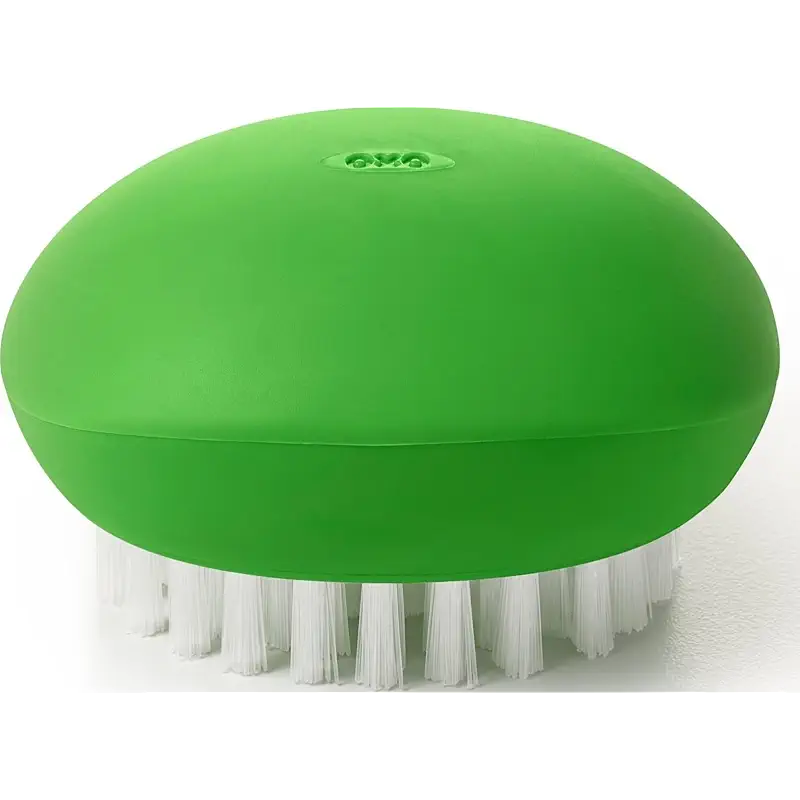
Ideal for: Home cooks who want a reliable, everyday brush that handles potatoes and mixed produce without fuss.
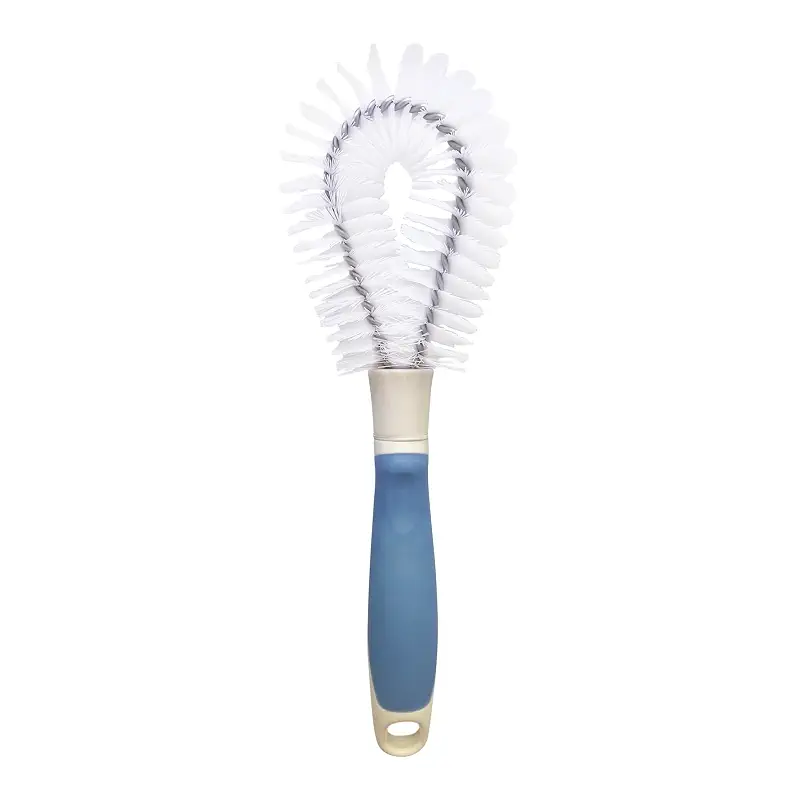
The OXO Good Grips has earned its reputation through sheer consistency. Owners report bristles that stay stiff and well-packed over many months of use, meaning you get reliable scrubbing power whether you're working through a pile of potatoes or a single batch of carrots. The flexible rubber handle is the real win here: it grips securely when wet, applies pressure without hand strain, and the whole tool feels built to last.
What sets this brush apart is its versatility. The bristle firmness sits in a sweet middle ground: sturdy enough to dislodge dirt from root vegetables and the crevices of bumpy produce, but gentle enough that regular use on mushrooms or thin-skinned tomatoes won't damage them. The compact head size lets you maneuver around odd shapes easily, and storage is hassle-free since it's small enough to fit in a drawer or silverware rack.
The main trade-off is that it's not designed with bristle variety. If you frequently switch between very delicate greens and heavily soiled root crops in a single session, the bristle types comparison suggests you might benefit from a dual-sided approach, though many cooks find this single-bristle design fast and effective enough that they never miss the option.
Pros
Bristles hold firmness over years of regular use
Non-slip rubber grip stays secure when wet
Compact size fits small hands and tight storage
Cons
Single bristle type may not suit delicate and tough vegetables equally
Handle color variation between units noted in rare cases
Key features
Nylon bristles firm enough for root vegetables and deep crevices
Flexible, pressure-absorbing rubber handle with secure wet grip
Compact head design maneuvers around odd-shaped produce easily
Dishwasher safe for quick cleaning after use
#2 Pick
Best with Traditional Handle
Fox Run
Fox Run Vegetable Cleaning Brush with Handle, Produce & Potato Scrub Brush | Long Lasting Bristles | Vegetable Brush Scrubber For Food | Easy To Store & Dishwasher Safe | Quickly Clean Produce & Veggies
4.6(630)
A wood-and-bristle brush that mixes old-school design with durability, perfect for home cooks who prefer a true handheld experience.
Ideal for: Cooks who prefer wooden kitchen tools and want a softer brush for delicate or fine-skinned produce.
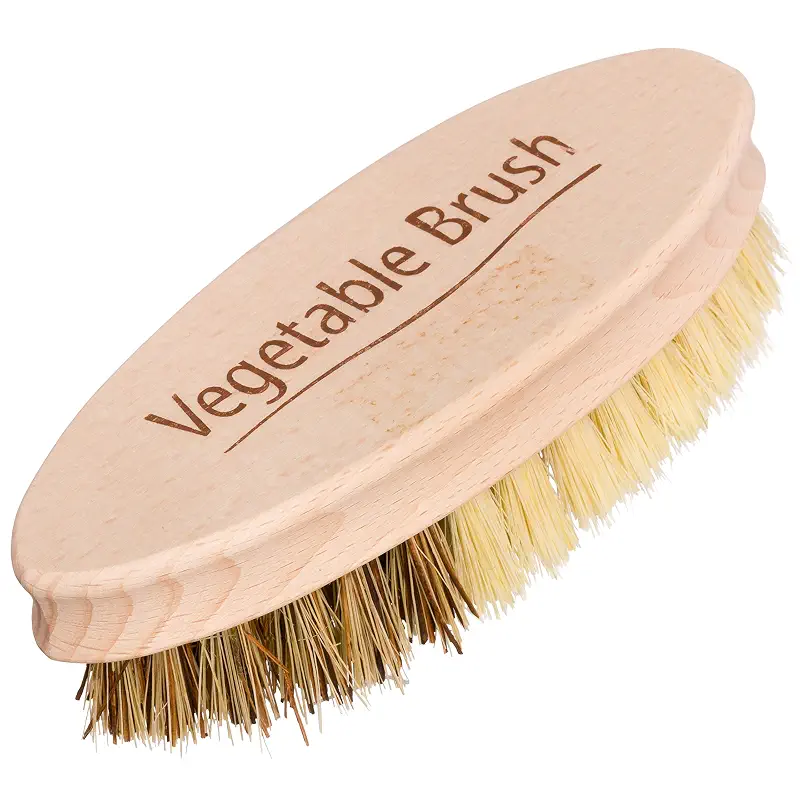
The Fox Run leans into the classic vegetable brush style: no plastic molds, just an honest wood handle and bristles that feel like they belong in a vintage kitchen. Owners praise how the brush sits in the palm, and the hanging hole makes storage above the sink or in a cabinet natural and practical. The soft rubber grip and modest size mean even smaller hands can work comfortably through a full basket of vegetables without fatigue.
Bristle softness is notably gentler than some competitors. Reviewers specifically mention using it on mushrooms without causing damage, and the bristles don't flatten or shed even after extended use. That said, one reviewer who expected stiffer scrubbing power for potatoes and carrots found them too soft, which points to an important decision: this brush is better suited to kitchens that prize gentleness and longevity over aggressive dirt removal. Compared to the OXO or Joie options, the Fox Run trades some scrubbing aggression for a more delicate touch.
The wood handle looks beautiful in a kitchen and holds up well if you let it air-dry properly. The tradeoff is that it requires active maintenance, leaving it wet for prolonged periods will eventually lead to rot, whereas plastic handles have no such concern.
Pros
Soft bristles clean mushrooms and thin-skinned vegetables gently
Natural wood handle feels ergonomic and beautiful
Hanging hole allows space-saving storage and fast drying
Cons
Softer bristles may not remove heavy soil from potatoes effectively
Wood requires air-drying and care to avoid mildew or rot
Key features
Soft natural bristles ideal for delicate mushrooms and greens
Wooden handle with ergonomic shape fits hand comfortably
Hanging loop for convenient storage and air-drying
Measures 10.5 inches with compact bristle head for maneuverability
#3 Pick
Best Dual-Bristle Design
Redecker
REDECKER Hard and Soft Side Vegetable Brush - Beechwood Handle - 2 Different Bristle Strengths for Cleaning Delicate or Tough-Skinned Vegetables, 5-1/4 inches - Vegetable Scrubber, Made in Germany
4.4(1,047)
A German-made brush with two bristle strengths, solving the soft-versus-firm dilemma in a single tool.
Ideal for: Cooks who handle both delicate and tough vegetables regularly and prefer natural bristles and wood craftsmanship.
The Redecker stands apart because it answers a real kitchen problem: what if you need to scrub potatoes one moment and tomatoes the next? The dual-bristle design puts a softer side and a stiffer side on the same brush, eliminating the need to swap tools mid-prep. Owners who work with mixed produce appreciate this efficiency, and the natural tampico and union fiber bristles (rather than synthetic nylon) give it a different texture that some cooks prefer. The beechwood handle is handcrafted, which means each brush has minor color variation: a feature, not a defect, for cooks who value artisanal quality.
Where bristle types comparison shows its value, this brush excels: the stiff side handles root vegetables and stubborn soil without bruising, while the soft side works on delicate items without risk. It requires more intentional hand positioning than a single-bristle brush, but once you develop the habit, it becomes second nature. The ergonomic rounded handle fits the palm well, even under running water, and the maintenance routine (lukewarm rinse and air-dry) is straightforward.
The main limitation is that it's not dishwasher safe, unlike the OXO or Joie: you must hand-wash to protect the natural bristles and wood. For cooks in a rush or who prefer minimal cleanup burden, this represents extra work. That said, owners report the brush lasting many years of daily use, making the hand-washing trade-off worthwhile for those committed to careful tool care.
Pros
Dual bristle sides eliminate tool-swapping between vegetable types
Natural tampico and union fibers offer different texture and performance
Handcrafted German construction lasts years of consistent use
Cons
Requires hand-washing to protect natural bristles and wood finish
Softer side may feel less aggressive on heavily soiled potatoes
Key features
Dual bristle sides: soft for delicate vegetables, stiff for root crops
Heat-resistant natural fibers safe for boiling water cleaning
Handcrafted beechwood handle with ergonomic rounded design
Measures 5.25 inches; made in Germany since 1935
#4 Pick
Best for Serious Dirt
亀の子スポンジ
"TAWASHI" VEGETABLE SCRUB BRUSH
4.6(1,790)
A dense coconut-fiber scrubber engineered for heavy soil removal and soap efficiency with zero wastage.
Ideal for: Cooks who prioritize scrubbing power for root vegetables and want a soap-efficient, eco-conscious brush.
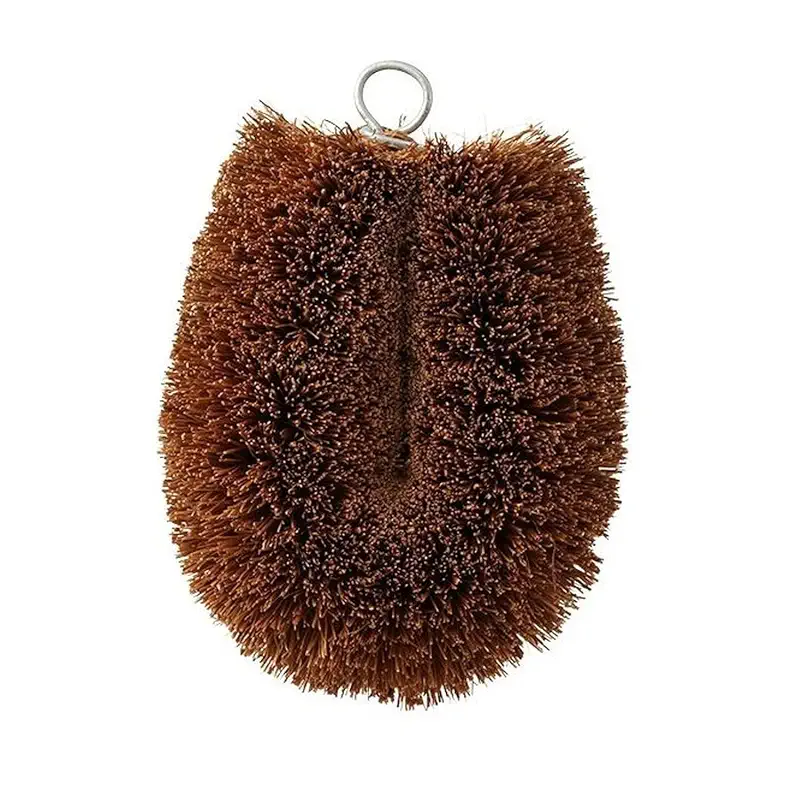
The Tawashi brings a completely different bristle technology to the category. Instead of brush hairs, you get tightly bound coconut fibers that create a texture unfamiliar to anyone used to traditional bristle designs. What owners consistently report is remarkable soap retention: a single drop of dish detergent lasts through an entire batch of potatoes, even under running water. That's because the dense fiber structure holds suds in a way synthetic and natural hair bristles cannot. If you're environmentally conscious or simply tired of resoaping your brush, this efficiency is a real advantage.
The bristles are intentionally stiff, which makes them excellent at scrubbing away garden debris without needing aggressive pressure. Reviewers praise the durability; after months of daily use, the fibers show no shedding or degradation. However, this stiffness is a trade-off: the brush isn't suited to soft-skinned fruits or delicate greens. Owners explicitly note switching to a silicone scrubber for tomatoes or mushrooms, meaning this is best as a dedicated root-vegetable tool rather than an all-purpose option. Compared to the Fox Run's gentle approach or the Redecker's dual-sided flexibility, the Tawashi commits fully to aggressive soil removal at the cost of versatility.
The small stainless steel loop allows hanging storage, and it performs well in the dishwasher, making maintenance simple. It's a specialty pick for kitchens where potatoes, carrots, and beets are the main focus.
Pros
Dense coconut fibers hold soap longer, reducing detergent waste
Stiff bristles remove heavy soil without aggressive pressure
No shedding or bristle deterioration after months of use
Cons
Too stiff for delicate vegetables like tomatoes or soft greens
Not suitable as a one-brush solution for mixed produce types
Key features
Tightly bound coconut fibers instead of traditional bristles
Dense structure holds dish soap throughout scrubbing session
Approximately 3.75 by 3 inches with stainless steel hanging loop
Dishwasher safe and made in Japan
#5 Pick
Best Compact & Ergonomic
Joie
Joie Potato Scrub Brush, Ergonomic Easy Grip Handle, Cleans Fruits and Vegeables of All Types | Ideal for Potatoes and Hard Vegetables, BPA-Free and Top Rack Dishwasher Safe
4.6(2,349)
A short, tough scrubber with an ergonomic handle that minimizes hand strain and fits tight kitchen storage.
Ideal for: Cooks with limited hand strength or storage space who need a compact, ergonomic scrubber for daily potato and root-vegetable prep.
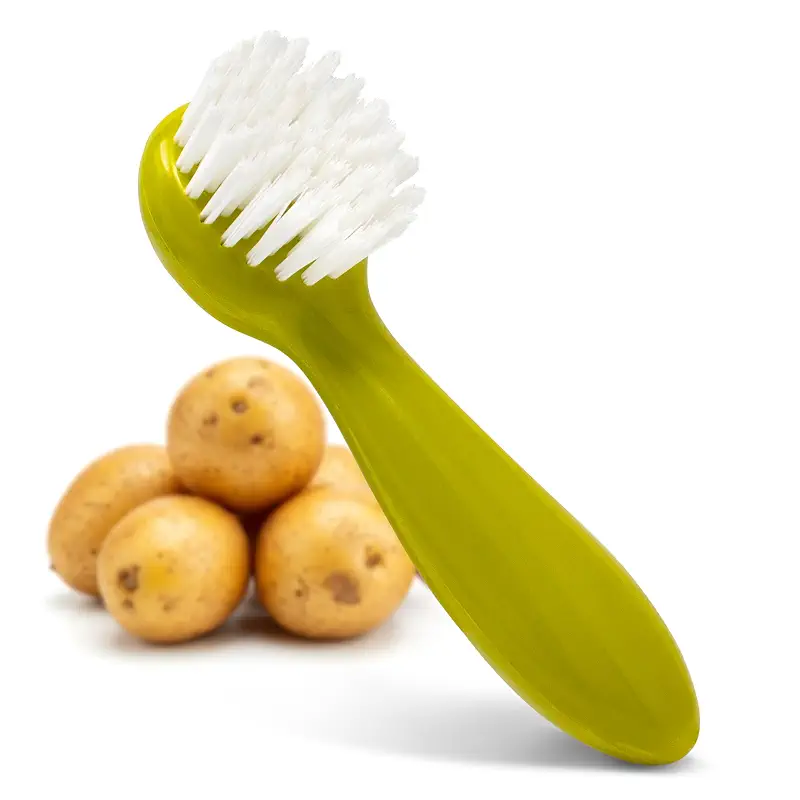
The Joie prioritizes comfort and compactness in a way that appeals to cooks with arthritis, small hands, or anyone who's felt hand fatigue after prepping a large batch of vegetables. The 5.5-inch handle is intentionally short and easy-grip, and multiple reviewers with arthritic hands report this brush as a game-changer for their kitchen work. The bristles are stiff enough to cut through potato skin and root-vegetable soil, but reviewers note they also scrub off loose skin if you're not careful: which matters if you're trying to preserve the vegetable surface.
Storage is a genuine advantage here: the compact size tucks into a drawer or silverware rack without taking up meaningful space, and it looks less intimidating on a small kitchen counter than longer traditional brushes. The BPA-free plastic handle is dishwasher safe, meaning quick cleanup after cooking. One reviewer mentioned the handle has a slight twist, which works fine for right-handed users but may feel awkward for lefties. The bristles are firm and durable, holding up well through regular dishwasher cycles and daily scrubbing.
Where this tool falls short is versatility. Unlike the Redecker's dual-bristle approach, you get one firmness level, so the same pressure that cleans potatoes effectively might be too aggressive on delicate tomatoes. Vegetable prep is only half the prep story, though: if you also use a best tomato dicer for fresh salads or salsas, you'll appreciate having both tools ready for different stages of produce handling. For apartment dwellers, people with limited hand strength, or anyone who values a quick-clean, easy-store option, the Joie delivers; others may want the bristle types comparison of a dual-sided design or the proven longevity of the OXO.
Pros
Ergonomic 5.5-inch handle reduces hand and wrist strain
Compact size stores easily in drawers or small counters
BPA-free plastic handle is fully dishwasher safe
Cons
Single bristle firmness may scratch delicate vegetable skins
Overseas shipping may result in longer delivery times
Key features
Ergonomic easy-grip handle reduces hand cramping during use
Stiff bristles remove dirt from potato eyes and root vegetables
BPA-free and top-rack dishwasher safe for easy cleaning
Compact design fits small hands and tight kitchen storage
How to Choose a Vegetable Brush
Four trade-offs that actually matter when matching a vegetable brush to your kitchen.
Bristle Firmness and Versatility
The most important decision is matching bristle stiffness to your produce habits. If you mostly clean potatoes and carrots, a stiff brush like the Tawashi removes soil efficiently. If you work with both root vegetables and delicate mushrooms or greens in the same session, consider bristle types comparison to understand your options: a dual-bristle design eliminates tool-swapping, while a medium-firmness brush (like the OXO) handles both without switching. Single-purpose brushes are fine if your produce list is narrow, but versatile cooks benefit from either flexibility or owning two brushes.
Handle Material and Durability
Plastic and rubber handles are virtually care-free and dishwasher safe, making them ideal for busy kitchens or anyone who prioritizes convenience. Wood handles require air-drying and occasional care to prevent mildew, but they offer a tactile, traditional feel and often outlast plastic if maintained properly. Compact handles suit people with small hands or arthritis, while longer handles give more leverage for larger batches. Test a brush in your hand if possible; comfort matters because you'll use this tool several times a week.
Material Type: Synthetic vs. Natural Bristles
Nylon and synthetic bristles hold their shape consistently and resist shedding, making them the reliable everyday choice. Natural fibers like tampico, union fibers, or coconut cords offer a different texture and aesthetic, and some cooks swear they grip soil better. Coconut fiber brushes excel at soap retention and are eco-conscious, but they're stiffer and less versatile. Natural bristles may feel premium but require more care. Vegetable cleaning techniques can differ depending on whether you're using synthetic or natural bristles: softer natural fibers sometimes benefit from gentler pressure, while nylon bristles tolerate vigorous scrubbing without complaint. If you're unsure, start with a nylon brush and upgrade to natural bristles once you understand your cleaning style.
Storage and Maintenance Ease
A hanging loop or hook-friendly design lets the brush air-dry instead of sitting in standing water, which extends its life significantly. Dishwasher-safe brushes simplify cleanup, while hand-wash-only options demand more attention. If your kitchen has limited counter or drawer space, a compact brush saves room. Consider how quickly you'll dry the brush after use; a wet brush left in a closed cabinet breeds mildew, so placement and ventilation matter as much as the tool itself.
Frequently asked
Quick answers to the questions readers ask most.
Can I use a vegetable brush on delicate fruits like tomatoes or mushrooms?
Yes, but it depends on bristle stiffness. A soft-bristled brush like the Fox Run won't bruise delicate skins, while very stiff bristles (like the Tawashi) are too aggressive for tomatoes. Medium-firmness brushes work with gentle pressure. A dual-bristle design lets you choose the right side for each produce type. Always apply lighter pressure on thin-skinned items, and when in doubt, test on one vegetable first to see if the bristles leave marks.
How do I prevent mildew or mold on a wooden-handle brush?
Air-dry the brush completely after every use: hang it bristles-down if possible so water drips away. Avoid storing it bristles-up in a cup where moisture collects. If you notice mold forming, soak the bristles (not the handle) in hot water for a few minutes, rinse thoroughly, and air-dry immediately. Store the brush in a well-ventilated area, not in a closed cabinet while damp. Most owners of wooden brushes report years of use if they follow this simple routine.
Is a vegetable brush worth the cost compared to using a sponge or cloth?
A dedicated brush removes dirt more thoroughly and with less water waste than a sponge, and it won't leave fibers or residue on your produce. Brushes also last longer than sponges: many owners report using the same brush for 3-5 years or more. If you cook with fresh vegetables regularly, the time savings alone justifies the modest investment. For occasional cooks or those on a tight budget, a sponge works, but a brush is more effective and economical over time.
Can I use a vegetable brush for other kitchen cleaning tasks?
Many owners repurpose vegetable brushes for nails, cast-iron seasoning, coffee mug stains, or general scrubbing. The firm bristles work well on surfaces that tolerate abrasion. However, avoid using a produce brush on greasy pans or heavily soiled cookware, as trapped food debris is hard to rinse away. If you want to double-duty a brush, make sure to clean it thoroughly between uses and keep it separate from food prep if used for non-food cleaning.
Do I need to peel vegetables if I brush them thoroughly?
No. Thorough brushing removes dirt and most surface contaminants, allowing you to eat the nutrient-rich skin on potatoes, carrots, and beets. Many home cooks keep the skin on after brushing to gain fiber, vitamins, and minerals. For root vegetables from your own garden or farmers market, a good brush is especially valuable because the skin often has caked-on soil. A vinegar-and-water soak before brushing adds extra cleaning power for heavily soiled produce.