Kitchen & Dining · Small
Best Under Counter Beverage Center: Top 5 Coolers Compared
Find the best under counter beverage center for your kitchen. Compare 24-inch beverage fridges with glass doors, temperature control, and built-in options.
Affiliate disclosure: As an Amazon Associate I earn from qualifying purchases.
At a glance
2
Best for Home Bar AmbianceCa'Lefort
3
Best Dual-Zone CoolerIcepure
4
Best for Tight SpacesSummit Appliance
Detailed reviews
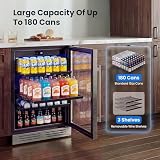
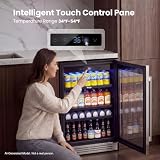
The Yeego hits the sweet spot for most home setups. It holds 140 to 180 cans across three adjustable shelves, runs whisper-quiet (owners report minimal noise even when the compressor cycles), and its digital panel lets you dial in temperatures from 34°F to 54°F with 1-degree precision. The stainless steel frame resists rust and wear, the double-pane tempered glass blocks UV light to protect drink flavor, and the independent heat dissipation vent suits built-in installation without overheating nearby cabinets.
Owners consistently praise the cooling speed and consistency. The unit arrived well-packaged, and the 12-month support team addresses issues fast. One note: the door is right-hinged and cannot be reversed, so measure your space before ordering.
Compared to the Ca'Lefort, which has more ambitious LED light options, the Yeego trades fancy lighting for rock-solid cooling performance and a track record of reaching its stated temperature range. If you want a straightforward cooler that simply works without fuss, this is it.
Pros
- Quiet compressor and consistent cooling to 34°F
- Adjustable shelves fit various beverage sizes easily
- Stainless steel frame resists rust and corrosion
Cons
- Right-hinged door cannot be reversed for left-opening layouts
- No LED lighting options like some competing models
Key features (5)
- 5.12 cu.ft. capacity holds 140–180 standard 12-oz cans
- Digital temperature control, 34°F to 54°F range with 1°F precision
- Double-pane tempered glass door blocks UV light
- Front-breathing design suits built-in under-counter or freestanding placement
- Power-failure memory restores previous temperature setting automatically
The Ca'Lefort stands out for owners who want their beverage cooler to double as a visual centerpiece. The three LED options (amber, blue, white) illuminate your drink collection, and the 304 stainless steel frame with double-glazed glass gives it a polished, modern look. Like the Yeego, it holds 140 to 180 cans, has adjustable shelves, and maintains a 34°F to 54°F range with 1-degree accuracy.
Buyers report that customer service is responsive and thorough. One lengthy review documented a temperature-performance concern and tracked the company's troubleshooting process transparently. The Ca'Lefort team explained that industry standards allow for temperature fluctuations and offered refunds as gestures of goodwill, which matters if you experience real-world cooling gaps in hot climates. The 360-degree air circulation system aims for even cooling, though some buyers in humid environments have noted that average temperatures settle around 38°F rather than the stated 34°F minimum.
If mood lighting and social atmosphere matter as much as pure cooling performance, this model competes well. For buyers prioritizing only temperature reliability, the Yeego or hOmeLabs may feel like the safer bet.
Pros
- Three selectable LED colors enhance bar ambiance
- Responsive, detailed customer service team
- 360-degree air circulation for even cooling distribution
Cons
- Average internal temperature may reach 38–40°F instead of stated 34°F minimum
- Requires 24-hour upright stabilization before first use
Key features (5)
- 5.65 cu.ft. capacity holds 140–180 cans with adjustable shelving
- 34°F to 54°F digital control with 1°F precision
- Integrated 304 stainless steel door frame, right-hinged
- Double-glazed tempered glass blocks UV and improves insulation
- Power-failure memory function and adjustable leveling feet
The Icepure is purpose-built for owners who want to store reds and whites at their own ideal temperatures, or separate beer from wine entirely. Its left zone (beverages) runs 35.6°F to 71.6°F, while the right zone (wine) spans 41°F to 71.6°F. Each side has its own compressor cycle and temperature sensor, so opening one door doesn't destabilize the other. Touchscreen controls replace physical buttons, and the sleek black metal frame with tinted glass gives it an upmarket appearance.
With capacity for 19 wine bottles and 58 cans across adjustable shelves, it fits comfortably under most counters. Owners report that it runs at just 41 dB and looks "chic and minimalistic." The learning curve is real, though: one buyer had to press power and light simultaneously inside the fridge to unlock temperature settings, a step not clearly documented in the manual. Another experienced frozen seltzers because the unit became too cold initially, suggesting that first-time users should monitor early operation closely.
Compared to single-zone coolers like the Yeego or hOmeLabs, this unit costs more and requires understanding of dual-zone operation. It shines if you genuinely use wine and beer differently. If you just want one temperature for mixed drinks, a simpler single-zone model saves money and setup headaches.
Pros
- Dual independent zones with separate compressors and sensors
- Touchscreen interface and sophisticated black aesthetic
- Holds 19 bottles plus 58 cans in one compact unit
Cons
- Steep learning curve; temperature controls require pressing buttons inside the fridge
- Initial overcooling can freeze beverages if settings not monitored carefully
Key features (5)
- Dual-zone temperature control: left 35.6–71.6°F, right 41–71.6°F
- Touchscreen interface with LED display and elegant lighting
- Double-layer glass door with safety lock and adjustable shelves
- Operates at 41 dB with high-efficiency compressor and automatic defrost
- Built-in or freestanding; fits under-counter spaces with adjustable feet
The Summit Appliance model takes a different approach: instead of a standard 24-inch width with deep cabinet space, this unit prioritizes shallow depth. At just 18 inches front to back (versus the typical 22–24 inches), it fits into kitchen islands, wet bars, and tight under-counter gaps where standard beverage coolers won't work. The 3.5 cu.ft. capacity is smaller than full-size models, but the front-breathing design means hot air exhausts from the bottom front, so it won't overheat adjacent cabinets or walls.
With three adjustable glass shelves, recessed LED lighting, and digital temperature control in both Fahrenheit and Celsius, it covers the basics. The design meets commercial standards (UL-471), which signals durability for high-use settings like offices or gyms.
The catch: owner feedback is sparse. One buyer reported severe condensation buildup on the glass door that ran down and pooled on the floor. Summit replaced the door once, but the replacement had the same issue. In humid climates, this could become a maintenance headache. Another buyer loved the build quality and confirmed the front-breathing benefit. Given the limited owner data, the Yeego or hOmeLabs offer more safety through user volume and proven reliability.
Pros
- Shallow 18-inch depth fits tight island and under-counter spaces
- Front-breathing design prevents overheating of adjacent cabinetry
- Energy-saving compressor reduces electricity costs
Cons
- Limited owner reviews; condensation issues reported in humid climates
- Smaller 3.5 cu.ft. capacity than standard 24-inch models
Key features (5)
- 33.75" H x 23.38" W x 18" D shallow footprint, 3.5 cu.ft. capacity
- Three adjustable glass shelves for flexible beverage storage
- Digital thermostat with Fahrenheit and Celsius display options
- Recessed LED lighting provides efficient, attractive display
- Front-breathing design for built-in or freestanding placement
The hOmeLabs lands in the budget category, but thousands of owners suggest it punches above its price tier. It holds 120 cans (smaller than the 140–180 capacity of 24-inch models), but the 3.2 cu.ft. footprint still occupies a respectable under-counter space at 17.3 by 18.9 by 33.3 inches. The compressor runs almost silently, the glass door feels solid with a matte silver stainless frame, and the white LED interior light illuminates your selection without being overly bright.
Critically, it reaches 34°F with easy touch-control and maintains that consistency reliably, which owners value. The removable shelves let you fit tall bottles or bulk drinks. A two-year warranty is standard; buyers can add extended Allstate coverage for minimal cost.
Due diligence: some older reviews flagged shelf stability and LED brightness as issues, but more recent feedback suggests these were early design flaws now corrected. Following the manual's instructions (leaving the unit upright 24 hours before plugging in, cooling it down before loading drinks) prevents compressor strain. The biggest trade-off is capacity; if you stock a full home bar or entertain large groups weekly, you'll outgrow 120 cans fast. For a guest bedroom, theater room, or dorm, it's a smart entry point that outperforms much pricier compact models.
Pros
- Reaches 34°F consistently with whisper-quiet compressor operation
- Sleek modern design fits smaller spaces and looks polished
- Budget-friendly entry with strong reliability track record
Cons
- 120-can capacity is smaller than 24-inch standard coolers
- Early design flaws (now reportedly corrected) affected some older units
Key features (5)
- 3.2 cu.ft. capacity holds up to 120 cans with 3 removable shelves
- Cools down to 34°F with digital display temperature control
- Whisper-quiet compressor with advanced chiller technology
- Reinforced glass door with matte silver frame and white LED lighting
- Compact 17.3" L x 18.9" W x 33.3" H size for small spaces and portability
How to Choose the Right Under-Counter Beverage Center
Capacity and Footprint
Most 24-inch under-counter beverage centers hold 140–180 cans and occupy roughly 22–24 inches of depth. If you have tight space (small island, narrow bar), consider the Summit's shallow 18-inch profile or the hOmeLabs' compact 17.3-inch length. Larger households and frequent entertainers benefit from the full 24-inch models, while smaller spaces or single-zone storage may suit the 120-can hOmeLabs. Measure your opening before ordering; many retailers won't accept returns for fit issues.
Temperature Performance and Cooling Zones
Single-zone coolers maintain one temperature for all beverages, typically 34°F to 54°F. Dual-zone models like the Icepure let you cool beer on one side and wine on the other, each at its own setting. The choice depends on your drinking habits. If you serve mixed guests with varied preferences, single-zone versus dual-zone coolers offer different benefits; single-zone simplicity suits casual entertaining, while dual-zone appeals to wine collectors or serious beer enthusiasts. Most units reach stated minimums if properly installed with 24 hours upright stabilization before first use and cooled empty before loading drinks.
Installation Flexibility and Design
Look for "front-breathing" or "under-counter beverage center installation" options if building into cabinetry. Front-breathing designs (like the Summit) exhaust heat from the bottom front, protecting adjacent cabinets. Right-hinged doors are standard on most models; verify that your layout allows right-side opening, as reversible hinges are uncommon. Freestanding units work in kitchens, home bars, and bonus rooms. Stainless steel frames resist fingerprints and corrosion; black frames suit modern aesthetics but show dust more easily.
Noise, Lighting, and Aesthetics
Beverage coolers typically operate at 41–50 dB; most owners report whisper-quiet operation. LED lighting options range from simple white lights to color-selectable modes (amber, blue, white) that enhance bar ambiance. Double-pane tempered glass blocks UV light and improves insulation, protecting drink flavor and reducing energy use. If your cooler lives in a bedroom or quiet space, prioritize low-noise specs. If it's your home bar centerpiece, accent lighting and polished frames matter more.
Warranty and Support
Standard warranties span 12 months to 3 years depending on brand. Most include compressor coverage, the most expensive component. Extended warranties (like Allstate plans) add years of protection for a small premium. Responsive customer service matters if you encounter condensation, temperature inconsistencies, or door-seal issues; read owner feedback on support speed and willingness to troubleshoot or replace units.
Our picks at a glance
2
Best for Home Bar AmbianceCa'Lefort
3
Best Dual-Zone CoolerIcepure
4
Best for Tight SpacesSummit Appliance
Frequently asked
Can I install an under-counter beverage center in a built-in cabinet, or does it have to be freestanding?
Most models work as both built-in and freestanding. Built-in units require front-breathing design (where hot air exhausts from the bottom front) to avoid overheating cabinets. Check the product specs for "front-breathing" or "built-in compatible" labels. Shallow-depth models like the Summit are especially suited to tight built-in spaces because they don't extend too far back.
Why does my beverage cooler condense on the glass door, and how do I fix it?
Condensation occurs when warm, humid air meets the cold glass surface. It's common in humid climates and summer months. Ensure door seals are intact, keep ambient humidity below 70% if possible, and wipe the door regularly. If condensation pools on the floor persistently, contact the manufacturer; they may replace the door gasket or unit under warranty.
How long does it take for a beverage cooler to reach its coldest temperature after delivery?
Keep the unit upright for 24–36 hours after delivery to allow the compressor to settle. Then let it cool for several more hours (or overnight) before loading drinks. Pre-chilling empty reduces strain on the compressor. Most units stabilize within 12–24 hours of first use if these steps are followed.
What's the difference between single-zone and dual-zone beverage coolers?
Single-zone coolers maintain one temperature throughout, ideal for beer, soda, or mixed drinks. Dual-zone models have separate compressors and sensors for each section, letting you store reds at 55°F and whites at 40°F, or beer and soda at different temps. Dual-zone costs more and requires learning two independent controls, but suits serious wine and beer collectors.
How many cans does a standard 24-inch beverage cooler hold, and can I fit wine bottles too?
Standard 24-inch models hold 140–180 cans across three adjustable shelves. Some also fit wine bottles if you remove shelves or angle them diagonally, though capacity drops. Dual-zone models like the Icepure officially accommodate 19 bottles and 58 cans. Check product specs before assuming bottle storage; capacity claims depend on bottle size and shelf arrangement.