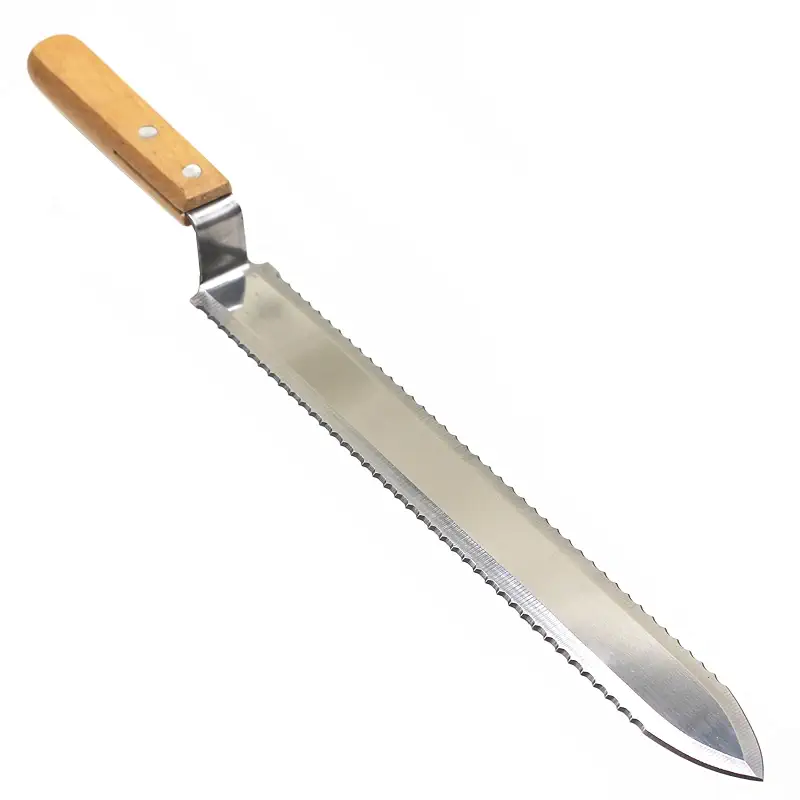
Ideal for: Hobby and small-scale beekeepers seeking affordability without sacrificing sharpness.
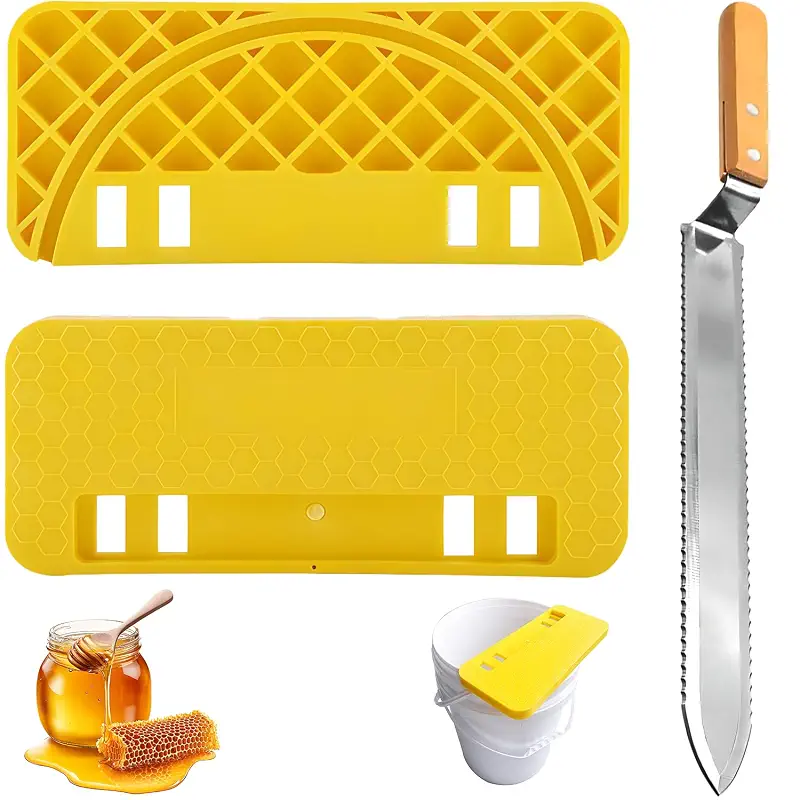
The Weichuan serrated uncapping knife comes in at a fraction of the cost of premium alternatives while delivering real performance. Owners consistently praise its sharpness and ease of use, and the 11-inch blade length gives you good reach across standard frames without requiring you to reposition as often. The doubled serrated edge works for both left and right-handed beekeepers, which is a practical touch. The beech wood handle sits comfortably in your hand during the repetitive motions of uncapping, and at 16 inches total length, the tool has enough heft to cut through cappings without requiring excessive downward pressure.
The main trade-off is that this is a cold-blade tool: you'll be doing the mechanical work yourself, which means more passes per frame and more hand fatigue during larger harvests. Compared to the heated electric knives in this lineup, you're trading convenience for simplicity and cost. But if you have fewer than five or six hives, or you don't mind the physical effort, the performance-to-cost ratio here is hard to beat.
One practical note from owners: the serrated edge will dull with heavy use, and a few quick passes with a file between frames keeps it cutting cleanly. This isn't a drawback so much as a reality of serrated tools, but it's worth budgeting a few minutes for maintenance during a full harvest.
Pros
Sharp serrated edge cuts through cappings quickly
Dual-edged design works for left and right hands
Lightweight and well-balanced for extended use
Excellent value for cost
Cons
Cold blade requires more passes per frame
Serrated edge dulls with heavy use
Key features
Stainless steel serrated blade with 11-inch cutting length
Beech wood handle for comfortable, non-slip grip
Dual-sided serrated edge supports ambidextrous use
16-inch total length provides broad reach across frames
#2 Pick
Best Heated Knife
Blue Sky Bee Supply
Pierce Beekeeping Equipment Original Uncapping Knife
4.5(72)
Legendary heated blade with precise temperature control: worth the investment for serious beekeepers.
Ideal for: Experienced beekeepers with multiple hives who value speed and reduced hand fatigue.
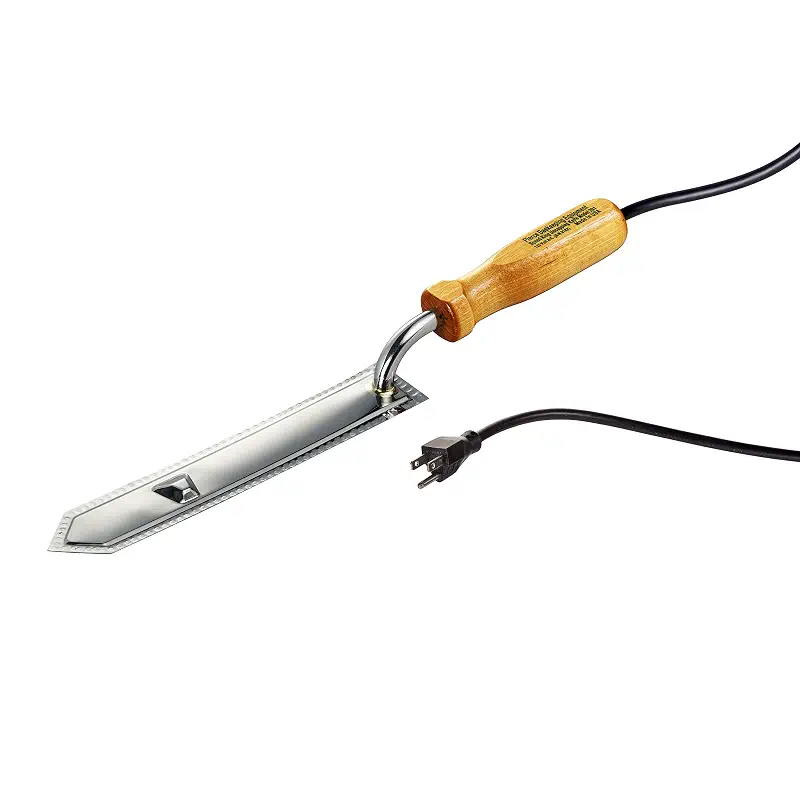
The Pierce Original Speed King represents decades of American beekeeping innovation. This electric heated knife reaches its ideal cutting temperature quickly and maintains consistent heat across the blade, which means you're gliding through wax cappings rather than sawing. The 10-by-2-inch stainless steel blade is designed with a small raised triangle that causes melted wax to roll away as you work, keeping the blade cleaner and speeding up your rhythm. Owners who've made the jump from cold serrated knives report that a heated blade cuts extraction time dramatically: you're making fewer passes and encountering less resistance, which translates to noticeably faster harvests and less fatigue.
The 8-foot grounded cord gives you good mobility around the hive stand, and the turned wood handle stays cool to the touch even during extended use. The 2-year warranty reflects the build quality, and the fact that this tool has been handmade in Southern California since 1941 shows Pierce still stands behind its design. Compared to the manual options in this roundup, you're investing more upfront but gaining real efficiency gains, especially if you're uncapping more than a few supers at a time.
The only consideration is that you need electricity nearby, and electric tools require a different rhythm of use: you're maintaining heat management rather than physical pressure. If you're working in a location without convenient power, or you prefer the simplicity of a non-electric tool, that's worth weighing against the time savings.
Pros
Consistent heating melts wax cleanly without blade cleaning
Raised triangle design rolls wax away during cutting
Cool-touch wood handle safe for extended use
Built in USA with 2-year warranty
Cons
Requires electrical outlet nearby
Larger investment than cold-blade alternatives
Key features
Pre-calibrated heating element reaches ideal wax-cutting temperature
Food-grade 304 stainless steel blade, 10 by 2 inches
8-foot grounded cord allows mobility around apiary
Patented raised triangle melts and rolls wax off blade
#3 Pick
Best Budget System
HiveSweet
Honey Uncapping Tank Holder Stainless Steel Serrated Uncapping Knife Set | Honey Harvesting Equipment Honey Uncapping Tank Fit In 5 And 6 Gallon Bucket
5.0(11)
Complete uncapping setup with frame holder and knife in one: practical for first-time harvesters.
Ideal for: First-time beekeepers and small operations seeking a organized, affordable extraction setup.
The HiveSweet set combines a serrated uncapping knife with an ingenious plastic frame holder that grips a 5-gallon bucket. If you're setting up your honey extraction station from scratch, this bundle saves you from hunting down components separately. The holder has grooves that grip the bucket rim securely, and the frame slots stabilize your comb while you're uncapping: both of which reduce fumbling and dropped frames. The included knife is stainless steel with a double-sided serrated design and a Z-shaped wooden handle that fits the hand naturally for precise control.
Owners appreciate that this is a complete, self-contained system at an approachable cost. The frame holder really does make a difference if you're working on your knees or at an awkward height: stability matters when honey is involved. Where the Pierce heated knife excels at speed, this setup excels at organization and safety. The serrated blade requires more passes than a heated alternative, but if you're harvesting a modest amount of honey each year, the trade-off is reasonable.
One practical tip from an owner: using the blade flat-side up (away from the frame) prevents catching the wood frame and gouging the comb. This isn't a defect of the tool itself, but a technique detail worth noting before your first harvest.
Pros
Plastic holder stabilizes frames and fits standard 5-gallon buckets
Stainless steel serrated knife sharp and efficient
Z-shaped handle ergonomic for varied hand positions
Complete system eliminates separate purchasing
Cons
Cold blade requires multiple passes per frame
Plastic holder adds bulk to storage
Key features
Plastic frame holder with grooves fits 5-gallon honey buckets
Double-sided serrated stainless steel knife included
Z-shaped wooden handle reduces hand fatigue during use
Stabilized frame positioning prevents slipping during uncapping
#4 Pick
Best Compact Electric Option
Rotors
ROTORS Electric Honey Uncapping Knife, Heated Beekeeping Knife | Stainless Steel Blade, Fast Heating Cutter Scraper with Wooden Handle, for Honey Harvesting
5.0(2)
Fast-heating electric blade with mirror-polished surface: ideal for beekeepers seeking simplicity.
Ideal for: Beekeepers seeking efficient heated uncapping without premium pricing or extra bulk.
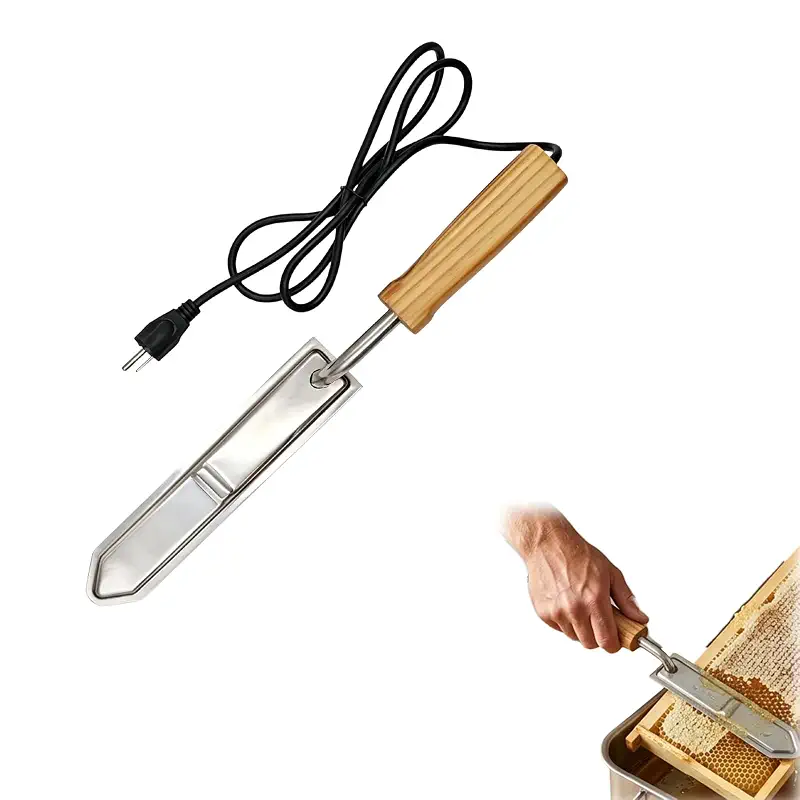
The Rotors electric uncapping knife brings heated efficiency to a straightforward design without the premium pricing or complexity of some alternatives. The stainless steel blade heats quickly and features a mirror-polished surface that resists wax adhesion, meaning you'll do less mid-operation cleaning and maintain a smoother workflow. The double-edged design lets you use either edge without flipping the knife, which speeds up your rhythm once you find your preferred stroke.
The wooden handle's low thermal conductivity keeps it cool to the touch, so you're not juggling a hot tool while your hands are already covered in honey and wax. Owners report that the blade glides through cappings smoothly and the handle feels comfortable during extended use. Compared to the cold-blade serrated knives, you get the thermal advantage without wrestling with a bulky or complicated system. The mirror-polished finish is a thoughtful detail that pays dividends over many frames. Just as a best kiritsuke knife demands precision and a particular technique to shine, this heated blade rewards a smooth, confident cutting motion that develops with practice.
This is a newer entry to the market with fewer reviews than the established Pierce model, so there's less long-term field data. However, the thermal design and materials are solid, and it positions itself well between budget serrated options and the premium heated category. If you want electric efficiency without the legacy premium or the frame-holder complexity of the HiveSweet set, this fills a practical middle ground.
Ideal for: Small-scale beekeepers prioritizing honey yield over wax recovery and minimal mess.
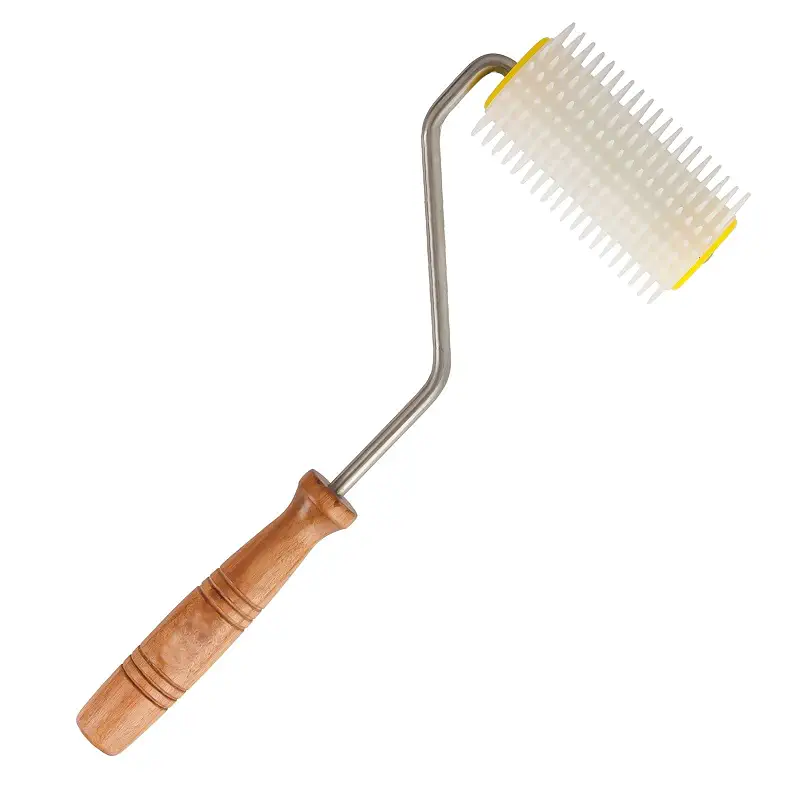
The Xiboya needle roller takes a fundamentally different approach to uncapping. Instead of slicing off the wax cap, it punctures the capping surface with sharp plastic tines, leaving cells intact and letting all honey drain during extraction. Owners who embrace this method report exceptional honey yields and minimal wax recovery: which is a trade-off worth understanding before you buy. If your priority is maximum honey output and you're willing to sacrifice wax collection, this tool excels. One detailed owner experience described processing 30 frames without cleaning the roller and recovering 44.5 pounds of honey with almost no additional straining needed.
The ergonomic handle and detachable design make it easy to rinse between uses, and the high-quality plastic-and-steel construction is durable. However, this method is best suited to small and hobby operations. If you're managing multiple supers or you're interested in collecting cappings for beeswax products, the needle roller won't serve your workflow. Some owners noted that honey and cappings can stick to the tines during heavy use, requiring periodic cleaning to maintain efficiency. Where a manual versus electric uncapping knives comparison often revolves around speed and fatigue, the needle roller is really a different category of tool altogether: it's not faster so much as differently effective.
This is the specialized option for beekeepers who've thought carefully about their extraction priorities and want to maximize what they take home in liquid honey.
Pros
Preserves all honey within the frame for extractor recovery
Leaves comb structure intact for faster bee repairs
Minimal wax waste and straining required after extraction
Detachable design simplifies cleaning between uses
Cons
Honey and cappings can stick to tines, requiring periodic cleaning
Not suitable for large operations or wax-collection goals
Key features
Sharp plastic tines puncture cappings without cutting comb structure
Ergonomic handle designed for comfortable grip and control
High-quality plastic and steel welding for durability
Detachable head simplifies rinsing and maintenance
How to Choose an Uncapping Knife for Your Apiary
Four trade-offs that actually matter when matching a uncapping knife to your kitchen.
Cold Blade vs. Heated: What Fits Your Workflow
The choice between manual versus electric uncapping knives shapes your entire extraction day. Cold serrated blades rely on your arm strength and cutting technique: they demand more passes per frame, but they're simple, affordable, and need no power source. Heated electric blades melt through wax with less resistance, cutting your per-frame time significantly and reducing hand fatigue. For small operations (one to three hives), a cold blade often makes sense. For larger apiaries or beekeepers with limited time, the speed and comfort of electric heat justify the investment. There's no wrong choice, only the one that matches your operation's scale and your tolerance for physical exertion.
Blade Design and Material
Serrated edges excel at sawing action and work well in cold-blade tools; the teeth grip wax and pull it away from the comb. Smooth stainless steel blades, common on heated knives, glide through wax without catching and resist buildup. Look for food-grade stainless steel (304 or better) to ensure the blade doesn't corrode under the moisture and acidity of honey and wax. The finish matters too: a polished blade resists wax adhesion better than a brushed surface. Blade length and width also affect your work: longer blades (10 to 11 inches) cover more area per stroke, reducing repetitive motion, while wider blades (2 inches or more) give you more surface to work with.
Handle Comfort and Control
You'll be making hundreds of repetitive strokes, so handle design directly affects fatigue and injury risk. Wood handles offer good grip, especially when wet with honey, and they don't conduct heat from an electric blade. Look for handles that are sanded smooth and thick enough to rest comfortably in your palm without pinching. Ergonomic or Z-shaped handles can reduce wrist strain by positioning your hand more naturally. If you're left-handed, dual-sided serrated edges or ambidextrous designs are essential: don't assume a tool works both ways unless it explicitly states so. Uncapping knife cleaning and maintenance also depends partly on handle construction; removable or open designs dry faster and are easier to rinse completely.
Complete Systems vs. Standalone Tools
Some uncapping knives come bundled with frame holders, wax catchers, or uncapping tanks. A frame holder that clips to your 5-gallon honey bucket stabilizes frames while you work, reducing dropped combs and wasted honey. If you're setting up extraction from scratch and you're on a budget, a bundled system saves shopping time and usually costs less than buying components separately. However, if you already have extraction equipment or you prefer to choose each tool individually, a standalone knife offers more flexibility. Consider what you already own before committing to a package deal.
Maintenance and Longevity
Serrated blades dull over time and benefit from regular honing with a file: a few passes every 20 frames keeps them sharp. Heated blades require less maintenance since they don't rely on a sharp edge the same way, but they do need to stay clean and the cord should be inspected for damage. All uncapping knives should be rinsed or wiped immediately after use while still warm, as hardened wax is much harder to remove. Before choosing, consider your post-harvest routine as part of the total investment, not an afterthought. Tools with detachable heads or easily accessible parts simplify this process considerably.
Frequently asked
Quick answers to the questions readers ask most.
Can I use a serrated uncapping knife if I'm left-handed?
Yes, but only if the knife is specifically designed for ambidextrous use. Many serrated uncapping knives feature double-sided serrated edges, meaning both sides have teeth and work equally well in either hand. Check the product description or reviews to confirm. Some single-sided knives can technically be used left-handed, but you'll be working at an awkward angle. The Weichuan and HiveSweet both market double-edged designs; the Pierce and Rotors are primarily right-handed heated blades, so left-handed beekeepers should look elsewhere unless they're willing to adapt their grip.
How often do I need to clean my uncapping knife during harvesting?
Cold serrated blades can accumulate wax and honey on the teeth, slowing performance and requiring a quick rinse every 5 to 10 frames depending on honey viscosity. Heated blades with polished surfaces resist buildup and may only need wiping every 15 to 20 frames. Warm water works better than cold since wax is still slightly soft. The advantage of heated blades is fewer cleaning interruptions, which keeps your rhythm steady. Some beekeepers keep a small bucket of warm water nearby and rinse between frames; others wait until the blade noticeably slows before cleaning.
What's the difference between uncapping knives and uncapping forks or scrapers?
Uncapping knives slice off the wax capping layer cleanly, leaving honeycomb exposed for the extractor. Uncapping forks and needle rollers puncture or rake the surface without removing wax, which preserves all honey in the frame but is slower and doesn't collect wax. Scrapers and hive tools are designed for different tasks, like removing propolis or stubborn debris. For traditional honey extraction, a knife (heated or cold) is the most efficient tool. The needle roller is a specialty choice for beekeepers who want maximum honey yield and don't care about wax recovery.
Do I need both hands to operate an uncapping knife?
Yes. One hand holds the uncapping knife and applies cutting pressure, while the other stabilizes the frame. This is true for both cold and heated knives. You're not just slicing; you're controlling depth and angle to avoid gouging the comb or wasting honey. Frames are fragile and slippery when covered in honey, so a two-handed operation is necessary for safety and quality. Some beekeepers use a frame holder or specialized uncapping tank to provide a third point of stability, which reduces hand fatigue during longer harvests.
Can a heated uncapping knife damage the honeycomb?
A properly calibrated heated blade melts only the wax capping, not the comb foundation below. The heat is designed to soften the cap layer for easy removal without touching the wooden frame or the delicate cell walls. Overheating or pressing too hard can cause damage, but quality heated knives like the Pierce are pre-calibrated to the right temperature and don't require adjustment. Cold serrated blades can also damage comb if used carelessly: rapid, shallow strokes that scrape instead of slice are safer. Regardless of knife type, technique matters as much as tool quality.